REVIEW · ISTANBUL
Guided Hagia Sofia, Blue mosque, Basilica Cistern skip lines tour
Book on Viator →Operated by My Local Guide lstanbul · Bookable on Viator
Istanbul’s top sights, organized for you. This guided route strings together skip-the-line entries and big stories in 4 to 5 hours, with a licensed English guide who helps you see meaning, not just monuments.
I especially like that you get real religious and Roman-era context across the day, and I love the added pauses like free coffee/tea that keep it human. One thing to plan for: you’ll be walking a lot, and some stops involve stairs plus serious heat in summer.
The guide names you might meet—like Omar, Burak, Salih, Pinar, and Bert—all come up for a reason: they’re focused on making the sites make sense and keeping the day moving without the herd feeling.
In This Review
- Key things I’d watch for before you go
- The value: why this tour is priced like a “do-it-once” day
- Meeting point and ending point: easy if you plan around the bazaar
- Blue Mosque: Sultanahmet, the blue tiles, and the “active mosque” part
- Hippodrome: the Roman racecourse you’ll recognize in pieces
- Basilica Cistern: what to look for when you enter the underground palace
- Hagia Sophia Grand Mosque: two religions, one building story
- Corlulu Ali Paşa Medresesi: the tea/coffee stop that feels like Istanbul, not a pit stop
- Grand Bazaar navigation: tips with a plan, not random wandering
- Vezirhan handmade carpets: optional, low-pressure, and in a historic caravanserai
- What the pacing feels like (based on how the guides run it)
- Accessibility and comfort: stairs, heat, and smart shoe choices
- Who should book this tour, and who might not
- Should you book it? My call
- FAQ
- What’s included in the skip-line part of the tour?
- How long is the tour?
- Is the tour offered in English?
- Do I need to cover my hair or dress a certain way?
- Where does the tour start and end?
- What happens on Sundays?
- Is the carpet shop stop required?
- Is coffee and tea included?
- Are there age limits or child pricing rules?
Key things I’d watch for before you go
- Skip-the-line access for Hagia Sophia and priority entry for Basilica Cistern
- Small group feel (up to 15), which makes questions and pacing easier
- A smart route that includes the Blue Mosque, Hippodrome, cistern, Hagia Sophia, and bazaars
- Coffee/tea break included, plus guidance for where to eat afterward
- Clear dress rules for Blue Mosque and Hagia Sophia (scarf, shoulders, knees)
The value: why this tour is priced like a “do-it-once” day
At $145.12 per person for about 4 to 5 hours, the price feels less like “paying for a walk” and more like buying time and confidence. You’re getting: a professional licensed English guide, entry to Blue Mosque, skip-the-line for Hagia Sophia, and priority skip-line entry for Basilica Cistern—plus coffee and/or tea.
That ticket bundle matters in Istanbul. These sites can be slow and crowded, and line-waiting can eat your whole morning. Here, the itinerary is built around hitting the big icons efficiently, then adding the smaller details that most people miss when they DIY it.
You can also read our reviews of more guided tours in Istanbul

Meeting point and ending point: easy if you plan around the bazaar
You start at the German Fountain at At Meydanı Cd, 34122 Fatih/İstanbul. The tour ends near the Grand Bazaar at Beyazıt (34126 Fatih/İstanbul).
Important practical note: Grand Bazaar is closed on Sundays, so your tour ends at Spice Bazaar instead. The tour also mentions that both bazaars close on religious festivals twice a year, when the plan swaps to Arasta bazaar.
Blue Mosque: Sultanahmet, the blue tiles, and the “active mosque” part
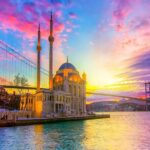
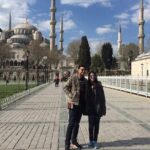
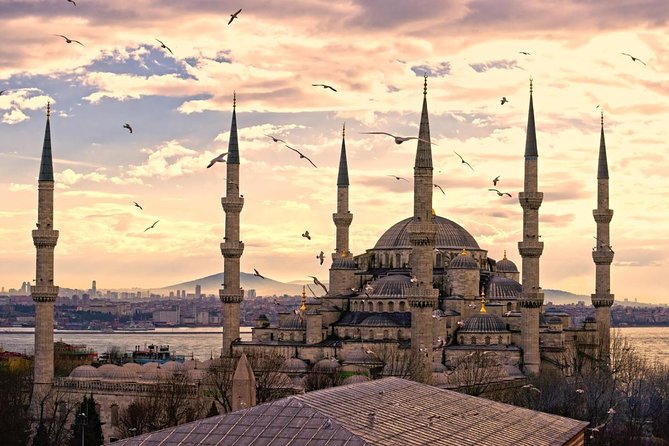
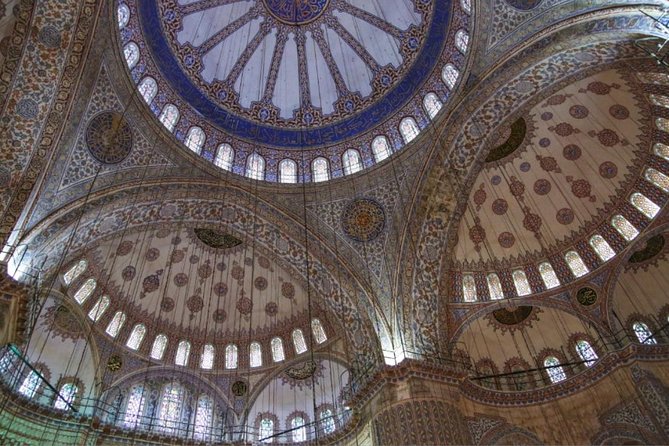
You’ll visit Blue Mosque (also known as Sultanahmet Mosque). It’s described as an active mosque and the most visited in Turkey. The name comes from the blue tiles inside.
Also, it’s not just a “pretty building.” You should treat it like a working place of worship. That means dress rules are real. Both Blue Mosque and Hagia Sophia require clothing that covers shoulders and knees, and women need a scarf to cover their hair while inside.
From a touring perspective, what you’re buying here is not only entry—it’s context. A guide helps you spot details without turning the visit into a textbook. If you’re hoping to understand why the architecture feels so intentional, the guide makes that payoff happen.
Hippodrome: the Roman racecourse you’ll recognize in pieces
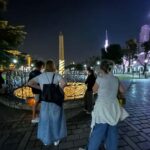
Next up is the Hippodrome, the base of a Roman complex originally built for chariot races back in the 4th century AD. You’re there briefly (about 30 minutes), but you’ll cover the key survivors that shaped how people remembered the place:
- an Egyptian obelisk (listed as around 1500 BC)
- the Serpent Column (listed as 5th century BC)
- a Constantine column (listed as 10th century AD)
Why this stop matters: it connects the “big empire stories” across centuries. You’re not just seeing objects—you’re seeing how Istanbul layered history on top of history. A guide makes it easier to keep track of what’s from where, and why it’s still here.
Basilica Cistern: what to look for when you enter the underground palace
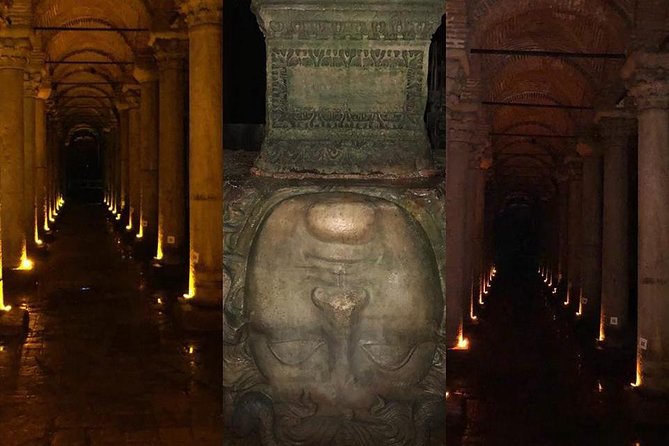
Then comes one of Istanbul’s most cinematic spaces: the Basilica Cistern. This is a Roman water reservoir designed like an underground palace. The tour gives you about 45 minutes, which is just enough time to see it properly without feeling trapped.
The standout detail is the Medusa heads—the tour specifically calls out walking to the end to see the giant heads, including the fact that they’re shown turned upside down.
Practical tip: the cistern is underground and can feel cooler than the street, but it also can be slippery and echo-y. Wear shoes that handle uneven stone and be ready for dim lighting—your guide will help point you toward the best spots to look and photograph.


Hagia Sophia Grand Mosque: two religions, one building story
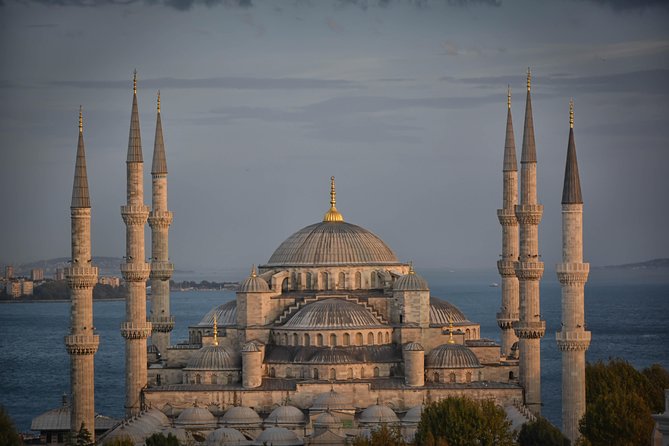
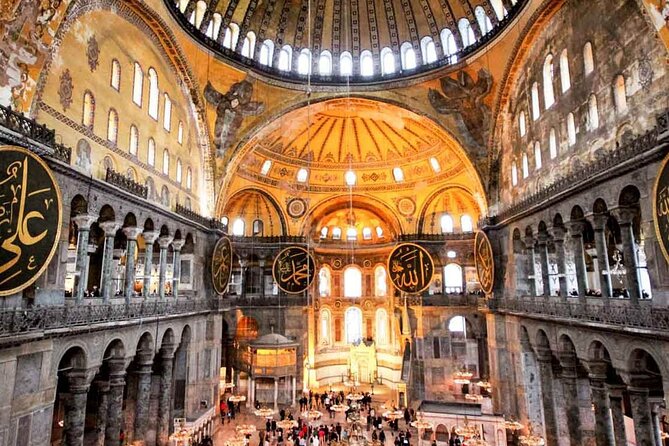
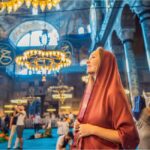
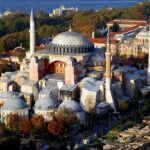
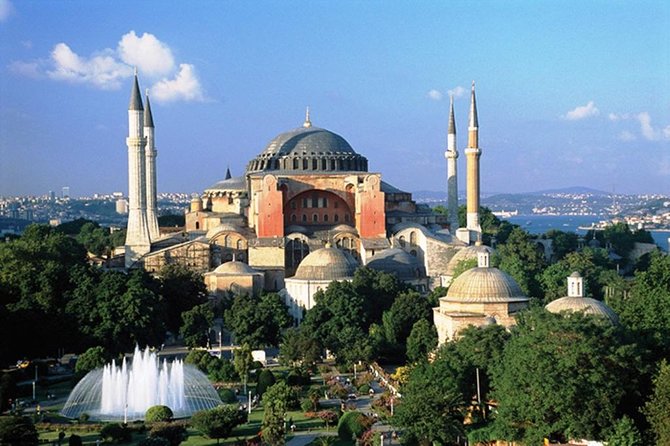
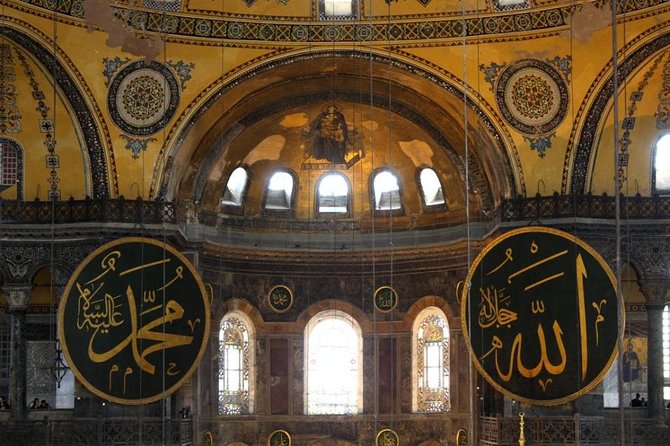
The highlight stop for many first-time visitors is Hagia Sophia Grand Mosque. The tour frames it as a 6th-century world heritage site and stresses its unusual “two religion” history—Islam and Christianity—inside one architecture.
This is the place where a guide earns their keep. Instead of you wandering and guessing at what you’re looking at, you’ll get a guided explanation that ties together:
- the building’s architecture and how it works
- mosaics and calligraphy-like art (the tour notes mosaics and chirography art)
- religious symbolism connected to about 1500 years of layered history
You’ll also be here around 1 hour, with entry included. Again: dress rules apply (shoulders and knees covered; women bring a scarf). In practice, you’ll want a quick plan for bathroom timing and water before you go in, because mosques don’t offer much “escape” from the day’s walking.
Corlulu Ali Paşa Medresesi: the tea/coffee stop that feels like Istanbul, not a pit stop
At Corlulu Ali Paşa Medresesi, you’ll take a tea/coffee break at a local café. The tour notes this used to be a religious school until the 1930s, which gives the stop a bit of weight.
The drinks are included, and you may notice the social side of Istanbul here—locals get together over tea/coffee, and the tour mentions shisha/hookah being part of the scene. Even if you don’t partake, it’s a good reset that breaks up the long stretch between major monuments.
If you want a smoother day, this is the moment to slow down, sip water, and ask your guide for a quick lunch direction for after the tour.
Grand Bazaar navigation: tips with a plan, not random wandering
The tour includes time to visit Grand Bazaar from inside, but the stop is about 20 minutes, so you’re not coming here to “shop for hours.” You’re here to learn how to move through it like a local: the guide gives shopping tips and helps you understand what you’re seeing.
The big practical issue is that bazaars can be confusing if you’re rushing. Having a guide means you’re less likely to get stuck in the wrong alley or miss the section you actually want.
And remember the Sunday rule: if you booked and it’s a Sunday, Grand Bazaar is closed and the tour ends at the Spice Bazaar instead.
Vezirhan handmade carpets: optional, low-pressure, and in a historic caravanserai
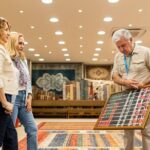
At the end, there’s an optional stop at Vezirhan Handmade Carpets & Klims. This is described as being inside a 500-years-old caravanserai—an old “ancient hotel” style building for travelers.
What makes it different (and why people seem to like it): the tour says the shop is not pushy, the carpets are treated as trust-based on quality, and shipping is handled if you buy.
Because this is optional, you can skip it if your travel style is pure sightseeing. But if you’ve ever wondered how Turkish carpets are made and what you’re actually paying for, this is one of the more sensible ways to approach the topic.
What the pacing feels like (based on how the guides run it)
This tour is built to avoid the classic mistake: spending most of your time stuck in lines, then rushing through everything at the end.
Across the experience, the vibe is efficient but not frantic. The itinerary gives structured time at each major stop—plus breaks that keep energy up. Guides like Omar and Salih are repeatedly described as flexible, friendly, and able to adapt the order when crowds are likely to be worse. That ability to shift timing on the fly is a huge part of why skip-line tours can still feel smooth.
Also, you’ll get more out of the day if you’re willing to ask questions. The best moments aren’t just “what is this building”—it’s “what am I looking at, and why does it matter?”
Accessibility and comfort: stairs, heat, and smart shoe choices
One clear theme in the experience is physical effort. Some stops involve stairs, and the tour environment is active and spread out.
The biggest real-world comfort challenge is weather. If you’re visiting in summer heat, you might find there’s not much cool-down inside the mosques either (and dress rules can make it hotter). Bring water, wear breathable layers under your required clothing coverage, and pick shoes you can walk in for hours.
If you’re sensitive to long walking days, this tour is doable—but go in expecting movement.
Who should book this tour, and who might not
This fits best if you:
- want Istanbul’s big three in one pass: Blue Mosque, Basilica Cistern, Hagia Sophia
- care about understanding symbols and stories, not just taking photos
- prefer a small group and a guide who helps with crowd strategy
- like a built-in break with coffee/tea and a moment to regroup
You might choose something else if you:
- hate stairs and long walking even with breaks
- want a slow, unstructured “wander at your own tempo” day
- plan to spend long hours shopping—this itinerary is more about seeing and learning than marketplace marathons
Should you book it? My call
If it’s your first visit to Istanbul and you only have a few hours for the historic core, this is a strong bet. You’re getting a guide-led route with priority access to the hardest-to-finish stops, plus the story threads that connect Roman, Byzantine, and Ottoman eras into one place.
Book it if you want less stress and more meaning per hour. Skip it if you’d rather customize everything yourself and don’t care about line strategy or guided interpretation.
FAQ
What’s included in the skip-line part of the tour?
The tour includes skip-line entry for Hagia Sophia and priority skip-line entry for Basilica Cistern. Blue Mosque entry is also included, along with the guided route.
How long is the tour?
It runs about 4 to 5 hours.
Is the tour offered in English?
Yes. The tour is offered in English with a professional licensed guide.
Do I need to cover my hair or dress a certain way?
Yes for Blue Mosque and Hagia Sophia. Women need a scarf to cover their hair, and everyone should wear clothes that cover shoulders and knees.
Where does the tour start and end?
It starts at the German Fountain (At Meydanı Cd, Fatih) and ends near the Grand Bazaar (Beyazıt, Fatih).
What happens on Sundays?
Grand Bazaar is closed on Sundays, so the tour ends at the Spice Bazaar instead.
Is the carpet shop stop required?
No. The visit to Vezirhan Handmade Carpets & Klims is optional at the end of the tour.
Is coffee and tea included?
Yes. Coffee and/or tea is included, including at the Corlulu Ali Paşa Medresesi break.
Are there age limits or child pricing rules?
Kids age 6+ are charged as adults. Kids age 5 and lower are free but need an ID or passport to confirm age.