REVIEW · ISTANBUL
Gobekli Tepe & Mountain Nemrut Tour-2 Days 1 Night From Istanbul
Book on Viator →Operated by Travel See Life · Bookable on Viator
Two days, two ancient worlds. You get a very focused circuit: Mount Nemrut for the sunset terraces, then Göbekli Tepe for the mind-bending pre-writing rituals, with Şanlıurfa’s religious sites woven in. I like that the trip is built around transfers and flights, so you spend your energy on ancient places instead of transportation headaches.
The second thing I love is the pacing and mix of sites. On day one, you’re not stuck only on the summit; you also hit Karakuş Tumulusu, Cendere Bridge, and Arsemia, which helps the Commagene story make more sense. On day two, you get museums plus Gobeklitepe, then Balıklıgöl, so the day feels like more than a single photo stop.
One possible drawback: it’s a physically moderate, long-day kind of program with windy roads and a lot of time moving between places. If you’re prone to motion sickness or you hate early starts, you’ll want to plan for that.
In This Review
- Key things I’d circle before you book
- Price and what you really get for $1,189.57
- Day 1: Istanbul to Adıyaman and the long road up to Nemrut
- Karakuş Tumulusu: the Commagene royal tomb you can actually picture
- Cendere Bridge and Arsemia: a stop-and-go taste of Roman-era Anatolia
- Mount Nemrut: East and West terraces, statues, and the sunset moment
- Day 2: Şanlıurfa museums first, then Gobeklitepe
- Balıklıgöl and Abraham’s cave: faith sites with clear local atmosphere
- Who this tour suits best (and who should skip it)
- About the guiding: why clients keep calling it out
- Practical planning tips that make this trip easier
- Should you book this Mount Nemrut and Göbekli Tepe tour?
- FAQ
- What sites are included on this tour?
- How long is the tour?
- What time is pickup?
- Are flights and airport transfers included?
- Are museum and site admission tickets included?
- Is lunch included?
- Is dinner included?
- What language is the tour offered in?
- How large is the group?
- Is the tour suitable for everyone physically?
- What happens if weather is poor?
Key things I’d circle before you book
- Two flight legs from Istanbul with airport transfers built in, so you don’t have to wing the logistics
- Nemrut sunset on the East and West terraces, timed for the best light at the mountaintop
- Göbekli Tepe entry included, with time to actually study the site and its sculpted pillars
- Şanlıurfa museums plus local sights, not just archaeology
- Small-group feel with a maximum of 15 travelers
- A guide-first approach, with clients praising guides as especially strong at explaining the story behind each stop
Price and what you really get for $1,189.57
At $1,189.57 per person, this is not a cheap weekend. But the price is doing heavy lifting for you. You’re paying for domestic roundtrip flights from Istanbul (including the airport legs), all airport transfers, museum and site admissions, breakfast, and two lunches. You’re also paying for the guide service that links all the dots between the monuments of Commagene and the prehistory of the Göbekli Tepe region.
So the value question becomes: do you want to spend days arranging buses, tickets, and timing yourself, or do you want a ready-made path to the big-ticket stops? If you’re short on vacation time, I’d say the structure is a strong fit.
One more note: it’s a popular departure pattern, with bookings averaging 98 days in advance. That’s usually a sign that you should book early if your dates are firm.
You can also read our reviews of more evening experiences in Istanbul

Day 1: Istanbul to Adıyaman and the long road up to Nemrut
Your day starts with a pickup (typically around 08:30) and a transfer to Istanbul airport. Then it’s a domestic hop to Adıyaman, arriving at about 13:00, followed by lunch along the way before the sightseeing begins.
That airport-to-sightseeing workflow matters. When you travel independently, the biggest time leak is often the transfer scramble: where to pick up, what time buses leave, where to find ticket desks. Here, you’re routed forward so you get time at the sites rather than waiting in lines and guessing.
The schedule also tells you what kind of traveler this tour suits. If you like history but hate unstructured days, you’ll do well. If you want slow travel, late breakfasts, and long pauses, you may feel the pace more than you’d like.
Also, keep your expectations honest on weather. This experience requires good conditions, and Nemrut is open-air and exposed. That’s part of why the payoff at sunset can be so dramatic, but you should dress like the weather might change quickly.
Karakuş Tumulusu: the Commagene royal tomb you can actually picture
After arriving and lunch, the first major culture stop is Karakuş Tumulusu, a funerary monument linked to the Commagene royal family. The guide explains the story, including the meaning behind its name: Karakuş means black bird, tied to an eagle-topped element.
What I like here is how the monument gives you shapes you can hold in your head. You’re surrounded by columns topped with steles and reliefs, including figures associated with bull, lion, and eagle. You’ll also hear about the inscription indicating a royal tomb that housed three women.
This isn’t one of those sites where you just point at rocks. It’s a designed place: a statement of power, belief, and royal identity. And because it’s listed as admission free, you’re getting a meaningful stop without a feel-bad sticker shock moment.
Cendere Bridge and Arsemia: a stop-and-go taste of Roman-era Anatolia
Next up is Cendere Bridge, a late Roman bridge near ancient Arsameia (today’s Eskikale), crossing the Cendere Çayı. It’s a quick visit—about 1 hour—so don’t expect a museum-style presentation here. Instead, the value is the context: you’re getting a sense of the older movement of people and goods through southeastern Turkey.
Then comes Arsemia Antik Kenti, described as a summer residence of the Commagene kings. You’ll spend about 1 hour, which again makes this a “right amount of time” stop if you like seeing multiple eras in a single trip. The highlight is a relief showing Heracles shaking hands with King Mithridates of Commagene, plus a famous Greek inscription nearby.
If you’re the kind of person who enjoys short visits done well, these two stops are a smart bridge between eras. If you prefer deep, uninterrupted exploration, you might wish you had more time. But as part of a two-day schedule, it’s a reasonable trade.
Mount Nemrut: East and West terraces, statues, and the sunset moment
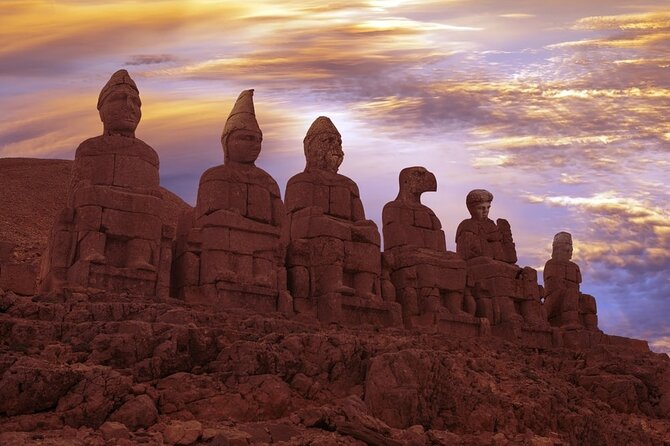
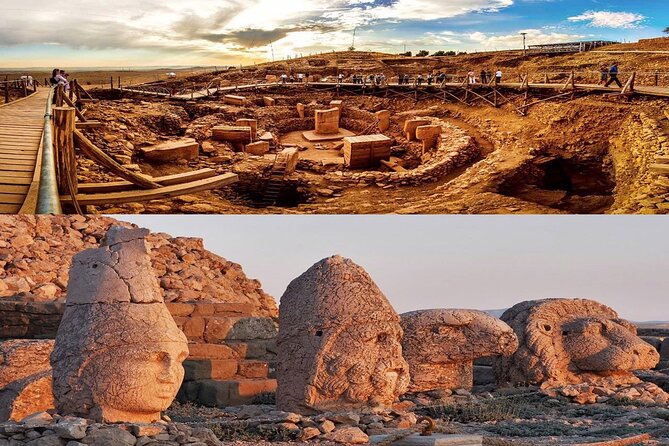
Then you reach the big magnet: Mount Nemrut. This is a 2,134-meter peak, famous for the monumental statues set around what’s believed to be a royal tomb site from the 1st century BC. Commagene king Antiochus I Theos built the tomb-sanctuary and arranged huge figures—8 to 9 meters tall—paired with lions and eagles, plus gods identified across Greek, Armenian, and Iranian traditions.
Plan for the fact that the site has lost pieces. Many heads have been removed and scattered, so you’ll see a mix of seated figures and fragments rather than a perfectly restored scene. That can actually make the place feel more real. You’re seeing what time has done, not what someone tried to repaint.
The best part for most people is the sunset on the East and West terraces. The timing is a key reason this tour is worth doing as a package: you don’t want to arrive at the summit too late and miss the light. Afterward, you’ll have time for photos around nearby valleys before heading back toward your base.
One more practical note: Nemrut is in open air and typically cold-to-windy compared to the lowlands, even in warm months. Bring a layer you’d be happy wearing during a sunset that lasts a bit longer than expected.
A few more Istanbul tours and experiences worth a look



Day 2: Şanlıurfa museums first, then Gobeklitepe
Day two starts with breakfast, then you move into Şanlıurfa. The first stop is the Urfa Archaeological Museum and the Aleppo Bahce Mosaic Museum. This is where the trip widens beyond a couple of headline sites. You’ll see collections connected to Harran and the Göbekli Tepe area.
A highlight here is that the day doesn’t feel like a pure lecture. You’ll also visit holy sites near Ainzelha, described as a lake with millions of domesticated fish, plus the cave connected to the prophet’s birth. Then you walk through the local covered bazaar and the surrounding town, followed by lunch featuring kebabs.
This museum + street combo is good value because it gives you a sense of how the ancient and modern layers live side by side. You’re not just decoding artifacts; you’re watching people keep traditions going while the past sits nearby.
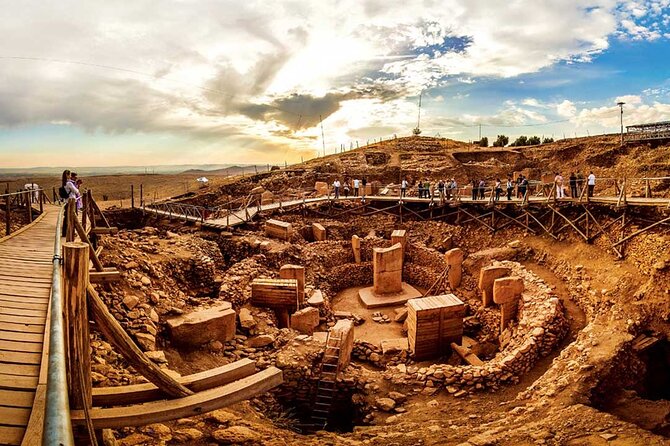
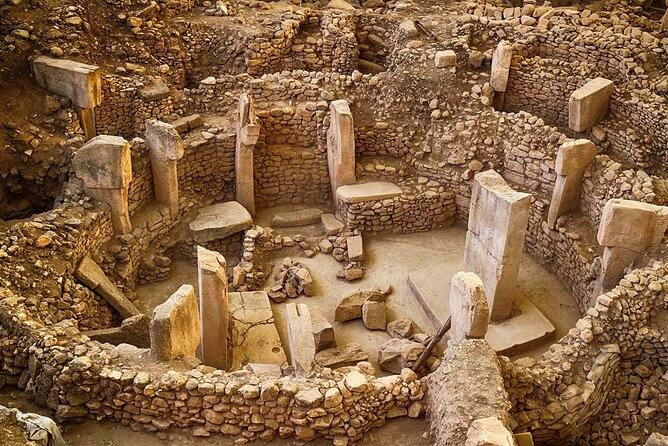
The big payoff comes after: Göbekli Tepe. The site dates back around 12,000 years, built before writing and pottery, and considered the oldest known ritual complex. You’re given about 2 hours here, and that matters. At Göbekli Tepe, you can’t skim. The carved pillars and the animal reliefs need time to register.
If you like the idea of seeing why archaeologists have had to rethink early human history, this is one of those places where your brain will be doing extra work even after you leave.
Balıklıgöl and Abraham’s cave: faith sites with clear local atmosphere
After Göbekli Tepe, the tour heads to Balıklıgöl. You’ll visit Abraham’s cave and the Pool of Prophet Abraham, described as the place where Abraham was thrown into the fire by Nimrod.
This stop is about 1.5 hours, and it works as a change of pace after Göbekli Tepe. You’re still in the realm of early stories and ritual meaning, but the experience here is tied to living religious geography—caves, pools, and an environment people return to year after year.
One practical thing: if you’re sensitive to crowds at popular viewpoints, you may want to time your photos and slow down when you can. The tour doesn’t promise you a private bubble around the water, and that’s normal for places that matter to many faiths.
Who this tour suits best (and who should skip it)
This tour is a great fit if:
- You want two of the world’s most important ancient sites in one trip: Göbekli Tepe and Nemrut
- You’d rather pay for organization than lose vacation time planning routes
- You like being guided, because the storytelling helps you understand why each site matters
- You can handle a moderate pace with lots of moving on a schedule
It may not be the best fit if:
- You’re looking for a slow, flexible style of travel
- You’re very motion-sickness prone on windy roads
- You hate long travel days and want more time to linger in one place
Group size is capped at 15 travelers, which is a nice balance. It’s small enough that a guide can keep people together, but big enough that the trip keeps its efficient rhythm.
About the guiding: why clients keep calling it out
The strongest pattern in the feedback I see is the guide quality. People consistently highlight how the guides are informative, professional, and passionate about explaining the stories behind the sites. One name that comes up in the feedback is Sercan, often paired with Kerem, credited with making the experience feel smooth and intelligently guided.
Even if you don’t get the same exact team, the approach matters: you’ll get explanations at Karakuş Tumulusu, Nemrut, and the Şanlıurfa stops, plus additional help at the major site areas. That combination is what turns a list of monuments into a connected understanding.
If you’re the type who reads every sign, you’ll enjoy it. If you usually skip explanations, this is one time where I’d pay attention to your guide’s details, because the context changes how you see the carvings and the statues.
Practical planning tips that make this trip easier
- Pack for changing weather at Nemrut. It’s high and open, and sunset conditions can feel colder or windier than you expect.
- Plan for a moderate fitness day. The tour is rated for moderate physical fitness, and you’ll be walking and moving between viewpoints.
- If motion sickness is a concern, prepare. The roads can be windy, and the schedule includes transfer time on day one.
- Wear shoes you trust. You’ll be on uneven ground around ancient sites and at mountaintop areas.
- Bring water and a layer for morning. You’ll have breakfast, but the early start plus outdoor time can still make you feel dry and chilly.
These are boring details. That’s exactly why they help.
Should you book this Mount Nemrut and Göbekli Tepe tour?
I’d book it if you want a high-impact, time-efficient ancient Turkey trip with flights, transfers, admission tickets, and guided explanations already handled. The combination of Commagene monuments (Karakuş Tumulusu, Arsemia, and Nemrut) with the prehistoric shock of Göbekli Tepe, plus Şanlıurfa’s museums and sacred sites, is a rare mix that works well in two days.
I’d hesitate only if you hate early starts, struggle with motion sickness, or want a slower travel rhythm. In that case, you might feel rushed on the road and tired in the open-air places.
FAQ
What sites are included on this tour?
You’ll visit Mount Nemrut, Karakuş Tumulus, Cendere Bridge, Arsemia Ancient City, Şanlıurfa Archaeology and Mosaic Museum, Göbekli Tepe, and Balıklıgöl (including Abraham’s cave and the Pool of Prophet Abraham).
How long is the tour?
It’s a 2-day trip, approximately, with an overnight component.
What time is pickup?
The meeting start time is 8:00 am, and day one pickup is listed at 08:30.
Are flights and airport transfers included?
Yes. The tour includes domestic roundtrip flights and all airport transfers.
Are museum and site admission tickets included?
Yes. Museum and admission tickets are listed as included for the sites and museums on the program.
Is lunch included?
Yes. Lunch is included twice.
Is dinner included?
Dinner is not listed as included.
What language is the tour offered in?
The tour is offered in English.
How large is the group?
The maximum group size is 15 travelers.
Is the tour suitable for everyone physically?
It’s described as suitable for travelers with moderate physical fitness.
What happens if weather is poor?
The experience requires good weather. If it’s canceled due to poor weather, you’ll be offered a different date or a full refund.