REVIEW · ISTANBUL
Ephesus and Pamukkale Tours 2 Days 1 Night from Istanbul by plane
Book on Viator →Operated by We Go Turkiye Travel · Bookable on Viator
Two days. Two flights. Big ancient sites. This is a fast, well-paced way to see Ephesus and Pamukkale without renting a car, and I like that the plan includes door-to-door transfers plus entrance fees for the main sights. The trade-off is the early wake-up and a fairly packed schedule, especially on Day 2 when you’re driving back-to-back between thermal terraces and ruined cities.
You’re in an English-speaking group capped at 15 people, which keeps things from feeling like a cattle-car tour. And the operator’s guides (names like Timur coordinating, Ferhat in Istanbul, and Harun on the Ephesus/Pamukkale side) are noted for clear explanations and keeping the day moving.
This is also a smart-value trip for anyone who wants the highlights with less hassle. Just plan for extra spending at Cleopatra Pools if you want to swim there, and remember that lunch drinks are not included.
In This Review
- Key Things to Know Before You Go
- Price and Logistics: What You’re Really Paying For
- Day 1 in Ephesus Country: The Full On-Ramp
- Meryemana (Virgin Mary’s House): A Quiet Start With Big Meaning
- Ancient City of Ephesus: The Stops That Matter Most
- Temple of Artemis: One Hour, One Icon, One Story
- Handicraft Demonstration and the Kusadası Overnight
- Day 2 Morning: Breakfast, Then the Drive to Pamukkale
- Pamukkale Thermal Pools: Cotton Castle Walk Time
- Hierapolis: UNESCO Ruins and a Roman Spa City
- Cleopatra Pools: Optional, With a Clear Extra Fee
- Denizli and Your Flight Back to Istanbul
- Who This Tour Fits Best (and Who Should Think Twice)
- Should You Book This 2-Day Ephesus and Pamukkale Trip?
- FAQ
- How long is the Ephesus and Pamukkale tour?
- What flights are included?
- Are transfers and hotel included?
- What sites do we visit in Ephesus?
- Is Pamukkale included?
- Is Cleopatra Pools included in the tour price?
- What’s the group size and language?
Key Things to Know Before You Go
- Early pickup and same-day flights: Istanbul to Izmir on Day 1, then Denizli back to Istanbul on Day 2.
- Meryemana before the heavy crowds: a calm start at the Virgin Mary’s House.
- Ephesus in a focused window: you get a guided route through the big-name stops in about two hours.
- Pamukkale terraces plus free time: time set aside for walking (and optionally swimming) in the natural springs.
- Hierapolis is shorter but included: enough time to see the main ruins without eating your whole day.
- Cleopatra Pools costs extra: swimming there is optional and not part of the included admissions.
Price and Logistics: What You’re Really Paying For
At $786.04 per person, this is not the kind of budget tour where you just show up and hope. The price makes sense if you value three things you don’t want to manage on your own: flights, hotel, and guided site time.
Here’s what you’re effectively buying with your money:
- Istanbul → Izmir flight to reach Ephesus quickly.
- A 1-night stay in Kusadasi so you’re not rushing back the same day.
- Denizli → Istanbul flight at the end of Day 2.
- Airport transfers in both locations, plus hotel breakfast and lunch (two meals).
- Entrance fees for the main listed museum/sight stops.
You’ll start with a very early pickup from your Istanbul hotel (around 04:00–04:45). The plan calls for self check-in using the information you receive after booking, then the operator meets you at Izmir Airport and takes you to the tour zone.
One small practical note: you’re traveling between regions fast. That’s great for people short on time, but if you want a slow, meandering trip where the day never feels timed, this may feel like you’re constantly switching gears.
You can also read our reviews of more evening experiences in Istanbul

Day 1 in Ephesus Country: The Full On-Ramp
Day 1 is built like a proper whirlwind: first you get airborne from Istanbul, then you spend your daylight hours stacking the top Ephesus-area sites. You end in Kuşadası, which is convenient because it places you close to the Pamukkale drive the next morning.
After pickup and your flight to Izmir, you’re greeted on arrival and transferred to the sites. The day is guided, and you’ll also get time allocations that matter: two hours at Meryemana, two hours at Ephesus, one hour at the Temple of Artemis, plus a short local stop for handicrafts.
The biggest value of this day is that you’re not only seeing famous ruins. You’re also getting a religious site visit that slows the pace before you enter the archaeological crush.
Meryemana (Virgin Mary’s House): A Quiet Start With Big Meaning
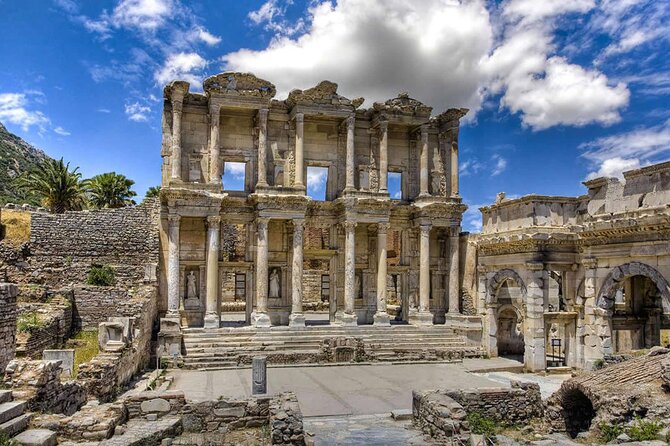
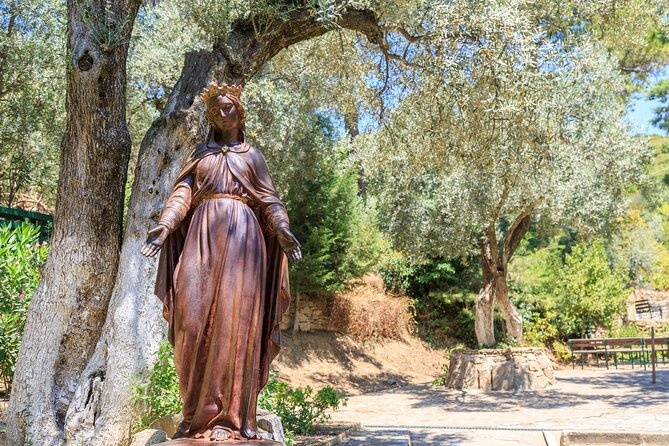
The House of the Virgin Mary (called Meryemana) is where the mother of Jesus Christ is said to have spent her final years. The site has long attracted pilgrims, and it’s known for visits by several Popes over the decades, including Pope Paul VI (1967), John Paul II (1979), and Benedict XVI (2006).
Practically, you have about two hours here. That’s enough time to look around at a respectful pace, read what you can, and take photos without feeling like you’re sprinting between gates.
If you care about the human side of travel—places tied to faith, ritual, and personal meaning—this stop is one of the more grounded parts of the whole itinerary.
Ancient City of Ephesus: The Stops That Matter Most
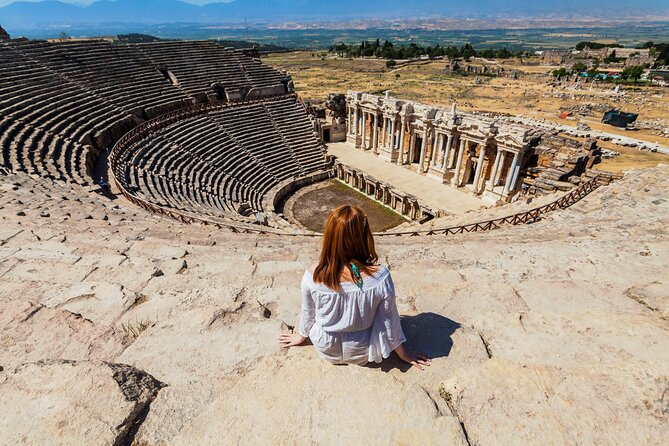
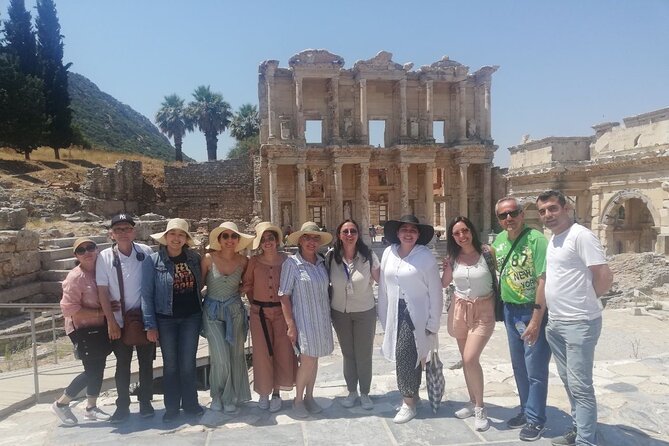
Ephesus is one of those rare places where the ruins feel like a whole city that never fully went to sleep. You get two hours for the big highlights, and the route is built around the most famous structures.
Expect to see:
- Odeon, where music concerts were organized
- Domitian Temple, one of the early temples dedicated to a human
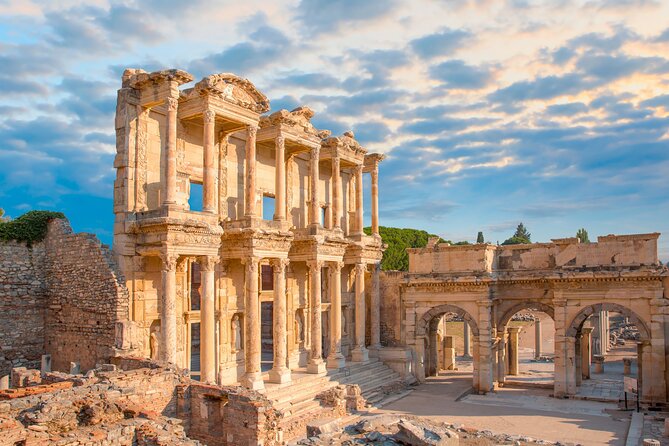
- Celsus Library, once the third biggest library in the ancient world
- Amphitheatre, with a capacity around 25,000, and tied to St. Paul’s preaching to the Ephesians
- Marble Street, Roman Baths, fountains, temples, agora
- Love House and public toilets
Is two hours a lot? It’s enough to get a real sense of the layout and capture the key visuals, especially with a guide to connect the dots. But it’s still tight if you’re the type who stops at every inscription and wants to read everything.
A smart move: decide in advance what you want photos of. The Celsus Library façade and the amphitheatre area are the obvious targets, while things like the Roman Baths and agora add that satisfying sense of everyday life beyond the big stages.
Temple of Artemis: One Hour, One Icon, One Story
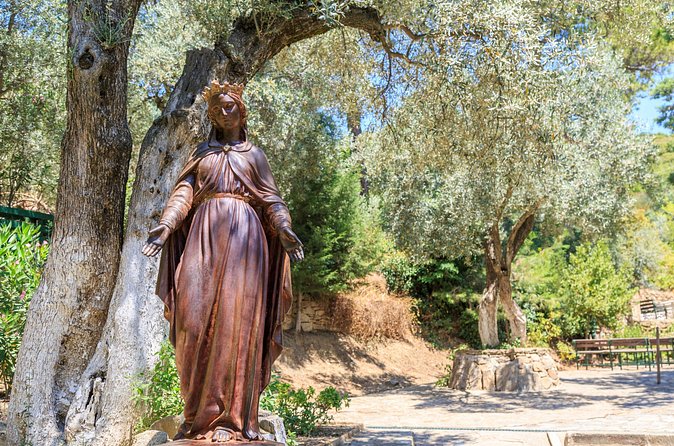
Then you move to the Temple of Artemis, the Greek goddess associated with the hunt and twin of Apollo. The plan notes that the temple’s roots go back to around 650 BC, on a site already considered sacred to the Anatolian Mother Goddess Cybele.
You get about one hour, including the visit time and the guided context. This stop is shorter than Ephesus, and that’s not a flaw—it’s a strategic breather before the day wraps and you head toward Kusadası.
Even if you don’t know a lot of Greek mythology, Artemis is a clear frame for understanding how these sites blended local belief with wider Greek culture.
A few more Istanbul tours and experiences worth a look





Handicraft Demonstration and the Kusadası Overnight
After the major monuments, the day includes a chance to watch a local handicrafts demonstration. You’re given educational information, which is a nice change from only seeing stone after stone.
Around 15:30–16:30, you transfer to your hotel and spend the night in Kuşadası. This is a practical base. It means you’re not trying to squeeze Pamukkale into an impossible same-day sprint.
One downside to the structure: by the time you reach the hotel, you’ll likely be tired. That’s normal. In a trip like this, the overnight break is part of the design.
Day 2 Morning: Breakfast, Then the Drive to Pamukkale
You start with breakfast at the hotel. Departure is around 08:00–08:30, followed by about three hours of driving for your full-day Pamukkale and Hierapolis exploration.
On Day 2, the pacing is more about balancing three different “feels”:
- surreal mineral terraces
- ancient spa-city ruins
- an optional swim experience that costs extra
If you’re okay with a structured day, this works well. If you want lots of free wandering on your own, you’ll have to accept that most of your time is guided or scheduled.
Pamukkale Thermal Pools: Cotton Castle Walk Time
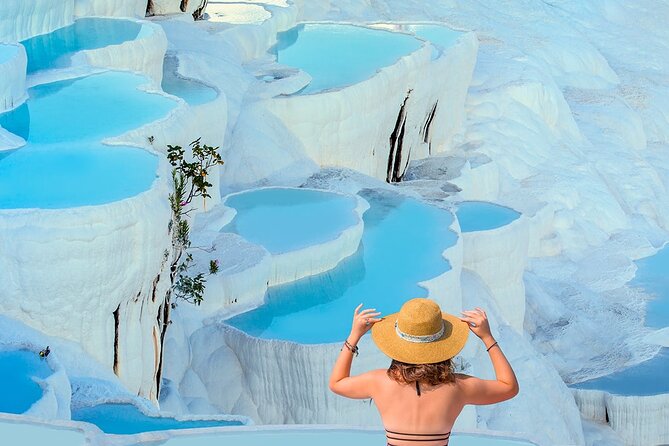
Pamukkale means cotton castle, and the name fits: the mineral terraces look like pale steps shaped by flowing thermal water over time. The tour emphasizes that it’s a natural site with hot springs and travertines formed from mineral deposits.
You’ll get about three hours total, with 1–2 hours of free time after the guide finishes the explanation. During that free time, you can walk the terraces and, if you want, you can swim in the natural springs.
This is the moment where the schedule stops feeling like math and starts feeling like travel. It’s one of Turkey’s most photographed settings for a reason, and you’ll want time here that isn’t just camera quick.
Helpful mindset: go at your own speed once the “must-see” part is explained. The terraces are visual, but they’re also physically uneven. Take it slow, especially if you’re going in sandals or you’re carrying bags.
Hierapolis: UNESCO Ruins and a Roman Spa City
Next up is Hierapolis, another UNESCO World Heritage site. The tour notes that the natural sources were used as a spa since at least the 2nd century BC, drawing people looking for cures.
The guided stop here includes sights like:
- Gymnasium
- Theatre
- Hierapolis City Museum
- Apollo Temple
- and other ruins in the area
You have about one hour here, which is short but focused. Hierapolis works best as a “sense of place” stop: you’ll walk among ruins and understand how the spa city functioned, rather than having time for deep museum reading.
If you’re the type who wants to spend hours in each ruin sector, you might leave Hierapolis feeling like you could have done more. The upside is you still get Pamukkale’s signature walk experience without sacrificing everything else.
Cleopatra Pools: Optional, With a Clear Extra Fee
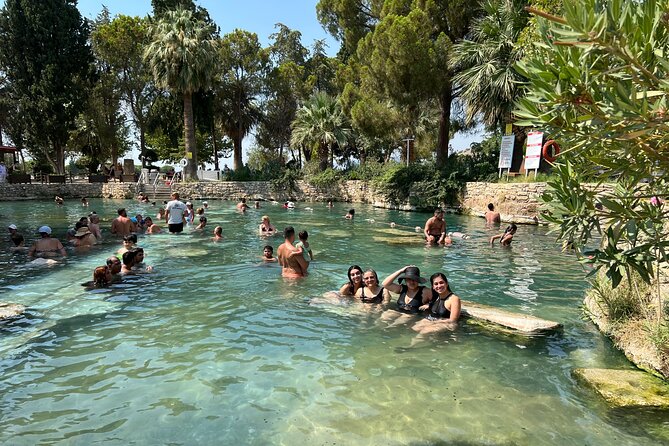
The Cleopatra/Antique Pools are described as a unique area with natural springs and ancient pillars. You get about one hour with free time.
The cost is the key detail: swimming here has an additional fee listed as 50 Turkish Lira (around €7.5) and also described elsewhere as roughly €10. Since this is not included in the package admissions, bring a bit of cash or plan to pay on-site.
This is the kind of add-on that many people love if they want the full Pamukkale experience. If you’d rather save money or you don’t want to pay for a second swimming stop, you can skip it and still enjoy the rest of Day 2.
Denizli and Your Flight Back to Istanbul
At the end of the tour (around 15:30–16:30), you head toward the airport area with about an hour drive. Then you fly back to Istanbul, and the operator meets you in the domestic terminal exit gate with a sign showing your name.
After that, you get transferred back to your Istanbul hotel. The full service ends there.
This final structure is one of the reasons the trip is efficient: you don’t have to figure out ground transportation between Pamukkale and your home base.
Who This Tour Fits Best (and Who Should Think Twice)
This trip is a strong match if:
- you want Ephesus and Pamukkale without the stress of organizing flights and connections
- you like guided routes that cover the major “you can’t miss this” sights
- you can handle an early start and a busy two-day plan
- you appreciate a small group size (max 15) and English guidance
You might think twice if:
- you hate early mornings and long travel days
- you want lots of time for slow, independent exploring in every ruin sector
- you don’t like extra paid add-ons (like Cleopatra Pools) and unplanned expenses for drinks
Should You Book This 2-Day Ephesus and Pamukkale Trip?
I’d book it if your goal is to see the headline sites with minimal logistics work. The price looks high until you remember it bundles flights, hotel, transfers, guides, and entrance fees for the main stops. For a two-day trip, that’s real value, not just marketing math.
Book it especially if you’ll appreciate a structured path through Meryemana, the core highlights of Ephesus, and then the signature mineral terraces at Pamukkale. Just go in with realistic expectations: you’ll get a guided hit of each major area, not a leisurely day spent reading every stone.
If you’re planning for the extra swim at Cleopatra Pools, budget for it ahead of time and wear shoes you trust on uneven surfaces. Do that, and this becomes a smooth, memorable way to see two of Turkey’s most famous destinations in a very time-efficient way.
FAQ
How long is the Ephesus and Pamukkale tour?
The tour runs for about 2 days and includes 1 night.
What flights are included?
You fly from Istanbul to Izmir for the Ephesus portion on Day 1, then from Denizli to Istanbul at the end of Day 2.
Are transfers and hotel included?
Yes. The price includes all airport transfers and 1-night accommodation in Kuşadası, plus breakfast.
What sites do we visit in Ephesus?
You visit Meryemana (Virgin Mary’s House), the Ancient City of Ephesus, and the Temple of Artemis, with listed admission fees included.
Is Pamukkale included?
Yes. You’ll visit Pamukkale Thermal Pools with included time for terraces and free time, plus a stop at Hierapolis.
Is Cleopatra Pools included in the tour price?
No. Cleopatra Pools is not included. Swimming there costs an additional fee (listed as 50 Turkish Lira and also described as around €10).
What’s the group size and language?
The tour is offered in English and has a maximum of 15 travelers.