REVIEW · ISTANBUL
Basilica Cistern Skip-the-Ticket-Line Entry with Audio Guide
Book on Viator →Operated by Istanbul Tourist Pass® · Bookable on Viator
Step underground in Istanbul’s water-museum. You’ll visit the Basilica Cistern, a 4th-century Byzantine structure enlarged in 532, and hear the story through a built-in audio guide that brings the Medusa-head mystery to life.
I like two things in particular: first, the scale. You’re surrounded by a cathedral-size room with 336 marble columns and that cool, quiet air that makes your brain go, wait—this is real. Second, the way the audio guide frames what you’re seeing, from the cistern’s role in feeding the Great Palace to the weird charm of those Medusa carvings.
One drawback to flag: the tour is skip-the-ticket-line, not skip-the-security-line. You still need to go through mandatory security, and there can be a line at the entrance.
In This Review
- Key highlights you’ll actually notice
- Basilica Cistern, the real wow-factor (even before you read the plaques)
- Entering with a QR ticket: what skip-the-line really means
- Down the 52 stone steps: the tour starts before the main room
- Justinian-era engineering: why this cistern feels bigger than it should
- The Medusa heads: the most talked-about detail for a reason
- What you get from the audio guide (and how to use it well)
- Duration and pacing: fitting it into a Istanbul day
- Opening hours note you should not ignore
- Price and value: is $55.61 a good deal?
- Who should book this, and who might rethink it
- Should you book this Basilica Cistern skip-the-ticket-line entry?
- FAQ
- How long does the Basilica Cistern entry with audio guide take?
- What is included in the price?
- How does the skip-the-ticket-line entry work?
- Will I receive the audio guide before I arrive?
- When do I receive the QR ticket?
- Can I skip security lines?
- Are there lines even with this entry option?
- Is the Basilica Cistern tour near public transportation?
- What happens if I need to cancel?
Key highlights you’ll actually notice

- Justinian’s water system in marble form: A cistern built to supply water to the Great Palace of Constantinople.
- A real underground descent: Descend 52 stone steps before you even get to the main chamber.
- Huge storage, concrete engineering: Holds up to 80,000 cubic meters of water and was fed by 20 kilometers of aqueducts.
- Medusa heads, two different angles: One upside down, one sideways—an eerie detail you’ll want to spot.
- Audio guide timing that fits your visit: About 1 hour on site, with narration geared to the main sights.
- QR ticket + audio link sent by email: You’ll receive separate emails for entry QR codes and the audio guide link.
Basilica Cistern, the real wow-factor (even before you read the plaques)
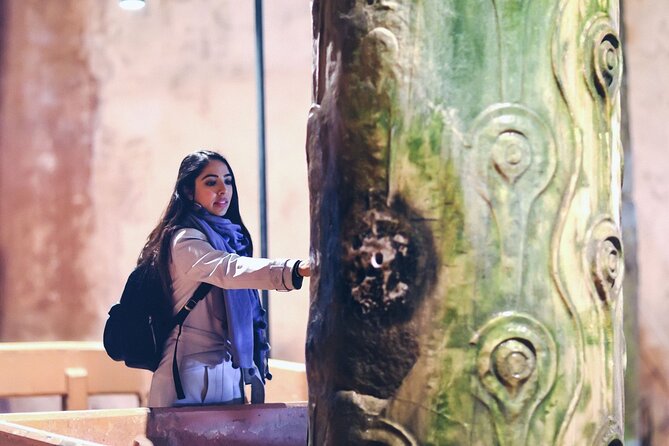
The Basilica Cistern is one of those Istanbul stops where the room itself does the storytelling. Built in the 4th century, then enlarged under Emperor Justinian I in 532 A.D., it wasn’t designed to impress tourists. It was designed to store water—seriously.
And that’s the mind-bender: you walk into an underground tank that once held an estimated 80,000 cubic meters of water. The water didn’t just appear out of nowhere. It came by 20 kilometers of aqueducts from a reservoir near the Black Sea, then flowed into this huge chamber as part of the capital’s supply system.
You’ll feel the setting before you process the facts. After the stairs, the temperature drops. The sound changes. Space opens up overhead like a stone ceiling has been there forever. If you like history that you can sense with your body, this is a great match.
A few more Istanbul tours and experiences worth a look


Entering with a QR ticket: what skip-the-line really means
This experience gives you entry to the Basilica Cistern with a QR ticket and an audio guide, and it’s positioned as skip-the-ticket-line. That’s useful—nobody wants to wait in a ticket counter queue after you already paid.
But here’s the plain reality: you cannot skip security lines. Expect mandatory security for everyone. Also, there can be a line at the entrance even with the skip-the-ticket-line concept.
So my practical advice is simple:
- Make sure you have your QR code ready on your phone.
- Keep your email handy before you go.
- Plan to move with the crowd once you arrive, because security is still part of the system.
One more important detail: your QR ticket and audio guide link are sent by email prior to your tour date. The activity provider sends the entry QR codes and the audio guide link via separate emails from the supplier Istanbul Tourist Pass®. If you only check one email and then panic later, that’s when the process feels stressful.
Down the 52 stone steps: the tour starts before the main room
The cistern isn’t a quick walk-in. You descend 52 stone steps into the entrance area, and that descent does something for the experience. It slows you down. It sets the expectation that you’re entering a space meant to be cool, sheltered, and functional—not a normal museum corridor.
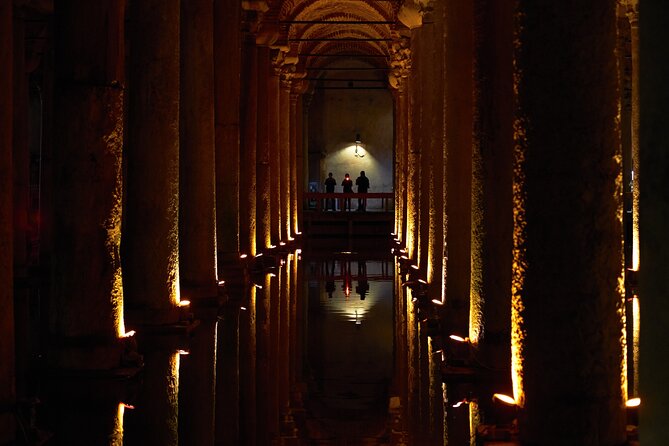
Once you’re down there, the room reveals itself: a broad, quiet chamber with 336 marble columns. The columns aren’t just decorative. They help hold up the roof and create that signature grid of reflections and shadows.
If you’re sensitive to crowds, come ready to share space. This is a famous Istanbul site and it’s open during a daytime window, so it’s usually popular. Your best strategy is to let the audio guide pace you, then take a few moments to step away from the densest cluster when you want to look at details.
Justinian-era engineering: why this cistern feels bigger than it should
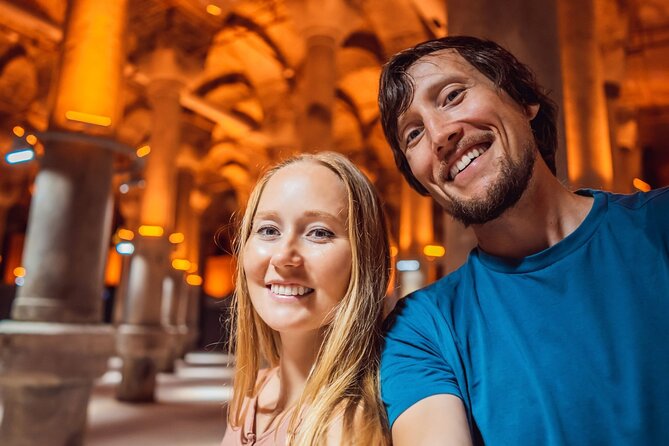
It’s easy to treat the Basilica Cistern like a spooky photo location. It is, technically, a little eerie. But the deeper value is engineering.
Under Justinian I, the cistern was expanded into a major part of supplying the Great Palace of Constantinople. That’s the key connection that makes the stop feel more than a set of columns: you’re not just looking at old stones. You’re tracing how a mega-city handled water.
Here’s what makes this especially impressive:
- Water storage at enormous scale: up to 80,000 cubic meters.
- Long-distance supply: fed by aqueducts running 20 kilometers.
- A purpose-built underground system: the chamber served the needs of royal power, not just daily life.
Even if you don’t geek out on infrastructure, you’ll feel it when you’re inside. The space is too large for casual sightseeing. It communicates “critical resource” without needing a modern explanation.
And if you’re the type who likes to connect Istanbul’s history layers—Roman/Byzantine water systems, empire-scale planning, the way Constantinople functioned—this stop gives you that connection fast.
The Medusa heads: the most talked-about detail for a reason
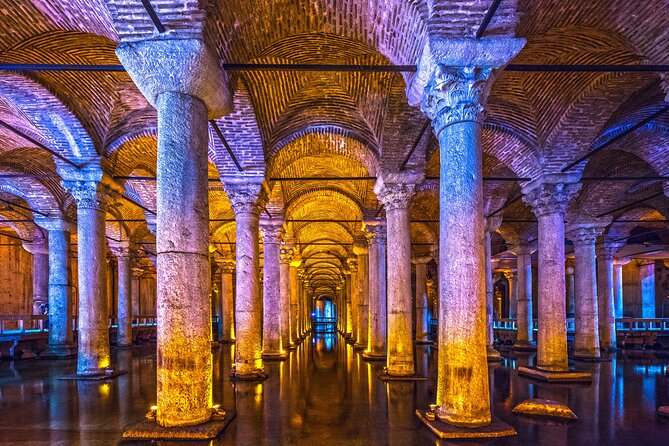
Every Basilica Cistern visit includes the Medusa story for a reason: those carvings are striking, and they break the mood of plain architecture.
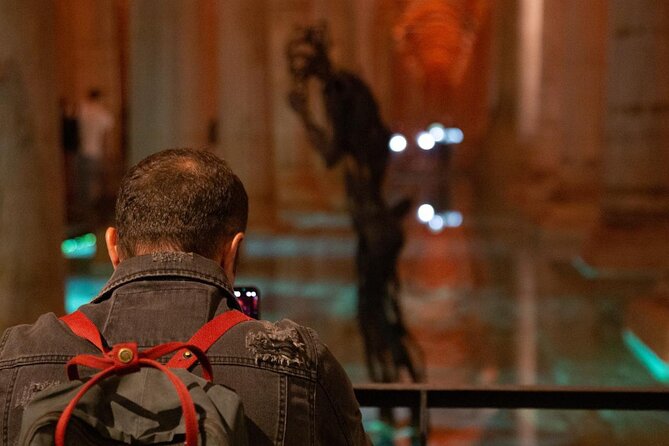
You’ll look for the Medusa head columns: two ancient stone carvings of Medusa. One is placed upside down, and the other is set sideways. That unusual presentation is exactly why people remember this site. It doesn’t feel tidy. It feels off in a deliberate way.
In the tour’s audio content, you’ll hear the background and myth connection—how Medusa from Greek mythology fits into the eerie atmosphere of the cistern. Even if mythology isn’t your main interest, the contrast works: you’re inside a practical water facility, yet your eye keeps snagging on a mythological figure.
A good way to use your time: when you spot the Medusa heads, pause for a full minute without taking a dozen photos right away. Let your eyes adjust to the lighting. Then you’ll notice the differences in placement and expression more clearly. It turns a headline into a scene.
You can also read our reviews of more guided tours in Istanbul




What you get from the audio guide (and how to use it well)
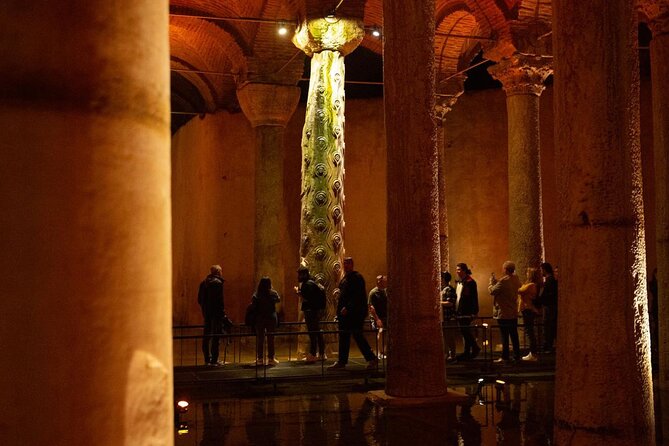
The audio guide is included, and it’s designed to explain what you’re seeing as you move through the space. The narration covers the cistern’s history and why it mattered, plus the Medusa mystery.
Because the total visit time is about 1 hour, you’ll want to treat the audio like a map. Don’t try to rush to every corner while listening. Instead:
- Start the audio as you enter the main area.
- Let the guide point your attention to the big elements first.
- Stop briefly at the highlights—especially the columns and Medusa carvings—then continue.
This is also why the audio format works better than it might sound. In a place this large, a live guide can be impossible to hear at all times. An audio track gives you control. You can replay if you missed a detail, or just move on when you’re done with the story.
One practical tip: since your audio guide link is delivered by email beforehand, make sure you have the link accessible before you step into the cistern area. If you’re stuck hunting for an email in the middle of the entrance, that’s wasted minutes.
Duration and pacing: fitting it into a Istanbul day
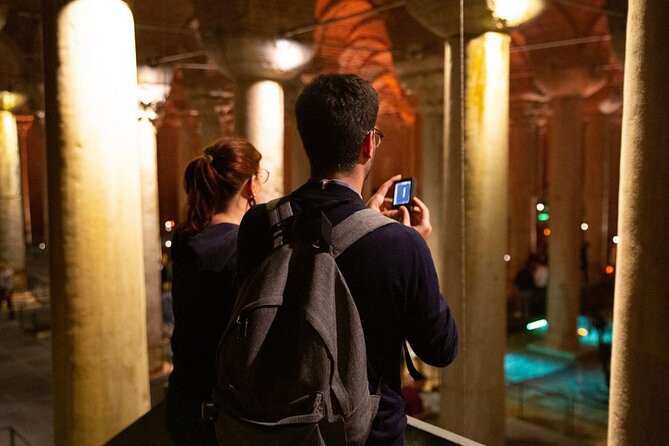
The time on site is listed as about 1 hour. That’s a sweet spot. It’s enough time to:
- descend and settle in,
- view the columns,
- find the Medusa heads,
- and listen to the key parts of the audio guide.
It’s not enough time to wander slowly like you’re moving through a palace garden. So if you tend to slow-tour everything, plan for that. You might want to cut your other stops a bit, or pair this with something nearby so you’re not rushing back and forth.
The cistern is also near public transportation, which matters because Istanbul can be a rhythm game. If you keep transfers short, this becomes an easy win in your day.
Opening hours note you should not ignore

The Basilica Cistern’s operating hours are 12:00 PM to 6:00 PM on January 1st. That’s a specific detail, but it can save you from a wasted trip if your dates overlap New Year’s Day.
Outside that date, you’ll still want to check the current hours before you go, but the Jan 1 window is the one explicitly called out here—so take it seriously.
Price and value: is $55.61 a good deal?
At $55.61 per person, this isn’t a budget ticket. You’re paying for three main things:
- included entrance to the Basilica Cistern,
- an audio guide,
- and a skip-the-ticket-line style approach.
Is it worth it? For me, the value comes down to how you handle crowds. If you hate queues, the skip-the-ticket-line part matters. If you prefer self-paced storytelling, the audio guide adds real value because the cistern can otherwise feel like a cool room with dramatic photos.
Also, the site is famous, so the demand tends to be steady. On average, this experience is booked about 26 days in advance, which suggests people plan ahead (often because they want time slots that work with the rest of their itinerary).
My bottom-line take: if you’re going anyway and you want the audio narrative plus smoother entry, the price can feel fair. If you’re someone who’s happy buying a ticket on the spot and you’re not bothered by queues, you may feel the cost more sharply.
Who should book this, and who might rethink it
This experience works well if you want:
- a focused visit (about 1 hour),
- practical help navigating entry with a QR ticket,
- and an audio explanation that covers the cistern’s role and the Medusa story.
It also fits most people since it’s listed as most travelers can participate.
I’d consider a different approach if:
- you rely on a smooth digital setup and don’t want to manage emails and QR codes,
- you expect zero waiting anywhere (you’ll still face mandatory security),
- or you’re visiting in a time frame that might make lines unpredictable.
Should you book this Basilica Cistern skip-the-ticket-line entry?
Book it if you want a smart, time-efficient way to see one of Istanbul’s strangest underground spaces, with an audio guide that helps you understand what you’re standing in. The Medusa heads, the 52-step descent, and the sheer scale of the 336 columns are the kind of details that are easier to appreciate when someone is guiding your attention.
Skip it if you dislike digital ticket troubleshooting or if you know you’d rather keep things flexible and buy on arrival. Also, remember: even with skip-the-ticket-line, you still go through security.
If you like history you can feel under your feet and you’re planning a packed day, this is a strong pick.
FAQ
How long does the Basilica Cistern entry with audio guide take?
The visit is listed at about 1 hour.
What is included in the price?
Entrance to the Basilica Cistern and an audio guide are included. Tips are not included.
How does the skip-the-ticket-line entry work?
You receive a QR entry ticket in advance. While it’s skip-the-ticket-line, you still must go through mandatory security lines.
Will I receive the audio guide before I arrive?
Yes. Your audio guide link is sent to you by email before your tour date.
When do I receive the QR ticket?
Your QR ticket codes are sent to your email prior to the tour date. They are delivered via separate emails from the supplier Istanbul Tourist Pass®.
Can I skip security lines?
No. Security lines cannot be skipped and are mandatory for all visitors.
Are there lines even with this entry option?
There could be a line at the entrance, and security is required.
Is the Basilica Cistern tour near public transportation?
Yes, it’s listed as near public transportation.
What happens if I need to cancel?
You can cancel for free up to 24 hours in advance for a full refund.