REVIEW · ISTANBUL
Alternative Tour; Daily Life, Customs, Stories – Tip Based Tour
Book on Viator →Operated by Basis Travel · Bookable on Viator
Trade tourist checklists for real neighborhood stories. This tip-based small-group tour is built around daily life and customs, using famous-sounding places in a way that feels human: you’ll move from an Ottoman madrasah to working streets near the Grand Bazaar, then end at Süleymaniye for mosque views, hamam culture, and a free tea-and-Turkish-delight moment. I especially liked how the guide connects what you’re seeing to everyday questions—how people learn, earn, pray, and live.
The second big win for me is the pacing. You get multiple stops with short, focused explanations, plenty of room for questions, and a finish that doesn’t turn into a shopping trap. Guides like Mohamed and Cumali come up in feedback as fun and friendly, with answers that actually help you understand what you’re looking at. The main drawback to know up front: the Grand Bazaar time is brief, and it’s closed on Sundays—so your route may feel different depending on the day and crowds.
In This Review
- Key highlights you’ll feel on the street
- Why this Istanbul tour feels different: daily life over checklist sightseeing
- A quick logistics reality check
- Start at Corlulu Ali Paşa Medresesi: Ottoman schooling before the modern split
- Grand Bazaar backstreets first, then a very short peek inside
- What’s good about keeping it short
- Sahaflar Çarşısı: Old book bazaar, Turkish literature, and human-scale culture
- Beyazıt Mosque interior: how Muslims pray, and what you can notice
- Beyazıt Square: a place where protests spread
- Istanbul University route: education, economy, and healthcare in one walk
- Süleymaniye Cultural Info Center: old houses turned into community spaces
- Süleymaniye Mosque: interior beauty plus Bosphorus views from the garden
- Hamam culture outside the walls, then fruit tea and Turkish delight
- Price and value: what $18 buys in Istanbul
- Who should book it for the best match
- Small group, big questions: the guide style that makes it work
- Practical tips so your visit goes smoothly
- Should you book this Istanbul daily-life tour?
- FAQ
- How much is the Istanbul tour?
- How long is the tour?
- Is the tour offered in English?
- Where does the tour start and end?
- Is the admission fee included for the stops?
- Does the tour include Turkish delight and fruit tea?
- Do I need to tip the guide?
- Is the Grand Bazaar open every day?
- What if the weather is bad?
- How big is the group?
Key highlights you’ll feel on the street
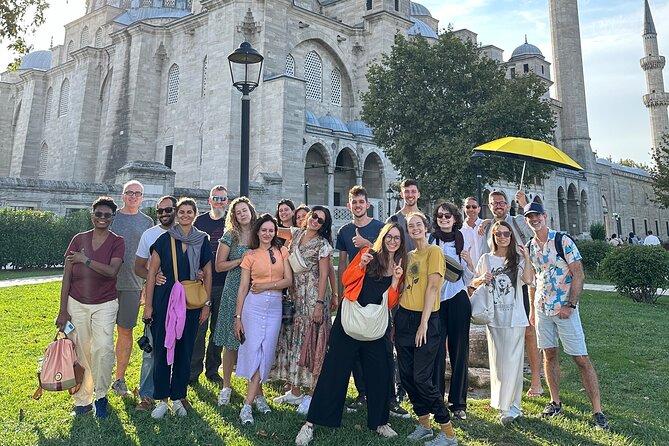
- Daily-life focus: education, economy, healthcare, and local customs, not just landmark photos.
- Small group vibe (max 25): easier to ask questions and keep the walk comfortable.
- Frequent places of worship + local learning: Beyazıt Mosque and Istanbul University, explained in plain terms.
- Book bazaar stop at Sahaflar Çarşısı: Turkish literature talk and recommendations.
- Süleymaniye viewpoint: from the mosque garden you get a strong sense of Istanbul’s geography.
- Included Turkish delight and fruit tea: a short, calm rooftop-style break with no selling.
Why this Istanbul tour feels different: daily life over checklist sightseeing
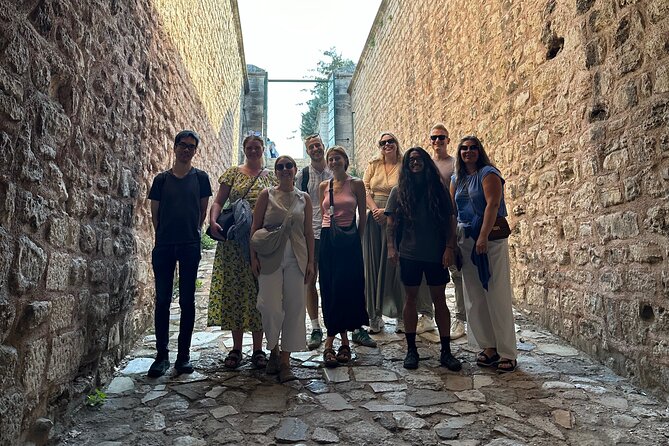
If you’ve already seen the big icons of Istanbul, this is the kind of tour that helps your brain switch gears. Instead of trying to “collect” sights, you’ll learn how the city works—through institutions, traditions, and the everyday routines that shape what you notice on the street.
You’re paying $18 per person for about 2 hours 30 minutes of guided walking, with English offered and an on-the-go explanation style that stays practical. Most stops don’t charge you for entry during the tour. That matters in a city where add-on fees can quietly pile up.
And since the tour is tip-based, you’re in the right frame of mind if you like giving a little extra for a guide who stays engaged, adjusts to questions, and makes the walk make sense. It’s not a “sit and watch” activity.
You can also read our reviews of more tours and experiences in Istanbul.


A quick logistics reality check
This route is walk-based and includes mosque and bazaar areas, so you’ll want to dress in a way that works for religious spaces and normal city walking. Wear comfy shoes. Also, the operator notes the experience requires good weather, which is a hint that you’ll spend a meaningful chunk outside.
Start at Corlulu Ali Paşa Medresesi: Ottoman schooling before the modern split
You kick off at Corlulu Ali Paşa Medresesi, a historic Ottoman madrasah—a religious school. The tour frames it in a way that’s easy to grasp: it’s a window into how education used to be closely tied to religion, before the Republic separated the roles.
This is a smart first stop because it sets the “theme” of the day. You’re not just seeing pretty architecture. You’re learning why certain kinds of buildings and institutions show up where they do, and how they shape daily life long after the original purpose changed.
Even if you’re not a building-nerd, the explanation style here helps you connect later stops—like Istanbul University—with something deeper than trivia.
Grand Bazaar backstreets first, then a very short peek inside
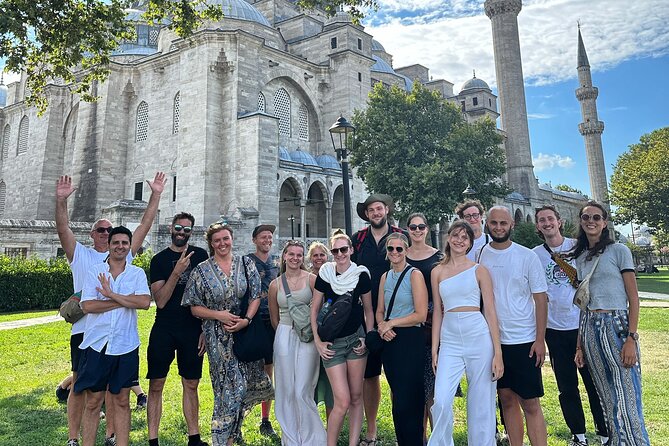
From the madrasah, you head into the area around the Grand Bazaar with a deliberate twist: you’ll explore backstreets before you do a brief look inside. That brief inside time is on purpose. The guide is trying to show you what’s around the bazaar and how people move through the neighborhood, not just the postcard rows of shops.
One key consideration: the Grand Bazaar is closed on Sundays. If your trip lands on a Sunday, don’t expect the same inside-the-bazaar moment. The route still aims to keep the “local daily life” theme, but the shopping-floor experience won’t be there.
What’s good about keeping it short
A short Grand Bazaar visit can actually be a relief. This is a place where crowds and sales pressure can make sightseeing feel like a chore. Here, you get enough of a glimpse to orient yourself and then you move on to other stops that are less hectic and more story-driven.






Sahaflar Çarşısı: Old book bazaar, Turkish literature, and human-scale culture
Next comes Sahaflar Çarşısı, the old book bazaar. This is where the tour leans into culture you can feel rather than just landmarks you can photograph.
The guide talks about Turkish literature and shares recommendations of notable Turkish authors. Even if you don’t plan to buy anything, this kind of stop helps you understand the reading culture behind the city’s ideas. You’ll also get that book-bazaar vibe—small, focused, and personal—instead of the mass-market energy you might associate with “a bazaar.”
The stop is brief, but it’s the right kind of brief: long enough to leave with names you can later look up, short enough to keep the tour’s momentum.
Beyazıt Mosque interior: how Muslims pray, and what you can notice
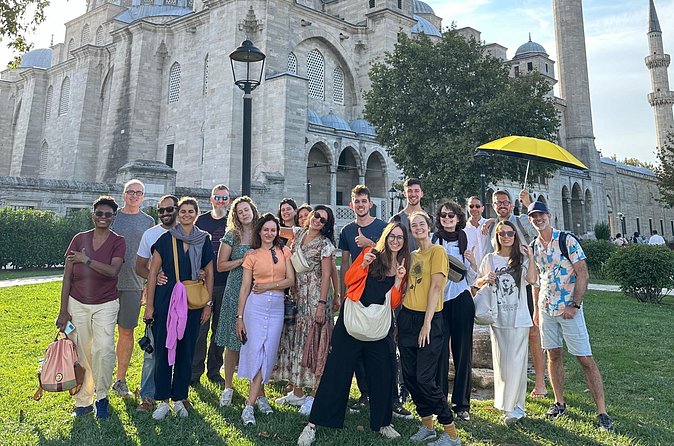
At Beyazıt Mosque, you’ll visit the interior and learn about how Muslims pray, including exploration of different sections. This can be the kind of stop that feels intimidating if you don’t know what to look for—but the tour frames it in a guided, step-by-step way.
This is also a good “listening stop.” Mosques are places where the details matter: space, movement, and respectful behavior. You’ll come away with a clearer idea of the purpose of what you’re seeing, which makes later visits to other mosques feel less confusing.
Beyazıt Square: a place where protests spread
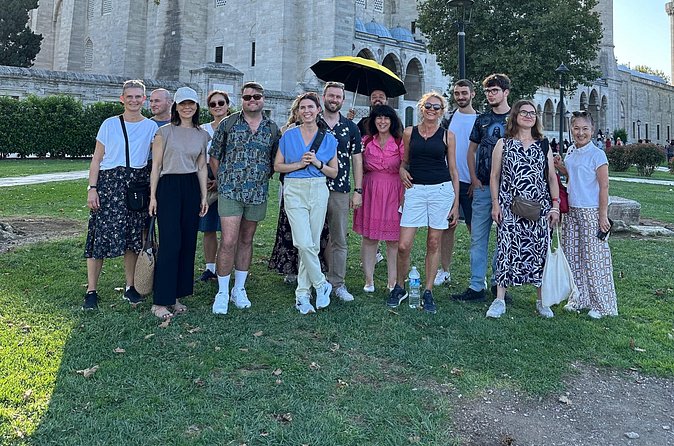
Beyazıt Square is more than an open area for photos. The tour explains how it was once a significant gathering place where protests began and spread throughout Turkey. Then you’ll discuss the current situation in the country.
That combination can be intense, but it’s also valuable. It helps you interpret Istanbul beyond old stones. You start to connect geography with modern life: where people gather, how ideas move, and why certain neighborhoods feel politically charged.
Just keep your expectations grounded. This is a short stop. You won’t get a full course in politics. You will get context to make the city feel less random.
Istanbul University route: education, economy, and healthcare in one walk
The tour spends time at Istanbul University’s rectorate area, then moves past multiple faculties with stops focused on two big themes: the economy and healthcare.
This is one of the most practical parts of the tour because it teaches you a way of thinking. Instead of treating universities like just campus scenery, you’ll understand how education connects to broader systems. And by pairing that with economic and healthcare discussion, the tour makes the city’s daily life feel like it runs on real structures—not just tradition and views.
You also get to see the university environment from the street, plus a focus near the Faculty of Economics and a hospital area. Even without long museum-style time, the guide’s explanations give you a framework for what you’re seeing.
Süleymaniye Cultural Info Center: old houses turned into community spaces
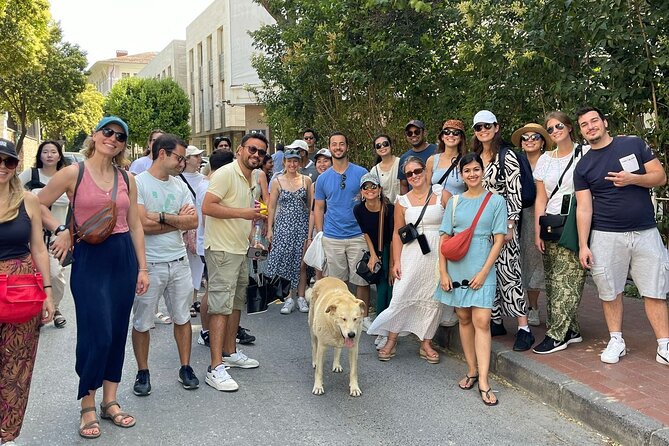
In Süleymaniye, you’ll stop at the Cultural Info Center area to see old houses, many of which have been turned into non-profit organizations. That’s an important point: historic neighborhoods aren’t only preserved for aesthetics. They can be reused for community needs.
The tour talks about daily life in the past and traditional weddings, plus other everyday cultural details. This is the kind of information that changes how you read a neighborhood. You start noticing why certain household patterns might have made sense, and how traditions continue even as the city evolves.
If you like learning from stories more than from objects, this section will click.
Süleymaniye Mosque: interior beauty plus Bosphorus views from the garden
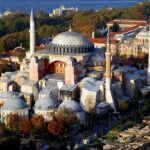
Then comes Süleymaniye Mosque, described as one of the most beautiful mosques in Turkey. You’ll visit the interior and also spend time in the garden area, where you can enjoy a stunning view of the Bosphorus.
Istanbul’s geography can feel like a trivia list until you see it from the right angle. This stop helps you understand the city’s unique layout in a very physical way—water, hills, and neighborhoods make more sense once you can connect the vista to the city’s shape.
It’s also a longer stop relative to others. About 25 minutes gives you time to look without feeling rushed, and to shift from “learning mode” into “taking in the place” mode.
Hamam culture outside the walls, then fruit tea and Turkish delight
Near the end, you’ll see the Süleymaniye HamamI from outside and learn about hamam culture. Even outside, you get the idea that bath culture wasn’t only about cleanliness—it was social, rhythmic, and part of how people met and refreshed.
After that, you have a choice. You can leave the tour here, or continue for a short 2-minute walk to a complimentary sampling of Turkish delight with fruit tea.
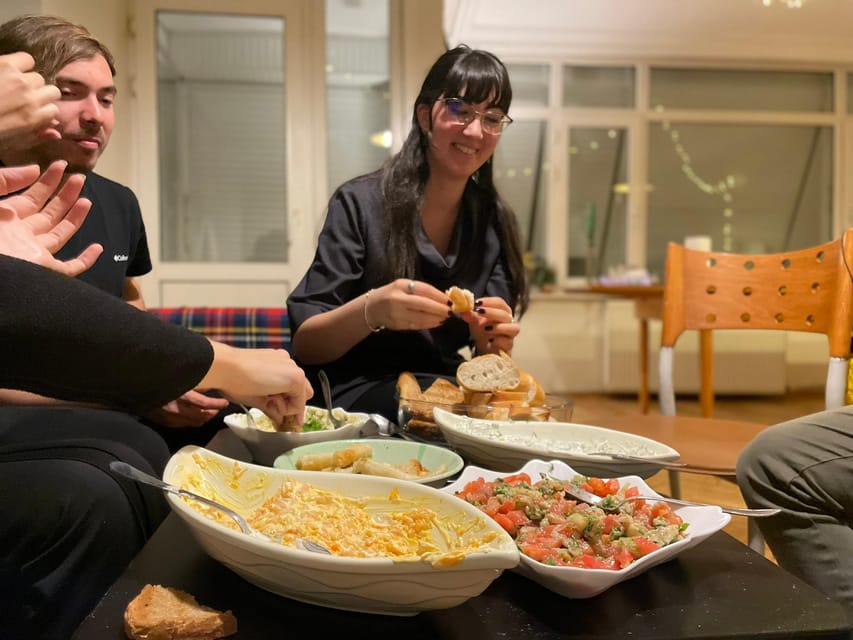
Important detail: this is not a shopping stop. No one is trying to sell you anything. It’s meant to be a calm atmosphere break, with access to a peaceful rooftop view. It’s a nice end to a walking tour because it’s not a “rush to your next landmark.” It’s a moment to slow down.
Price and value: what $18 buys in Istanbul
Let’s talk value in a city where guides often charge extra for extras. Here, you’re paying $18, and the tour includes:
- a booking fee (part of what you pay),
- the Turkish delight + fruit tea sampling.
On top of that, the listed sights have free admission tickets for this tour visit. That means your cost stays predictable compared with tours that add ticket fees at each stop.
What’s not included is the big one: tipping your guide. Since this is tip-based, decide ahead of time what feels fair to you. If your guide keeps your questions answered and your group moving smoothly, a solid tip is the easiest way to keep this kind of local storytelling business healthy.
Who should book it for the best match
This tour is a strong fit if you want:
- a local-life focus (education, economy, healthcare, customs),
- mosque learning that’s respectful and explained clearly,
- a break from the usual “main attractions only” Istanbul loop.
It may be less ideal if you mainly want long interior time in museums or want a shopping-heavy experience. The route is story-focused and stays intentionally short at places like the Grand Bazaar.
Small group, big questions: the guide style that makes it work
The best thing about this tour isn’t the number of stops. It’s how those stops connect into a single theme. That’s where good guidance matters.
Multiple guides have been described as fun and friendly—names like Mohamed and Cumali come up—with the ability to answer questions and keep the pace comfortable. In practice, that means you’re not stuck with a script. When you ask how something works in daily life, you get an answer that helps you interpret what you’re seeing next.
You also get the small-group benefit (up to 25 people), which matters in Istanbul. Big groups can turn explanations into background noise. Here, you’re more likely to actually hear the key points.
Practical tips so your visit goes smoothly
- Wear shoes you can walk in comfortably for a 2.5-hour route that includes multiple neighborhood changes.
- If your route day includes Sunday travel, remember the Grand Bazaar is closed.
- Be prepared for mosque visits: dress and behavior should be respectful.
- Bring a light layer. You’ll be outside often, and the tour notes it needs good weather.
Should you book this Istanbul daily-life tour?
Book it if you want Istanbul to feel like a living city, not a checklist. This tour is built for understanding—how education, faith, neighborhoods, and daily routines fit together. You’ll get great context at Beyazıt Mosque, a literature-minded moment at Sahaflar Çarşısı, and a viewpoint finish that helps you understand why Istanbul looks the way it does.
Skip it only if you’re the type who needs long museum time, or if you expect the Grand Bazaar to be a major part of the day every time (Sunday can change that). Otherwise, this is excellent value for an English guided walk that ends with something sweet and calm—fruit tea and Turkish delight—without pulling you into a sales pitch.
FAQ
How much is the Istanbul tour?
The price is $18.00 per person.
How long is the tour?
It runs about 2 hours 30 minutes.
Is the tour offered in English?
Yes, it’s offered in English.
Where does the tour start and end?
It starts at Anadolu Nargile Çorlulu Ali Paşa Medresesi (Molla Fenari, Yeniçeriler Cd. No:38, Fatih/İstanbul) and ends at Süleymaniye Mosque (Süleymaniye, Prof. Sıddık Sami Onar Cd. No:1). The tour ends about a 5-minute walk from Suleymaniye Mosque.
Is the admission fee included for the stops?
For the stops listed on the tour, admission tickets are marked as free.
Does the tour include Turkish delight and fruit tea?
Yes. A complimentary sampling of Turkish delight with fruit tea is included, and you can choose to take the short walk to enjoy it.
Do I need to tip the guide?
Tipping the tour guide is not included.
Is the Grand Bazaar open every day?
No. The Grand Bazaar is closed on Sundays, and the tour notes the visit inside is very short.
What if the weather is bad?
The tour requires good weather. If it’s canceled due to poor weather, you’ll be offered a different date or a full refund.
How big is the group?
The tour has a maximum of 25 travelers.