REVIEW · ISTANBUL
8 Days Istanbul, Cappadocia, Konya, Pamukkale, Ephesus by flights
Book on Viator →Operated by Private & Small Group Ephesus & Istanbul & Turkey Tours · Bookable on Viator
Turkey hits fast, then keeps going. This small-group route runs by minibus with airport pickups and domestic flights, and I love the personal service and the way your guide uses pre-paid entrance tickets to speed up the biggest stops. The trade-off is a tight pace, including a very long travel day toward Pamukkale.
You’ll also see how Turkey’s layers connect: Byzantine/Ottoman Istanbul one day, then fairy chimneys and underground cities, followed by Mevlana in Konya, cotton-white travertines in Pamukkale, and Roman Ephesus. If you’re hoping for lots of slow mornings and free afternoons, you’ll need to adjust your expectations.
In This Review
- Key things I’d focus on
- Istanbul’s big four: Hippodrome, Topkapi, Hagia Sophia, and the Blue Mosque
- Grand Bazaar time: how to enjoy Istanbul shopping without losing the day
- The flight to Cappadocia: what you get before you even start walking
- Ozkonak underground city: a cool switch from above-ground sightseeing
- Pasabag to Göreme: how to spot the best “mushroom” chimneys
- Konya’s Mevlana Mausoleum stop makes the route feel bigger
- Pamukkale travertines and Hierapolis: white cliffs that look unreal
- Ephesus day: Temple of Artemis, marble streets, and Mary’s House
- Where you sleep and how you travel (A/C minibus, cave hotels, and thermal pools)
- Price and value: what $1,579 covers (and what it doesn’t)
- Who should book this Turkey route, and the main caution
- Should you book this 8-day Istanbul, Cappadocia, Konya, Pamukkale, and Ephesus tour?
- FAQ
- Which airports does the tour use for Istanbul pickups and transfers?
- Are domestic flights included?
- What sights are covered in Istanbul?
- What Cappadocia stops are included?
- What’s included in the Pamukkale and Hierapolis day?
- What Ephesus area highlights are included?
- What should I wear for religious sites?
- Is Hagia Sophia guided inside?
Key things I’d focus on
- Max 15 people means you’re not swallowed by a huge crowd
- Airport-to-hotel transfers in Istanbul, plus domestic flights, remove a lot of stress
- Hagia Sophia rules changed: you’ll need a smartphone and headphones for audio (after Jan 15, 2024)
- Cappadocia underground city visit includes the Ozkonak underground with a unique ventilation/piping system
- Pamukkale thermal hotel time includes the chance to swim in thermal pools until 22:30
- Ephesus day is action-packed: Temple of Artemis, Ephesus highlights, then Meryemana
Istanbul’s big four: Hippodrome, Topkapi, Hagia Sophia, and the Blue Mosque
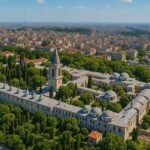
Istanbul is the kind of city where you can get lost fast. This tour keeps you moving in the best way: a hotel pickup in the morning, then a clear route through the key sights, ending at the Grand Bazaar before you head back to your hotel.
You start at the Hippodrome, where chariot races and Byzantine-era unrest played out. It’s not the longest stop, but it’s a smart warm-up because it helps you understand Istanbul as a power center long before the Ottomans and long before modern Istanbul.
From there, you move into Topkapi Palace, including the weapons section. Topkapi works especially well with a guide because it’s not just courtyards and rooms—you start seeing how the palace functioned as both residence and political brain. It’s also one of those places where pre-paid entry saves your time and patience.
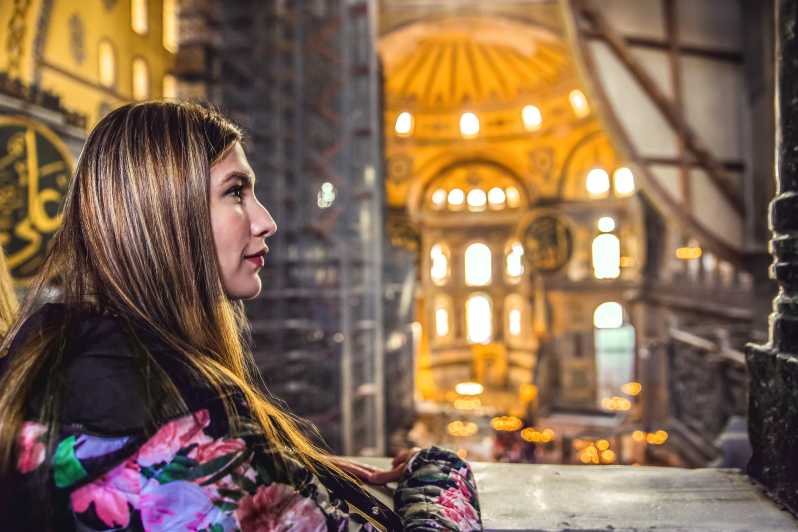
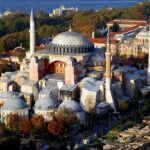
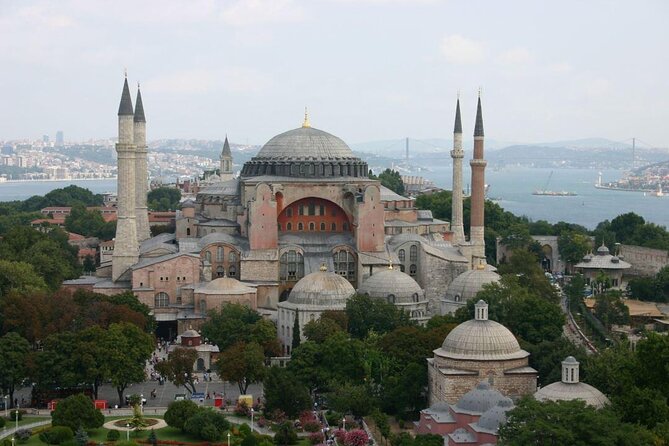
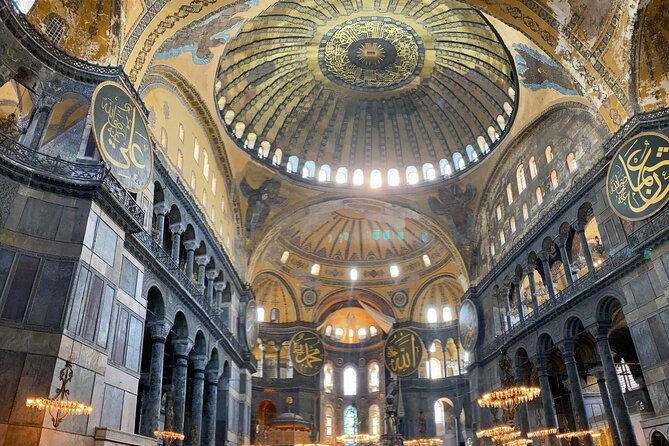
Next up is Hagia Sophia Grand Mosque. Here’s a practical heads-up that matters: live guiding is not allowed inside after the Jan 15, 2024 update. The tour handles this by requiring you to use your smart phone plus headphones during your visit. If you don’t have headphones, you can buy them at the entrance for $3.5. If you do have a phone, this becomes easy: you follow signs and audio-style information rather than the guide talking over you.
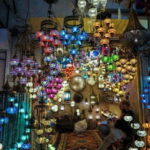
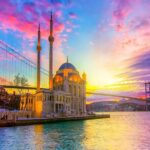
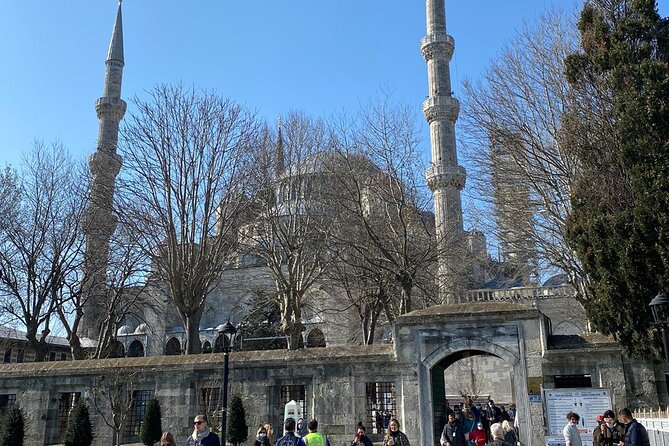
You finish the day with the Blue Mosque, famous for Iznik tiles, and then the Grand Bazaar—more than 58 covered streets and over 1,200 shops. The market is packed and touristy in parts, but you’ll have a set time to wander with context instead of drifting for hours.
You can also read our reviews of more tours and experiences in Istanbul.
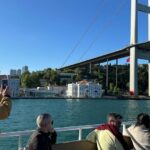

Grand Bazaar time: how to enjoy Istanbul shopping without losing the day
I like that the tour gives you Grand Bazaar as a defined stop, not as an open-ended “go do shopping.” You get about 1.5 hours, which is enough to browse jewelry, pottery, and spices without turning the day into a heat-stress marathon.
Because the day already includes major landmarks, I’d treat the bazaar visit as a chance to pick up a small set of souvenirs you’ll actually use. Think spices you can take home, Turkish ceramics, or a few easy gifts rather than trying to cover every shop in one go. The bazaar can be a maze, so your time is best spent with a simple plan: pick one category, compare prices, and then move on.
If you’re sensitive to crowds, remember you’ll be in a major market during the day when it’s busiest. This is one place where going a little slower and stepping aside from the main aisles is worth it.
The flight to Cappadocia: what you get before you even start walking
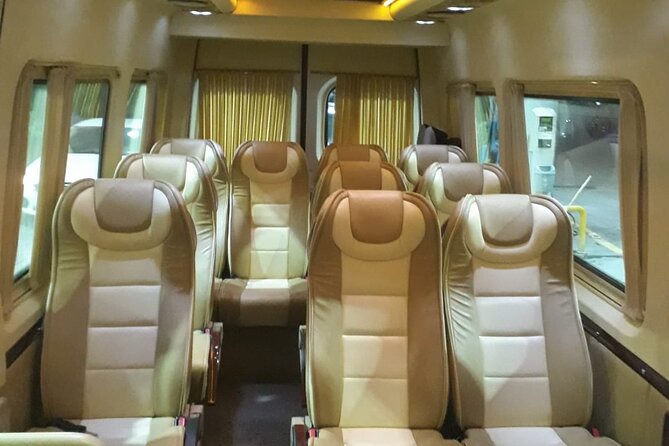
On the Cappadocia day, you don’t lose half your time wrestling with transportation. You get a hotel pickup, transfer to the airport, and then fly to Kayseri or Nevşehir. When you land, your guide meets you with a name sign and you start the Cappadocia tour right away.
That matters because Cappadocia is all about momentum. The best views and most striking formations don’t feel “real” until you’re right there. And once you’re there, you’ll be taken around the region for stops that are iconic for a reason.
Your first big photo moment is the Fairy Chimneys area of Urgup—specifically the Three Sisters formations—where those rock towers make the whole landscape make sense. This stop is also a good orientation point: it’s where you learn what to look for during the rest of your day.
Then you head to Pigeon Valley, where you’ll see how locals used pigeon houses carved into rock. Even if you’ve never cared about pigeons in your life, it’s a fascinating “people-life” detail. Cappadocia isn’t only fairy chimneys—it’s also a place where animals, farming, and shelter shaped daily life.
Ozkonak underground city: a cool switch from above-ground sightseeing
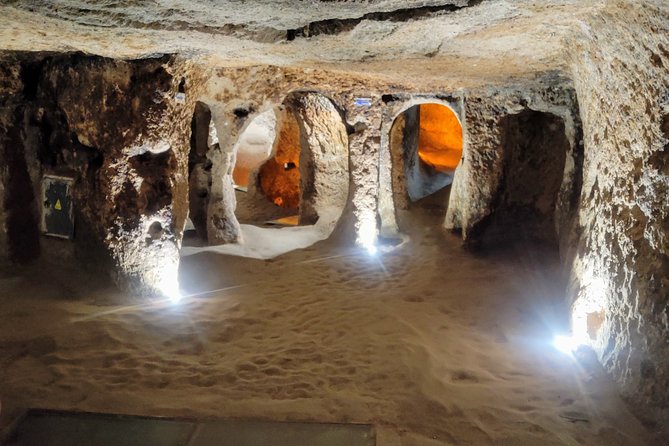
Cappadocia tours often include underground spaces, but what you get here is a specific underground city: Ozkonak. You’ll descend into volcanic granite levels connected by tunnels, with a piping communication system reaching multiple levels. The tour notes this feature as unique compared to other well-known underground cities.
What I like about this stop is the change of pace and temperature. It’s a break from sun-exposed walking and viewpoints, and it adds depth to Cappadocia because it shows how people protected themselves during sieges.
Physical note: underground sites can mean uneven steps and tighter corridors. The tour lists “moderate physical fitness” as the expectation, so if stairs make you nervous, ask your guide on the day how accessible the most crowded areas are.
Pasabag to Göreme: how to spot the best “mushroom” chimneys
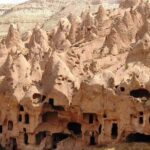
The next day builds on what you learned the first day. Pasabag Fairy Chimneys Valley is where you see some of the most striking chimneys in Cappadocia, including twin and even triple rock caps—often compared to mushroom tops.
Then you roll toward Avanos, a town known for tile and pottery workshops. You get a lunch break here, which is a nice balance because it breaks up the sightseeing rhythm. Even if you don’t buy anything, Avanos is where you can connect the geology to real craft traditions.
After lunch, you visit the Göreme Open Air Museum, focused on rock churches with frescoes from different centuries. This is a stop where your guide’s context can make a huge difference: you start looking at faded artwork and carved spaces as evidence of long-term belief and community, not just as pretty walls.
Finally, you end with Uchisar Rock Castle, the highest and most dominant point in the area, offering panoramic views. If you like photography, this is one of the most rewarding places to slow down. Even if you’re not taking pictures, the viewpoint helps your brain connect all the formations you’ve been seeing.




Konya’s Mevlana Mausoleum stop makes the route feel bigger
The travel day from Cappadocia toward Pamukkale is long—about 10 hours of driving time included in the schedule. This is the day I’d mentally prepare for: your comfort matters more than trying to squeeze in extra stops.
On the way, you get an important cultural pause in Konya: the mausoleum of Mevlana. It’s an unusual and worthwhile addition because it shifts the story from geology and ancient ruins into spiritual Turkey, with Mevlana as the focus.
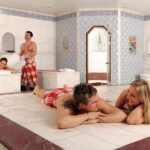
Once you reach Pamukkale, you check into a thermal hotel and get time in the thermal pools until 22:30. That’s one of the best “value” touches in this itinerary because it turns the long day into something you can actually recover from.
Pamukkale travertines and Hierapolis: white cliffs that look unreal
Pamukkale starts early. After breakfast and check-out, you head to the Hierapolis area and travertine terraces. The scheduled time is about 4 hours, which gives you enough time to see travertines clearly without feeling rushed through the whole thing.
Hierarchy check list includes the ancient city of Hierapolis: the theatre, Apollo Temple, and the magnificent necropolis. This is Roman-era archaeology set right beside one of Turkey’s most dramatic natural features. It’s not just “ruins plus views.” It’s ruins that explain how people built and lived in a place tied to water and minerals.
Then comes the travertine terraces themselves. The tour describes them as cotton-castle white cliffs shaped by mineral springs, and the visual is exactly why Pamukkale became famous. You’ll see terraces that look snow-like or like piled cotton. The whole area has that surreal, almost unnatural look—especially when the sunlight hits the mineral edges.
After this, you drive to Kusadasi for your overnight, about 2 hours in the schedule. It’s a change from the “white cliffs” mood to a coastal base for the Ephesus day.
Ephesus day: Temple of Artemis, marble streets, and Mary’s House
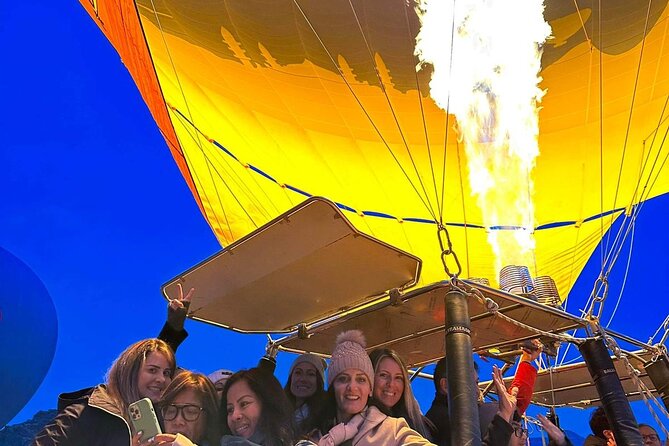
This is one of the most impressive days in the whole route because it stacks three major experiences.
You start with a drive to the Ephesus region, then stop at the Temple of Artemis. It’s a quick stop, but it anchors the story: Artemis is one of the seven wonders of the ancient world, and it sets context before you walk through the larger Ephesus ruins.
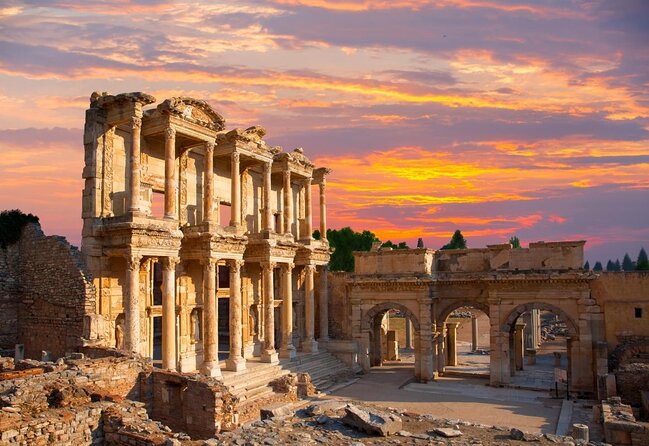
Next is the Ancient City of Ephesus. You’ll walk marble streets lined with major public buildings, including the State Agora and Odeon, then the Celsus Library, Curetes Street, the Grand Theater, and more. The tour notes the Grand Theater’s Roman expansion to about 24,000 spectators, which helps you picture the scale when you’re standing in the seating area.
Then you shift from civic life to spirituality with Meryemana, the Virgin Mary’s House, located about 5 miles from Ephesus on the Aladag Mountains. This stop is framed by pilgrimage history, including the idea that Mary lived here after arriving with St. John, and Pope Paul VI’s visit in 1967. Even if you’re not religious, it’s a powerful place because it feels intentionally quiet.
Finally, the day turns practical: you head to Izmir airport for your flight back to Istanbul. This is built into the route, so you don’t waste half your last day figuring out schedules.
Where you sleep and how you travel (A/C minibus, cave hotels, and thermal pools)
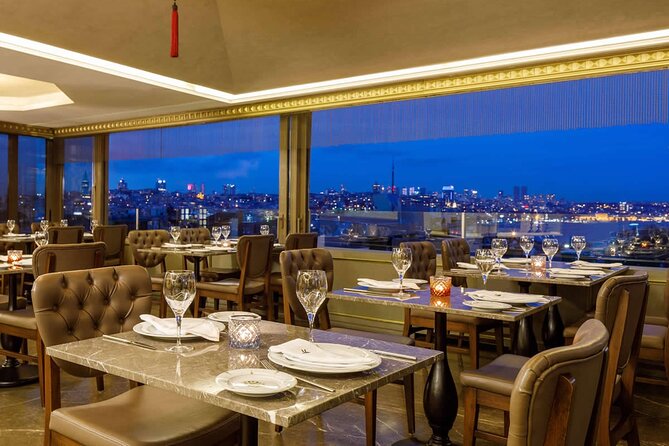
Logistics are part of why this tour works, especially if you’re new to Turkey.
You travel by A/C vehicle that’s marked NO SMOKING. In Istanbul, you get private transfers from both airports—IST and SAW—so you’re not scrambling with taxis after landing. In Cappadocia, your guide meets you at Kayseri or Nevşehir and keeps you on track from there.
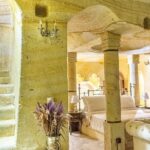
Accommodation choices are a big part of the feel. In Istanbul, you’ll stay at boutique options such as Recital Hotel or Recital Park, Yasmak Sultan, or similar. In Cappadocia, the plan calls for cave hotels like Melekler Evi or Zeydem Suites or Fresco Konakları. In Pamukkale, you’ll be in a thermal hotel such as Colossae Thermal or Pam Thermal Hotel or similar. And in Kusadasi, hotel examples include Efe Butik or Neopol Deluxe or similar.
These aren’t just names—they help you sleep in places that match the theme of each region. You’re not stuck with the same plain hotel style for eight straight days.
Price and value: what $1,579 covers (and what it doesn’t)
At $1,579 per person, the value comes from what you avoid. You’re getting 7 nights of lodging, a professional licensed guide, entrance fees handled with pre-paid tickets, and the domestic flights that connect the route: Istanbul to Cappadocia and Izmir to Istanbul. The tour also includes ground transportation with A/C, and private transfers from Istanbul airports.
It also includes meal structure: 7 breakfasts and 2 dinners. That’s helpful because you don’t have to find restaurants every morning and evening during your busiest sightseeing stretch.
Your baggage allowance is spelled out too: 15 kg checked and 8 kg cabin on domestic flights. That means you can pack without guessing what airline rules will be.
What’s not included is straightforward: personal expenses, and drinks and any meals not listed. If you want bottled water all day, budget for it. Also, at major markets and long drive days, you’ll likely want small snack stops—those won’t be included unless they’re part of one of the listed meal breaks.
Who should book this Turkey route, and the main caution
This tour is family friendly and built for real-life travel, not just box-checking. The small group size (maximum 15) plus the minibus format helps the guide give context and keep things moving without turning every stop into a free-for-all.
From guide praise, I’ve learned that the guides on these kinds of routes often make the difference: people specifically mention guides like Orkun, Gurkan, Yavuz, Ozzy, and Ozgur for being patient and friendly, including with kids, and for adding humor and cultural context. There’s also praise for drivers being safe and reliable on longer drives.
The main caution is the pace and the long road days. The route includes a roughly 10-hour drive portion on the way to Pamukkale, plus additional driving time between regions. If you dislike being in transit for long stretches, you’ll feel it.
The second caution is the Hagia Sophia audio rule after Jan 15, 2024. Plan to bring a charged smartphone and comfortable headphones, and you’ll be fine. If you show up without those, you can still buy headphones at the entrance for $3.5, but that’s time and money you can easily avoid.
Should you book this 8-day Istanbul, Cappadocia, Konya, Pamukkale, and Ephesus tour?
If you want a first-timer-friendly Turkey loop with flights, transfers, and entrance tickets handled, this is a strong choice. The mix of Istanbul icons, Cappadocia’s underground-and-chimney combo, Mevlana in Konya, Pamukkale’s thermal experience, and Ephesus’s major ruins is exactly the kind of itinerary that saves you planning time while still feeling varied.
I’d only skip or tweak it if you’re trying to travel super slowly, or if long travel days will stress you out. Otherwise, pack for a fast-moving week, bring headphones for Hagia Sophia, and enjoy the benefit of a small group doing the heavy lifting for you.
FAQ
Which airports does the tour use for Istanbul pickups and transfers?
The tour offers private pickup and transfer from Istanbul Airport (IST) and Sabiha Gokcen (SAW).
Are domestic flights included?
Yes. Domestic flight tickets are included for Istanbul to Cappadocia and Izmir to Istanbul, with a baggage allowance of 15 kg check-in and 8 kg cabin.
What sights are covered in Istanbul?
You’ll visit the Hippodrome, Topkapi Palace (including the weapons section), Hagia Sophia Grand Mosque, the Blue Mosque, and the Grand Bazaar.
What Cappadocia stops are included?
You’ll visit Three Sisters Fairy Chimneys in Urgup, Pigeon Valley, Ozkonak Underground City, Pasabag Fairy Chimneys Valley, Avanos, Göreme Open Air Museum, and Uchisar Rock Castle.
What’s included in the Pamukkale and Hierapolis day?
You’ll see Hierapolis (including the Theatre, Apollo Temple, and Necropolis) and visit the travertine terraces at Pamukkale. Your hotel also provides thermal pools time until 22:30.
What Ephesus area highlights are included?
You’ll visit the Temple of Artemis, the Ancient City of Ephesus (including major sites like Celsus Library and the Grand Theater), and Meryemana (the Virgin Mary’s House).
What should I wear for religious sites?
A dress code is required: knees and shoulders must be covered for both men and women. Shoes are not allowed in mosques, and you may be refused entry if you don’t meet the requirements.
Is Hagia Sophia guided inside?
Live guiding is not allowed in Hagia Sophia after Jan 15, 2024. You’re expected to use your smartphone with headphones during your visit. If you don’t have headphones, you can buy them at the entrance for $3.5.