REVIEW · ISTANBUL
8 Day Istanbul – Cappadocia – Ephesus – Pamukkale Discover Tour
Book on Viator →Operated by Ephesus Shuttle Private & Small Group Tours · Bookable on Viator
Turkey’s big hits, neatly stitched together. This 8-day mini-group tour strings together Istanbul, Cappadocia, Ephesus, and Pamukkale with domestic flights, hotel stays, and guided visits—so you spend less time figuring logistics and more time seeing the goods.
What I like most is the value baked in: domestic flights, licensed guide support, and pre-arranged entry tickets that help you avoid long waits. I also like the smart bonus stops that make Istanbul feel like more than just monuments, like the Bosphorus boat ride and the Basilica Cistern.
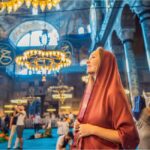
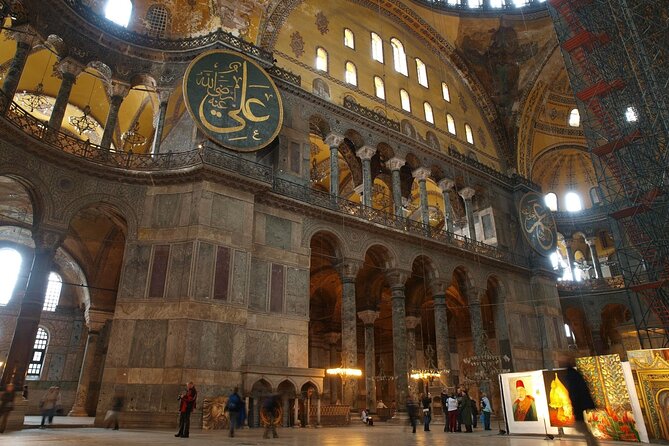
One consideration: Hagia Sophia interior visits have a specific audio rule. After 15 January 2024, live guiding isn’t allowed inside, and you’ll need your phone plus headphones (or you can buy headphones at the entrance for about $3.5).
In This Review
- Key highlights that make this tour tick
- A smart 8-day route across four worlds
- Istanbul classics: Hippodrome to Grand Bazaar, with a real flow
- The Bosphorus + Basilica Cistern: two sides of Istanbul
- Cappadocia: fairy chimneys, pigeon valleys, and underground cities
- Goreme frescoes, Pasabag mushrooms, and Uchisar views
- Ephesus: Artemis first, then marble streets and a huge theater
- Meryemana and the shift to Pamukkale’s thermal world
- Hierapolis necropolis and the white travertine terraces
- Flights, transfers, and practical packing notes
- Is $1,769 good value for this specific tour?
- Should you book this 8-day Istanbul–Cappadocia–Ephesus–Pamukkale tour?
- FAQ
- What cities and regions are included?
- How long is the tour?
- What’s the group size?
- Are domestic flights included?
- What’s included for meals?
- Does the tour include entrance fees?
- What hotels does the tour use?
- How does airport pickup and transfer work?
- Is Hagia Sophia guided inside?
- What’s the luggage allowance for the included flights?
- What if I need to cancel?
Key highlights that make this tour tick
- Max 10 travelers keeps the experience personal, not chaotic.
- Skip-the-line, pre-paid tickets help you spend time where it matters.
- Cave hotel nights in Cappadocia add real atmosphere to the trip.
- Two thermal experiences in Pamukkale: a hotel pool swim plus travertine terraces.
- Pro guide storytelling (often with strong photography instincts) makes big ruins easier to picture.
- Domestic flights included so you don’t waste vacation days on long transfers.
A smart 8-day route across four worlds
This is a fast-moving tour, but the pacing is deliberate. You’re not just “visiting” places; you’re moving between regions with domestic flights and air-conditioned minivan transfers, which is exactly what you want if you’d rather not plan connections yourself.
At $1,769 per person, you’re paying for more than sightseeing. The price includes 7 nights of accommodation (bed & breakfast), domestic flights in Turkey, a licensed guide, most key entrance fees with skip-the-line handling, and scheduled meals (7 breakfasts plus 1 dinner and 1 lunch). If you tried to DIY the same route, the combination of flights, hotels in multiple regions, and paid entries can quickly add up.
The group size also matters. With a maximum of 10 people, you usually get clearer timing and a better chance to ask questions, even when the sites get crowded.
You can also read our reviews of more tours and experiences in Istanbul.

Istanbul classics: Hippodrome to Grand Bazaar, with a real flow
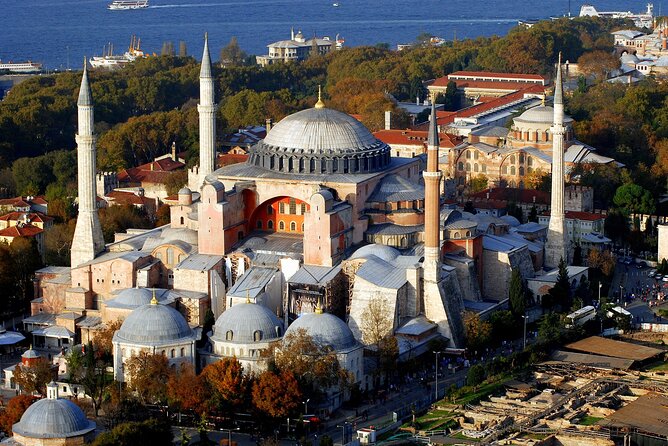
Istanbul can feel like a blur when you’re bouncing between sites on your own. This tour lines things up in a walkable logic, starting around the Hippodrome Square, where chariot races and Byzantine-era unrest once played out.
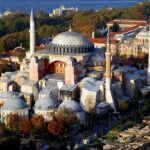
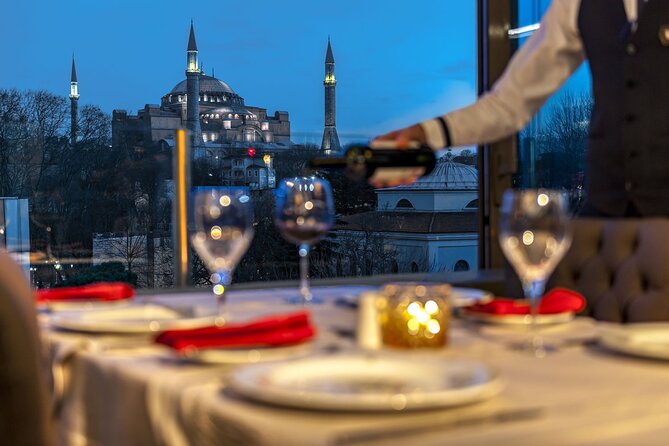
From there, the core religious landmarks follow one another at a comfortable walking pace. Hagia Sophia Grand Mosque is next, and it’s the kind of stop where the details matter: built in 532 AD by Roman Emperor Justinian I. Then comes the Blue Mosque (famous for its Iznik tiles), and after that you head to Topkapi Palace, including the weapons section—a sharp reminder that this was also an administration and power center, not just a fancy residence.
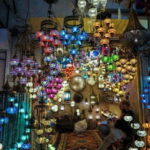
Then you reach the Grand Bazaar, and it’s exactly what you’d expect from a market that’s been trading since 1461: covered streets, a huge shop count, and everything from jewelry to pottery and carpets. The practical win here is timing. You’ll arrive with a plan rather than wandering until your feet quit.
A quick reality check: Hagia Sophia’s interior rules
- After 15 January 2024, live guiding isn’t allowed inside.
- You’ll need your smartphone and headphones.
- If you show up without headphones, you can buy them at the entrance for about $3.5.
If you’re the type who likes to read every plaque and listen closely, this is still doable—you just need the right gear.
The Bosphorus + Basilica Cistern: two sides of Istanbul
Spice Bazaar (Egyptian Bazaar) is one of those places that doesn’t need convincing. The air is filled with cinnamon, saffron, mint, and other herbs and spices, and it’s a great start because it gets your senses working before the big monuments.
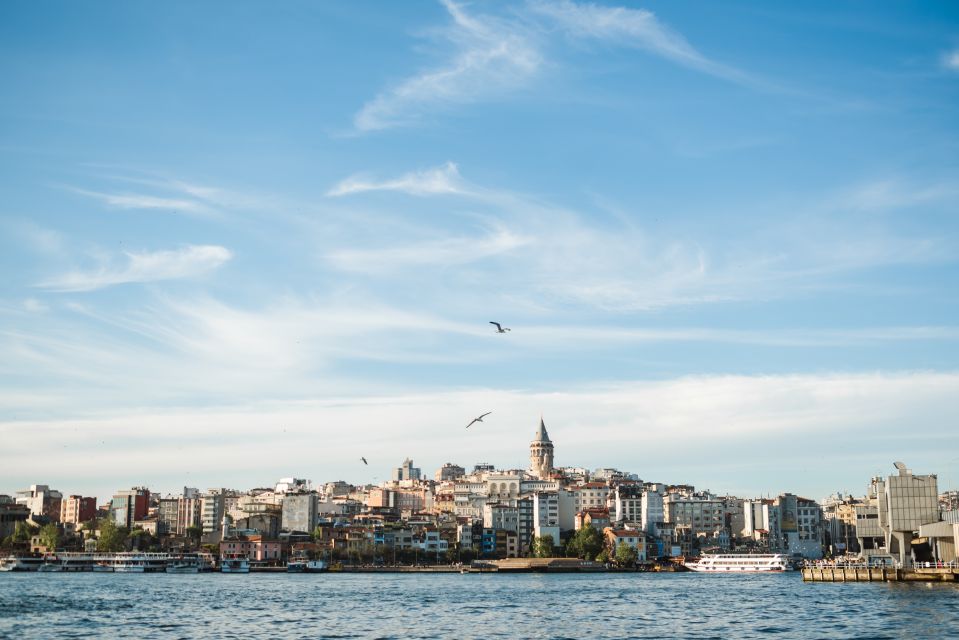
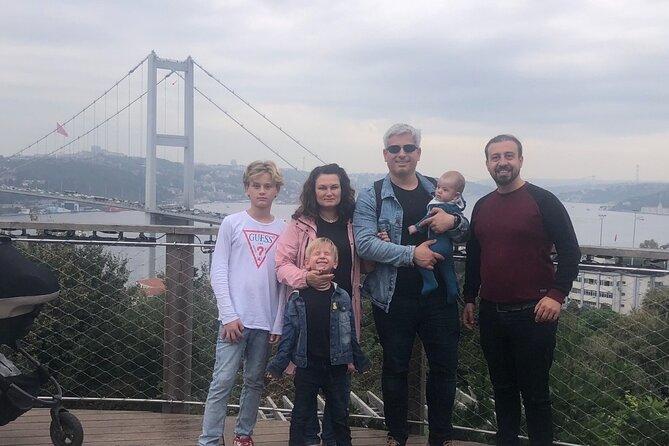
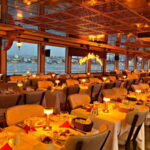
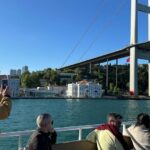
Then comes the Bosphorus Strait boat trip, a classic way to understand why Istanbul matters. You’ll see the water separating Europe and Asia, and you get a view of marble palaces, fortresses, old wooden villas, and small fishing villages along the shore. Even if you’ve seen photos before, the boat view gives you scale.
After the water, you head underground to the Basilica Cistern. This is one of those stops where the atmosphere does half the work: Byzantine engineering, columns rising from water, and that slightly surreal feeling of walking through a stone museum that’s still “doing its job.” It’s timed as a one-hour stop, which is about right—long enough to enjoy it, not long enough to make you bored.
Cappadocia: fairy chimneys, pigeon valleys, and underground cities
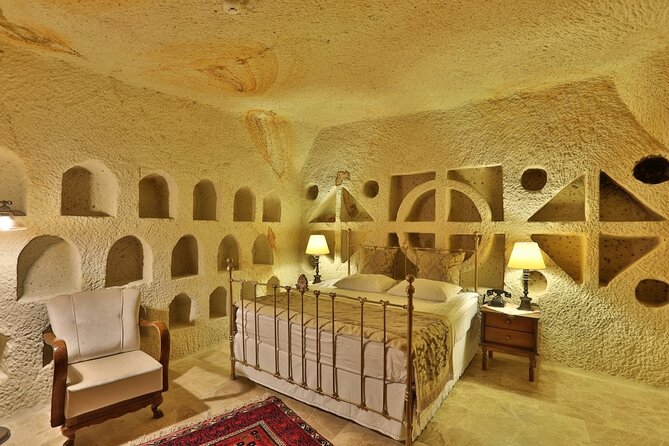
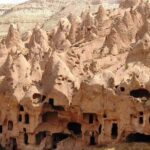
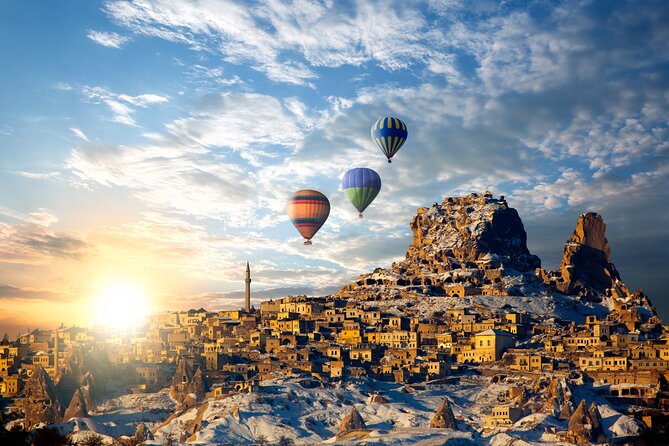
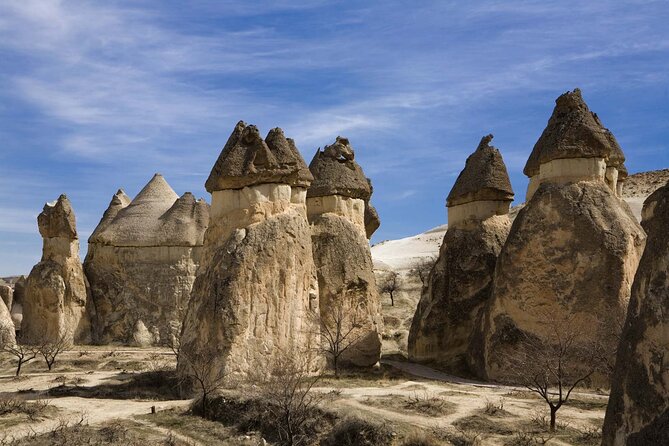
Cappadocia is where this tour turns from “sightseeing” into “storytelling.” Your flight lands in Kayseri or Nevşehir, and then you’re met and transferred into the region. From there, the first big hit is the Three Sisters fairy chimneys in Uçhisar/Ürgüp area. These are the rock formations you recognize from ads and postcards, but seeing them in person still feels a step more real.
Next is Pigeon Valley, where the pigeon houses are carved into the rock. It’s a small shift from the dramatic fairy chimneys, but it explains how people adapted to the terrain instead of fighting it. You can look at the rock and also picture daily life.
Then you go underground into Kaymaklı Underground City. Descending into subterranean tunnels is a strong equalizer for pacing: you’re not just walking in daylight, you’re changing environments. This stop also fits the “moderate physical fitness” note. If you’re sensitive to stairs, tight spaces, or uneven surfaces, you’ll want to take it slow and bring comfortable shoes.
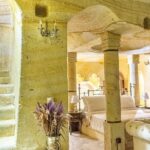
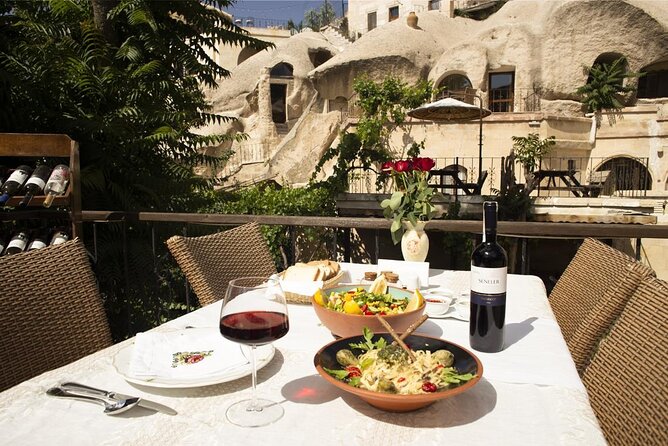
You’ll also sleep in a cave hotel—options like Yunak Evleri or Gamirasu Cave Hotel are named as examples. That matters for value because the accommodation isn’t generic. You’re buying into the atmosphere, not just renting a bed.
Goreme frescoes, Pasabag mushrooms, and Uchisar views
The second day in Cappadocia keeps the variety high. Devrent Valley starts with a lunar feel—rock formations that look like animals or shapes, depending on where you stand. Then you move to Pasabag (Monks’ Valley), famous for the best fairy chimneys, including twin and even triple rock caps.
After that, you reach Avanos, known for pottery and tile workshops. There’s a lunch break here, and you’ll feel the change from geology to craft. Even if you don’t buy anything, it’s a welcome reminder that Cappadocia isn’t only rocks—it’s also human hands and local trades.
Göreme Open-Air Museum is the next big must-see. Expect rock churches and frescoes from different centuries. This stop is timed at about 90 minutes, which is a sweet spot: enough time to appreciate the painting styles without losing the thread.
Finally, you finish with Uchisar Castle, the area’s highest point with a sweeping panorama over Cappadocia. This is where the day pays off visually. The payoff also depends on the weather, so plan for changing light—this region can look very different hour to hour.
At the end of the Cappadocia portion, you’re driven to Kayseri or Nevşehir airport for your flight onward, with an included connection via Istanbul.



Ephesus: Artemis first, then marble streets and a huge theater
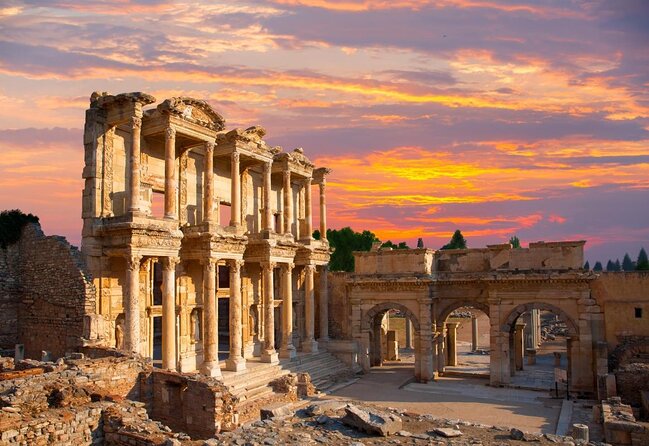
Ephesus is a whole-city lesson in how civilizations build, expand, and reuse space. You start with the Temple of Artemis, one of the Seven Wonders of the Ancient World, and even if you can’t see every original stone detail, the significance hits immediately.
Then you’re into the Ancient City of Ephesus itself. The walking route is long enough to matter, but not so long that it feels like a punishment. Along the way you’ll pass through major public landmarks including the Celsus Library, the State Agora, Odeon, Curetes Street, the Baths of Scholastica, Hadrian Temple, the Trajan Fountain, and more.
The highlight for many people is the Grand Theater, built in the 3rd century BC and expanded by Romans to a capacity around 24,000 spectators. Even without a performance happening, you can picture the crowd. This is the kind of site where a good guide helps you see how everything connects—routes, gathering spaces, and civic life.
Tickets here are included, with pre-paid arrangements to skip the line, which is a practical win at Ephesus where waiting can eat into your limited time.
Meryemana and the shift to Pamukkale’s thermal world
After Ephesus, you visit Meryemana (the House of the Virgin Mary) on the Aladag Mountains area. The site is tied to the idea that Mary lived there after coming to Ephesus, and it became a pilgrimage place after a declaration in 1892, plus a well-known papal visit in 1967. Even if you’re not focused on religious history, it’s a peaceful change from the excavated city blocks below.
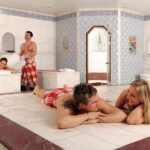
Then you drive to Pamukkale, about a three-hour transfer. You check into a thermal hotel—examples given include Pam Thermal or Colossea Thermal—and you’re set up for a true comfort feature: swimming in the hotel thermal pools. It’s a smart moment in the itinerary because it resets you after Ephesus walking.
This is also where you get a real sense of why Pamukkale is more than a photo stop. The “white castle” look comes from the travertine terraces and mineral springs, and you’ll be seeing that up close the following day.
Hierapolis necropolis and the white travertine terraces
The next day blends ancient ruins with natural wonder. You start with Hierapolis, including the Theatre, Apollo Temple, and the Necropolis. The Necropolis part is especially striking because it’s not hidden away—it’s a visible record of how the city memorialized its dead.
Then you head to the Pamukkale travertine terraces. The description fits what you’ll see: bright mineral formations that resemble snowballs or cotton, created by flowing springs. It’s timed to let you walk and look without turning it into a rushed “five-minute photo” stop.
You also continue to Laodicea, another major ancient site with about 2 hours here. The tour notes its establishment in the 3rd century BC, the city’s location near important roads, and its connection to the last of the seven churches tradition. If Ephesus feels like civic life and public buildings, Laodicea helps round out the theme: this region was a network, not isolated towns.
Flights, transfers, and practical packing notes
This itinerary is built around moving fast but not sprinting everywhere. Domestic flights are included for the Istanbul–Cappadocia–Izmir portion and then Denizli–Istanbul. Luggage allowance is listed as 15 kilos check-in and 8 kilos cabin, so you can pack confidently but you’ll still want to keep your bag within limits.
Transfers are private. You’ll get a representative meeting you at the airport with your name sign and then a private transfer to your hotel in Istanbul, and later in Kusadasi/Pamukkale regions depending on flight timing. The tour also notes that arrival to Kusadasi can be late (even midnight) depending on schedules, so keep that in mind if you hate late check-ins.
Dress code is smart casual. For the ground-heavy days in Cappadocia and the walking at Ephesus/Hierapolis, you’ll be grateful for comfortable shoes and layers. If you’re visiting Hagia Sophia interior during the audio-rule period, bring your smartphone and headphones so you’re not scrambling at the entrance.
Is $1,769 good value for this specific tour?
For many people, the deciding question isn’t whether the sites are worth it—they are. The deciding question is whether you’re paying for time savings and stress reduction.
This tour includes:
- 7 nights with listed hotel examples across four regions
- Domestic flights (the hardest part to DIY cleanly across regions)
- Skip-the-line entry handling with pre-paid tickets
- A professional licensed guide
- Meals: 7 breakfasts plus 1 dinner and 1 lunch
If you’re the kind of traveler who can plan, book, and coordinate on your own, DIY might work out cheaper. But it rarely keeps the same mix of hotel locations, entries, and flight timing without extra work.
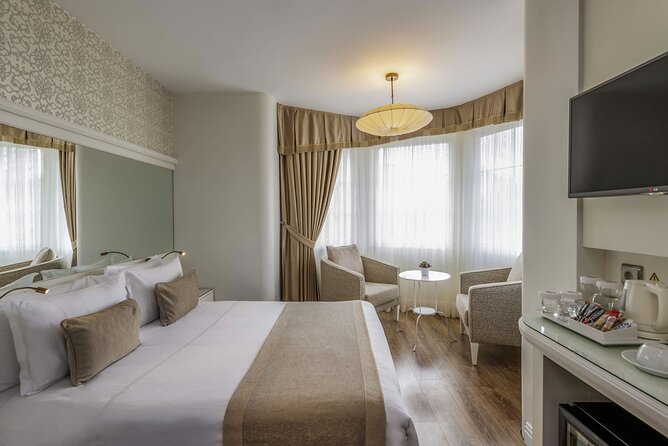
This price also makes more sense if you want boutique and specialty stays: Istanbul’s central hotels, cave accommodation in Cappadocia, and a thermal hotel in Pamukkale. Those are exactly the categories where “cheap” DIY plans often cut corners.
The biggest trade-off is that Istanbul and Cappadocia are only partially “yours.” If you dream of more than one night in Istanbul at your own pace, you’ll feel the time pinch.
Should you book this 8-day Istanbul–Cappadocia–Ephesus–Pamukkale tour?
Book it if you want:
- A guided route that links four regions without you managing flights and check-ins
- Small-group comfort (max 10 people) and pre-arranged museum entry handling
- Specialty experiences like cave hotel nights and a thermal pool swim at Pamukkale
Skip it (or consider a longer trip) if you:
- Hate tight schedules and long walking days
- Really want a deep, slow Istanbul binge and would rather spend extra time there
- Don’t want to deal with Hagia Sophia’s interior audio-phone requirement after 15 January 2024
If your goal is to see the big Turkey highlights with less headache and solid guidance, this tour is a strong match.
FAQ
What cities and regions are included?
The tour covers Istanbul, Cappadocia, the Ephesus region (Kuşadası area for hotel staying), and Pamukkale/Hierapolis/Laodicea. You’ll fly between regions inside Turkey.
How long is the tour?
It’s listed as about 8 days.
What’s the group size?
This is a mini-group tour with a maximum of 10 travelers.
Are domestic flights included?
Yes. Domestic flights are included for Istanbul–Cappadocia–Izmir and Denizli–Istanbul. The tour notes flight connections via Istanbul.
What’s included for meals?
You get 7 breakfasts plus 1 lunch and 1 dinner. Drinks and meals not listed are not included.
Does the tour include entrance fees?
Yes. Entrance fees are included, and the guide has pre-paid tickets intended to skip the line.
What hotels does the tour use?
Examples listed include Istanbul hotels such as Yasmak Sultan or Dosso Dossi Old City (or similar), Cappadocia cave hotels such as Yunak Evleri or Gamirasu Cave Hotel (or similar), Kusadası hotels such as Carina Hotel or Marina Suits (or similar), and Pamukkale thermal hotels such as 5 Star Pam Thermal or Colossea Thermal (or similar).
How does airport pickup and transfer work?
Private pickup and private transfers are provided from Istanbul Airport (IST) and Sabiha Gökçen (SAW), with a representative meeting you at the airport with your name sign.
Is Hagia Sophia guided inside?
After 15 January 2024, live guiding is not allowed inside Hagia Sophia. You must have a smartphone and headphones for the audio system; if you don’t, you can buy headphones at the entrance for about $3.5.
What’s the luggage allowance for the included flights?
The tour lists 15 kilos check-in and 8 kg cabin.
What if I need to cancel?
You can cancel up to 6 days in advance for a full refund. Cancel 2–6 full days before for a 50% refund, and cancel less than 2 days before for no refund. Cut-off times use the local time at the experience location.