REVIEW · ISTANBUL
4 days Turkey highlight: Pamukkale Ephesus and Cappadocia
Book on Viator →Operated by Travel Store Istanbul · Bookable on Viator
Cotton-white cliffs and ancient ruins in four days. I like how this plan delivers a Pamukkale hot-spring swim and pairs it with small-group guides who explain what you’re looking at, not just where to stand. The trade-off is that it’s a packed, multi-day route, and outdoor viewpoints in Cappadocia are always at the mercy of weather.
For $1,500 per person, you’re not only buying sightseeing. You get round-trip flights with taxes, airport transfers, a one-night hotel in Kusadasi with breakfast, plus meals and entrance fees for key stops. Dinner isn’t included, so you’ll want to budget for evenings on your own.
In This Review
- Key highlights at a glance
- The route that links Pamukkale, Ephesus, and Cappadocia
- Pamukkale’s cotton-white terraces and Cleopatra’s pool swim
- Hierapolis and the ruins that explain the spa city
- Ephesus: a big ancient city, handled with real guidance
- Meryemana (Virgin Mary’s House): the mountain setting and pilgrimage pull
- Artemis Temple foundations and Isa Bey Mosque’s Seljuk artistry
- Cappadocia starts at Uchisar: fortress views that set the tone
- Red Valley hikes and rock churches at Kızılçukur and Çavuşin
- Love Valley, Pigeon Valley, and the quiet charm of short walks
- Derinkuyu Underground City: the survival engineering stop
- Göreme Panorama and the Open-Air Museum’s fresco churches
- Avanos pottery and Devrent’s imagination rocks
- Pasabag Monk’s Valley and the Three Beauties viewpoints
- Price and value: what $1,500 actually covers
- Should you book this Turkey highlights tour?
- FAQ
- What is the tour duration?
- What is the total price?
- Is hotel pickup included?
- Does the price include flights and transfers?
- How many people are in the group?
- What language is the tour guide?
- Are entrance fees included?
- What meals are included?
- Is a hotel stay included?
- If the weather is bad, what happens?
- What is the cancellation window for a full refund?
Key highlights at a glance
- Pamukkale hot-spring time: Allowing a relaxing swim, including Cleopatra’s pool area.
- Hierapolis ruins in a tight circuit: Theater, spa-era city remains, and a Byzantine church stop.
- Ephesus with clear on-the-ground context: A long ruins walk with a guide’s explanations.
- Cappadocia variety, not repetition: Castles, valleys, underground shelters, and museum churches.
- Small group size (max 15): Less waiting, more time for questions in English.
- Meals and tickets handled for most major stops: Lunches and many admissions included.
The route that links Pamukkale, Ephesus, and Cappadocia
This is the kind of trip that makes Turkey feel big and close at the same time. You start with Pamukkale and Hierapolis, move on to Ephesus and the Selçuk area, then fly to Cappadocia for a full day and a half of rock-carved sights and valley walks.
The small-group setup matters. With a max of 15 people and guided touring in English, you’re less stuck behind a giant bus crowd. Hotel pick-up is included from your Istanbul-area hotel or apartment, and airport transfers are covered too—so the “where do I go next” stress stays low.
The one thing to keep in mind is pacing. Each day has multiple stops, many of them outside, and you’ll likely move with the rhythm of a day tour. If you prefer long unstructured downtime, plan to build it into your evenings.
A few more Istanbul tours and experiences worth a look
Pamukkale’s cotton-white terraces and Cleopatra’s pool swim
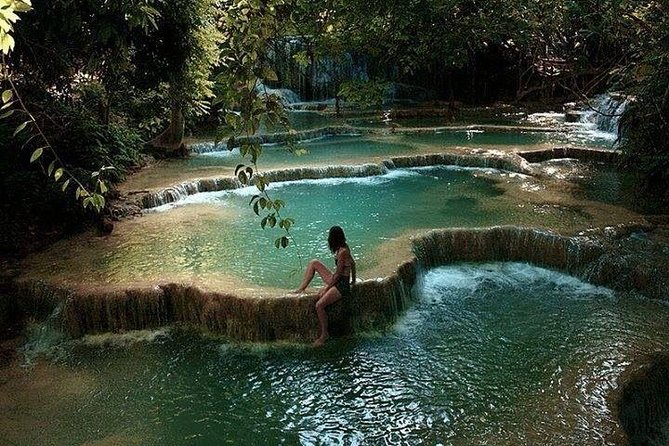
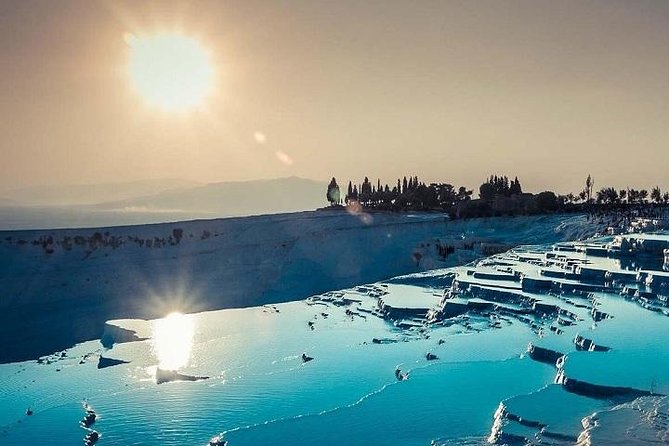
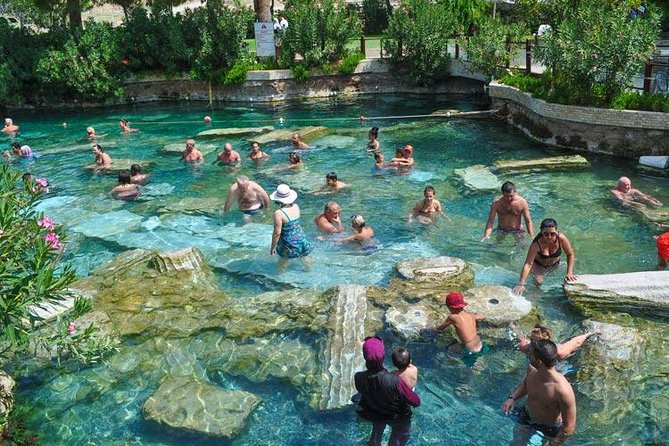
Pamukkale is the showpiece. Those famous white cliffs come from minerals left by long-running hot springs. At Pamukkale Thermal Pools, you’ll get about two hours with admission included, which is enough time to slow down, see the terraces, and actually enjoy being in the water.
What I like about this stop is the mix of the visual and the physical. Yes, the cascading white mineral formations are the headline. But the real benefit is that you’re not only looking—you get time for a thermal pool swim, including the Cleopatra’s pool experience that’s often the most memorable water stop here.
Practical tip: bring swimwear and something easy to wear back and forth. Mineral-rich water can be slippery around the pools, so sturdy sandals and a towel help you stay calm and steady.
Hierapolis and the ruins that explain the spa city
After Pamukkale’s terraces, you step into the older layer: Hierapolis. You’ll have about two hours at this ancient city, with admission included.
Hierapolis is fascinating because it reads like a story in layers. This was a place people came for healing and spa-like cures, and over centuries it collected influences from pagan, Roman, Jewish, and Christian worlds. That’s a big reason the ruins don’t feel random—you can sense why so many different buildings and sites ended up here.
Then the plan adds shorter, high-impact stops:
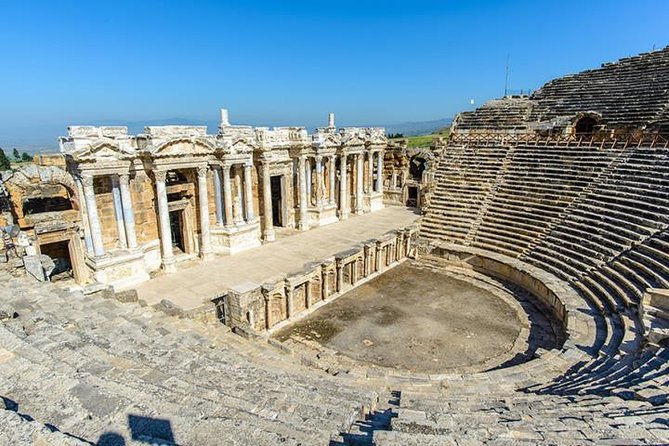
- Pamukkale Theater (about 30 minutes, admission included): seating up to a huge capacity in its day, with the steep passageways and aisles still shaping how you move through the space.
- Byzantine Church / nearby ruins (about 30 minutes, admission included): a Roman gymnasium-era gathering place is referenced here, which helps you connect the daily social life behind the stones.
The main drawback is that this day is visually heavy: terraces, then city ruins, then another theater, then a church stop. If you’re sensitive to heat or crowds, go slower than you think you need and give yourself a breather between points.
Ephesus: a big ancient city, handled with real guidance
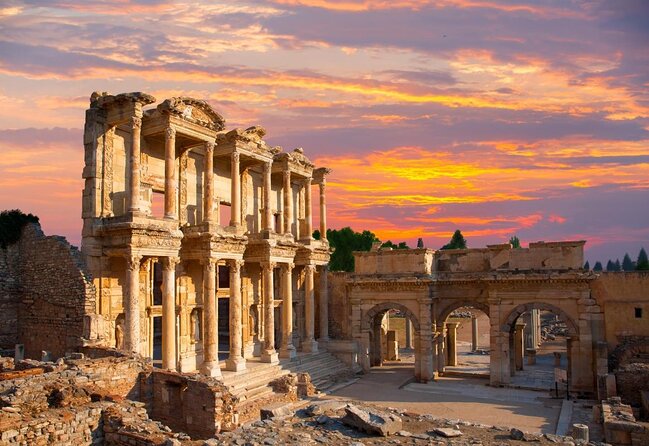
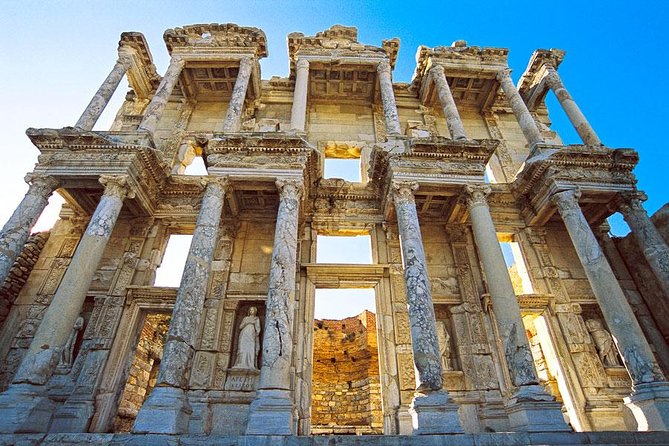
On Day 2, you hit Ephesus, and you’ll be there for about three hours with admission included. Ephesus is described as the second largest ancient city in the ancient world, once home to over 200,000 people. What you experience today are the best-preserved ruins, but the key is how the guide frames them.
This is where the small group pays off. A guide’s explanations turn the maze of stones into something logical: streets, monumental structures, and the scale of daily life. You get to walk at a pace that feels like touring, not sprinting.
If you want photos, you’ll find plenty—but don’t only chase pictures. Ephesus is one of those places where stopping for one good viewpoint can tell you more than moving every 30 seconds.
Meryemana (Virgin Mary’s House): the mountain setting and pilgrimage pull
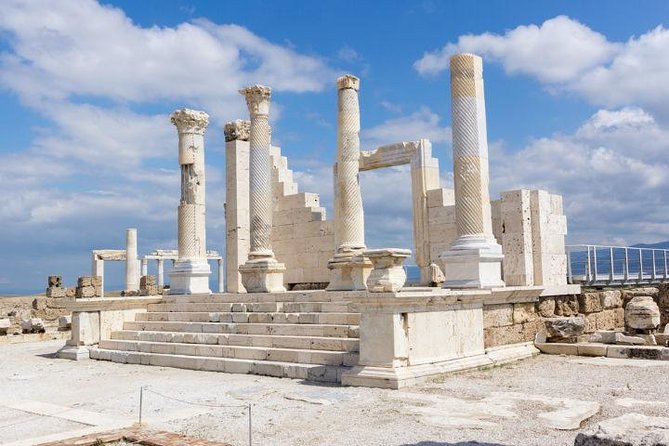
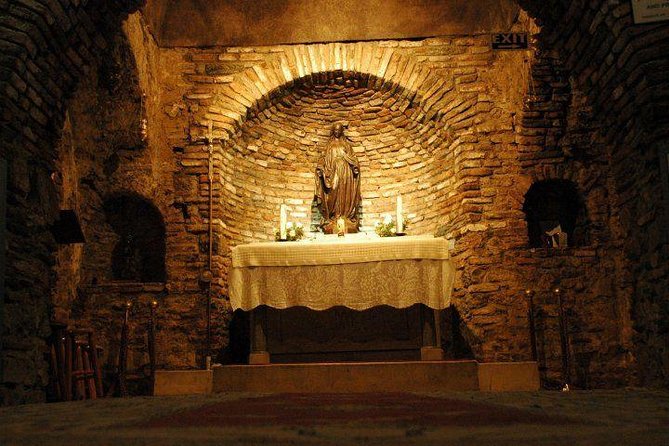
Next comes Meryemana, the Virgin Mary’s House, set on top of BulBul Mountain overlooking Selçuk. The time here is about one hour, with admission included.
Even if your interests are historical rather than religious, the location matters. The overlook gives you a sense of why this spot became important for Christian pilgrimage. You’re not buried under ruins; you’re facing a wider view and a quieter beat.
A good use of your hour is to do two things: take in the overlook, then connect it back to the bigger region story—Ephesus is the ancient urban center, while Meryemana adds the spiritual map.



Artemis Temple foundations and Isa Bey Mosque’s Seljuk artistry
The tour keeps Day 2 moving with two very different cultural stops.
First: Temple of Artemis. You’ll spend about 30 minutes here, and admission is free. What remains standing is mostly foundations and a few columns, but that’s exactly why it still works. You can still grasp the temple’s original ambition without getting stuck expecting a fully restored monument.
Then: Isa Bey Mosque. You’ll have about 30 minutes at the mosque, also free. The info here focuses on Seljuk architecture with crown-like doorways and beautiful mosaics. It’s a nice change of pace after open-air ruins—more calm, more detail, more “look closer” time.
Cappadocia starts at Uchisar: fortress views that set the tone
Day 3 moves you into Cappadocia, and the first stop is Uchisar Castle. Expect about one hour, admission included.
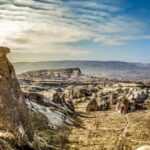
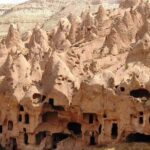
Uchisar Castle is a natural rock formation carved into volcanic stone, positioned to give wide panoramic views over valleys and the fairy-chimney formations. It also has that practical historical angle: it functioned as a strategic defense point, and today visitors can explore tunnels and rooms.
The best way to enjoy this stop is to treat it as orientation. Stand back for the big picture, then move into the rock-cut spaces to connect what you see with how people lived and defended themselves.
Red Valley hikes and rock churches at Kızılçukur and Çavuşin
Kızılçukur Valley (Red Valley) is next, with about two hours on the schedule. Admission is free here. It’s known for red and pink rock formations, especially around sunset, and it links to fairy chimneys, vineyards, and rock-carved churches. This is a hiking stop, so bring water and good footwear.
Then you’ll visit Çavuşin (Çavuşin Village) for about one hour, admission included. This is where you get more village texture: rock-carved houses and a famous church site, the Church of St. John the Baptist with frescoes dated to the 5th century.
One practical note: this part of Cappadocia is built on uneven ground and rock steps. You don’t need to be a hiker to enjoy it, but you do need to walk carefully.
Love Valley, Pigeon Valley, and the quiet charm of short walks
The tour adds two more valley walks that feel different from the main hikes.
Love Valley takes about 30 minutes and is free. The rock formations look like classic fairy-chimney shapes, and the stop is popular for hiking and hot air balloon rides nearby. Even if you don’t ride, the views feel airy and photogenic.
Later, Pigeon Valley gives about 30 minutes and is also free. It’s named for pigeon houses carved into soft volcanic rock, once used for fertilizer. The route connects areas and is a good “stretch your legs” slot between bigger monuments.
If you’re short on time, you’ll want your best camera ready. If you’re short on energy, you’ll love these because they don’t demand a long hike.
Derinkuyu Underground City: the survival engineering stop
One of the most memorable science-of-people stops is Derinkuyu Underground City. You’ll have about one hour, admission included.
This underground city is described as one of Cappadocia’s largest and deepest shelters, with construction dating back to around the 8th–7th centuries BCE. The idea is simple and intense: it could house large populations along with livestock and supplies, with multiple levels and even ventilation.
You’ll explore tunnels and rooms that include living quarters, kitchens, chapels, storage areas, and the ventilation system. It’s a strong contrast to open valleys above ground, and it makes the region feel less like movie scenery and more like human survival.
Göreme Panorama and the Open-Air Museum’s fresco churches
Day 4 begins with Göreme Panorama for about 30 minutes, free. This viewpoint gives sweeping views of fairy chimneys and valleys, and it’s especially popular around sunrise and sunset due to golden light. You may also see hot air balloons in the early morning hours, depending on timing.
Next is the big ticket: Göreme Open-Air Museum. You’ll spend about two hours here, with admission included. It’s UNESCO-listed and packed with rock-cut churches, chapels, monasteries, and living quarters, many decorated with frescoes dated to the 10th–12th centuries.
The plan specifically highlights churches like the Dark Church, Apple Church, and Snake Church. What makes this stop special is that you’re not just watching ruins in the distance—you’re in the same rock space that early Christians used to worship and shelter.
If you’re tired of walking, pace yourself. Museum churches can tempt you into a “rush to the next chapel” habit. Slow down for two minutes inside, and the art will land better.
Avanos pottery and Devrent’s imagination rocks
After the museum, the tour shifts to craft and imagination.
In Avanos, you’ll spend about one hour. Admission is free. Avanos is known for pottery and ceramics, with red clay sourced from the Kızılırmak River. Workshops and artisans are part of the experience, and some studios offer hands-on pottery making, depending on what’s running at the time.
Then comes Devrent Valley (Imagination Valley), about two hours, admission included. This is where you search for animal and face-like rock shapes created by wind and water erosion. No churches here—just natural sculptures.
This stop is a fun change if you want something lighter than the underground and museum days. It’s also a great place to relax your brain and let your eyes do the work.
Pasabag Monk’s Valley and the Three Beauties viewpoints
The final stretch leans hard into the classic Cappadocia forms.
Paşabağları / Monk’s Valley takes about one hour, admission included. It’s known for fairy chimneys with mushroom-like shapes and the rock-cut chapels and dwellings connected to monks in the Byzantine period. The main benefit here is closeness: you can see the shapes up close instead of only in the distance.
Then you’ll finish with The Three Beauties (Üç Güzeller) for about 30 minutes, free. This is primarily a viewpoint stop over Urgup town, with a focus on memorable photos tied to the region’s vineyards and apricot gardens.
If you’re a “one last photo” person, this works well. If you hate viewpoints, you still get a final visual payoff without a huge time commitment.
Price and value: what $1,500 actually covers
At $1,500 per person, the value comes from the amount of logistics bundled into the package.
You get:
- Round-trip flights with all taxes
- All airport transfers
- A small group tour with guide, transportation, and entrance fees for major stops
- One-night hotel in Kusadasi with breakfast by the sea
- Breakfast (3) and lunch (4)
Dinner is not included. That’s normal on multi-stop tours, but it does affect your planning. You’ll want to treat evenings as flexible and find a simple local meal near wherever you’re staying.
Where I see good value is the way meals and entrances are handled. You’re less likely to blow time and money chasing tickets or figuring out which site charges at the gate.
Should you book this Turkey highlights tour?
Book it if you want a tight, guided mix of Pamukkale, Ephesus, and Cappadocia without spending your days organizing flights, transfers, and ticket logistics. The small group size (max 15) and English guidance make the history readable, especially at Ephesus and the Cappadocia museum sites.
Skip or reconsider if you’re the type who wants slow travel. This route moves, and you’ll spend significant time walking and transferring between regions. Also, Cappadocia is weather-dependent for the best light and balloon visibility, so you’ll want at least a little flexibility in your mindset.
If you like scenery plus real explanations, and you’re okay paying for convenience, this one is a strong fit.
FAQ
What is the tour duration?
The duration is listed as approximately 4 days.
What is the total price?
The price is $1,500.00 per person.
Is hotel pickup included?
Yes. Pickup is offered from hotels and apart hotels.
Does the price include flights and transfers?
Yes. Round-trip flight tickets with all taxes and all airport transfers are included.
How many people are in the group?
The tour has a maximum of 15 travelers.
What language is the tour guide?
The tour is offered in English.
Are entrance fees included?
Many entrance fees are included, and some stops are free (for example Artemis Temple and Isa Bey Mosque). The included list specifies entrance fees for major parts of the tour.
What meals are included?
Breakfast is included 3 times, and lunch is included 4 times. Dinner is not included.
Is a hotel stay included?
Yes. There is a one-night hotel stay in Kusadasi with breakfast by the sea.
If the weather is bad, what happens?
This experience requires good weather. If it’s canceled due to poor weather, you’ll be offered a different date or a full refund.
What is the cancellation window for a full refund?
You can cancel up to 6 days in advance for a full refund. Cancellation within 2 days of the start time is not refunded.