REVIEW · IZMIR
4-Day Private Pilgrimage Tour to the 7 Churches of Asia Minor
Book on Viator →Operated by Puerto Travel Turkey · Bookable on Viator
Revelation stops feel like you are stepping inside. This private 4-day pilgrimage strings together the Seven Churches of Asia Minor with a religious history guide, then adds Pamukkale and Hierapolis for a breather. I love the way the guide handles the Bible passages at each site and reads the relevant Revelation letter where it matters. I also like that a big chunk of the sightseeing has entrance tickets included, so you spend less time at gates and more time absorbing the place. The main drawback: the schedule is full, so expect some walking and plan on a day that is not slow and leisurely.
On past departures, the experience seems built around a calm, organized team. Guides such as Güfte have been praised for patient, detailed explanations and for keeping the drive times manageable, while drivers like Ogun (and sometimes Salih) help make the long in-between hours feel easier. You also get proper Turkish breakfast built into the hotel routine, and the tours usually wrap before dinner so you can eat on your own without racing the clock.
One more thing to know up front: two of the most popular “bonus” stops are not fully covered. Terrace Houses in Ephesus requires a separate entrance ticket on-site, and the Cleopatra Pools swimming entrance is extra (walking and relaxing by the pool area are still an option).
In This Review
- Key things that make this tour worth your time
- A private pilgrimage of the Seven Churches, plus Pamukkale
- Day 1: Smyrna and Pergamon, from Polycarp to the Altar of Zeus
- Day 2: Thyatira to Philadelphia, then a drive toward Pamukkale
- Pamukkale and Hierapolis: the healing theme you can feel
- Day 4: Ephesus, Mary’s House, Artemis, and St. John’s tomb
- Price and what your money is really buying
- What to expect day-to-day: walking pace, time to think, and “not rushed” feels
- Who should book this private Seven Churches tour
- Should you book the 4-Day Private Pilgrimage to the Seven Churches?
- FAQ
- What does the tour cover for the Seven Churches of Revelation?
- Where do you meet and how does pickup work?
- Is the tour in English?
- What’s included in the price?
- What meals are included?
- Which paid extras should I budget for?
- Are the tour days long and how much walking is involved?
- What happens if weather is bad?
Key things that make this tour worth your time
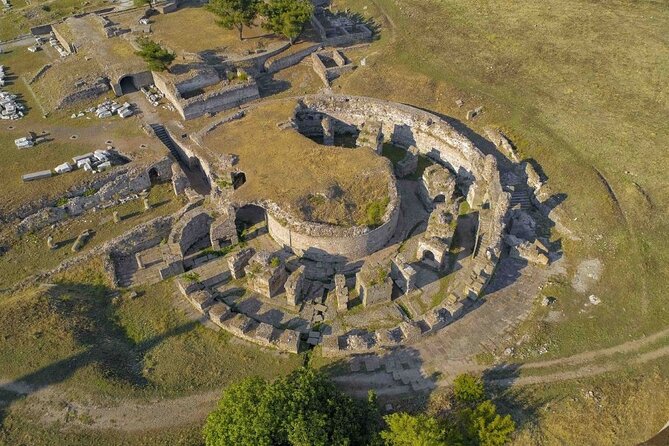
- Seven Churches with context, not just names on a list, so Revelation lines make sense as you stand in front of the ruins
- Passage-at-the-site moments, including practical reading of the Revelation letters while you’re in the locations they refer to
- Mostly included admissions, which cuts friction and helps you keep moving
- Good pacing for a packed itinerary, with time to explore rather than being herded nonstop
- Pamukkale and Hierapolis added for variety, including optional swimming at Cleopatra Pools and time on the travertine terraces
- Private format, so the experience stays focused on your group instead of a big scramble
A private pilgrimage of the Seven Churches, plus Pamukkale
This is the kind of itinerary that works best when you treat it like a journey, not a checklist. You’re not only seeing major archaeological sites; you’re also moving through the geography that shaped the early Christian world of Asia Minor. The route centers on the churches named in Revelation—Smyrna, Pergamon, Thyatira, Sardis, Philadelphia, Laodicea, and Ephesus—then adds the surrounding places that make the letters feel grounded.
Because it’s private, the rhythm is easier to control. You meet your guide at Izmir Airport or at a hotel in the Izmir/Selçuk/Kuşadası area, then follow a tight loop through western Turkey. The vehicle is air-conditioned, and the driving is done by professional drivers—important on longer stretches where you just want the day to run smoothly.
The guide is specialized in religious history, so your conversations tend to link what you see on the ground to what the early Christians faced. That might sound abstract until you’re standing in a Roman agora or on a hill above a city and hearing how the ancient setting connects to Revelation’s warnings and promises.
You can also read our reviews of more private tours in Izmir
Day 1: Smyrna and Pergamon, from Polycarp to the Altar of Zeus
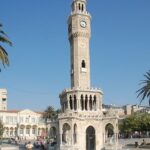
Day 1 starts in İzmir’s region with the ancient city of Smyrna, where Revelation calls out the church that was under pressure. Your first stop is the Agora Open Air Museum, where you’ll be walking through the heart of Roman Smyrna and hearing the story of St. Polycarp. The modern Polycarp Church is closed for long-term restoration, but the key value here is the setting: you’re at the actual civic center where Roman judgment played out.
A highlight is how the tour treats Polycarp less like a distant saint and more like someone whose story would have felt immediate to Christians in Smyrna. If you care about connecting belief to place, this opening is a strong start because it grounds Revelation in real historic tension—Christian faith versus imperial pressure.
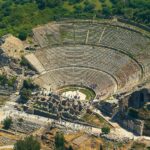
Next comes Pergamon Ancient City and its Acropolis (the spot linked to Revelation’s description of where Satan has his throne). Pergamon is famous for its dramatic ruins, and you’ll see structures like the Temple of Trajan and the foundation of the Altar of Zeus. The guide explains why these imperial cult symbols mattered to early Christians, which is exactly the kind of context that turns a Bible line into something you can picture.
You also get the steep theater of the ancient world as part of the Pergamon experience. It’s not just a photo stop. It’s a reminder that public life was designed for spectacle, and early Christians lived in that same world of crowd attention, civic rituals, and political power.
After that, you visit the Asklepion, often described as the first major healing center focused on psychiatric care. It’s a smart contrast stop: you see pagan healing practices like incubation, sacred water, and mud baths, then compare them with the Christian idea of miracles. That comparison isn’t about mocking beliefs—it’s about showing what people in Pergamon already believed and what made Christian faith stand out in that environment.
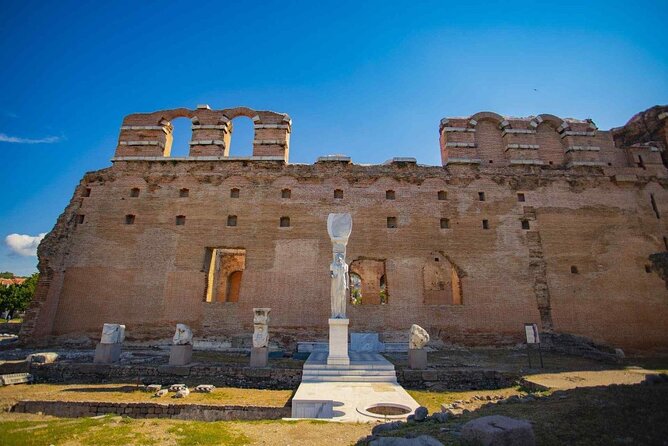
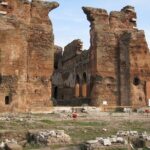
Finally, you end Day 1 at the Red Basilica (Kizil Avlu), also tied to St. John’s Church among the Seven Churches of Revelation. This is one of those “bigger-than-you-expect” buildings—originally connected to Egyptian gods like Serapis, later converted into a basilica. The symbolism here is the point: Christianity turning monumental pagan space into worship space.
Practical note: you end in Bergama town center for overnight, which keeps Day 2 logistics simpler because you’re already in the region.
Day 2: Thyatira to Philadelphia, then a drive toward Pamukkale
Day 2 focuses on the churches of Revelation that sit along a different part of the route. It starts with Akhisar, representing Thyatira (Rev. 2:18–29). You walk through ruins of a basilica in the modern city center, and the spiritual theme is moral compromise—the church praised for love and service but warned about tolerating Jezebel. The guide’s job here is to connect the Bible warning to the daily pressures of life in a city shaped by trade guilds and pagan influence.
This stop is quick, but it’s spiritually focused. If you like your faith-history tour to have one clear theme per stop, Thyatira is well-designed that way.
Next is Sardis (Sardes), Revelation’s “dead church” (Rev. 3:1–6). Sardis looks wealthy at a glance, with major remains like the gymnasium and a synagogue. Yet the message Jesus gives is blunt: wake up. Standing among the marble roads and large structures helps you see the difference between outward success and inward spiritual health.
Then you move to Philadelphia (Alasehir), known as the church with the promise of an open door (Rev. 3:7–13). Unlike the others, this church gets no rebuke. The experience ends with a visit to the Byzantine Basilica of St. John, where the guide explains the “open door” idea and what it means to be a “pillar in the temple of God.”
A lot of tours rush these days by squeezing too many churches into too little time. Here, the churches are clearly sequenced, and you’re given time for scenic Turkish countryside and vineyard drives in between sites. That matters because it’s when your brain processes what you just heard, instead of just stacking facts.
After the day’s sites, you drive toward Pamukkale for dinner and an overnight at a 5-star hotel. That hotel choice isn’t just comfort for comfort’s sake. It helps you recover, because you’ll be back in walking mode the next day.
Pamukkale and Hierapolis: the healing theme you can feel
Day 3 is where the tour shifts from city ruins to places tied to healing and the Christian message of hope in the face of death.
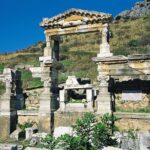
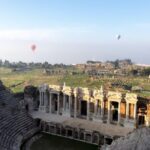
You start in Hierapolis, called the holy city in the tour’s framing, and you focus on the Martyrium of St. Philip. Philip’s octagonal tomb and the large theater above the Lycus River Valley set a tone that feels different from the earlier civic and imperial settings. The tour also includes the largest necropolis in Anatolia, with thousands of pagan tombs. That’s a strong emotional context for resurrection themes—because you’re not just talking about hope; you’re literally surrounded by evidence of mortality.
Then you visit the Hierapolis Archaeology Museum, located inside ancient Roman Baths. This is a short but culturally valuable stop. You see statues and sarcophagi linked to Hierapolis and Laodicea. It helps you visualize the kind of wealth and artistic life early Christians would have been negotiating as they shared their message.
After that, you get a genuinely enjoyable break at Cleopatra Pools. You can swim among submerged Roman columns, with warm thermal water. But swimming is optional, and the entrance fee for the pool is extra and paid on-site. If you don’t swim, you can still relax by the pool area and use the cafeteria there.
This is where the tour feels human. It’s one thing to stand in ruins all day; it’s another to move your body in warm water and then cool down for more sightseeing.
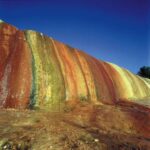
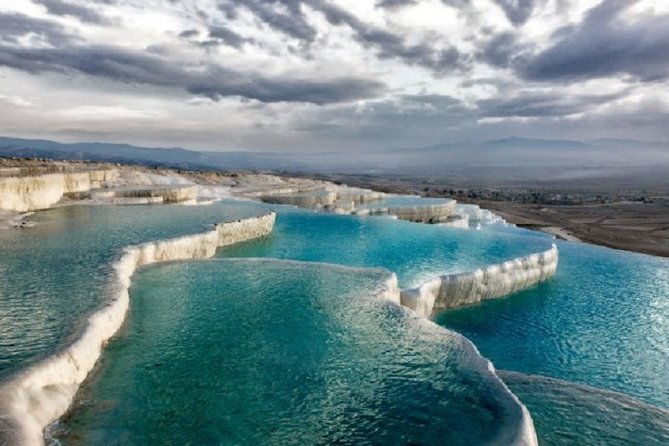
Next is the main Pamukkale moment: Pamukkale Thermal Pools and the travertine terraces, the famous cotton castle effect. You’ll have time to walk barefoot on the snow-white travertines formed by mineral waters. This is both a photography window and a meditation window, because the view over the plains below gives you a chance to slow your thinking. The healing story behind the site has pulled seekers for centuries, and you’ll feel why once you see it.
Then comes Laodicea (Rev. 3:14–22), the “lukewarm church.” This stop is clever because it uses the city’s water system as the lesson. You’ll see the ancient distribution system that brought hot water from Hierapolis and cold from Colossae—ending up in Laodicea as lukewarm. The spiritual meaning becomes tangible when you understand the physical reality behind it.
You’ll also explore the newly excavated Church of Laodicea and the Syria Street area, reinforcing how the city could be wealthy yet spiritually poor, blind, and naked.
At the end of Day 3, you drive back to Kuşadası for an overnight at a 4-star hotel.
Day 4: Ephesus, Mary’s House, Artemis, and St. John’s tomb
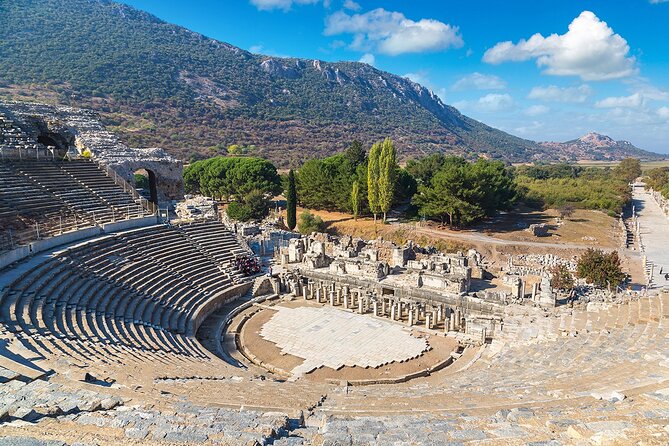
Day 4 is the grand finale, centered on Ephesus, which is closely tied to multiple figures in early Christianity.
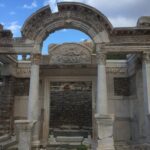
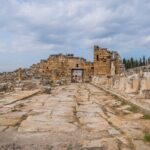
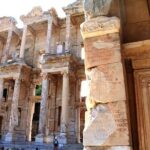
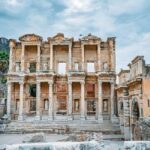
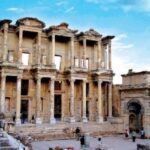
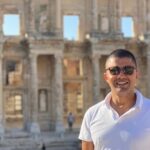
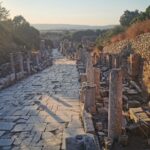
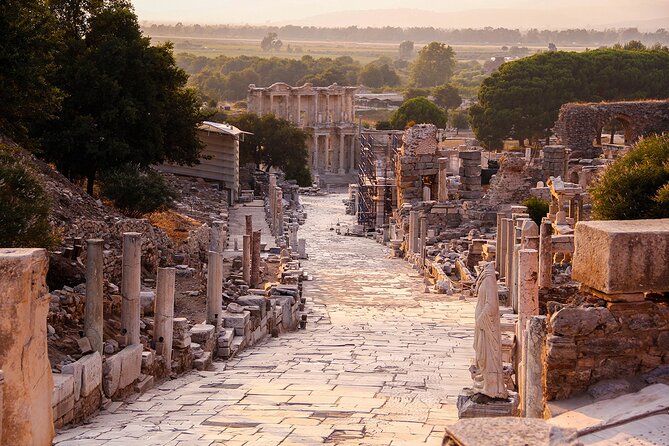
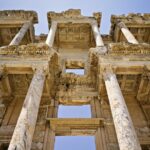
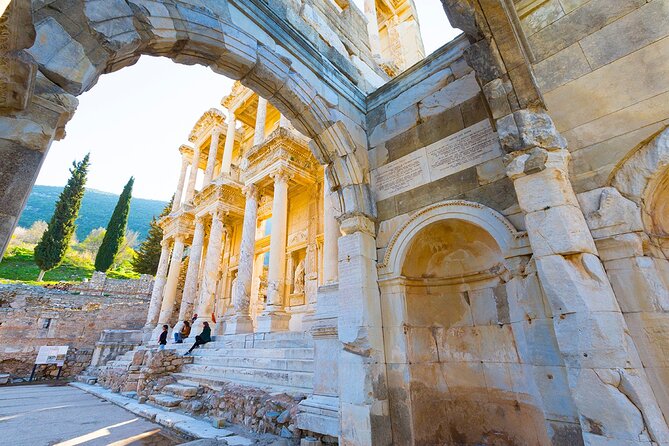
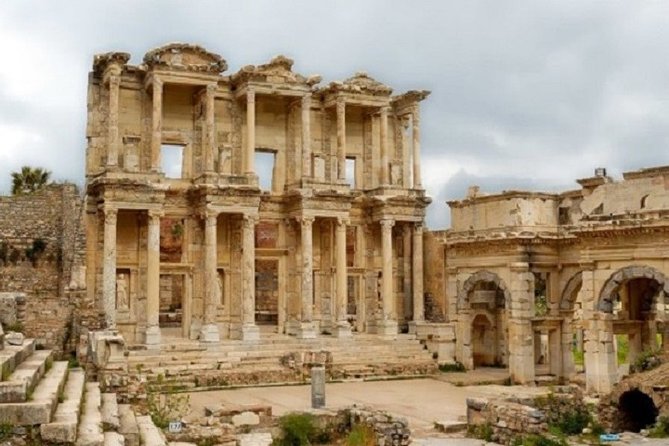
First stop is Ancient City of Ephesus, framed as the “loveless church” (Rev. 2:1–7). You’ll walk down the marble Curetes Street, then reach major landmarks like the Great Theatre (scene of the riot described in Acts 19) and the Celsus Library. These places matter because they show how public life, crowds, and religious tension overlapped in this city.
In the guide’s storytelling, the “loveless church” idea connects to the call to return to first love. It’s not a vague moral message once you’ve seen the scale of Ephesus. This was a center where devotion and propaganda, preaching and opposition, all collided in the open.
Next is the Ephesus Terrace Houses, often called the homes of the rich. This stop is optional in the sense that it requires a separate entrance ticket, so it’s not included in the package pricing. If you can swing the extra fee, it’s worth it because it reveals private life through roofed excavations with mosaics, frescoes, and baths. It helps you understand what early Christians were living among when they shared their message inside a world of comfort and status.
After Ephesus, you travel up to Meryemana, the Virgin Mary’s House on Mt. Koressos. This is a deeply spiritual pause: a humble stone house or chapel connected to Christian tradition about St. John bringing Mary there after the crucifixion. You get time to visit, light a candle for loved ones, and collect water from the holy fountains. Even if you’re not tightly focused on Marian tradition, the quiet here is a real reset after big ruins and crowds.
Then comes the stop for the Temple of Artemis, known as one of the Seven Wonders of the Ancient World. Today there’s only a single standing column, but it still works as a symbol of the shift from pagan world power to Christian triumph in Asia Minor. It’s a short stop, and that’s fine—Artemis is best when it doesn’t eat your whole afternoon.
You end at the Basilica of St. John, the burial place of the Apostle and author of Revelation. Built by Emperor Justinian, it sits on Ayasuluk Hill overlooking the city. Standing at St. John’s tomb is one of those moments where you feel the tour has a point. It’s the full-circle ending after walking Revelation’s cities.
Finally, you get a private transfer to Izmir Adnan Menderes Airport or your Izmir hotel. The drive is about 45–60 minutes.
Price and what your money is really buying
At $1,276.36 per person, this tour isn’t cheap. But it’s not just you paying for a van and a name on a calendar. You’re paying for an all-in-the-background setup: air-conditioned vehicle and professional driver, a religious history specialist guide, included entrance fees for the main biblical sites, and hotel-based comfort with 3 breakfasts plus dinner on Day 2.
The biggest value boosters are the included admissions and the private format. When you’re doing this many sites in a short time, every small logistical friction matters. Instead of figuring out ticket systems and timing yourself, the structure keeps the day from falling apart.
That said, you should budget for the extras that are clearly not included:
- Ephesus Terrace Houses entrance ticket (separate on-site)
- Cleopatra Pools swimming entrance fee (optional; walking by the pool area is still available)
If you’re the kind of person who likes a detailed route but hates surprises at the cash point, this package is relatively predictable because those two extras are called out in advance.
Also note: the tour requires good weather. Pamukkale is weather-dependent, and if conditions are poor, you’ll be offered a different date or a full refund.
What to expect day-to-day: walking pace, time to think, and “not rushed” feels
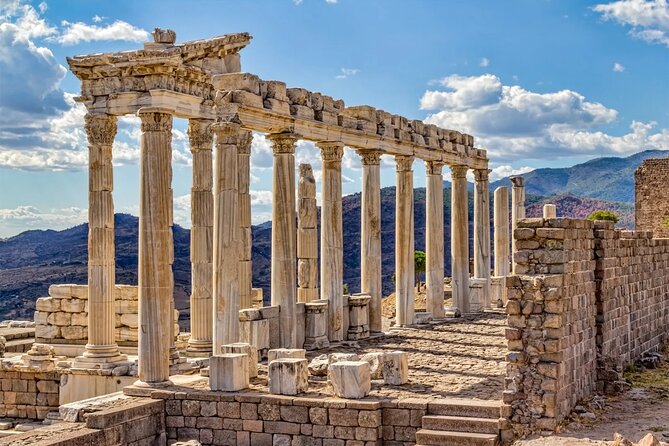
Even with a full itinerary, the tour is built to avoid the most annoying style of group touring: nonstop marching with zero time to process. The schedule generally includes a blend of heavier “anchor” stops (Agora, Pergamon Acropolis, Sardis, Hierapolis Martyrium, Ephesus) and lighter transitions (scenic drives, shorter stops at ruins tied to a theme).
The best way to get value is to wear shoes you trust. Sites include uneven stone, steps, and long stretches outdoors. The tour is listed as requiring moderate physical fitness, so you don’t need to be an athlete, but you do need to be comfortable walking for hours on several days.
One small habit that helps: bring a simple layer. Even in shoulder seasons, you can get temperature shifts between coastal Izmir/Kuşadası and higher inland zones like parts of Pamukkale.
And if you care about food, you’ll appreciate that the day ends before dinner most nights. You’ll have time to choose meals locally instead of being locked into a set group restaurant every day.
Who should book this private Seven Churches tour
This tour fits best if you want:
- A faith-and-history experience tied to Revelation’s churches, not just general sightseeing
- A guide who treats each stop as connected to a Bible theme, including reading the relevant letter on-site
- A route that includes major ruins plus restorative breaks like Pamukkale terraces and optional time in warm thermal water
- The ease of a private group where the pace can be managed for your needs
It might be less ideal if you want a fully unhurried itinerary with no optional add-ons and no extra ticket surprises. This is busy by design; the payoff is that you see the full arc of the Seven Churches area in four days.
Should you book the 4-Day Private Pilgrimage to the Seven Churches?
I’d book it if your goal is to understand Revelation as a map of real places. The mix of Smyrna and Pergamon’s imperial pressure, Thyatira’s moral warning, Sardis’s wake-up call, Philadelphia’s open-door promise, Laodicea’s lukewarm lesson, and Ephesus’s first-love challenge becomes much more meaningful when you’re standing amid the ruins and the city layout.
I also like the value structure for the price: guided religious history, professional transport, hotels in good locations for the route, and included admissions for the core sites. Just plan for the two clear paid extras—Terrace Houses and Cleopatra Pools swimming—and pack walking comfort.
If that sounds like your kind of pilgrimage, this is a strong way to spend four days in western Turkey.
FAQ
What does the tour cover for the Seven Churches of Revelation?
It focuses on the Seven Churches of Revelation across Asia Minor, with visits tied to Smyrna, Pergamon, Thyatira, Sardis, Philadelphia, Laodicea, and Ephesus.
Where do you meet and how does pickup work?
Pickup is available from Izmir Airport or from hotels in the İzmir, Kuşadası, or Selçuk area. You’ll be able to confirm the pick-up point and time with the provider.
Is the tour in English?
Yes, it is offered in English.
What’s included in the price?
Included items are air-conditioned transportation, accommodation in local hotels, a professional tour guide specialized in religious history, entrance fees to the biblical sites visited, and breakfast for 3 days.
What meals are included?
Breakfast is included for 3 days, and Day 2 dinner is included. Other meals are not included and your guide suggests places.
Which paid extras should I budget for?
You need a separate entrance ticket for the Ephesus Terrace Houses, and Cleopatra Pools swimming requires an extra entrance fee paid on-site.
Are the tour days long and how much walking is involved?
The tour is designed for moderate physical fitness, with multiple major ruins and outdoor walking across several days, plus time to explore each stop.
What happens if weather is bad?
The experience requires good weather. If it’s canceled due to poor weather, you’ll be offered a different date or a full refund.