REVIEW · ISTANBUL
2 Days-Ephesus&Pamukkale Tour from-to Istanbul
Book on Viator →Operated by Tour Altinkum Travel · Bookable on Viator
Two days, two UNESCO worlds, little planning. This max-12 small-group tour strings together domestic flights, a central Kusadasi hotel night, and sightseeing in an air-conditioned private minibus, so you spend your energy looking—not organizing.
I like this setup for two big reasons: skip-the-line entry for Ephesus and Pamukkale helps you lose less time to ticket queues, and the tour runs with a licensed English-speaking guide. Depending on the day, you may meet names like Medi for Ephesus, Murt/Mert for the ruins, or OZ for clear, question-friendly explanations.
One possible drawback: flight timing can shape your day 2. If your return flight is late, you may have a long wait at Denizli/Çardak, and that airport has limited on-site distractions.
In This Review
- Key things that make this tour work well
- A Two-Day Shortcut to Ephesus and Pamukkale from Istanbul
- Price and What This Includes (Flights, Hotel, and Meals)
- Day 1: Istanbul to İzmir, Ephesus Ruins, and Artemis Territory
- What stop timing feels like
- The House of the Virgin Mary: A Quiet Stop With Big Religious Meaning
- Ephesus Ancient City: What You’re Really Seeing When You Walk It
- Temple of Artemis: A Wonder You See Through Context
- Kusadasi Overnight: Why Staying Here Matters
- Day 2: Morning in Kusadasi, Pamukkale Terraces, and Hierapolis Necropolis
- Morning in Kusadasi (3 hours)
- Pamukkale Thermal Pools: 35°C Water and the UNESCO Factor
- Hierapolis and Pamukkale Sacred Pool: Roman Ruins at Water Level
- Flights and Transfers: Fast, but Follow the Script at Airports
- How the Guides Shape Your Experience (And Why Names Matter)
- Who Should Book This Two-Day Ephesus and Pamukkale Tour
- Should You Book? My Take on Value and Timing
- FAQ
- What time does pickup start?
- How many people are in the group?
- Are domestic flights included in the price?
- What’s included with the tour besides flights?
- What entrance fees should I expect to pay separately?
- Is there skip-the-line access?
- Where do I stay overnight?
- Is the tour guide language English?
- Is there luggage included or a baggage limit?
- What’s the cancellation policy?
Key things that make this tour work well
- Small group (up to 12): easier pacing, less herding, and more time to ask questions.
- Skip-the-line tickets for major sights: saves time at Ephesus and Pamukkale open-air areas.
- Flights plus private transfers: Istanbul to İzmir and back via Denizli/Çardak keeps travel efficient.
- One night in Kusadasi: you wake up in the region instead of rushing everything in one day.
- Plan-your-heat factor: Pamukkale’s travertines and Sacred Pool area are best approached with smart timing and water.
- Licensed guide coverage: you get interpretation at ruins and heritage sites, not just a bus drop-off.
A Two-Day Shortcut to Ephesus and Pamukkale from Istanbul
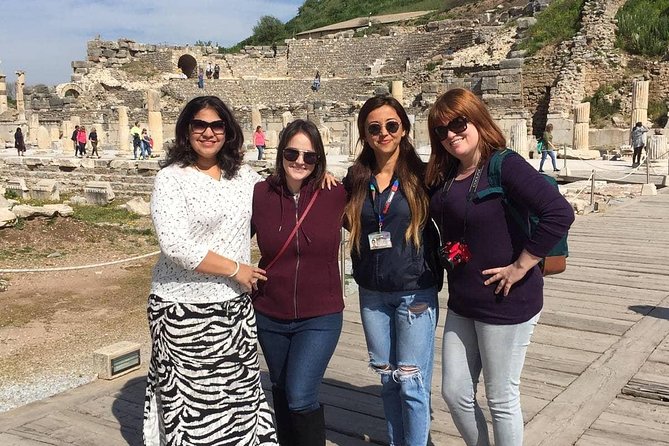
If you want the headline sights of western Turkey without the spreadsheet life, this is a practical route. You fly from Istanbul to İzmir, spend the day in the Ephesus area, sleep in Kuşadası, then fly again from Denizli/Çardak back to Istanbul after Pamukkale and Hierapolis.
What makes this especially attractive is how it balances structure with breathing room. You’re not doing “one stop, photo, next” nonstop. Instead, you get guided time at the big sites and then enough slack to wander the ruins and terraces in your own rhythm.
The second advantage is the overall pace. Domestic flights plus private transfers mean you avoid the worst of long overland days. That matters on a two-day trip, because every hour you save becomes more time walking, looking, and actually absorbing what you’re seeing.
A few more Istanbul tours and experiences worth a look



Price and What This Includes (Flights, Hotel, and Meals)
At $330 per person, the headline price looks straightforward, but the real value comes from what you get bundled. You’re paying for a guided small-group experience with:
- domestic flights (only if you choose the included-flight option)
- hotel for one night in Kusadasi
- airport transfers (listed as two transfers)
- breakfast and lunch (plus another lunch item)
- a professional licensed English-speaking guide
- rides in a private air-conditioned minibus
The most important cost note is that entrance fees are not included. You should budget the specific admissions listed:
- Ancient City of Ephesus: €45
- House of the Virgin Mary: €20
- Pamukkale Open Air Museum: €35
That’s about €100 in entrance fees on top of the tour price, plus drinks with meals and any personal spending. Still, compared with piecing together flights, hotel, transfers, and guided interpretation yourself, this tends to come out feeling efficient—especially when you value time and stress savings.
Day 1: Istanbul to İzmir, Ephesus Ruins, and Artemis Territory
Your day starts early, with pickup at 7:30 am. From your hotel lobby, you’re driven to the airport for a domestic flight of about 1 hour 30 minutes to İzmir. On arrival, you meet your driver, then head onward to the Ephesus/Selçuk area to meet up with your group and start sightseeing.
What stop timing feels like
Day 1 is built around one core goal: Ephesus and its surrounding highlights, finished with an easy evening in Kusadasi. That means you’ll likely spend most of the daylight hours walking through archaeological zones and imagining the scale of the ancient city.
It also means you’ll want to manage energy. Ephesus is not a quick glance kind of site. You’ll want comfortable shoes, water, and a plan to take short breaks instead of forcing long stretches.
The House of the Virgin Mary: A Quiet Stop With Big Religious Meaning
After you settle in, you go to the House of the Virgin Mary, located about 6 km north of the ruins of Ephesus.
This stop is special because it’s layered. The church itself was built from the 6th century AD over foundations believed to belong to a house from the 1st century. Tradition also places major events there, including belief about the Assumption on 15 August.
Practical takeaway: this is usually the more reflective, less strenuous moment of the day. If you prefer sites where you can slow down, look, and understand why people have traveled here for centuries, this is a good fit.
Entrance is not included in the tour price, so have that in mind for your total budget.




Ephesus Ancient City: What You’re Really Seeing When You Walk It
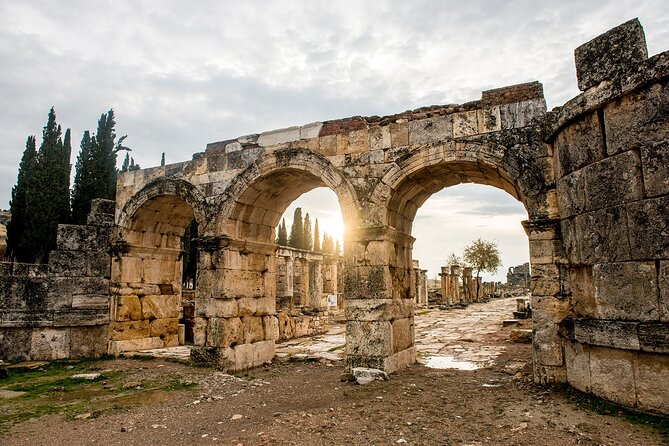
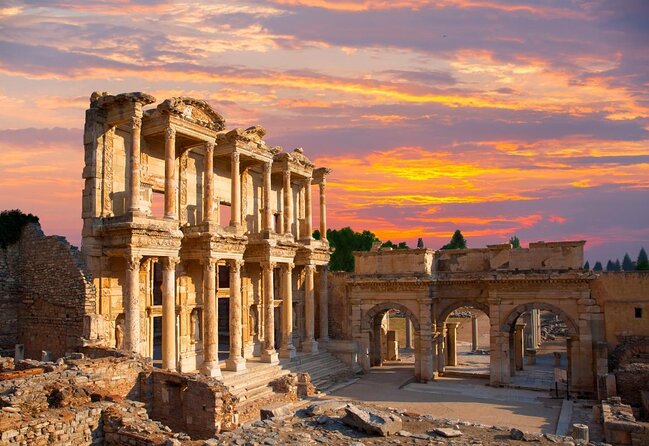
Then comes the main attraction: Ephesus Ancient City. The tour frames it as one of the best-preserved classical cities in the eastern Mediterranean, and that’s not exaggeration in spirit. You’re walking streets that connect major monuments, and the scale makes the city feel “alive” even in ruin.
A few facts worth keeping in your head while you walk:
- During the 1st century AD, Ephesus was the second largest city on the planet after Rome, with over 250,000 citizens.
- It served as a gateway between the East and the West.
- The harbor made it a trade center.
- It’s tied to the story of Mark Anthony and Cleopatra.
- It’s also linked to one of the Seven Wonders: the Temple of Artemis.
You’ll likely spend about 2 hours at Ephesus. That time is enough for the highlights, but not enough to do a slow “every carved detail” approach. If you want to photograph, rest, and still feel oriented, keep an eye on your pace and don’t try to sprint from monument to monument.
Temple of Artemis: A Wonder You See Through Context
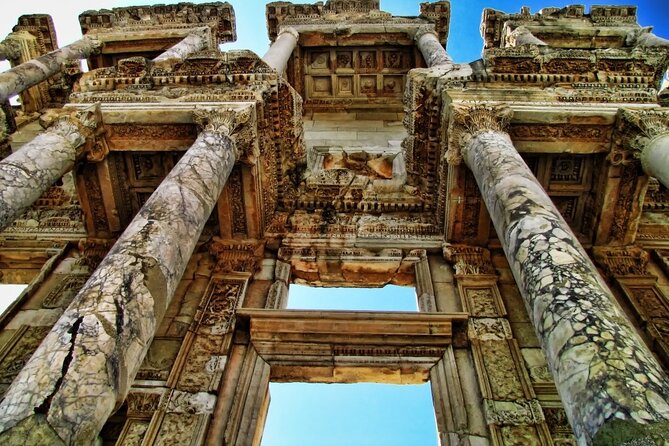
Next is the Temple of Artemis, which the tour notes as one of the Seven Wonders of the Ancient World. In the classical world, this sanctuary and its cult dedication to Artemis drew huge attention, turning Ephesus into a pilgrimage place.
The tour also shares a concrete detail: there were 127 Ionic columns, and they were about 19 meters tall. That number helps you understand what you’re missing when you look at ruins today.
One more practical note: because Artemis is tied closely to Ephesus, it works best when you just saw the city’s streets. Your brain connects the dots fast.
Entrance is not included, but you’re still using guide-provided access (the tour notes skip-the-line handling for Ephesus and Pamukkale).
Kusadasi Overnight: Why Staying Here Matters
After the day’s archaeological push, you drive to your hotel in Kuşadası for check-in and overnight.
Even though the itinerary doesn’t spell out your evening, the value is clear: you’re not traveling again that night, and Kusadası puts you close to the Pamukkale route for the next day. It’s also a helpful base because you’ll start day 2 near services and amenities instead of rolling straight from a flight into another long transfer.
From the review notes you can expect room comfort like a typical central hotel stay in the region, and at least some departures have included stays at places like Hotel Efe in Kusadasi—but the guaranteed “name” isn’t listed in the provided details, only the fact that it’s one night accommodation in Kusadası.
Day 2: Morning in Kusadasi, Pamukkale Terraces, and Hierapolis Necropolis
Day 2 begins with breakfast and check-out, and then your itinerary moves into a full day of thermal wonder.
Morning in Kusadasi (3 hours)
You have a 3-hour stop in Kusadasi with admission listed as free. The details aren’t broken down into specific landmarks, but treat it as your buffer: time to reset after day 1, grab water, and prepare for heat and walking.
Pamukkale Thermal Pools: 35°C Water and the UNESCO Factor
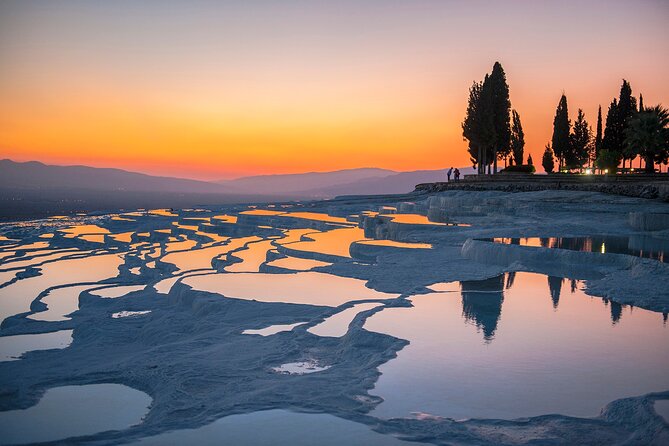
Then you head to Pamukkale Thermal Pools, described as pools of heaven on earth and noted as a UNESCO world heritage site.
The tour gives specific science-flavored context:
- hot springs run at about 35°C
- the water contains calcium bicarbonate
- terraces formed as warm water flowed over the hillside
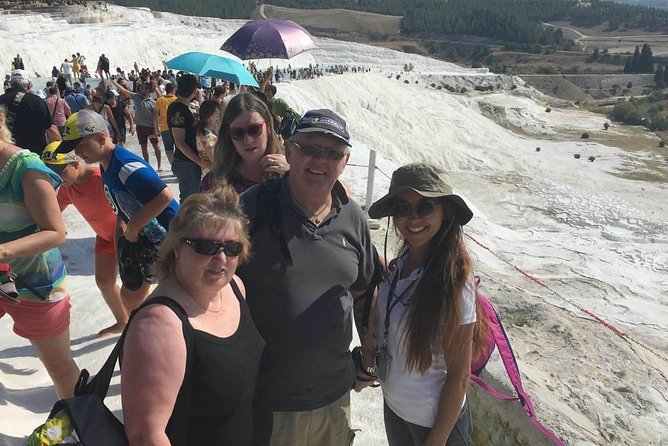
This is one of those places where you should plan around comfort. The area can feel hot and exposed, and walking on uneven travertine surfaces can be slippery. Go slow, keep an eye on your footing, and don’t expect this to be a “quick walk and done” stop. The itinerary gives about 2 hours here, which is enough for the main viewpoints and a longer look if you pace yourself.
Entrance to Pamukkale Open Air Museum is not included.
A practical tip from the experience vibe
Some people also plan a swim at Cleopatra Pool, where you’ll see the reference to a 2000-year-old column. If you want to do that, bring a swimsuit, and keep your towel and change clothes accessible.
Hierapolis and Pamukkale Sacred Pool: Roman Ruins at Water Level
After Pamukkale’s terraces, you move into Hierapolis & Pamukkale, with about 1 hour allocated.
The tour highlights two things:
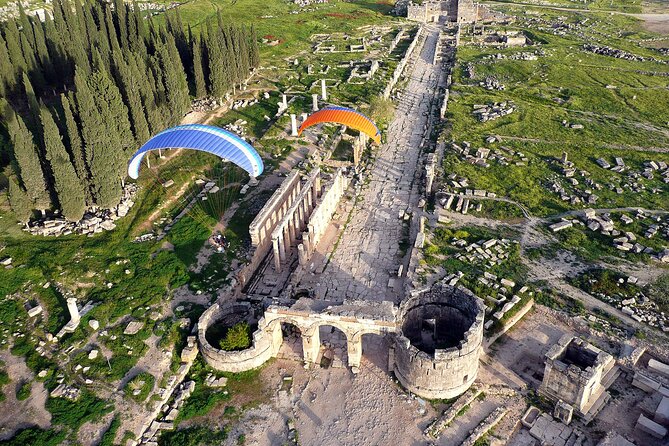
- Hierapolis has a necropolis with 1200 gravestones in Anatolia (as described).
- The Sacred Pool is a highlight, with shallow thermal waters rippling over Roman ruins beneath.
This is a nice contrast from Pamukkale’s white terraces. Here, you’re looking at the Roman urban layer—structures and ruins that connect the thermal setting to the ancient city’s daily life.
A word on expectations: one hour goes quickly here. If you want photos plus some reading/interpretation from your guide, stay close to the front and move only when your guide’s walking rhythm pauses.
Entrance is listed as partly covered in the plan (Hierapolis & Pamukkale stop includes a free admission flag in the itinerary section), but since Pamukkale Open Air Museum admission is listed separately as not included, it’s smart to confirm what you’re paying for on your specific day.
Flights and Transfers: Fast, but Follow the Script at Airports
The tour uses domestic flights to compress time:
- Istanbul to İzmir (about 1h 30m)
- Denizli/Çardak to Istanbul (about 1h 30m)
After the sights, you drive to Denizli Çardak Airport, fly back, then get picked up by a driver at Sabiha Gökçen (SAW).
Two logistics details matter:
- There is no assistant service for flights in airports. The driver drops you at the entrance and you follow instructions sent in advance to reach check-in.
- The driver will meet you at arrival with a sign bearing your name.
So, pack like a traveler who knows they’ll need to move efficiently: keep your passport and ticket info easy to reach, and aim to stay within sight of your driver instructions.
Also note the baggage allowance of 15 kg checked + 8 kg hand luggage is listed for the flight-included option. If you choose excluded-flight tickets, make sure you’re matching whatever baggage your own airline allows.
How the Guides Shape Your Experience (And Why Names Matter)
This tour’s quality comes down to the guide hands-on time. From the names that show up in recent feedback—Medi, Murt/Mert, and OZ—you can see the tour tends to assign different people to different sections.
What to watch for in the way you’ll experience the day:
- Ephesus guides can make the ruins feel logical, not chaotic. The tour style is designed for interpretation while you walk.
- On Pamukkale, some departures may provide more site context than others. The itinerary gives you time on-site, so you’ll benefit most if you ask questions early and keep your guide near you while the history is being explained.
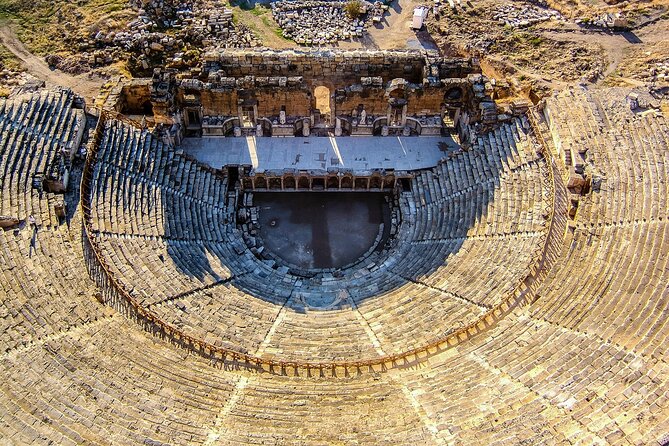
You don’t need to be an archaeology expert. You just need someone to help you see why a theater matters or what the Artemis temple meant to the city’s economy and worship.
And since this is a max-12 group, you should have a better chance of getting quick answers than on massive coach tours.
Who Should Book This Two-Day Ephesus and Pamukkale Tour
This is a strong fit if you:
- want the top highlights of Ephesus and Pamukkale in 48 hours
- prefer guided time over map-guessing
- value time efficiency more than total slow travel
- like the comfort of private air-conditioned minibus rides between zones
- are okay with moderate walking and sun exposure (the tour asks for moderate physical fitness)
It’s also a good choice for couples and solo travelers who don’t want to deal with arranging flights, a hotel night, and transfers on their own.
If you’re the type who wants deep archaeological study at a slower tempo, you may find the two-day structure a little tight. But for a first visit, it hits the main notes without dragging the trip into a full week.
Should You Book? My Take on Value and Timing
Book it if you want a clean, guided route that saves you from logistics stress, and you’re happy to pay extra for entrance fees and any drinks. The combination of flights, skip-the-line handling for key sites, and a small group size makes the price feel more justified than it looks at first glance.
Skip it or choose a different option if your priority is to avoid late airport waits on day 2, or if you hate heat and want more time in the shade. The Pamukkale day can feel long and warm, and return flight timing can affect how comfortable you feel in airports.
If you’re flexible on the timetable and ready for a high-impact weekend, this tour is the kind of itinerary that turns “I want to see Ephesus and Pamukkale” into a done deal.
FAQ
What time does pickup start?
Pickup is scheduled to begin at 7:30 am.
How many people are in the group?
This tour has a maximum of 12 travelers.
Are domestic flights included in the price?
Flights are included only if you select the included-flight option. The tour also offers an excluded-flight option.
What’s included with the tour besides flights?
Included items list breakfast, airport transfers (2 transfers), a professional licensed guide, one night accommodation in Kusadasi, and lunch.
What entrance fees should I expect to pay separately?
Entrance fees are not included. The tour lists: Ephesus €45, House of the Virgin Mary €20, and Pamukkale Open Air Museum €35.
Is there skip-the-line access?
Yes. The tour notes that your guide will have skip-the-line tickets for Ephesus and Pamukkale.
Where do I stay overnight?
You stay for one night in Kusadasi.
Is the tour guide language English?
Yes, the tour is offered in English.
Is there luggage included or a baggage limit?
A baggage allowance of 15 kg checked and 8 kg hand luggage is listed for the flight-included option.
What’s the cancellation policy?
Free cancellation is available up to 24 hours in advance for a full refund.