REVIEW · ISTANBUL
2 Days Ephesus & Pamukkale Tours From Istanbul
Book on Viator →Operated by Puerto Travel Turkey · Bookable on Viator
Two days, two ancient worlds. This tour strings together Ephesus and Pamukkale with smooth airport transfers and real time inside the sites, not just bus stops.
I especially like the small-group feel (up to 15) and the way guides such as Güfte and Darya are praised for adapting to your pace and questions.
One thing to plan carefully: you need a morning domestic flight into Izmir (around 08:00–08:30), and the package notes entrance fees are not included even though some stops are marked as ticket-covered—so you’ll want to confirm what’s covered when you book.
In This Review
- Key highlights at a glance
- How the Istanbul-to-Izmir schedule actually works
- Virgin Mary’s House in the hills: your calm warm-up
- Ephesus Ancient City: the day’s anchor stop
- Terrace Houses vs. your time: choose your level of detail
- The 360° Ephesus Experience Museum: ruins plus the missing pieces
- Selçuk lunch and the Temple of Artemis viewpoint
- Kusadasi hotel night: when you need a real break
- The drive to Pamukkale: countryside and that first sight of white terraces
- Hierapolis Necropolis and Roman Theatre: the ruins with a view
- Hierapolis Archaeology Museum: optional, but good if you like artifacts
- Cleopatra Pools and the warm-water option
- Pamukkale travertines: walking barefoot on the cotton-white terraces
- Lunch in Pamukkale and a slower end to the day
- Return to Istanbul: one more transfer, then you’re done
- Price, value, and what you’re really paying for
- Should you book this Ephesus & Pamukkale tour?
- FAQ
- Do I need to book flights for this tour?
- Where do you pick me up in Istanbul?
- How large is the group?
- Is the tour in English?
- Is accommodation included?
- Are lunch and dinner included?
- Are entrance tickets included?
- What fitness level do I need?
- What airport do I leave from on day two?
- Is it cancelled if weather is bad?
Key highlights at a glance
- Small group size (max 15): easier questions, better pacing
- Pro guide focus: strong explanations tied to what you’re seeing
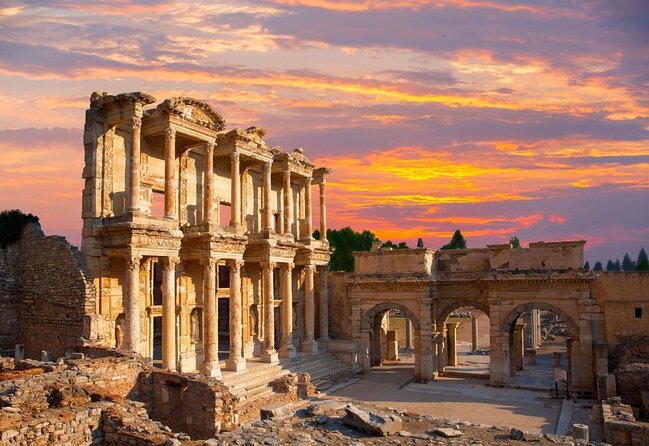
- Ephesus classics: Celsus, Trajan Fountain, and the Great Theatre
- Pamukkale time on the travertines: barefoot walking and thermal pools
- Optional add-ons: Terrace Houses and Cleopatra Pools if you want extra
- Two-airport logistics: Izmir in, Denizli Çardak out, with transfers
How the Istanbul-to-Izmir schedule actually works
This is an Istanbul-based 2-day plan, but the action really starts at Izmir Airport. You’re picked up from your Istanbul hotel early, then transferred to the airport so you can catch a morning domestic flight that lands in Izmir around 08:00–08:30. Domestic flights are not included, so your entire timeline depends on that arrival window.
Once you land, you meet a representative at the arrivals area, then take an air-conditioned drive toward the Ephesus region. The ride is about 45–60 minutes, and you’ll get that Aegean-Coast feeling—peach orchards and olive groves going by while you get oriented for the big day ahead.
A few more Istanbul tours and experiences worth a look



Virgin Mary’s House in the hills: your calm warm-up
After arriving in Selçuk, you meet your professional guide and get on the bus that carries you up toward Nightingale Mountain. First stop is the House of the Virgin Mary, a peaceful pilgrimage site believed to be Mary’s final residence. It has a chapel, holy water fountains, and a wishing wall where you can leave a wish if that sort of ritual matters to you.
Why this stop works: it breaks up the day before you hit the crowds and crowds of stones at Ephesus. You also get a quieter kind of focus—less museum-style pointing, more “slow down and look around.”
Practical note: plan for some uphill walking. The tour lists moderate physical fitness as the right fit, so if your legs get cranky, bring water and take your time.
Ephesus Ancient City: the day’s anchor stop
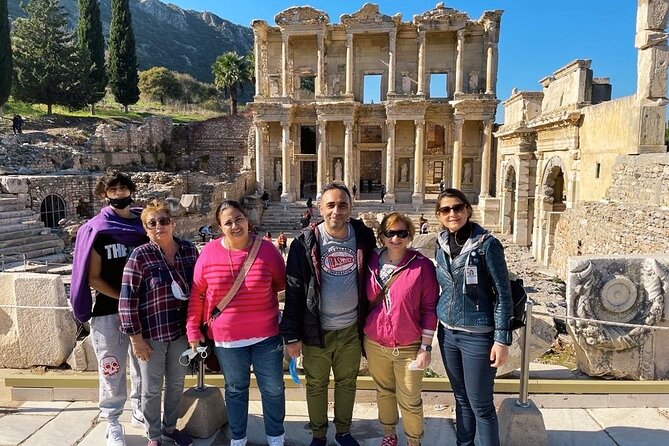
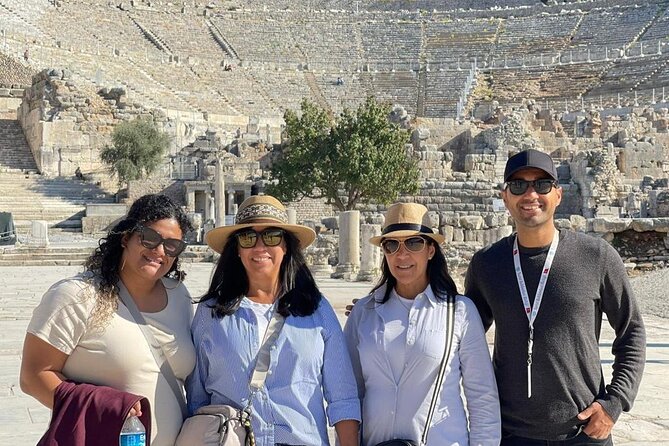
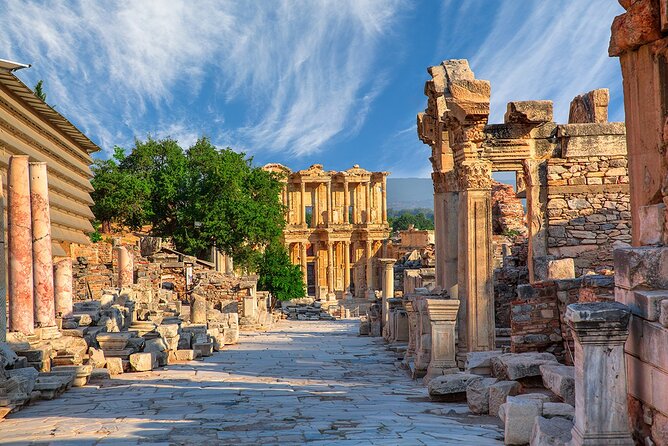
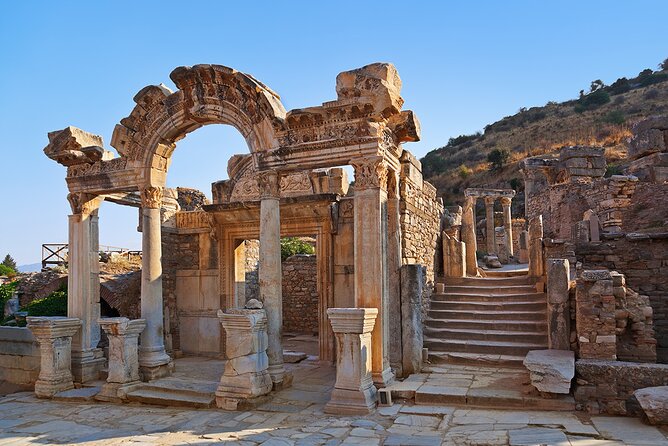
Ephesus is the big headline, and the route delivers its core highlights. Your guide leads you through the original marble streets of one of the best-preserved Roman cities in the world. Expect the famous sights in a logical flow: Celsus Library, the Temple of Hadrian, the Trajan Fountain, and then the huge open-air Great Theatre where St. Paul preached.
This is where you’ll feel why a good guide matters. In the Ephesus portion, the guides on this tour (including Güfte and Darya, based on past departures) are praised for helping you picture daily life instead of reciting facts like a worksheet. That “make it make sense” skill is what turns a list of ruins into a place.
Time-wise, you get about 2 hours at Ephesus. That’s usually enough to see the major spaces without feeling like you’re sprinting through everything—especially if you’re willing to stop for a minute or two when something grabs your attention.
Terrace Houses vs. your time: choose your level of detail
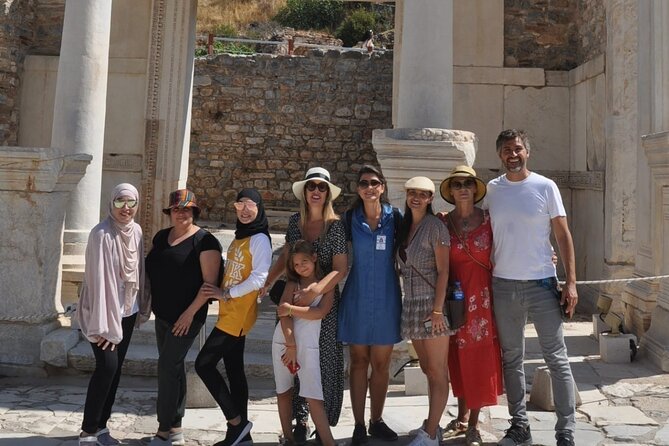
After Ephesus, you can add the Ephesus Terrace Houses. This part is marked optional, with tickets purchased at the entrance. If you go, you’ll see “private life” spaces of the Roman elite on Bulbul Mountain slopes, with impressive mosaics and frescoes preserved under modern protection.
If you don’t want to pay extra or if you’re tired from the walking, you can skip this and keep your energy for the next stop. My take: Terrace Houses are worth it only if you like visual details—floor patterns, wall art, and the idea of stepping into a wealthy home.
The 360° Ephesus Experience Museum: ruins plus the missing pieces
Next is the Ephesus Experience Museum, a museum with a 360-degree digital presentation designed to show you what ancient Ephesus may have looked like at its height. You’re guided into the experience (about 30 minutes), which helps connect the empty shells you just walked through to their former scale.
This is a smart pairing with Ephesus because ruins can feel disconnected if you don’t have visual context. The museum won’t replace walking the real site—but it can fill in the gaps quickly, especially if you’re visiting for the first time.




Selçuk lunch and the Temple of Artemis viewpoint
Lunch happens in Selçuk at a traditional local restaurant, with Aegean-style food. The tour listing doesn’t say lunch is included in the base package (it’s in the “Not Included” section), but the day does include a scheduled lunch stop, so budget for it on the spot.
Later, you stop at the Temple of Artemis site. Today, you’ll see a single surviving column, but your guide will help you place it in context: Artemis was one of the Seven Wonders of the ancient world, and the temple was once the largest in the Greek world. Even in its ruined state, the site is a good pause before the day’s closing drive.
You also get a panoramic view from there—helpful for understanding how the area connects: the ruins, nearby landmarks, and the broader setting around Selçuk.
Kusadasi hotel night: when you need a real break
After the long Ephesus day, you drive to Kuşadası on the coast. You check in to local hotel accommodation, and the evening is yours—perfect for a slow dinner and a sunset walk by the sea if that’s your thing.
This is more than a “rest stop.” It’s what makes a two-day plan actually enjoyable instead of a blur. If you push too hard without the recovery night, Pamukkale day can feel like you’re dragging yourself uphill for travertine photos.
The drive to Pamukkale: countryside and that first sight of white terraces
Day two begins with a drive from the coast into the inner Aegean region toward Pamukkale (about 3 hours of travel time). Your guide shares stories about local culture and the changing scenery—olive, fig, and cotton trees along the way.
There’s also that buildup effect: the white travertines—the famous “cotton castle” look—appear on the horizon, and suddenly you understand why people get emotional over bathroom-scale geology.
You take a short break to stretch. Use it. You’ll appreciate having your legs back for the walking at Pamukkale and nearby Hierapolis.
Hierapolis Necropolis and Roman Theatre: the ruins with a view
At Pamukkale, you step into the ruins of Hierapolis, the ancient “holy city” built above the terraces. Exploration starts with the Necropolis, one of the largest cemetery complexes in Anatolia. You’ll walk through monumental gates and keep moving toward the Roman Theatre, where the view over the valley below is a big part of the payoff.
Your guide explains how Hierapolis became known for healing and thermal baths during the Roman Empire. This is important because Pamukkale isn’t just a pretty white slope—it’s tied to the idea of water curing what ails you, which changes how you interpret the whole site.
About 2 hours here gives you enough time to take in the main monumental spaces without turning it into a power-walk contest.
Hierapolis Archaeology Museum: optional, but good if you like artifacts
If you want more than stones and views, there’s an optional stop at the Hierapolis Archaeology Museum. It’s located inside a beautifully restored Roman Bath area, and the museum holds artifacts from Hierapolis, Laodicea, and the Lycus Valley.
You can see marble sarcophagi, Roman statues, and rare coins. The time slot is about 30 minutes. If you’re more of a “walk and look” person than a “stand and read” person, you might skip this. But if you like seeing what survived the centuries, it’s a nice change of pace.
Cleopatra Pools and the warm-water option
Next up are the Cleopatra Pools. This is described as a thermal pool with warm mineral water, plus a setting with lush gardens and submerged ancient marble columns. The idea is that swimming here is optional, and you’d pay at the pool office.
This is one of those “you decide” moments. If you enjoy water breaks and don’t mind extra time and a separate fee, it can be a fun change from walking ruins. If you’re focused on the main terraces, you can still enjoy the area without swimming.
Pamukkale travertines: walking barefoot on the cotton-white terraces
This is the signature moment. You get about 45 minutes for the Pamukkale Thermal Pools / travertines, which are made by calcium-rich thermal water cascading down the hill over thousands of years. The ground is white and smooth in appearance—travertine—and you’ll have free time to walk barefoot on the terraces and soak your feet in the warm turquoise pools.
Photo tip without the fluff: go early in your time block when the light feels better and before you’re surrounded by the thickest clusters. Also, remember this is a hot spot. Your best photos often come when you step slightly away from the busiest viewpoints and let the scale do the work.
Lunch in Pamukkale and a slower end to the day
After exploring the terraces and Hierapolis, you’ll take a break for lunch at a local restaurant near Pamukkale village. The tour lists lunch as not included, but the schedule includes time for it. This is also where you regroup—hydrate, sit down, and let your legs recover before the airport transfer.
Then you’re back on the road for the final logistics: the group transfers to Denizli Çardak Airport so you can fly back. You’re aiming for an on-time arrival, with luggage help at the terminal drop-off.
Return to Istanbul: one more transfer, then you’re done
When you land back in Istanbul, the tour includes a private transfer back to your accommodation. The driver assists with luggage, which matters after two long days where you’ve been doing airports plus walking plus sun.
It’s a relief to end with a clean handoff rather than figuring out public transport after a long final day.
Price, value, and what you’re really paying for
At $614.52 per person, this isn’t a cheap “bus and ticket” option. The value comes from bundling several things that are annoying to line up on your own:
- Air-conditioned transfers across regions, not just local sightseeing
- A professional English-speaking guide for both Ephesus and Pamukkale days
- Hotel accommodation and breakfast (your second day won’t be another all-nighter)
- Airport-to-site coordination on both ends of the trip
But there are a couple of money questions you should check before you commit:
- Flights are not included, and the schedule depends on arriving Izmir in that morning window.
- The package also lists that entrance fees are not included, while some stops on the schedule are marked as ticket included/free. In real life, that means you should confirm what you personally will pay at each site.
If you want maximum value, you’ll get it by going with the flow: let the guide handle timing, use the included guidance at the major sites, and only pay extra when you actually want the optional pieces like Terrace Houses or Cleopatra Pools.
Should you book this Ephesus & Pamukkale tour?
I’d book it if you want a two-day plan that is structured, guide-led, and built around the biggest hits—Ephesus and Pamukkale—without you managing the logistics between airports and sites. It also makes sense if you like having your schedule handled, since guides such as Güfte (and others like Darya, on past departures) are repeatedly praised for flexibility and for answering questions clearly. Families also seem to enjoy how the guide keeps the day manageable even in hot weather.
I’d think twice if you hate early starts. You’re tied to a morning flight into Izmir, and the day starts early whether you feel ready or not. Also, if you’re very budget-sensitive, confirm entrance fees and lunch costs up front, since the inclusions list and the stop-by-stop notes can create confusion.
If you’re okay with those trade-offs, this tour is a strong way to see two of Turkey’s top archaeological and natural sites in just 48 hours.
FAQ
Do I need to book flights for this tour?
Yes. Domestic flight tickets are not included. You’re asked to book a morning flight arriving in Izmir around 08:00–08:30 AM, and you’ll be transferred to Denizli Çardak Airport for your return.
Where do you pick me up in Istanbul?
Pickup is offered from your hotel in Istanbul early in the morning.
How large is the group?
The tour lists a maximum of 15 travelers.
Is the tour in English?
Yes, it’s offered in English.
Is accommodation included?
Yes. Accommodation in local hotels and breakfast are included, and you’ll have a hotel night between the two days.
Are lunch and dinner included?
Lunch and dinner and drinks are listed as not included. The itinerary does include scheduled lunch stops, so you should plan to pay for meals on your own.
Are entrance tickets included?
The tour notes that entrance fees to the sites and museums are not included, even though some stops are marked as ticket free or ticket included. When you book, confirm what you personally will pay at each stop.
What fitness level do I need?
The tour says a moderate physical fitness level is recommended, since you’ll be walking around ruins and sites.
What airport do I leave from on day two?
You’ll be transferred to Denizli Çardak Airport at the end of the tour.
Is it cancelled if weather is bad?
The experience requires good weather. If it’s canceled due to poor weather, you’ll be offered a different date or a full refund.