REVIEW · ISTANBUL
1 Night and 2 Days Private Gobeklitepe Tour from Istanbul
Book on Viator →Operated by SELİM BAKIR TURİZM · Bookable on Viator
Gobeklitepe feels like a time machine with wings. In just 2 days, you get a guided run through Göbeklitepe and the nearby Karahantepe area, where the oldest known temple finds change how you think about early human life. I like that it’s built around a pro guide, a private group, and early starts that make the short trip actually count.
I also like the way the route mixes big-ticket archaeology with religious sites and everyday local culture. You’re not only looking at stones; you’re seeing why this region matters in stories from Jewish, Christian, and Islamic traditions, then finishing with a classic bazaar stop for pistachio coffee at Gümrük Han.
One drawback: this is a fast, full schedule. Starting at 4:30 am and flying from Istanbul means you’ll want comfortable shoes and a flexible attitude toward long days, plus lunches and dinners are not included.
In This Review
- Key things I’d note before you go
- How the Istanbul-to-Şanlıurfa plan really works (and why it’s worth it)
- Göbeklitepe: T-shaped pillars, lions, and a settled-life plot twist
- Sanlıurfa Archaeology and Mosaic Museum: connect the carvings to the artifacts
- Balıklıgöl and the Cave of Abraham: where legend becomes a physical route
- Gümrük Han: short stop, big atmosphere, and pistachio coffee
- Day 2 starts with Karahantepe: a Göbeklitepe sister site at human scale
- Soğmatar (Sogmatar): rain in the name, seven temples in the story
- Harran: Abraham’s connection and the beehive house views
- Value check: what you’re really paying for at $1,320 per person
- Should you book this private Gobeklitepe tour from Istanbul?
- FAQ
- What time does the tour start?
- Is pickup available from my hotel in Istanbul?
- What’s included in the price?
- Are meals included?
- What language is the tour offered in?
- Can I cancel and get a full refund?
Key things I’d note before you go
- Private group + English guide: you won’t be squeezed into a crowd while the guide works through the details.
- Flights and hotel are included: you’re paying for an Istanbul-to-Şanlıurfa “package,” not just admission to sites.
- Göbeklitepe + Karahantepe: two major T-shaped-stelae areas in the same trip gives you real comparison value.
- Museum time in Şanlıurfa: you’ll see artifacts that help you connect the carvings you saw outdoors to the bigger story.
- Religious sites with practical access rules: for Balıklıgöl, entering the cave has a specific pathway through the courtyard.
- Pistachio coffee in a historic bazaar inn: a short cultural break that feels genuinely local.
How the Istanbul-to-Şanlıurfa plan really works (and why it’s worth it)
This tour is designed for the traveler who wants Göbeklitepe but doesn’t want to burn days on logistics. You start early in Istanbul, then fly to Şanlıurfa, where the rest of the experience runs with an air-conditioned vehicle and a professional guide.
The practical win is that flights, transfers (hotel–airport–hotel), and your 2-day B&B accommodation are bundled. That matters because Göbeklitepe is far enough from Istanbul that doing everything on your own turns into a lot of planning: timing, driving, tickets, and a guide who can translate what you’re actually looking at.
You’ll also get a mobile ticket, and the tour is offered in English. It’s private, so only your group participates, which usually makes questions easier and pacing more comfortable.
You can also read our reviews of more private tours in Istanbul
Göbeklitepe: T-shaped pillars, lions, and a settled-life plot twist
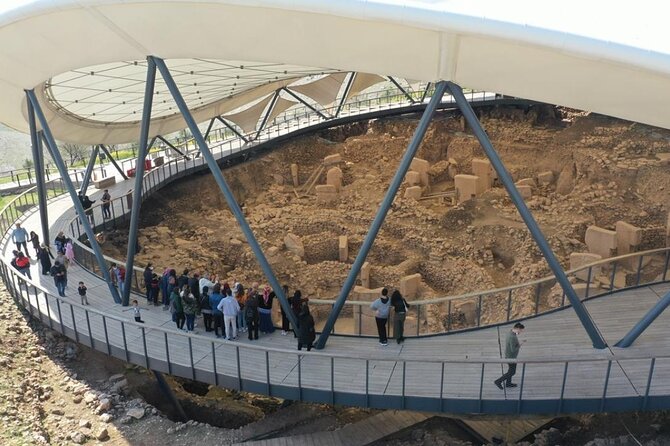
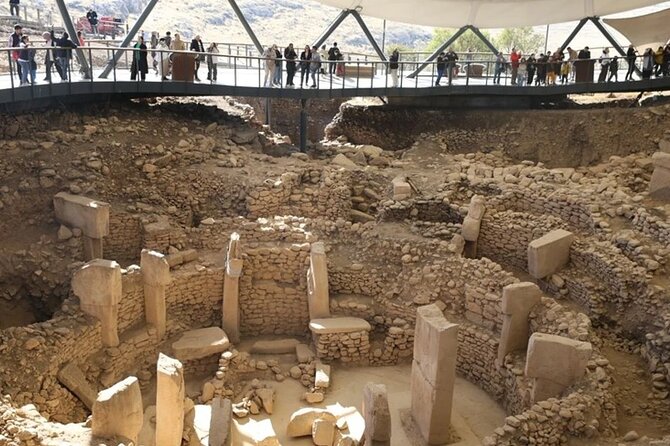
Göbeklitepe is the headline for a reason. It’s described as the oldest known temple complex in human history and the first major religious center on earth, with about 20 temples known in the region and six unearthed so far. UNESCO recognized it as a World Heritage site in 2018, and once you’re there, the scale of “ancient” stops being an idea and becomes real.
What you’ll focus on is the architecture and symbolism. You can see at least 15 structures and more than 200 obelisks, including the T-shaped columns (about 3 to 6 meters long) that are thought to be stylized human figures. There’s also a 3-dimensional lion relief, which supports the possibility that lions were part of Anatolian Neolithic life.
Here’s the deeper reason I think this stop is so satisfying: it doesn’t just add another famous site. The discovery suggests settled life may have revolved around temples first, not agriculture as the main starting point. If you’ve ever learned early history as a simple line from farming to villages to monuments, Göbeklitepe complicates the story in a good way.
Practical tip: plan for walking around outdoor ruins. Bring comfortable shoes and a water bottle, because you’ll be outdoors for at least the guided time (admission is included).
Sanlıurfa Archaeology and Mosaic Museum: connect the carvings to the artifacts
After Göbeklitepe, you head into the museum world of Şanlıurfa. This is a smart move because Göbeklitepe outdoors can feel abstract unless someone helps you place what you’re seeing in context.
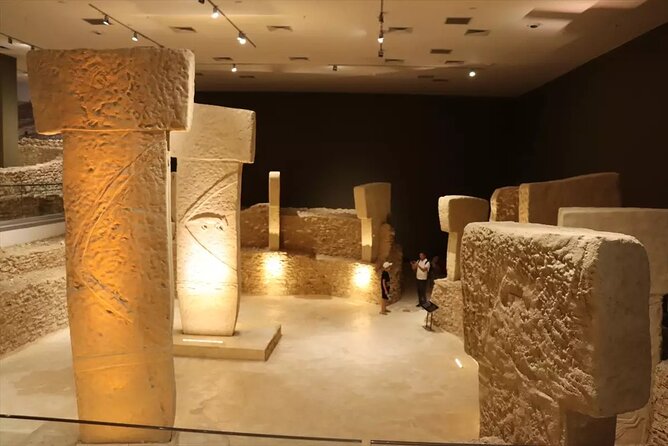
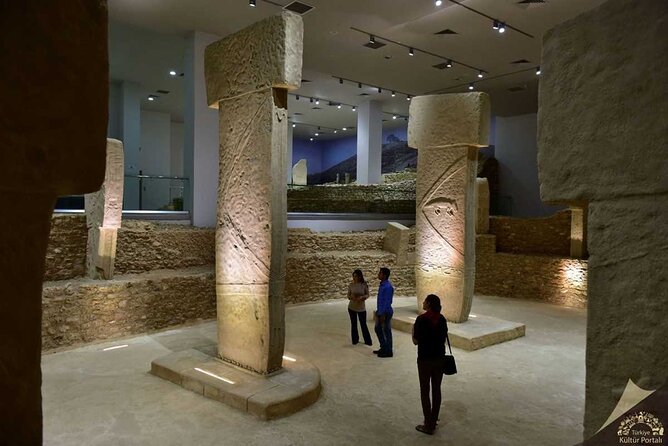
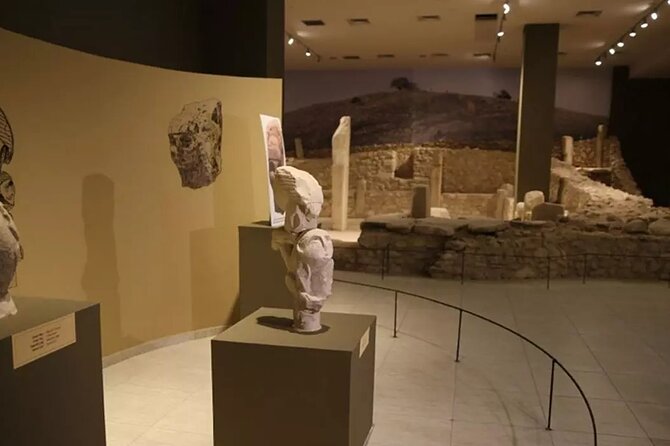
At the Sanlıurfa Archaeological Museum, you get exhibits tied to the region’s major Neolithic and earlier discoveries. The highlights listed include an imitation of the Göbeklitepe D Temple, the original Nevali Çori Temple, and what’s described as the oldest statue in the world. There are also around 13,200 artifacts, plus periodic animations that help explain the material rather than leaving you with only labels.
And you’ll also see mosaics described as among the most aesthetically pleasing, connected to the New Şanlıurfa Museum. The museum time is about 2 hours, and admission is included.
What I like about adding a museum stop is that it upgrades your outdoor memories. By the time you return to the sacred-site stops later, you tend to notice more details—shapes, materials, and why certain motifs keep showing up.
Balıklıgöl and the Cave of Abraham: where legend becomes a physical route
Balıklıgöl is one of those places where architecture, water, and story all overlap. The Pool of Abraham is tied to Jewish and Islamic legends, including the idea that Nimrod threw Abraham into a fire. Whether you look at it as religious tradition, local culture, or history-shaped storytelling, the setting is undeniably focused.
The tour also takes you to the Cave of Abraham, described as a pilgrimage site in Urfa and connected to the story of Abraham’s protection as an infant. There’s a praying area built inside the cave, and the exact spot where Abraham is said to have been born is protected by a glass encasement. You’ll also see faucets inside the cave where devotees can wash hands with holy water.
One important practical detail: to enter the cave, you go through the same courtyard used by the Mevlid-I Halil Mosque. If you’re sensitive to tight pathways or crowds, it’s good to know ahead of time that it’s not a free-for-all entrance—it’s structured.
Admission is included for this stop, and the time on site is about 1 hour. You’ll spend that time absorbing the water, the cave interior, and the ritual elements that make the place feel alive even if you’re just there for the sights.
Gümrük Han: short stop, big atmosphere, and pistachio coffee
Not every important stop needs to be long. After Balıklıgöl, you’ll go to Gümrük Han, a historic 440-year-old inn located in the center of the historical bazaars.
The focus here is food and flavor, specifically pistachio coffee made from wild pistachios. There’s a local proverb about remembering a cup of coffee for forty years, and whether you take it literally or not, this is the kind of pause that helps the day feel less like a sprint.
This stop is listed as about 30 minutes, with admission free. If you’ve been staring at carved stone all day, this is a nice reset: you switch to scent, taste, and casual bazaar energy.
You can also read our reviews of more evening experiences in Istanbul



Day 2 starts with Karahantepe: a Göbeklitepe sister site at human scale
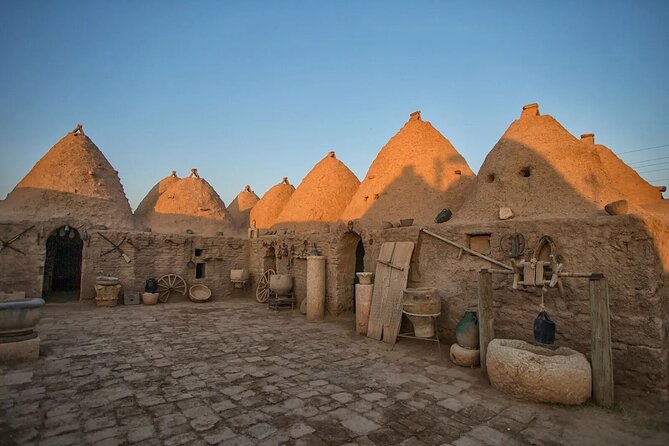
Day 2 keeps the momentum but adds variety. Your first stop is Karahantepe Orenyeri (Karahan Tepe), an archaeological site near Şanlıurfa Province.
This site matters because it’s close to Göbeklitepe and has related finds. Archaeologists have uncovered T-shaped stelae there, and excavations have uncovered around 250 obelisks featuring animal figures. It’s positioned as part of the broader Göbeklitepe Culture and Karahantepe Excavations project.
The route description also helps you visualize the location: it’s near Yağmurlu, about 46 kilometers east of Göbeklitepe, and local people call the area Keçilitepe. It’s part of the “Taş Tepeler” region, where more similar sites are being uncovered.
Time on site is about 1 hour 30 minutes, and admission is included. I like this stop because it gives you comparison value. You can see how the iconography and architectural approach repeats across related sites—and that makes Göbeklitepe feel less like a one-off miracle and more like part of a wider cultural network.
Soğmatar (Sogmatar): rain in the name, seven temples in the story
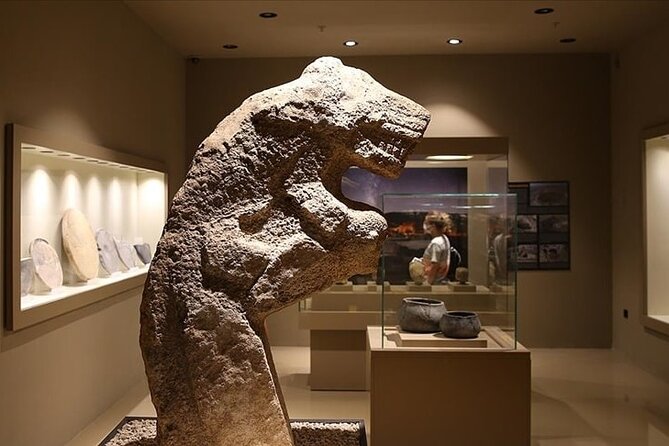
Next up is Soğmatar, and even the name pulls you in. The term Soğmatar is linked to “Matar,” Arabic for rain, which sets the tone for the stories tied to the place.
There’s a tradition here connected to Prophet Moses escaping Pharaoh and farming in the region, plus a claim that a well hole was opened by Moses’ scepter. The site is also described as having remnants of a civilization dating to the 2nd century, originally treated as a pagan center with an outside sanctuary.
The sanctuary story is specific: the seven temples are described as dedicated to the Sun, Moon, Saturn, Jupiter, Mars, Venus, and Mercury. Later investigation is said to have revealed it as a grave monument and sacred area, interpreted as a representation of Mare-late (Lord of Gods), with people praying toward the center in a way compared to modern prayers toward Mecca.
You’ll visit Pognon’s Cave, the sacred hill, and the Mars temple. Admission for this portion is listed as free, and time is about 1 hour.
I think the value here is how it broadens your view of the region. After Göbeklitepe, it would be easy to treat history as a single highlight. Soğmatar reminds you that this landscape kept collecting meanings over centuries.
Harran: Abraham’s connection and the beehive house views
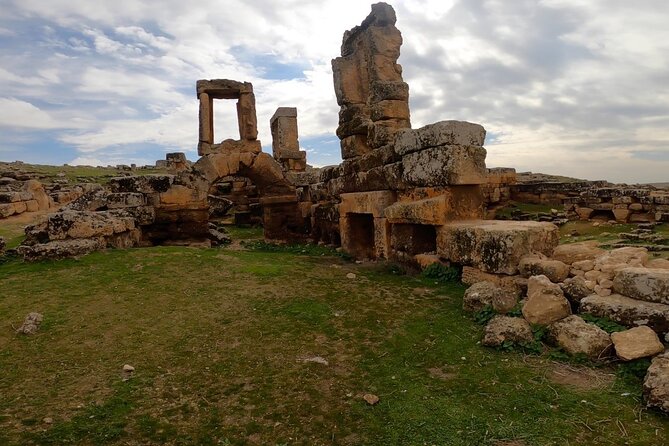
Then you shift to Harran, and Harran gives you something different: a living-looking setting where ancient life turns into a photo-friendly modern view.
The tour includes nearby Harran, focusing on beehive houses, which are the real star of the stop. The Bible connection mentioned is that Harran is where prophet Abraham spent a few years with his family before moving on to Israel, the Promised Land.
The plan calls out that you’ll have exceptional photo opportunities here. That’s useful because Harran is one of the rare ancient-modern overlaps where photos genuinely help you remember the shapes of the place.
After that, you’ll do a short stop at Meşhur Harran Evleri (bee houses you must see). That time is brief—about 15 minutes—with admission included.
If you’re trying to balance “big ruins” with “everyday architecture,” Harran is a smart final note. The day ends with a scene that feels less like museum glass and more like a place people still point you toward.
Value check: what you’re really paying for at $1,320 per person
Let’s talk money in a way that helps you decide. The price listed is $1,320 per person, and the key point is what’s bundled.
Included items on this tour are substantial:
- Flights Istanbul ⇄ Şanlıurfa
- Transfers hotel–airport–hotel in Istanbul
- Accommodation with bed and breakfast (2 breakfasts total)
- A professional tour guide
- Air-conditioned vehicle for ground time in the region
- Admission tickets for major sites (with some marked as free)
- A private setup (your group only)
- Mobile ticket
Not included are lunches and dinners. That means you’re not paying for every meal, but you’re getting the heavy logistics handled. And based on what’s been shared from past trips, the rhythm can include snacks and tea, plus later meals at local restaurants for an extra, reasonable price.
So where does the value land? For most people, it comes down to time. If you try to DIY this, the trip starts with a flight, then becomes a multi-stop archaeology and religious-site route. The guide makes those stops work, especially at Göbeklitepe and Karahantepe, where the site details matter.
Who is this best for?
- You want to do Göbeklitepe as a side trip from Istanbul without sacrificing context.
- You like archaeology with explanations, not just photos.
- You’re okay with an early morning start and a packed, two-day circuit.
Who might pause first?
- If you hate early starts or prefer slow travel with lots of downtime, this may feel like a sprint.
- If you’re on a tight meal budget, remember lunches/dinners are on you.
Should you book this private Gobeklitepe tour from Istanbul?
I’d book it if you want the practical shortcut: flights, hotel, admissions, and a guide who can make the sites click. With Göbeklitepe plus Karahantepe in the same private framework, you get more than a single “tick the box” day.
I’d think twice if your ideal trip is relaxed and unstructured. This is built for efficiency—4:30 am, flying, then a serious lineup of sites across two days—so you’ll enjoy it most if you can match that pace.
If you’re the kind of traveler who likes learning what you’re looking at—then this tour is a strong fit, and it’s the kind of itinerary that turns a far-away wonder into a clear, guided story you can actually follow.
FAQ
What time does the tour start?
The start time is listed as 4:30 am. Pickup is arranged for guests staying at hotels in Istanbul.
Is pickup available from my hotel in Istanbul?
Yes. You can share your hotel location via WhatsApp, and the team will arrange pickup directly from your hotel.
What’s included in the price?
The tour includes round-trip flights between Istanbul and Şanlıurfa, hotel accommodation (bed and breakfast), airport transfers, an air-conditioned vehicle, a professional guide, and admission tickets for listed sites (with some marked free). Mobile tickets are also included.
Are meals included?
Breakfast is included (2 breakfasts total), but lunches and dinners are not included.
What language is the tour offered in?
The tour is offered in English.
Can I cancel and get a full refund?
Yes—free cancellation is available up to 24 hours in advance for a full refund, based on the experience’s local time.