REVIEW · ISTANBUL
1, 2 Or 3 Days Private Istanbul Guided Tour
Book on Viator →Operated by Moira Travel Agency · Bookable on Viator
Istanbul feels like five cities stitched together, not one. This private 3-day route strings together the big Ottoman and Byzantine hitters with a human pace and real neighborhood time. I especially like how the tour mixes major monuments with “walk and look” moments in places like Sultanahmet and Balat.
What I like most is the guide format: you get a private licensed guide and you stay with them long enough to make sense of what you’re seeing. I also like that several stops are free, so you get a lot of value without turning the day into a ticket-shopping exercise.
One consideration: some of the biggest sights here—Topkapi Palace, Hagia Sophia, Basilica Cistern, and Dolmabahçe Palace—have admission tickets that are not included. If you’re traveling with tight time windows or a strict budget, plan your ticket time and spending before you go, and keep an eye on guide communication quality (one guide experience on day 2 was reported as too quiet).
In This Review
- Key things to know before you go
- Why this 3-day private Istanbul format feels worth it
- Price and ticket reality: what’s included vs. what costs extra
- Day 1: Sultanahmet monuments in an order that makes sense
- Topkapi Palace: Ottoman rule with real court-scale energy
- Blue Mosque: active worship plus the classic interior look
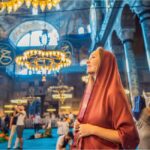
- Hagia Sophia Grand Mosque: Byzantine scale turned Ottoman icon
- Basilica Cistern: the city’s underground hush
- Grand Bazaar and Sultanahmet: shop-stroll without getting swallowed
- Day 2: Bosphorus glamour and modern Istanbul momentum
- Dolmabahçe Palace: late Ottoman westernization in a palace-sized package
- Bosphorus Strait: the water that splits Europe and Asia
- Taksim Square: Istanbul’s modern gathering point
- Spice Bazaar (Misir Çarşısı): smell-first shopping for real Ottoman trade flavor
- Galata Tower: panoramic views fast
- İstiklal Caddesi: independence avenue on foot
- Day 3: Süleymaniye, Balat, Pierre Loti, and the Golden Horn
- Süleymaniye Mosque: Mimar Sinan’s masterpiece and a social complex
- Balat: pastel streets with a multicultural past
- Pierre Loti Tepesi: a viewpoint that offers a breather
- Halic (Golden Horn): trade, harbor history, and light at the water
- Guide quality matters more than you think
- Getting the most value from this tour (without burning out)
- Should you book this Istanbul private tour?
Key things to know before you go
- Private, licensed guide: you’re not stuck with a “follow the crowd” script.
- Up to 15 people per group: still private, but you’ll want to stay close when the group moves.
- Pickup is offered: either at central Istanbul hotels/port areas or at the front of Hagia Sophia if you’re farther out.
- Mix of paid and free stops: key monuments need tickets, but many classic viewpoints and markets are free to enter.
- Walking days, smart stops: expect lots of seeing, short breaks, and frequent orientation so you don’t feel lost.
Why this 3-day private Istanbul format feels worth it
Istanbul can punish you for moving too fast. You arrive, you cram, you photograph, and then you forget why any of it matters. This tour’s strength is that it keeps you oriented—Ottoman versus Byzantine, palace versus mosque, waterfront versus old streets—so the city clicks into place.
At $160 per group (up to 15), the pricing isn’t “per person,” so your cost per traveler drops fast if you’re a small group sharing the guide. It’s a good fit if you want comfort and context more than a photo sprint.
Also, it’s practical that the tour includes a mobile ticket and uses a clear meeting point. You’re not hunting down a meeting kiosk while jet-lagged. Pickup is offered from central hotels or the port, and if your hotel isn’t central, you meet at the front of Hagia Sophia.
You can also read our reviews of more guided tours in Istanbul

Price and ticket reality: what’s included vs. what costs extra
Here’s the part that can surprise people: museum/attraction tickets are not included, even though many stops are free. You’ll likely pay out of pocket for:
- Topkapi Palace (paid)
- Hagia Sophia Grand Mosque (paid)
- Basilica Cistern (paid)
- Dolmabahçe Palace (paid)
But you’ll also hit several stops where admission is free, including:
- Blue Mosque
- Grand Bazaar
- Sultanahmet District sights
- Spice Bazaar (Misir Çarşısı)
- Galata Tower
- İstiklal Caddesi (street walk)
- Süleymaniye Mosque
- Balat
- Pierre Loti Tepesi
- Golden Horn (Haliç)
This mix is actually smart value. You’ll spend money where it counts—on the major timed interiors—then save on places that are about streets, views, and atmosphere.
Day 1: Sultanahmet monuments in an order that makes sense
Day 1 is built around the historic heart of Istanbul: Sultanahmet. You start with power and governance at Topkapi, then move into the city’s iconic religious architecture, then finish underground and inside a market. The pacing matters because each stop answers the previous one.
Topkapi Palace: Ottoman rule with real court-scale energy
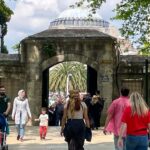
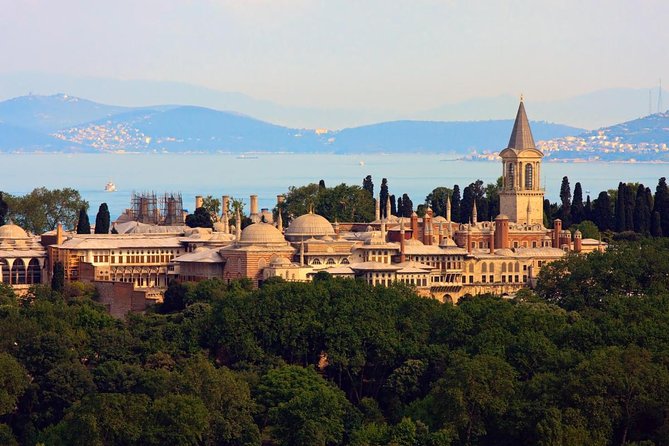
Topkapi Palace is huge in both size and meaning. It was the main residence of Ottoman sultans and the empire’s administrative center for nearly 400 years, sitting on the peninsula above the Marmara Sea, the Bosphorus, and the Golden Horn. Even if you only spend about two hours, you’ll come away understanding why Istanbul looked so “controlled” from within—this wasn’t a casual palace.
The drawback is simple: Topkapi is a timed-ticket, high-foot-traffic kind of place. You’ll want comfy shoes and a willingness to slow down inside courtyards and halls, not just rush for photo angles.
Blue Mosque: active worship plus the classic interior look
Next is the Blue Mosque (Sultan Ahmed Mosque). It’s famous for its six minarets and the famous Iznik tiles that give the interior its signature feel. Since it’s still an active mosque, you’re not just visiting an empty monument—you’re stepping into a place of worship, which changes the mood.
I like this kind of stop because it’s not frozen history. If you keep your voice low and follow local guidance, you get a calmer, more human experience than the usual “tour bus theater.”
You can also read our reviews of more private tours in Istanbul


Hagia Sophia Grand Mosque: Byzantine scale turned Ottoman icon
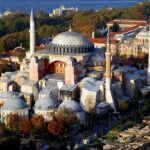
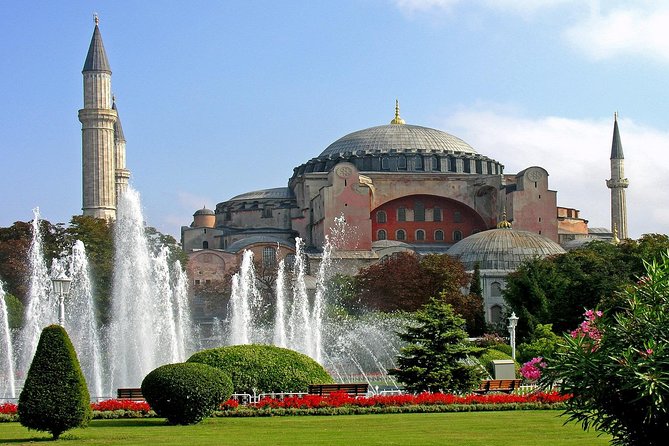
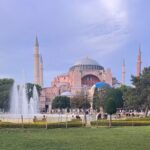
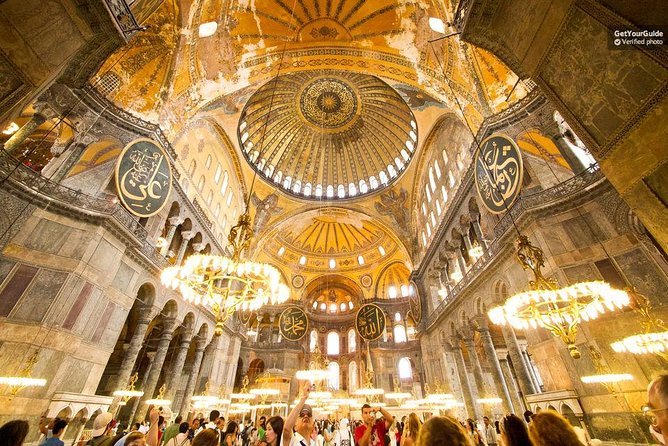
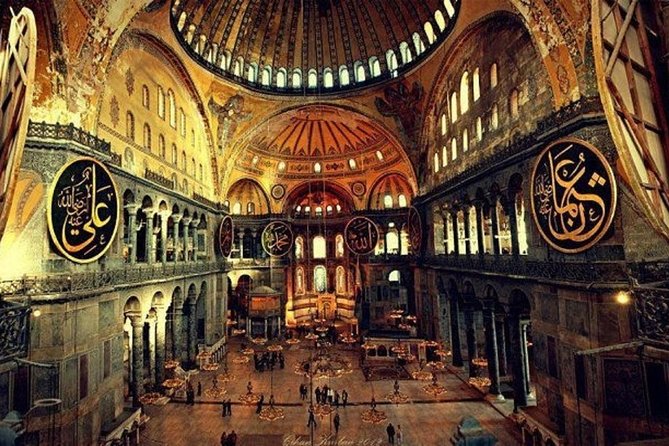
Then you move into the big one: Hagia Sophia. The story is dramatic and layered. It began in 537 CE as the largest cathedral in the Christian world for nearly 1,000 years, then became a mosque after the Ottoman conquest, and later shifted again to a museum before reconverting to a functioning mosque in 2020.
What I find useful is that your guide can explain what changed when the Ottomans took over—not just that it changed. That context helps you read the building instead of just admiring it.
Basilica Cistern: the city’s underground hush
After the grand names in the open air, the Basilica Cistern feels like stepping into another world. This 6th-century water reservoir once supported the Great Palace and nearby buildings. Today, it’s atmospheric and dim, with a “how did people even build this?” feeling.
It’s also the kind of place where your brain slows down. One hour here can feel like it’s doing more than an hour above ground because it resets your pace.
Grand Bazaar and Sultanahmet: shop-stroll without getting swallowed
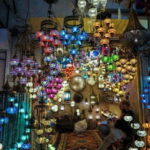
By the time you hit the Grand Bazaar, you’re ready to shift from monuments to street-level life. The bazaar is one of the largest and oldest covered markets, established in the 15th century. Even if you buy nothing, the mix of colors, aromas, and corridors gives you a sense of how trade shaped daily Istanbul.
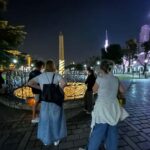
Then you wrap with the Sultanahmet District area around landmarks like the Hippodrome of Constantinople, including the Serpent Column and the Obelisk of Theodosius. This is where the tour becomes more “orientation and wandering” than strict museum time, and that’s a good thing.
Day 2: Bosphorus glamour and modern Istanbul momentum
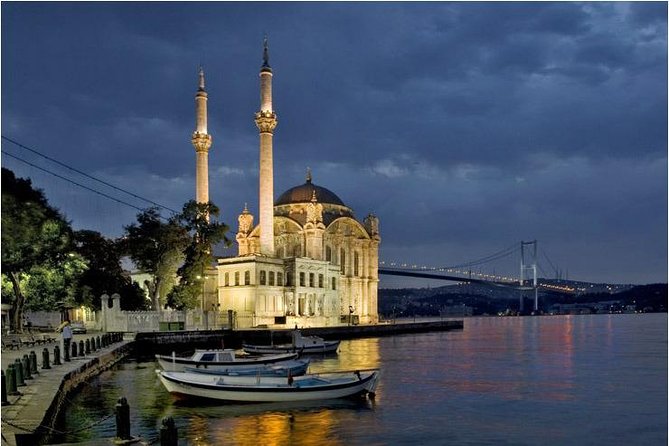
Day 2 pivots from historic cores toward the Bosphorus and the city’s modern face. You’ll go from palace grandeur to waterfront views, then head into the energy zones of Taksim and Beyoğlu.
Dolmabahçe Palace: late Ottoman westernization in a palace-sized package
You start with Dolmabahçe Palace, built between 1843 and 1856 under Sultan Abdülmecid I. It served as the Ottoman administrative center and imperial residence until the empire fell. Architecturally, it mixes Ottoman with Baroque, Rococo, and Neoclassical elements, so it feels different from earlier palace styles.
I like starting here because the palace helps you understand change over time. Istanbul isn’t stuck in one era; it kept adjusting its look as the empire evolved. If you’re only a little curious about architecture, this stop usually flips you from casual to “okay, I get it.”
Bosphorus Strait: the water that splits Europe and Asia
From there, the focus shifts to the Bosphorus Strait, the natural waterway separating Europe and Asia and connecting the Black Sea to the Sea of Marmara. It’s about 31 kilometers long, and it’s where Istanbul’s identity becomes visible: palaces, mansions, mosques, and fortresses line the shores.
When you’re looking at the Bosphorus with a guide, it’s easier to connect what you see to why it mattered—trade, strategy, and geography. Without that context, you’d just see a scenic stretch. With it, you see the logic.
Taksim Square: Istanbul’s modern gathering point
Then you move to Taksim Square, Istanbul’s modern hub for shopping, dining, and nightlife. It’s also a symbolic place for national celebrations and public gatherings. Even if you don’t plan to party, Taksim helps you contrast Istanbul’s old power centers with its modern civic pulse.
Spice Bazaar (Misir Çarşısı): smell-first shopping for real Ottoman trade flavor
Next comes Misir Çarşısı, also called the Spice Bazaar. It was built in the 17th century as part of the Yeni Camii complex and historically tied to the spice trade. Even if you’re not buying spices, this is one of the best “stand here and look” markets in Istanbul.
This is the stop where you’ll feel the city in your senses: colors, scents, and the busy flow of shoppers.
Galata Tower: panoramic views fast
Galata Tower gives you a high point over the Old City peninsula and the Beyoğlu side. An elevator takes you to a viewing platform under the roof, so you avoid some of the “stairs punishment.” Plan to spend time looking out, not just snapping and moving on.
If visibility is hazy, your guide can still help you identify key points and understand the layout.
İstiklal Caddesi: independence avenue on foot
Finally, you walk İstiklal Caddesi, a long pedestrian avenue connecting Taksim Square toward Galata. It’s lined with shops, cafés, restaurants, galleries, and historic buildings, and it’s one of the city’s major strolling corridors.
It’s also the kind of street where you can choose your own pace. If you feel like browsing, you can. If you want quiet, step into a side lane and reset.
Day 3: Süleymaniye, Balat, Pierre Loti, and the Golden Horn
Day 3 is where the tour feels most like Istanbul-as-a-neighborhood. You still get big architecture and famous viewpoints, but you also get to slow down in places that feel lived in.
Süleymaniye Mosque: Mimar Sinan’s masterpiece and a social complex
You begin with Süleymaniye Mosque, commissioned by Sultan Süleyman the Magnificent and completed in 1557. It’s widely considered a masterpiece of Mimar Sinan, the Ottoman architect.
What I really like here is the külliye idea: it wasn’t only a mosque. It was part of a larger complex that once included a hospital, madrasa, public kitchen, caravanserai, and a hammam. That means you’re not just looking at a building; you’re seeing how Ottoman society organized daily life around religion and public services.
Balat: pastel streets with a multicultural past
Then you head into Balat, on the Golden Horn in the Fatih district. Historically, it housed Jewish, Greek, and Armenian communities, and today it’s known for pastel-colored houses, narrow streets, antique shops, and cozy cafés.
This neighborhood time is one of the tour’s best values. You get “old Istanbul” without needing special tours or extra tickets. You’ll likely find yourself turning corners just to see how the lanes open up.
Pierre Loti Tepesi: a viewpoint that offers a breather
Next is Pierre Loti Tepesi. It’s named after the French novelist Pierre Loti, who lived in Istanbul and wrote about the city. He was a frequent visitor to the hilltop café, and even today it remains known for panoramic views and calmer vibes compared with the main streets.
This is a good stop if your feet are starting to protest. Two hours is enough time to enjoy the view without feeling like it’s a forced sprint.
Halic (Golden Horn): trade, harbor history, and light at the water
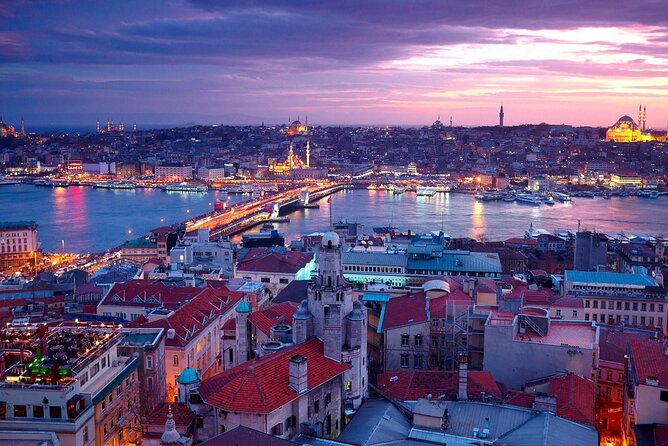
You finish with Haliç, the Golden Horn. It’s the horn-shaped estuary separating the old peninsula from Beyoğlu and Eyüp, and it has served as a natural harbor for centuries. It’s also tied to the way the water can turn golden around sunrise and sunset.
Even when you’re not chasing a specific time of day, understanding the harbor role helps you picture how Constantinople and later Istanbul functioned. It’s not just scenery—it’s geography doing work.
Guide quality matters more than you think
One thing I’d flag before booking: guide quality is the difference between a tour that feels explanatory and one that feels like a moving photo checklist. In the feedback for this experience, one guide called Flower was described as good and communicative on day one. A different guide experience named Imran was reported as speaking very little on day two, which made the tour feel under-explained.
You can’t control who you get, but you can control your behavior. If you take this tour, ask questions early and clearly. If your guide’s English pacing is too slow or too quiet, your best move is to prompt with simple questions right away like what to look for, what era you’re seeing, or what changed after 1453.
Getting the most value from this tour (without burning out)
This is a three-day plan with multiple heavy hitters, so you’ll enjoy it more if you travel like a realist, not a superhero.
- Wear shoes you trust. You’ll do plenty of street walking.
- Bring patience for ticket sites that have their own flow and security.
- Expect a mix of interiors (paid) and outdoors (free). That’s the whole deal here.
- If you’re a first-time Istanbul visitor, you’ll appreciate the order: palaces and courts first, then religion landmarks, then neighborhoods and views.
And a small practical note: the experience notes say it needs good weather. If the day gets washed out, you may need to adjust expectations for outdoor viewpoints and the walk sections.
Should you book this Istanbul private tour?
I’d recommend booking this tour if you want a private licensed guide, you like structure over wandering alone, and you’re happy to pay tickets for a handful of major sites. The group price is strong value if you’re traveling with others, and the mix of paid interiors plus free markets and viewpoints helps keep costs from ballooning.
Skip it—or at least be extra picky—if you hate ticket add-ons or you’re the type who wants total freedom every minute. Also, if your biggest priority is nonstop narration, ask for clarity up front about guide engagement. A quiet guide can make a big difference in how much you enjoy Istanbul’s stories.
If you’re flexible and you like learning as you walk, this is a solid way to see Istanbul with less stress and more meaning.