REVIEW · URGUP
Tailor-Made Private Cappadocia Culture and Gastronomy Daily Tour
Book on Viator →Operated by Archangel Travel Agency · Bookable on Viator
Wine, food, and cave history in one day. This private Cappadocia tour turns a long day into clean chunks: carved churches and hilltop views in the morning, then crafts and underground life after lunch—plus wine tasting and local bites that feel like the real region, not a checklist. I particularly love how the guide ties each stop to how people actually lived, ate, and prayed here. And I love that the day doesn’t just look at sights; you also get to taste the food side, including favorites like testi kebab and homemade manti.
One thing to keep in mind: several entrances are optional (and not included), so your final total can creep up depending on what you choose—especially for Göreme’s museum and the underground cities. The good news is you can decide based on your energy level.
In This Review
- Key highlights worth marking on your map
- How the Urgup pickup-to-dropoff day works
- Göreme Open Air Museum: churches cut into rock, with fresco stories
- Çavuşin Village and Wish Hill: calm village life and a big panorama hit
- Büyükakten Underground House vs Kaymaklı Underground City
- Büyükakten Underground House (Ürgüp)
- Kaymaklı Underground City
- Avanos pottery workshop: red clay craft you can watch happen
- Çınar rugs and Ortahisar’s castle viewpoint: culture with a side of shopping reality
- The food and wine side: why gastronomy is doing the heavy lifting
- Price and value: $224.86 for a private group up to 14
- Should you book this Cappadocia culture and gastronomy tour?
- FAQ
- How long is the Tailor-Made Private Cappadocia Culture and Gastronomy Daily Tour?
- Is pickup from my hotel included?
- What language is the tour offered in?
- Is this tour private?
- Are tickets for the main sites included in the price?
- Is lunch included?
- What’s the activity level like?
- Does the tour use a mobile ticket?
Key highlights worth marking on your map
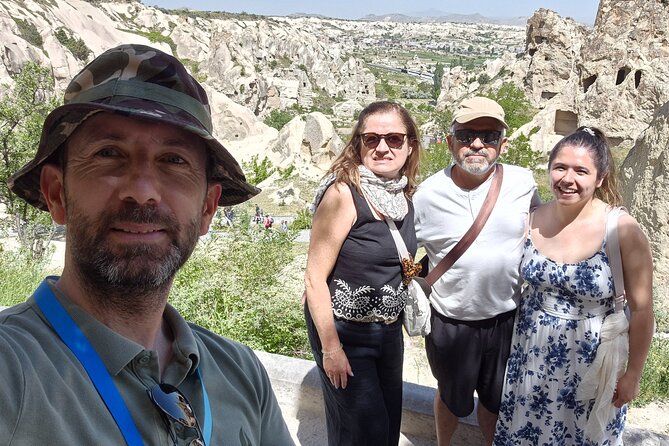
- UNESCO churches in Göreme with stops at multiple rock-cut churches and fresco cycles
- Temenni Hill (Wish Hill) for a quick, high-impact panorama and ancient tomb stories
- Underground living comparisons: Büyükakten House tunnels vs. Kaymaklı’s 8-floor city
- Hands-on culture without the fuss: Avanos pottery where you can watch red-clay craftwork
- Çınar rugs stop focused on motifs and Anatolian rug meaning (not just shopping)
- Ortahisar Castle viewpoint photos even if you skip climbing due to time
How the Urgup pickup-to-dropoff day works
This tour runs about 6 to 7 hours starting at 10:00 am, and the pace is built around driving time plus short, meaningful visits. The format is private—only your group—so you’re not stuck waiting for a big, mixed crowd to shuffle toward the next viewpoint.
Pickup is offered from hotels across the main Cappadocia towns, including Ürgüp, Mustafapaşa, Ortahisar, Göreme, Avanos, Nar, Nevşehir, Uçhisar, Çavuşin, and İbrahimpaşa. That matters more than people think. Cappadocia’s sights are close on a map, but they can feel far when you’re hauling yourselves between valleys. Here, you get an air-conditioned vehicle, plus parking fees handled.
The tour is listed for moderate physical fitness. That’s your heads-up that some areas involve walking on uneven ground and steps—especially around the hill viewpoint and in/around underground spaces. If you’re comfortable doing short, careful walks and taking your time, you should be fine.
Also, the tour language is English, and you’ll have a professional guide. In my experience, a good guide makes the difference between seeing “some caves” and understanding why these places were built the way they were.
You can also read our reviews of more private tours in Urgup

Göreme Open Air Museum: churches cut into rock, with fresco stories
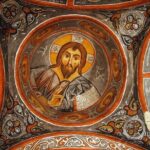
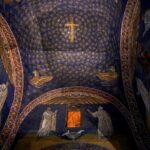
Your first major stop is the Göreme Open Air Museum, a UNESCO site that has hosted Christian monastic life from roughly the 4th to the 13th centuries. Picture a valley of carved homes and religious buildings—churches, chapels, dining halls, even seating areas—built directly into the rock blocks. The result feels like architecture designed for survival, then perfected into devotion.
Plan on about 1 hour 30 minutes here. You’ll visit a cluster of churches and chapels, including the Girls’ and Boys’ Monastery, St. Basileus Church, Elmalı Church, St. Barbara Church, Yılanlı Church, Karanlık Church, Çarıklı Church, and Tokalı Church.
What makes this stop worth your time is the mix of evidence. Early on, you can see geometric decorations tied to early Christian art. In later churches, the frescoes tell more recognizable Bible stories and scenes from the life of Jesus. The guide’s job is to point out what changed and why—so you’re not just looking at pretty wall color.
One practical note: the museum entrance is not included. It’s recommended (listed as €20 per person). If you care about art history and symbolism, paying this entrance fee tends to be a smart move. If you want to keep costs down, you might choose to skip it—but then you’ll miss the most concentrated concentration of painted rock-cut churches on the day.
Çavuşin Village and Wish Hill: calm village life and a big panorama hit
Next you head to Çavuşin Village, about 45 minutes. This is one of the older settlements in the Cappadocia region, set along the Göreme–Avanos road. What I like about this stop is that it shows you Cappadocia beyond the famous photo spots.
Çavuşin has two sections:
- the Old Village, carved into rock and lived in for a long time
- the New Village, developed later with newer buildings
You’ll also see dovecotes, traditional village houses, and Aktepe, which formed after caldera eruptions. The highlight for many people is the Church of John the Baptist, described as one of the oldest and largest rock-carved churches in Cappadocia. Even if the main museum is skipped, this village stop gives you grounded context.
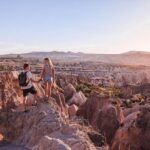
After Çavuşin, you get a shorter, punchy break at Temenni Tepesi (Wish Hill) for about 15 minutes. This is your quick panoramic stop above Ürgüp. The hill’s ancient names are a nice touch, but the real “aha” is the meaning behind the name: Temenni relates to sacred or prayer areas, and there’s a story about wishes being made and rags tied at tombs on the summit.
You’ll also hear about the Seljuk sultans tied to those tomb stories: Sultan IV Rüknettin Kılıçarslan (1246–1266) and Sultan III Alaeddin Keykubat (1297–1304). It’s not a long stop, but it helps you connect the landscape to human habits—prayer, memory, and ritual.
Büyükakten Underground House vs Kaymaklı Underground City
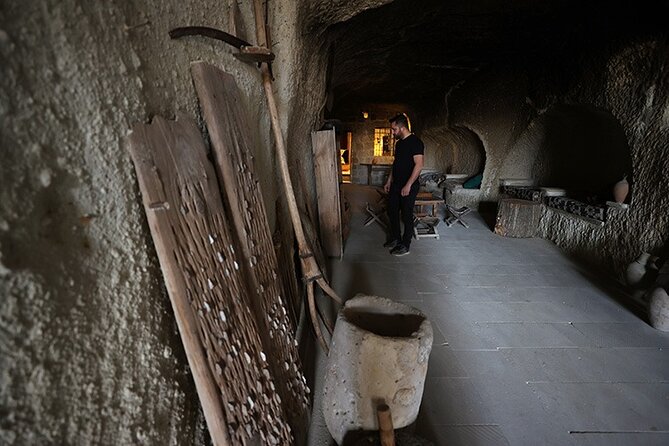
This is where the day gets properly unique, because you’re not only seeing “caves.” You’re seeing two different answers to the same question: how do you live when the earth itself becomes your building material?
Büyükakten Underground House (Ürgüp)
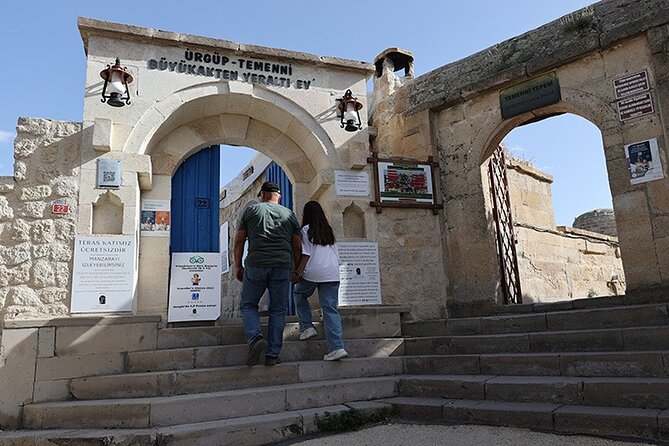
Stop 4 is the Büyükakten Underground House, around 30 minutes. This one is less famous than Derinkuyu or Kaymaklı, and that can be an advantage if you like quieter, less crowded feeling spaces.
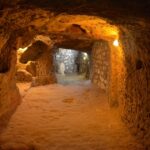
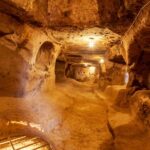
The underground complex is formed by combining three older rock-carved houses and connected by tunnels, and it’s described as being inhabited until the 1960s. That detail matters. It means this wasn’t just a relic abandoned long ago—it was a functional living environment in recent history too.
The entrance is optional and recommended (listed as €5 per person). If you’re deciding whether to pay, ask yourself what kind of travel you prefer: fast exterior sightseeing or close-up understanding. This stop is about close-up.

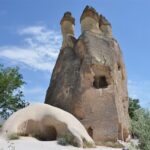

Kaymaklı Underground City
Then you go to Kaymaklı Underground City for about 1 hour. This one is more structured and extensive. It’s located about 15 km to Nevşehir, in the Kaymaklı area, and it was built around the 9th to 10th centuries as a defense and hiding city during the spread of Christianity.
Kaymaklı’s underground structure is built around a ventilation stack, and it’s described as having 8 floors. Rooms and corridors are low. The ceiling height is given as about 2 meters (you’ll want to watch your head), while chapels are larger with higher ceilings.
The experience is very physical, even when you’re just standing and reading plaques. I like this part because you start imagining daily routines under pressure—moving people, securing space, keeping air flowing.
Entrance is optional and recommended (listed as €13 per person). If you choose to pay for only one underground site, I’d lean Kaymaklı if you want the full “city scale” feeling, and Büyükakten if you want a more intimate, tunnel-connected living-world perspective.
Avanos pottery workshop: red clay craft you can watch happen
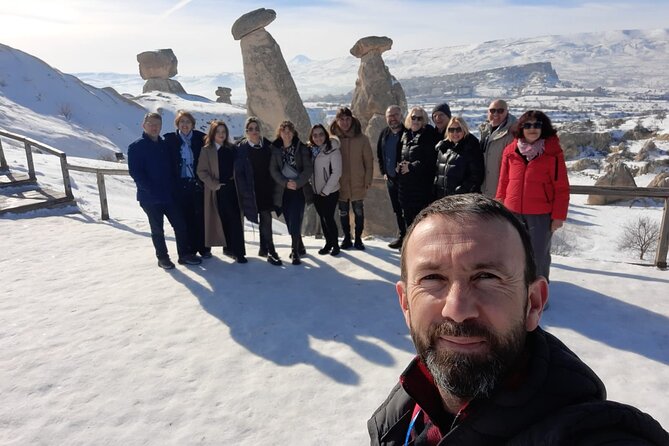
After the underground chapters, the tour shifts to hands-and-clay energy with Avanos Pottery Workshop for about 30 minutes.
Avanos sits on the Kızılırmak (Red) River. The area has ancient roots too: Romans called it Vanessa, and it’s said to have been the third most important city in the Kingdom of Cappadocia after Kayseri and Kemerhisar. The reason pottery matters here is practical—fertile volcanic soil along the river and the availability of red clay.
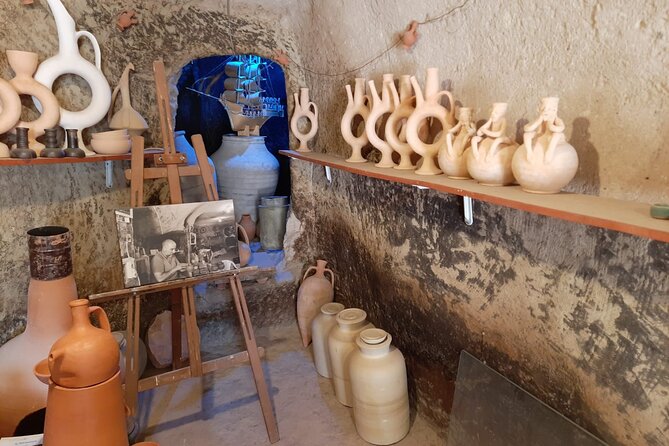
What you’ll see is the craft itself: potteries run by families where skill passed from father to son through generations. The work uses traditional tools like foot-driven spinning wheels, and the clay is shaped and moulded by hand. The pottery style you’ll recognize includes vases, plates, and earthenware made from the local red clay.
This stop is listed as free, which I love because it keeps you from spending money on culture you can enjoy without a separate ticket. Don’t expect a long class. It’s more like a window into technique and tradition, and the best part is seeing how much labor and patience goes into each piece.
Çınar rugs and Ortahisar’s castle viewpoint: culture with a side of shopping reality
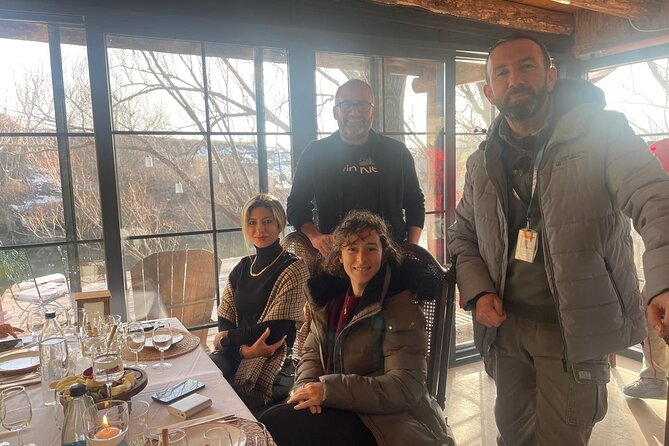
Next comes Çınar rugs – Cappadocia (Hand Made Turkish Carpets) for about 45 minutes. This stop can work in two ways. If you’re a person who likes art and symbolism, it’s a smart cultural pause. If you’re price-conscious and not interested in buying, you’ll want to stay friendly but firm with any sales talk.
The explanation here connects rugs to human storytelling. The canvas of Anatolian life is described as rugs, with motifs carrying meanings across time. You’ll hear how motifs reflect values, ideas, and daily life, and how Cappadocia carpets fit into that longer regional tradition.
It’s also realistic: this is a carpet-focused stop, so yes, carpets are for sale. Still, the cultural meaning part gives it more value than a rushed store stop.
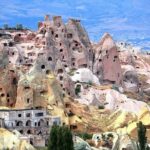
Then you finish with Ortahisar Kalesi for about 30 minutes. Ortahisar is about 1 km from the Ürgüp–Nevşehir highway, and the rock castle rises over 50 meters and is visible from the main road. The castle is thought to have been carved into the rocks during the Hittite era.
Because of time limits, you won’t climb up to the castle. Instead, you get viewpoint time for photos. I actually like this approach. It keeps you from wasting the afternoon on steep stairs when you still have a lot of “thinking time” left in your head from earlier stops.
The food and wine side: why gastronomy is doing the heavy lifting
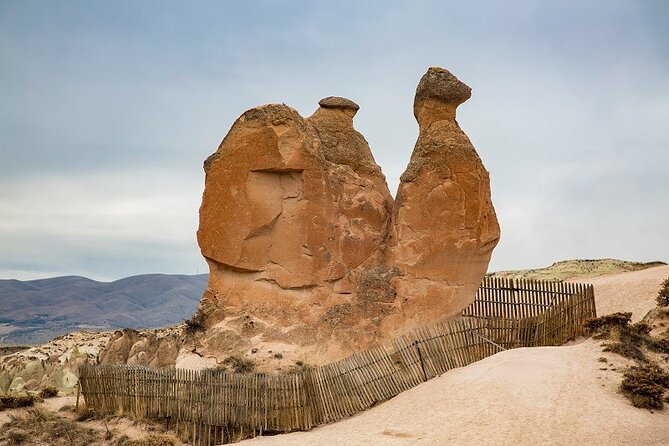
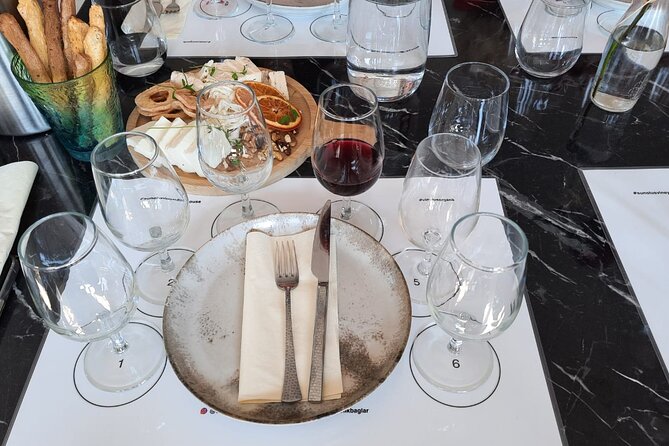
This experience earns its name from the mix of history and tastes. In the Cappadocia version of culture travel, it’s easy to focus only on caves and frescoes. But the food and wine piece turns those same places into something you can smell and remember.
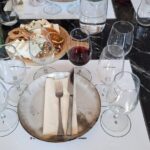
From the tastings and bites included, highlights include testi kebab and homemade manti. Those are not just generic dishes; they’re local-style comfort foods tied to how people cook and gather. The day also includes wine tasting at boutique producers, with particular attention to grapes like Emir and Kalecik Karası.
One review also mentioned the guide, Mr. Erdal, being born and raised in the area. That kind of local perspective changes how you experience wine culture. You’re not only learning what you’re tasting; you’re hearing the story of why those grapes and methods matter here.
If you have food allergies or strong preferences, plan to talk to your guide early. The itinerary doesn’t spell out every dish, so the safest move is to flag your needs at the start so tastings and meals can work for you.
Also note: lunch isn’t listed as included. That means you might eat as part of the tour’s food program, but you shouldn’t assume a full sit-down lunch is guaranteed in the price. If you’re traveling hungry, bring practical expectations.
Price and value: $224.86 for a private group up to 14
At $224.86 per group (up to 14), this tour can be a surprisingly good deal—especially if you travel with 4–7 people and want a private guide plus a full day of stops. It’s not priced like a budget bus tour, but it also isn’t priced like a luxury custom driver for one or two people. The value comes from bundling transport, a professional guide, and multiple “different kinds” of culture in one route.
Here’s the trade-off: several entrances are optional, and those costs depend on what you pick. Göreme Open Air Museum is listed as optional but recommended (€20 per person). Büyükakten Underground House is optional but recommended (€5 per person). Kaymaklı Underground City is optional but recommended (€13 per person). If you pay for all three, you’ll feel it.
Still, that flexibility is part of the value. You can tailor the day: culture-heavy, underground-heavy, or balanced.
What makes the private format especially worth it is the flow. Pickup from your hotel area cuts down on wasted time. And because it’s private, the guide can keep explanations tight and relevant instead of speaking at a group that’s half distracted.
Should you book this Cappadocia culture and gastronomy tour?
If you want one day that mixes UNESCO church art, underground life, crafts, and a real food-and-wine experience, this tour fits. I’d especially recommend it if you’re traveling with family or friends who don’t all want the same pace—private format helps you adjust micro-breaks and photo stops.
Book it if:
- you care about tasting Cappadocia, not just walking through it
- you want a guide to connect sites into a single story
- you prefer pickup/drop-off over self-driving stress
Skip it (or adjust expectations) if:
- you hate entrance fees that are optional but likely worth paying
- you want lots of long stops rather than short, well-planned segments
- you need a very slow pace with minimal walking
If you’re on the fence, your best move is to decide your underground priority first. Kaymaklı for big scale, Büyükakten for tunnel intimacy, and Göreme for painted rock-cut church depth. Choose based on your mood that day—then let the guide handle the route.
FAQ
How long is the Tailor-Made Private Cappadocia Culture and Gastronomy Daily Tour?
It runs about 6 to 7 hours, starting at 10:00 am.
Is pickup from my hotel included?
Yes. Pickup is offered from any hotel in Ürgüp, Mustafapaşa, Ortahisar, Göreme, Avanos, Nar, Nevşehir, Uçhisar, Çavuşin, and İbrahimpaşa, and you’re dropped back at your hotel after the tour.
What language is the tour offered in?
The tour is offered in English.
Is this tour private?
Yes. Only your group participates.
Are tickets for the main sites included in the price?
No. The Göreme Open Air Museum, Büyükakten Underground House, and Kaymaklı Underground City have optional entrance fees that are not included. Avanos pottery and the carpet stop are listed as free, and the village and viewpoint stops don’t list paid admission.
Is lunch included?
Lunch isn’t included.
What’s the activity level like?
The tour calls for a moderate physical fitness level. You’ll have some walking and you may deal with uneven ground and low spaces at underground sites.
Does the tour use a mobile ticket?
Yes, a mobile ticket is offered.