REVIEW · KUSADASI
Private Halfday Ephesus Tour with Temple of Artemis Tour
Book on GetYourGuide →Operated by AZURE VOYAGE TOURISM · Bookable on GetYourGuide
Ephesus in half a day is the perfect hit. This private tour pairs the big-name Ephesus sights like Celsus Library and the Great Theater with a separate look at the Temple of Artemis ruins, so you get both museum-worthy architecture and the story behind one of the ancient world’s wonders. I especially like how your guide is there to connect the dots as you walk, rather than just pointing at stones; the main drawback is that you still need to budget extra for site admission, plus you’ll be doing solid walking on uneven ancient surfaces.
You’ll meet your guide at the Kusadasi Port Main Gate (or your hotel in Kusadasi/Selcuk), then ride in an air-conditioned, non-smoking vehicle to start. The payoff for the time crunch is that your guide arranges skip-the-ticket-line access, and the whole plan is built around a tight 5-hour loop with time for scenic drive and a bit of en-route shopping.
In This Review
- Key highlights to look for
- Aegean Coast pickup and the quick route to Ancient Ephesus
- Temple of Artemis ruins: the seven-wonders stop
- Odeon and Roman Baths: the public-life Ephesus
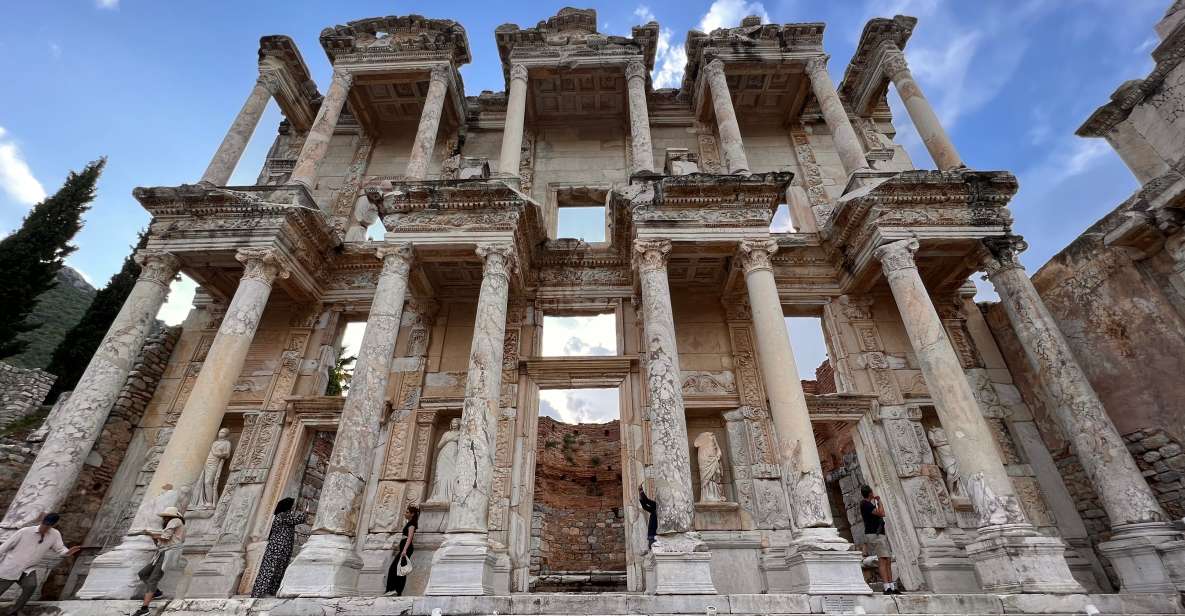
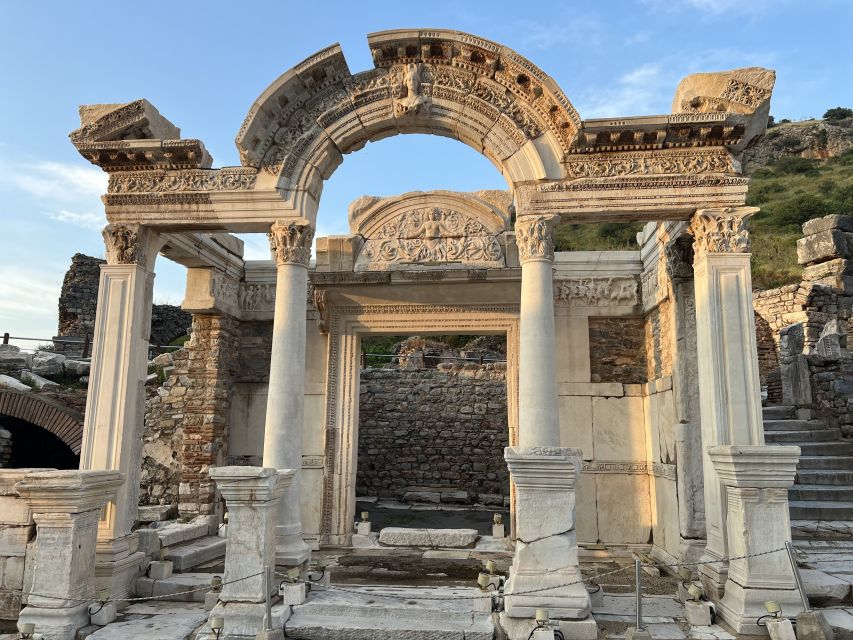
- Celsus Library and Hadrian’s Temple: architecture you can read
- Great Theater and Trajan’s Fountain: scale of spectacle
- How skip-the-line and a private guide save your half day
- Price and logistics: what you’re really paying for
- Practical packing for a 5-hour Ephesus sprint
- Who should book this tour, and who should skip it
- Should you book this private half-day plan?
- FAQ
- How long is the private Ephesus and Temple of Artemis tour?
- Where do I meet the guide for this tour?
- What if I booked within the last 12 hours and can’t find the meeting point?
- Are admission fees included in the tour price?
- Does the tour include skip-the-line access?
- What’s included in the tour besides the guide?
- What language is the tour guide?
- What should I bring, and are tripods allowed?
- Is the tour available in rain?
Key highlights to look for
- Skip-the-ticket-line setup, arranged by your guide to avoid long waits
- Temple of Artemis ruins stop, tied directly to the seven-wonders legend
- Celsus Library + Hadrian’s Temple for standout Roman-era architecture
- Great Theater and Trajan’s Fountain for scale of public life
- Odeon and Roman Baths to see more than just the postcard stops
- Private, English-speaking guide with practical explanations throughout
Aegean Coast pickup and the quick route to Ancient Ephesus
This tour is designed for people who want the best of Ephesus without losing half a day to logistics. You meet your guide either at the MAIN GATE at Kusadasi Port (in front of the passenger exit gate) or directly from your hotel in Kusadasi, and the tour note also allows pickup from Selcuk. That flexibility matters because Kusadasi can be busy and confusing, especially if you’re arriving by cruise.
Once you’re picked up, you’re driven in an air-conditioned, non-smoking vehicle. There’s also car park coverage included, so you don’t have to worry about little add-ons while you’re switching between viewpoints and entrances.
Practical note on meeting: if your booking is made within the last 12 hours, your guide may meet you at the first security point after the main gate (outside). In that case, you’ll be directed to walk through toward the city center after the passenger exit gate, then find the main gate where you meet. If you’re unsure, you can call the team at +90 542 609 70 43.
You can also read our reviews of more private tours in Kusadasi
Temple of Artemis ruins: the seven-wonders stop
The tour includes a visit to the Temple of Artemis ruins, described as one of the world’s seven wonders. Even if you’re not a major archaeologist, this stop works because it puts Ephesus on a larger map. Artemis isn’t just an object of curiosity; it’s a way to understand why this region mattered so much.
What to expect here is a “ruins-first” moment before you move into the fuller sweep of Ephesus proper. The ruins don’t behave like a restored building; you’ll be reading the site from what remains. That’s exactly why a guide helps. You’ll get the framing you need so you can look at the broken pieces and still understand the original importance.
If you’re the type who likes to connect myths, politics, and architecture, you’ll probably enjoy this part most. If you prefer fully intact monuments only, you may find it less satisfying than the Ephesus highlights—but it’s still a strong origin-story for the city.
Odeon and Roman Baths: the public-life Ephesus
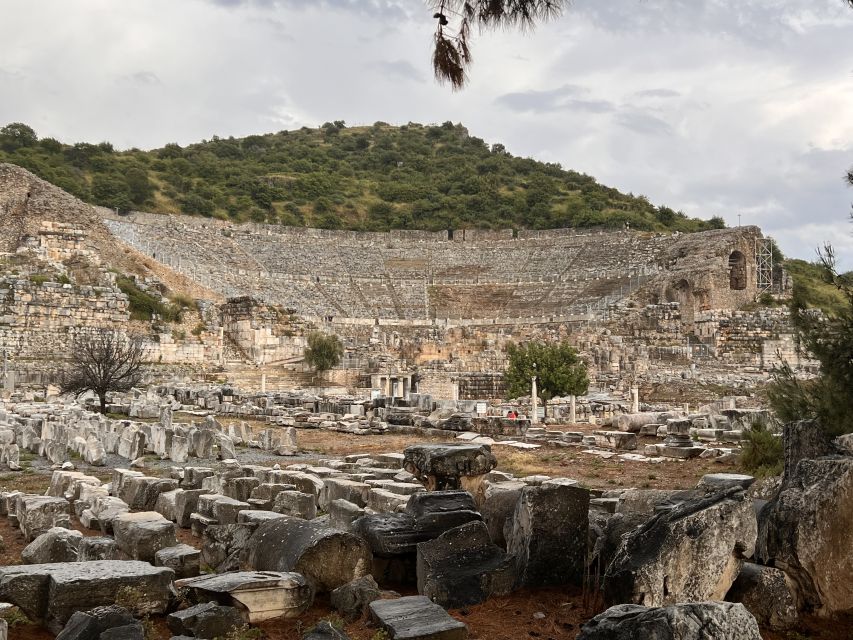
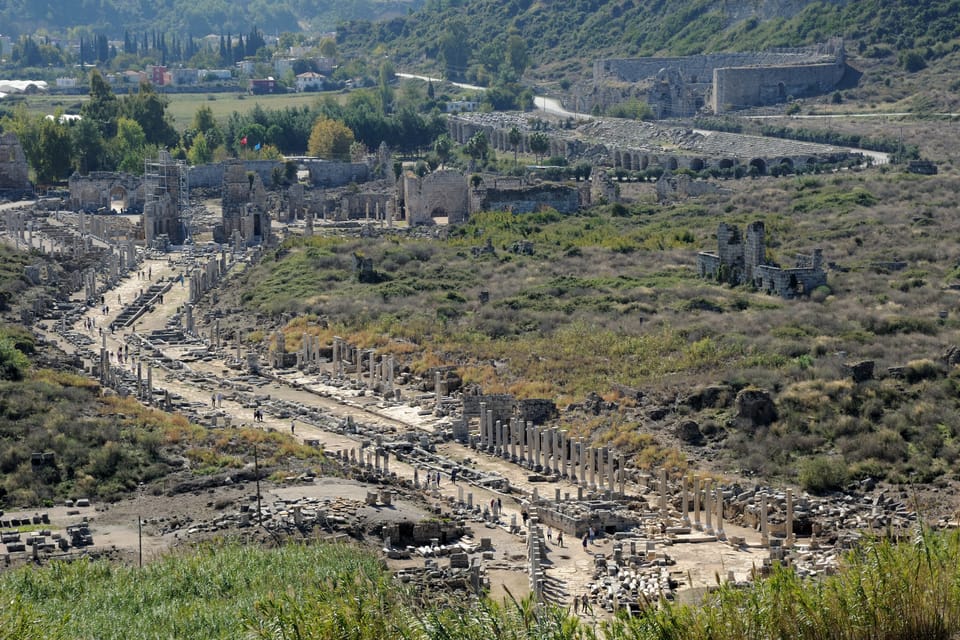
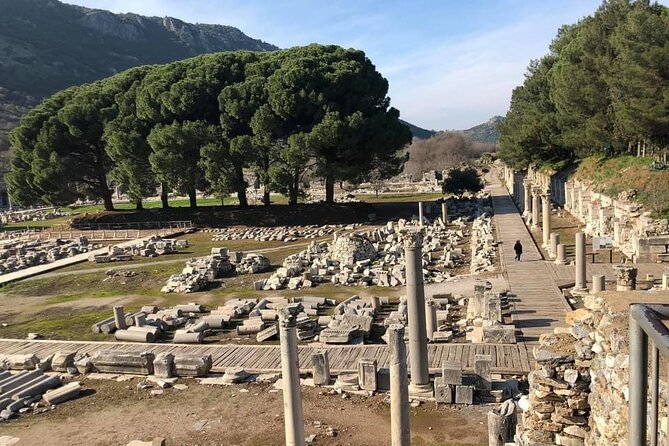
After the Artemis-area stop, you shift into Ephesus itself—often described as one of the best-preserved ancient cities in the world. Your guide starts you with major civic spaces, not just the easiest photo spots.
Two key areas included are:
- Odeon, where the advisory council met
- Roman Baths, an essential slice of everyday Roman life
These aren’t only “look but don’t touch” ruins. They help you understand that Ephesus wasn’t a single grand temple complex. It was a functioning city with governance, meetings, and public routines.
One reason I like this approach: the Odeon and Roman Baths give context. When you later stand in front of the grand theater and the famous libraries, it’s easier to grasp what all that public architecture was for—crowds, events, learning, status, and power.
Celsus Library and Hadrian’s Temple: architecture you can read
The Ephesus highlights here are the big visual anchors: Celsus Library and Hadrian’s Temple. These two stops are where the tour becomes very “wow, that was built for real people.”
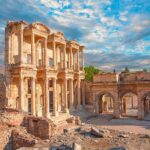
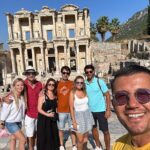
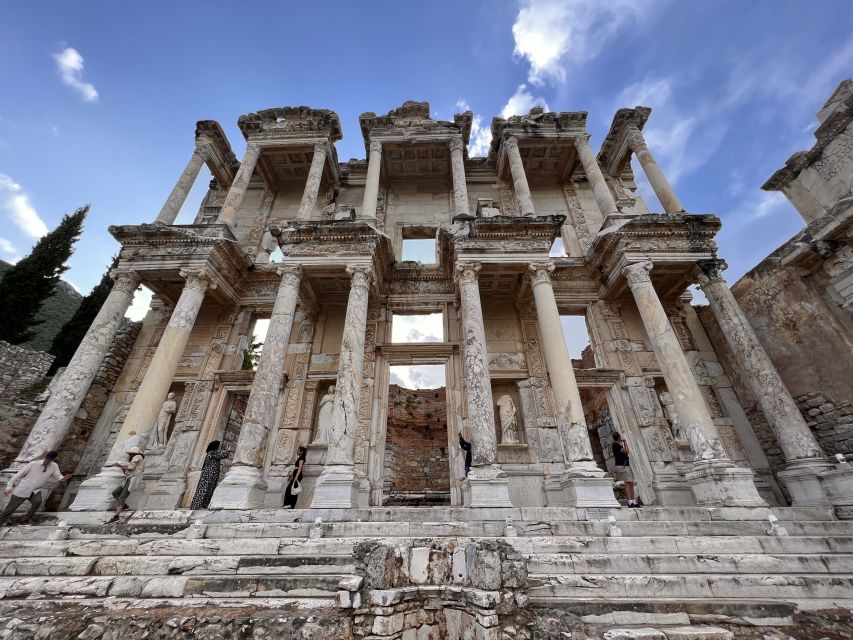
Celsus Library is the kind of place that rewards slow looking. You’ll see how the façade is designed to impress, and your guide’s job is to point out the architectural logic behind what looks like pure decoration. I like that the tour doesn’t treat it as a quick snapshot stop. With a live guide, you can make the site feel less like random columns and more like planned grandeur.
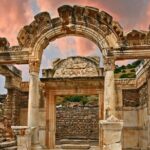
Then you move to Hadrian’s Temple. Temples in Roman and Hellenistic cities weren’t just religious centers; they were also statements of civic identity and authority. Standing in and around temple remains helps you get a feeling for the scale and the visual “persuasion” ancient builders used—especially important if you’re comparing Ephesus to other major sites in Turkey and Greece.
Quick practical tip: tripods aren’t allowed, so if you rely on steady video or long exposures, plan on handheld or your phone’s built-in timer modes.
Great Theater and Trajan’s Fountain: scale of spectacle
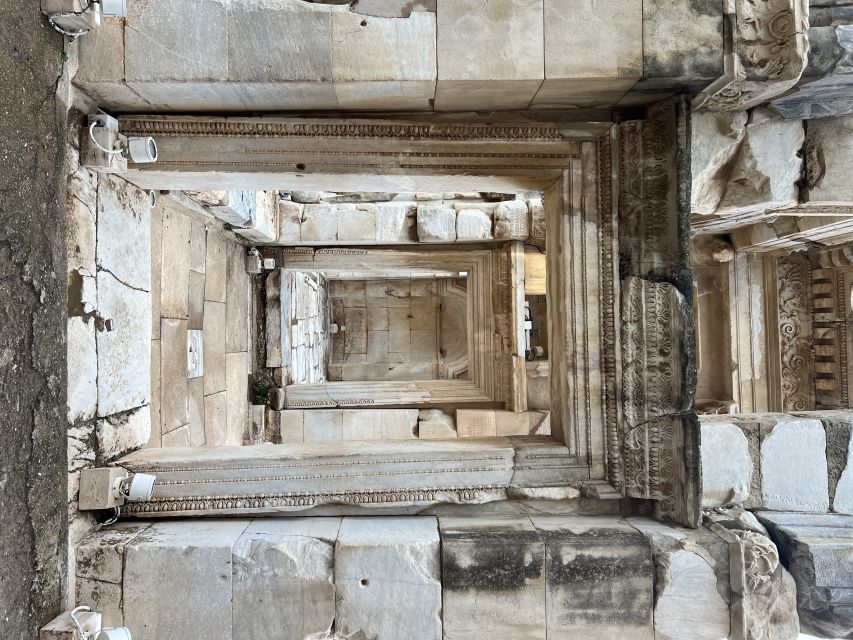
The tour includes the Great Theater of Ephesus and Trajan’s Fountain (listed among the highlights). Together, these are the public-life duo: performance space and urban infrastructure.
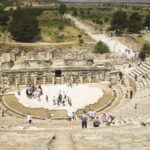
The Great Theater is one of those ruins that feels instantly recognizable even before you learn the details. From the seating and stage area, you can sense why theaters mattered: they gathered large groups for major events and public gatherings. Your guide’s explanations should help you see it as a functioning stage for civic life, not just a steep pile of stone.
Trajan’s Fountain adds another layer. It’s the kind of stop that reminds you cities had systems—water, decoration, and public movement—wrapped into monumental structures. If you’ve ever wondered how ancient cities managed daily comfort while projecting power, this is one of the places where the answer becomes visible.
I’ll also flag that these sites can be a bit of a photo workout. Bring a camera you already know how to use, because once you’re inside, time moves fast and you’ll want to spend it looking, not troubleshooting.






How skip-the-line and a private guide save your half day
This is where the value really shows. The tour price includes a professional English-speaking guide and transportation, but the biggest time-saver is that your guide has pre-paid for skip-the-line tickets to avoid long ticket queues.
Here’s the practical part: admission fees are not included in the tour price. The note states an admission fee for Ancient Ephesus of 40 EURO per person. Your guide has the skip-the-line arrangement in place, but the actual entry ticket cost is paid to your guide directly in cash in euros, dollars, or Turkish Lira.
To me, this is a smart trade. Instead of spending precious minutes standing around, you start sightseeing with momentum. For a 5-hour experience, momentum is everything.
And private matters more than people think. A private group means your guide can pace the tour around your interests and your ability to keep moving from stop to stop. In the short time window, that can make the difference between feeling rushed and feeling informed.
I also like the quality signals from the recent reviews connected to this style of tour: one UK booking rated it 5 out of 5 and specifically called out good transportation and solid explanations. An Austrian booking also praised the guide’s deep knowledge and noted an upgrade to a private tour setup.
Price and logistics: what you’re really paying for
At $213 per person for a 5-hour private tour, you’re paying for three things: the guide, the transfers, and the effort of getting you into the site efficiently.
What’s included:
- Professional English-speaking guide
- Transfer service from Kusadasi Port/Hotel
- Air-conditioned, non-smoking land transportation
- Car park fees
What’s not included:
- Admission fees to attractions (the stated Ephesus admission is 40 EURO per person)
- Personal expenses
So the real budgeting picture is: you start with the tour price, then add at least the site entry fee. Since the Temple of Artemis stop is within the overall plan but the data only explicitly names the Ancient Ephesus admission fee, I’d plan around that 40€ figure as your confirmed add-on, and keep some extra cash for any other entrance charges your guide mentions on the day.
Is it good value? For me, it is if you want a guide to interpret what you’re seeing and you want to avoid lines. If you’re traveling with friends and you’re perfectly fine wandering independently (and you don’t mind waiting), you could possibly do it cheaper. But if you want time-efficient access and real explanations, $213 starts to look like paying for “less hassle per hour,” which is exactly what a half day is about.
Practical packing for a 5-hour Ephesus sprint
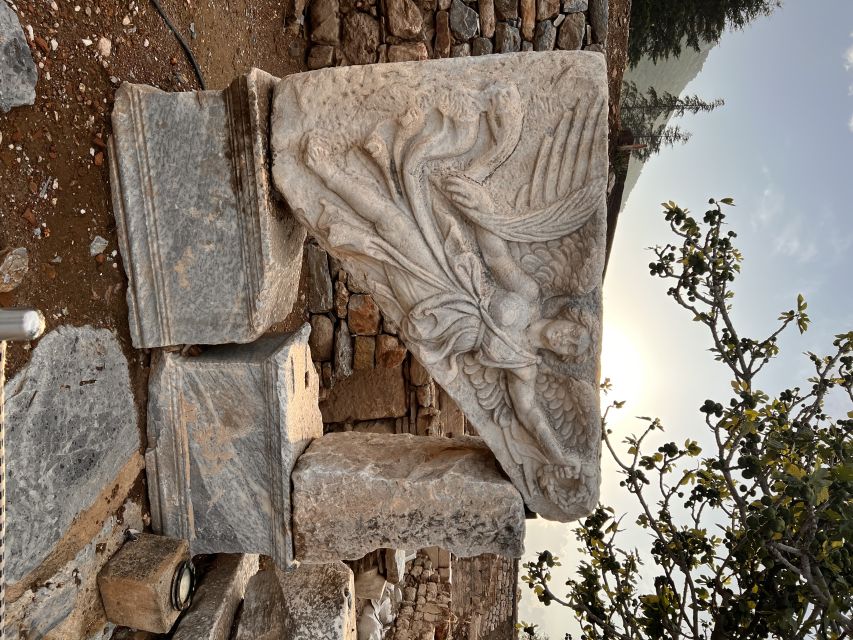
You’ll be outdoors and on uneven stone in multiple sections, so pack for comfort and speed.
Bring:
- Comfortable shoes
- Sunglasses and a hat
- Camera
- Passport (a copy is accepted)
- Charged smartphone
Not allowed:
- Tripods
Also, the tour runs rain or shine. That’s not just small print. Rain can make stone surfaces slick, and ruins don’t become easier to walk in.
If you want photos, be realistic about time. Without tripods, you’ll still get great shots, but you’ll work faster. Keep your day bag simple so you’re not constantly digging for items while moving between stops.
Who should book this tour, and who should skip it
This tour is best for:
- First-timers who want the major Ephesus sights plus the Artemis ruins
- People who like architecture, urban planning, and how public spaces connect
- Anyone traveling on a schedule constraint and wanting a 5-hour plan that stays efficient
- Travelers who value a live English guide to explain what you’re looking at
It’s not a fit for everyone. The note says it’s not suitable for people with mobility impairments. That makes sense given the ancient site terrain and the walking involved.
If you love a calm museum pace with lots of sitting breaks, consider that Ephesus is a moving, walking experience. The tour is half a day for a reason.
Should you book this private half-day plan?
I’d book it if you want a guided, efficient Ephesus overview that includes both the city’s big Roman highlights and a dedicated stop at the Temple of Artemis ruins. The skip-the-line setup, private guide format, and pickup options from Kusadasi Port or your hotel are what make it feel worth the money for a limited time window.
I’d think twice if you’re trying to keep costs ultra-low (because admission is extra and paid in cash to your guide) or if walking on uneven ground is a problem. Also, if you’re the kind of visitor who only enjoys fully restored monuments, the Artemis ruins may feel less satisfying than the intact-looking façades at Celsus and the bigger public structures inside Ephesus.
If that sounds like you, this is a strong choice.
FAQ
How long is the private Ephesus and Temple of Artemis tour?
The duration is 5 hours.
Where do I meet the guide for this tour?
Your guide waits in front of the passenger exit gate at the terminal of Kusadasi Port. Pickup is also offered from hotels in Kusadasi (and the tour notes mention Selcuk).
What if I booked within the last 12 hours and can’t find the meeting point?
Your guide may meet you at the first security point after the Main gate (Outside) of Kusadası port. Walk through to City Center after the passenger exit gate, then find the Main Gate where you meet.
Are admission fees included in the tour price?
No. Admission fees are not included. The Ancient Ephesus admission fee listed is 40 EURO per person.
Does the tour include skip-the-line access?
Yes. The guide has pre-paid skip-the-line tickets to avoid long ticket queues, and the entry ticket cost is paid to the guide in cash in euros, dollars, or Turkish Lira.
What’s included in the tour besides the guide?
You get transfer service from Kusadasi Port/Hotel, land transportation in an air-conditioned non-smoking vehicle, and car park fees.
What language is the tour guide?
The guide provides the tour in English.
What should I bring, and are tripods allowed?
Bring comfortable shoes, sunglasses, a hat, a camera, and a passport (a copy is accepted), plus a charged smartphone. Tripods are not allowed.
Is the tour available in rain?
The tour takes place rain or shine.