REVIEW · KUSADASI
Private Ephesus Shore Tour for Cruise Guests from Kusadasi Port
Book on Viator →Operated by Okeanos Travel - Ephesus Private Tour · Bookable on Viator
Ephesus feels personal on this shore tour. What makes it special is the private pace: you get a licensed guide, air-conditioned transport, and time to look closely at Ephesus without the usual stampede. It’s a cruise-friendly way to see the Roman city highlights fast, then add the Temple of Artemis before you head back.
I love the way the guide can shape the walk to your questions and photo stops, especially with standout experts like Hadi and Begüm. I also like that the tour includes the big-ticket sites you came for, with entrance fees handled up front so you’re not wasting time hunting tickets.
The main drawback to plan for is time. Ephesus is huge, and this format gives you about two hours on the ground, plus only around 20 minutes at the Temple of Artemis—perfect for a strong overview, but not for slow wandering.
In This Review
- Key highlights at a glance
- Why this private Ephesus shore tour fits cruise time
- Getting from Kusadasi to Selçuk without the hassle
- Stop 1: Ancient Ephesus, from Marble Road to Great Theatre
- How much time you really get in Ephesus
- Stop 2: Temple of Artemis and the Seven Wonders feel
- What to expect in the real-world vibe
- Price, value, and how to judge $162 per person
- The biggest value unlock: your pace
- A note on group size and child pricing
- What’s included (and what you still need to plan)
- Practical things you should bring
- The small guide details that make this day work
- Expect a tour that’s built around questions
- Who this tour suits best
- Should you book this Ephesus private shore tour?
- FAQ
- How long is the Private Ephesus Shore Tour for Cruise Guests from Kusadasi Port?
- Is this a private tour?
- What stops are included?
- How long do you spend in Ephesus?
- How long is the Temple of Artemis stop?
- Are entrance fees included?
- Do you provide pickup and drop-off?
- What languages are available for the guide?
- How much does the tour cost?
- How do child rates work for ages 7–12?
- What is the cancellation policy?
Key highlights at a glance
- Licensed guide focus: You get English-language guidance and plenty of chances to ask questions.
- Cruise-schedule friendly: Pickup and drop-off are designed for port timing, not for leisurely land trips.
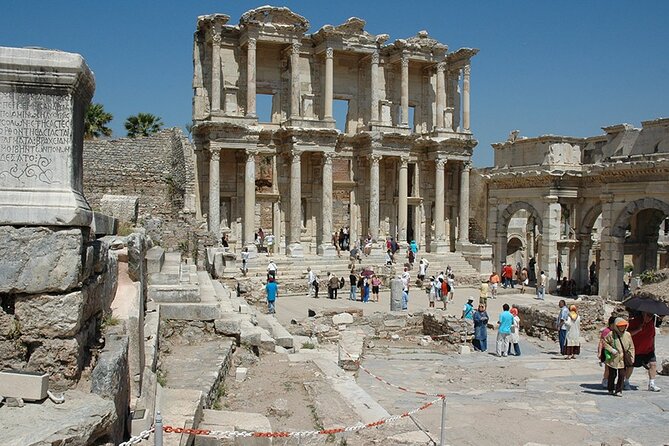
- Ephesus big hitters, properly paced: Marble Road, Library of Celsus, Great Theatre, and more.
- A Wonder that’s still hauntingly real: Temple of Artemis with its surviving columns and legend-filled backstory.
- Value math is easier here: Entrance fees and transportation are included, so the $162 price feels more “all-in.”
Why this private Ephesus shore tour fits cruise time
If you’re on a cruise, you usually have one big enemy: the clock. This tour is built around that reality. You start in Kusadasi and head toward Selçuk, where Ephesus sits, and you’re guided through the ruins at a tempo that fits a half-day, not a full-day commitment.
The private setup is the secret sauce. Instead of being swept along by a large group, you can pause when something grabs your attention—whether that’s a view from the theatre area or a less-obvious corner of the Marble Road. Even better, the tour uses a licensed local guide, so the story stays clear instead of turning into generic explanations.
You’ll also get a second stop that many cruise day-trips skip: the Temple of Artemis. Even though it’s shorter, it gives you a satisfying contrast after Roman Ephesus—myth, religion, and that Seven Wonders aura right in the open air.
You can also read our reviews of more boat tours in Kusadasi


Getting from Kusadasi to Selçuk without the hassle
The ride is part of the comfort here. You use an air-conditioned luxury vehicle with a professional driver, and pickup plus drop-off is included. That means less time figuring out transport, less stress about getting back to the port, and more time living in the ruins.
The route from Kusadasi toward the Ephesus area is scenic, but the real win is practical: you’re not doing guesswork. The tour timing is designed for shore schedules, and once you’re on-site, you don’t lose momentum to logistics.
There’s another underrated benefit to having a proper driver and a guide: you get a smooth start. When people are trying to coordinate a bus, a cab, and a ticket line all at once, the day can feel like a series of mini-crises. This tour keeps the day focused on the sites.
Stop 1: Ancient Ephesus, from Marble Road to Great Theatre
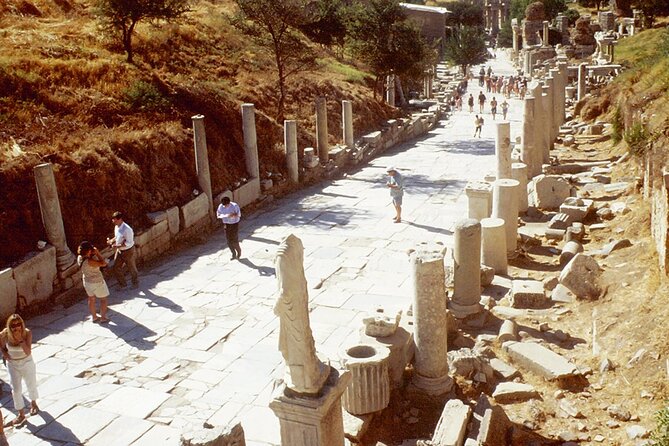
Ephesus is the kind of place that makes you slow down, even if you’re trying to be efficient. One reason is physical scale. Another is density: landmark after landmark sits close enough that you can connect the dots instead of seeing the ruins like separate attractions.
Your guided walk typically starts on the Marble Road, a long stretch that feels almost ceremonial. The marble itself is the clue to the city’s ambition. It’s one of those details that helps the ruins feel less like “stones” and more like a living city.
From there, the tour zeroes in on the headline structures that set Ephesus apart from many other ancient sites:
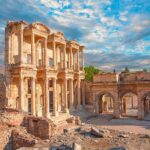
- Library of Celsus: This is a classic “how did they build this” stop, and the guide context helps you understand why it mattered.
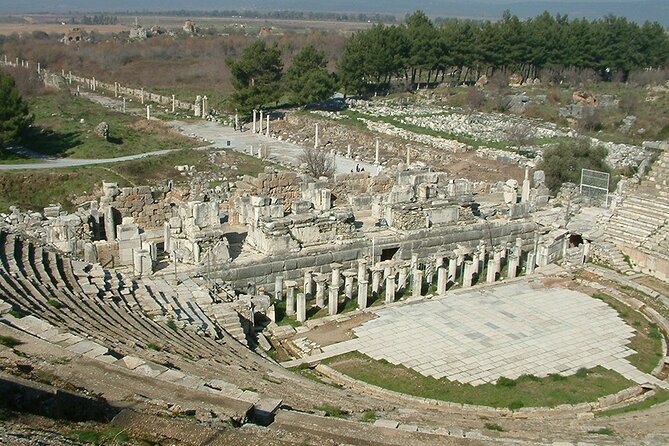
- Great Theatre (about 24,000 seats): When you stand where performances once took place, the size stops being a number and starts being a feeling. The theatre is powerful because it shapes sightlines and crowd movement. You can also sense why politics and public life would have happened here.
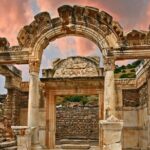
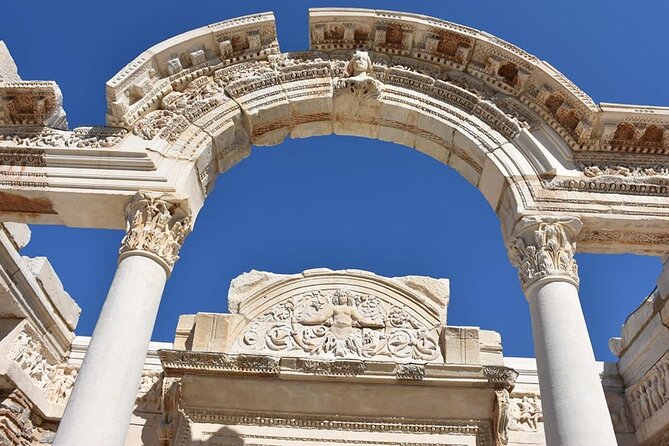
- Temple of Hadrian and Roman civic life: You’ll see the kinds of places that anchor everyday empire life—temples, baths, fountains, and civic spaces.
- Agora and political sites: This is where the story often shifts from architecture to people. The guide explanations make it clearer how public decisions and public rituals shaped the city.
The tour isn’t only about monuments, either. You’ll also move through areas tied to Roman daily rhythm: baths, fountains, and the broader mix of religious and civic spaces. That blend matters because it prevents Ephesus from turning into a checklist.
One of the more interesting points you can pick up during a good guide-led visit is how much still lies under the ground. In one account, I noted the surprise that around 80% of the ruins remain covered and unexplored. Even without turning this into a “dig site” experience, that idea changes how you look at what’s visible. You start to see Ephesus as part of an ongoing process, not a finished museum diorama.
You may also have the chance to consider the Terrace Houses area as an optional add-on. The key is simple: if you want that, confirm during booking because it can affect timing in an already packed half-day.
How much time you really get in Ephesus
You’ll spend about two hours in the ancient city area. That’s enough to hit the main set pieces and get good context, but it’s not enough to wander every side lane or spend long stretches in each location. Think of this as a guided highlight tour with time for questions and photos—not a free-form archaeology day.
Stop 2: Temple of Artemis and the Seven Wonders feel
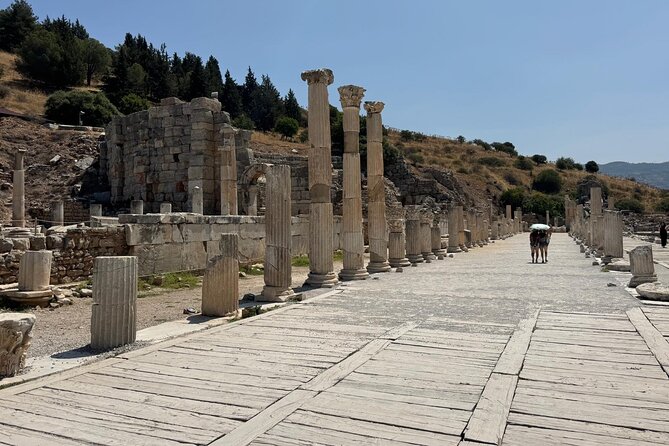
After the Roman concentration of Ephesus, the Temple of Artemis offers a different kind of atmosphere. Even though only a few columns remain, the site still feels tied to something bigger than the ruins themselves. Artemis is the goddess of the hunt and nature, and the temple’s reputation traveled far enough that it once ranked among the Seven Wonders of the Ancient World.
Your time here is short—about 20 minutes—so the visit works best if you treat it like a story stop. The guide explains the temple’s rise as a spiritual center and its dramatic fall. Then you’re left with the quiet physical reality: scattered remains, open sky, and a sense of how impressive it must have been at full height.
There’s also a subtle payoff after seeing the marble grandeur in Ephesus. The Artemis stop reminds you that ancient sacred architecture wasn’t just decoration—it was identity, power, and belief made visible.
You can also read our reviews of more private tours in Kusadasi


What to expect in the real-world vibe
This is an outdoor site with limited structures left. That’s normal. You’re not going to see a complete temple like a reconstructed model. Instead, you get the legend feeling plus enough physical remnants to anchor the story. It’s a compact stop that helps round out the day.
Price, value, and how to judge $162 per person
At $162 per person, this isn’t a bargain-basement option. But for a cruise shore tour, the value story is about what’s included and what you avoid.
You’re paying for:
- a licensed professional guide
- air-conditioned round-trip transport via a professional driver
- pickup and drop-off
- entrance fees to the sites in the plan
Once you add up those categories, the price starts to feel more reasonable, especially if you’re traveling as a small group and want the flexibility of a private format. If you were doing the day on your own, you’d still pay for transport and tickets, and you’d be left with the hassle of keeping track of timing back to the port.
The biggest value unlock: your pace
This is where private guidance pays off. Ephesus can be mentally exhausting if you’re trying to interpret it alone. With a guide, you spend more time understanding what you’re looking at and less time asking yourself if you’re looking at the right thing.
A note on group size and child pricing
Child rates (ages 7–12) are described as 50% of the per-person price based on group size. There’s also an important practical warning: Viator may miscalculate. Contact before booking, or expect an adjustment after. If you’re bringing kids, treat this as a must-check detail so there are no surprises at checkout.
What’s included (and what you still need to plan)
This tour is structured so your day runs on rails. Here’s what’s covered:
- Licensed professional guide in English or another preferred language
- Air-conditioned luxury vehicle and professional driver
- Pick-up and drop-off service
- Entrance fees to museums and sites tied to the stops
What’s not included:
- gratuities to guide and driver
- personal items
- anything not specifically listed as included
Practical things you should bring
Because both Ephesus and Artemis are outdoor, plan like it’s warm and sunny. Bring:
- comfortable walking shoes with grip
- sun protection (hat, sunglasses, sunscreen)
- water
- a charged phone or camera battery
Also, I’d keep your camera ready early. Some of the best photo moments happen as you transition between spaces—when the guide is pointing out what to look for, not just when you’ve already arrived.
The small guide details that make this day work
A great Ephesus guide doesn’t just point. They connect. In accounts like these, I’ve seen guides praised for attention to detail and for choosing a pace that doesn’t feel like a race.
For example:
- Hadi gets called out for expertise and a careful, question-friendly pace.
- Begüm is highlighted for being an excellent guide and for making Ephesus feel understandable, not overwhelming.
Those two qualities matter because Ephesus has layers. One moment you’re looking at marble architecture. Next you’re hearing how the city operated—public life, religious life, and even the ways Ephesus connects to Christian history. In one account, it’s the Christian-history angle that surprised someone, showing you that a good guide can widen the lens beyond Roman rule.
Expect a tour that’s built around questions
This private format makes it easier to ask about what you’re seeing. If you’re the type who likes context—why a theatre was built, why a civic space mattered—this style fits. If you’re the type who wants silence and speed, you can likely find that rhythm too, but you’ll still benefit from having someone interpret the “why.”
Who this tour suits best
This is a strong match if:
- you’re on a cruise and need a controlled, half-day plan
- you want private attention without losing the essentials
- you prefer guided context over DIY wandering
- you can handle moderate walking for the ancient city terrain
It may be less perfect if:
- you want to spend hours inside every major monument area
- you want a lot of museum time beyond the listed stops
- you’re hoping for a slow, relaxed day with minimal movement
Should you book this Ephesus private shore tour?
I’d book it if you want the best “bang for your limited time” experience. Ephesus is too big to treat casually, and a private, guided format helps you see the big landmarks while still moving at a human pace. The added Temple of Artemis stop makes the half-day feel rounded rather than one-note.
I’d think twice if you’re the type who dislikes any time pressure at all, because you’ll have limited hours on-site and only a short Artemis visit. Still, if your priority is seeing Ephesus’s core set pieces—Marble Road, Library of Celsus, Great Theatre, and the surrounding Roman civic-religious spaces—this tour is built for exactly that.
FAQ
How long is the Private Ephesus Shore Tour for Cruise Guests from Kusadasi Port?
The tour lasts about 3 hours 30 minutes.
Is this a private tour?
Yes. It’s private, and only your group participates.
What stops are included?
You’ll visit the Ancient City of Ephesus and the Temple of Artemis.
How long do you spend in Ephesus?
You’ll have about 2 hours at the Ancient City of Ephesus, with entrance ticket included.
How long is the Temple of Artemis stop?
The Temple of Artemis stop is about 20 minutes, and entry is free.
Are entrance fees included?
Yes. Entrance fees to the museums and sites included in the itinerary are covered.
Do you provide pickup and drop-off?
Yes. Pickup and drop-off are included.
What languages are available for the guide?
The guide is listed as licensed professional and can operate in English or other preferred language.
How much does the tour cost?
The price is $162.00 per person.
How do child rates work for ages 7–12?
Child rates (ages 7–12) are listed as 50% of the per-person price based on group size. There is also a warning that Viator may miscalculate, so you should contact before booking or expect an adjustment afterward.
What is the cancellation policy?
Free cancellation is available up to 24 hours in advance for a full refund. If you cancel less than 24 hours before the start time, the amount paid is not refunded.