REVIEW · ISTANBUL
Istanbul: Theodosius Water Cistern Tickets & Audio Guide
Book on GetYourGuide →Operated by Cosmic Tickets & Audios · Bookable on GetYourGuide
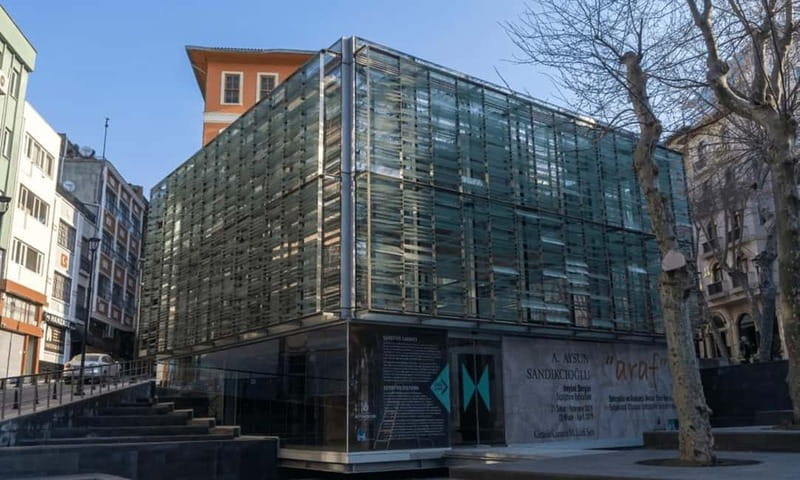
The Theodosius Cistern feels like Istanbul underground. This self-guided ticket turns Şerefiye Sarnıcı into a walk-through lesson on Byzantine engineering, with atmospheric lighting that makes the stone feel alive. You’ll see the well-preserved columns up close and learn how the water system kept Constantinople running.
I especially like that the ticket includes an audio guide app, so you’re not stuck guessing what you’re looking at in the dark. I also appreciate the skip-the-ticket-lines setup, which helps you get inside faster and spend your time where it matters: the cistern itself.
The main drawback to watch for is value. At $26 per person, some people feel the entry price is steep for a relatively short visit, even if the lighting and architecture are genuinely impressive.
In This Review
- Key highlights worth your attention
- Şerefiye Sarnıcı: a Byzantine water vault you can walk into
- What’s included: ticket, skip-entry, and the audio guide app
- How the QR ticket fits into your arrival plan
- Entering the cistern: what you’ll see first
- The columns and vaulted ceilings: the architecture part you’ll remember
- Atmospheric lighting: when the cistern feels like a set
- The audio guide app: where it helps most
- The “walk-through” reality: pace, timing, and staying comfortable
- Price check: does $26 feel worth it here?
- Who should book this ticket (and who should skip)
- Final verdict: should you book the Theodosius Cistern ticket?
- FAQ
- What’s included with the Theodosius Cistern ticket?
- Do I need a guided tour for this experience?
- When will I receive the QR code ticket?
- Is flash photography allowed inside the cistern?
- What should I wear or bring for the cistern?
- Is the cistern accessible for people with claustrophobia or wheelchairs?
Key highlights worth your attention
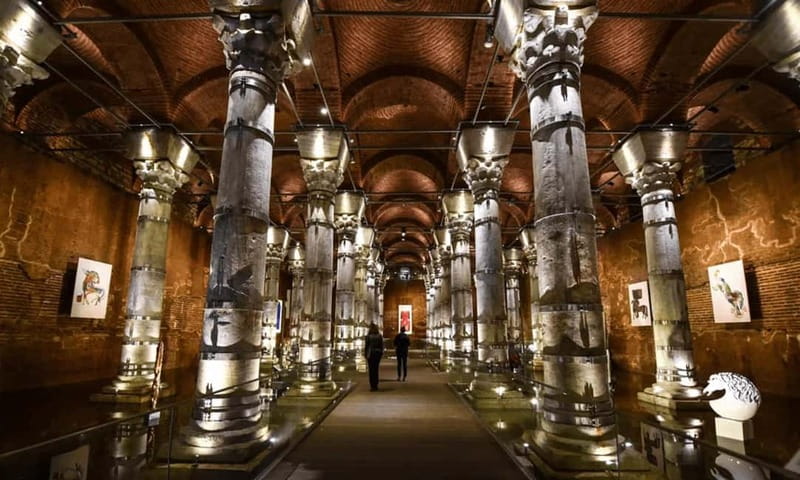
- 32 marble columns and vaulted ceilings: a dramatic, repeatable photo viewpoint without leaving your path
- Atmospheric lighting: it can make the space feel like more than a dark storage room
- Audio guide app: helps you make sense of the cistern’s purpose and design
- Express security and skip-the-line entry: less waiting, more time underground
- Underground temps and slippery floors: you’ll feel the environment right away, so plan footwear
- Not suitable for claustrophobia or wheelchairs: this is a closed, underground walk-through
Şerefiye Sarnıcı: a Byzantine water vault you can walk into
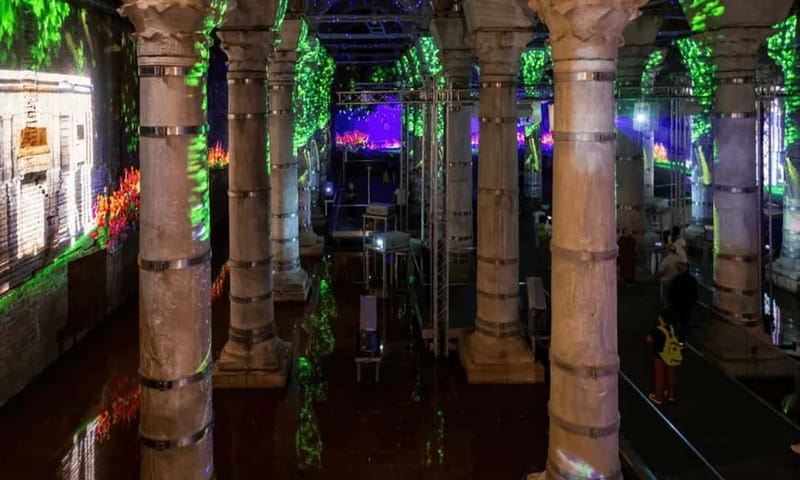
The Theodosius Cistern (Şerefiye Sarnıcı) is an ancient underground water reservoir in Istanbul, built during the reign of Emperor Theodosius II in the 5th century. It was a key water storage facility for Byzantine Constantinople, so this isn’t just a pretty ruin—it’s infrastructure on a grand scale.
What you’ll notice fast is the geometry. The space is built around a forest of columns supporting the vaulted ceiling, and that repetition makes the cistern feel bigger than you expect. In a city full of surface-level sights, this one goes under your feet and keeps speaking in stone.
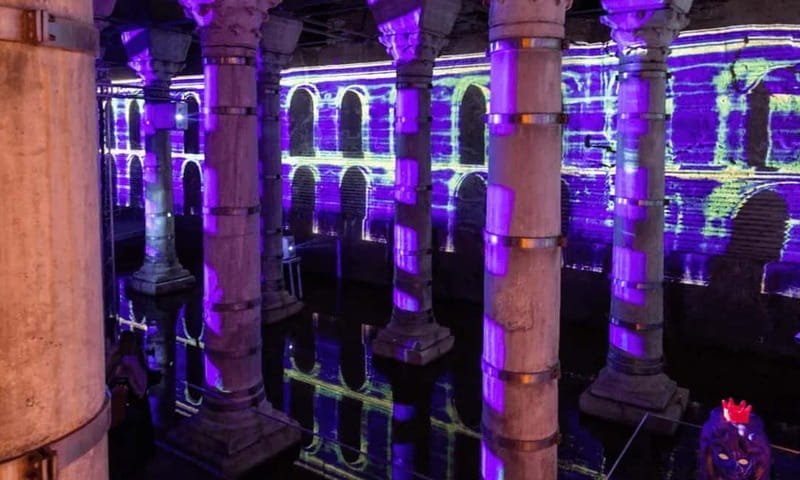
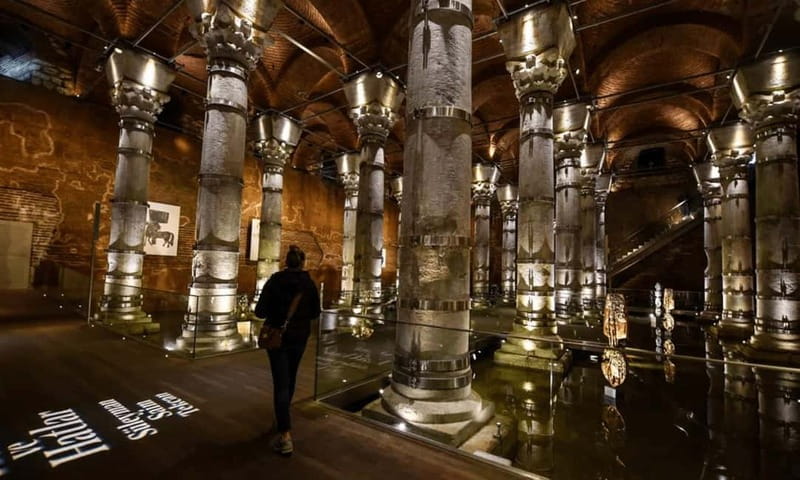
You should also know the setting is intentionally theatrical. The cistern uses atmospheric lighting, and some visitors describe it like a light show or projection effect that highlights the columns and walls. Even if you’re not chasing effects, the lighting changes the way the architecture reads.
A few more Istanbul tours and experiences worth a look


What’s included: ticket, skip-entry, and the audio guide app
This experience is a straightforward admission ticket plus an audio component. Your package includes:
- Entrance ticket to the Theodosius Cistern
- Skip the ticket lines
- Audio guide app
There’s no guided tour included, and food or drinks aren’t part of the ticket. That means you control your pace—and you can linger on the columns, ceilings, and water-reservoir layout without feeling like you’re being rushed from one stop to the next.
The audio guide app is the real upgrade. Instead of looking at a dark underground room and hoping you understand it, you get an on-site explanation of the cistern’s historical significance. You’ll also get context for how it fit into the city’s water supply system, which is the difference between seeing columns and understanding why they matter.
How the QR ticket fits into your arrival plan
You’ll get your QR code ticket from the supplier Cosmic Tickets after 6 PM the day before your visit. If you book on the same day, the QR code is sent immediately.
That timing matters because it pushes this activity away from “spontaneous, right now” planning. If you’re the type who likes to keep your phone battery low and your plans simple, you’ll still be fine—just don’t count on receiving anything the moment you decide.
The ticket also includes an express security approach. In practice, that means less friction before you reach the cistern entry point. Still, keep one thought in mind: if a QR scan needs staff activation, expect a moment of troubleshooting at the door. Be calm, have the QR visible, and give staff the chance to sort it out.
Entering the cistern: what you’ll see first
Once you’re inside, your first view is typically the “wow” frame—the columns receding into the dark like a stone corridor. The structure is known for its 32 marble columns, and these aren’t just present; they’re part of how the space guides your eyes.
Look for the vaulted ceilings above you. They create a repeating pattern that helps your brain measure the room. When you slow down, you’ll start noticing details like column spacing, support rhythm, and how the floor path helps you navigate the reservoir space without crowding.
Photography is allowed, but flash photography is not permitted. That’s a sensible rule here because flash would ruin the lighting effect and can be harsh in low-light conditions. If you care about photos, plan to use your normal camera settings rather than trying to blast the scene with flash.
The columns and vaulted ceilings: the architecture part you’ll remember
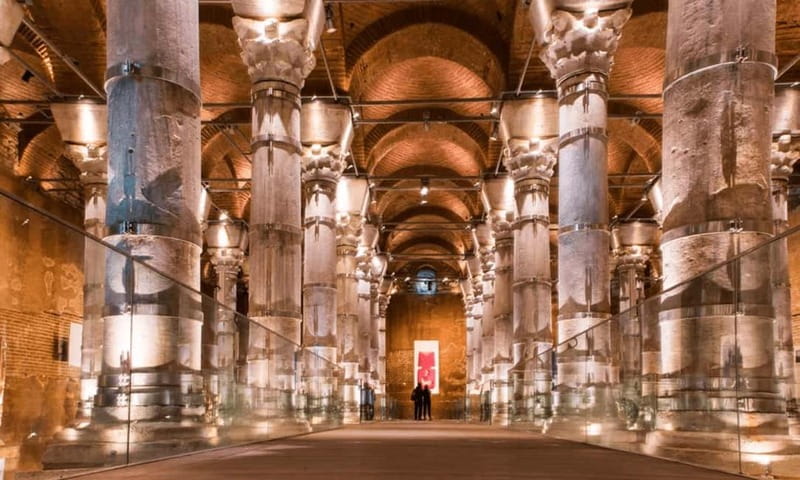
This is the section you can’t really rush. The cistern is famous for its intricate architecture and well-preserved columns. You’re looking at an underground reservoir designed to survive centuries, and you can feel that in the way the columns and stonework hold together.
Here’s what the columns do for the experience. They turn a large underground cavity into a series of structured “views.” As you walk, you get repeated compositions—columns aligned, ceiling shadows shifting, and the distant geometry changing with your position.
Because the cistern is mostly stone and shadows, lighting becomes part of the architecture reading. Visitors who really enjoyed the experience often point to the way the lighting makes the space feel more dimensional, like the walls and stone surfaces have depth instead of flattening into darkness.
You can also read our reviews of more guided tours in Istanbul




Atmospheric lighting: when the cistern feels like a set
Atmospheric lighting is explicitly part of the experience, and it’s one of the most praised aspects. In some cases, people describe it as a light show or mapping effect that brings attention to the columns and walls.
The practical takeaway: if you’re sensitive to audio-visual effects, this likely won’t bother you because it’s subtle compared with big museum performances. If you’re the type who likes how lighting shapes mood, you’ll probably appreciate it more than you expect.
Now the honest counterpoint. Lighting won’t fix everything if you think the entry fee is too high. One common complaint is that even with good visuals, the overall price can feel steep for a single cistern visit. So treat the lighting as a bonus, not the sole reason to go.
The audio guide app: where it helps most
The audio guide app is designed to give you historical significance and engineering context as you move through the space. It’s especially useful in a cistern, because your eyes may latch onto the columns, but you might miss the “why” without guidance.
What you’ll get from the audio component:
- A clear explanation that the cistern is a Byzantine water storage facility
- Context tied to Emperor Theodosius II and the 5th century
- A walkthrough of the cistern’s role in the city’s water supply system
- Notes that help you connect the architecture to its function
This matters because the cistern’s design is functional first. When you understand what it was built to do—store and manage water—you see the columns and vaulted structure differently. You stop thinking of it as a room and start thinking of it as a mechanism.
Keep the audio at a comfortable volume. The cistern is underground and echo-y, and the sound can carry. If you’re visiting near a crowd, you’ll also want to keep it low enough that you’re not competing with others.
The “walk-through” reality: pace, timing, and staying comfortable
This ticket is valid for 1 day, and the experience itself is self-paced. Since it’s underground, your comfort changes immediately when you enter. It can be cooler than the outdoor temperature, and that’s actually a plus on a hot Istanbul day.
The flooring can be slippery, so bring comfortable shoes with grip. This isn’t the time for smooth soles or minimalist sneakers that have no traction. You don’t need hiking boots, but you do need something stable.
Also consider spacing. It’s not described as wheelchair-friendly, and the cistern’s layout is underground, so movement can feel constrained. If you don’t like tight indoor spaces, take that seriously—this is one of those sites where your comfort level is as important as the history.
Price check: does $26 feel worth it here?
At $26 per person, you’re paying for three things: the entrance, the skip-line setup, and the audio guide app. The value question comes down to how much you care about context versus raw sightseeing.
If your priority is context, the included audio guide can make a real difference. Without it, a cistern can become just “pretty stone columns.” With it, you get a story about why the structure exists and what it did for Byzantine Constantinople.
If your priority is value-per-minute, you’ll need to think honestly. A cistern ticket can only cover so much time, and that’s why some people criticize entry fees. If you’re already planning to hit multiple paid sights in Istanbul, it can feel like the costs stack up.
My practical advice: treat this as a “high-impact” stop rather than a long day activity. Go when you’ll have your best attention. If you’re tired, hungry, or rushed, you’ll likely feel like the price is higher than the experience.
Who should book this ticket (and who should skip)
This experience fits best if you want a self-guided, history-focused walk inside a major piece of infrastructure. If you like architecture, engineering, and visual storytelling through lighting and sound, you’ll probably enjoy how the audio guide ties the stone to the city’s water system.
You may want to skip it if:
- You have claustrophobia, since it’s an underground closed environment
- You use a wheelchair, since it’s not suitable for wheelchair users
If you’re traveling with kids, it can be a good educational stop, but the lighting rules and underground setting mean you should go with clear expectations about walking and time.
Final verdict: should you book the Theodosius Cistern ticket?
Book it if you want an easy, line-skip admission into a 5th-century water reservoir and you’ll actually use the audio guide app. The columns, vaulted ceiling design, and atmospheric lighting are the kind of combination that turns a short underground visit into a memorable one.
Think twice if price sensitivity is your main concern. If you’re expecting a long, guided experience or you dislike paying museum-level fees for a single stop, this may feel overpriced. In that case, you might decide to prioritize other Istanbul sights first.
Overall, this is a strong choice when you want a well-structured self-guided history moment that’s easy to fit into your day—just go prepared for underground cool air, slippery floors, and a visit that stays firmly underground.
FAQ
What’s included with the Theodosius Cistern ticket?
The ticket includes entrance to the cistern, skip-the-ticket-lines access, and an audio guide app.
Do I need a guided tour for this experience?
No. A guided tour is not included, so you explore the cistern independently with the audio guide app.
When will I receive the QR code ticket?
You receive your QR code ticket after 6 PM the day before your visit. If you book on the same day, the QR code is sent immediately.
Is flash photography allowed inside the cistern?
No. Flash photography is not permitted, though regular photography is allowed.
What should I wear or bring for the cistern?
Wear comfortable shoes because there will be some walking and the cistern can be slippery.
Is the cistern accessible for people with claustrophobia or wheelchairs?
It’s not suitable for people with claustrophobia, and it’s also not suitable for wheelchair users.