REVIEW · KUSADASI
From Kusadasi: Pamukkale & Hierapolis Tour with Entry Ticket
Book on GetYourGuide →Operated by Crossroads Travel · Bookable on GetYourGuide
Two wonders, one day: white terraces and Roman ruins. This Kusadasi trip brings you to Pamukkale’s Cotton Castle and the Hierapolis necropolis with a guided, ticket-in plan, plus lunch and hot-spring time. I like the skip-the-ticket-line convenience, and I also like that you get guided time where the details matter: Hierapolis sarcophagi and Cleopatra’s Pool.
One possible drawback: the schedule is full and can feel tight. If you’re hoping for long, slow barefoot wandering on the travertine, the time allocation can feel a bit rushed, and the lunch stop can be hit-or-miss depending on the day.
In This Review
- Key Points That Matter Before You Go
- Cotton Castle and Hierapolis in One Long Day
- Timing From Kusadasi or Selcuk: What 10 Hours Really Means
- Pamukkale Hot Springs: Travertine Terraces and the Barefoot Rule
- The big thing you can’t ignore: walking without shoes
- Expect slippery spots and plan for your footing
- Hierapolis Ruins: Necropolis Sarcophagi, Colonnades, and Thermal Baths
- Sarcophagi and the necropolis atmosphere
- Cleopatra’s Pool: mineral water with a legend
- Lunch at Pamukkale: Turkish Buffet, Timing, and Drink Costs
- Drinks are extra
- How to make lunch better anyway
- Free Time and the Reality of Shopping Stops
- Included Perks: Pickup, Guide, Entry, Transport, and Skip-the-Line
- The small catch: accessibility vs. travertine walking
- What I Think This Tour Is Best For (and Who Should Skip It)
- Final Verdict: Should You Book This Pamukkale & Hierapolis Tour?
- FAQ
- How long is the Pamukkale & Hierapolis tour from Kusadasi?
- Where do you get picked up from?
- What should I bring for Pamukkale?
- Are entrance tickets included?
- Is lunch included, and are drinks included too?
- Do I need to walk on travertine without shoes?
Key Points That Matter Before You Go
- Cotton Castle travertines with a barefoot walking requirement: you’ll need to walk about 0.5 miles over travertine without shoes
- Guided Hierapolis with necropolis highlights: sarcophagi areas plus the main colonnaded street and city gates
- Hot springs time built into the plan: mineral-rich waters tied to Roman-era thermal use
- Lunch is included, beverages aren’t: open buffet Turkish food, but drinks cost extra
- Order can shift to avoid congestion: you might see Pamukkale and Hierapolis in slightly different sequencing
Cotton Castle and Hierapolis in One Long Day

Pamukkale is one of Turkey’s most famous “how is this real?” places. The white travertine terraces form when mineral-rich thermal water flows over the plateau, leaving calcium carbonate deposits that build those stepped, cotton-like surfaces over centuries. Add Hierapolis—an ancient Roman city built on the same thermal zone—and you get a rare mix of nature and archaeology in a single 10-hour outing.
What I like about this tour is that it’s structured for comfort and flow: hotel pickup and drop-off, a live English-speaking guide, air-conditioned transport, and entrance fees included. You’re not trying to piece together tickets, transfers, and directions on your own, which is a big deal on a long day trip.
Still, it’s a full-day format. You’ll be moving between the Pamukkale hot-springs area and the Hierapolis ruins, with lunch and a shopping/free-time block thrown into the mix. That’s great if you want a “see it all” day—less great if you’re mainly after slow, dreamy time on the terraces.
A few more Kusadasi tours and experiences worth a look

Timing From Kusadasi or Selcuk: What 10 Hours Really Means
You’ll start with pickup from hotels around Kuşadası and Selçuk, with two pickup options listed: Selçuk and Kuşadası. Plan to be ready in the lobby about 10 minutes before your scheduled time, because the driver won’t wait much past the pickup window.
The drive itself is broken up with a short break along the way, so the day doesn’t feel like nonstop sitting. The itinerary shows roughly hour-long driving stretches, then a 20-minute break, then more driving before you reach Pamukkale.
Here’s the practical part: the total time is 10 hours, so you should treat it like a day of highlights, not a relaxed spa day. You’ll get guided time at Pamukkale, guided time at Hierapolis, lunch, and then free time/shopping back at Pamukkale. If you’re the type who takes 50 photos per terrace section, you’ll want to pace yourself early—especially since there’s a rule about walking over travertine without shoes.
Pamukkale Hot Springs: Travertine Terraces and the Barefoot Rule
Pamukkale’s thermal system is famous for a reason. The area has 17 hot springs, with water temperatures ranging from 35°C to 100°C. That water travels about 320 meters to the terraces, and as it spreads, it deposits calcium carbonate—creating the signature white formations.
On this tour, you’ll get a guided tour at Pamukkale Hot Springs (about 1 hour). That guided window is where you’ll learn what you’re actually looking at—how the mineral deposits form, why certain sections look smoother or more stepped, and how the hot-spring zone connects to the Roman-era use.
The big thing you can’t ignore: walking without shoes
The tour notes you must be able to walk approximately 0.5 miles over travertine without shoes. This is not a “stand and pose” requirement. Travertine surfaces can be slick, and your time is safer and smoother if you’re physically comfortable walking that distance carefully.
My tip: if you’re coming from the restrooms or parking areas, wear easy footwear to get around outside the travertine zone—then be ready to go barefoot where required. Also bring a hat and plenty of sunscreen, because a lot of the experience is out in the open sun.
Expect slippery spots and plan for your footing
You’ll want to watch your step at all times. That’s not dramatic advice—it’s the difference between a great day and a sore ankle. Pamukkale’s beauty is tied to mineral water action, and that same water action can mean slick surfaces.




Hierapolis Ruins: Necropolis Sarcophagi, Colonnades, and Thermal Baths
After Pamukkale, the tour heads to Hierapolis, with a guided visit (about 75 minutes). This is where your day shifts from natural wonder to ancient city storytelling.
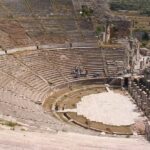
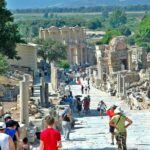
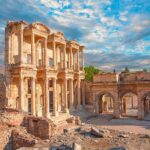
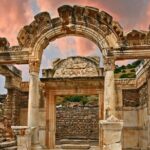
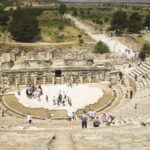
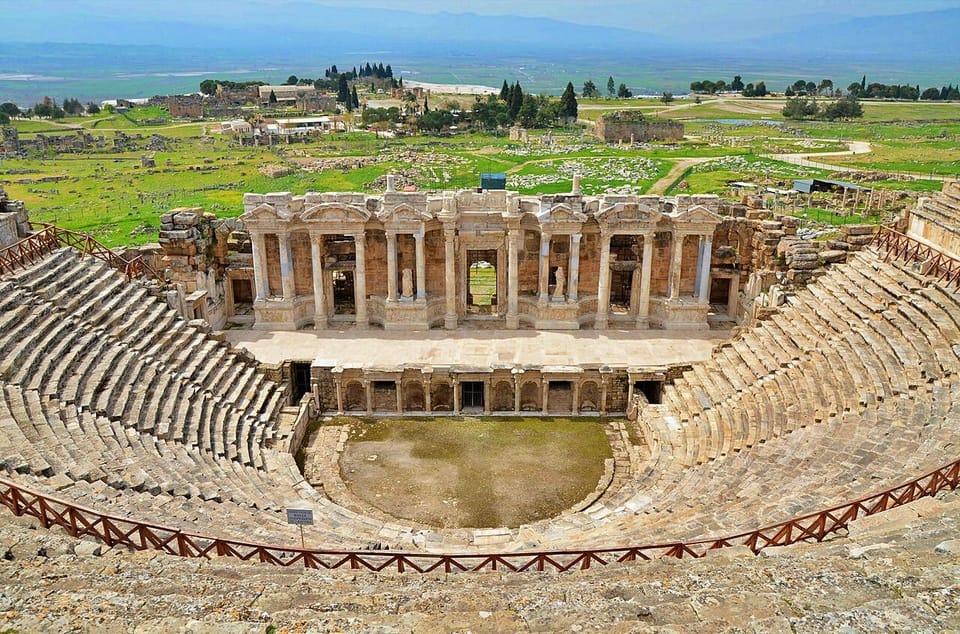
Hierapolis is especially compelling because the ruins are preserved in the same hot-spring environment that attracted people in antiquity. The site includes a well-preserved necropolis, a main colonnaded road, ancient city gates, and thermal baths. If you like archaeology with a visible, human-scale feel—streets you can walk and tombs you can stand beside—this portion delivers.
Sarcophagi and the necropolis atmosphere
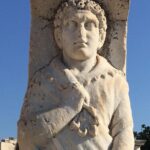
A highlight for this tour is the sarcophagi of the necropolis at Hierapolis. Even if you’re not a “tomb person,” sarcophagi zones make the Roman world feel tangible. It’s one thing to read about ancient burial traditions; it’s another to stand in the same complex layout and see how structured the dead became.
Cleopatra’s Pool: mineral water with a legend
Back at Pamukkale’s complex, the description points to Cleopatra’s Pool, where mineral-rich waters are used for therapeutic showers and drinking cures. This is one of those “famous for a reason” stops. Even if you skip any drinking-cure aspect, you can still treat the pool area as a window into how Romans used the same thermal water.
One health note in plain language: don’t treat it like a medical prescription. If you’re sensitive to mineral waters or have any health concerns, use the guide’s context for what’s known, then decide what feels safe for you.
Lunch at Pamukkale: Turkish Buffet, Timing, and Drink Costs
Lunch is included as a typical Turkish buffet at an open buffet restaurant. The schedule shows about 45 minutes for lunch, and then you’ll have additional free time back at Pamukkale afterward.
This is where reviews reveal a common truth about day tours: lunch quality can vary with the venue and crowd levels. One review called lunch poor quality and described the buffet rush in blunt terms. Another said lunch was good. So treat lunch as part of the package, not the centerpiece.
Drinks are extra
Beverages aren’t included. That matters because extra drink charges are a common frustration on long tours—especially in hot regions where water intake is essential. If you want control over costs, plan to budget for drinks separately.
How to make lunch better anyway
- Use lunch time to refuel and keep your energy up for the terrace walking.
- Don’t overcommit to trying everything if the buffet line is moving fast.
- If you’re picky, aim for simple, filling options you recognize.
Free Time and the Reality of Shopping Stops
After lunch, you’ll get free time and shopping at Pamukkale (about 1 hour). This is your chance to do the things that don’t fit neatly into guided commentary: additional terrace viewing, souvenir browsing, and relaxing your pace.
Some departures also include an onyx factory stop. That’s likely there because local businesses provide work and commissions, but it can feel like a detour if you came for nature and ruins only. If shopping isn’t your style, decide early that you’ll browse quickly and move on.
If you prefer zero-pressure experiences, go into the free-time portion with a plan:
- pick one souvenir category you actually want,
- then spend the rest of the hour on the terraces.
Included Perks: Pickup, Guide, Entry, Transport, and Skip-the-Line
This tour includes a lot that saves time and hassle. You get:
- Hotel or airport pick-up and drop-off
- English-speaking guide
- Entrance fees to sites as per the itinerary
- Transportation by non-smoking, air-conditioned mini/midi bus
- Lunch at a typical Turkish restaurant
- Skip the ticket line
- Wheelchair accessibility is listed
The small catch: accessibility vs. travertine walking
Wheelchair accessibility is stated, but the tour also requires being able to walk about 0.5 miles over travertine without shoes. If you rely on a wheelchair or have mobility limits, don’t assume “wheelchair accessible” means you can avoid the barefoot travertine requirement. Ask the operator how that works in practice for your situation.
What I Think This Tour Is Best For (and Who Should Skip It)
This is a strong fit if:
- you want Pamukkale and Hierapolis in one day without planning logistics,
- you appreciate an English guide for context at the ruins,
- you’re comfortable moving steadily and don’t mind a timed day.
It’s a less ideal fit if:
- you mainly want a slow, spa-like Pamukkale experience,
- you’re sensitive to slippery surfaces or can’t handle careful barefoot walking,
- you’re pregnant (the tour lists this as not suitable).
Also, bring your common sense about day tours. You’ll be on a schedule. If you need lots of quiet time or you’re prone to feeling rushed, you may feel the day’s momentum more than other people.
Final Verdict: Should You Book This Pamukkale & Hierapolis Tour?
Book it if your top priority is convenience: pickup, guided entry, entrance fees, transport, and lunch bundled into a single full-day trip. You’re paying for a structured day that gets you to the two most famous stops—Pamukkale’s white travertines and Hierapolis’ necropolis and sarcophagi—without ticket-hunting or route headaches.
Skip it or choose carefully if you want lots of unhurried time on the terraces, or if you dislike lunch and shopping detours. The biggest risk here is feeling rushed at Pamukkale and having lunch quality that may not match your expectations, plus possible extra costs for drinks.
If you do book, pack smart: swimwear, a hat, sunscreen, and be ready for the barefoot travertine walk. That one detail changes the whole experience from comfortable to stressful—so plan for it and you’ll get the best of the day.
FAQ
How long is the Pamukkale & Hierapolis tour from Kusadasi?
The tour duration is listed as 10 hours.
Where do you get picked up from?
Pickup options are listed for Selçuk and Kuşadası. Drop-off locations are also listed as Kuşadası and Selçuk.
What should I bring for Pamukkale?
You should bring swimwear. The tour also notes bringing a hat and plenty of sunscreen.
Are entrance tickets included?
Yes. Entrance fees to the sites as per the itinerary are included, and the tour offers skip-the-ticket-line.
Is lunch included, and are drinks included too?
Lunch is included as a Turkish buffet. Beverages are not included.
Do I need to walk on travertine without shoes?
Yes. The tour notes you must be able to walk approximately 0.5 miles over travertine without shoes.