REVIEW · KUSADASI
Private Ephesus Bible Study Tour From Kusadasi Port
Book on Viator →Operated by Guide of Ephesus · Bookable on Viator
A day in Ephesus with a Bible focus can feel personal. This private tour runs like a well-paced road trip through major sites—then ties the sights to the Christian stories many people come for. You also get a cruise-port plan that’s built for the clock.
I love that it’s private for your party only. No waiting for other groups, and your guide can set the pace around what you care about most. I also like the mix of stops: Ancient Ephesus ruins plus the nearby pilgrimage sites of Meryemana and the Basilica of St. John.
One thing to consider: most of the big-ticket sites have separate entrance fees, so your final cost will land higher than the tour price once you add Ephesus, Meryemana, and St. John.
In This Review
- Key highlights for your Kusadası day
- Kusadası Port pickup that respects the cruise timetable
- Why a private Ephesus Bible tour changes the vibe
- Kusadası Castle views and the Öküz Mehmet Paşa Caravanserai
- Ancient Ephesus: how the key sights connect to scripture
- Meryemana and St. John’s Basilica: pilgrimage stops with living tradition
- Temple of Artemis: ruins with religion layers
- Lunch in the countryside: included, but plan for drinks
- Price and value: tour fee plus separate entrance tickets
- Comfort, timing, and what to bring for 4–5 hours
- Should you book this private Ephesus Bible study tour?
- FAQ
- FAQ
- How long is the Private Ephesus Bible Study Tour from Kusadasi Port?
- Is this tour private?
- Where do cruise passengers meet the guide?
- What language is the tour offered in?
- What’s included in the tour price?
- Are entrance fees included?
- Do you get a meal during the tour?
- Will the tour help with ticket lines?
- What time should I meet the guide after my cruise docks?
- What if the weather is poor?
Key highlights for your Kusadası day
- Private, party-only format with a licensed local guide focused on your group
- Skip-the-line ticket handling so you lose less time standing around
- Cruise-friendly timing with guaranteed on-time return to the port
- Biblical connections built into the stops around Ephesus and nearby Christian sites
- Countryside lunch included (but drinks aren’t) for a real break from ruins
- Convenient “pass by” culture stops in Kusadası Castle area and the Öküz Mehmet Paşa Caravanserai
Kusadası Port pickup that respects the cruise timetable
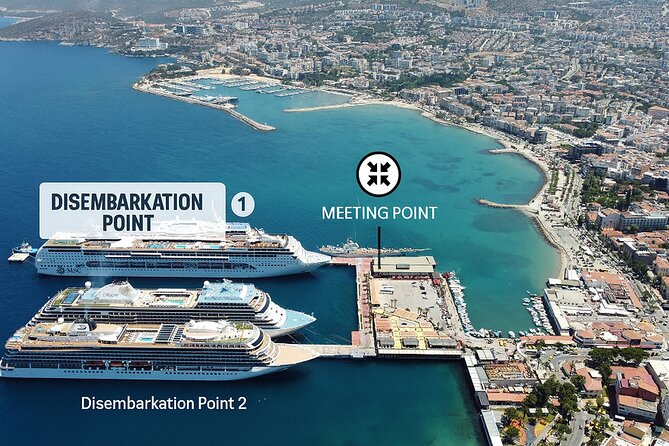
If you’re doing this from Kusadası by cruise, the first win is simple: they plan around ship schedules. Your guide meets you at the port meeting point and uses a sign with your name. For hotel guests, it’s in the hotel lobby.
What makes this more than just convenient is the promise of timing control. They keep a close eye on docking and departure times across different ships, then coordinate your return so you’re back before your ship leaves. That matters in Ephesus days, because a late return can erase the whole point of the trip.
In practical terms, your day is built to be efficient. You’re on a private van with a separate driver, you’re moving between sites with intent, and you’re not stuck in the chaos of big group herding.
You can also read our reviews of more private tours in Kusadasi
Why a private Ephesus Bible tour changes the vibe
Ephesus is one of those places where crowds can turn the day into a shuffle. Private helps you avoid that. You get a guide who can answer questions and explain what you’re seeing in a way that sticks.
I also like the Bible-centered approach. This isn’t just ancient architecture homework. The tour’s flow connects the sites to Christian tradition—especially in and around Ephesus—so you’re not walking through ruins with zero context.
And the guide quality shows up in real-world examples. Names like Yesra and Bilal come up for their clear explanations and helpful, accommodating style. That’s the kind of guide interaction that can make you look twice at things you’d normally rush past.
Kusadası Castle views and the Öküz Mehmet Paşa Caravanserai
Not every stop here is a “full entry ticket moment.” Two of the early pieces are quick looks that set the mood before you hit the bigger historical hits.
First, there’s a pass-by around Kuşadası Castle on Pigeon Island. You’re not going deep inside on this schedule, but you do get the chance to take in the idea of it: an Ottoman-era coastal defense fortress built to protect the region from pirates and invaders. The payoff is also practical—those panoramic sea views help you orient yourself for the day and appreciate why this port town mattered.
Next comes Öküz Mehmet Paşa Caravanserai. Again, it’s not a long museum-style visit, but it’s a meaningful one. Built in 1618 as an Ottoman-era trade hub, it represents how merchants traveled between the East and West and needed lodging and protection. Seeing the grand entrance and heavy stone walls in person gives the trade-route story a physical anchor.
Even if your main focus is Bible sites, I think these short Kusadası moments are useful. They add context for how travel and trade shaped the region long before today’s cruise arrivals.
Ancient Ephesus: how the key sights connect to scripture
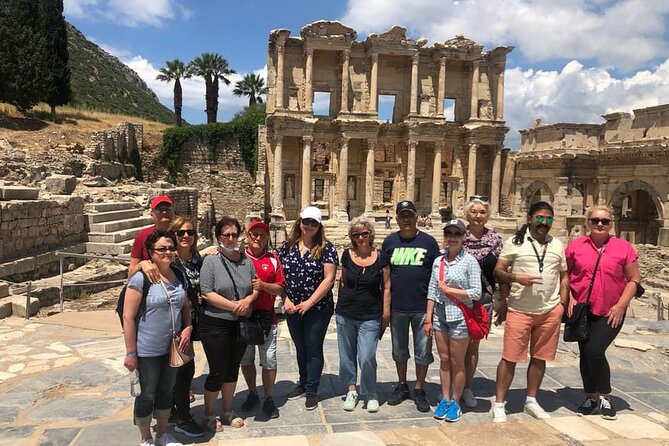
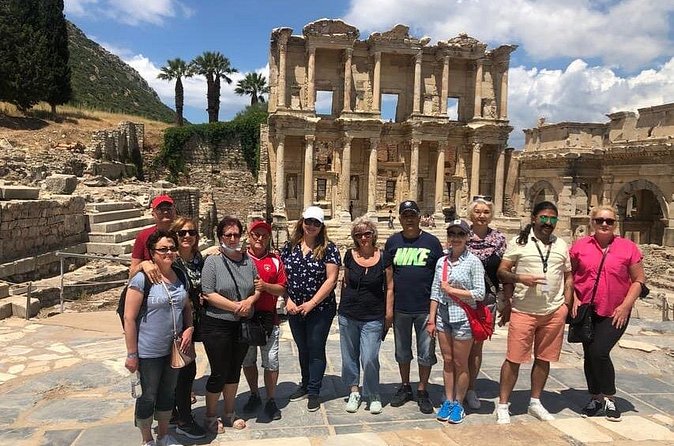
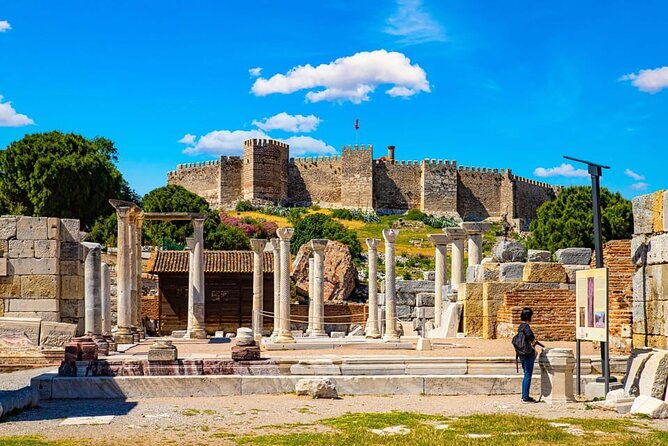
This is the core of the day, and it’s where you’ll spend roughly two hours exploring Ancient City of Ephesus. Admission for Ephesus itself is not included, so plan on the entrance fee separately. But the schedule is tight and efficient, meaning you should feel like you’re using your time well.
Here’s what you’ll typically see, and why each stop matters:
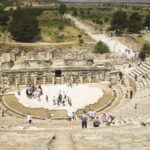
- Great Theater: Seating for over 20,000 people. Even if you can’t picture every gladiatorial moment, the scale does the job. It helps you understand how public life worked—events were a form of communication.
- Public Agora: This is a gathering space tied to where St. Paul preached. Even if you’re not a history nerd, “where people stood to hear ideas” makes the ruins feel less abstract.
- Marble Street: Chariot wheel marks still exist here. It’s a small detail, but it’s one of those “wait, this is real” moments. You’re literally walking over grooves left by ancient movement.
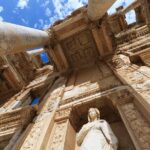
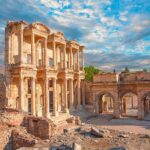
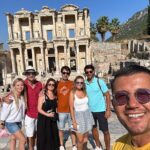
- Celsus Library: The restored façade is the headline. It’s also a good visual checkpoint: you’ll remember the library long after you’ve left.
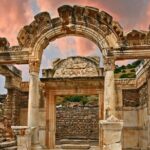
- Temple of Hadrian, Trajan Fountain, Domitian Temple, and Odeon: These add architectural variety and show how political power, worship, and public culture blended together.
If you want Bible context, I’d focus on the idea of public space. Agora, theater, street life—Ephesus wasn’t designed for quiet. It was a message city. A good guide turns that from “tour stops” into a story you can track.
One realistic consideration: Ephesus is outdoor ruins. Bring water, wear shoes that handle uneven ground, and expect some walking on stone and slope.
Meryemana and St. John’s Basilica: pilgrimage stops with living tradition
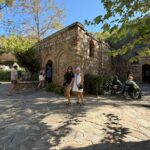
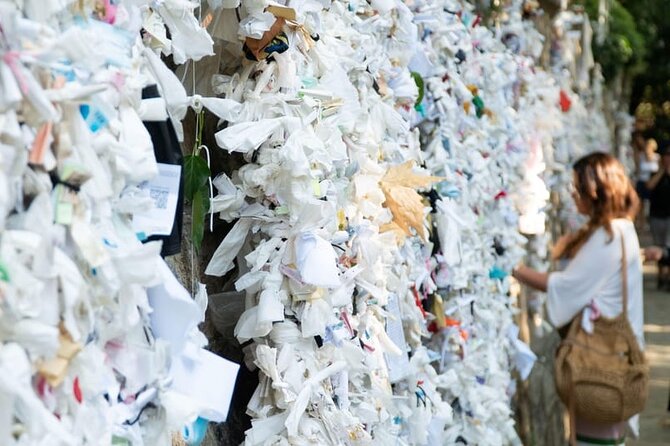
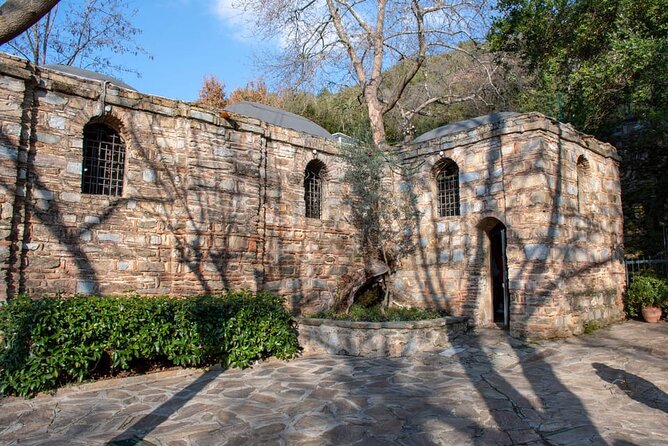
After Ephesus, you head to Meryemana (The House of the Virgin Mary). This is one of the big emotional stops on the route. The site is believed to be where the Virgin Mary spent her final days, and where Christian tradition says she was assumed into heaven.
The tour highlights the tradition that Apostle John brought Mary to Ephesus after the Resurrection. It also points out that the church has been affirmed by visits from three popes: Paul VI in 1967, John Paul II in 1979, and Benedict XVI in 2006. There are gifts connected to the shrine displayed as symbols of the site’s sacred importance.
The actual time here is about 45 minutes, and the value is more spiritual than archaeological. I like it because it slows the day down after the intensity of Ephesus ruins. It gives you a different kind of understanding: not just what happened, but what the place means to people today.
Then comes the Basilica of St. John, with about 30 minutes on-site. This stop is anchored in tradition about St. John the Evangelist living and teaching in Ephesus, then later being buried on Ayasoluk Hill. The basilica was built in the 6th century under Emperor Justinian, placed over his tomb, and known for domes and intricate mosaics.
For many people, these stops are the reason they book a “Bible” version of Ephesus rather than a pure ruins tour. You’re not only looking at stones; you’re connecting them to Christian memory.




Temple of Artemis: ruins with religion layers
Next is a short stop at the Temple of Artemis, scheduled for about 20 minutes. This one is different because it ties the region’s religious changes together.
The tour explains that Artemis was the Greek goddess of the hunt and moon, and the temple was built around 650 BC on a site sacred to Cybele. You’ll also hear about how it was financed by the King of Lydia and engineered on marshy ground to reduce earthquake damage. Only columns and ruins remain, but the legacy is treated as equal in fame to other major world wonders.
There’s also a dramatic historical note: in 41 BC, Arsinoe IV (Cleopatra’s sister) was murdered here under Mark Antony’s orders. That mix—religion, politics, engineering—helps explain why the site feels larger than its ruins.
The tour also emphasizes how Christianity shaped religious identity in the area. Even though you’re here for a short time, it’s a useful “big-picture” moment before you return to Kusadası.
Lunch in the countryside: included, but plan for drinks
A big part of the day’s comfort is the lunch in the countryside, included in the tour price. It’s a chance to sit down, eat something local, and reset your feet after time on ancient stone.
What’s not included: beverages during lunch. That’s common, but it’s still worth planning for so you don’t feel stuck buying water inside the meal pause.
Also, because this tour is private and scheduled around cruise timing, you’re less likely to face the classic problem of “lunch that runs late.” When your return to the ship is guaranteed, meals tend to be kept efficient.
Price and value: tour fee plus separate entrance tickets
The tour price is listed at $30.10 per person, which sounds almost too good—until you look at what’s separate.
Entrance fees are not included for:
- Ephesus: €40.00 per person
- House of the Virgin Mary: €10.00 per person
- Basilica of St. John: €6.00 per person
So the real value equation looks like this:
- You pay a relatively low base amount for private guide service, transportation, parking fees, ticket arrangements, and lunch.
- You then add site entrance fees for the major attractions.
In my view, what makes it a fair deal is the combination of private van + licensed local guide + on-time return guarantee + skip-the-line ticket handling. Those parts save time and stress—especially with a cruise schedule.
Also, the “ticket lines” piece is meaningful. When you’re limited to a few hours, losing 30–60 minutes to ticket lines can break the pacing. Having tickets handled in advance helps keep the day feeling controlled.
Comfort, timing, and what to bring for 4–5 hours
This is a 4 to 5 hour day, roughly. That time window is short enough that every minute matters, and it’s also short enough that you don’t need to feel like you’re committing your whole vacation to one ancient city.
For cruise guests, the tour includes practical timing advice: meeting about 30 minutes after docking helps you avoid crowds and the worst heat. If your ship arrives early (before 7:00 AM), they suggest meeting at 7:45 AM. For later arrivals, aim for 30–45 minutes after docking.
What I’d bring:
- Comfortable walking shoes for uneven ground
- Water (especially since you’ll be outside during parts of the day)
- A hat and sunscreen for the open-air ruins
- A light layer, since coastal weather can shift
And a small but smart tip: since pickup is at the port exit gate with a name sign, have your booking info handy. That avoids the “where are they?” panic that can happen when multiple ships dock.
Should you book this private Ephesus Bible study tour?
If your priorities are comfort, time control, and a guide who connects the sites to Christian tradition, I think this is an easy “yes.” The private format cuts down on wasted time, and the on-time return promise is the kind of detail that turns a risky port excursion into a calm one.
It’s also a strong fit if you want a day that’s not just ruins. The schedule includes Ephesus plus Meryemana and the Basilica of St. John, with Temple of Artemis for broader context.
I’d book it with one clear expectation: entrance fees for the major sites are extra, and you’re moving on a tight schedule. If you want a slow, museum-heavy day with long breaks, this probably won’t be your best match.
FAQ
FAQ
How long is the Private Ephesus Bible Study Tour from Kusadasi Port?
It runs about 4 to 5 hours.
Is this tour private?
Yes. It is an exclusive private tour for your party only, with no sharing with other groups.
Where do cruise passengers meet the guide?
The meeting point is at Kuşadası Cruise Terminal / Kusadasi Port, at the Camikebir area near the ferry port zone (09400 Kuşadası/Aydın). The guide will meet you at the port’s main exit gate holding a sign with your name.
What language is the tour offered in?
The tour is offered in English.
What’s included in the tour price?
Included are private transportation (air-conditioned, non-smoking van), a professional licensed local guide, parking fees, lunch in the countryside, cruise port/hotel pickup and drop-off, guaranteed on-time return, and ticket arrangements to skip long lines.
Are entrance fees included?
No. Entrance fees are not included for Ephesus (€40), the House of the Virgin Mary (€10), and the Basilica of St. John (€6). Some other stops are listed as free.
Do you get a meal during the tour?
Yes. Lunch in the countryside is included, but beverages during lunch are not included.
Will the tour help with ticket lines?
Yes. Tickets are arranged in advance to help you skip long ticket lines.
What time should I meet the guide after my cruise docks?
They recommend meeting about 30 minutes after your ship docks. If your ship docks before 7:00 AM, meeting at 7:45 AM is suggested.
What if the weather is poor?
The experience requires good weather. If it’s canceled due to poor weather, you’ll be offered a different date or a full refund.