REVIEW · KUSADASI
From Kusadasi: Ephesus Highlights Tour for Cruise Customers
Book on GetYourGuide →Operated by Visit to Ephesus · Bookable on GetYourGuide
Ancient Ephesus fits a cruise day. This tour is built for cruise timing, with a name-sign meet-up and a licensed guide who turns ruins into an easy story you can follow. I like the Great Theater sound check moment, where the guide makes the place feel alive fast.
Two things I really liked: the Celsus Library area is explained with useful context, not just standing in front of stone, and you get a Roman-feeling stop at the Odeon instead of only the biggest photos. The day also moves at a pace that usually works well for people who can’t (or don’t want to) do a long, slow DIY walk.
One drawback to plan for: entrance fees are not included, and that extra cost can add up across multiple sites. Also, you’re doing several stops in a 5 to 6 hour window, so you won’t have time to wander forever.
In This Review
- Key things to know before you go
- Kuşadası Cruise Port: the name-sign meet-up and quick start
- Ephesus in about 2.5 hours: Celsus, the Theater sound check, and Odeon
- Walking the ancient streets (with wheel-mark vibes)
- Great Theater: your chance to do a sound check
- Public Agora and St. Paul’s preaching connection
- Marble Street and the Celsus Library secrets
- Temple of Hadrian, Trajan Fountain, Domitian Temple: the “Roman takeover” feel
- Odeon: feel like a Roman for a minute
- House of the Virgin Mary: a quieter, spiritual pause
- Selçuk lunch and shopping: the break that saves the afternoon
- Temple of Artemis: quick stop for a Seven Wonders-style hit
- Private-van value: what you’re paying for (and what you’re not)
- Logistics that actually matter: timing, heat, and walking reality
- Which guide style fits you best?
- Should you book this Ephesus highlights tour from Kuşadası?
- FAQ
- How long is the Ephesus highlights tour from Kuşadası?
- Is this tour private?
- Where do I meet the guide if I’m coming from the cruise port?
- Do I need to pay entrance fees separately?
- Is lunch included?
- What languages are the guides available in?
- Is pickup included?
- Is this tour only for cruise passengers?
- Is the tour suitable for wheelchair users or pregnant women?
- Can I cancel for a refund?
- Are there discounts or flexible payment options?
Key things to know before you go
- Cruise-friendly meet-up at the main exit gate with a sign showing your name
- Great Theater sound check to hear why the ancient design mattered
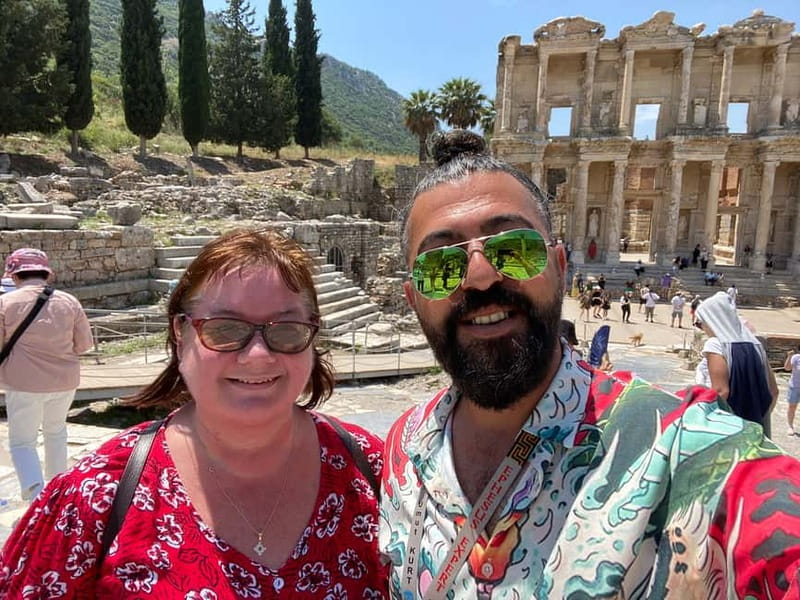
- Celsus Library focus with the kind of details that make ruins make sense
- House of the Virgin Mary visit plus time to reset before the next ruins stop
- Temple of Artemis stop for a fast Seven Wonders-style payoff
- Selçuk lunch and shopping break so you’re not ruining the afternoon with hunger
Kuşadası Cruise Port: the name-sign meet-up and quick start
If you’re doing Ephesus from a cruise, the first challenge is simple: finding your person without wasting time. This tour solves that with a guide team that welcomes you at Kuşadası Port’s main exit gate, holding a sign with your name.
From there, you’re on a van ride (about 20 minutes) toward Selçuk/Ephesus. It’s a small but important detail. In places like Ephesus, losing even 30 minutes to confusion or waiting can ruin the flow. Here, you get moving early enough that you can actually enjoy the ruins instead of speed-running them.
I also like that the team helps lock in timing after booking. They’ll ask for your cruise ship name and arrival/onboard times, then suggest the best meeting time so you don’t get stuck chasing a van when your ship has already started boarding back up.
You can also read our reviews of more boat tours in Kusadasi

Ephesus in about 2.5 hours: Celsus, the Theater sound check, and Odeon
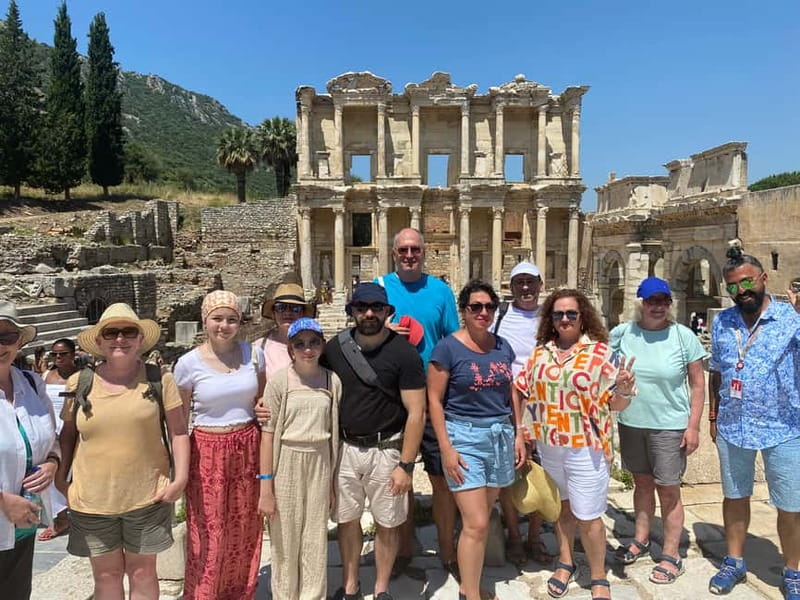
Ephesus is the headline, and the tour keeps it focused. You get guided time that covers the main “why it mattered” parts—plus a few spots that make you feel how people actually moved through the city.
Here’s what you’ll work through, in a way that’s easier than just following a map:
Walking the ancient streets (with wheel-mark vibes)
You’ll stroll through areas where you can still see chariot wheel ruts. That’s the sort of detail that makes you slow down, because it turns “old city” into something physical. Your guide ties this to how the city functioned and how the streets were used.
Great Theater: your chance to do a sound check
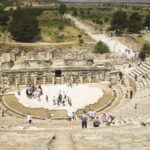
The Great Theater is built for crowds, with seating for more than 20,000 people. Your guide encourages a practical moment here—essentially a sound check—so you hear the design in action. Even if you don’t do anything dramatic, you’ll understand quickly why performers and speakers didn’t need modern tech to reach the back rows.
It’s one of the best stops on any Ephesus day because it’s not only architecture; it’s a reminder that entertainment and public life were engineered.
Public Agora and St. Paul’s preaching connection
You’ll pass through the Public Agora, and your guide points out the part linked with St. Paul. It’s a good check-in moment for perspective: Ephesus wasn’t just “Roman grandeur.” It was also a crossroads city with public messages, crowds, and real conversations in the open spaces.



Marble Street and the Celsus Library secrets
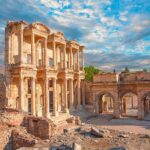
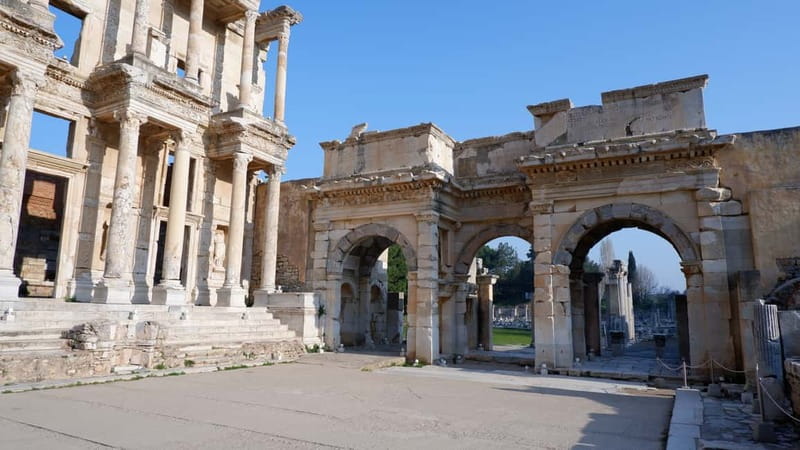
The walk along Marble Street leads to the star-area: Celsus Library. Instead of treating it like a photo wall, the guide explains why it’s called one of the great libraries of the ancient world and what you’re looking at architecturally.
I like this focus because Celsus can be easy to misunderstand if you only see the front facade. With explanation, you start noticing how the building was arranged to project power, learning, and prestige.
Temple of Hadrian, Trajan Fountain, Domitian Temple: the “Roman takeover” feel
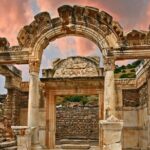
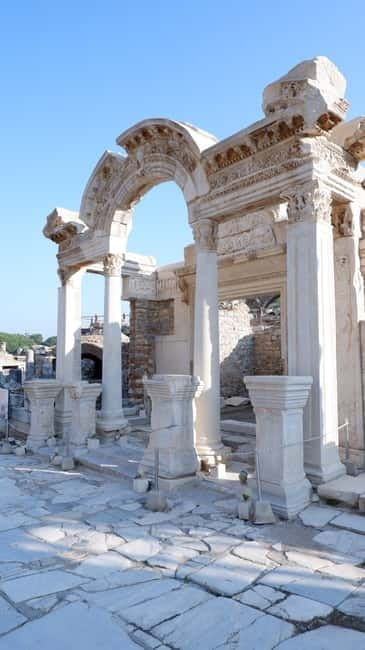
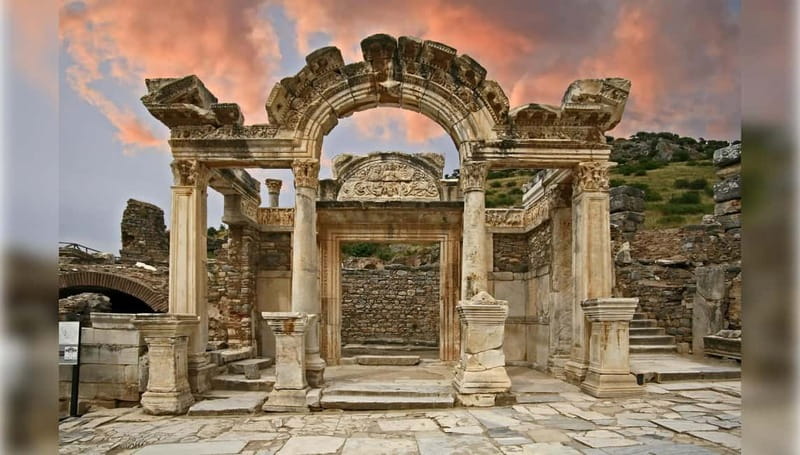
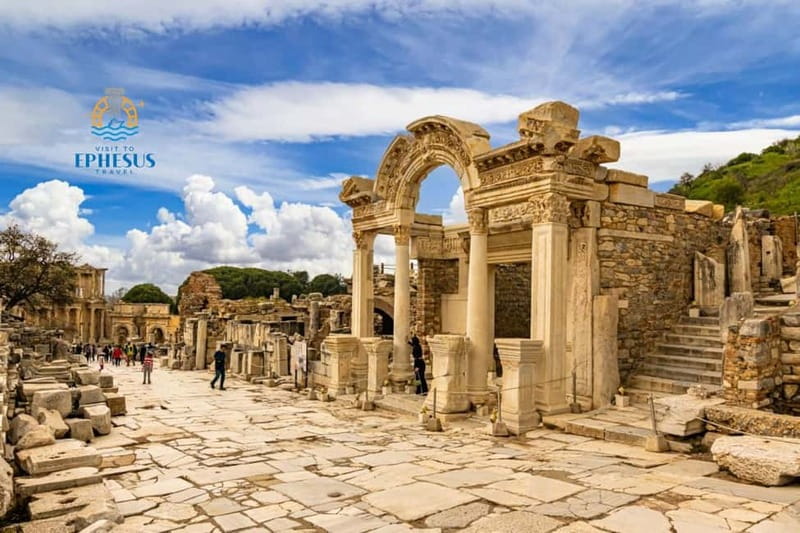
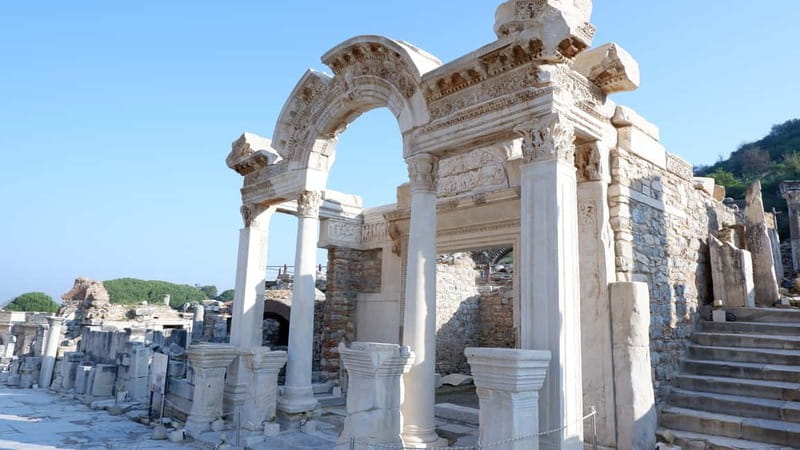
You’ll also see key Roman-era highlights such as the Temple of Hadrian, Trajan Fountain, and Domitian Temple. These stops matter because they show the city shifting over time—Greek identity, then layered with Roman architecture and civic space.
Odeon: feel like a Roman for a minute
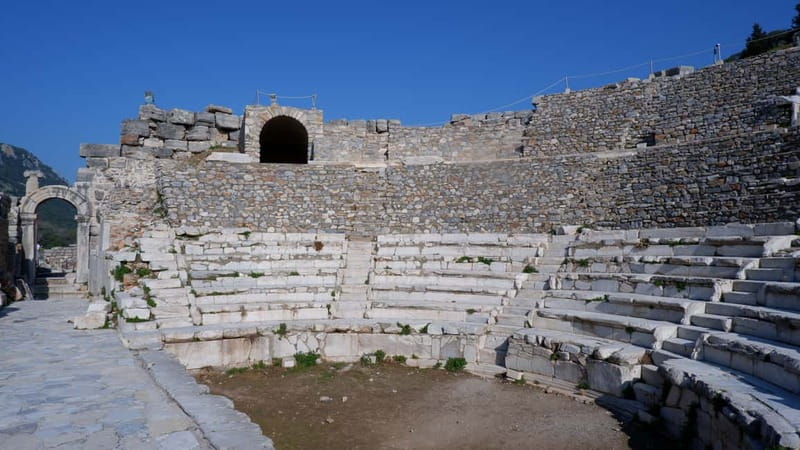
Your guide will bring you to the Odeon, described as a venue for music and performances. This is the “smaller than the big stadium” stop that often gets missed. Here, you get a better sense of everyday cultural life—events, audiences, and the spaces built for them.
A quick practical note: Ephesus involves uneven stone and stairs. Your guide can usually keep the pacing sensible, and you’ll benefit most if you wear shoes that handle both.
House of the Virgin Mary: a quieter, spiritual pause
After the main ruins, you’ll head to the House of the Virgin Mary for about 45 minutes of visit time with a guided component.
This stop is different from the others on the day. The vibe shifts from “ancient city streets” to “pilgrimage site.” The house is traditionally linked with the final years of Mary, and the story connects it to Apostle John bringing her to Ephesus after the Resurrection.
What I like here is the balance. You’re not stuck in another high-energy ruin sprint. Instead, you get a slower, reflective break before the day’s final stops.
And if your group includes people who care about Christian sites as well as classical archaeology, this is the moment where the tour earns extra points for variety.
Selçuk lunch and shopping: the break that saves the afternoon
Next up is Selçuk, where you’ll have lunch and shopping time for about an hour.
The lunch is included and described as in the countryside. In real terms, that usually helps because you’re fed away from the loudest tourist strips. A guided day can feel tiring without a solid break, especially on cruise days where you might already be thinking about returning on time.
Shopping time can be a mixed bag depending on your tolerance for sales pressure. The good news here is that the tour includes time for it, and your guide can steer you toward what you actually want to see. Some guides also plan a short craft or demonstration stop in this area—people have mentioned things like pottery and carpet demonstrations, with the best experiences including explanations of how items are made.
One word of caution: if you stop for carpets, watch out for the rug-seller pressure. It doesn’t mean you can’t enjoy the cultural side. It just means you should decide in advance how much you want to browse and whether you want to be firm if anyone tries to push.
If you’re not in the mood for shopping, use the hour for shade, water, and a relaxed pace. You’ll appreciate it later when the sun is still high.
Temple of Artemis: quick stop for a Seven Wonders-style hit
Then you’ll go to the Temple of Artemis for about 20 minutes of guided sightseeing (with the tour overview describing around 30 minutes total). This is one of those stops that works best when you treat it like a stop for context.
Even in a reduced, modern-day state, Artemis was a giant landmark—linked to ancient Greek culture and associated with Artemis as the goddess of the hunt and moon. The temple is described as dating to around 650 BC, and it’s tied to the Seven Wonders reputation.
Why it’s worth the time: it helps you see Ephesus as part of a wider ancient world, not only one preserved city. You get a “zoom out” moment that makes the earlier ruins feel like pieces of a bigger puzzle.
Private-van value: what you’re paying for (and what you’re not)
At about $25 per person and lasting 5 to 6 hours, this tour aims to be practical for cruise schedules. The biggest value isn’t only the price—it’s what’s bundled:
- Private tour (or small group availability)
- Professional, licensed local guide
- Private transportation
- Parking fees
- Lunch
- Guaranteed on-time return to the cruise port
The part you should plan around: entrance fees aren’t included. That means you’ll pay tickets on your own for the museums and sites. Many tours handle ticket lines well by arranging tickets ahead, but the fees themselves are still extra.
This matters for budgeting. If you’re trying to travel cheap, entrance fees can turn a “good deal” into a “deal with real add-ons.” Still, the bundled guide + transport + lunch often keeps the overall day from turning into a puzzle you have to solve yourself.
Also, because the tour is cruise-only (not for hotel guests), you can expect a stronger focus on timing discipline. That’s the whole game on a ship day.
Logistics that actually matter: timing, heat, and walking reality
Cruise days in Turkey can mean quick decisions. This tour helps because you get:
- a defined meet-up location at the port,
- a guide who’s expected to be there with your name sign,
- and a plan to return you to the port before departure.
Still, there are a few things to bring so you’re comfortable:
- comfortable shoes for stone floors and uneven ground
- sunglasses and a sun hat
- an ID or passport for children
On the ground, you should also assume heat will play a role. One of the reasons guides are praised is their ability to manage the day—finding shade when they can and keeping you moving at a pace that doesn’t feel punishing.
If you’re sensitive to crowds, the private or small-group format is another plus. You’re not squeezed into a big bus flow where you lose your day between ramps and waiting.
Two limitations to note up front: the tour is not suitable for wheelchair users, and it’s not recommended for pregnant women. The day includes walking across ancient surfaces and transitions between sites.
Which guide style fits you best?
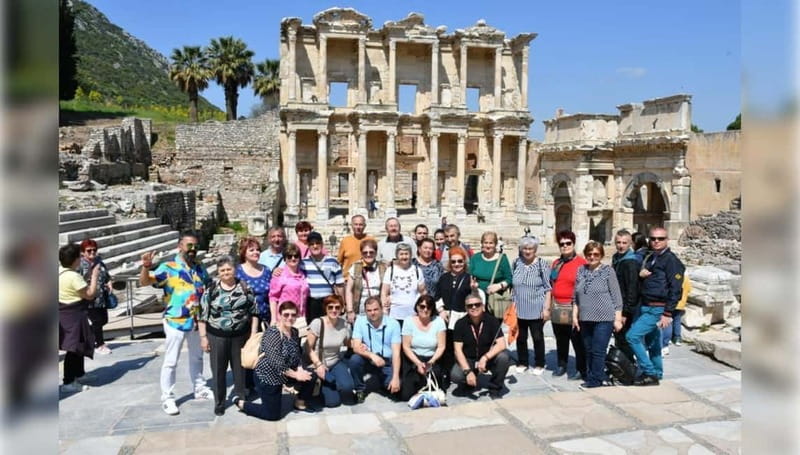
One of the best things about this tour is that it’s not a rigid script. Different guides have different voices, and the day can adjust around your interests.
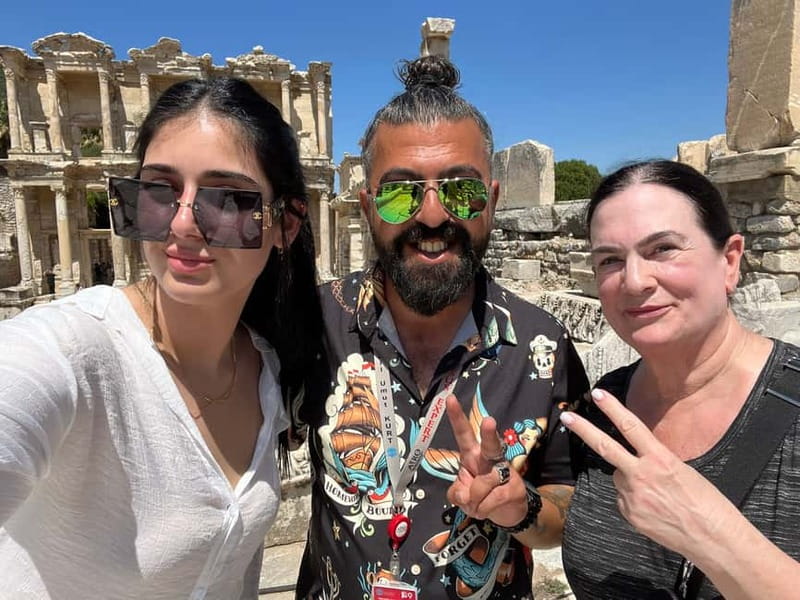
You’ll see guide names mentioned such as Umut, Yesra, Char, Senem, Ibrahim, Abe, Ozan, Erdal, and Ismail. The recurring theme is that they explain what you’re seeing in a way that helps the ruins feel understandable—plus they try to keep you from feeling rushed.
If you like history that connects architecture to daily life, you’re in the right place. If you want a more relaxed pace, guides often help by adjusting what you spend extra time on (like Theater vs. smaller corners, or how much time you need at House of the Virgin Mary).
And if your group loves photo stops, you’ll still get the “why” behind them—useful when you’re looking back later and trying to place what you saw.
Should you book this Ephesus highlights tour from Kuşadası?
Book it if:
- you’re on a cruise and want clear timing with a meeting point that doesn’t leave you guessing,
- you want the core Ephesus sights without spending hours planning,
- and you like guided explanations that help you connect pieces like Celsus, the Theater, and Odeon.
Skip it or consider alternatives if:
- you strongly dislike walking and stairs (this tour isn’t set up for wheelchair use),
- you’re expecting all entrance fees to be fully included in the price,
- or you’re traveling with someone who can’t comfortably do outdoor ruins over several stops.
My practical bottom line: for a limited cruise window, this is a smart way to get a lot of meaning out of Ephesus—especially because the day is built around a real guide experience, not just transportation and a checklist.
FAQ
How long is the Ephesus highlights tour from Kuşadası?
It runs about 5 to 6 hours, with Ephesus taking roughly 2.5 hours, the House of the Virgin Mary about 45 minutes, Selçuk about 1 hour, and the Temple of Artemis about 20–30 minutes.
Is this tour private?
It’s described as private for cruise passengers, with private or small-group options available.
Where do I meet the guide if I’m coming from the cruise port?
Meet your guide at Kuşadası Port Terminal’s main exit gate. The guide will be holding a sign with your name.
Do I need to pay entrance fees separately?
Yes. Entrance fees to museums and sites are not included, and you’ll pay the site fee on the spot. The guide can help arrange tickets to skip ticket lines.
Is lunch included?
Yes. Lunch in the countryside is included, but drinks during lunch are not included.
What languages are the guides available in?
The live tour guide is available in English and Spanish.
Is pickup included?
Pickup/drop-off is offered for cruise port/hotel connections, and pickup is listed as optional. The meeting point is still the port terminal main exit gate.
Is this tour only for cruise passengers?
Yes. It’s only private for cruise ship passengers. Hotel guest bookings are not accepted.
Is the tour suitable for wheelchair users or pregnant women?
No. It’s not suitable for wheelchair users, and it’s not suitable for pregnant women.
Can I cancel for a refund?
Yes. Free cancellation is available up to 24 hours in advance for a full refund.
Are there discounts or flexible payment options?
The tour offers a reserve now & pay later option, so you can book and pay later to keep plans flexible.