REVIEW · PAMUKKALE HOT SPRINGS
Pamukkale and Hierapolis Full-Day Guided Tour
Book on GetYourGuide →Operated by TURISTA TRAVEL AGENCY · Bookable on GetYourGuide
Hot springs and white terraces in one smooth day.
This tour is interesting because it mixes Roman-era healing waters with the otherworldly look of Pamukkale’s travertines—all with a guide doing the heavy lifting. You get a focused day that’s built for “see it, feel it, then relax,” not museum marathon energy.
What I love most is the chance to slow down in the Hierapolis hot springs while also getting context for why the ancients cared so much. I also really like how the guide helps you connect the ruins—like the Domitian Gate and the colonnaded street—with the sacred-city story behind them.
One drawback to plan around: the day can include extra costs or missed features for certain hot-spring sections. For example, the Cleopatra spring area has shown up as closed due to renovation, and sometimes that specific pool can have separate entry and locker fees.
In This Review
- Key things to know before you go
- Hierapolis and Pamukkale: heat, marble, and myth in one day
- Getting picked up in Pamukkale and starting with the right pace
- Hierapolis Sacred City ruins: Domitian Gate, colonnaded street, cathedral
- Soaking in Hierapolis hot springs: how to enjoy the healing waters
- Pamukkale Museum and the white travertines walk
- Lunch and the real-world timing: what fits, what to watch
- Price and value at $141: what you truly get
- Who should book this tour, and who might prefer DIY
- Should you book this Pamukkale and Hierapolis full-day tour?
- FAQ
- How long is the Pamukkale and Hierapolis guided tour?
- Where does the tour start for hotel pickup?
- What’s included in the ticket price?
- Are drinks included?
- What language is the live guide?
- What should I bring?
- Is luggage allowed?
Key things to know before you go
- Start in Pamukkale: pickup only works from this area, not other cities.
- 7 hours, guided, in English: good if you want structure without rushing.
- Travertines depend on season: expect more or less water on the terraces at different times of year.
- Thermal time is built in: you’re not just taking photos—you’ll have time to soak.
- Bring a swimsuit if you plan to get in: comfy shoes are the baseline.
- Some add-ons may cost extra: especially at specific spring/pool areas beyond the main included sites.
Hierapolis and Pamukkale: heat, marble, and myth in one day
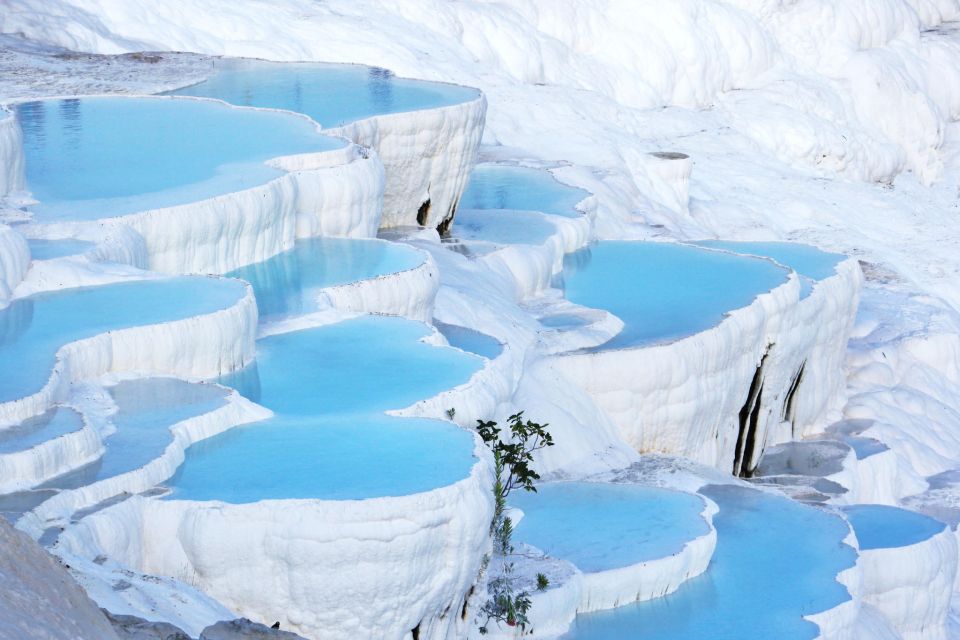
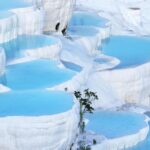
Pamukkale and Hierapolis are famous for a reason: they look almost staged. White limestone steps from Pamukkale pour down into shallow basins, while Hierapolis carries the story of a city that treated healing as serious business.
What makes this full-day experience especially practical is that it doesn’t force you to choose between nature and archaeology. You get both: ancient remains—gates, streets, and a cathedral—and the soothing contrast of thermal waters. And you get a guide to translate the symbolism that would otherwise feel like random ruins and pretty pools.
You’ll also appreciate the rhythm. A place like Pamukkale tempts you to linger, but the day is planned so you can enjoy it without feeling lost. That’s the real value of the format: it keeps you moving through big highlights while still giving you that slow, post-soak calm.
You can also read our reviews of more tours and experiences in Pamukkale Hot Springs.
Getting picked up in Pamukkale and starting with the right pace
This tour is built around a single starting point: Pamukkale. If you’re staying elsewhere, you’ll need to arrange separate transport, because the pickup is limited to the Pamukkale area.
Once you’re collected, the day runs on a straightforward flow. Hotel pickup and drop-off are included, and the guide stays with you while you move between the sites. That matters because the sites are part of the same region, but you still want someone managing the timing so you’re not juggling tickets, directions, and local questions.
You also want to travel light. Large bags or luggage aren’t allowed, so plan on traveling with only what you truly need. If you bring a small day bag, it’s much easier to keep things simple—especially because you’ll be switching from walking shoes to thermal-water comfort.
Hierapolis Sacred City ruins: Domitian Gate, colonnaded street, cathedral
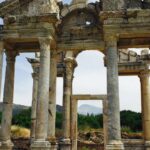
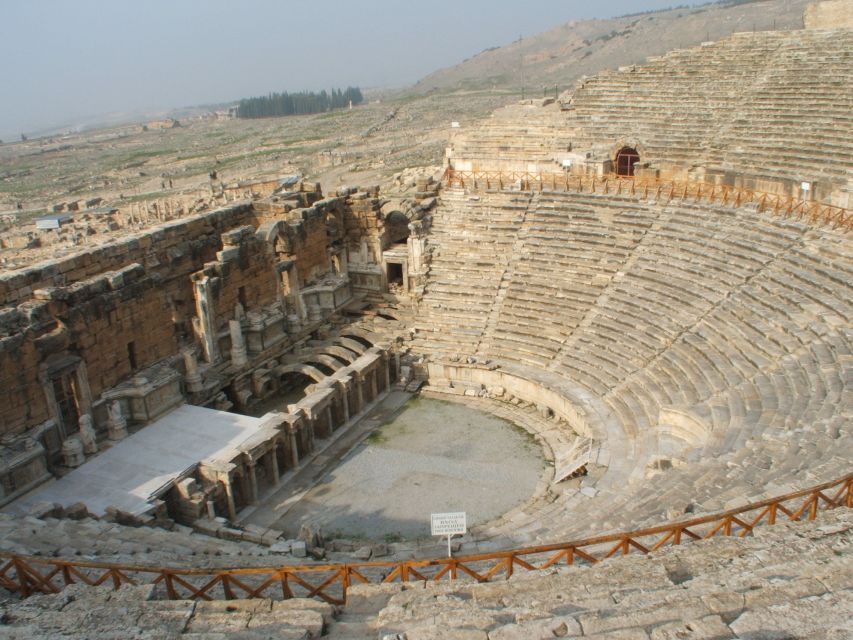
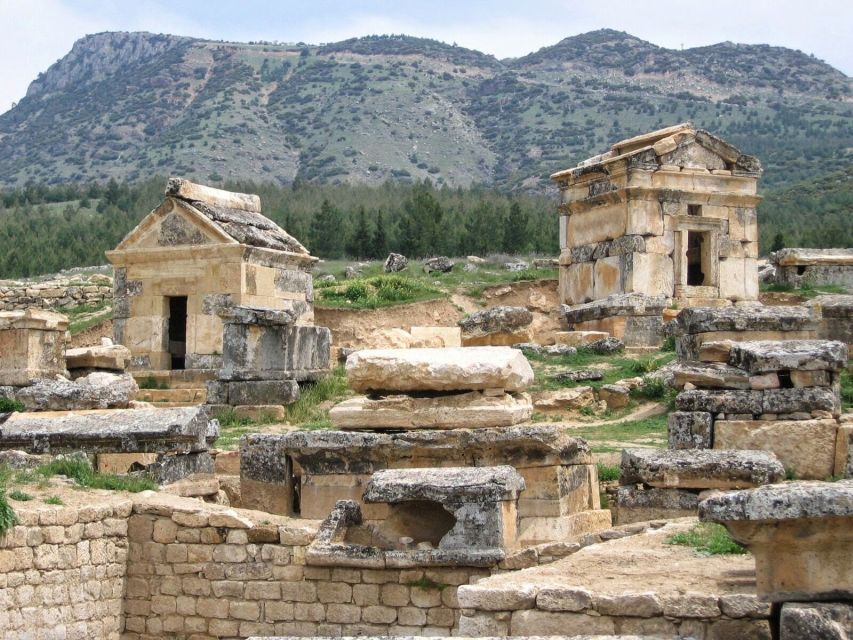
Hierarchy of highlights here is clear: you’ll see key architectural pieces that help the story click. One of the first anchors is the Domitian Gate, a monumental entrance that gives you a sense of how grand the city’s public spaces were. Even if you’re not a serious architecture nerd, the gate helps you orient your brain.
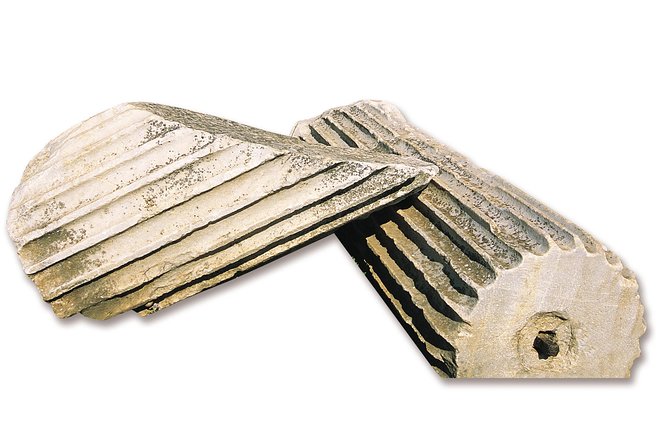
From there you’ll move through areas tied to daily civic life—like the colonnaded street. This is where the site stops being just “pretty stones” and becomes a believable Roman city. The columns and street layout help you imagine movement through the city—processions, markets, and public gatherings.
Then you get the cathedral viewpoint, which adds another layer to Hierapolis’ long timeline. Hierapolis wasn’t only about Roman luxury and healing; it also developed into a place of religious importance. The guide’s explanations help connect that shift, especially when you hear the myth behind the area.
The ancients believed Hierapolis was linked to Apollo as its sacred founding story. They also tied the hot spring vapors to Pluto, the god associated with the underworld. Hearing that while standing among the ruins makes the site feel less like a history lesson and more like a place people once truly believed in.
Soaking in Hierapolis hot springs: how to enjoy the healing waters
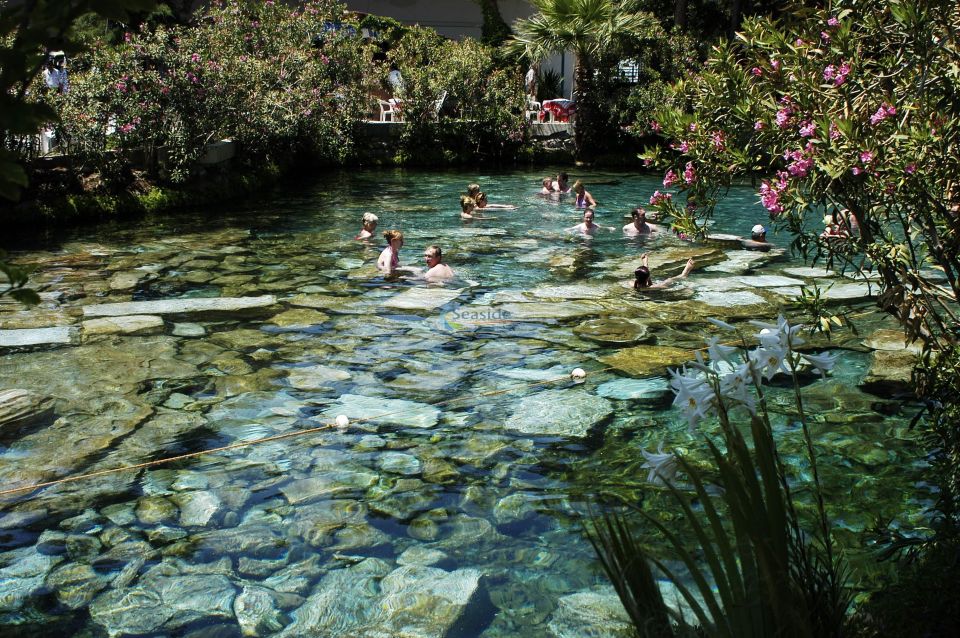
The hot springs are the emotional center of the day. This isn’t just a quick stop for a picture; you’ll get time to relax in the thermal waters of Hierapolis and let the day slow down.
Why it works so well: hot springs are one of the few tourist experiences that genuinely changes your mood. Even if you came for the travertines, the soak is the reset button. And because the guide gives context about why Roman visitors treated the springs as therapeutic, the soak feels purposeful instead of random.
A practical tip: bring your patience for comfort logistics. You’ll be transitioning from walking to soaking, so plan for a swimsuit change if you want to go in fully. One smart reminder from past visitors: a swimsuit is a key item, not optional if you actually want to swim in or fully enjoy the thermal water.
Also, don’t assume the same conditions every time. Water levels and available access can vary due to seasonal factors or site maintenance. The good news is the tour format is built around the springs experience, so even if one section is limited, you’re not left with nothing to do.
Pamukkale Museum and the white travertines walk
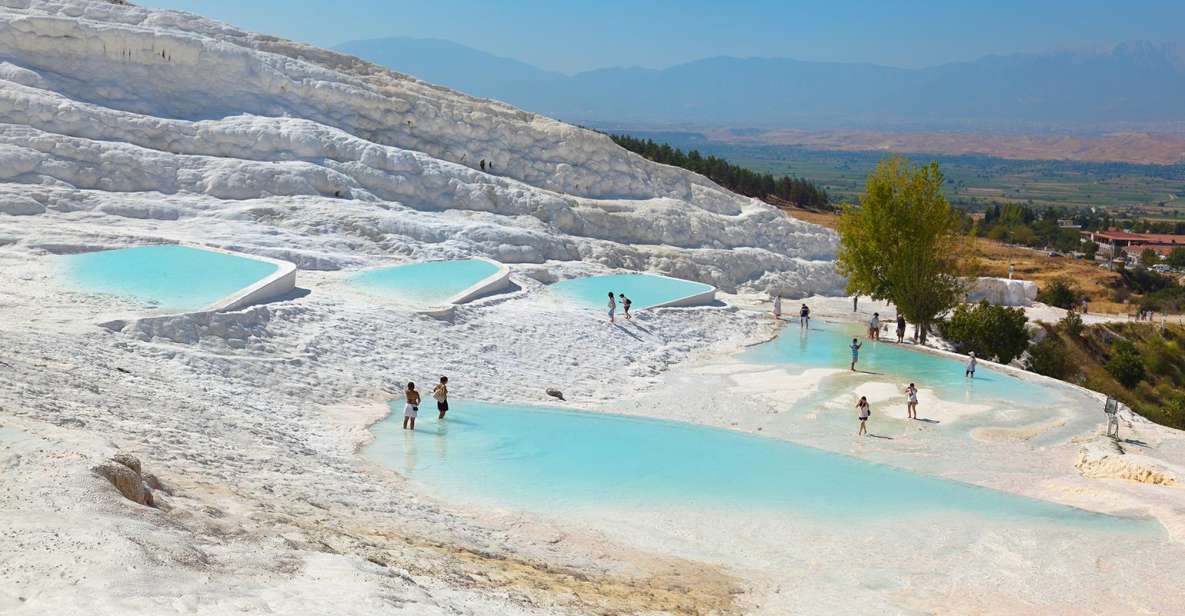
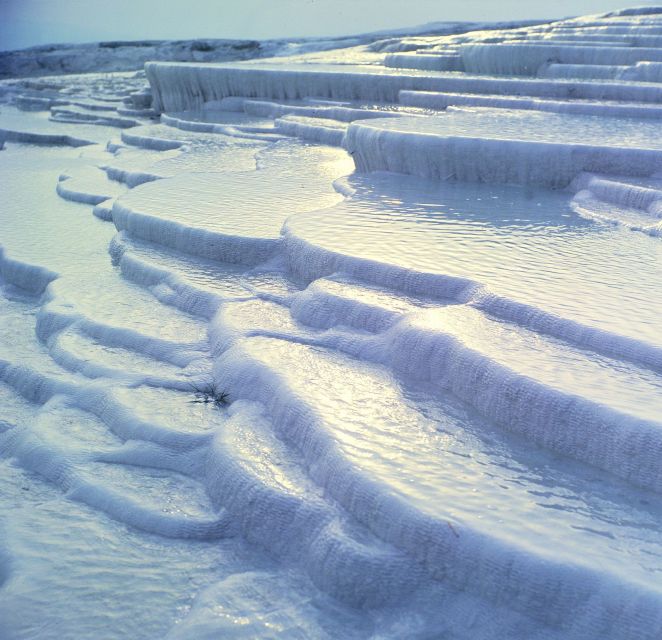
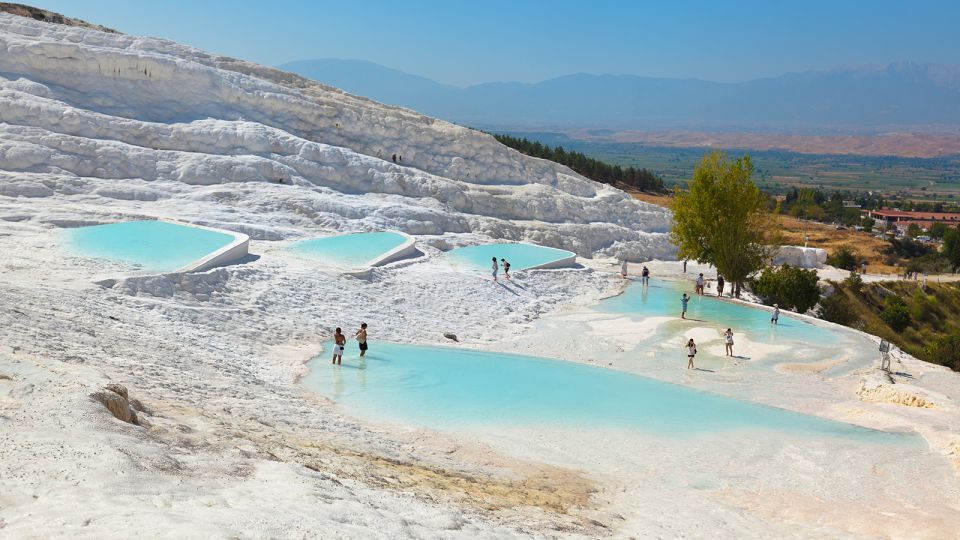
After the ruins and springs, Pamukkale brings the visual wow. The limestone terraces—often called travertines—are the centerpiece, and they’re genuinely different from anything else in the region. The stepped mineral formations catch the light in a way that makes the whole area look like it’s been powdered white.
You’ll also visit the Pamukkale Museum, which helps you understand what you’re seeing. A museum stop can sometimes feel like a detour, but here it actually prepares you for the terrace walk. It gives you the background so the terraces don’t just look like a natural phenomenon, but like part of a long human relationship with the site.
Then comes the walking time among the terraces. One thing to know before you arrive: the terraces can look more or less wet depending on the month. In drier conditions, you might see less water pooling in places; during wetter periods, there can be more visible steam or shallow coverage. Either way, walking the terraces is usually a highlight.
Comfort matters. Bring comfortable shoes for the walking sections, and be ready for slippery spots near water. You’ll be stepping carefully while trying to see and photograph everything, so sturdy footwear makes the difference between enjoying the day and constantly adjusting your footing.





Lunch and the real-world timing: what fits, what to watch
A full-day guided tour has one job: keep the transitions smooth. In practice, the day often includes time for a simple restaurant buffet. When the food is good, it’s exactly what you want—something easy, filling, and not too complicated after a hot spring soak.
But there’s a second reality to acknowledge: some versions of this experience may add extra stops, like a textile or outlet shopping stop, especially after the meal. I’m not saying you should expect shopping every single day, but you should mentally budget for the possibility if you’re trying to keep the day focused only on nature and ruins.
If you dislike shopping stops, you can still handle it smartly. Decide in advance what you’ll do if you’re brought there. For example, if you only want water and a quick break, aim to treat the stop as optional time rather than a surprise you must act on.
Also, drinks aren’t included. That’s an easy detail to miss when you’re excited about the sights, so plan to buy water on the day—particularly after walking and heat.
Price and value at $141: what you truly get
At around $141 per person for a 7-hour guided day, this is not a budget DIY alternative. You’re paying for several things that add up: hotel pickup and drop-off, an English-speaking local guide, and entrance tickets for the included stops.
That value math works best if you don’t want to coordinate transportation, ticket timing, and site logistics yourself. If you’re traveling with limited flexibility or you just want someone to handle the details, the guided structure can feel worth it quickly—especially for travelers who prefer not to figure everything out between sites.
That said, you should plan for possible extra costs tied to specific hot spring/pool areas. Some people have reported separate fees for a Cleopatra spring/pool area and a locker cost. Others have seen that same area closed for renovation. So treat the main included hot springs and terraces as the core experience, and treat any extra pool access as a potential add-on that may cost more on the day.
If your priority is strict cost control, you should also consider that you can cover both Pamukkale and Hierapolis independently in many situations. But if you want a calmer day with a guide connecting myth, Roman civic life, and the mineral landscape, the price starts to make sense.
Who should book this tour, and who might prefer DIY
This tour is a strong fit for you if you like having someone set the pace. You’ll enjoy the combination of a guided ruin walk and actual soaking time, and you’ll appreciate the guide’s explanations when the names and structures start to feel real rather than abstract.
It’s also a good match if you’re short on time. When you only have one day in the region, a guided route helps you avoid spending that day doing logistics. The sites are memorable, and you want your energy spent looking and relaxing, not navigating.
You might prefer a DIY plan if you’re extremely budget-focused or if shopping stops would feel like wasted time. Also, if your biggest goal is a specific pool area that can be closed or priced separately, you may want to check conditions close to the date and be ready with Plan B.
One more practical note: you’ll likely get a friendly, engaged guide. Past experiences include guides such as Ahmed and Elvan, both praised for connecting the sites with clear explanations and good energy. That personal touch is often what turns “I visited” into “I understood what I saw.”
Should you book this Pamukkale and Hierapolis full-day tour?
Book it if you want a stress-free day where Pamukkale’s travertines and Hierapolis hot springs are both treated as main events. The included tickets, door-to-door pickup, and English guide are the strongest reasons, especially if you’re the type who likes your travel organized.
Skip or reconsider if you’re trying to keep costs ultra-tight, or if you strongly prefer zero shopping stops and no surprise extra fees at specific pool areas. In that case, it may be better to plan your own route and build in extra time where you actually want it.
FAQ
How long is the Pamukkale and Hierapolis guided tour?
The tour lasts 7 hours.
Where does the tour start for hotel pickup?
The tour starts from Pamukkale, and pickup is not available from another city.
What’s included in the ticket price?
The price includes entrance tickets, an expert local guide, and hotel pick-up and drop-off.
Are drinks included?
No, drinks are not included.
What language is the live guide?
The live tour guide is available in English.
What should I bring?
Comfortable shoes are recommended. If you plan to get into the thermal waters, bringing a swimsuit can help.
Is luggage allowed?
No luggage or large bags are allowed.