REVIEW · ISTANBUL
Istanbul: Hagia Sophia Skip-the-Ticket Line & Audio Guide
Book on GetYourGuide →Operated by Herms · Bookable on GetYourGuide
Hagia Sophia feels like a time machine. This skip-the-ticket-line entry and English audio guide combo helps you read the building’s layers fast, without burning hours on paperwork and queues.
I love that your QR-code tickets land in your email the day before, so you can show your phone and get moving. I also love how the audio guide steers your attention to the Byzantine mosaics, the Islamic calligraphy, and the big-picture story of how Istanbul keeps changing hats.
One drawback to plan for: this does not mean priority at security or the main entrance, and access is limited to the upper galleries (the ground-level prayer hall is not included).
In This Review
- Key Things That Make This a Smart Hagia Sophia Visit
- Price and Value: Is $41 Worth It?
- How the Skip-the-Ticket Line Works (And What It Does Not Mean)
- Enter Through the Tourist Entrance Near Topkapi Palace
- Your App-Based Audio Guide: How to Use It Without Hassle
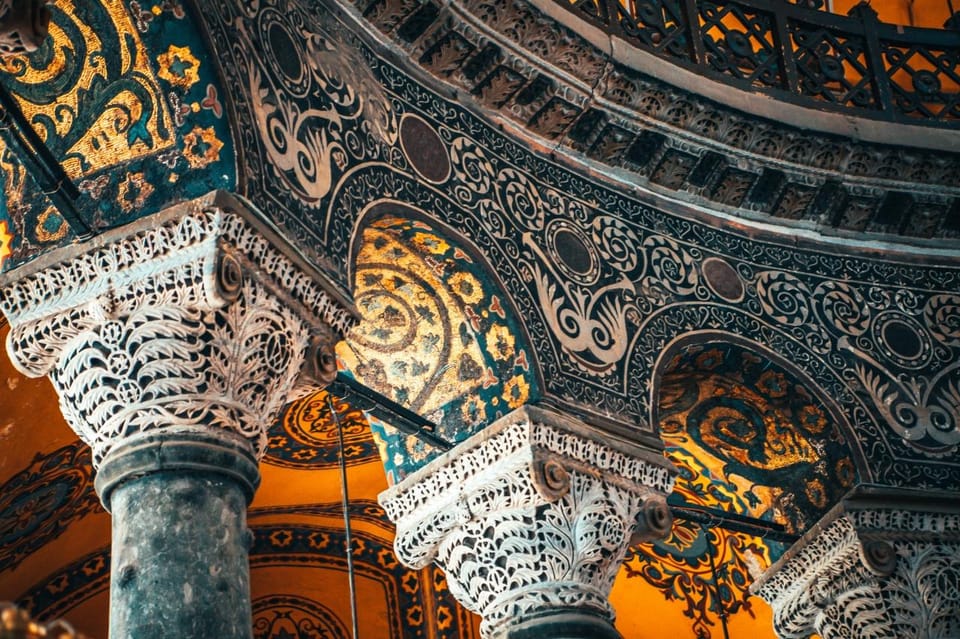
- What You’ll See Upstairs: Dome Feel, Mosaics, and Calligraphy
- The Most Intriguing Interior Details: Submerged Columns and Medusa Heads
- Crowd Tactics: When to Go, Where the Bottlenecks Form
- Dress Code, Photography Rules, and Quiet Etiquette
- Accessibility and Who This Visit Fits Best
- What a Typical Visit Feels Like (So You Can Plan Your Time)
- The Bottom Line: Should You Book This Hagia Sophia Audio Guide Ticket?
- FAQ
- Is this a guided tour with a live guide?
- When do I receive my QR-code tickets and audio guide link?
- What does the skip-the-ticket-line include?
- What areas of Hagia Sophia are included with this ticket?
- Does the price include headphones?
- Are there restrictions on photography?
- What is the dress code?
Key Things That Make This a Smart Hagia Sophia Visit
- Skip-the-ticket-line (but not the whole crowd): you save time on ticket buying, while security and entry can still be busy
- Upper galleries only: you’ll enjoy the domed interior and viewpoints from above, not the ground-level prayer hall
- Free English audio guide app: it’s designed to explain what you’re seeing, including mosaics and calligraphy
- Ear-notice details: submerged marble columns and upside-down Medusa heads are part of what you’re asked to look for
- Topkapi-side tourist entrance route: foreigners enter via the newly opened tourist entrance near Topkapi Palace
- You’ll want your own earbuds: headphones are not included, and the app is the audio source
Price and Value: Is $41 Worth It?
For $41 per person, you’re mainly paying for two things: (1) avoiding the long ticket-purchase line and (2) getting an included digital audio guide in English. That can be real value on a short Istanbul trip, when you’d rather spend your time inside Hagia Sophia instead of circling outside.
That said, don’t assume you’ve bought invisibility. Even with skip-the-ticket-line access, you may still face security checks and a still-busy entry flow during peak hours. In other words, this is a time-saver, not a magic key.
A few more Istanbul tours and experiences worth a look


How the Skip-the-Ticket Line Works (And What It Does Not Mean)
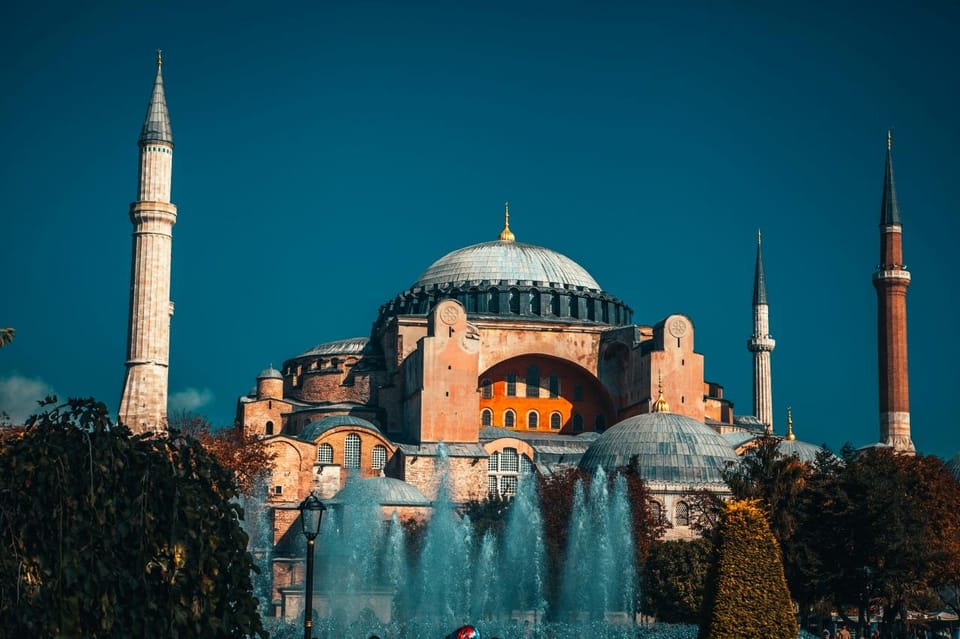
Here’s the honest expectation: your ticket helps with the ticket-buying stage, but you don’t get priority access for everything. The rules explicitly note that your ticket does not provide priority access, and in the busiest periods entry may take longer than usual.
One useful way to think about it: you’re shaving off the “ticket counter” time, not the “where the line is anyway” time. If you’re going at the busiest part of the day, you’ll still feel the crowds.
So if your goal is maximum speed, your best move is timing (more on that below). And if your goal is maximum comfort, show up prepared for security and keep your expectations grounded.
Enter Through the Tourist Entrance Near Topkapi Palace
This is a self-guided visit, so you’re not meeting a live group at a specific point inside. You simply go to Hagia Sophia (Ayasofya) and enter on your own at the time you choose.
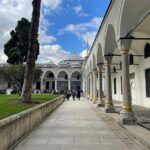
For foreign visitors, the instructions say entry is through the newly opened tourist entrance located near Topkapi Palace. From there, you have direct access to the upper floor galleries via a gentle ramp. If you want the easiest possible wheelchair route, the information also notes that ramps and stairs can be uneven, and using the “Turkish Citizen Entrance” may offer a ramp for full accessibility.
What this means for you practically:
- Plan on walking the ramp and stairs flow even with the tourist entrance route.
- If you’re mobility-limited, look for the most ramp-friendly option the site provides.
- Keep your visit flexible if crowds shift how lines move through the entrance area.
Your App-Based Audio Guide: How to Use It Without Hassle
This experience includes a complimentary digital audio guide app in English. Your tickets and your audio guide link are sent by email one day before your visit, which is convenient because you can prep at home.
One smart habit: download or load what you need before you arrive. Inside, internet can be unreliable, and the whole audio-guide system depends on getting set up ahead of time. When the app works, it’s great at pacing your visit—telling you what to look for and why it matters.
Also note the small catch: headphones are not included. You’ll likely want your own earbuds so you’re not blasting audio in a sacred space.
One more real-world detail from the overall experience: the audio app can be glitchy. If it stumbles, don’t panic—move with the flow for a moment and try again, then continue listening when it stabilizes.
What You’ll See Upstairs: Dome Feel, Mosaics, and Calligraphy
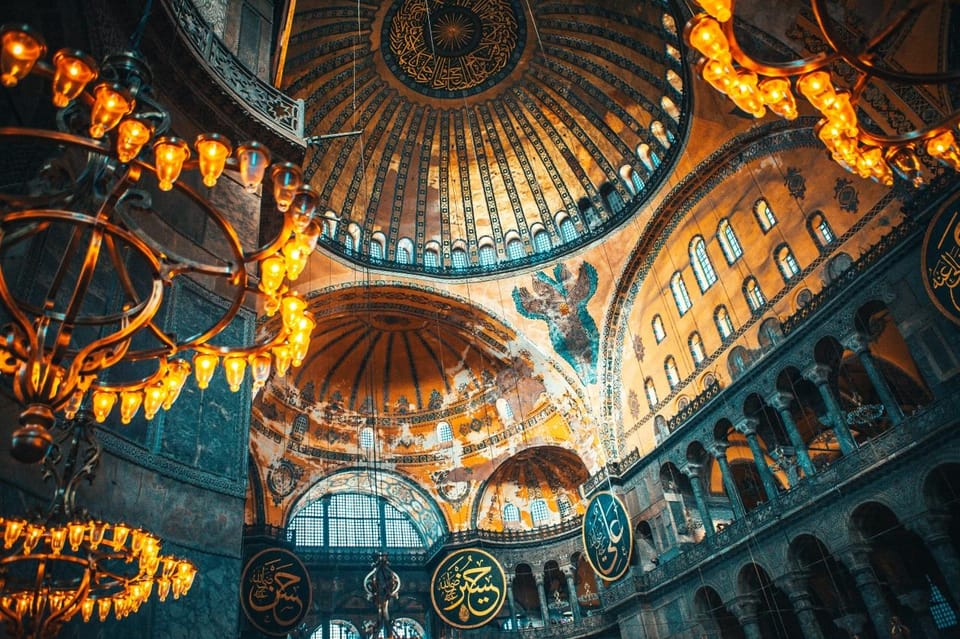
Your ticket grants access to the upper gallery and viewing area only. That means you’re not going onto the ground-level prayer hall, so the angle and atmosphere are different from what many classic photos show.
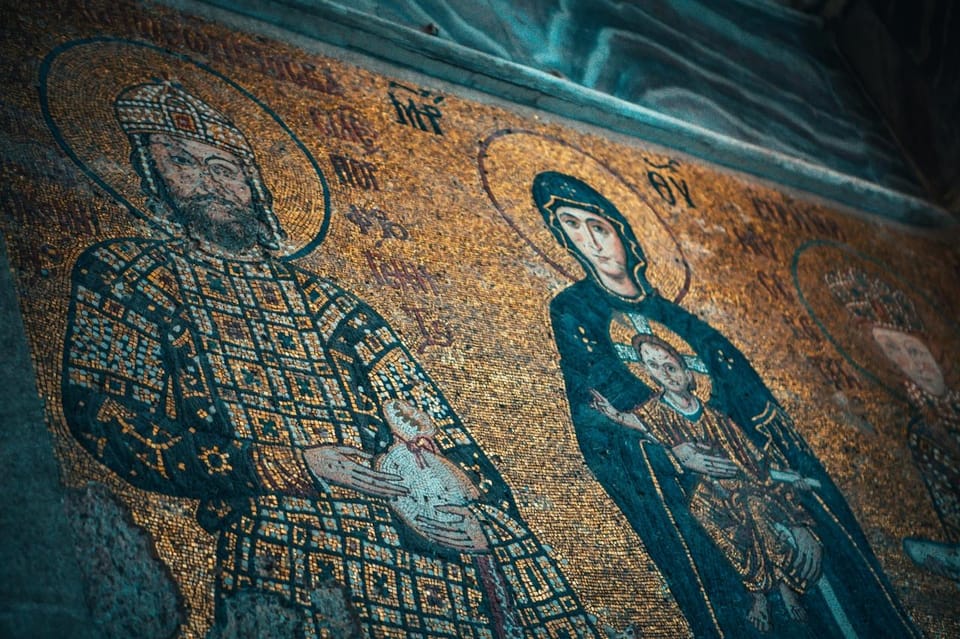
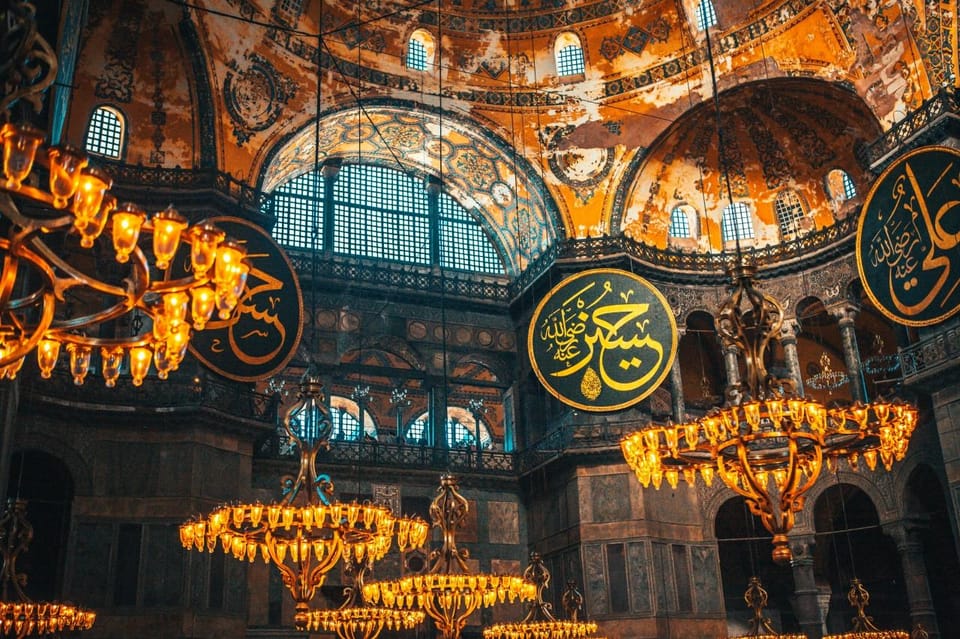
Still, you’ll likely love the “from above” view. Standing higher in Hagia Sophia, you get a stronger sense of scale, and the mosaics plus interior geometry tend to read more clearly as a unified design.
The audio guide is built around exactly what you’re seeing:
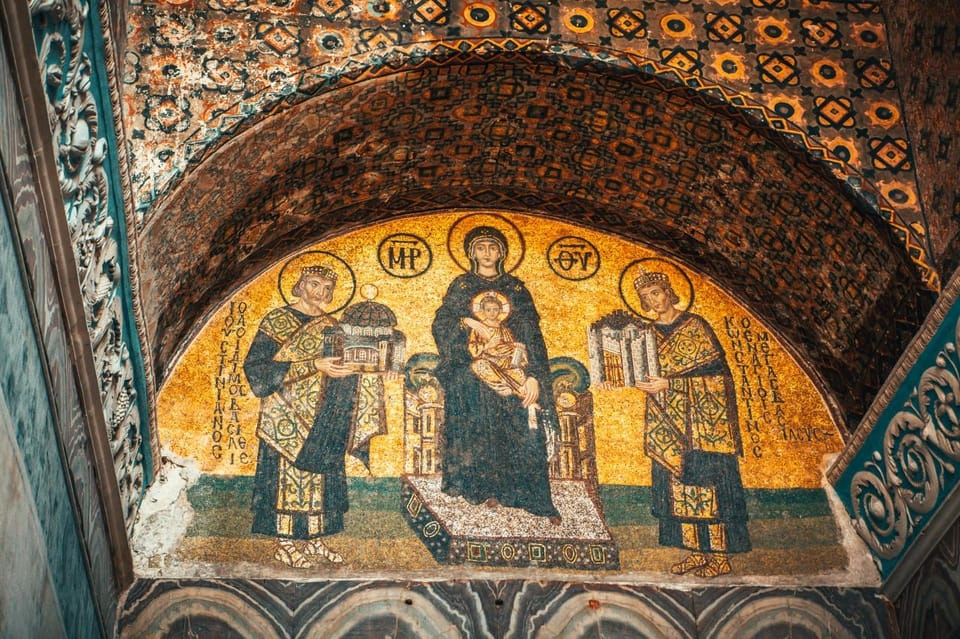
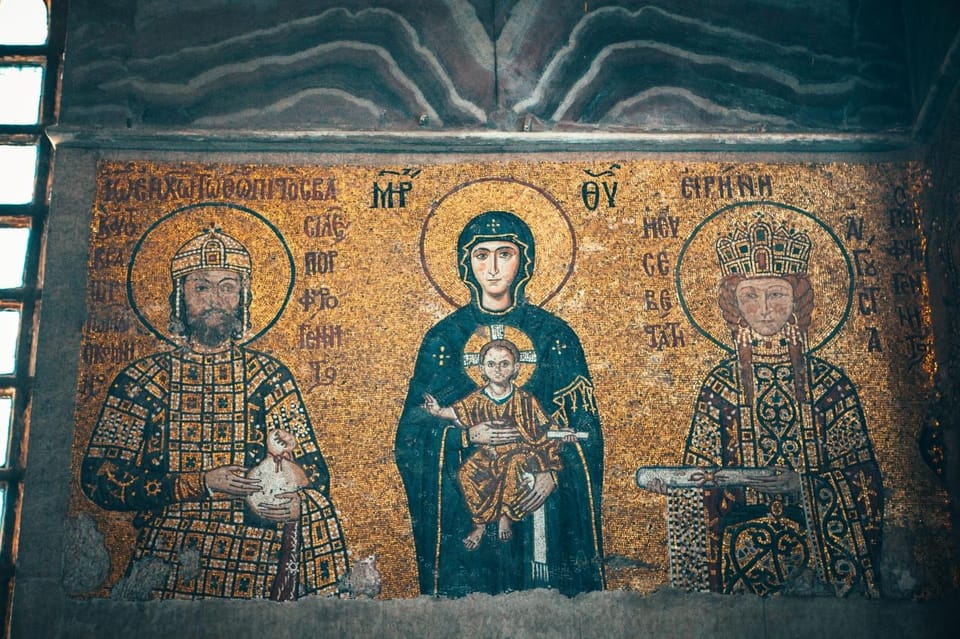
- Byzantine mosaics, explained with the surrounding context
- Islamic calligraphy, tied to how the space changed over time
- The story of civilizations converging in Istanbul
If you don’t know much beforehand, this is where the audio guide earns its keep. It turns random decoration into a map of meaning. And if you already love art and architecture, it helps you look at the right surfaces instead of getting lost in the first wave of awe.
You can also read our reviews of more guided tours in Istanbul




The Most Intriguing Interior Details: Submerged Columns and Medusa Heads
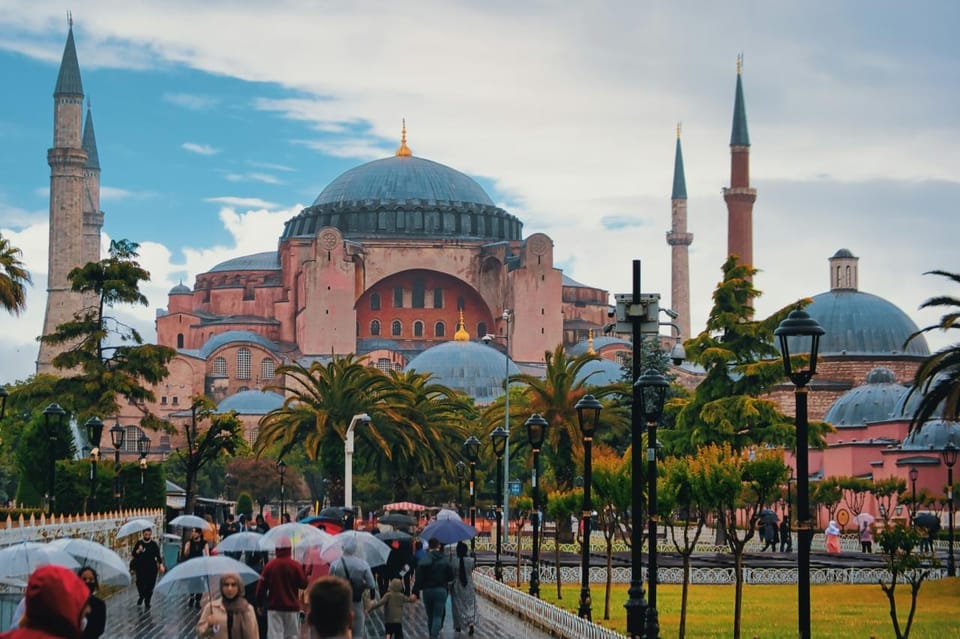
Hagia Sophia has the big-famous stuff—the dome, the mosaics—but it’s also full of details that feel like Easter eggs if you know where to look. The experience specifically highlights eerie beauty in two places you should watch for:
First, the ancient, submerged columns crafted from marble. This is one of those “only in older cities” moments where you realize layers of time didn’t just change the building, they also left physical traces inside it.
Second, the mysterious upside-down Medusa heads. It sounds strange until you see how they’re carved and positioned. If the audio guide points them out, stop and look long enough to let your brain catch up. The face-in-shadow effect can feel unsettling in a good way—like a secret that never got fully explained away.
These details also help explain why Hagia Sophia keeps pulling people back. Even if you’ve seen photos, the building has small-scale surprises that only show up when you slow down.
Crowd Tactics: When to Go, Where the Bottlenecks Form
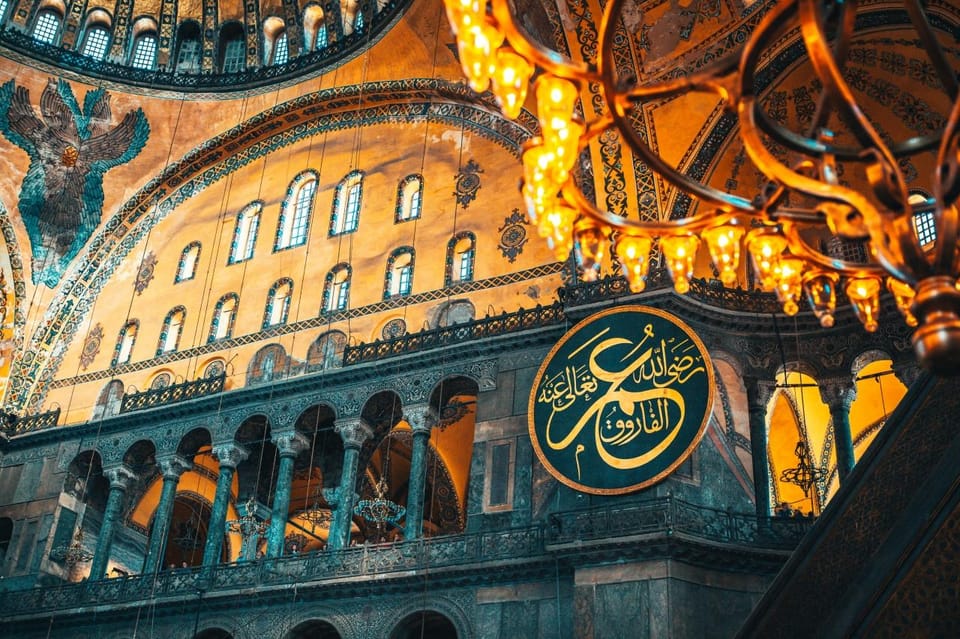
Crowds are real here. People funnel through security checkpoints, and even when the ticket stage is faster, you may still wait.
Based on the practical patterns people describe, going early is your best lever. Some visitors report minimal or no line when arriving early in the morning (and that can make a huge difference in how the building feels). If you can choose a first time slot—like the 9:00AM start—this is often the sweet spot for fewer lines and less heat.
Also remember: security checkpoints can create a line even after you’re already “done” with tickets. So don’t spend your energy chasing the idea that you’ll never queue. Spend it preparing so the queue doesn’t ruin your day.
A second crowd tip: download your audio guide before you stand in line, because waiting plus bad reception is a recipe for frustration.
Dress Code, Photography Rules, and Quiet Etiquette
This is a working religious site, so expect rules. They’re not optional, and the staff will enforce them.
Dress code:
- Women must cover their heads, shoulders, and knees.
- Men must cover their knees and shoulders.
- Headscarves and body wraps are available for a small fee at the ticket booth.
Photography:
- Photography inside is listed as not allowed.
- Flash and tripods are prohibited.
- The guidance also says to refrain from photographing worshippers and to follow what the site allows in visitor areas.
Etiquette matters too. The information asks visitors to avoid loud conversations, remain still during prayers, and avoid restricted areas. If you follow that, your visit will feel smoother—and more respectful—especially when you’re surrounded by people actively using the space.
One practical detail: there’s no cloakroom. If you arrive with a big bag, that can slow you down fast. The rules also say luggage or large bags aren’t allowed, so travel light.
Accessibility and Who This Visit Fits Best
This activity is wheelchair accessible, but it’s still an old building with ramps and stairs that may be uneven. The guidance points out that for full accessibility, you may want to use the “Turkish Citizen Entrance” because it has a ramp.
Who this suits well:
- First-time Hagia Sophia visitors who want context without a live guide
- Art and architecture fans who’ll enjoy being guided toward mosaics, calligraphy, and specific carved details
- People on a tight schedule who want a time-saver for ticket purchase
Who might be less satisfied:
- If you expected full access to every interior area, note the ground-level prayer hall is not included.
- If you’re hoping to avoid all queues, remember this isn’t priority entry. You’ll still meet security and crowds.
What a Typical Visit Feels Like (So You Can Plan Your Time)
Duration is listed as 1 day, but the time you actually spend inside depends on you. Some visitors report a shorter, focused visit—enough time to see the highlights and read the main audio-guide points—while others linger longer to take in the mosaics, calligraphy, and the smaller details like the Medusa heads and the submerged columns.
Your best plan:
- Use the audio guide as your “route.” Let it tell you where to look first.
- Stop often at the spots the guide highlights, since those are where the story gets clear.
- Keep an eye on your phone battery and data settings, since the app experience relies on your device working well.
The Bottom Line: Should You Book This Hagia Sophia Audio Guide Ticket?
I’d book this if you want the smartest mix of speed and meaning. The skip-the-ticket-line part helps you start your visit faster, and the included English audio guide app does real work by explaining what you’re looking at—mosaics, calligraphy, and the layered Istanbul story.
Skip it only if one of these is true:
- You need ground-level prayer hall access (not included).
- You’re going in a crowded window and your priority is avoiding any waiting at security (this does not guarantee that).
- You don’t want app-based audio and you’re not willing to bring your own earbuds.
If you’re choosing your time slot, go early when you can. And if you’re flexible, this is one of those Istanbul stops where the building keeps rewarding your attention—especially when you’re guided to the details that many people walk past too quickly.
FAQ
Is this a guided tour with a live guide?
No. This is not a guided tour. You enter on your own with your QR-code tickets at your chosen time.
When do I receive my QR-code tickets and audio guide link?
Your tickets with a QR code and your digital audio guide link are sent one day before your visit via email.
What does the skip-the-ticket-line include?
It includes skip-the-ticket-line entry for the ticket line. The info also warns that your ticket does not provide priority access for entry/security in peak times.
What areas of Hagia Sophia are included with this ticket?
The ticket grants access to the upper gallery and viewing area only. Entry to the ground-level prayer hall is not included.
Does the price include headphones?
No. Headphones are not included. The audio guide is provided through the app, so you’ll want your own earbuds if you plan to listen privately.
Are there restrictions on photography?
Yes. Photography inside is listed as not allowed. Flash and tripods are prohibited, and you should avoid photographing worshippers.
What is the dress code?
Women must cover their heads, shoulders, and knees; men must cover their knees and shoulders. Headscarves and body wraps are available for a small fee at the ticket booth.