REVIEW · ISTANBUL
Istanbul: Dolmabahce Palace & Harem Skip-the-Line Entry
Book on GetYourGuide →Operated by Istanbul Tourist Pass® · Bookable on GetYourGuide
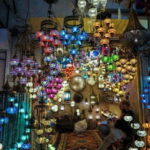
Those chandeliers are the real headline. With Dolmabahçe Palace and Harem skip-the-line e-tickets, you get in faster, plus a 25-language audio guide to keep the visit moving.
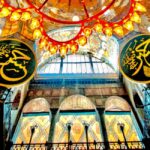
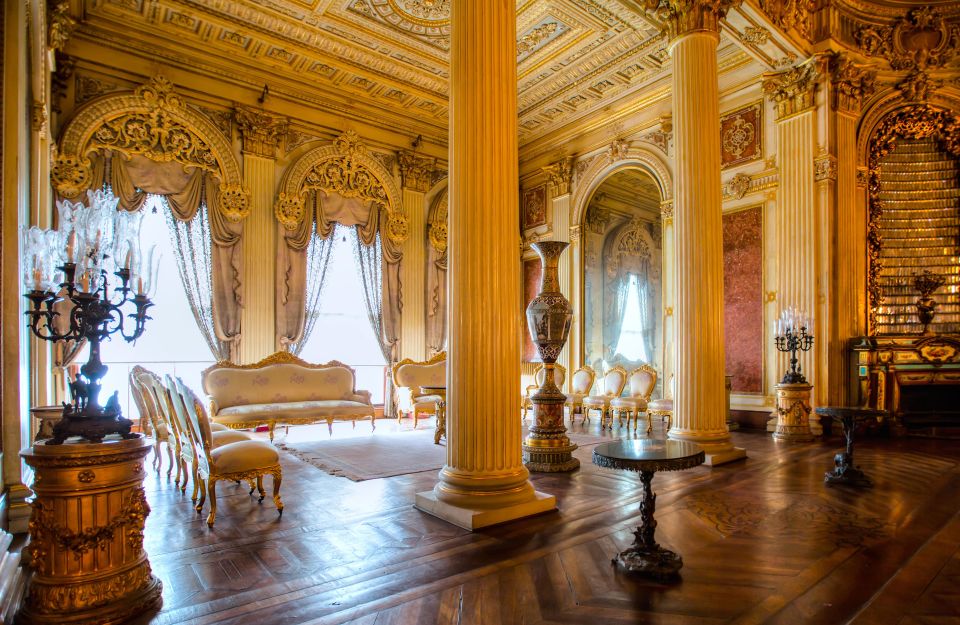
I love the scale and ambition here: Dolmabahçe was the largest sultan’s palace of the Ottoman Empire, ordered by Sultan Abdülmecid I and opened in 1856. I also love the visual punch—Baccarat and Bohemian chandeliers overhead, and that famous gold glow on the ornate ceilings.
The main catch is that “skip-the-line” isn’t magic. You still do a mandatory security check, and if your QR code needs attention, you could end up waiting at an info desk anyway.
In This Review
- Key takeaways
- Entering the Palace Fast: QR codes, security, and the real deal on “skip-the-line”
- Your 2-hour flow: a pace that fits the palace without stress
- Dolmabahçe Palace: Ottoman grandeur, built on a specific timeline
- Chandelier and gold ceiling hunting: what to look for first
- Atatürk’s era connection: why this palace mattered after the sultans
- Dolmabahçe vs Topkapi: the “so what” behind the comparison
- The Harem section: great if it’s open, annoying if it’s not
- The 25-language audio guide: the best option when guides can’t go deep
- Price and value: is $55 for 2 hours a good deal?
- Who this is best for (and who should rethink it)
- Should you book Dolmabahçe Palace & Harem skip-the-line with audio?
- FAQ
- What’s included with this ticket?
- Is there a live guide included?
- How long is the visit?
- How do I get my entry ticket QR codes?
- Can I get the 25-language audio guide at the palace?
- Is Dolmabahçe Palace open every day?
- What hours should I expect in winter?
- Do I still need to go through security?
- Are photos allowed inside?
- Can I cancel for a refund?
Key takeaways
- Skip-the-line e-tickets for Dolmabahçe Palace and the Harem section
- 25-language audio guide (via link, not available on-site)
- Baccarat and Bohemian chandelier collection, including a huge Bohemian chandelier
- Ottoman-to-Republic transition, with Mustafa Kemal Atatürk tied to the palace’s final era
- Monday closure and shorter winter hours to plan around
- Camera rules indoors, so think “watch and memorize,” not “scroll later”
Entering the Palace Fast: QR codes, security, and the real deal on “skip-the-line”

You’re paying for one thing more than anything: time. Dolmabahçe can be slow at the front gate, especially when Istanbul is full of visitors. With this ticket, you start with e-tickets and QR codes, and you’re meant to use a faster lane than regular walk-ups.
That said, I wouldn’t plan your whole day like security doesn’t exist. The palace uses a mandatory security check, and waiting times can still happen—busy hours, crowded days, all the normal stuff that keeps every site honest. One more practical thing: your entry QR codes arrive by a separate email from the supplier (Istanbul Tourist Pass®), not as a “pick it up at the ticket booth” situation. So save that email and have your phone charged.
Also note the small-but-important friction point: some people reported the skip-the-line entry wasn’t fully smooth if the QR code needed to be exchanged or fixed at an information desk. That doesn’t mean it will happen to you—but it is a good reminder to arrive with patience (and a backup plan for getting your bearings).
A few more Istanbul tours and experiences worth a look


Your 2-hour flow: a pace that fits the palace without stress
This experience is designed for a 2-hour visit. That’s enough time to see the stand-out rooms, take in the chandeliers and gold ceilings, and still have breathing room to wander.
Here’s how I’d structure it once you’re through security:
- Start at Dolmabahçe Palace and move room-to-room with either the audio guide or a quick “look first, read later” approach.
- Keep your pace steady. The palace interiors don’t feel like a quick museum stop; they feel like walking through power, wealth, and taste.
- When you reach the Harem section, you’ll want to slow down for a slightly different vibe, then finish with time to regroup (the gardens and nearby café options can help).
If you’re tempted to rush, don’t. People often assume they can speed-run this palace in 60 minutes. That’s how you end up staring at walls without noticing the details that make Dolmabahçe unforgettable.
Dolmabahçe Palace: Ottoman grandeur, built on a specific timeline
Dolmabahçe is not just “an old palace.” It’s the Ottoman Empire’s last grand statement in palace form. The building is huge, and it’s tied to a clear historical moment: it was built under Sultan Abdülmecid I’s orders and opened in 1856.
This matters because it helps you read what you’re seeing. Earlier Ottoman power is one style; later imperial tastes shift toward European influence and showy materials. Dolmabahçe is where that transition becomes visible in the architecture, layout, and interior feel.
You’ll also learn why people often compare it to Topkapi Palace. Dolmabahçe and Topkapi aren’t the same “kind” of palace experience. Even if both are Ottoman, the differences show up in style and furnishings, and you’ll get guided context either from the audio guide (25 languages) or from a guide at the start of the tour, depending on what option you choose.
Tip I’d give you: treat the palace like a sequence of rooms with different moods, not like one big room. When you move that way, you notice how the design choices keep changing.
Chandelier and gold ceiling hunting: what to look for first
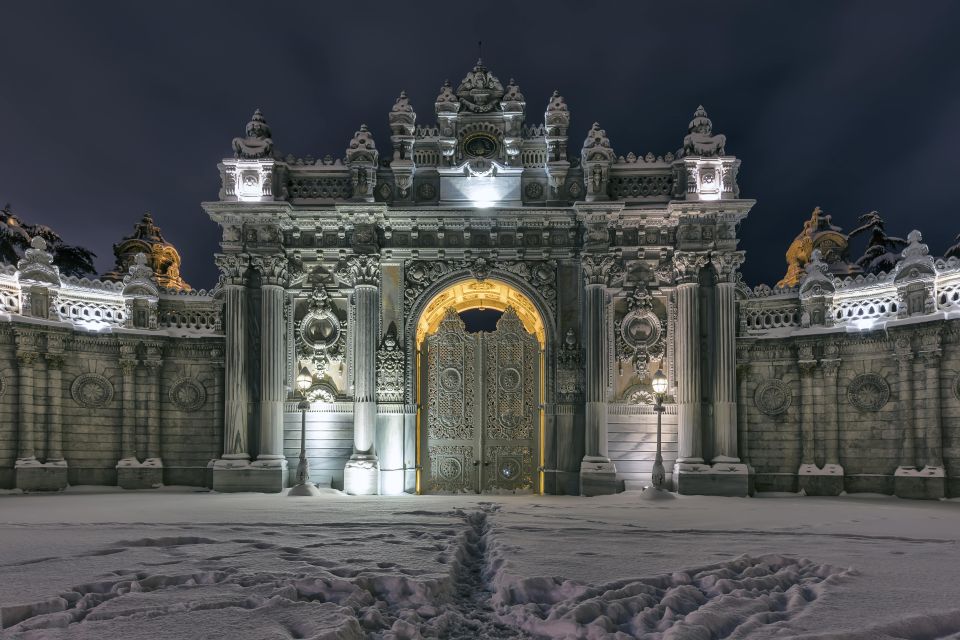
Dolmabahçe has a reputation for light and sparkle, and it’s earned. One of the biggest highlights is the collection of Baccarat and Bohemian chandeliers, including the biggest Bohemian chandelier ever. It’s the kind of detail that makes you look up even if you swear you never do.
Another “don’t miss” is the gold inside—especially the ornate ceilings. This is not a subtle gold. It catches the light, frames the room, and makes the space feel ceremonial.
Here’s the practical way to enjoy this without losing time:
- Use the first main rooms to orient your eyes. Look for chandelier placement and ceiling work.
- Then, as you continue, pick one “theme” per room. Chandeliers in one area, gold and ceiling details in the next.
- Don’t try to capture photos inside. Pictures are restricted indoors, and the rules tend to be strict. You’ll enjoy it more if you watch and store it in your memory.
If you like design details, you’ll feel rewarded quickly. If you hate looking up (I get it), still do it once. Dolmabahçe pulls your gaze upward for a reason.
Atatürk’s era connection: why this palace mattered after the sultans
What makes Dolmabahçe more than just a pretty building is what happened here at the end of the empire. The palace was served as the empire’s last headquarters and continued in use until 1922. That’s the kind of date that changes how you interpret the rooms.
In your visit, you’ll hear the story of the founder of modern Turkey, Mustafa Kemal Atatürk, and how the palace connects to his era. Even without a deep lecture, the timeline gives you a lens: this wasn’t only about court life in the 1800s. It was also part of a closing chapter for the imperial system.
That context is valuable because it helps your brain stop treating each room as decoration. Instead, you start to see it as infrastructure—power expressed through architecture, display, and ceremony.




Dolmabahçe vs Topkapi: the “so what” behind the comparison
People compare Dolmabahçe and Topkapi because they both scream Ottoman history. But the difference is more than location or size. Dolmabahçe tends to hit you as a later, more polished imperial palace experience, while Topkapi feels more layered in earlier traditions.
During your visit, you’ll learn the distinct differences between the two—especially in architectural style and in furniture choices. That comparison is useful because it turns “I saw palaces” into “I understood what changed over time.”
If you’re deciding which palace to prioritize in your Istanbul plan, this is a simple rule: choose Dolmabahçe if you want the chandelier-and-ceremony spectacle plus the late-imperial feel. Choose Topkapi if you want the older court atmosphere and more of the traditional palace structure vibe.
In a perfect world, you’d do both. But if you only have time for one, this comparison gives you clarity fast.
The Harem section: great if it’s open, annoying if it’s not
The ticket includes entry to the Harem section, which is a big part of why this tour package is popular. The Harem adds variety: a different layout, a different historical framing, and a shift from pure spectacle to more intimate domestic storytelling.
Still, be ready for real-world museum behavior. One issue that can crop up is that the Harem may not be open at some times. If that happens on your day, your experience may shrink compared to what you expected, even though you still have palace access.
Another small but helpful tip: there’s a café area near the Harem entrance, and people noted it as a nice break point. If the day is warm or you’re tired from walking, plan your refresh here. You’ll be glad you did.
The 25-language audio guide: the best option when guides can’t go deep
This is a self-guided experience with an audio layer. That’s important. The tour includes an audio guide in 25 different languages, and it’s available through a link connected to your ticket package. You cannot pick it up at the palace.
I like this setup for two reasons. First, it gives you control over pacing—pause when something catches your attention instead of trying to keep up with a group. Second, the language coverage is broad, so you’re not stuck with awkward fragments of understanding.
But you should know one more practical point: photography is restricted inside, and some groups have reported limitations on how much a live guide can do inside. For that reason, relying on the audio guide can be the safest way to make sure you understand what you’re seeing as you walk.
If you want to maximize your experience, do this:
- Before you enter, open the audio link and download/play so you’re not scrambling on site.
- Use it early. The first rooms set the context so later rooms feel meaningful.
Price and value: is $55 for 2 hours a good deal?
At $55 per person, the value depends on what you fear most: waiting, confusion, or missing context.
This price can be a good value if:
- You want to cut down on the front-end time at a high-demand site.
- You’ll actually use the audio guide instead of wandering blankly.
- You care about details like chandeliers, gold ceilings, and the Ottoman-to-Atatürk connection.
It’s less of a deal if:
- You’re fine buying standard tickets and don’t mind queuing.
- You plan to skip the audio guide entirely.
- You’re visiting on a day where you suspect QR or ticket exchange issues might happen. (It’s not guaranteed, but it’s real enough to consider.)
So I’d frame it like this: you’re not paying for “a room with a view.” You’re paying for smoother entry plus a strong explanation layer. If those two things matter to you, the price makes sense.
Who this is best for (and who should rethink it)
This experience fits you best if you’re the type who enjoys palaces but wants a plan that doesn’t require you to study every sign in Turkish. You’ll likely like it if you want a flexible pace with audio support, and you care about big visual highlights like Baccarat and Bohemian chandeliers.
It may not be your best choice if you expect lots of live guiding inside. Some people have run into restrictions about what a guide can do on the floor, and that can make a purely audio-centered visit feel more important than expected.
If you’re traveling with kids or you move slowly, the 2-hour window might feel tight. Dolmabahçe is an “eyes up” place, and kids may need extra breaks. In that case, consider whether you’d prefer a longer option.
Should you book Dolmabahçe Palace & Harem skip-the-line with audio?
I’d book it if your top goals are faster entry and a self-paced visit with context. The combination of a 25-language audio guide and the palace’s biggest highlights—especially the chandelier collection and the gold ceiling details—makes Dolmabahçe easier to enjoy without turning it into a slog.
I would hesitate only if you strongly dislike any chance of QR code hassle or you’re visiting with the expectation that you’ll get extensive guided walking inside. In that case, you might want a tour designed around a live guide experience rather than audio-first.
If you do book, do two things and you’ll have a smoother day: keep your QR email handy on your phone, and queue up the audio before you enter.
FAQ
What’s included with this ticket?
You get a skip-the-line entry ticket for the Dolmabahçe Palace and the Harem section, plus an audio guide in 25 different languages.
Is there a live guide included?
No. The option described includes the audio guide, not a live guide.
How long is the visit?
The duration is 2 hours.
How do I get my entry ticket QR codes?
You receive your entry ticket QR codes via a separate email from the supplier (Istanbul Tourist Pass®).
Can I get the 25-language audio guide at the palace?
No. The audio guide is provided via a link with your tickets, and it cannot be obtained at the palace.
Is Dolmabahçe Palace open every day?
No. The palace museum is closed on Mondays.
What hours should I expect in winter?
From November 1 to March 31, opening hours are approximately 9:00 AM to 4:00 PM.
Do I still need to go through security?
Yes. There’s a mandatory security check, and waiting times may occur, especially during busy hours.
Are photos allowed inside?
No. Pictures are not allowed inside the palace.
Can I cancel for a refund?
Yes. You can cancel up to 24 hours in advance for a full refund.