REVIEW · ISTANBUL
Dolmabahce Palace & Harem Skip-the-Line Entry & Audio Guide
Book on GetYourGuide →Operated by Istanbul E-pass · Bookable on GetYourGuide
Big palace, fast entry, Ottoman drama.
This skip-the-line Dolmabahce Palace ticket is a smart way to beat the worst queues, and the included audio guide helps you pace yourself through rooms, halls, and stories from the Ottoman court. You also get access to the palace’s Harem Section with your entry, so you’re not stuck only seeing the grand public spaces.
I like that you can tour at your own speed. The audio guide turns the visit into a do-it-your-way route instead of waiting on a group timeline. One possible snag: the audio guide pickup requires you to deposit proof of identification right after security, so bring your passport or driver’s license and don’t plan to wander off with it.
Plan for the big picture too. Dolmabahce is closed on Mondays, and in winter (Nov 1 to Mar 31) it opens around 9:00 AM and closes about 4:00 PM, so timing matters if you’re squeezing in Istanbul sights.
In This Review
- Key takeaways before you go
- Why Dolmabahce Palace still hits hard in 2026
- Skip-the-line entry: what you actually save
- The self-guided format: using the audio guide without getting lost
- The Selamlik and main palace rooms: where ceremony lives
- Harem Section access: private life beyond the throne rooms
- Gardens and courtyards: a breather with real atmosphere
- Rules and restrictions that affect your day
- Timing tips: Mondays, winter hours, and real opening surprises
- Comfort and crowd management: make the visit easier on yourself
- Getting there the easy way: tram + short walk
- Price and value: is $54 a fair deal?
- Who should book this Dolmabahce Palace + Harem audio ticket
- Should you book Dolmabahce Palace with skip-the-line and audio?
- FAQ
- Is the Dolmabahce Palace visit guided?
- Does my ticket include the Harem Section?
- Do I need to pick up something on-site for the audio guide?
- What documents do I need for the audio guide pickup?
- What languages are available on the audio guide?
- Are photos allowed inside Dolmabahce Palace?
- What items are not allowed at the entrance?
- When is Dolmabahce Palace closed?
- What are the opening hours in winter?
Key takeaways before you go
Skip-the-line access cuts down your time at the busiest choke points.
Harem Section entry is included in your palace ticket, not sold separately at the door.
Audio guide in multiple languages lets you explore independently in English plus many others.
Audio device pickup needs ID after security, then you collect it back at the end.
No photos inside can be a deal-breaker if you love documenting everything.
Why Dolmabahce Palace still hits hard in 2026
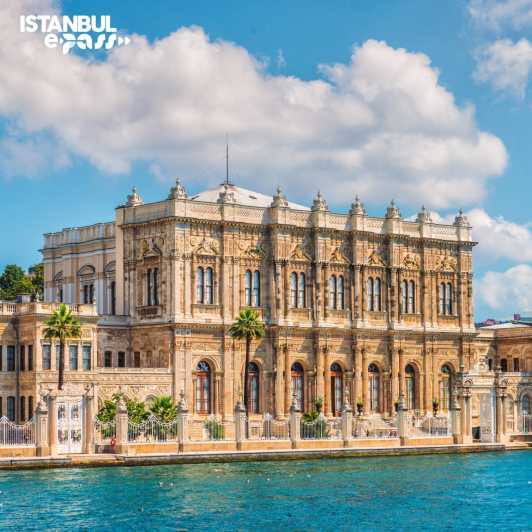
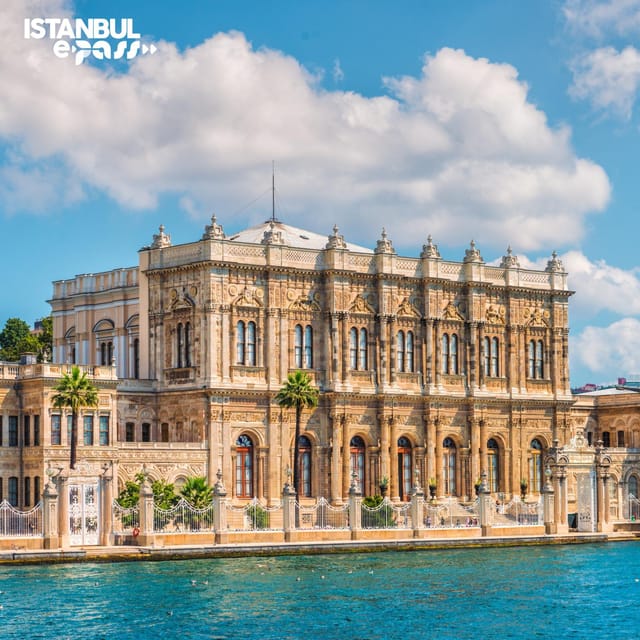
Dolmabahce Palace isn’t trying to be subtle. It’s Ottoman power made visible: the scale, the ornament, and the sense that this was built for ceremony and image. You’re also seeing it in the context of the late empire—Dolmabahce was home for the last six sultans—so the palace reads a little like a final chapter, not just a museum shell.
And the palace is huge. One visit note highlights 258 rooms and 46 halls, plus hammams and a big network of interior spaces. That size is exactly why the audio guide matters here: without it, the rooms can blur together fast, especially when you’re moving from formal spaces to the darker, more private world of the Harem.
You can also read our reviews of more guided tours in Istanbul



Skip-the-line entry: what you actually save
This ticket’s main practical win is simple: you bypass the long ticket line. That matters at Dolmabahce because security and entry bottlenecks can swallow your time even when you’ve pre-booked.
In real terms, skip-the-line tends to help you in two ways:
- You reach security faster, so your visit starts sooner.
- You waste less energy late in the day when the palace can feel busier and warmer.
Just keep your expectations grounded. Even with skip-the-line, you still go through security. If you’re arriving at a peak hour, you may still wait a bit, but you avoid the longest “stand and queue” part of the experience.
The self-guided format: using the audio guide without getting lost
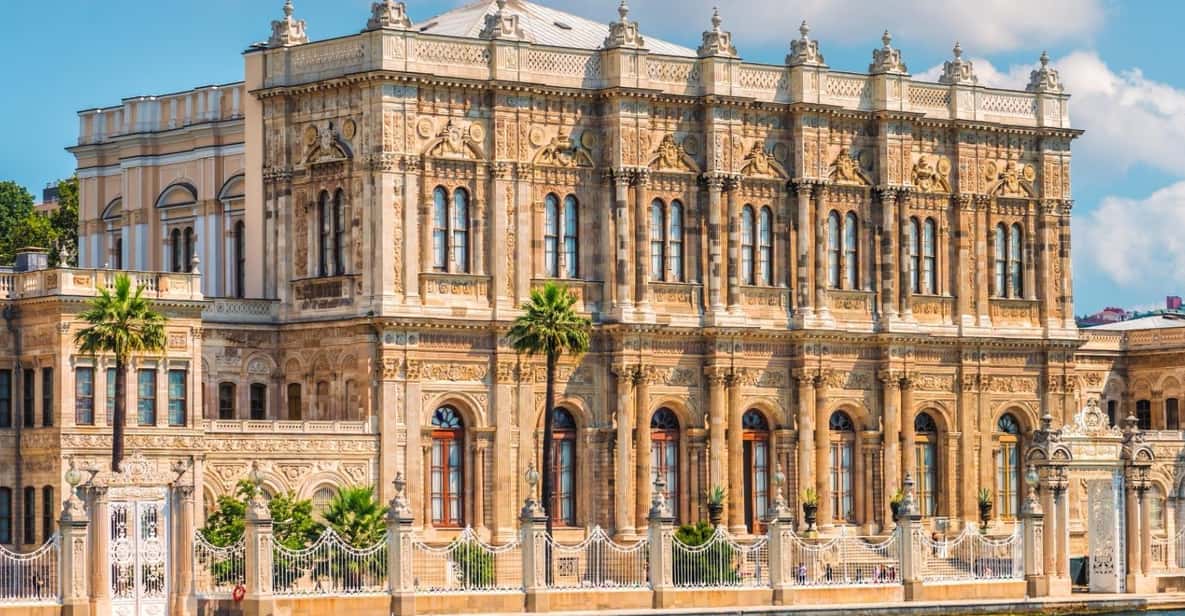
This is not a guided tour in the classic sense. There’s no fixed meeting point where someone herds you into place. You go directly to Dolmabahce, enter with your ticket, and then pick up your audio guide device.
Here’s how the flow works in a way that helps you plan:
- You enter and pass through security.
- Immediately after, you go to a dedicated office by the entrance to get the audio guide and headphones.
- You deposit proof of identification to obtain the device.
- You return to collect your ID at the end.
That ID deposit detail is easy to underestimate. Don’t show up with only a phone screenshot of your documents. Bring your physical passport or driver’s license so the pickup is smooth.
Language coverage is another plus. You can choose from many options including English, Russian, Spanish, Arabic, German, French, Italian, Dutch, Chinese, Korean, and Turkish. The exact set can vary by availability, but you should be able to find a language that works for you.
One more detail: the audio guide is scripted. That’s great for structure, especially in a palace where you could otherwise spend half your time just reading signs. It won’t replace a live guide if you want deep storytelling, but it’s strong for orientation and for explaining what you’re seeing as you move.
The Selamlik and main palace rooms: where ceremony lives
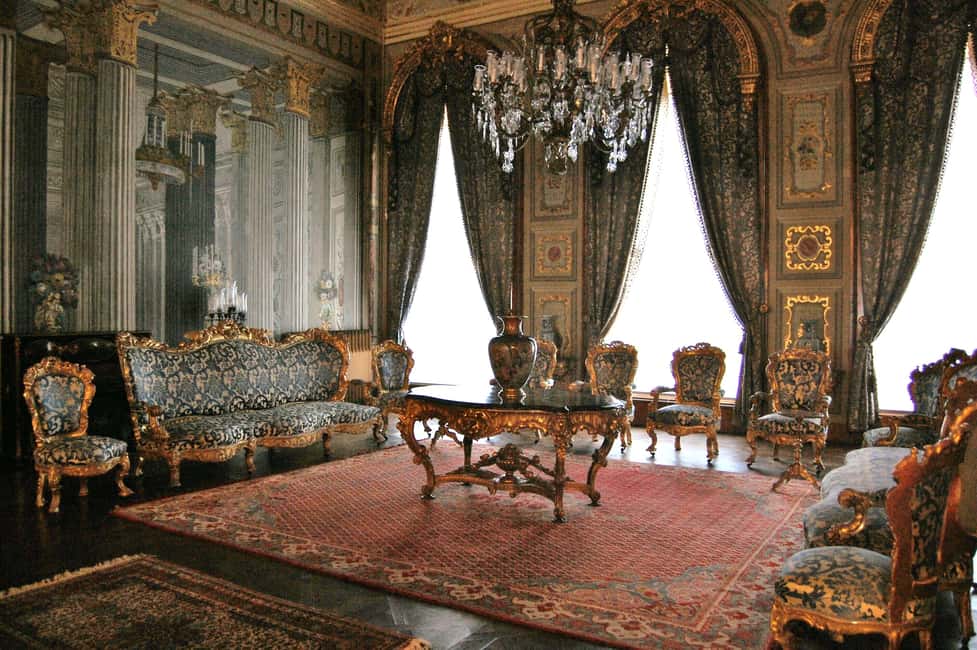
Your entry includes the Garden and Selamlik Section. Selamlik is the side of the palace associated with official life, so the rooms here tend to feel more staged—formal, impressive, and designed for public display.
What to look for while you move through the main rooms:
- Grand ceremonial spaces where the architecture and decorative details are clearly meant to impress.
- Areas that help you understand how the Ottoman court used the palace as a political and cultural statement.
Because the visit is self-paced, I recommend you give yourself time to slow down for a couple of signature rooms. Otherwise, you’ll end up rushing through the same kinds of decorative motifs and you won’t feel the palace’s “this was built to awe” logic.
A good mental strategy: think of the palace as three experiences—public ceremony (Selamlik), private life (Harem), and outdoor breathing room (courtyards and gardens). The audio guide helps connect those, but you still need to let your eyes adjust as you shift from one mood to the next.
Harem Section access: private life beyond the throne rooms

The ticket includes entry to the Harem Section. This is where the palace starts to feel less like a stage set and more like a lived-in home—at least as the museum interpretation allows.
I like the Harem part because it changes the tone. In many historic palaces, the public areas can feel like “symbols.” The Harem section adds human scale: daily life, household organization, and the idea that power also ran through private spaces and family life.
Expect a different flow than the Selamlik section. Rooms can feel tighter and more maze-like compared to the grand halls, so the audio guide is extra useful here. Without it, you might spend your time just wondering where the layout is leading.
Also note the reality of the day-to-day visit: some interior experiences can feel less comfortable because of ventilation. One firsthand account points out that the palace can feel not well ventilated, and that you’ll likely feel it more in warm months. If you’re visiting in summer, plan breaks outside when you can, and carry water.
A few more Istanbul tours and experiences worth a look

Gardens and courtyards: a breather with real atmosphere
Your ticket includes access to the palace grounds, including the Garden. Reviews consistently call out the gardens as a welcome change from the interior intensity, and you’ll want that switch.
What the outdoor time gives you:
- Relief from indoor crowds and indoor temperature swings
- Space to regroup before you tackle more rooms
- A nicer pace for photos outside (note: inside photography is restricted)
Some visitors also mention that benches and shade can be limited in certain outdoor garden areas. That’s not a reason to avoid the palace, but it is a reason to travel ready: if you’re heat-sensitive, plan water and consider arriving earlier in the day.
Rules and restrictions that affect your day
Dolmabahce has rules, and the wrong item can slow you down at security.
Not allowed items include:
- Oversize luggage
- Baby strollers
- Large bags or luggage
- Selfie sticks
- Baby carriages
If you’re traveling light, you’ll probably sail through. If you’re traveling with a big bag, do yourself a favor and downsize before you head there, or you may end up dealing with awkward storage decisions at the gate.
Photography inside is also restricted. Multiple notes say you can’t take photos inside the palace. If your plan is heavily photo-based, this matters. You’ll still be able to enjoy the sights, but it’s not the “shoot everything” kind of museum.
Timing tips: Mondays, winter hours, and real opening surprises
The biggest timing issue is straightforward: Dolmabahce Palace is closed on Mondays. That alone can ruin a day if your schedule assumes every landmark stays open.
In winter, hours shift. From Nov 1 to Mar 31, the palace opens around 9:00 AM and closes about 4:00 PM. If you’re visiting outside summer, plan around those shorter days.
One useful real-world warning: a note mentions opening delays (arriving for an advertised morning start but the palace opened later). The safest approach is arriving early and staying flexible—especially if you’re working from a tight itinerary.
Comfort and crowd management: make the visit easier on yourself
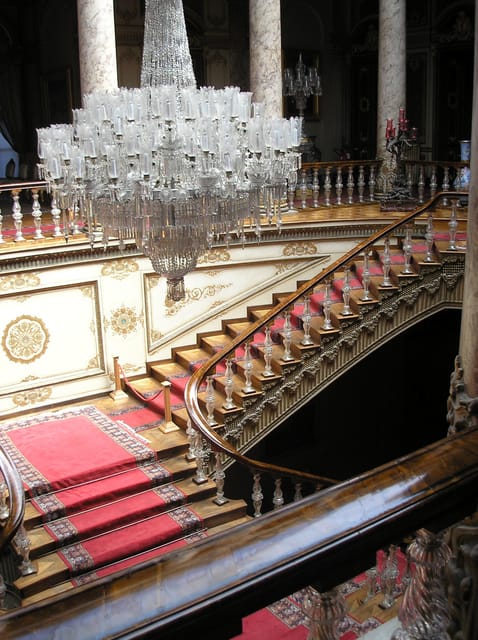
This palace can be a workout—lots of walking, lots of rooms, lots of decorative surfaces that make you slow down. Even with audio guide structure, you’ll likely spend several hours absorbing the spaces.
Two comfort points to keep in mind:
- Indoor ventilation can feel tough at times, so take breaks.
- Outdoor areas may have limited shade and fewer places to sit.
A simple plan that works: do the interiors first when you still have energy, then end with gardens and courtyards so you’re rewarded with open air. If you do it backward, you might end up wanting to rush the rooms just to escape the heat.
Also, some exhibits or sections may be temporarily closed for maintenance. One note says the crystal pavilion was closed, and another mentions the clock museum and crystals being closed. Don’t let that sour your day—just treat it as a bonus reason to return someday.
Getting there the easy way: tram + short walk
Location helps here because Dolmabahce connects well with Istanbul’s public transit.
One practical tip: the T1 tram line is noted as taking you within a short walk—about five minutes—from the entrance area. That’s a big plus if you’re traveling across the city and want a straightforward route without a complicated transfer chain.
If you’re already based in central areas, this can keep your day focused on the palace instead of on transit logistics.
Price and value: is $54 a fair deal?
At $54 per person, the value question is real. It’s not a cheap ticket, especially when Istanbul has lots of famous sites competing for your limited time.
Here’s how I’d judge the value for this specific experience:
- If you hate queues and want your day to start smoothly, skip-the-line can justify a lot of the cost.
- The audio guide is included, and for a palace this large, it’s not just a nice extra—it’s how you make sense of the scale without paying for a live guide.
- Harem access is included in the same ticket. Getting the Harem as part of one entry is a value driver, because the Harem is a major part of what makes Dolmabahce feel complete.
That said, cost sensitivity is personal. Some notes call it overpriced, and one person even says the skip-the-line didn’t feel necessary for them. If your travel day is quiet, you might question whether you needed the upgrade.
A simple decision rule:
- If your Istanbul schedule is tight, you want to see multiple landmarks, or you dislike waiting in lines, this ticket makes sense.
- If you’re taking a slower trip and can tolerate queues, you might reconsider.
Who should book this Dolmabahce Palace + Harem audio ticket
This is best for:
- People who want independent touring rather than a group pace
- Anyone who likes structure but doesn’t want to pay for a full guided tour
- Visitors who care about seeing both Selamlik and the Harem without extra booking steps
- Travelers who want audio in English and other major languages
It may not be ideal if:
- You strongly prefer live commentary the entire time (the format is self-guided)
- You’re traveling with large bags that you can’t minimize for security
- You’re planning a heavy photo day inside the palace (interior photography is not allowed)
One note also suggests that a live guide can add extra color. If you ever find a human guide connection—someone specifically named Ozzie in one account—then combining that with the audio approach can make the palace feel even more understandable.
Should you book Dolmabahce Palace with skip-the-line and audio?
Yes, I think you should book it if Dolmabahce is high on your “must-see” list and you want a smoother entry plus a way to understand what you’re walking past. For a palace this big, the audio guide isn’t fluff; it’s how you keep the visit coherent from hall to hall.
Skip this add-on only if:
- You’re fine waiting in queues,
- You’re not interested in the Harem Section,
- Or you’re confident you’ll enjoy the palace mostly as visuals without needing narration.
If your goal is an efficient, self-paced day that still feels informed, this is a strong way to do it.
FAQ
Is the Dolmabahce Palace visit guided?
No. This is a self-guided visit. There’s no meeting location, and you enter the attraction on your own using the provided tickets.
Does my ticket include the Harem Section?
Yes. Your entry ticket includes the Garden and Selamlik Section, and it also includes the Harem Section with your tickets.
Do I need to pick up something on-site for the audio guide?
Yes. After security, you pick up the audio guide device and headphones from a dedicated office by the entrance.
What documents do I need for the audio guide pickup?
To obtain the audio guide, you need to deposit proof of identification (like a passport or driver’s license) and collect it back at the end.
What languages are available on the audio guide?
The audio guide options include English, Russian, Spanish, Arabic, German, French, Italian, Dutch, Chinese, Korean, and Turkish.
Are photos allowed inside Dolmabahce Palace?
No. Photos are not allowed inside the palace building.
What items are not allowed at the entrance?
Oversize luggage, baby strollers, luggage or large bags, selfie sticks, and baby carriages are not allowed.
When is Dolmabahce Palace closed?
Dolmabahce Palace is closed on Mondays.
What are the opening hours in winter?
From Nov 1 to Mar 31, the palace opens around 9:00 AM and closes around 4:00 PM.