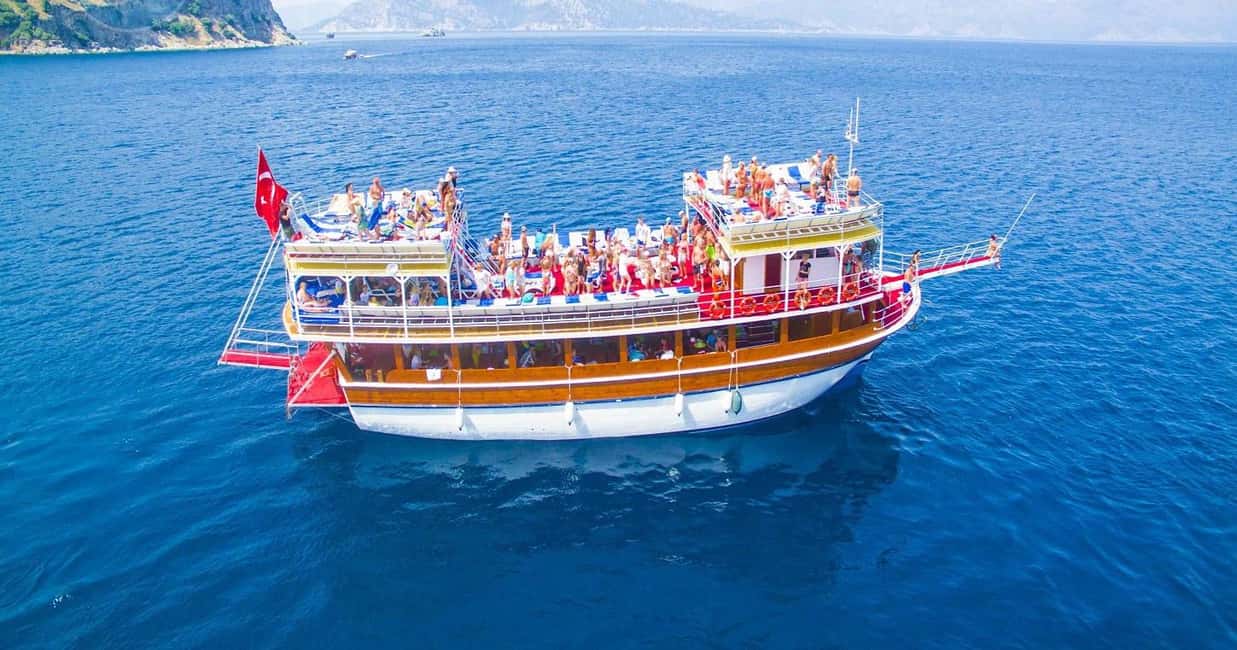
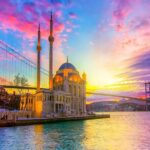
One good hour on the water and you get Istanbul fast. This Bosphorus Yacht Cruise with an Asian-side stop strings together iconic waterfront sights, from Dolmabahçe to the bridges, with a real tasting moment on the Asian shore. I especially like the mix of photo-ready architecture and the small-group feel, plus the comfort extras like hot tea on cooler days. The only real catch is weather—this experience needs good conditions, and you may need to reschedule if it’s rough.
Dolmabahçe is a smart place to begin because the Bosphorus is the show from the start. You’ll see grand Ottoman and early-modern splendor, then keep moving toward fortresses and viewpoints that explain how this strait shaped the city. For your money, you’re not just riding along; you’re guided, and you’re fed—pastries, fruits, light snacks, and a traditional Turkish coffee with delight included.
The itinerary is packed with sights, so you should expect mostly sightseeing from the water rather than long museum time. If you’re hoping for lots of ticketed indoor visits, you’ll likely want to plan those separately on another day.
In This Review
- Key highlights worth clocking before you go
- Why a Bosphorus yacht cruise beats a bus plan
- Dolmabahçe start: Mosque views and Ottoman-scale details
- Dolmabahçe Palace and that Crystal Staircase you can picture
- Ortaköy and the Bosphorus Bridge: your photo plan
- Rumeli Hisarı and Anadolu Hisarı: forts that controlled the strait
- Asian-side treats: Kanlıca yogurt plus Ottoman elegance
- Maiden’s Tower, Galata Bridge, and Galataport’s modern shoreline
- Price and inclusions: what you actually get for $59.57
- Comfort, timing, and group size (the quiet stuff that matters)
- Who should book this cruise—and who might want a different option
- Should you book Bosphorus Cruises Istanbul?
- FAQ
- How long is the Bosphorus Yacht Cruise?
- What time does the tour run?
- Where do I meet, and where do I end?
- Is the tour offered in English?
- What’s included in the price?
- Is alcohol included?
- Is the Kanlıca stop admission-free?
- What happens if the weather is bad?
Key highlights worth clocking before you go
- Small luxury yacht, max 35 people: less crowding, easier viewing.
- Dolmabahçe to the Bosphorus Bridge and beyond: major landmarks in one smooth route.
- Asian-side stop for Kanlıca yogurt (about 20 minutes): an actual taste of local life.
- Fortress-to-fortress Bosphorus story: Rumeli Hisarı and Anadolu Hisarı frame the strait’s past.
- Onboard comfort on cold or rainy weather: blankets and hot drinks show up when conditions turn.
Why a Bosphorus yacht cruise beats a bus plan
In Istanbul, the waterfront is where the city makes sense. Streets can confuse you—directions, traffic, and distance add up fast. From the water, you get the skyline in order, and your guide can point out why each building matters without you playing archaeologist on your own.
This cruise runs about 2 hours 30 minutes (10:30 AM to 1:00 PM). That timing is great because it’s long enough to feel like a full outing, but not so long that you feel cooked afterward. It’s also a good format for first-timers who want the big hits—bridges, palaces, forts—without stacking three separate tours.
I also like that you’re not stuck in silence. The tour includes an English-speaking guide, and the vibe stays practical: you get orientation plus explanations as you pass each landmark. Add onboard snacks and Turkish coffee, and you end up with a “simple day plan” that still feels special.
You can also read our reviews of more boat tours in Istanbul
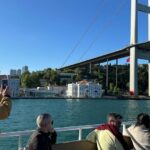
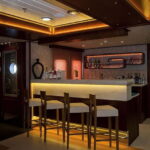
Dolmabahçe start: Mosque views and Ottoman-scale details
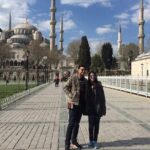
You meet at Dolmabahçe Mosque (Ömer Avni, Meclis-i Mebusan Cd. No:34). It’s a smart starting point because this waterfront stretch instantly communicates Istanbul’s late-Ottoman ambition and European-facing style.
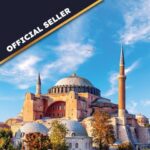
Dolmabahçe Mosque is one of the standout architectural results of the Ottoman reform era. It was commissioned by Queen Mother Bezmialem Sultan and completed in 1855 under Sultan Abdülmecid. Look for how the design mixes Islamic form with European influences, including baroque and neoclassical touches. From the water, the mosque’s large dome and tall minarets help you orient the entire coastline.
Even if you don’t do a long interior visit during the cruise itself, your guide can connect the mosque to what you’re about to see nearby: Dolmabahçe Palace. That one-two pairing matters because it turns “pretty buildings” into a clearer story about power, modernization, and taste.
Dolmabahçe Palace and that Crystal Staircase you can picture
Dolmabahçe Palace sits along the same European shore as the mosque, and it’s hard to ignore once you’re cruising in the right spot. The palace was built between 1843 and 1856 under Sultan Abdülmecid I, and it replaced Topkapı Palace as the empire’s main administrative center.
What makes it feel so iconic is the sheer scale. The palace includes 285 rooms and 46 halls, and you’ll often hear about the Crystal Staircase as a signature highlight. You’ll also see how late-Ottoman wealth and European artistic influence intersect in the details—ornate chandeliers, gold-toned interiors, and marble finishes.
A quick reality check: the cruise format is built for viewing, not deep museum time. If you want to walk the palace rooms yourself, you’ll need a separate visit with tickets. Still, the cruise viewpoint is valuable because it gives you the overall setting first—then you can decide later whether interior access is worth your time.
Ortaköy and the Bosphorus Bridge: your photo plan
Ortaköy is one of those neighborhoods that works in every weather. As you cruise, you’ll pass under the Bosphorus Bridge (officially the 15 July Martyrs Bridge, opened in 1973). Even though this is a modern structure, it’s still a “symbol bridge,” linking Europe and Asia across the waterway.
Ortaköy sits on the European shore beneath that bridge, and it’s known for its waterfront life—cafés, galleries, and the famous stuffed baked potato called kumpir. The centerpiece is Ortaköy Mosque, with a baroque-influenced design that photographers love.
What I like about passing these areas on a cruise is that you get the skyline framing without having to fight street crowds or traffic. The best advice is to keep your camera ready during the bridge approach and the moments right after—lighting and angles shift quickly, and your guide’s timing helps.
At night, the bridge lights are famous for their colorful LED glow, but even in daytime, it’s impressive how the bridge’s lines stretch over the strait.
Rumeli Hisarı and Anadolu Hisarı: forts that controlled the strait
If you only remember one “history lesson” from this cruise, make it the fortress pairing. Rumeli Fortress (Rumeli Hisarı) is on the European side, while Anadolu Fortress (Anadolu Hisarı) sits directly opposite on the Asian side. Seeing them from the water gives you the clearest sense of how narrow Istanbul can feel when you understand the geography.
Rumeli Hisarı was built in 1452 in just four months by Sultan Mehmed II. It was designed to control naval traffic through the Bosphorus and to cut off support to Constantinople. When you look at its thick stone walls and major towers, you get why it was so effective.
Anadolu Hisarı goes even further back: it was constructed in 1395 by Ottoman Sultan Bayezid I. That makes it the oldest Turkish structure on the Bosphorus, and it was built to manage naval passage while setting the stage for future conquest decades later.
Your guide’s explanations are the difference between “two castles” and “a strategy.” You’ll feel the logic of why one fortress on each side turns this strait into a controlled corridor.
You can also read our reviews of more sailing experiences in Istanbul
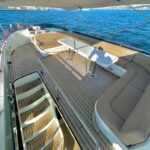
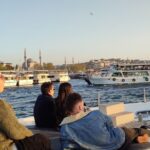
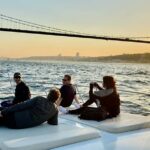
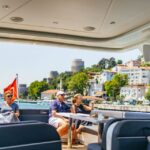
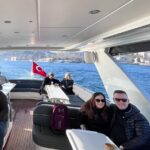
Asian-side treats: Kanlıca yogurt plus Ottoman elegance
This is the part of the tour you’ll likely remember at mealtime later. The cruise includes a stop at Kanlıca (Kanlıca Meydani) on the Asian shore for about 20 minutes, and the admission ticket is free. Kanlıca is best known for traditional yogurt—thick, creamy, and slightly tangy—often served in simple wooden cups and sometimes finished with powdered sugar.
What I like about this stop is that it’s not just a snack. It’s a small cultural reset. You’re on the Asian side now, looking back toward the historic European shoreline, and you’re eating something tied to local tradition rather than a tourist menu.
After Kanlıca, the cruise continues with Asian-side landmarks such as Küçüksu Pavilion (Küçüksu Kasrı) and Beylerbeyi Palace. Küçüksu was commissioned by Sultan Abdülmecid I and completed in 1857, designed in an ornate neo-baroque style by architect Nigoğayos Balyan. If you like architectural details, this is a good moment: think marble façade, grand staircases, and a sense of Ottoman leisure—an imperial hunting lodge turned waterfront spectacle.
Beylerbeyi Palace was built between 1861 and 1865 during Sultan Abdülaziz’s reign. It served as a summer palace for Ottoman sultans and also as a guesthouse for dignitaries. Again, you may not be doing long indoor touring here during the cruise, but the garden-and-water setting plus the palace style adds context to how the elite lived with the Bosphorus right outside.
Maiden’s Tower, Galata Bridge, and Galataport’s modern shoreline
As you continue, the skyline shifts toward classic Istanbul “layers.” Maiden’s Tower (Kız Kulesi) sits on a small islet where the Bosphorus meets the Sea of Marmara. It’s one of Istanbul’s most romantic landmarks, with origins said to go back over 2,000 years and a reputation tied to a protective legend. Even when you’re focused on the architecture, the location helps you understand why people keep returning to this spot for centuries.
Next, you’ll reach Galata Bridge, spanning the Golden Horn from Istanbul’s historic peninsula to Karaköy. From the bridge area, you see how Istanbul functions day-to-day: people fishing and strolling above, and cafés below. The current bridge dates to 1994, but the spot itself sits in a long line of earlier crossings.
Then comes Galataport Istanbul, a modern cruise terminal and lifestyle promenade opened in 2021. This is worth noticing because it changes the waterfront’s feel from purely historic to a mixed-use, modern public space. There’s also an underground terminal design associated with the port, and you can spot how this part of the city now caters to cruise traffic and local hangouts side-by-side.
This last stretch gives you a useful takeaway: Istanbul doesn’t freeze in time. It keeps building, and it keeps adapting the waterfront to new needs.
Price and inclusions: what you actually get for $59.57
At about $59.57 per person, the value comes from bundling three things: a luxury yacht ride, guided interpretation, and food/drink basics that would cost you extra if you’re building the day yourself.
Included items:
- 2.5-hour luxury yacht cruise (10:30 AM–1:00 PM)
- Professional English-speaking guide
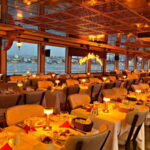
- Fresh pastries served onboard
- Seasonal fresh fruits
- Light snacks throughout
- Authentic Turkish coffee with traditional Turkish delight
- Mobile ticket
Alcohol is not included, but it can be purchased if requested.
A practical note: you’ll still want your own budget for the Kanlıca stop, because the yogurt and any drinks or souvenirs are listed under personal expenses. If you want to avoid surprise costs, bring some cash or card and treat that 20-minute stop as part snack, part break.
One comfort detail I’d plan for: when the weather is cold or rainy, the experience can still feel manageable. On cooler days, the onboard team provides blankets and keeps serving hot tea and food/hot drinks to stay comfortable. That matters because Bosphorus wind can turn a “short outing” into a stiff one fast.
Comfort, timing, and group size (the quiet stuff that matters)
This tour limits you to a maximum of 35 travelers. That number doesn’t sound huge on paper, but on a yacht it can mean the difference between easy sightlines and constant elbow shifts. You’re also closer to the water, which is the whole point: Bosphorus cruising works because the shoreline keeps changing.
The schedule is also built for good morning light and a calmer pace. You’re back at the meeting point at the end, which avoids that common Istanbul headache where your day ends on the opposite side of the city.
You’ll want to dress for wind and occasional rain, even if the forecast looks decent. The itinerary moves along open water and bridges, so weather can feel more intense than inland.
If poor weather cancels the experience, you’ll be offered a different date or a full refund. That’s good to know before you plan the rest of your trip.
Who should book this cruise—and who might want a different option
This one is ideal if:
- you’re a first-time Istanbul visitor and want the Bosphorus in one outing
- you like architecture and want it explained, not guessed
- you want a low-effort day with food onboard and a small group
- you care about the European-to-Asian comparison, not just a single side
You might consider a different style of tour if:
- you’re hoping for long, inside-the-museum visits (the cruise format is mostly viewing)
- you want heavy walking breaks between stops
- you’re traveling with a strict schedule where a weather change would seriously break your plans
Should you book Bosphorus Cruises Istanbul?
If your goal is to see Istanbul’s waterfront story—fortresses, palaces, bridges, and a real taste stop on the Asian side—this is a strong pick. The price makes sense because you’re not just paying for boat time; you’re paying for guide-led context and included snacks and Turkish coffee.
My best advice: book it early in your trip so the visuals help you understand the city afterward. And when you show up, treat it like a “bring a jacket, then relax” morning. If the day is clear, you’ll get the skyline. If it’s cold or rainy, you’re not left out in the wind—you’ve got blankets and hot tea to keep things comfortable.
FAQ
How long is the Bosphorus Yacht Cruise?
The cruise is approximately 2 hours 30 minutes.
What time does the tour run?
It runs from 10:30 AM to 1:00 PM.
Where do I meet, and where do I end?
You meet at Dolmabahçe Mosque (Ömer Avni, Meclis-i Mebusan Cd. No:34, 34427 Beyoğlu/İstanbul) and the activity ends back at the meeting point.
Is the tour offered in English?
Yes. The tour is offered in English.
What’s included in the price?
The tour includes a luxury yacht cruise, professional English-speaking guide, pastries, seasonal fresh fruits, light snacks, and authentic Turkish coffee with traditional Turkish delight.
Is alcohol included?
No. Alcoholic drinks are not included and can be purchased upon request.
Is the Kanlıca stop admission-free?
Yes. The Kanlıca stop is listed as admission ticket free for the 20-minute stop.
What happens if the weather is bad?
This experience requires good weather. If it’s canceled due to poor weather, you’ll be offered a different date or a full refund.