REVIEW · ISTANBUL
Afternoon Bosphorus Cruise Luxury Yacht with Professional Guide
Book on Viator →Operated by Yacht Cruises: Bosphorus · Bookable on Viator
Bosphorus views from a luxury yacht fly by. You’ll cruise the strait that splits Istanbul between Europe and Asia, with the guide helping you read the shoreline instead of just staring at it. I especially like the onboard comfort for a low price, plus the included treats and drinks that keep the whole thing easy from start to finish. The one thing to consider: this is a boat ride, so it’s not a good match if you get seasick or have vertigo.
I also love that the tour’s focus is practical: in about two hours you get a long chain of landmarks—palaces, fortresses, and signature Istanbul skyline points—without spending your afternoon hopping between neighborhoods. The standout for me is the professional English guide; in reviews, Celil is singled out for being kind and for connecting the sights with the bigger story behind them.
In This Review
- Key Highlights You’ll Feel on the Cruise
- Why This Bosphorus Yacht Cruise Works So Well (2 Hours, Big Istanbul)
- Your Onboard Setup: Drinks, Snacks, and a Restroom That Matters
- The Bosphorus From the Water: What You’re Actually Seeing
- Dolmabahçe Palace: Ottoman Grand Residence, Framed by the Water
- Çırağan Palace: Marble Grandeur and a Darker Side
- Ortaköy Waterfront and the Bosphorus Bridge: The Perfect Photo Section
- Rumeli Hisarı and Anadolu Hisarı: Two Fortresses Facing Each Other
- Rumeli Hisarı (European Fortress)
- Anadolu Hisarı (Anatolian Fortress)
- Küçüksu Pavilion: Ottoman Summer Life, Seen Through the Shoreline
- Beylerbeyi Palace Under the Bosphorus Bridge: A Waterfront Royal Complex
- Kız Kulesi (Maiden’s Tower): Legend-Driven Views from the Bosphorus
- Galata Bridge and Galata Tower: Golden Horn Views and Skyline Power
- Galata Bridge (Galata Köprüsü)
- Galata Tower
- What the Guide Adds (And Why Celil Gets Mentioned)
- Price and Value: What $25.74 Gets You
- Who Should Book This Cruise?
- Should You Book This Bosphorus Yacht Cruise?
- FAQ
- How long is the Bosphorus luxury yacht cruise?
- What time does the tour start?
- What language is the guide?
- What’s included on board?
- Are alcoholic beverages included?
- Where does the tour meet?
- Is it suitable if I have vertigo or seasickness?
Key Highlights You’ll Feel on the Cruise
- Professional English guide with real context (Celil gets praise for clear, friendly explanations)
- Luxury yacht comfort for a short time window: about 2 hours of deck time
- Included refreshments plus fruit, cookies, and baklava served onboard
- Big-picture views of the Bosphorus strait separating Europe and Anatolia
- Photo moments at Istanbul icons like Dolmabahçe, Ortaköy, the Bosphorus Bridge, and Kız Kulesi
Why This Bosphorus Yacht Cruise Works So Well (2 Hours, Big Istanbul)

Istanbul can be a lot. You land, you walk, you queue, and suddenly your “quick overview” turns into an all-day project. This cruise is different because it compresses a lot of the city’s signature scenery into a smooth two-hour loop on the Bosphorus.
The Bosphorus isn’t just a pretty waterway. It’s an international strait that connects the Sea of Marmara and the Black Sea, stretching roughly 30 kilometers and dividing the city into the European and Anatolian sides. From the boat, you can actually sense how Istanbul’s geography funnels movement and trade—currents run one way on the surface and the opposite direction underwater. Even if you don’t remember the details, the guide’s talk makes you notice the water’s behavior and why this strait matters.
You get the best “return on time” when you want a skyline hit. And because it’s on the water, you see the city from a perspective you can’t fake from street level.
You can also read our reviews of more boat tours in Istanbul
Your Onboard Setup: Drinks, Snacks, and a Restroom That Matters
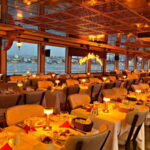
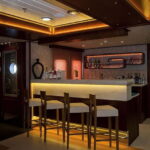
This is a 2-hour luxury yacht cruise with a professional guide. The boat includes a restroom, which sounds basic—until you’ve toured enough cities to know how quickly that becomes a deal-breaker.
You also get complimentary drinks and comfort food that make the cruise feel like a treat, not a bus ride with a view:
- homemade lemonade with fresh mint, plus water, tea, and coffee
- a fresh season fruits plate
- cookies and baklava served onboard
Alcoholic beverages are not included, so if you want wine or beer, you’ll need to plan separately. For many people, that’s totally fine—lemonade, tea, coffee, and the pastry spread are already a nice rhythm for an afternoon cruise.
Another practical perk: you’ll get a mobile ticket, and the group size is capped at 30 travelers. That matters because smaller groups tend to move and listen better when the guide is pointing out landmarks.
The Bosphorus From the Water: What You’re Actually Seeing
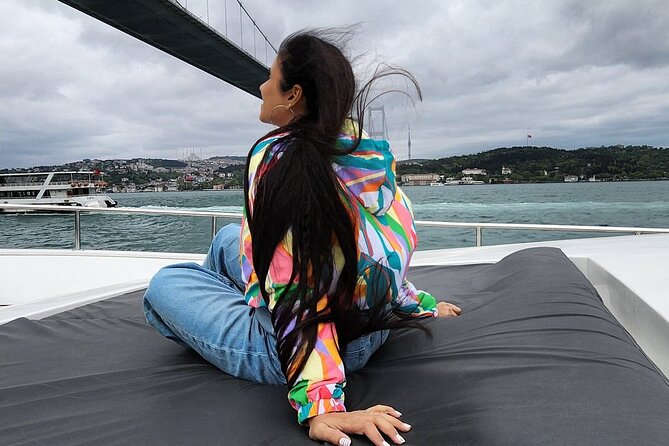
The tour’s core is the Bosphorus itself—its shape, the way the shoreline bends, and the way the city rises directly off the water.
As you cruise, the guide connects the dots for you:
- why this strait is so strategically important
- how it separates Europe from Anatolia
- why the city developed in these exact pockets along the coast
You also get a clear sense of distance. The waterway is relatively narrow in some stretches and wider in others, so the views swing from tight and dramatic to open and panoramic. That’s why a Bosphorus cruise feels like it’s moving faster than a typical sightseeing day: your eyes keep refreshing with new angles.
The cruise includes a lot of landmark spotting, but it’s still an afternoon activity. Plan on enjoying outside views—don’t expect this to function like a museum ticket where you wander inside each palace or tower.
Dolmabahçe Palace: Ottoman Grand Residence, Framed by the Water
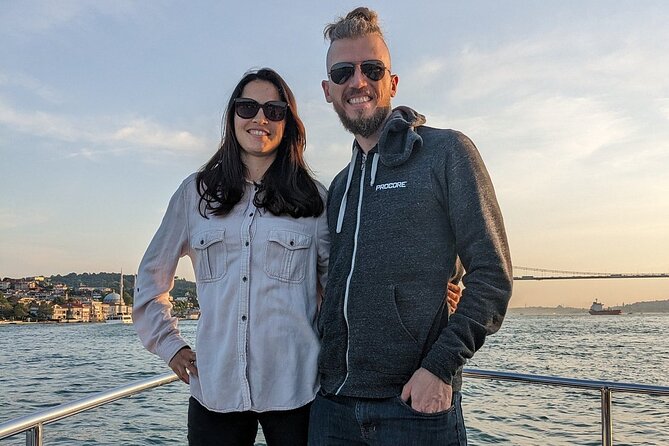
Dolmabahçe Palace sits in Beşiktaş along the European shoreline, positioned on the left bank at the entrance to the Bosphorus from the Sea of Marmara, opposite Üsküdar and Kuzguncuk.
The palace covers an enormous 250,000 square meters, and the area was once a cove where ships anchored in ancient times. That past matters, because from the boat you’re looking at a place that has always been tied to arrivals and departures—only the scale changed from old anchorage life to Ottoman royal power.
What I like about seeing Dolmabahçe from the water:
- the façade reads better from a distance
- you get the palace’s “sit-on-the-water” relationship instantly
What you should keep in mind:
- this cruise is about visuals, not interior visits
- for palace interiors, you’d need a separate ticket and time on land
Even so, it’s one of the easiest places to understand why the Bosphorus became the showpiece of Istanbul.
Çırağan Palace: Marble Grandeur and a Darker Side
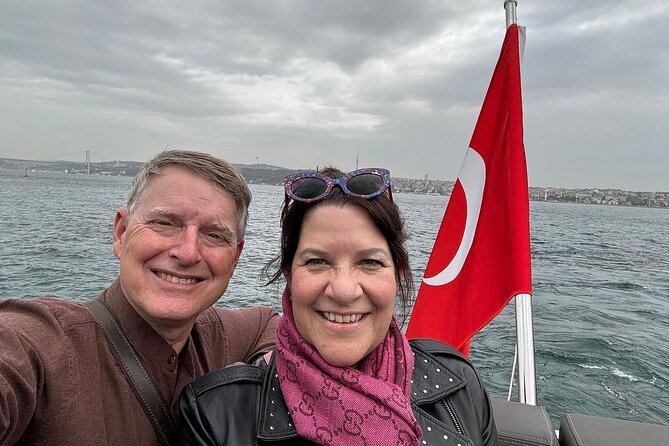
Çırağan Palace was commissioned by Sultan Abdulaziz and designed by architect Sarkis Balyan. Construction wrapped up in 1871, and the palace is made of marble across 80,000 square meters.
From the yacht, you’ll notice the scale and the grand waterfront placement, but the guide’s story adds the extra layer. After Abdulaziz was deposed, he was imprisoned there with his family. Later, after Murat V was deposed, he faced similar imprisonment there for decades.
That shift—from royal residence to confinement—gives you a different way to look at the building. It’s still beautiful, but it’s also a reminder that power in Istanbul often had a sharp edge.
Again, this is primarily a viewpoint experience. If you want rooms, halls, and a deeper interior feel, plan that separately. For the cruise, focus on the exterior massing and how it sits along the Bosphorus edge.
You can also read our reviews of more guided tours in Istanbul



Ortaköy Waterfront and the Bosphorus Bridge: The Perfect Photo Section
Ortaköy (on the European side, in Beşiktaş) is one of those neighborhoods that feels instantly alive. It’s built on slopes opening toward the coast, with Ortaköy and Mecidiye districts together forming the area.
On the land, Ortaköy Bazaar is lively throughout the day, but movement ramps up after about 10:00 am. On a 1:00 pm departure, you’re hitting a good window for a lively waterfront atmosphere even if you don’t actually step into the bazaar.
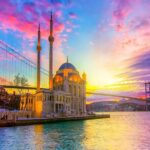
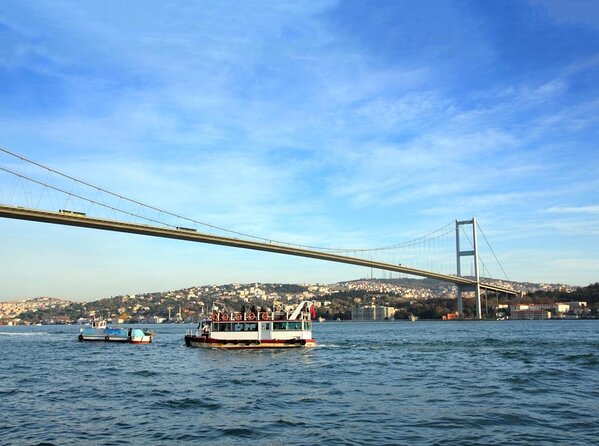
Then comes the Bosphorus Bridge—the first bridge built across the Bosphorus. Its suspension span connects the European side near Ortaköy with the Anatolian side near Beylerbeyi. The bridge’s construction started in 1970 and it opened on 29 October 1973, tied to the republic’s 50th anniversary.
What I like: it’s one of the rare times you see Istanbul’s modern engineering framed against Ottoman and waterfront landmarks on the same horizon. It’s also an active crossing point throughout the day, and the bridge is used for Istanbul’s Eurasa Marathon.
If you’re a photographer, this segment gives you a lot. You’ll get angles where the bridge lines cut across the water, and you can frame the palaces and waterfront behind it.
Rumeli Hisarı and Anadolu Hisarı: Two Fortresses Facing Each Other
If you’ve ever wondered how Istanbul protected itself, these two sites are the answer.
Rumeli Hisarı (European Fortress)
Rumeli Hisarı is in Sarıyer, built directly across from Anadolu Hisarı at the narrowest part of the Bosphorus. Construction began in 1453 under Sultan Mehmet the Conqueror, and the fortress was completed in an astonishingly short period—about three months.
From the cruise, what stands out is the fortress’s waterfront position. Before the conquest, it protected against naval attacks. After the conquest, it became an inspection point for maritime traffic. That “watch the water” purpose is easy to understand when you’re traveling along the same route it controlled.
Over time the area inside the fortress had small wooden houses, but restoration work in 1953 removed them. Today the fortress is known for summer concerts and functions as an open-air theater and museum—so it’s not just a relic. It’s still used.
Anadolu Hisarı (Anatolian Fortress)
Anadolu Hisarı sits on the Anatolian side in Beykoz, also near the Bosphorus narrowest point. It was built in 1395 by Beyazit I and includes both a citadel and exterior walls.
After the conquest, it lost much of its strategic importance. The area became a military hospital, and settlements grew around the fortress. Restoration between 1991 and 1993 converted it into a museum, but it’s not open for public access in the way you might expect. You can see it as an open-air museum, but only outer walls are reachable, and the road passes through the site.
From the yacht, your payoff is the contrast: two fortresses, opposite shores, both built to control the same choke point. The Bosphorus stops looking like scenery and starts looking like history in motion.
Küçüksu Pavilion: Ottoman Summer Life, Seen Through the Shoreline
Between fortresses and larger palace complexes, the cruise also highlights the Küçüksu Pavilion museum area. Ottoman emperors used Küçüksu Pavilion as a summer palace and a hunting lodge.
From the water, the pavilion segment feels like a softer pause. Fortresses are about defense; this is about leisure—summer air, status, and the seasonal rhythm of elite life along the Bosphorus.
You won’t get interior time on this cruise. But you will get a sense of how the shoreline alternates between power, protection, and relaxation.
Beylerbeyi Palace Under the Bosphorus Bridge: A Waterfront Royal Complex
Beylerbeyi Palace is one of the most fun sights because it sits right where the water gives you a direct read. The complex was built in the 1860s, on the shores of the Bosphorus, and today it lies right under the Bosphorus Bridge.
Designed by Sarkis Balyan, the palace blends styles from both East and West, including Renaissance and baroque elements. The main building is two stories, made of stone with a high basement. It sits on about 2,500 square meters of land.
The tour data also gives the room count and layout: 6 halls, 24 rooms, plus a hamam and bathroom across the two floors. The south side was organized as Imperial Mabeyn, and the north side as Valide Sultan’s Apartment.
What you should focus on from the yacht:
- how the palace lines up under the bridge
- the garden setting and the lily pond
If you like architecture, this section gives you a clear “royal compound” feel rather than just a single building silhouette.
Kız Kulesi (Maiden’s Tower): Legend-Driven Views from the Bosphorus
Kız Kulesi is one of the most recognizable points in Istanbul’s skyline. The tower sits on a tiny island about 200 meters from the Üsküdar shore.
The best part is the legend. An oracle predicted a sultan’s daughter would be killed by snake bite on her 18th birthday. So her father had the tower built so she could live protected and secret—until the prophecy still came true via a hidden snake in a fruit basket.
Even if you’ve heard versions of this story before, seeing the tower from the water gives it more weight. It’s not just a postcard. It’s a real island setting in the middle of a busy strait.
The tower also makes a smart photo moment because it’s surrounded by water and gives you a strong focal point—easy to frame, even on an afternoon cruise when light is less dramatic than sunset.
Galata Bridge and Galata Tower: Golden Horn Views and Skyline Power
Toward the city-side landmarks, you’ll also take in the area around Galata Bridge and Galata Tower.
Galata Bridge (Galata Köprüsü)
Galata Bridge spans the Golden Horn. It began in 1845, and the bridge has changed over time. It was damaged by fire in 1992, and a new bridge was built afterward. The older bridge was moved to Halic.
Why it matters to you: it’s alive in everyday ways. Below the bridge are restaurants, cafes, and hookah lounges, while above you get tramway and pedestrian traffic. There are also street peddlers, people fishing from the bridge, and ferries docking nearby.
On this afternoon timing, you might not catch the same evening glow people love, but the bridge still gives you a strong sense of how Istanbul functions—where commuting and leisure share the same structure.
Galata Tower
Galata Tower was built by the Genoese in 1348. It’s nine stories and stands 66.90 meters tall, which made it the tallest building in the city when it was completed.
In Ottoman times it served multiple roles: fire observatory and jail. One highlight the guide may point out is the story of Hezarfen Ahmet Çelebi, who in 1632 glided from the top of the tower across the Bosphorus to Üsküdar using self-constructed wings.
The conic roof was destroyed during a storm in 1875 and wasn’t restored during the Ottoman period. In the 1960s, the conical cap was restored and the wooden interior replaced with concrete. Today the tower is open to public, with a restaurant and café on the upper floor.
From the water, you’re mostly in panoramic mode—so treat it as a skyline capstone. For a full visit, you’ll want to plan a separate stop.
What the Guide Adds (And Why Celil Gets Mentioned)
A cruise can be just moving scenery. The difference here is the guide.
In the feedback I leaned on, Celil repeatedly comes up as the reason people feel the trip is worth it: he’s kind, and his explanations connect the buildings to the larger story of Istanbul’s waterfront. That means you don’t just see a fortress—you understand why it was built exactly there. You don’t just glance at palaces—you understand what they were for and what happened when rulers fell.
If you want Istanbul to make sense fast, pick a time when you can pay attention for the full ride. Two hours passes quickly, and this kind of guide work only shows up if you listen.
Price and Value: What $25.74 Gets You
At $25.74 per person, this is a strong bargain for a Bosphorus yacht experience. The “value” isn’t just the low sticker price. It’s what’s included:
- professional English guidance
- a luxury yacht ride for about 2 hours
- restroom access
- complimentary non-alcoholic drinks
- fresh season fruits plus cookies and baklava
For many people, snacks and drinks included are the difference between a “nice tour” and a “real experience you’d actually recommend.” If you’ve priced waterfront cruises in other cities, this one feels built for visitors who want something special without blowing the day budget.
The trade-off is typical of short cruises: you get outside views and landmark recognition, not deep interior time at every stop.
Who Should Book This Cruise?
This fits best if you:
- want a fast Istanbul overview that still feels upscale
- like learning stories behind landmarks while you relax
- want a comfortable afternoon plan with included refreshments
- are okay with staying on the boat for the whole time window
You might skip it if:
- you get severe motion sickness or have vertigo
- you only want museum interiors and long walking tours
Should You Book This Bosphorus Yacht Cruise?
Yes, if you want a high-impact Bosphorus view session without the stress of constant transfers. The included drinks and sweets alone make the price easier to justify, but the real win is the guide’s ability to turn “I recognize that” into “I get why this matters.”
If you’re prone to seasickness, be honest with yourself before booking. Otherwise, this is one of those afternoon activities that leaves you with a clean set of Istanbul images in your head—palaces, fortresses, bridges, towers—arranged in the same visual frame where they belong: on the water.
FAQ
How long is the Bosphorus luxury yacht cruise?
The cruise lasts about 2 hours.
What time does the tour start?
It starts at 1:00 pm.
What language is the guide?
The experience is offered in English.
What’s included on board?
You’ll have the 2-hour luxury yacht cruise, a restroom onboard, complimentary drinks (homemade lemonade with fresh mint, water, tea, and coffee), and a fresh season fruits plate plus cookies and baklava served aboard.
Are alcoholic beverages included?
No. Alcoholic beverages are not included.
Where does the tour meet?
The meeting point is Türkiye Petrolleri Ömer Avni, Meclis-i Mebusan Cd. No:34, 34427 Beyoğlu, Istanbul, Turkey.
Is it suitable if I have vertigo or seasickness?
It’s not recommended for travelers with vertigo and seasickness.