REVIEW · HAGIA SOPHIA
Istanbul: Top Museums Guided Pass
Book on GetYourGuide →Operated by Istanbul E-pass · Bookable on GetYourGuide
Six icons, one guided walk. What makes this pass work is the way an English guide stitches together Hagia Sophia and Topkapi Palace into one easy story you can follow in real time, not a pile of facts. I also like that when you hit security lines, the guide keeps you moving mentally with clear context so the waiting doesn’t feel wasted.
One catch to plan around: there is no skip-the-line at Hagia Sophia and the Blue Mosque, and peak-season security can take around 45 minutes.
In This Review
- Key highlights worth your attention
- Entering Istanbul’s Most Famous Core Without Getting Lost
- Meeting Point Timing: Why 30 Minutes Can Matter Here
- Hagia Sophia: The One Building That Changes Meaning
- Sultan Ahmed (Blue Mosque): Tiles That Actually Have a Story
- Basilica Cistern: The Medusa Moment and the Column Forest
- Topkapi Palace: Courtyards First, Then the Meaning
- Hippodrome Square and Theodosius: Roman Relics in Living City Streets
- Grand Bazaar Walk: Useful Guidance, Shopping Caution
- The 2.5–3 Hour Reality: How Much You Can Actually Absorb
- Value for $171: What You Pay For (and What You Don’t)
- Who Should Book This Guided Pass
- My Booking Call: Should You Book This Istanbul Top Museums Tour?
- FAQ
- How long is the guided tour?
- Where do I meet the guide?
- What places are included in this pass?
- Are tickets included?
- Is the Harem section at Topkapi included?
- Is skip-the-line included for Hagia Sophia or the Blue Mosque?
- What language is the tour guide?
- What should I bring?
- What is not allowed?
- Is the pass valid for more than one day?
Key highlights worth your attention
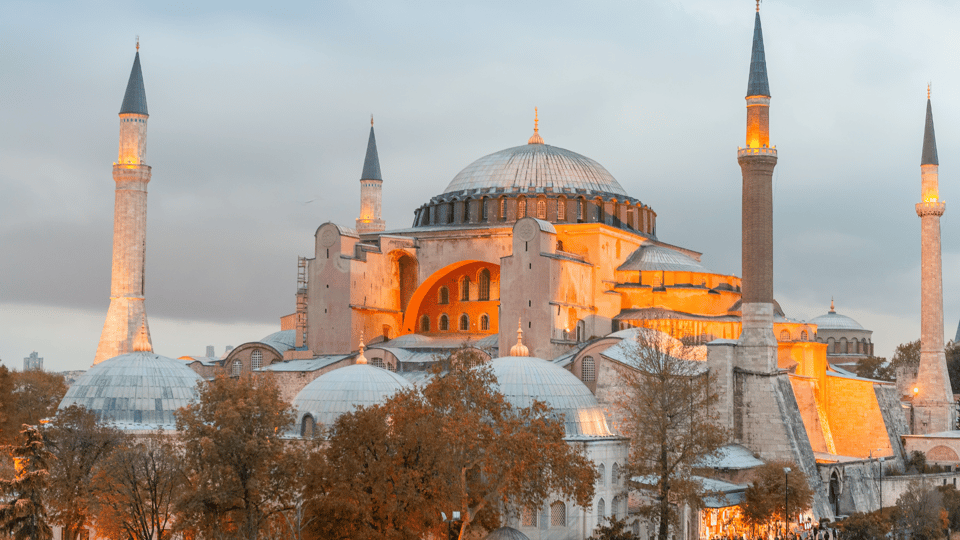
- English live guide, timed to a meet-up point so you can start without fuss
- Hagia Sophia + Topkapi Palace as the backbone of the Ottoman-and-Byzantine story
- Basilica Cistern with Medusa heads and a forest of columns (yes, you’ll notice the symbolism fast)
- Blue Mosque tile design explained with the how-and-why behind the look
- Hippodrome Square stop that turns old landmarks into a sense of place
- Grand Bazaar guidance, with one important buying caution
Entering Istanbul’s Most Famous Core Without Getting Lost
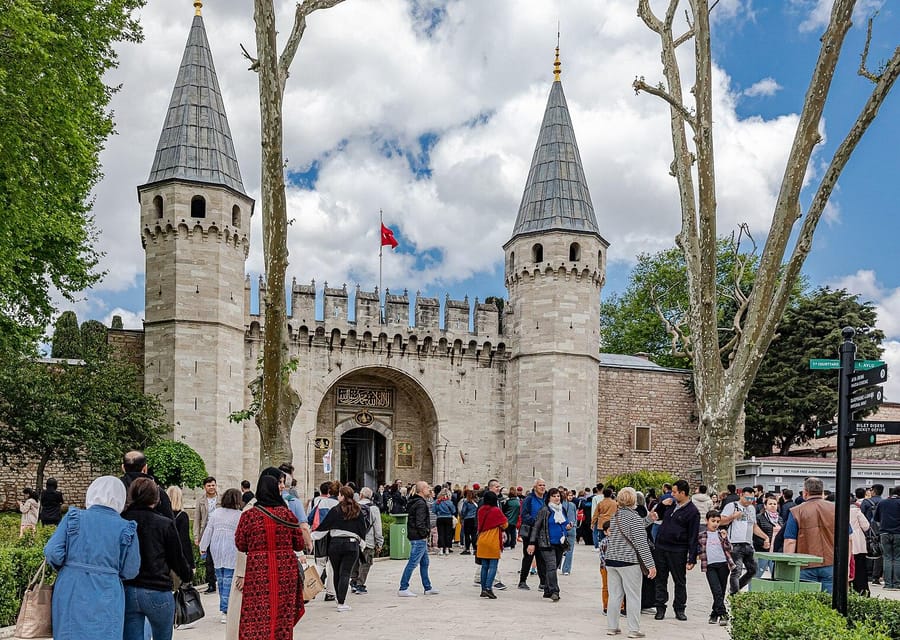
This tour covers the Sultanahmet area, where Istanbul’s big ideas from multiple eras sit close together. You’re not just seeing buildings. You’re seeing how power, faith, and art got reused and rebranded over centuries. That matters because Istanbul can feel overwhelming if you’re bouncing between spots on your own.
The experience is also tightly timed: plan on about 2.5 to 3 hours. That’s short enough to stay energetic, but long enough for a guide to explain what you’re staring at. The best part is that you get guided museum access for the major interiors—Hagia Sophia, Basilica Cistern, and Topkapi Palace—so you’re not left translating everything yourself.
You’ll meet at BUSFORUS ISTANBUL (Hop On Hop Off Tours) at your scheduled time. From there, the guide does the heavy lifting: keeping the group on track and making each stop feel connected.
You can also read our reviews of more tours and experiences in Hagia Sophia.

Meeting Point Timing: Why 30 Minutes Can Matter Here
This pass is built around scheduled tour times, and the meeting point details are posted on the timetable page. In practice, your day goes smoother if you arrive a little early and start settling your essentials: comfortable shoes, and a headscarf you can use quickly when needed.
The biggest timing issue is crowd control around the two most in-demand stops: Hagia Sophia and the Blue Mosque. The tour does not include skip-the-line service there. During peak season, security may take roughly 45 minutes. That’s a real chunk of time, so it helps to know what you can expect: the guide usually keeps you engaged with stories and details while you wait.
Hagia Sophia: The One Building That Changes Meaning
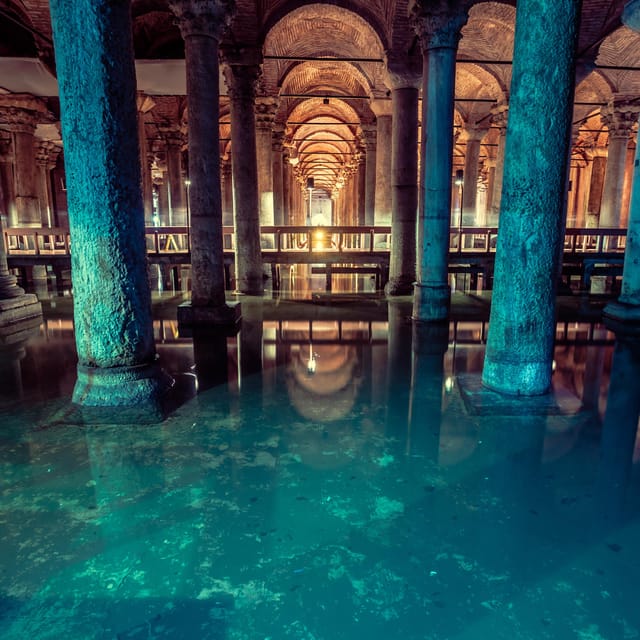
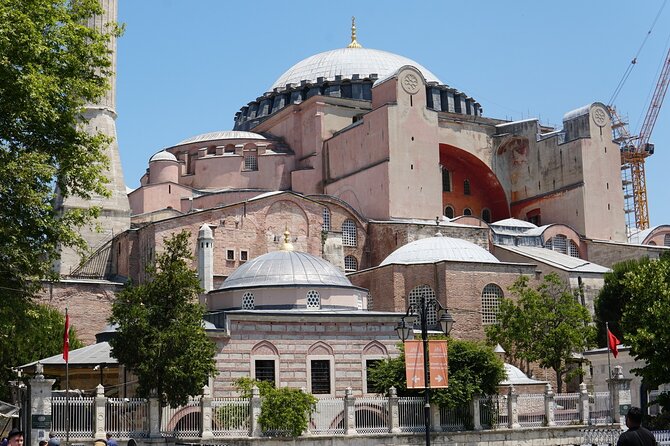
Hagia Sophia is the kind of place where your first reaction is emotional, then your second reaction is practical: how did they build something like this, and why does it matter to two religions?
In your visit, the guide frames it as a building that stood in the same place for about 1,500 years—first as a major temple, then as the Ottoman-era mosque. You’ll hear how it served as a key “headquarters” of Orthodox Christendom and later became an Istanbul mosque. You’ll also learn why the building is so symbolic: the guide points out the religious depictions side by side, and explains how the site shifted with the people who controlled the city.
Construction speed is part of the fascination too. You’re told it was constructed within about five years. Then you get the big engineering brag: the dome’s size was the largest in the world for around 800 years, with a height of 55.60 meters and a diameter of 31.87 meters.
What I’d watch for as you go: follow what the guide points out rather than trying to read everything on your own. Hagia Sophia is visually loud. The guide’s job is to help you see order in the chaos—what’s original, what’s changed, and what stayed meaningful.
Practical note: because skip-the-line isn’t included, you might wait. If you’re the type who gets cranky in queues, mentally prep now. I’d bring a bottle of water and keep your phone charged for the later stops.
Sultan Ahmed (Blue Mosque): Tiles That Actually Have a Story
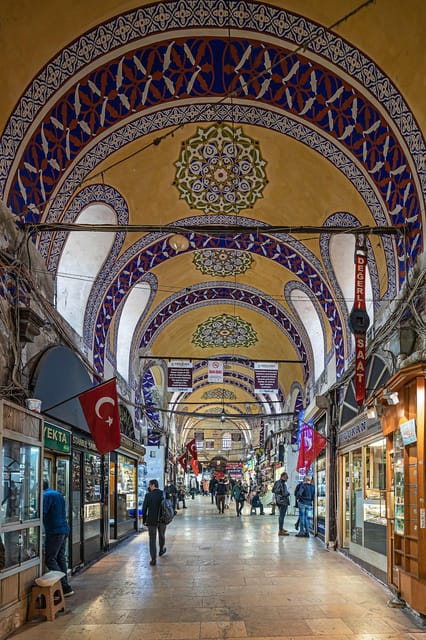
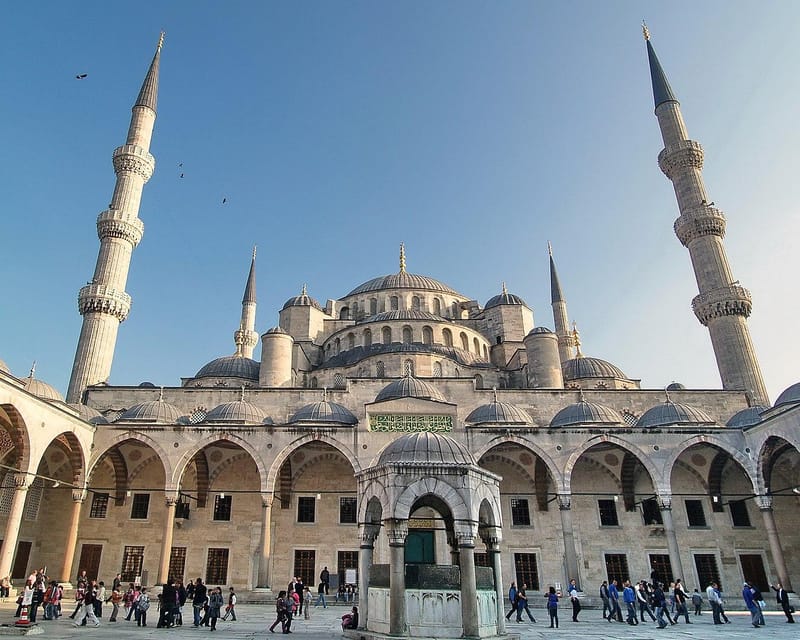
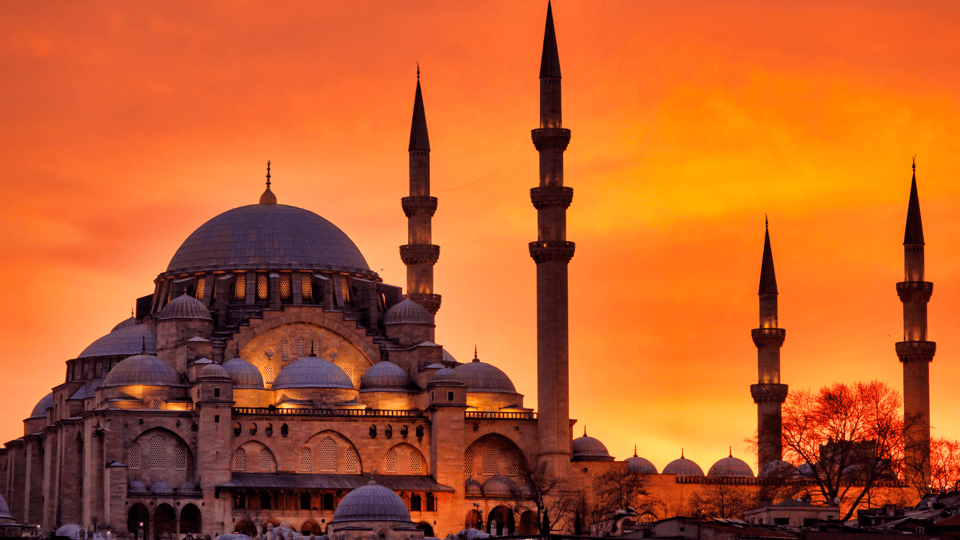
Next up is Sultan Ahmed Mosque, the Blue Mosque. The name you’ll hear most is Sultanahmet Mosque, but the core point is this: you’re walking into one of Istanbul’s most famous mosque interiors, known for the tilework that gives the space its signature look.
Here’s the detail that makes the tiles more than decoration: you’ll be told the tiles came from Iznik, Turkey’s famous tile-producing city. The guide also explains the naming tradition in the Ottoman era—mosques were often named based on the person who funded or ordered them. That’s why you’ll hear the word Sultanahmet in more than one related way: it connects to the mosque, the sultan connected to its construction, and even the district name.
What you should do inside: don’t treat it as a photo stop. Treat it as a context stop. Look at the tile patterns as design choices, not just color. When the guide points out how the decoration ties to the building’s role, the room becomes easier to understand.
Another practical note: same security reality as Hagia Sophia. No skip-the-line here either. The upside is that you’ll still get guided attention while you wait, which keeps the tour from feeling like you’re paying for standing around.
Basilica Cistern: The Medusa Moment and the Column Forest
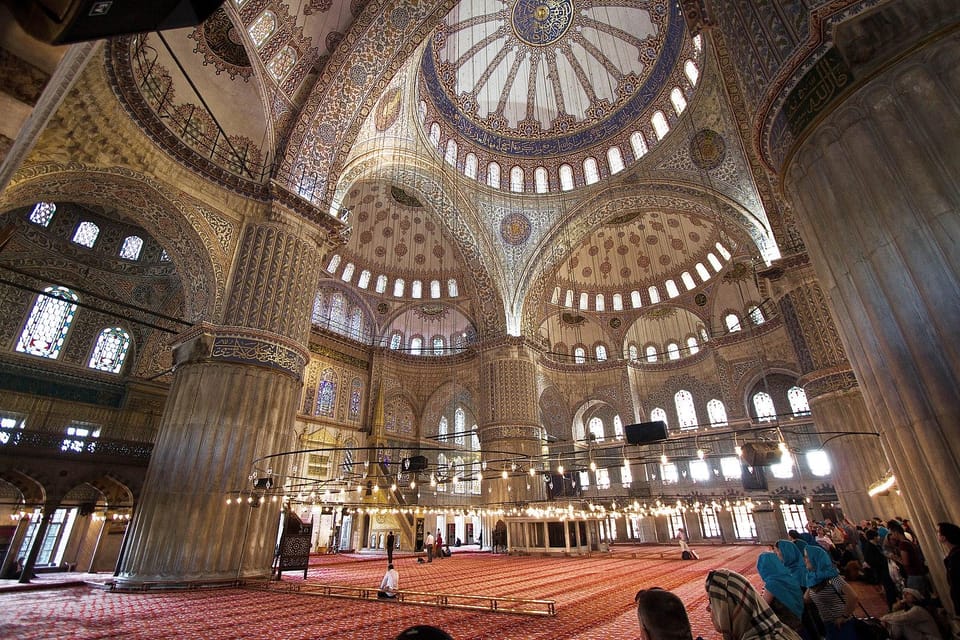
Basilica Cistern is the kind of place that changes your mood fast. You step into a dim, echoing underground space and suddenly the “big monuments” approach gives way to atmosphere. It’s famous for its scale: 336 columns, each about nine meters long, holding up the ceiling.
Then you hit the visual hook everyone remembers: Medusa heads. You’ll see two of them used decoratively in the cistern. The guide will also help you understand why these figures matter in this setting—why a pagan myth figure ends up in a Byzantine-era water storage room.
What I love about this stop: it’s the one place on the route where you feel the architecture with your body. The low light, the dripping acoustics, and the repetition of columns make it hard to stay detached. Even if you’re tired from being aboveground, the cistern pulls you in.
Small practical tip: wear shoes that handle slick stone floors. Comfortable shoes are listed for a reason, and this is one of the stops where you’ll notice it. Also, you won’t want to lug a backpack inside, since backpacks are not allowed.
Topkapi Palace: Courtyards First, Then the Meaning
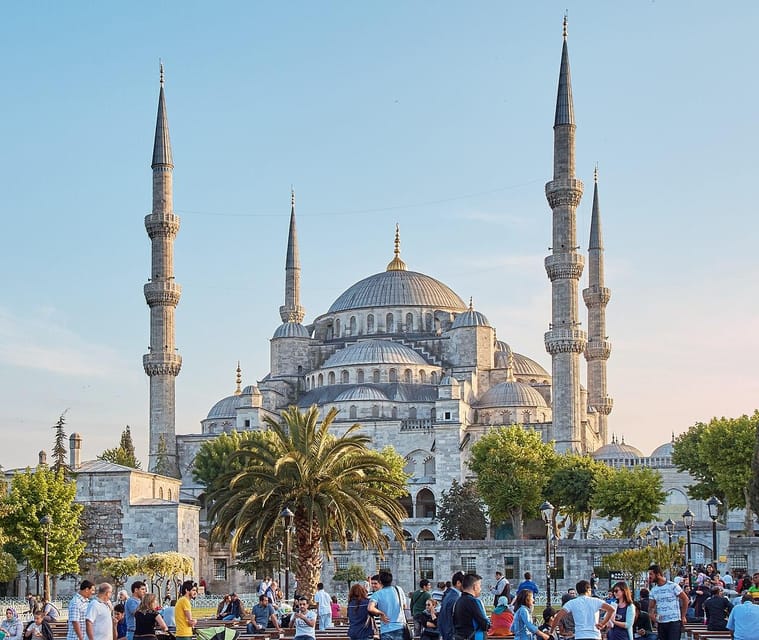
Topkapi Palace is massive, and the timing matters. This tour guides you through key sections and courtyards rather than trying to make you sprint through everything.
You’ll start with the idea that Topkapi is the big one—Turkey’s most important museum of Turkey and the Balkan Peninsula in terms of what you can learn from its collection and structure. The palace is organized into first, second, third, and fourth courtyards. Those courtyards are more than layout. They’re a social map of how power moved inside the complex.
Expect guided time in places like:
- the Audience Hall
- the Divan, described as the High Court
- historical kitchens
- royal stables
- the treasury, plus gardens and kiosks
If you want a simple way to think about the experience, it’s this: Topkapi is where you learn to read Ottoman life through space. You walk from formal public-facing areas toward more controlled spaces, and the guide helps you connect architecture to administration and daily functioning.
One important omission: the Harem section is not included. If you specifically want the harem rooms, you’ll need another plan for that portion.
Hippodrome Square and Theodosius: Roman Relics in Living City Streets
Between the major museum stops, you’ll get a sense of the old city around Sultanahmet Square. The Hippodrome of Constantinople is the anchor here.
You’ll hear that it was built in the 3rd century CE by Roman Emperor Septimius Severus and expanded in the 4th century by Emperor Constantine the Great. This wasn’t some quiet monument. It was the arena for chariot races and public gatherings—an engine of public life in Byzantine Istanbul.
Then you’ll meet the famous “leftover” you can’t miss once you’re pointed toward it: the Obelisk of Theodosius. This towering relic is described as an Egyptian obelisk brought in the 4th century. The guide’s explanation helps it feel less like a random tall thing in a square and more like a symbol of how rulers imported prestige.
What I’d do here: slow down and orient yourself. This stop is the bridge between museums. It helps you understand why Sultanahmet looks the way it does and why you keep bumping into Roman and Byzantine references even when you’re thinking Ottoman.
Grand Bazaar Walk: Useful Guidance, Shopping Caution
Grand Bazaar is a great place to walk, but it’s also a place where shopping can turn into a trap if you’re not careful. This tour includes a guided Grand Bazaar walk, which is a real value-add because the guide can help you filter the noise and stay calm.
Now the practical part: don’t let a sales pitch rush you. One specific warning stands out from real experiences shared by prior guests: avoid buying on the spot just because someone recommends a shop, especially if you’re not fully clear on pricing and what you’re buying. The caution is blunt: it’s possible to end up overcharged and lose the ability to fix the problem after the fact.
That doesn’t mean you can’t enjoy the Bazaar. It means your mindset should be: look first, compare later, and only buy when you’re sure.
A smart approach: use the guided walk to learn the layout and identify what you actually want—spice, leather, textiles, or small gifts—then decide what’s worth your money when you’re out of the pressure zone. The guide’s presence helps you understand what’s normal and what feels off.
The 2.5–3 Hour Reality: How Much You Can Actually Absorb
Two and a half to three hours sounds short on paper, but the itinerary is packed with places that each have a lot going on. The trick is that you’re not meant to “finish” each museum like a homework assignment. You’re meant to get oriented so you can enjoy a return visit later if you want to go deeper.
Here’s what this route does well:
- It starts with the most iconic building (Hagia Sophia) and builds context before you go elsewhere.
- It hits the Blue Mosque right after, so the religious-and-art story stays coherent.
- It uses Basilica Cistern as a mood reset.
- It gives you a palace overview through courtyards and major functions.
- It rounds out the day with public-life landmarks and a Bazaar stroll.
If you’re adding Dolmabahce Palace: the info you have says it can increase the total number of places visited to six. That likely changes the pacing. If Dolmabahce is a must for you, consider whether you want more time at fewer spots instead of trying to “do it all” in one push.
Value for $171: What You Pay For (and What You Don’t)
At $171 per person, this pass isn’t a budget add-on. You’re paying for a timed guided experience plus entrance tickets for major interiors: Hagia Sophia, Basilica Cistern, and Topkapi Palace. You’re also paying for guided time at the Blue Mosque and Grand Bazaar.
The value proposition is strongest if you:
- want an English guide who connects buildings to the bigger story
- don’t want to spend your limited vacation time figuring out what to prioritize
- appreciate structured visits through several top sites in a short stretch
What you’re not paying for:
- skip-the-line service at Hagia Sophia and the Blue Mosque
- the Topkapi Harem section
- pick-up and drop-off
So yes, you may still spend time in security lines. But you’re also paying so that while you’re waiting, you’re not just stuck scrolling your phone. A good guide turns waiting into part of the experience.
Who Should Book This Guided Pass
This works best for you if you want a guided introduction to Istanbul’s core landmarks—especially if it’s your first time in the city or your first time in this part of town.
It also fits families and groups who want structure. Several guests have praised guides by name—like Cam, Can, Adam, Ahmet, Delek, Ihsan, Deniz, Dilek, and Onur—often noting how the guide makes the story clear and keeps the group engaged.
You’ll probably love this most if:
- you can do a walking route with a few indoor stops
- you’re okay with possible security waiting
- you want guided museum access rather than self-guided wandering
You might want a different approach if:
- you use a wheelchair (this tour is not suitable for wheelchair users)
- you have pre-existing medical conditions that require additional accommodation
- you hate photo-op crowds so much that security lines throw off your whole day
My Booking Call: Should You Book This Istanbul Top Museums Tour?
Book it if you want the fastest path to understanding what you’re seeing in Sultanahmet. Hagia Sophia and Topkapi Palace do the heavy lifting here, and the guide format helps the rest of the route make sense: Blue Mosque tiles, the cistern’s column maze, the Hippodrome’s public-life context, and a Grand Bazaar walk that you can navigate with your eyes open.
Skip or reconsider if you specifically need:
- guaranteed short lines (this pass doesn’t offer skip-the-line at the two key sites)
- the Harem section inside Topkapi
- strong mobility flexibility, since you’re walking and the tour isn’t wheelchair-friendly
If your priority is value through clarity—seeing more than random highlights, with a guide who keeps you connected to the meaning—this is a solid choice.
FAQ
How long is the guided tour?
The duration is listed as 2.5 to 3 hours.
Where do I meet the guide?
The starting location is BUSFORUS ISTANBUL (HOP ON HOP OFF TOURS). You can also check the meeting point details and timetables on the provider timetable link.
What places are included in this pass?
The tour includes visits with guided tours to Hagia Sophia, Topkapi Palace, Basilica Cistern, Grand Bazaar, Blue Mosque, and Hippodrome Square.
Are tickets included?
Yes. Entrance tickets are included with guided tours for Hagia Sophia, Basilica Cistern, and Topkapi Palace.
Is the Harem section at Topkapi included?
No. The Harem section is not included.
Is skip-the-line included for Hagia Sophia or the Blue Mosque?
No. A skip-the-lines service is not offered at Hagia Sophia and the Blue Mosque. In peak season, security lines may require about 45 minutes of waiting.
What language is the tour guide?
The live tour guide is English.
What should I bring?
Bring comfortable shoes and a headscarf.
What is not allowed?
Shorts and short skirts are not allowed. Flash photography is not allowed, and backpacks are not allowed.
Is the pass valid for more than one day?
Yes. The Guided Museum Pass is valid for 3 days, and you can join any tour time you prefer.