REVIEW · KUSADASI
Skip Lines: Ephesus PRIVATE TOUR For Cruise Guests
Book on Viator →Operated by Tours for Ephesus · Bookable on Viator
Ephesus is a lot easier with private planning. I love the skip-the-line ticket setup and the cruise-time pacing, so you spend your limited hours seeing the big stuff instead of standing around. The one caution: entrance fees aren’t included, and with 4 to 5 hours total, you’ll need to accept that this is a highlights run.
What makes this feel smooth is the way they run meet-up and timing. You’re met at the port gate or hotel lobby with your name on a signboard, then you head out early to beat traffic and heat. If your guide is someone like Umut (a name that shows up repeatedly), you can also expect clear explanations and even helpful details like photo timing so you don’t miss the best moments at the ruins.
In This Review
- Key points to know before you go
- Ephesus in a Cruise-Friendly Bubble: How the Private Format Helps
- Price and What You Get for $180
- The Port Meet-Up That Can Make or Break Your Day
- Ancient City of Ephesus: Odeon to the 24,000-Seat Amphitheatre
- Terrace Houses at Bulbuldağ: Mosaics and Frescoes Without the Rush
- Meryemana (Virgin Mary’s House): A Sacred Stop on a Hill
- Basilica of St John: The Justinian-Era Layer on Ayasuluk Hill
- Temple of Artemis: Seven Wonders Energy in 15 Minutes
- Shopping Time and Pigeon Island Views Without Losing Your Return Window
- Guides, Pacing, and the Real Difference You’ll Feel
- Who This Tour Fits Best (and Who Might Want Something Else)
- Should You Book This Ephesus Private Tour for Cruise Guests?
- FAQ
- Is entrance to Ephesus included in the tour price?
- How long is the private tour?
- Do I get pickup and drop-off from the cruise port or a hotel?
- Is this a private tour or a shared group?
- What language is the tour offered in?
- When should I meet the guide for a cruise day?
Key points to know before you go
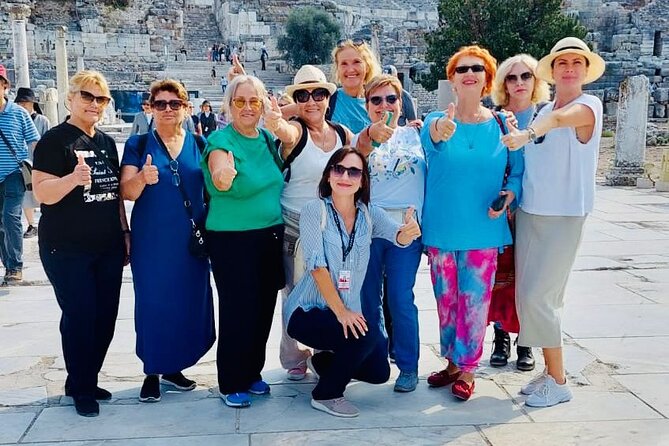
- Private pickup at the port with a signboard and your name to reduce confusion
- Ephesus skip-line planning for the main archaeological ticket lines
- A focused route that covers Ephesus, Terrace Houses, Mary’s House, St John, and Artemis
- Terrace Houses time is protected so the mosaics aren’t rushed out of existence
- Cruise schedule design built to return you on time instead of hoping for the best
Ephesus in a Cruise-Friendly Bubble: How the Private Format Helps
If you’re arriving by cruise, you already know the drill: the port day moves fast, and the heat can turn ruins into a sweat test. This private format is built for that reality. You’re not negotiating with a big group’s pace or waiting while someone buys tickets or uses the restroom. Your guide handles the flow, and you keep moving at a human speed.
The biggest payoff is the way the itinerary is structured around the most important Ephesus landmarks. You start with the Ancient City, then add the Terrace Houses, then move into the Christian sites (Mary’s House and St John’s Basilica), and finally wrap with the Temple of Artemis. That order matters because you’re not bouncing randomly across the map while the clock shrinks.
One more practical note: this is English-language service, and it’s operated as a true private tour. Only your group participates, which usually means you can ask questions without feeling like you’re slowing 20 people down.
You can also read our reviews of more boat tours in Kusadasi

Price and What You Get for $180
At $180 per person for 4 to 5 hours, the price makes sense only if you value time. If you were just going for a wander, you could do Ephesus on your own. But if you’re on a cruise and want to hit the top sites without losing hours to lines, getting there, and re-grouping, this is a “buy time” purchase.
Here’s what you’re paying for beyond transportation:
- Professional certified regional guide who works the route as a story, not just a checklist
- Port/hotel pickup and drop-off plus all parking fees and taxes
- Tickets arranged in advance for Ephesus so you skip long ticket lines
What’s not included: food and drinks and entrance fees (they arrange ticketing for Ephesus in advance, but you should still plan for site admissions). For most cruise travelers, that’s the only real “gotcha,” since it means you budget a bit extra for entry costs.
If you’re traveling with a friend or two and you can swing the private cost, it often feels better value than joining a group bus that keeps stopping and starting.
The Port Meet-Up That Can Make or Break Your Day
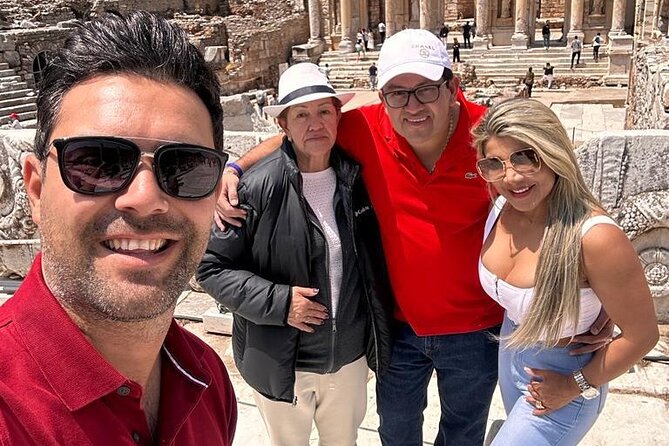
On cruise days, the meeting time is everything. The recommendation is to meet your guide within 45 minutes after your ship anchoring. That’s not just advice for fun. Early arrival helps you avoid heavy traffic, city crowding, and the worst of the heat.
They’ll wait for you at the port gate or hotel lobby with your name on a signboard. That small detail saves stress. No guessing where to stand. No frantically texting half a dozen options. Just find your sign and go.
Duration is listed as about 4 to 5 hours, so you’ll want to keep your own day plan realistic. Eat beforehand if your ship allows it, and carry water even if the day feels short. If you’re the kind of traveler who stops often for photos, you’ll appreciate having a guide who can help you find the best moments quickly.
Ancient City of Ephesus: Odeon to the 24,000-Seat Amphitheatre
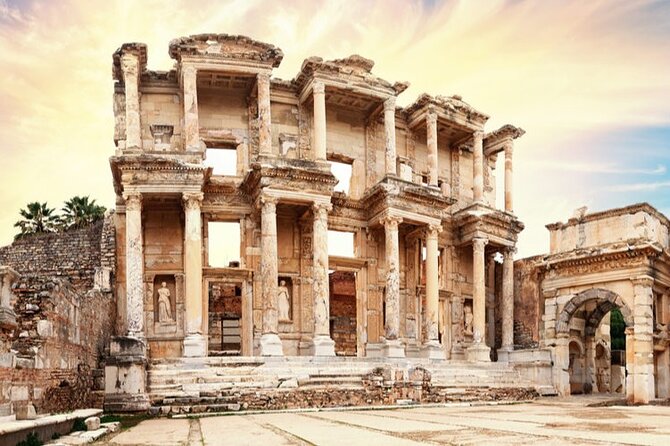
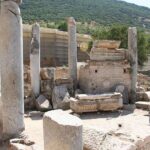
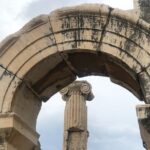
This is the main event, and it’s scheduled for about 2 hours. If you only had time for one stop, you’d still want Ephesus as your anchor because it packs layers of Roman and Greek life into one site.
Here’s what you can expect to see and why it matters:
Odeon (music concerts): The Odeon reminds you that these weren’t empty ruins. People gathered here for events. Even if you just imagine the sound carrying, the scale clicks fast.
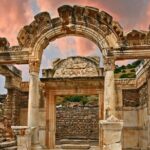
Domitian Temple: This is tied to early dedication and power, and it helps connect the city’s civic religion to how the Romans managed culture.
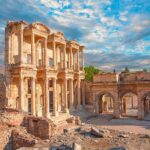
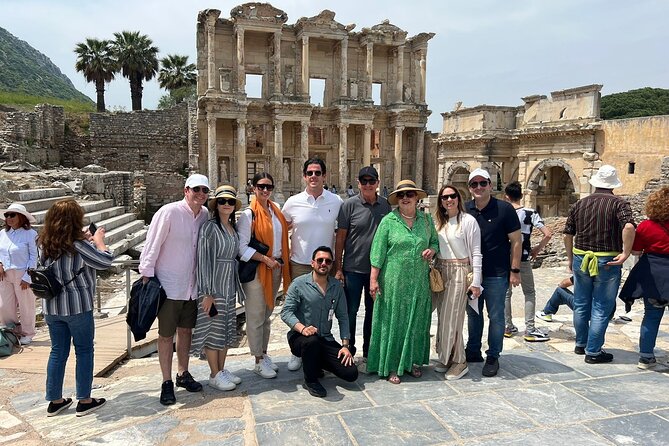
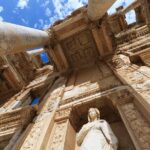
Celsus Library: It’s often the Instagram favorite, but it also functions as a symbol of how seriously the ancients treated learning and public knowledge. When you walk through the setting, the size hits differently than photos.
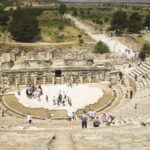
Amphitheatre (around 24,000 people): This is where the “wow” factor is simple. It was built for crowds. And it’s also linked to Christian tradition through the story that St Paul preached to the Ephesians. Whether you think about it as archaeology or as biblical geography, it gives you a reference point for the city’s influence.
Marble Street and Roman Baths: Marble Street is one of those “you can feel the planning” parts of the site. Roman Baths add daily-life context—less throne-room, more routine.
Agora, fountains, temples, Love House, and public toilets: These details turn the ruins into a city again. The agora shows civic life. The Love House is a famous stop for its decoration and the way people interpret the symbolism of the space. Public toilets are a reality check that civilization included plumbing long before we take it for granted.
If you want the Terrace Houses included too, they’re handled separately later. In the main Ephesus section, you’ll likely focus on the big open ruins and the most meaningful highlights.
Terrace Houses at Bulbuldağ: Mosaics and Frescoes Without the Rush
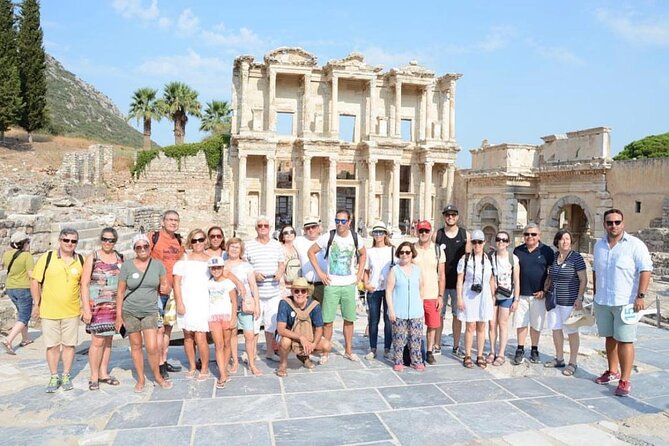
After Ephesus, you head to the Ephesus Terrace Houses, set on the northern slope of Bulbüldağ hill. This stop is about 30 minutes, which is exactly the right amount of time if you want to actually look at the decoration instead of just standing at the entrance.
These weren’t tiny homes. They were luxurious residential villas located near Curetes Street and opposite Hadrian Temple. Excavations started in 1960, so you’re seeing a site that was uncovered with modern archaeology methods, not just random ruins picked up over time.
What you’ll likely care about most: the meticulous frescoes and mosaics. This is where Ephesus stops feeling like stonework and starts feeling like personal taste—people decorating walls because they wanted beauty, status, and comfort.
A fair warning: 30 minutes passes quickly. If mosaics are your priority, go slow with your eyes and accept that you won’t read every sign. The goal is to leave with a clear mental image of the rooms and floorwork.
You can also read our reviews of more private tours in Kusadasi

Meryemana (Virgin Mary’s House): A Sacred Stop on a Hill
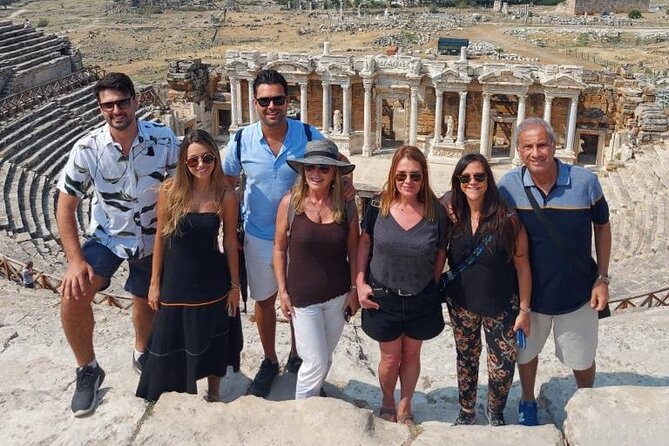
Next is Meryemana, also known as the Virgin Mary’s House, about 45 minutes. It’s located on Bulbül Mountain, roughly 9 km from Selçuk.
The story here is powerful in a different way than the ruins. According to the tradition presented for the site, John (Yuhanna) brought Mary to Ephesus a few years after Jesus’ death. Later, the site’s discovery is tied to research by Lazarist priests in 1891, inspired by a dream of the German priest A. Kathathina Emerich.
This is also described as sacred to Muslims, and the tour notes reference Pope VI. The rituals mentioned are held yearly on August 15, which is why the site can feel especially meaningful during certain seasons.
You might notice that this stop changes the pace. Instead of sprinting across archaeology, you’re stepping into a place where people come for reflection. The visit is not long, but it can leave a deeper impression than another set of stones.
Basilica of St John: The Justinian-Era Layer on Ayasuluk Hill
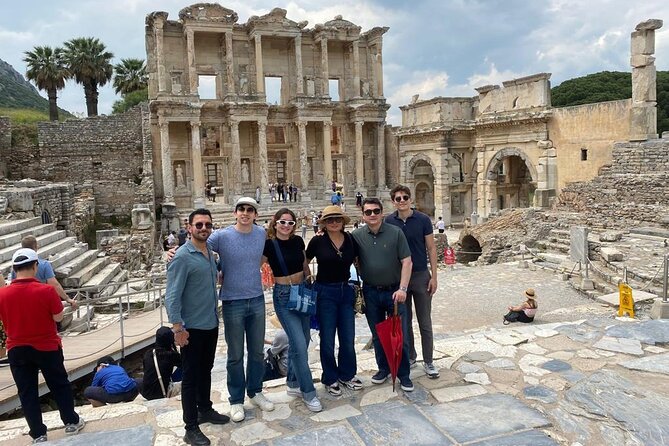
The next stop is the Basilica of St. John, about 30 minutes. The idea is simple: St John is presented as living in Ephesus to spread Christianity, and he’s linked to an exile-to-Ephesus story before dying around the region.
The tour framing then connects the site to Roman leadership. It notes that Emperor Justinian built one of Christianity’s biggest basilicas in the 4th century AD over the burial area of St John the Evangelist, located on the southern slope of Ayasuluk Hill.
This is a great pairing with the Virgin Mary stop. You get a broader “Christian geography” picture: not just one location, but a connected set of places tied to tradition and early Christian movement.
If you’re someone who likes big visual moments, the basilica structure helps. If you’re more into narratives, the guide can tie the evolution of the sacred sites together into a single, understandable story.
Temple of Artemis: Seven Wonders Energy in 15 Minutes
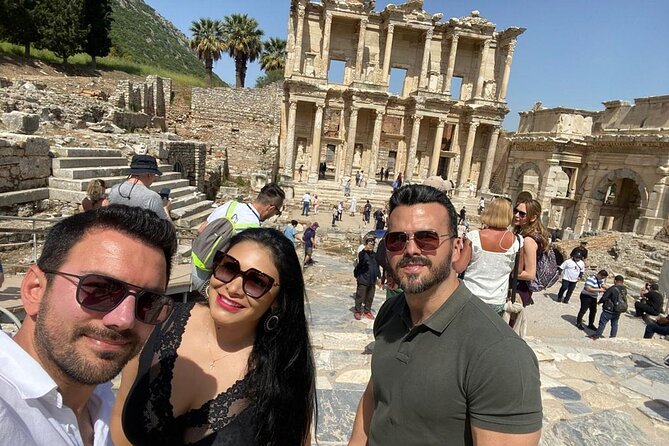
Then you finish with the Temple of Artemis (Artemesium), scheduled for about 15 minutes. It’s famous for a reason. The tour materials describe it as one of the Seven Wonders of the World, built around 550 BCE and rebuilt after destruction.
The key dates and details you’ll hear:
- Built by Croesus, king of Lydia, about 550 BCE
- Rebuilt after a fire in 356 BCE, linked to Herostratus
- Massive dimensions noted as about 350 by 180 feet (roughly 110 by 55 meters)
In only 15 minutes, you’re not going to “complete” the story. But you can get the main point: this temple wasn’t a local project. It was a statement of wealth, power, and artistic ambition.
It also works as a contrast. You’ve spent time among Christian sacred sites and Roman city life. Artemis brings you back to the broader ancient world that existed before and alongside those later narratives.
Shopping Time and Pigeon Island Views Without Losing Your Return Window
Between the main sights, the tour includes time for local handicrafts and shopping if you want it. Your guide can also share practical tips on what to look for, where to go for traditional items, and what to watch out for to keep things hassle-free. This is one of those “optional but useful” additions—especially if you’ve never shopped in Turkey before and don’t want to get steered by random advice outside your tour bubble.
There’s also a drive-by opportunity for Pigeon Island (called out as a nearby early settlement of modern Kusadasi). You’ll typically see it from a distance, and it’s positioned as a quick extra without turning into a separate activity that steals time from the ruins.
Finally, you return to the Kuşadası cruise port based on your onboard time. That’s the core design goal here: on-time return, not a heroic overstay.
Guides, Pacing, and the Real Difference You’ll Feel
The tour lives or dies by the guide, and the names you’ll hear associated with the best experiences include Umut, Kemal, Bugra, Kermal, and support from Gizem when coordination is needed.
What I like in this kind of guide match is not just facts. It’s how the facts are delivered:
- Clear explanations that make the ruins understandable fast
- A pace that respects the cruise schedule
- Small helpful touches like reminding you when to take group photos
If your guide is someone like Umut, you’ll also likely get stories that connect major stops into one timeline. That helps a lot at Ephesus, because the site is huge, and without narrative, it can blur.
Who This Tour Fits Best (and Who Might Want Something Else)
This private cruise tour is best for:
- Cruise travelers who want Ephesus highlights plus Mary’s House and St John in one day
- People who hate wasting time in lines or herding themselves through a large site
- Travelers who like a guide to connect scattered ruins into something meaningful
It might be less ideal if:
- You want long free time to wander without structure
- You love only one type of stop (for example, you want purely archaeology and nothing religious)
- You can’t handle a day with several walking segments and standing at uneven ground (the tour asks for moderate physical fitness)
Should You Book This Ephesus Private Tour for Cruise Guests?
Yes, if you’re short on port time and you want the best-known Ephesus sights plus the main Christian landmarks in a single organized day. This is the kind of tour that buys you time, protects your schedule, and keeps you from getting stuck in crowds.
My decision rule is simple:
- If your priority is seeing a lot without losing your return window, book it.
- If your priority is deep, unhurried exploration with lots of free wandering, consider a longer land-based plan instead.
If you do book, plan for entrance fees (since they’re not included), bring water, and keep your expectations aligned with a highlights route. You’ll still get the big moments: Odeon, Celsus, the huge amphitheatre, Terrace House mosaics, Meryemana, St John’s Basilica, and Artemis.
FAQ
Is entrance to Ephesus included in the tour price?
Entrance fees are not included. The tour states they arrange Ephesus tickets in advance so you can skip long ticket lines, but you should still expect to pay site admissions separately.
How long is the private tour?
The duration is listed as approximately 4 to 5 hours.
Do I get pickup and drop-off from the cruise port or a hotel?
Yes. Port/hotel pickup and drop-off are included.
Is this a private tour or a shared group?
This is a private tour/activity. Only your group will participate.
What language is the tour offered in?
The tour is offered in English.
When should I meet the guide for a cruise day?
The guidance is to meet your guide within 45 minutes after your ship anchoring the harbor, to avoid heavy traffic, crowding, and heat.