Ephesus in four hours, minus the hassle. You’ll get a max 16-person mini-group setup from Kusadasi, plus entrance fees included with pre-paid tickets that help you avoid ticket-line delays. Guides like Emre, Aleyna, Selda, and Yavuz show up often in the feedback, with praise for clear English and practical context as you walk the ruins.
One thing to plan for: this is real walking. You’ll cover about 1 mile (1.5 km) with some steps, so it can feel like a lot if you tire easily. If you’re pregnant, have mobility limits, or you know you struggle with stairs, I’d treat this as a no-go.
In This Review
- Key Highlights Worth Noting
- From Kusadasi Port to Ephesus: Smooth Pickup That Respects Cruise Time
- Entering the Marble Streets of Ephesus: The Ruins You Can Actually Follow
- Baths, Celsus, and Hadrian: What the Roman Architecture Is Telling You
- The Grand Theater and the City’s Daily Rhythm in One Stop
- Temple of Artemis: A Short Guided Moment That Still Hits
- Terrace Houses Option: When You Want the Homes Behind the Headlines
- Price and Value: Why $56 for a 4-Hour Ruins Day Can Make Sense
- No Hidden Fees: How the Tour Handles Shops (and How to Protect Your Priorities)
- What to Bring, and How to Pace Yourself on Uneven Ruins
- Who This Tour Fits Best (and Who Should Skip It)
- Should You Book This Ephesus 4-Hour Mini-Group Tour?
Key Highlights Worth Noting
- Small-group size (max 16): easier pacing, more chances to ask questions, and less waiting around.
- Entrance fees included: you’re not juggling money or queues mid-excursion.
- Skip-the-line approach: your guide brings pre-paid tickets so entry runs smoother.
- Ephesus must-sees in a tight loop: Celsus, Grand Theater, and the Temple of Hadrian’s colonnade.
- Temple of Artemis included: a short but meaningful stop tied to one of the ancient world’s Seven Wonders.
- Terrace Houses option: if you want the houses behind the headlines, choose the add-on.
From Kusadasi Port to Ephesus: Smooth Pickup That Respects Cruise Time
If you’re arriving by cruise, time is the real currency. This tour is built around getting you from Kuşadası Cruise Terminal to Ephesus quickly and then returning you on schedule. You’ll see the practical cruise-setup details up front: pickup is handled from the port area (and listed hotel/transfer points), and you’re dropped back in Kuşadası at one of the provided locations.
Here’s what I like about the flow: it reduces the common stress of figuring out transport, meeting points, and ticket timing. A lot of feedback also mentions the calm confidence of the pickup process—people talk about a guide waiting with a name sign and a quick roll-out once everyone is accounted for. That may sound small, but with a ship that won’t wait, it matters.
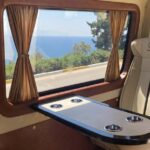
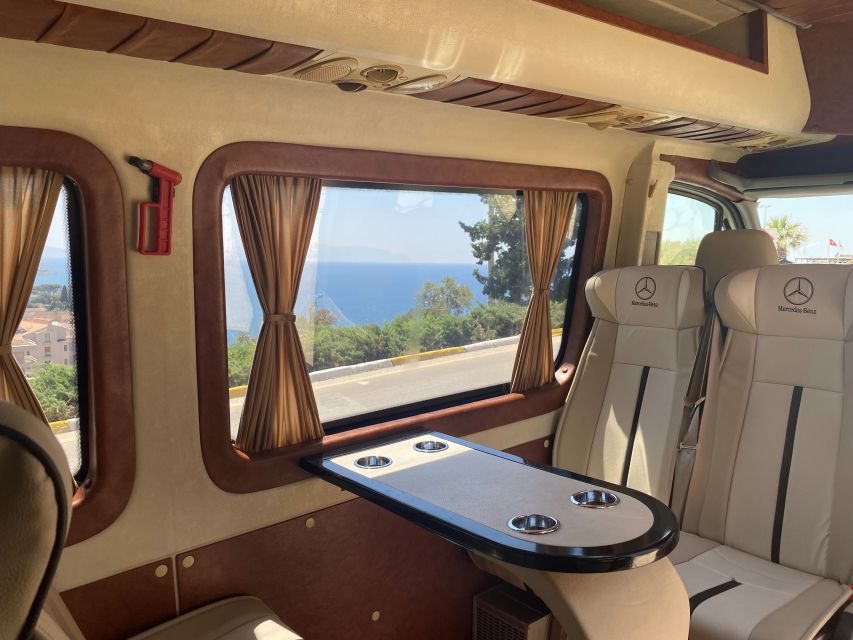
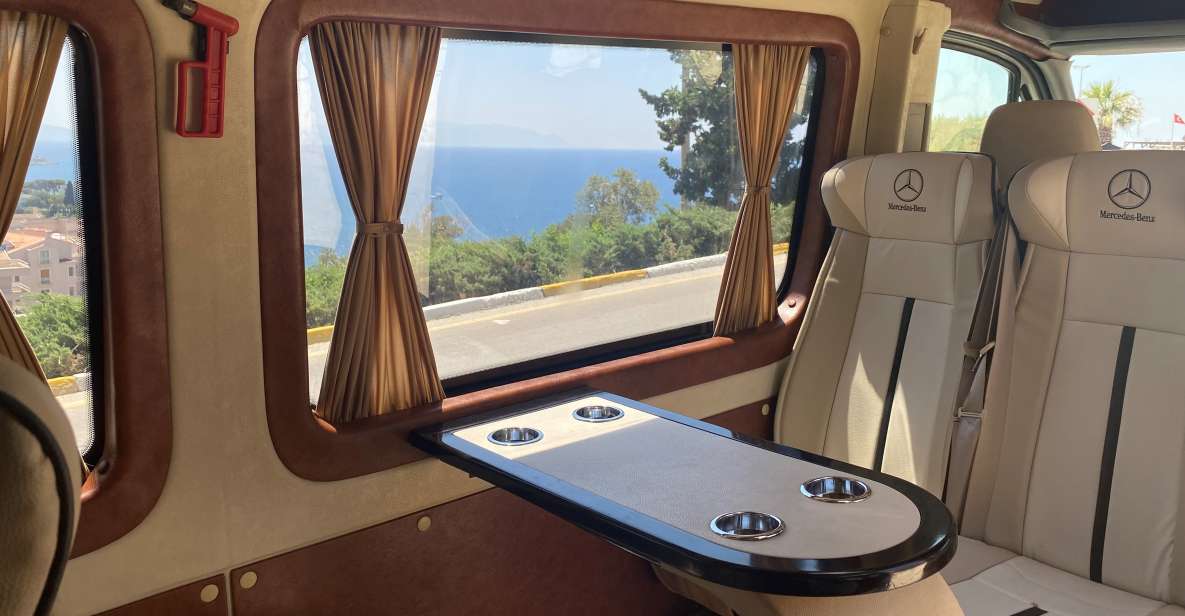
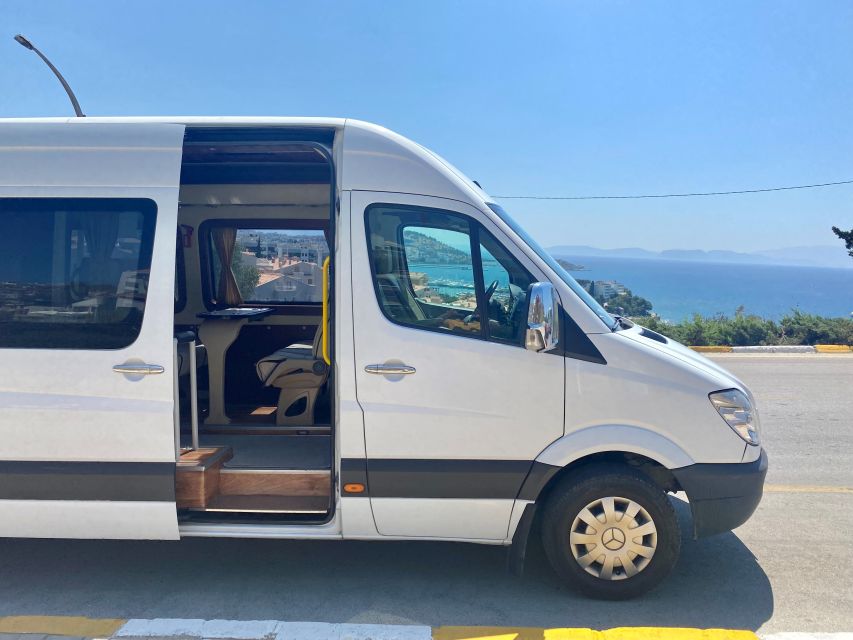
Transport is in an air-conditioned vehicle, and several guides/drivers get credited for safe, comfortable rides. That’s a comfort upgrade when you’re heading into warm weather and then walking uneven ground.
You can also read our reviews of more shopping tours in Kusadasi


Entering the Marble Streets of Ephesus: The Ruins You Can Actually Follow
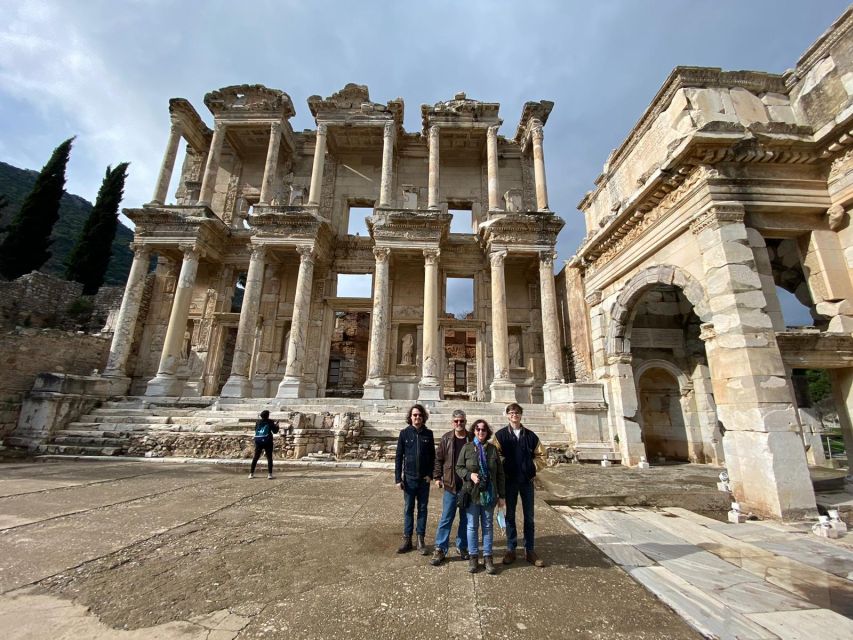
Ephesus is the kind of place where you can either feel wowed—or completely lost. The win here is structure: you’re guided through the big scenes so the ruins start making sense as a living city, not just scattered stone.
The story starts with why Ephesus mattered. It thrived first as a Greek colony within the Ionian league, then later as part of the Roman world. In its prime, it was a major departure point for trade routes moving inland. When you’re standing among the ruins, that context helps you understand why the city invested in public buildings and big-scale architecture.
What you’ll see on foot is the classic highlight run, paced for a 4-hour format:
- Marble streets and public buildings where you can visually connect the city’s layout.
- Baths of Scholastica dating to the 1st century, a reminder that daily life had serious infrastructure.
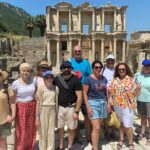
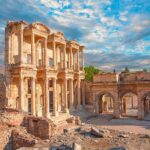
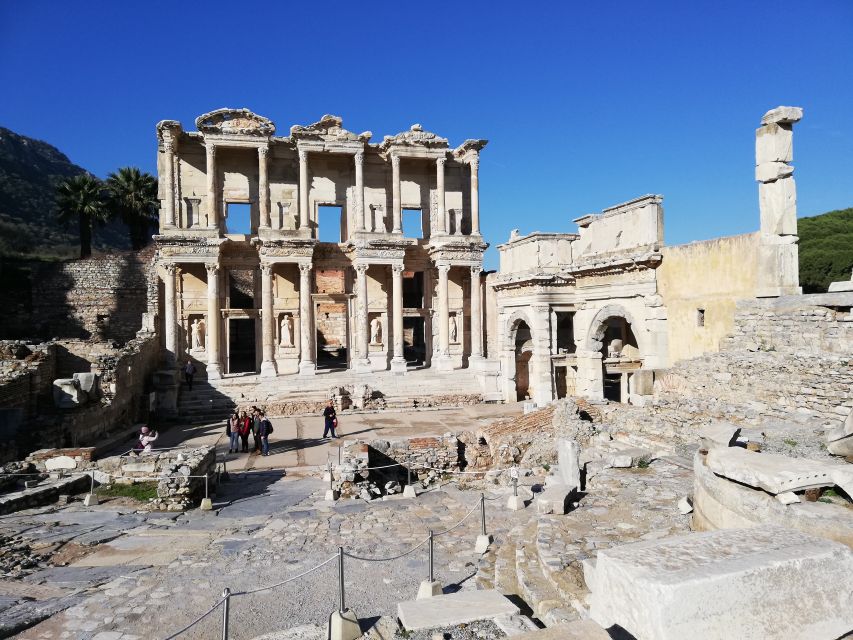
- The facade of the Library of Celsus, famous for what remains of the front of one of the ancient world’s largest libraries.
That Library of Celsus facade deserves a closer look in your head. You’re not just seeing pretty stone—you’re seeing a building that suffered an earthquake and was later burned during invasions. Even with that rough ending, the facade still signals wealth, ambition, and public knowledge.
Baths, Celsus, and Hadrian: What the Roman Architecture Is Telling You
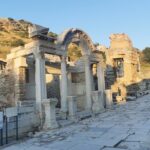
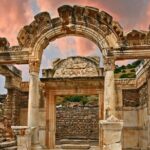
Ephesus isn’t only Greek-in-style ruins; it’s a layered Roman cityscape too. A key stop is the massive colonnade of the Temple of Hadrian, which gives you a feel for how Romans used monumental architecture to reinforce power and public life.
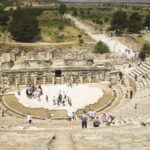
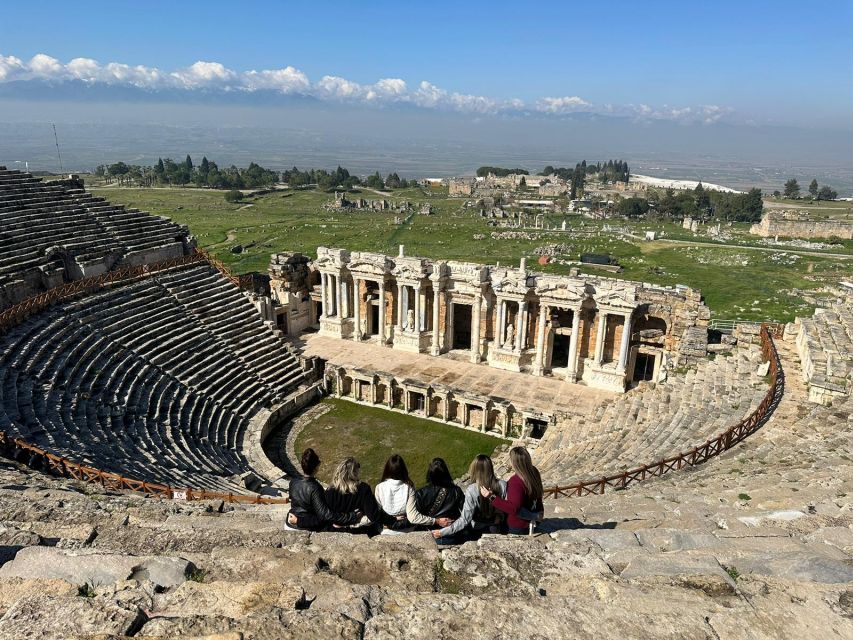
Then the tour brings you into theater-and-civic Ephesus territory. The Grand Theater is one of those sites where scale hits you fast. It could seat 24,000 spectators, and it’s where emperors and leaders watched performances and events like plays, concerts, and gladiatorial fighting.
If you only glance at a theater and move on, you miss the point. But when your guide frames how the space worked, you start noticing the design choices—visibility, acoustics, and the social meaning of mass gatherings. That’s where guided context turns ruins from scenery into a story you can follow.
The Grand Theater and the City’s Daily Rhythm in One Stop
The Grand Theater isn’t just a single photo-op. It’s a snapshot of how public life functioned: a big crowd space for entertainment and authority.
This matters because Ephesus wasn’t abandoned relic-town. It was active, crowded, and politically connected. That’s why the tour doesn’t rush past it. You get the history with enough timing to keep you interested without turning the day into a lecture.
From feedback, I also like how guides are described as tailoring the vibe to the group. People name guides like Ozzie, Cenzig, Oz, and Emre, and they frequently get credit for pacing and for answering questions clearly. That can make the theater stop feel less like a checkbox and more like a moment where everything clicks.
Temple of Artemis: A Short Guided Moment That Still Hits
Next up is the Temple of Artemis, tied to one of the ancient world’s Seven Wonders. The stop is guided for about 20 minutes, which is just enough to set the context without eating your whole day.
You’ll learn about Artemis as the goddess tied to the hunt, and about the idea that people traveled from far away seeking favor. That context matters because the temple’s current state can make it easy to underappreciate what it once represented.
This is also a useful reality check for your expectations. If you’re hoping for a long, slow museum-style experience, this isn’t that. But as part of a 4-hour cruise-friendly day, it’s a strong add-on that connects Ephesus to wider ancient Greek imagination.






Terrace Houses Option: When You Want the Homes Behind the Headlines
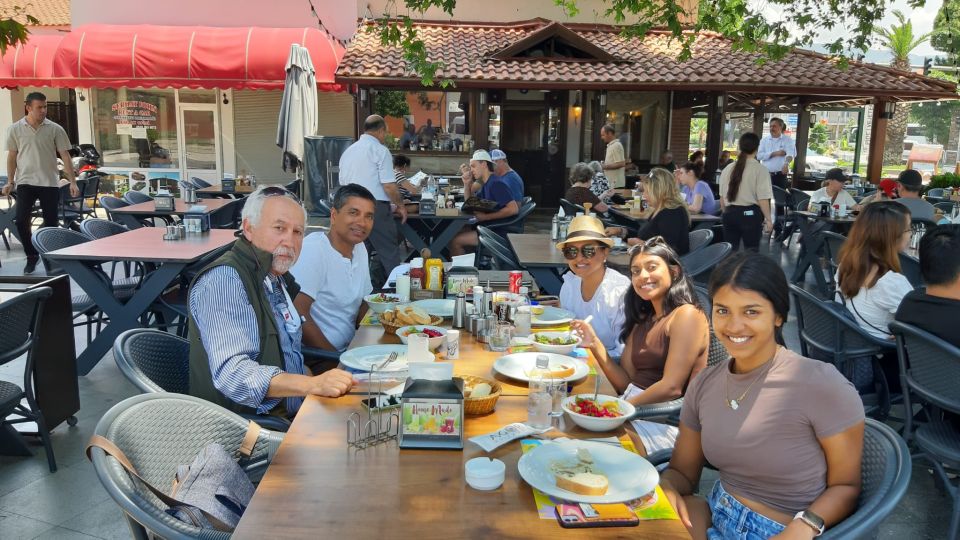
If you choose the Terrace Houses option, you’re adding something different from the public-life ruins. Instead of focusing only on streets, theaters, and grand facades, you get a peek at residential space and elite home design.
That’s the core value: you get closer to everyday visual culture and status symbols—how people lived when Ephesus was at its peak. For many people, that contrast is what makes the tour feel more complete, because it turns the day from monuments-only into both public and private life.
Do keep the “option” part in mind. Terrace Houses aren’t automatically included for every departure; you’re meant to add it when selecting the terrace option. If this detail matters to you, double-check what you’re booking before you show up.
Price and Value: Why $56 for a 4-Hour Ruins Day Can Make Sense
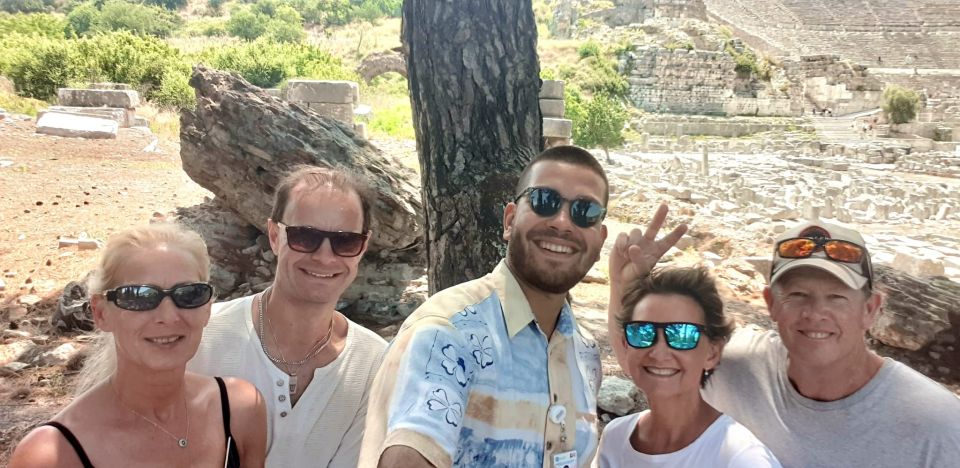
At $56 per person for 4 hours, the value comes from what’s folded into the package—not just the guided walking.
Here’s what you’re getting that usually costs extra elsewhere:
- Entrance fees included, handled by the guide with pre-paid tickets to help skip the line.
- Air-conditioned transportation with parking covered.
- Pickup and drop-off linked to the Kusadası cruise terminal area.
- A licensed live guide who handles the story and pacing.
When you’re on a cruise, you’re paying for time management as much as sightseeing. A well-run excursion that gets you in and out without stress is often worth it, even if a DIY approach looks cheaper on paper.
Feedback also points to comfort and efficiency—people mention clean, comfortable vehicles and good driver handling. That reduces fatigue, and fatigue reduction is underrated on archaeological days.
No Hidden Fees: How the Tour Handles Shops (and How to Protect Your Priorities)
The marketing angle is clear: no shopping stops and no hidden fees. That’s a major plus for anyone who wants the day to stay focused on ruins.
Still, I’ll be practical: a few feedback notes mention extra stops at artisan-style showrooms (for example ceramics or leather/rug-related stops) or added time at outlets. That doesn’t mean the tour is automatically a shopping trip every time, but it does mean you should be ready for the possibility of short, low-pressure stops depending on the exact run.
So here’s my advice: if your number one goal is ruins-only time, message or confirm with the local operator beforehand and ask whether your departure includes any additional showrooms beyond the listed sites. Then you can decide if you’ll enjoy the culture-shopping layer or if you’d rather skip it.
The good part: multiple comments describe these stops as optional or not pushy. That makes them more like cultural side-quests than a sales trap—when they happen at all.
What to Bring, and How to Pace Yourself on Uneven Ruins
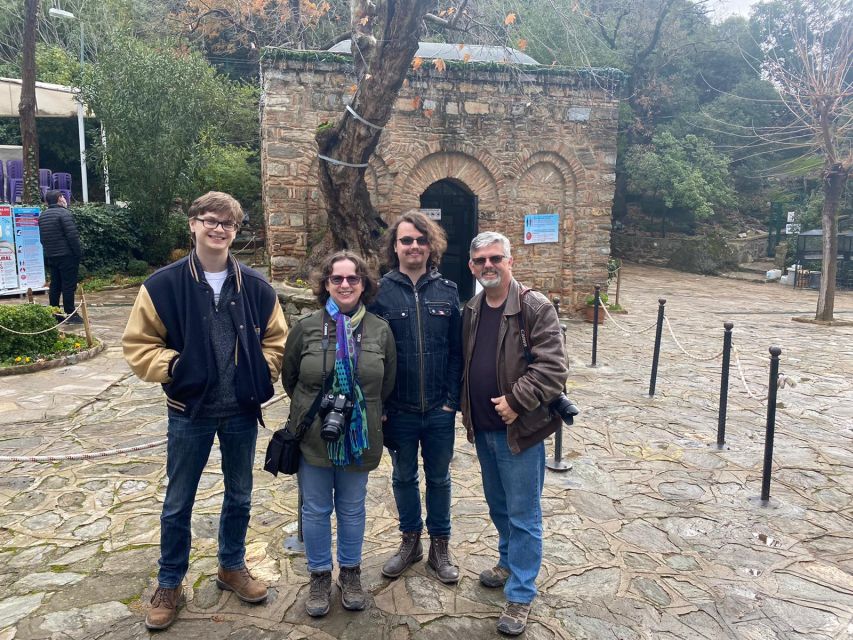
This tour gives you a short walking distance on paper, but the terrain can still feel serious. Plan for about 1 mile (1.5 km) including steps.
Bring:
- Comfortable shoes you trust on uneven surfaces
- Sunglasses (for glare off pale stone)
- Sun hat (because shade can be limited in open areas)
My rule for Ephesus: wear shoes that handle both cobbles and stone steps. You don’t need hiking boots, but you do need grip and support.
Also, if you’re sensitive to heat, aim to start with water in your day plan. Meals and drinks aren’t included, so you’ll want a strategy for hydration around the excursion.
Who This Tour Fits Best (and Who Should Skip It)
This is built for cruise passengers and works best if you’re okay with a structured, highlights-first route.
It’s a good match if you:
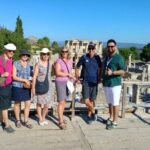
- Want a small group format (max 16) instead of a crowded bus
- Like clear guidance so the site makes sense quickly
- Appreciate a tight plan that includes Ephesus plus Temple of Artemis
- Want optional variety with Terrace Houses
It’s not a great match if you:
- Have mobility impairments
- Are pregnant
- Know that you struggle with steps and uneven stone
That walking note is not about distance—it’s about steps. If stairs are a problem, you’ll feel it here.
Should You Book This Ephesus 4-Hour Mini-Group Tour?
Yes—if your goal is a focused, well-paced Ephesus hits list from Kusadası with entrance fees handled and skip-the-line support, this tour checks a lot of boxes.
I’d book it especially if you appreciate the small-group feel and you want guides like Emre, Aleyna, Selda, or Yavuz to provide the kind of context that turns ruins into something you can visualize. The price feels fair when you factor in pre-paid entry and cruise-friendly timing.
Just do one sanity check before you confirm: verify whether your specific departure includes any short artisan/outlet stops, since the tour is advertised as no-shopping but a few feedback entries mention extra time at showrooms. If you prefer ruins-only, that’s the one variable worth addressing early.
If you want a smooth day with less stress and good storytelling, this is a strong pick for Ephesus.