REVIEW · ISTANBUL
Istanbul: Whirling Dervishes Ceremony and Mevlevi Sema
Book on GetYourGuide →Operated by Istanbul E-pass · Bookable on GetYourGuide
Spinning like prayer is the whole point. At Hoca Rüstem Medrese, the live music and hypnotic whirling dervishes turn a busy Istanbul evening into something calm, focused, and oddly unforgettable. I also like that the ritual comes with a simple audio guide in English, so you can follow the meaning even if you know little about Sufism.
You’re stepping into the Mevlevi Sema ceremony—part spiritual practice, part performance in the way a concert is a performance. The hall is intimate, so you feel close to the musicians chanting and the dervishes beginning their steady rotation. You’ll also get tea before the show, which helps you settle in before the ritual starts.
One watch-out: there’s very little spoken explanation during the event. If you want a full narrated history in real time, you’ll need to lean on the audio guide and your own reading beforehand, and the room can get crowded enough that views are hit-or-miss.
In This Review
- Key Things That Make This Sema Worth Your Time
- Where the Mevlevi Sema Fits in Istanbul
- Your 60-Minute Flow: Tea, Music, Then the Whirl
- The Meaning Behind the Costumes and the Whirl
- What to Do (and Not Do) During the Ritual
- Choosing Your Seat: Two Rows, Pillars, and Side Panels
- Music, Voices, and the Pace of the Sema
- Price and Value: Is $23 Worth It?
- Who Should Book This and Who Might Not Love It
- Quick Practical Checklist Before You Go
- Should You Book This Whirling Dervishes Ceremony?
- FAQ
- Where does the Mevlevi Sema ceremony take place?
- How long is the ceremony?
- How much does it cost?
- What’s included in the ticket?
- Is hotel pickup included?
- What do I need to bring?
- Do I need to arrive early?
Key Things That Make This Sema Worth Your Time
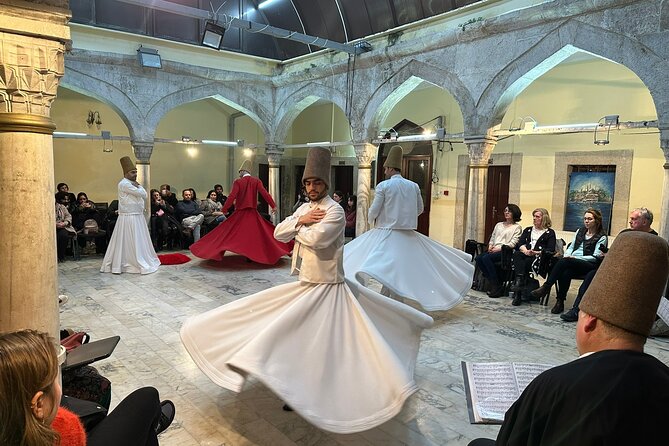
- Hoca Rüstem Medrese sets the tone: a small, older-feeling hall where the ritual feels less like a stadium act.
- The program has two clear phases: first the music, then the dervishes’ whirling ritual.
- Symbolism is built into everything: robes, tall hats, and even the whirling philosophy have a specific meaning.
- Respectful behavior matters: this is treated as a spiritual ceremony, so keep your voice down.
- Arrive early for your seat: front row sightlines are much better, and there are only two rows of seating.
- Bring headphones: the English audio guide app is included, but you need your own headphones.
Where the Mevlevi Sema Fits in Istanbul
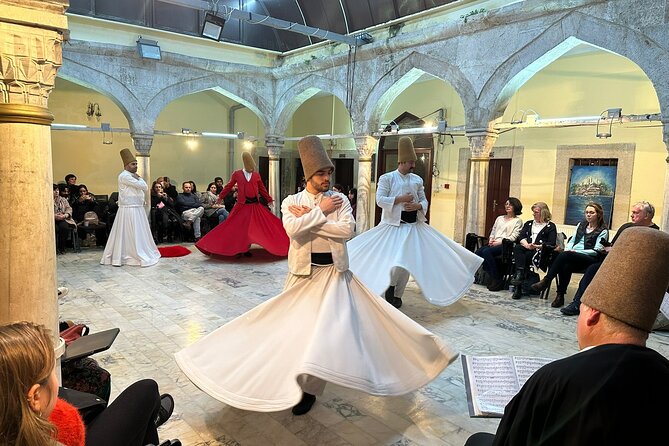
If you’ve been bouncing between mosques, bazaars, and viewpoints, this is a different kind of stop. The Mevlevi Sema at Hoca Rüstem Medrese is centered on the Sufi mystic tradition of Islam, with whirling meant to represent a spiritual journey toward love, unity, and harmony.
The Mevlevi tradition is tied to Mevlana Jelaleddini Rumi (the name Mevlevi comes from him). The story included with this experience also links the path of pure love to the creation of the order, with the ritual stage set by that spiritual background. Even if you only catch the basics, the ceremony’s structure and symbolism give you a framework fast.
This is also a practical Istanbul choice. Some major Mevlevi events are associated with Konya, but this one places a Sema-style experience directly in the city. That means you can see the ritual without reshaping your entire itinerary around a specific religious holiday schedule.
You can also read our reviews of more tours and experiences in Istanbul.



Your 60-Minute Flow: Tea, Music, Then the Whirl
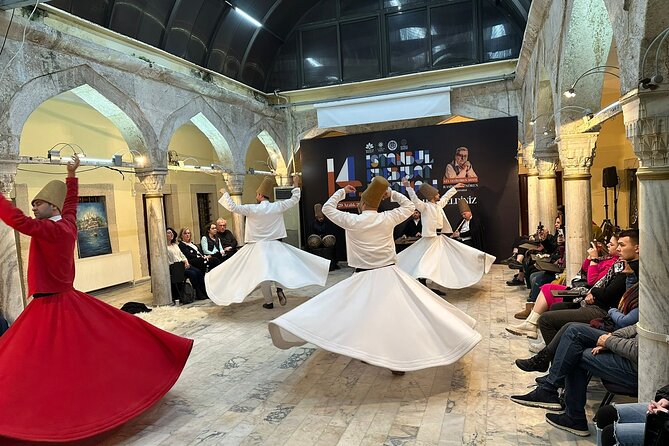
This runs about 1 hour total. The timing is tight, so I like that you’re not stuck for a long, drawn-out evening. In the hall, it generally starts with music and chanting, and then the dervishes come out to begin their whirling ritual.
Here’s the rhythm to expect:
- Before the start: you’ll be served tea while you get settled.
- Early part: you’ll hear musicians and vocalists perform as the hall builds a meditative mood.
- Main ritual: the dervishes enter and start their spinning, with the rotation taking over the energy of the room.
A lot of people pick up on a key point: the dervishes’ whirling looks controlled and steady, not chaotic. You may notice it immediately—many descriptions focus on how they manage to spin without getting dizzy.
One small detail that matters: you need to be at the hall 15 minutes before the show starts. If you arrive late, you may end up farther back or behind sight blockers like pillars.
The Meaning Behind the Costumes and the Whirl
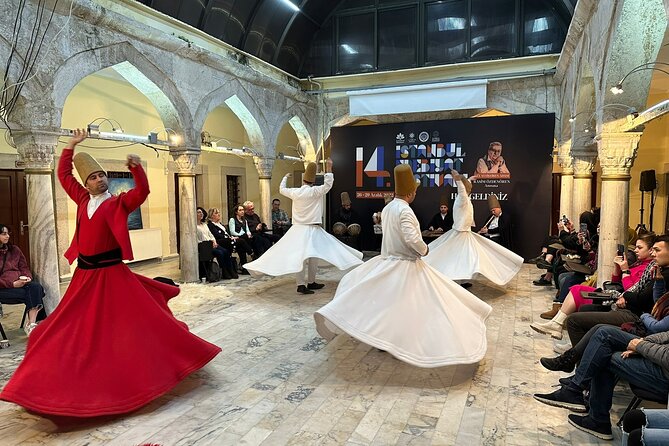
The Mevlevi Sema isn’t just movement. It’s meaning made visible, and the experience explains that the whirling is tied to being in harmony with all creation.
The ceremony’s symbolism includes the idea that the whirling represents relationships between opposites and cycles: day and night, summer and winter, life and death, and even the blood in the veils. In other words, it’s not random spinning. It’s a statement about how everything fits together.
You’ll also see specific costume and ritual elements with symbolic roles:
- Black robes symbolize death.
- White robes symbolize birth.
- The tall hats are described as tombstones of the ego.
- The movements themselves carry meaning, including the idea that the right hand opens toward the sky (receiving divine blessings) and the left hand points to the earth (distributing blessings).
The order’s philosophy around entry is also part of the story shared with this experience. In the tradition described here, potential students were welcomed to witness, but initiation tasks were challenging—helping in the kitchens, cleaning the monastery daily, and doing hard work before deeper study begins. In that context, the whirling becomes a final act of acceptance, showing readiness to pursue harmony.
You don’t need to memorize all of this. But if you show up with even a few of these ideas in mind, the spinning stops looking like a gimmick and starts feeling like a ritual language.
What to Do (and Not Do) During the Ritual
This one is not a party show where you clap on cue. The tone is quieter, more reverent, and that changes how the whole evening feels.
Here’s what you should do:
- Be respectful and quiet once the ceremony begins.
- Let the ceremony lead the pace. The music sets the mood, and the whirling follows as part of that flow.
- Use the English audio guide app to add context. Since there’s little spoken explanation in the hall, your audio guide becomes your translator.
One practical tip: bring headphones and make sure your smartphone is charged. The audio guide is included, but it only works if you have a functioning device and headphones ready at showtime.
Also, keep expectations realistic. Some people go in wanting a narrated lesson, and they end up wishing they had more explanation. If you’re the type who needs context to stay engaged, do a little prep before you go (even 10–15 minutes of reading about the symbolism can help). If you’re comfortable letting the ritual speak for itself, you’ll probably find it very calming.
Choosing Your Seat: Two Rows, Pillars, and Side Panels
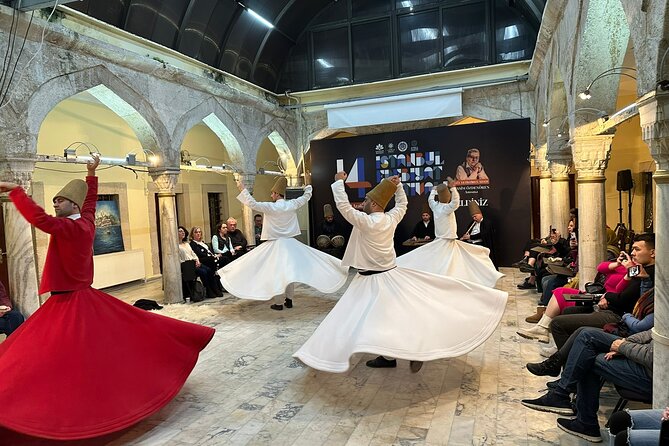
This is one of those events where your viewpoint matters. The hall setup includes only two rows, and arriving late can mean you’re stuck with a less ideal angle. If you want to see the footwork and rotation clearly, arrive early and prioritize front-row seating when possible.
A couple of things can affect sightlines:
- Pillars can block views if you end up behind them.
- Side panels with backlighting can be distracting for photography, especially depending on where you’re sitting.
So I’d plan like this: arrive early, scan the room quickly, and choose the cleanest sightline over the closest proximity to the center. If you’re more interested in the overall rotation and atmosphere, any seat can still work. But if you’re a detail watcher, you’ll want the best line of sight you can get.






Music, Voices, and the Pace of the Sema
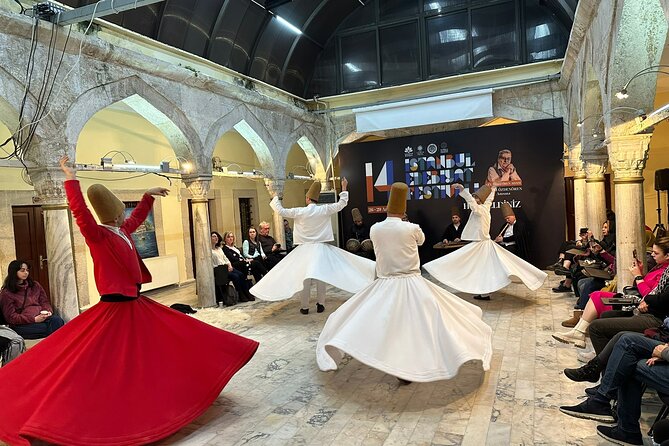
The first part of the evening is led by musicians and vocalists, including singing/chanting. Multiple performances describe a trio of musicians playing with vocal elements, which helps explain why the Sema starts with sound rather than dance.
Then the dervishes come in and the whirling becomes the new rhythm. The music isn’t background noise—it feels like the engine of the ceremony. That’s why the timing of the program works: music first, then movement takes over.
The whole flow can feel intense in a quiet way. Even when you don’t catch every word (English spoken explanations aren’t the focus here), the structure gives your brain something to hold onto: steady sound, then steady spinning.
Price and Value: Is $23 Worth It?
$23 for a 1-hour Mevlevi Sema ticket sounds simple, but the real question is what you get per minute. Here, you’re paying for three things that matter in this setting:
- a ticketed seat in a venue that feels close and intimate,
- live music and vocal performance before the whirling begins,
- and a meaningful tradition you can partially understand through an included English audio guide app.
If your goal is a quick cultural stop in central Istanbul, this is a strong value. It’s also a fair deal compared with longer evening programs, because you’re not paying for extra time that’s mostly waiting.
That said, it’s worth matching the ticket to your mindset. If you need a guided lecture, this may feel like too little explanation. If you want the direct experience—music, movement, and symbolism—this price-to-experience ratio is hard to beat for Istanbul.
Who Should Book This and Who Might Not Love It
This works best if you want a spiritual-culture experience that’s structured, quiet, and focused on art and devotion.
You’ll likely enjoy it if:
- you like live music and performance with a serious tone,
- you’re curious about Sufi symbolism and the Mevlevi tradition,
- you’re happy to use your audio guide to understand what you’re seeing,
- you want a one-hour evening plan that fits easily into a city itinerary.
You might think twice if:
- you need lots of spoken explanation in English during the ceremony,
- you’re sensitive to crowded indoor seating,
- you only enjoy lively, high-energy shows with constant commentary.
Quick Practical Checklist Before You Go
A few details can make your evening smoother:
- Arrive at the hall 15 minutes early so you can pick a better view.
- Bring headphones for the audio guide app and keep your smartphone charged.
- Plan for a quiet, respectful atmosphere once the ritual begins.
- If you care about seeing details, prioritize front-row sightlines over anything else.
Also, check that you can find the venue easily once you’re near Sultanahmet/Fatih. Some people find the area simple, others feel slightly lost—so I’d rather you give yourself a buffer than rush at the end.
Should You Book This Whirling Dervishes Ceremony?
I think it’s a good booking if you’re after something different from the usual Istanbul checklist. For $23, you get live music, a focused hour, and a Mevlevi Sema ritual in a small, historic-feeling hall—plus an English audio guide to help you follow the meaning.
Book it if you can handle a ceremony that asks you to be calm and observant. Skip it or prepare yourself if you’re expecting a teacher-led lecture or lots of English narration on site. In the right mindset, this is one of those Istanbul experiences that sticks with you long after the spinning stops.
FAQ
Where does the Mevlevi Sema ceremony take place?
It takes place at Hoca Rüstem Medrese in the heart of Istanbul.
How long is the ceremony?
The experience lasts about 1 hour.
How much does it cost?
The price is $23 per person.
What’s included in the ticket?
Your ticket includes admission to the Whirling Dervishes ceremony and an audio guide app on your smartphone.
Is hotel pickup included?
No. Hotel pickup and drop-off are not included.
What do I need to bring?
Bring headphones and a charged smartphone for the audio guide.
Do I need to arrive early?
Yes. You need to be at the hall 15 minutes before the show starts.