REVIEW · KUSADASI
Highlights of Ephesus Private Tour From Kusadasi Port
Book on Viator →Operated by Turkey Tours Company · Bookable on Viator
Four to six hours, and ancient Ephesus hits hard. This private cruise-friendly tour is built around easy port timing and a smart route: you get major Ephesus sights plus stops that help the ruins make more sense, like the Ephesus Museum and the lesser-seen Prytaneion.
I also like that it’s a true private setup for your group, with a professional guide and a fully air-conditioned vehicle. The one caution: entrance fees and drinks add up, and one past group noted an unwanted leather showroom stop that can change the vibe if you prefer straight archaeology.
In This Review
- Key highlights worth caring about
- Kusadasi Port Pickup: How You Avoid the Usual Cruise Chaos
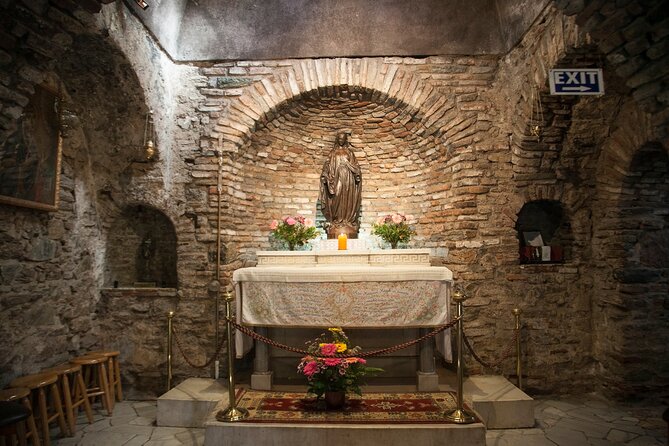
- Virgin Mary’s House: Where Faith Shapes the Experience
- Ephesus Museum: The Fastest Way to Understand the Ruins
- The Prytaneion: Where the Sacred Flame Thought Was Kept
- Domitian Temple and Hadrian Temple: Emperor Worship in Stone
- Temple of Domitian
- Temple of Hadrian
- Ephesus Ancient City: The Walk That Makes the Scale Real
- Lunch and the Real Cost of Visiting: What’s Included vs. Not
- Value Check: Is $22.49 a Smart Deal?
- Should You Book This Private Ephesus Tour from Kusadasi Port?
- FAQ
- How long is the Ephesus Private Tour from Kusadasi Port?
- Do I get pickup and return to Kusadasi Port?
- Is this tour private?
- Are entrance fees included in the price?
- Is lunch included?
- What language is the tour offered in?
- How do I find the guide at the port?
Key highlights worth caring about
- Guaranteed cruise timing: you return to Kusadasi Port on schedule.
- Private for your party: no mixing, no herd-herding.
- Museum time before the big ruins: artifacts help you recognize what you’re seeing.
- Stops with meaning, not just size: Prytaneion and the emperor temples give context.
- Lunch included: a real sit-down break, not just a snack stop.
- English-speaking guide: easier explanations, faster understanding on limited time.
Kusadasi Port Pickup: How You Avoid the Usual Cruise Chaos
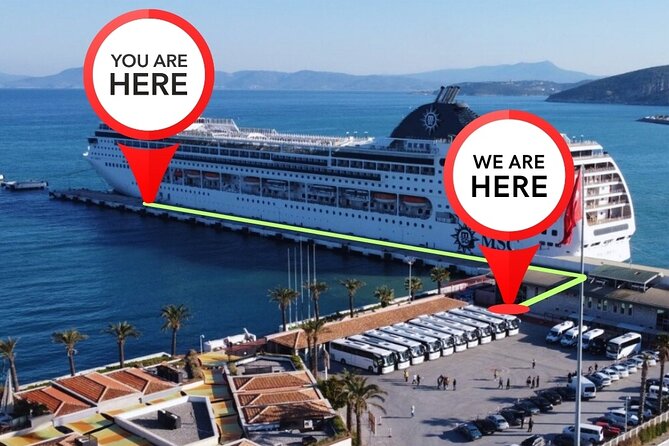
This tour is made for cruise days. You meet your guide at Kusadasi Port at the agreed time, then get escorted to the vehicle. Look for your reservation name on a board in the port exit area—this is one of those small details that saves real time when you’re disembarking with hundreds of people.
The transport is a fully air-conditioned vehicle, which matters more than it sounds when you’re mixing coastal humidity with walking. After the tour, you’re dropped back at Kusadasi Port with a guaranteed return on time—the big difference between a calm day and one where you’re sprinting back to the ship.
If you want a personal touch, there’s an optional greeting with your name at the port (extra 3 euros per person). Also, in at least one reported experience with this operator, bottled water showed up early—worth keeping an eye out for it when you board.
You can also read our reviews of more private tours in Kusadasi
Virgin Mary’s House: Where Faith Shapes the Experience
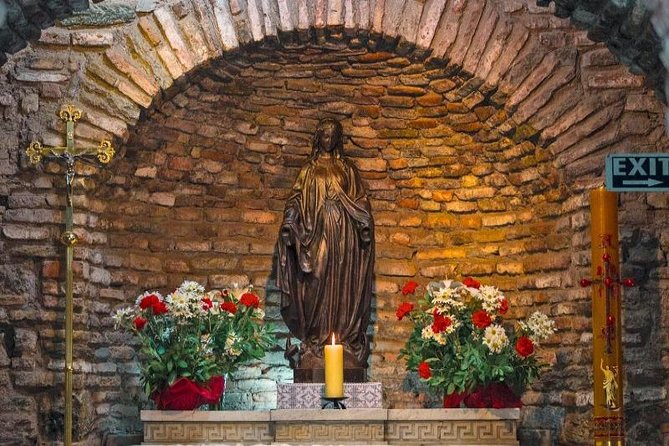
The House of the Virgin Mary is the first major stop. The tradition places Mary’s later years here—according to belief, she lived in Ephesus from roughly 37–45 CE with St. John, until her Assumption or Dormition. Even if you’re not into religious history, it’s still a powerful setting because you’re visiting a site that people come to for meaning, not just masonry.
You’ll have about 1 hour here. Admission is not included, so you’ll pay separately (700 TRY). The guide can often help with skip-the-line arrangements by handling payment directly, which can save you time if there’s a queue.
Practical tip: plan for quiet, slower pacing. This isn’t the kind of place where you rush from one photo spot to the next. If you’re sensitive to crowds, you might want to follow your guide’s timing and avoid spending the whole hour stuck at the busiest viewpoints.
Ephesus Museum: The Fastest Way to Understand the Ruins
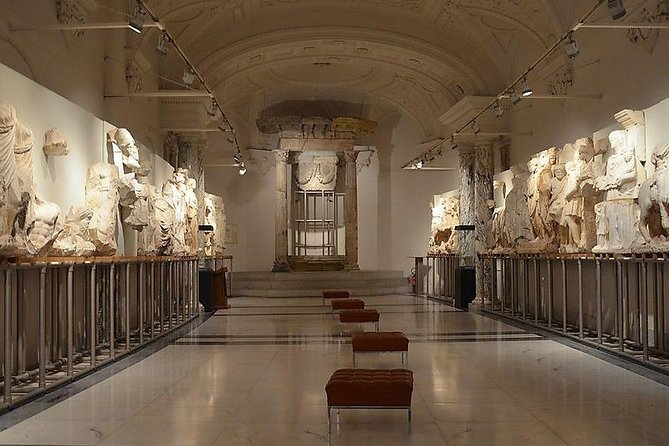
After Mary’s House, the route shifts to Ephesus Museum for around 45 minutes. This is a smart move on a limited schedule. Instead of only seeing cracked columns in the open air, you get to connect them to the objects that once filled the city.
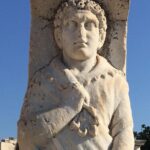
The museum collection includes statues of Ephesian Artemis and finds from the Temple of Artemis. There are also Eros statues, items tied to the Hall of the Roman Empires, carvings linked to the Temple of Hadrian, and a biblical-inscriptions statue connected to Dormition. You’ll also see figures like Augustus and Livia, plus other carved pieces tied to Roman-era identity.
Admission is not included (10 euros). As with other entrances, you can pay the guide for skip-the-line tickets.
This stop is especially useful if you want to understand details you’d otherwise miss. For example, certain figures or themes you notice later in the city—like repeating deities and imperial symbolism—make more sense when you’ve already seen the related artifacts indoors.
The Prytaneion: Where the Sacred Flame Thought Was Kept
The Prytaneion is quick—around 5 minutes—but it’s the kind of stop that makes Ephesus feel more complete. It sits behind the basilica and is tied to ceremonies, official receptions, and banquets. Most importantly, it’s where a symbol of Ephesus—the sacred flame—was kept burning.
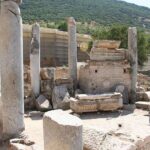
You’ll learn that the complex construction dates back to the 3rd century BCE under Lysimachos, while the ruins you see come from the Augustan age. The four-cornered pit where the sacred fire was burned is described as a relic from Lysimachos’s reign. Inside, the location of the flame is said to have been marked by a red color on the floor, and during excavations archaeologists found two Artemis statues that are now in the museum.
Admission is included for this short stop. Even with the tight time, the Prytaneion can change how you read the larger site: Ephesus wasn’t just impressive architecture—it was ritual, administration, and civic identity.
Domitian Temple and Hadrian Temple: Emperor Worship in Stone
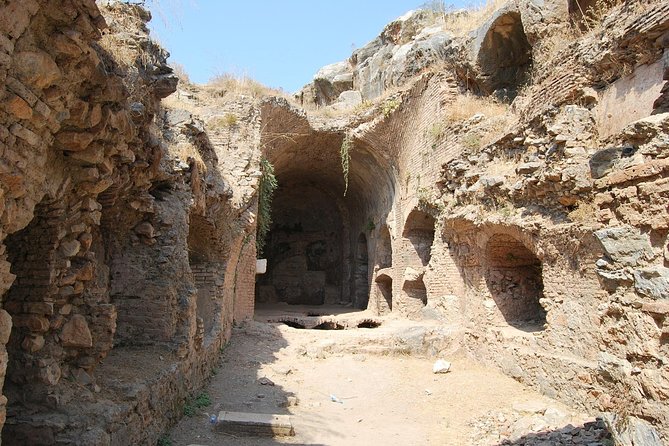
After Prytaneion, you get two emperor-focused stops that help explain how Roman power played out locally.






Temple of Domitian
The Temple of Domitian is located at the south end of Domitian Street. It’s noted as the first structure in Ephesus dedicated to an emperor. The temple sits on a high, wide terrace (about 50 x 100 meters) with vaulted foundations, and stairs are still visible today.
The details here are fun because they’re concrete: the plan is described as pro-style, with eight columns on the short side and thirteen on the long side, plus four additional columns in front of the cella. At the northern side, there was a u-shaped altar, and that altar is displayed in Izmir museum.
This is also where you hear the political story. Domitian’s era included permission for cities to build an emperor temple, a first-time honor for Ephesus linked with the term neocoros. After Domitian was killed, people reportedly erased his name from many inscriptions.
Expect about 10 minutes. Admission is included.
Temple of Hadrian
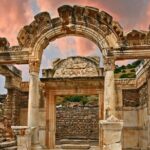
Next is the Temple of Hadrian on Curetes Street, described as one of the best preserved and most beautiful structures there. It was built before 138 AD and dedicated to Emperor Hadrian. Your visit also connects to a visit Hadrian made in 128 AD.
The facade has four Corinthian columns supporting a curved arch, with a relief of Tyche (the goddess of victory) in the middle. Inside, a human figure is mentioned—probably Medusa—above the door. The friezes include stories tied to the foundation of Ephesus: Androklos shooting a boar, Dionysus in ceremonial procession, and the Amazons. Another frieze includes figures named Apollo and Athena (and others tied to myth and the Theodosius family, depending on the panel description). A key note: the friezes visible today are copies, while originals are displayed in the Ephesus Museum.
Plan for about 5 minutes at Hadrian’s Temple. Admission is included.
If you like architecture and symbols, these two stops are where the tour earns its keep. You’re not just ticking boxes—you’re learning how Ephesus advertised its loyalty and identity.
Ephesus Ancient City: The Walk That Makes the Scale Real
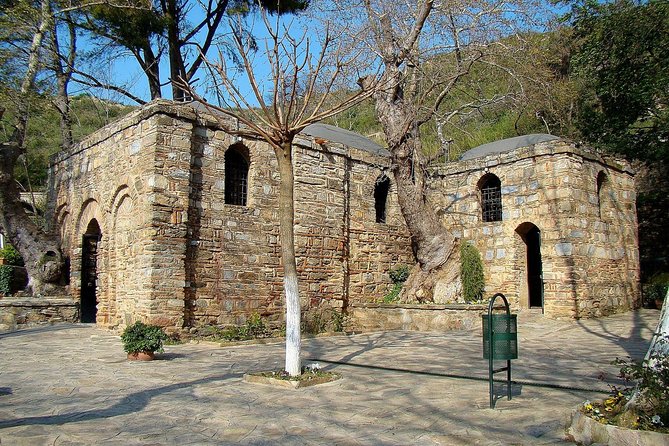
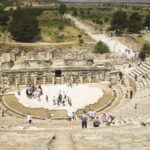
The centerpiece is your time in the Ephesus Ancient City area—about 2 hours. This is where the city’s size stops being a fact on paper and starts feeling real under your feet.
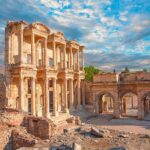
Ephesus is described as the second largest city in the Roman Empire, with over 250,000 people in the 1st century BC. It was a harbor city, and the tour’s background notes emphasize that much of it was built with marble. You’ll hear about the amphitheater too: over 25,000 seats, making it the largest amphitheater in the ancient world.
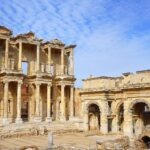
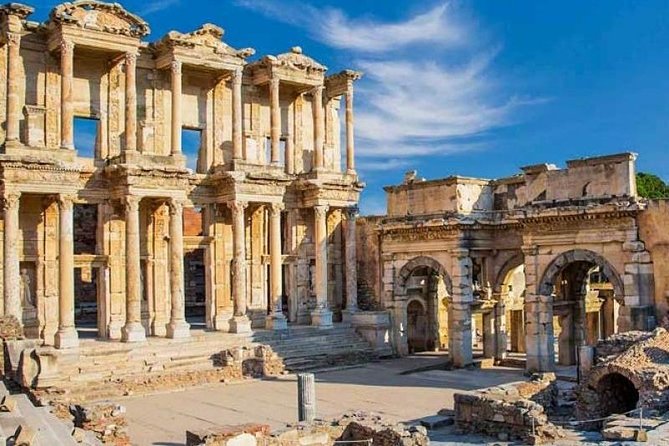
You’ll see a classic set of landmarks, including Goddess Nike, a local pharmacy, Hadrian Gate, and the Library of Celsus (called the third largest library). The route also includes Marble Street and Harbour Street.
The biggest “why this matters” point: with a guide, you don’t just look at ruins—you learn what you’re looking at. That’s how the amphitheater becomes more than seats, and how Hadrian Gate becomes more than an arch.
Practical note: 2 hours can feel short when the site is this spread out. Wear good shoes and expect some uneven surfaces. If it’s hot, the best strategy is to let the guide set your pace and focus on fewer, clearer stops rather than sprinting for every photo angle.
Lunch and the Real Cost of Visiting: What’s Included vs. Not
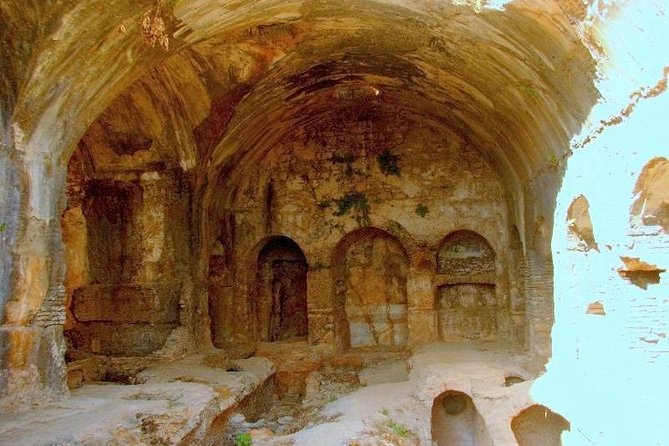
This tour includes a deluxe lunch, which is a big deal on cruise days. You’re also covered with a professional tour guide and a fully air-conditioned vehicle. That combination often costs more on other day trips where lunch is skipped or the vehicle is basic.
But here’s the part you should plan for: entrance fees and drinks are not included. The tour data lists:
- Ephesus entrance fee: 40 €
- Virgin Mary’s House entrance fee: 700 TRY
- Ephesus Museum entrance fee: 10 €
- Drinks: not included
- Personal expenses: not included
- Driver and guide tips: not included
A helpful detail is that the guide says you can pay for skip-the-line tickets for these entrances. That can reduce the most annoying delays—waiting around while tour buses juggle ticket lines.
One more caution based on a reported experience: at least one group mentioned being taken to a leather showroom with a fashion presentation, which felt like a tourist-trap detour for them. If you strongly prefer a straight archaeology day, ask ahead of time if there’s any shopping stop planned and set your expectation clearly.
Value Check: Is $22.49 a Smart Deal?
At $22.49 per person, this tour’s value is all about what you’re getting for that price—plus the fees you still pay.
What you get in the base price:
- Private tour for your group
- Professional English-speaking guide
- A/C vehicle with cruise-timed pickup and drop-off
- Deluxe lunch
- Mobile ticket
- Entrance included only for certain short stops (Prytaneion, Domitian Temple, Hadrian Temple)
What you still pay:
- Ephesus 40 €
- Ephesus Museum 10 €
- Mary’s House 700 TRY
- Drinks and tips
So yes, it can be a good value when you compare it to typical cruise excursions. The real win is time management: guaranteed return on time to Kusadasi Port means you’re not gambling with the cruise clock. The second win is lunch and transport. Many cheaper tours cut those, then add “extras” later.
Who tends to benefit most:
- First-timers who want structure without spending all day figuring things out
- Cruise travelers who need a dependable schedule
- Families or small groups who prefer private pacing
- Anyone who likes explanations (because the museum + temples combo rewards listening)
Should You Book This Private Ephesus Tour from Kusadasi Port?
If you have limited time and you want Ephesus done cleanly, I think this is a strong choice. The combination of A/C transport, a guided route, and a guaranteed cruise return is exactly what you need when you’re visiting on a tight schedule. The Prytaneion + emperor temples pairing also gives you more “meaning per minute” than a rushed stop-and-take-photos tour.
Book it if:
- You’re prioritizing classic Ephesus highlights like Celsus, the amphitheater area, and the major gates
- You want time in the museum so the ruins make more sense
- You’ll appreciate a real lunch break
Consider skipping or clarifying before you go if:
- You dislike any shopping/showroom detours and want a strictly archaeological day
- You’re very price-sensitive and don’t want to add entrance fees (especially Mary’s House)
- You prefer to handle everything independently and are comfortable managing lines on your own
If you want, tell me your travel month and how many people are in your party. I can help you judge whether the entrance-fee math and time pacing will likely feel worth it for your exact day.
FAQ
How long is the Ephesus Private Tour from Kusadasi Port?
The tour runs about 4 to 6 hours, depending on timing and how long you spend at each stop.
Do I get pickup and return to Kusadasi Port?
Yes. The guide meets you at Kusadasi Port, escorts you to the vehicle, and drops you back at Kusadasi Port. There is a guaranteed on-time return to your cruise.
Is this tour private?
Yes. It’s a private tour/activity where only your group participates.
Are entrance fees included in the price?
No. Ephesus entrance fee (40 €), Virgin Mary’s House entrance fee (700 TRY), and Ephesus Museum entrance fee (10 €) are not included. Some specific sites in the route include admission, as listed for those stops.
Is lunch included?
Yes. A deluxe lunch is included. Drinks are not included.
What language is the tour offered in?
The tour is offered in English.
How do I find the guide at the port?
Look for your reservation name on a board in the port exit area. The guide will meet you at the agreed-upon time and escort you to the vehicle.