REVIEW · MARMARIS
From Marmaris: Pamukkale Cotton Castle & Hierapolis Day Trip
Book on GetYourGuide →Operated by Payless Turizm · Bookable on GetYourGuide
White cliffs and ancient ruins in one long day.
This Pamukkale and Hierapolis day trip from Marmaris pairs Pamukkale’s thermal pools with Hierapolis’ theater and necropolis. I like how the tour time is structured so you get a focused look at the travertines (for photos), plus guided context at the archaeological site. The main drawback is the early start and long coach day, so plan on making it a full-day outing.
What makes it work is the human touch: guides like Nur, Beste, and Mert (names you’ll actually see on recent departures) guide you with practical tips and local stories, not just dates from a textbook. You’ll also want to mentally budget for Pamukkale entry fees (not included), and sometimes the best photo spot—Cleopatra Pools—can be closed for renovations depending on the season.
In This Review
- Key highlights worth getting excited about
- Pamukkale + Hierapolis: why this pairing is such good value
- Getting from Marmaris: early pickup and the bus schedule reality
- Breakfast box on the road: how to set yourself up for Pamukkale
- Pamukkale’s travertines: what to do in your 3-hour photo window
- Safety and comfort tips for walking the travertine
- Swimming in the thermal pools: warm water, slippery footing, and Cleopatra Pools
- Hierapolis ruins: how the 3-hour guided visit makes the site click
- Lunch included: buffet style, local enough, and easy to eat between stops
- Extra stops and add-ons: onyx, Sultanite, Turkish delight, wine
- Price and value: what you’re really paying for at about $38
- Who should book this day trip (and who should skip it)
- Should you book this Marmaris to Pamukkale trip?
Key highlights worth getting excited about
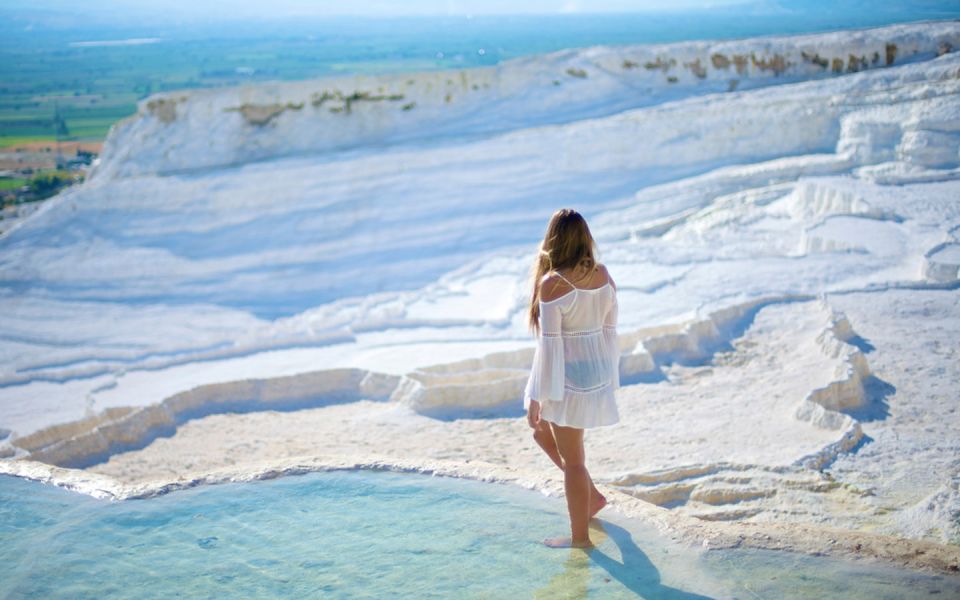
- Pamukkale travertines for photos during a dedicated stop, with enough time to walk and choose your angle
- Guided Hierapolis visit (about 3 hours) so the ruins make sense when you’re standing in front of them
- Thermal pool swim time with reminders that the water surface can be slippery and shoes may not be allowed
- Included breakfast box + buffet lunch that keeps you from hunting for food mid-journey
- Optional adds that show up on many departures, like wine tasting and local product stops (varies by route/day)
Pamukkale + Hierapolis: why this pairing is such good value
Pamukkale is the famous cotton-castle effect: milky white travertines that look like frozen waterfalls. Seeing it in person hits different because you’re not just looking at a monument—you’re walking on the same terraced, mineral-covered formations that shape the hot-spring flow.
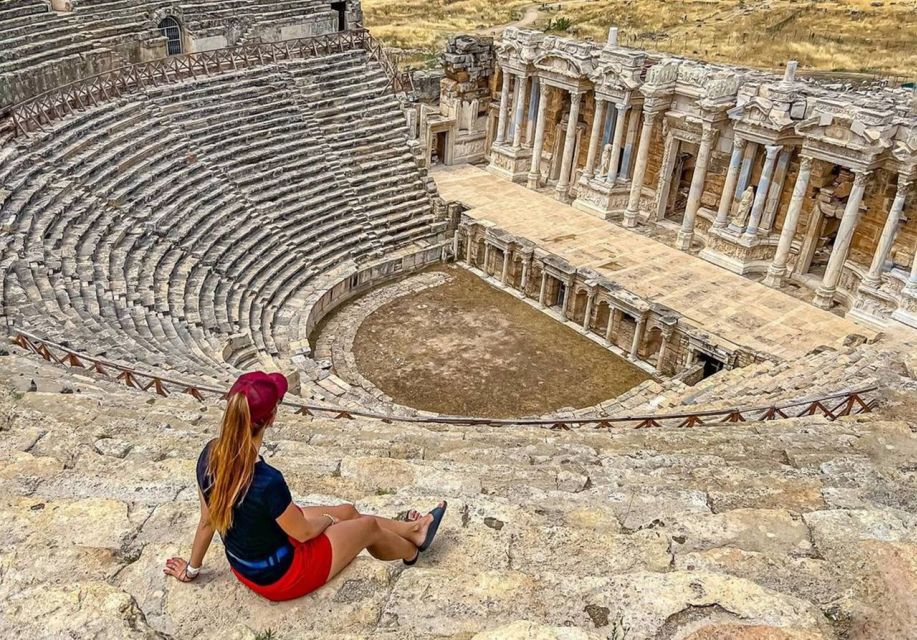
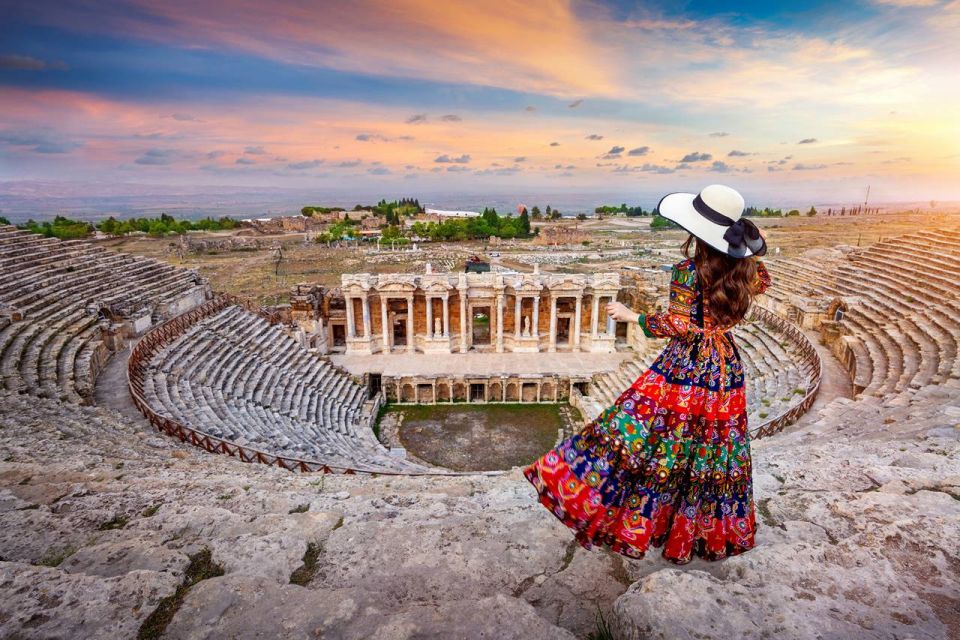
Hierapolis is the other half of the story. The ruins sit above and around Pamukkale, and a good guide helps you connect what you see—like the amphitheater and surrounding necropolis areas—to why this place mattered to ancient visitors. When both stops are on the same day with a guide, you leave with the “wow” plus the “oh, that’s why” feeling.
A few more Marmaris tours and experiences worth a look

Getting from Marmaris: early pickup and the bus schedule reality
This is a long day by design. You’ll ride in an air-conditioned bus, and the driving time is roughly 3.5 hours each way. You also get at least one timed break: there’s a 30-minute bathroom stop in Denizli, which is the kind of stop that matters when you’re leaving early.
Plan for an early pickup. Recent departures have started around 5:30am, so even if you live close to the main tourist zones, you’ll want to set an alarm the night before and pack anything you’ll need during the ride. The upside of leaving so early is that you get to Pamukkale earlier in the day, when it’s typically easier to move and take photos.
Breakfast box on the road: how to set yourself up for Pamukkale
Instead of sending you off hungry, the tour includes a breakfast box. One common setup is a roadside stop with items like bagels or similar baked rolls with spreads/jams, plus the option to grab coffee separately at the cafe if you want it.
A practical tip: treat breakfast as fuel, not as a full meal you can “graze” later. If you want coffee or tea, get it early. Once you’re at Pamukkale, the heat and walking tend to make you crave water and shade, not another snack search.
Also, keep your breakfast and water easy to reach. You’re on and off the bus a few times, and it’s smoother if you can grab your essentials fast without rummaging.
Pamukkale’s travertines: what to do in your 3-hour photo window
The tour gives you a focused visit time at Pamukkale, including time to explore the travertines and take photos. This is where the “frozen waterfall” look happens, and it’s easy to see why people call this place the cotton castle. You’ll also pass by the Cleopatra Pools area, which is a popular reference point even when access is limited.
Here’s how I’d plan your walk: start with a quick loop to find a safe path down and a route back up. Then slow down for photos. The tours move in a group rhythm, and the real advantage is using your time to pick angles before you’re stuck with everyone else at the same spot.
Safety and comfort tips for walking the travertine
Pamukkale’s mineral surfaces can be slippery, and at least one recent guide experience included the reminder that shoes aren’t allowed in the thermal pool areas. Even if rules are enforced differently on different days, don’t rely on luck—wear gear that helps you stay steady on uneven, slick surfaces outside the pools.
Bring:
- sun protection (Pamukkale sun can be intense)
- water
- a small towel or swim cover-up (if you’re planning to get in the pools)
And if you’re not confident walking on slopes, take it slow and let the group pass in waves.



Swimming in the thermal pools: warm water, slippery footing, and Cleopatra Pools
One of the biggest reasons people book this day trip is the chance to rejuvenate in the hot springs. You get guided time plus additional free time later, so you’re not just standing around for photos. This is the moment where the cotton-castle views turn into a real body experience.
A few practical notes from real on-the-ground behavior:
- The pools can feel soothing, but the surfaces can be very slippery, so take shorter steps.
- Some guides handle logistics like looking after bags while you swim, which makes it easier to focus on enjoying the water.
- Cleopatra Pools are not included as part of the standard tour package entry, and on some dates they can be closed for renovations (one recent mention said Cleopatra Pools were closed, with a future reopening referenced).
That means your swim plan should be flexible. If Cleopatra Pools are open, great. If they aren’t, you still have the core Pamukkale thermal experience and the travertine views that make this trip worth it.
Hierapolis ruins: how the 3-hour guided visit makes the site click
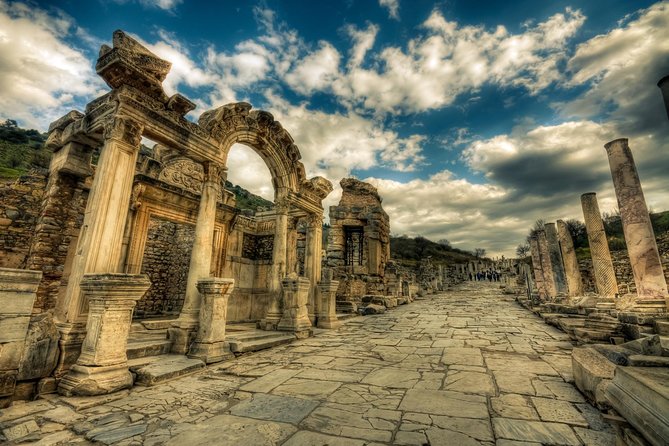
Hierapolis is where the day turns from “photo stop” into “story stop.” You get about 3 hours here with a guide, and you’ll cover more than one type of ruin. The amphitheater tends to be the headliner. One recent highlight was how stunning it looked in person, especially when you understand what it served in daily life.
The necropolis area and other ruins add context too, and guides often give practical orientation—what’s worth your time, where shade might be, and how to pace yourself. If you only have one day, that guidance matters.
If you’re visiting with kids or anyone who tires easily, focus on the core areas first. The site can feel spread out, and it’s hard to see everything at once without rushing.
Lunch included: buffet style, local enough, and easy to eat between stops
After Pamukkale, you’ll typically have an open buffet lunch at a modern local restaurant. Lunch usually includes a cold appetizer, a main course, dessert, and fruit. Drinks are not included, so if you want soda, tea, or anything stronger, plan on paying separately.
How I read the lunch situation: it’s there to keep you moving and fed, not to be a culinary destination. Several experiences described lunch as average or a bit hit-or-miss, but still convenient and filling after a hot, long morning.
If you’re a picky eater, bring a small snack you like for backup. And if you have a taste for coffee or tea, decide whether you’ll buy it at the road stop earlier or during lunch.
Extra stops and add-ons: onyx, Sultanite, Turkish delight, wine
Some departures add extra stops that can feel like a bonus. You might see stops tied to onyx/jewelry production, a sultanite/stone workshop, and even small tasting moments like Turkish delight and wine. These show up often enough in recent experiences that I’d expect them on many days, but they aren’t always the same across every route.
Is it worth it? It can be, because these stops break up the driving and give you a glimpse of how locals produce and sell specialty goods. The downside is time. If you’re chasing maximum ruin time, every added shop stop means less flex time later.
If you want to prioritize Pamukkale and Hierapolis only, ask your guide what’s scheduled for your specific departure before the bus leaves. That way you can decide how much patience you want to bring.
Price and value: what you’re really paying for at about $38
At around $38 per person, this tour is priced for convenience: hotel pickup and drop-off, roundtrip air-conditioned transport, a guide (shared or private depending on your option), and meal support (breakfast box plus buffet lunch). For a day like this—long distance, early departure, and two major sites—transport + guidance can save you from juggling tickets and timing on your own.
Here’s the catch: entry fees are not included, and Cleopatra Pools costs are also separate. One recent note mentioned expectations around 30 euros / 1500 Lira per person for Pamukkale entry (it’s wise to treat that as a “recent reference,” not a guaranteed fixed number). If you don’t budget for entry fees, the final cost will feel like a surprise.
So the real value math is:
- You’re paying to remove the hassle of getting there and getting it organized.
- You’re still paying separately for the core site admissions once you arrive.
If you’re short on time in Marmaris and want a guided structure, that’s where this trip earns its price.
Who should book this day trip (and who should skip it)
This tour is a strong fit for:
- you want one organized day to see Pamukkale + Hierapolis
- you like having a guide steer you through big sites
- you appreciate included meals and transport
It’s not a great match if:
- you have mobility impairments, since you’ll be walking on uneven, sometimes slippery areas
- you’re pregnant, because the tour includes early pickup and active site movement
- you hate early starts and long coach rides
If your travel style is flexible and you’re okay with being on the move most of the day, you’ll likely feel good about the trade-offs.
Should you book this Marmaris to Pamukkale trip?
I’d book it if you want an efficient, guided day that combines the iconic travertines with Hierapolis ruins—without having to plan every ticket and route yourself. The included breakfast box + buffet lunch also helps, especially on a day that starts so early.
Skip it or reconsider if you strongly dislike early mornings, you can’t do uphill walking, or you’re determined to spend every minute without any shop or tasting stops. And before you go, budget for Pamukkale and other site entry fees, and keep your expectations flexible about Cleopatra Pools access if closures happen.
If you’re ready for a full-day hit of history plus hot-spring fun, this is one of the more straightforward ways to make Pamukkale happen from Marmaris.