REVIEW · KUSADASI
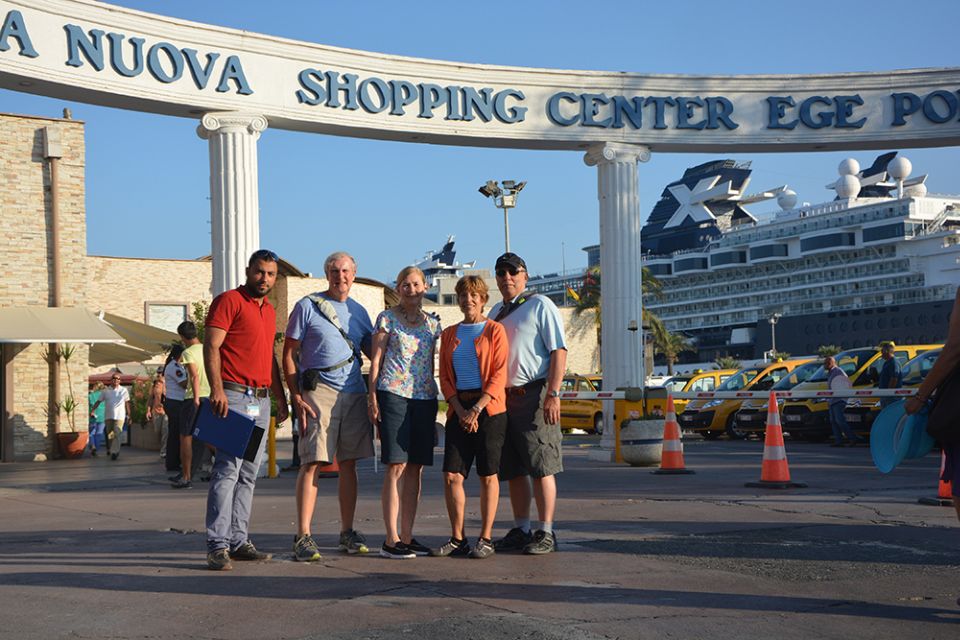
From Cruise port: Private Ephesus Shore Excursion
Book on GetYourGuide →Operated by Ephesus Tour Company · Bookable on GetYourGuide
Ephesus in five hours feels like a magic trick. This private shore excursion is a smart way to tackle major sites without wasting time, and I especially like having a licensed live guide to explain what you’re looking at plus the chance to see Ephesus ruins at a comfortable pace. One thing to plan for: the walking is real, and entrance tickets plus food aren’t included.
You’re picked up at the Kusadası cruise port arrival gate (your guide holds a sign with your name), then ride in an air-conditioned luxury van. The tour runs about 5 hours, with live guiding in English or Spanish, and it’s set up to skip the ticket line so you can get to the good stuff faster.
In This Review
- Key highlights worth planning around
- How the private 5-hour Kusadasi plan works
- The House of Virgin Mary: tradition you can feel in the details
- Ephesus ruins: Library of Celsus, Marble Street, and the stops that make it click
- A quick reality check on timing
- Basilica of St John: where the story changes from stones to meaning
- What you’re really paying for: $100 per person and the smart extras
- Tips to make your Ephesus shore day feel less rushed
- Who this tour is best for (and who should pick a different option)
- Should you book this Ephesus private shore excursion?
- FAQ
- How long is the Private Ephesus Shore Excursion?
- What’s included in the price?
- Are entrance fees included?
- Where does pickup happen?
- What languages are available for the guide?
- What should I bring and is it accessible?
Key highlights worth planning around
- Skip-the-line flow so you lose less time waiting and more time looking
- House of the Virgin Mary stop with a guided visit that frames the tradition behind the site
- Ephesus essentials like the Library of Celsus facade and Marble Street, plus room for optional highlights
- Terrace Houses if time allows to understand Roman household life beyond the big monuments
- St John’s Basilica context tying the burial tradition to the later Byzantine basilica
- Guides who teach in Spanish or English (I’ve seen names like Aysun and Mehmet Yegin associated with this experience)
How the private 5-hour Kusadasi plan works
Kusadası is basically a launchpad for Ephesus. The big win here is not just that you go, but that the day is structured like a guided route: pickup, a clear sequence of stops, and on-the-ground commentary so you don’t stare at stones wondering what you’re supposed to notice.
You’ll start in Kusadası and head out in an air-conditioned luxury van. The tour is private, so it’s not a cattle-car rhythm where you’re always rushing to keep up or waiting for someone else to catch up. In practice, this makes a huge difference on a cruise day, because your time window is tight.
The itinerary is simple on paper: House of the Virgin Mary, then Ephesus ruins, then Basilica of St John, and back to Kusadası. Within that structure, the guide can also add extra stops in Ephesus if the timing works—things like Terrace Houses or other standout ruins—so you’re not locked into only the most famous facades.
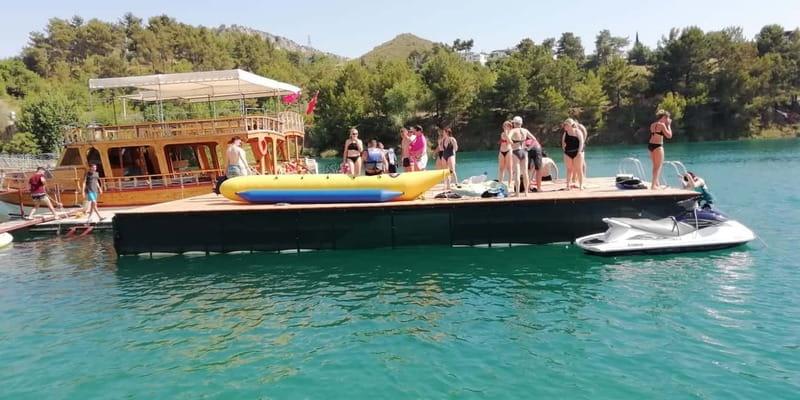
You can also read our reviews of more boat tours in Kusadasi


The House of Virgin Mary: tradition you can feel in the details
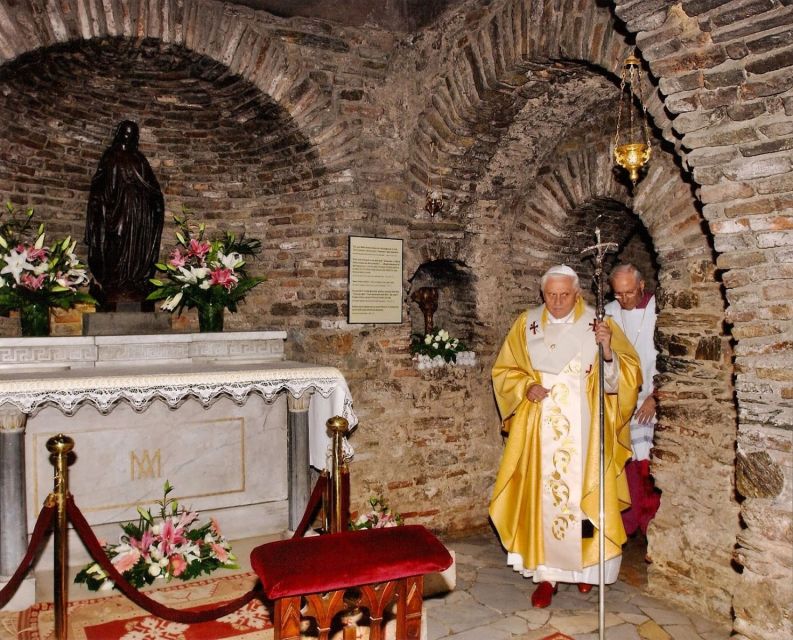
The first stop is the House of the Virgin Mary, with a guided visit of about 45 minutes. Even if you’re not a church-history person, this site tends to land emotionally because it’s presented as a physical place connected to Christian tradition: after the resurrection, Mary is said to have lived her final days in Ephesus, guided by the Apostle John.
The church at this site was built on the foundation of that house, and the information provided emphasizes that the authenticity of the location has been confirmed by Popes Paul VI and John Paul II. That matters for your visit because it explains why the setting is treated with so much care—this isn’t just a random ruin where someone later built a viewpoint.
Practical note: plan for calm walking here, but also be ready for sun and wind. Comfortable shoes matter. You’ll also want your camera for the exterior views and the general feel of the area.
Ephesus ruins: Library of Celsus, Marble Street, and the stops that make it click
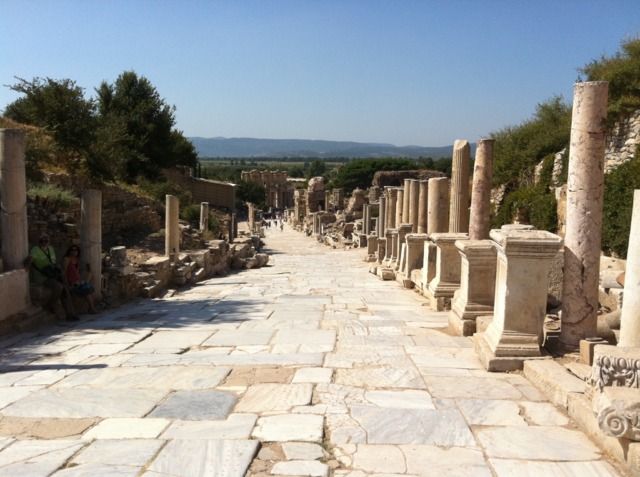
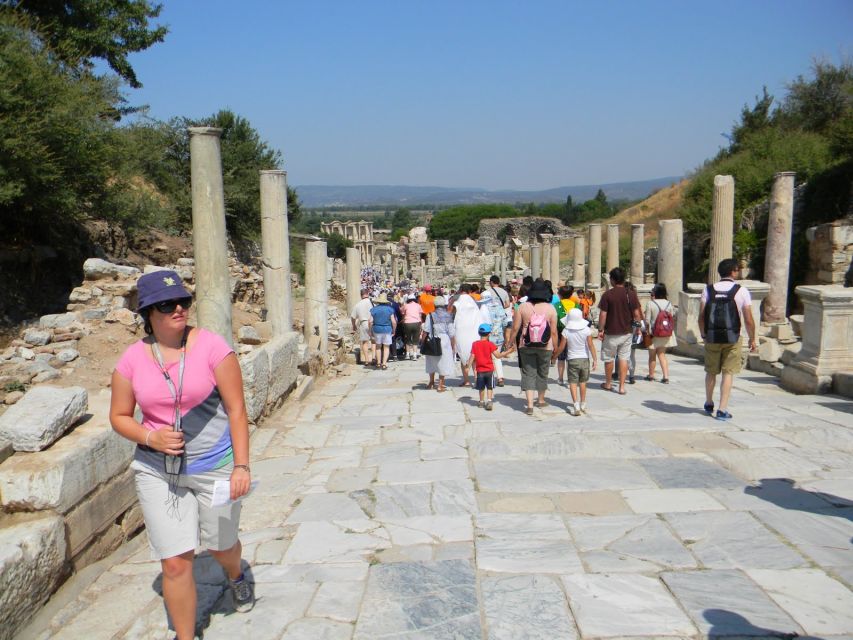
The heart of the day is Ephesus, with a guided visit of about 2 hours plus a photo stop. This is one of the best-preserved classical cities in the Eastern Mediterranean, and the guide’s job is to help you connect the layout to what people actually did there—politics, religion, daily life, and spectacle.
Here are the big moments that make Ephesus feel real:
Library of Celsus and Marble Street
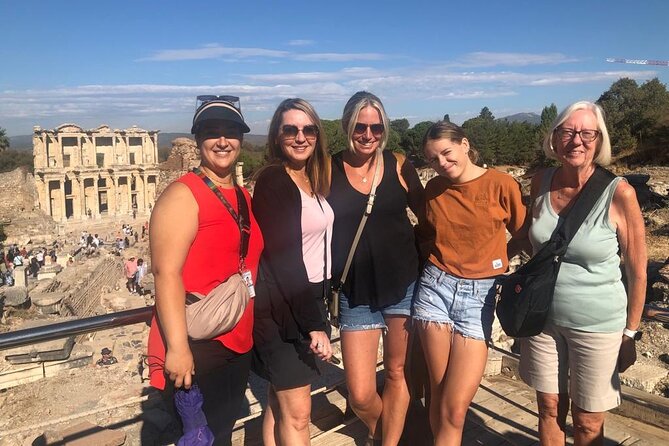
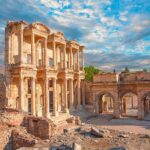
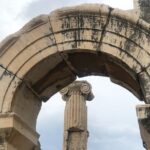
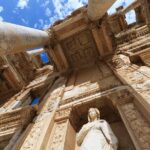
You’ll walk along Marble Street and reach the Library of Celsus, including the famous restored facade. The facade is what most people photograph, but the guide framing helps you see it as more than a pretty frontage. It’s tied to how Romans and their successors understood learning, status, and public life—an entire cultural statement carved into stone.
Great Theater and Roman-era spectacle
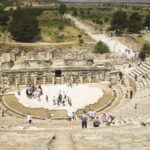
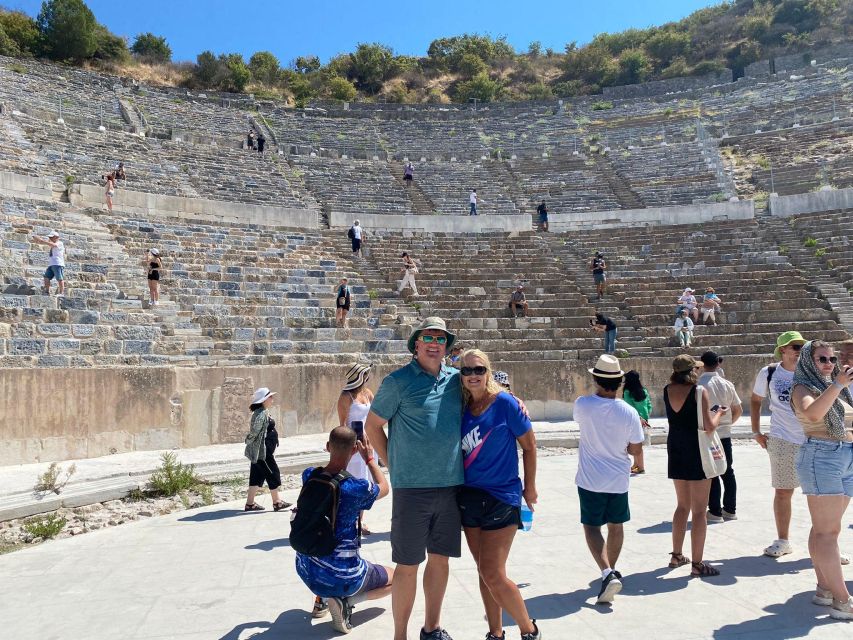
Ephesus isn’t only temples and libraries. It also has the Great Theater, where St. Paul is connected through tradition, and gladiatorial fighting is also referenced. Even if you don’t remember the dates, the scale does the convincing: this was mass entertainment and public debate on a serious stage.
Temple of Hadrian, Roman baths, and the everyday Roman city
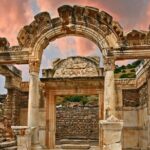
The tour information points to stops like the Temple of Hadrian and Roman baths. Those are crucial because they show you the city as a working place, not just a museum of monuments. Baths especially help you visualize routine life—an everyday rhythm of water, socializing, and status.
Temple of Artemis: what’s left and why it matters
You may also see the Temple of Artemis, one of the Seven Wonders of the Ancient World. Today, it’s mostly columns and scattered ruins. That can feel like a disappointment if you expect a fully standing wonder. But the guide interpretation turns it into a lesson: you’re seeing how later time reduced something colossal, while still preserving evidence of how huge and important it once was.
Terrace Houses: Roman family life on the hill (if timing allows)
Another optional highlight is the Terrace Houses, often called the houses of rich. These matter because they shift your focus from grand public buildings to private, family spaces. The tour notes explain the Hippodamian plan layout with roads crossing at right angles, and that the Terrace Houses include six residential units on three terraces on the slope of Bulbul Mountain.
Even better, the timeframe is long: the oldest building dates back to the 1st century BC and continued as a residence until the 7th century AD. That timeline helps you understand that the city’s story didn’t stop when the big empires changed—it kept living, adapting, and reusing space.
A quick reality check on timing
Ephesus has more than 30 linked buildings and structures, and streets still show marks of ancient chariot wheels. That’s a lot to cover in two hours. So if your priority is the Library of Celsus and the theater views, make peace with not seeing every single ruin detail.
The upside of a private guided structure is that you can spend time on the parts that match your interests, instead of ticking boxes. If you care a lot about daily life, ask your guide whether Terrace Houses can fit. If you’re all about big facades and famous names, focus on the center corridor and main photo points first.
Basilica of St John: where the story changes from stones to meaning
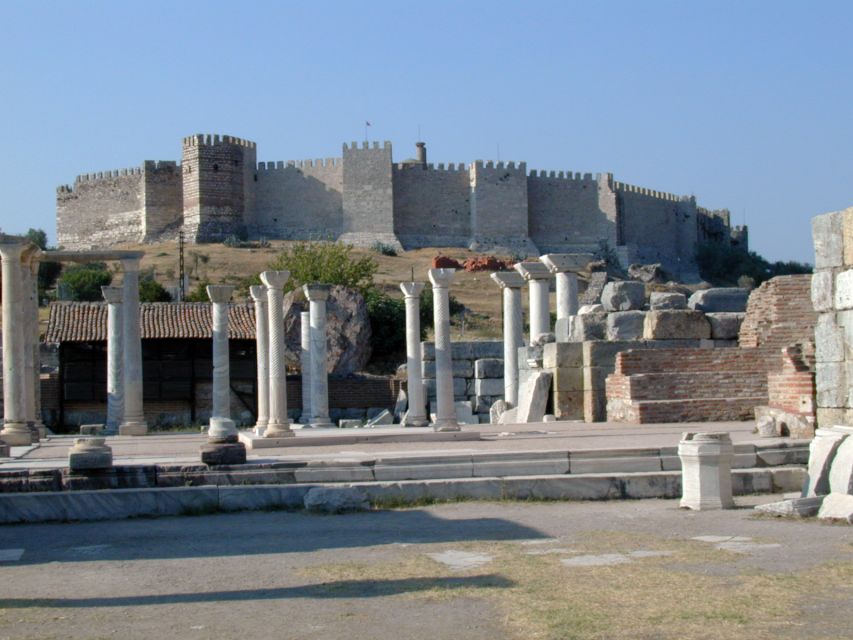
After Ephesus, you’ll head to the Basilica of St John for a guided visit of about 25 minutes. This stop is shorter, but it has a strong narrative arc built into it.
The tour framing says that St. John spent his last years in the region around Ephesus and was buried on the southern slope of Ayosolug Hill. It also notes that about 300 years after his death, a small chapel was built over the grave.
Later, during Emperor Justinian’s period (527 to 565 AD), the church was transformed into a basilica. That timeline matters because it tells you the site grew in meaning over centuries, not in one moment. You’re not just looking at Byzantine-era architecture—you’re seeing the physical layer where later generations chose to honor an earlier tradition.
If you’re walking with a guide who explains that shift, the site feels less like a stop on a route and more like a conclusion to the day’s themes: public life in Ephesus, then the later religious memory tied to the region.
You can also read our reviews of more private tours in Kusadasi

What you’re really paying for: $100 per person and the smart extras
At $100 per person for a 5-hour private tour, you’re paying mainly for three things: a professional licensed guide, transportation in an air-conditioned luxury van, and parking fees. Entrance fees and food and drink are not included, so you’ll want to budget for those separately.
Is it good value? For most cruise days, private guiding is less about luxury and more about efficiency. You skip the ticket line, you get a guided path instead of wandering, and you have someone responsible for keeping your group on track. That can easily outweigh the entrance fee add-ons, especially if you’re only in the area for a short window.
You should also think about language. Live guiding is offered in Spanish and English, which can be a big deal in places where the stone carvings and architectural details are easier to understand with real-world interpretation.
One more practical value point: this experience is associated with guides like Aysun (noted for Spanish fluency) and Mehmet Yegin (noted for being informative and attentive), and the transportation described is a comfortable limousine van. Even if your exact driver differs, this tells you the service style you can expect: clear communication and a focus on your comfort.
Tips to make your Ephesus shore day feel less rushed
Cruise excursion days can go sideways fast if you arrive unprepared. Here are the basics that fit this exact route and its walking demands.
Wear comfortable shoes first. The tour is not suitable for people with mobility impairments or wheelchair users, so you’ll be doing a lot of walking on uneven stone and paths at Ephesus. Don’t wait until you’re on the ground to realize your footwear decision was… optimistic.
Bring a camera and a sunhat. The itinerary is outdoors-heavy, with open-air ruins and multiple photo opportunities. A sunhat turns the heat from a problem into background noise.
Think in photo priorities, not in minute-by-minute panic. With only about 2 hours in Ephesus, pick your must-see items in advance. I’d anchor your plan around the Library of Celsus facade and Marble Street. After that, let the guide’s route choices help you match your curiosity—Terrace Houses if you want family life, Temple of Artemis if you’re chasing Seven Wonders context, or the Great Theater if you want spectacle scale.
Use the skip-the-ticket-line advantage. That feature is there to buy you time. Don’t waste that time on long detours right at the start. Get to your first priority site, then relax into the rest.
Who this tour is best for (and who should pick a different option)
This private excursion fits best if you want a guided route through Ephesus without the stress of joining a larger group. It’s also a strong choice if language matters to you, because the tour offers live guide service in English or Spanish.
It’s especially good for people who like their sightseeing with explanations—why a building exists, how it was used, and how the modern restoration changes what you see. The sites here are famous, but the meaning comes from the way the guide connects the pieces.
It’s not a fit for wheelchair users or people with mobility impairments, based on the tour’s stated unsuitability. If you fall into that category, you’ll likely need a different accessibility-focused format.
Should you book this Ephesus private shore excursion?
Book it if you want a well-sequenced day that hits the big Ephesus icons (Library of Celsus, Marble Street, and key ruins) plus the House of the Virgin Mary and the Basilica of St John—without wasting time. The $100 per person price makes sense when you factor in a licensed guide, air-conditioned van transport, parking, and the skip-the-line approach.
Skip it (or choose a different plan) if you’re sensitive to walking or if you prefer total freedom to wander unguided. Also remember that entrance fees and meals are extra, so the true day cost will be more than the base price.
If you want a cruise-day shortcut to real understanding—stone, story, and timing—this is the kind of private tour that lets Ephesus actually land in your mind, not just on your camera roll.
FAQ
How long is the Private Ephesus Shore Excursion?
The tour lasts 5 hours.
What’s included in the price?
The tour includes a professional licensed tour guide, transportation in an air-conditioned luxury van, and parking fees.
Are entrance fees included?
No. Entrance fees are not included.
Where does pickup happen?
Pickup is included at the Kusadası Cruise Port arrival gate. Your guide will welcome you holding a sign with your name.
What languages are available for the guide?
Live tour guide service is available in Spanish and English.
What should I bring and is it accessible?
Bring comfortable walking shoes, a camera, and a sunhat. The tour is not suitable for people with mobility impairments or wheelchair users.