REVIEW · CAPPADOCIA
From Cappadocia: 2-Night Nemrut, Sanliurfa, and Harran Tour
Book on GetYourGuide →Operated by TRAVELUX CAPPADOCIA · Bookable on GetYourGuide
Nemrut sunrise hits different when you’re there in person. This 3-day, 2-night tour strings together Mount Nemrut, the Commagene ruins, and the holy sites around Sanlıurfa, then adds the mud-brick world of Harran. I especially love how the itinerary keeps things moving without feeling rushed, and how the stops connect into one clear story across empires and religions. One consideration: you’ll spend a lot of time in the car, so it helps if you’re comfortable with early mornings and long transit.
What makes this trip feel practical is that it handles the logistics for you—air-conditioned transport, an English-speaking guide, hotel transfers, and entrance fees. You’re also covered for most of the day with meals, which matters when you’re bouncing between remote sites and small towns. Still, drinks during lunch and dinner are not included, so budget a bit extra if you like soda, tea, or other beverages with your meals.
If you want a taste of eastern Turkey that goes beyond postcards, this is a strong, value-minded way to do it. It’s also a nice fit for people who appreciate seeing how communities live today while visiting major historical places.
In This Review
- Key highlights you’ll actually care about
- A 3-Day Route That Links Nemrut, Sanlıurfa, and Harran
- Getting Started in Cappadocia: Karatayhan and the Kahramanmaraş Ice Cream
- Sunrise at Mount Nemrut: the 25-Minute Summit Walk
- Arsemia, the Septimius Severus Bridge, and Karakus Tumulus
- Sanlıurfa’s Holy Circuit: Göbeklitepe, Abraham’s Cave, and Holy Carp Pools
- Harran’s Mud-Brick Beehive Houses and the Atatürk Dam Stop
- Day 3: Birecik Bald Ibis Farm, a Tea Break, and Back to Cappadocia
- Price and Logistics: is $3,543 per group good value?
- What to Pack and How to Handle the Early Start
- Should You Book This Tour?
- FAQ
- How long is the From Cappadocia: 2-Night Nemrut, Sanliurfa, and Harran Tour?
- What languages are available for the tour guide?
- Is this a private tour, and is it wheelchair accessible?
- What time will I be picked up, and how do I find the driver?
- What’s included in the tour price?
- Is there free cancellation?
Key highlights you’ll actually care about
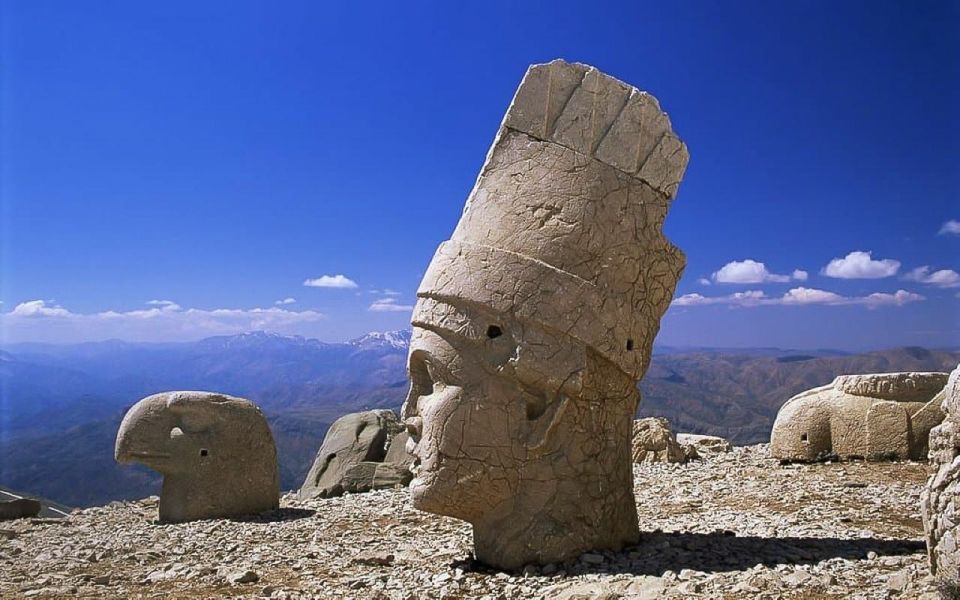
- Nemrut sunrise walk: After driving to the summit area, you walk about 25 minutes to reach the view point.
- Commagene stops in sequence: You pair Mount Nemrut with Arsemia and the Septimius Severus Bridge so the kingdom’s footprint makes more sense.
- Sanlıurfa’s signature holy sites: Gobeklitepe, Abraham’s Cave, and the Pools of Holy Carp are all part of the same day.
- Market and caravanserai atmosphere: You get time for a covered bazaar feel plus Gümrük Han.
- Harran mud-brick houses: The beehive-shaped village setting is the kind of place you can picture from stories of Abraham.
- Birecik bald ibis visit on Day 3: You add a nature stop tied to the region’s birds.
A 3-Day Route That Links Nemrut, Sanlıurfa, and Harran
I like tours that connect the dots, not just the headlines. This one does that by building a route that makes sense geographically: start in the Cappadocia area, work your way through Adıyaman Province and the Taurus region, and end with Sanlıurfa and Harran before easing back toward Cappadocia on Day 3.
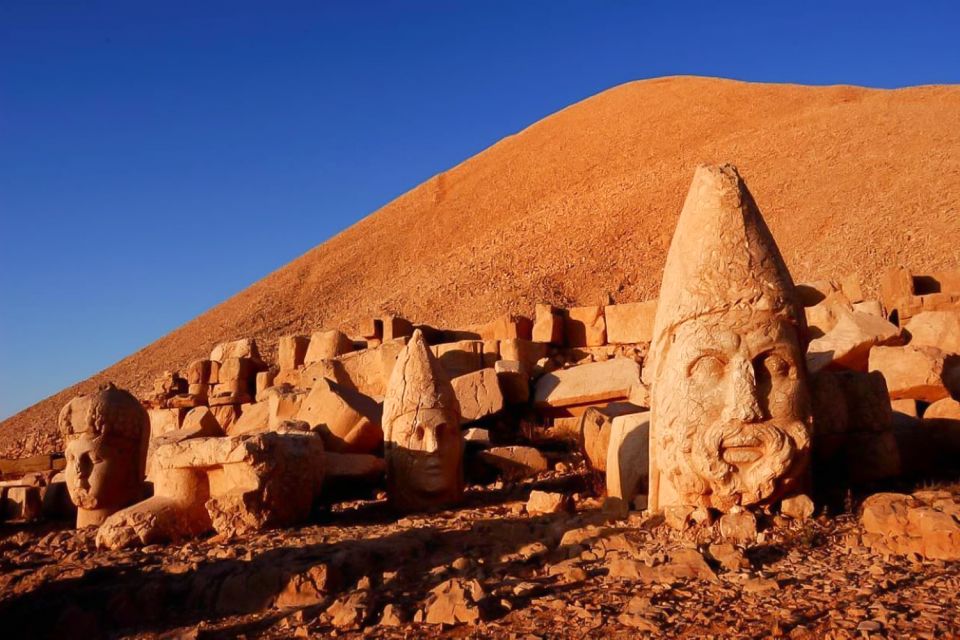
You’ll see two very different sides of eastern Turkey. First is the giant-scale archaeology of Commagene at Nemrut—statues and monumental tomb culture. Then you shift to layered spiritual sites around Sanlıurfa—temples, caves, and a living tradition symbolized by the Pools of Holy Carp. Finally, Harran brings the daily-life setting: mud-brick “beehive” houses in a village setting that still looks like the stories people connect to Abraham.
The value here is not only that you cover three destinations. It’s that the days are structured so each stop has breathing room. You’re not doing “pop-in, pop-out” photo runs as the main event—you’re doing guided viewing, walking where it matters, and then transitioning to the next meaningful layer.
You can also read our reviews of more evening experiences in Cappadocia
Getting Started in Cappadocia: Karatayhan and the Kahramanmaraş Ice Cream
Day 1 starts with a hotel pickup at 8:00 AM and then a drive that quickly gets you out of the tourist bubble and into real regional travel rhythms. After passing Kayseri, you visit the Karatayhan Caravanserai, a Seljuk stop on the Silk Road. This is the kind of place that helps you understand the route history of Turkey: roads existed long before highways, and caravanserais were the social and logistical glue for travelers and traders.
Then comes the Taurus Mountains drive. The tour schedule explicitly gives time to watch rural countryside life as you travel. You can treat this as a break between big sites—just enjoy the movement, the changing scenery, and the sense that you’re crossing a living region, not a museum map.
For me, one of the smartest touches is the Kahramanmaraş ice cream stop after lunch. It’s not a major historical site, but it’s a genuine local-food moment and an effective morale booster before the longer day continues toward Adıyaman for the overnight.
Practical note: you’re eating lunch during the drive day, and you’ll have dinner later on Day 2, so bring a calm mindset. Day 1 is more about setting the route and getting you positioned for the sunrise on Day 2.
Sunrise at Mount Nemrut: the 25-Minute Summit Walk
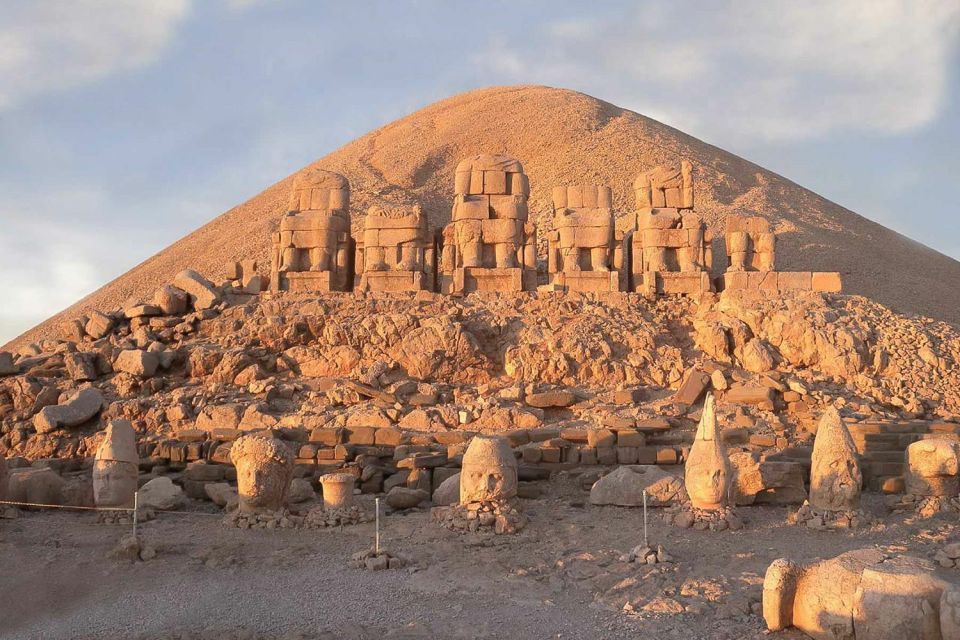
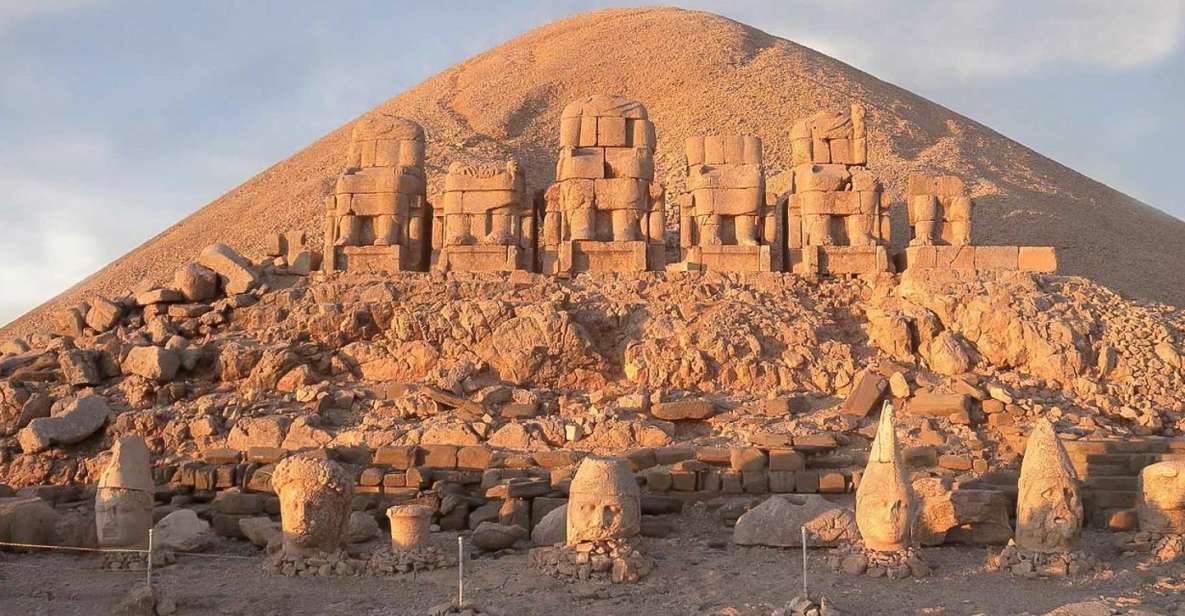
Day 2 is where the tour earns its reputation. You leave early and head for Mount Nemrut, then drive as far as the road allows. At the top area, you step out and do a roughly 25-minute walk to reach the summit viewpoint.
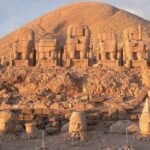
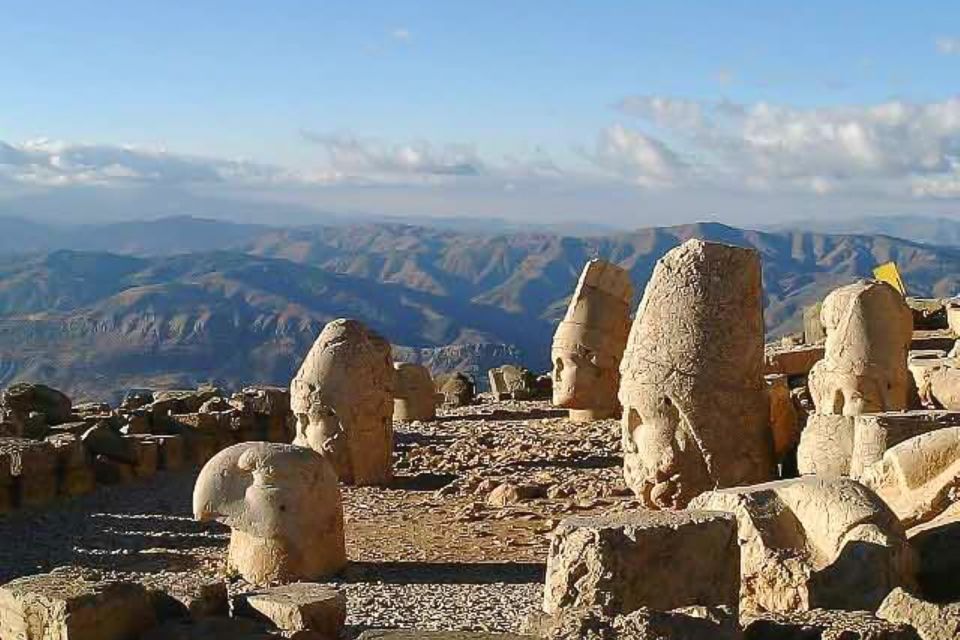
The payoff is the sunrise. You’ll watch the light hit the colossal statues and the large king and god heads that make Nemrut so unforgettable. Even if you’ve seen photos, sunrise changes the experience: you get time for quiet looking, and the scale feels more real when the light is still soft.
One useful thing to know about Nemrut is that weather matters more than most people expect. Sunrise tours tend to be cold and windy at elevation even when the rest of the day is comfortable. Wear layers you can handle quickly. If your travel style is more about comfort than early mornings, you’ll still enjoy Nemrut—but you’ll need to accept the start time as part of the bargain.
After the sunrise portion, the tour doesn’t just stop at Nemrut and call it a day. It moves you onward so the morning isn’t the only highlight.
Arsemia, the Septimius Severus Bridge, and Karakus Tumulus
Once sunrise is done, you head to Arsemia, described as the once-capital of the Commagene Kingdom. This pairing is smart. Nemrut gives you the monumental imagery, while Arsemia helps you anchor what you’re seeing in a broader settlement and political story.
Next up is the Septimius Severus Bridge over the Cendere Stream. Bridges like this aren’t just scenic stops. They show you how later empires used and built on earlier routes, and they give you a quick contrast against the dramatic stone figures of Nemrut.
Then you visit the Karakus Tumulus, tied to royal burials. The tour framing here matters because it keeps the day from becoming a scattered list of sites. You’re moving from image to city to infrastructure to burial landscape, in a sequence that makes the region feel connected.
Drawback to consider: this stretch is still part of a long travel day. Even with good pacing, you’ll be out and walking in parts of the day, so comfortable shoes are a must.
Sanlıurfa’s Holy Circuit: Göbeklitepe, Abraham’s Cave, and Holy Carp Pools
After the Commagene stops, you drive to Sanlıurfa and check into your hotel. Lunch in town is on your schedule, then you start the holy sites.
First is Göbeklitepe, a hilltop sanctuary believed by archaeologists to be among the oldest of its kind, dated to around 11,500 years old. Whether you focus on the scale, the symbolism, or the sheer time depth, Göbeklitepe is the kind of stop that makes you slow down. It also pairs well with the rest of the day because you’re not just seeing one era—you’re seeing how belief landscapes gather over millennia.
Next you visit Abraham’s Cave and then the Pools of Holy Carp around it. That combination is a classic Sanlıurfa feeling: sacred space plus living tradition. Even if you don’t go deep into the religious narrative, the site works as a cultural experience because it’s tangible and specific, not abstract.
Then the tour turns to atmosphere. You walk around an oriental covered bazaar and visit Gümrük Han. Covered bazaars aren’t just for shopping; they’re about rhythm—how people move, how light falls indoors, and how everyday trade fits into a historical setting.
One thing I like about this day is the balance. You get deep-time archaeology, then Abraham-linked sites, then market and caravanserai ambiance. It makes the day feel like a whole place, not a checklist.
Harran’s Mud-Brick Beehive Houses and the Atatürk Dam Stop
On Day 2, after lunch and the Sanlıurfa sites, the itinerary continues toward Harran. Along the way, you stop at the Atatürk Dam, described as the largest dam in the Middle East. Even if you’re not a hydrology nerd, a dam stop does something useful: it shows you how the modern region manages water and energy, side-by-side with the ancient and religious tourism culture you’re also seeing.
Then Harran arrives. You’ll visit the village known for its mud-brick “beehive” houses, mentioned in the context of Abraham’s life in the Book of Genesis. The value of Harran isn’t only the architecture. It’s the way the setting makes the stories feel visual. You can stand in the space and understand why people describe it with images, not just dates.
You’ll have dinner and an overnight stay in Sanlıurfa (the tour’s overnight remains there), so you’re not juggling multiple hotels. That keeps the trip stable and reduces the stress that often comes with multi-city itineraries.
A practical consideration here: by the end of Day 2, you’ll likely feel the length of the day. Plan on slower pacing in the evening. You’re traveling a lot, and the best way to enjoy Harran is to actually let it register rather than rushing through it for photos.
Day 3: Birecik Bald Ibis Farm, a Tea Break, and Back to Cappadocia
Day 3 is a gentler finish with a nature stop that adds variety. You depart Sanlıurfa to Birecik, which is famous for bald ibises that live there. The tour includes a visit to a bald ibis breeding farm, so you’re not only chasing wildlife sightings—you’re seeing a conservation and breeding effort.
This is a smart last-day choice. After archaeology and sacred sites, you get something grounded in contemporary life and ecology. It’s also a good emotional reset before the long return drive.
After lunch, you drive up to the Taurus Mountains again. There’s a short tea break, then you head back toward Cappadocia. That tea stop matters more than it sounds. It’s a real moment to stretch, refuel, and chat with your guide about what you’ve seen so far.
By the time you return, you’ll feel you actually understand the region’s geography. The Taurus Mountains are not just a route; they’re part of why these places developed as they did.
Price and Logistics: is $3,543 per group good value?
This tour is priced at $3,543 per group up to 1, and it runs for 3 days / 2 nights. The key question isn’t whether the number looks big or small. It’s what’s included and how much you’d pay to replicate it on your own.
Here’s what you’re getting bundled:
- Air-conditioned transportation throughout
- A professional English-speaking tour guide
- Hotel accommodations for 2 nights
- Meals: 2 breakfasts, 3 lunches, 2 dinners
- Entry fees of museums/sites
- Hotel pickup and drop-off
That bundle is where the value often shows. If you attempted to build this yourself, you’d pay separately for private transport across multiple provinces, a guide to interpret sites like Nemrut and Göbeklitepe, and then the entry fees and meals that keep you from scrambling for good options.
What’s not included is drinks at lunch and dinner and personal spending. That’s normal for tours, but it’s still something to plan for so you’re not surprised when you’re paying for water or soft drinks on top of the meal plan.
Also, this is a private group. Private doesn’t just mean comfort. It usually means the schedule can fit your pacing, and you’re less likely to feel lost when the guide explains what you’re looking at. If you like a more personal travel style, this format tends to feel worth it.
What to Pack and How to Handle the Early Start
This itinerary has a built-in rhythm: early mornings, walking at viewpoints, then a long chain of stops. That means you should pack for comfort, not just weather.
My quick packing list:
- Layers for sunrise and cooler periods near higher elevations
- Comfortable walking shoes for the Nemrut summit walk (about 25 minutes)
- A light jacket you can manage easily
- Sunglasses and sunscreen, since you’ll be outside for multiple view points
For timing, understand that the tour starts with an 8:00 AM pickup on Day 1, then shifts into an early departure on Day 2 for Nemrut sunrise. If you’re the type who hates waking up early, this tour will feel harder on you than on people who don’t mind mornings.
Finally, bring a flexible mindset about transit. There’s a lot of driving because the sites are spread out across Adıyaman, Sanlıurfa, and the Taurus corridor. The upside is you’ll see more of the region than you would with a single-destination tour.
Should You Book This Tour?
I’d book this if you want one organized trip that connects Nemrut, Sanlıurfa’s holy sites, and Harran in a way that feels like a real journey. I also think it suits you if you care about having a guide interpret what you see—especially for places like Göbeklitepe, where context turns photos into understanding.
I’d think twice if you’re very sensitive to long car time, or if early sunrise starts will drain you more than you expect. This isn’t a relaxed, slow-holiday style tour. It’s a well-run sequence of major moments.
One more note from the spirit of the experience: you pass through areas impacted by earthquakes, and that can add an extra emotional layer to the trip. If you’re open to seeing how communities carry on while visiting historic sites, you’ll likely find the whole route more meaningful.
FAQ
How long is the From Cappadocia: 2-Night Nemrut, Sanliurfa, and Harran Tour?
It lasts 3 days and includes 2 nights of accommodations.
What languages are available for the tour guide?
The tour guide is available in English, Spanish, Portuguese, Japanese, Italian, French, Arabic.
Is this a private tour, and is it wheelchair accessible?
Yes, it’s listed as a private group tour, and it is wheelchair accessible.
What time will I be picked up, and how do I find the driver?
You’ll be picked up at your hotel and should wait in the lobby 10 minutes before the scheduled pickup time. The driver will hold a sign with your last name, and they will wait no longer than 15–20 minutes after pickup time.
What’s included in the tour price?
The price includes air-conditioned transportation, a professional English-speaking tour guide, 2 nights accommodations, 2 breakfasts, 3 lunches, 2 dinners, entry fees, and hotel pickup/drop-off.
Is there free cancellation?
Yes. You can cancel up to 24 hours in advance for a full refund.
![Hot-Air Balloon Ride in Cappadocia [bestseller] - Pigeon Valley: what you’ll be looking for and why it matters](https://7.theturkeytraveller.com/wp-content/uploads/hot-air-balloon-ride-in-cappadocia-bestseller.jpg)