REVIEW · KUSADASI
Ephesus Small Group Day Tour from Kusadasi
Book on Viator →Operated by Alaturca Ephesus · Bookable on Viator
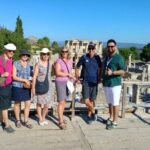
The easiest way to fall for Ephesus is simply walking it. This small-group day trip pairs the UNESCO ruins with the House of the Virgin Mary, plus stops that show how Seljuk-era Turkey and ancient Greece overlapped.
I like that the tour includes hotel pickup/drop-off, a real lunch buffet, and entrance fees so you don’t spend the day doing math. You also get a guide who can explain what you’re seeing without leaving you stranded in stone.
One thing to keep in mind: the day runs full and can include shopping-style workshop stops, so if you hate that, set expectations early.
In This Review
- Key highlights worth your time
- Ephesus from Kusadasi: why this trip works
- Morning pickup and getting to the ancient city on time
- Meryemana (House of the Virgin Mary): a calm start with big views
- Ancient City of Ephesus: the UNESCO ruins that actually make sense
- Odeon and the theatre: when Ephesus turns visual
- Celsus Library and Temple of Artemis: the “wow, wow” combo
- Temple of Hadrian: small stop, strong details
- Lunch buffet: how to make the meal part of your day
- Isabey Mosque in Selçuk: a different style of sacred and civic space
- Shopping stops: where the tour can feel great or a bit annoying
- Tour pace, group size, and what you actually get for the money
- Who this tour suits best
- Should you book this Ephesus Small Group Day Tour from Kusadasi?
- FAQ
- FAQ
- What time does the tour start, and what pickup time should I expect?
- Is lunch included in the price?
- How many people are in the group?
- Is the tour offered in English?
- Are entrance fees included?
- Do I need a paper ticket?
- Can I cancel for free?
Key highlights worth your time
- Max 15 people means you’re not fighting for attention at every ruin photo stop.
- Entrance fees + lunch included gives this a strong value feel for a full-day schedule.
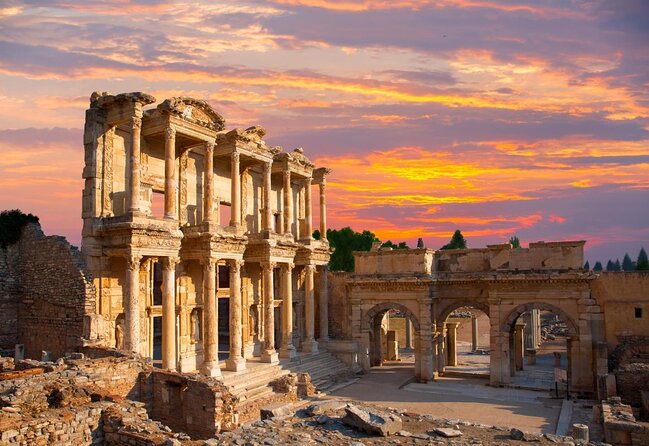
- Ephesus landmarks like the Celsus Library and Great Theatre are built into the route, not left to chance.
- Meryemana (Virgin Mary’s House) offers a calmer, spiritual contrast to the Roman city blocks.
- Temple of Artemis remains are quick but memorable as a last “ancient wonder” reminder.
- Isabey Mosque adds a different Turkey chapter with a Seljuk architectural style.
Ephesus from Kusadasi: why this trip works
Kusadasi is a convenient base, but the ruins at Ephesus are spread out and easy to underestimate. This tour fixes that with an early start, a focused route, and a guide to help you understand what you’re looking at. The result is a day that feels big, but not chaotic.
For me, the biggest win is how the itinerary builds rhythm. You start with the House of the Virgin Mary, then hit the most famous Ephesus sights in a logical loop, and finish with Artemis and a bit of modern-day religious architecture at Selçuk’s Isabey Mosque.
The second win is practical value. You’re paying once for a bundle: pickup, guide, lunch buffet, and entrance fees. If you’ve ever tried to cobble together Ephesus tickets, transport, and meal plans on your own, you’ll appreciate how this removes friction.
You can also read our reviews of more tours and experiences in Kusadasi.

Morning pickup and getting to the ancient city on time
Pickup starts around 8:30am, with Kusadasi hotel collections typically running 8:00–9:00am. If you’re staying in Selçuk, pickup is usually 9:00–9:30am. The exact time can shift depending on where you’re picked up and how many other stops are on the route.
That flexibility is normal for small-group touring, but it does mean you should plan to be ready a bit before your window. Also note the simple but important rule: your final pickup time can be set the day before, so contact the pickup operator to confirm. It’s the kind of tiny step that saves a lot of worry.
On the drive, you’ll hear context about Ephesus—especially its role as a Roman capital of Asia Minor during its peak between roughly 1 AD and 2 AD. It’s not just trivia. Hearing the backstory before you step into the ruins helps you see the city as a place where people lived, worked, worshiped, and traded.
Meryemana (House of the Virgin Mary): a calm start with big views
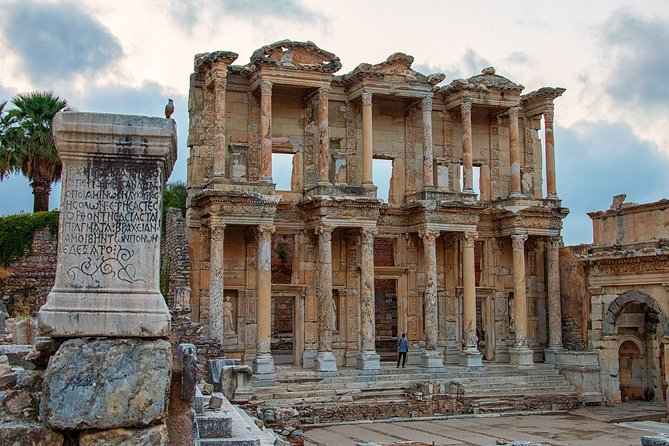
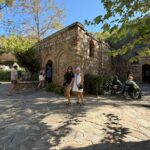
The day begins at Meryemana, also called the House of the Virgin Mary or Meryem Ana Evi. The site is associated with the belief that Mary spent her last years in Ephesus, with the story linked to St. John. You’ll get about 45 minutes, including admission.
The setting matters here. The house sits on Bulbul Mountain, so even before you focus on the shrine details, you’re greeted by that sense of elevation and quiet that you don’t get inside the crowded Ephesus ruins.
Inside, you’ll see the shrine and spend time with the space as it’s meant to be visited. If you want to follow the local custom, you might notice references to a spring said to have healing qualities—people often choose to try it. Just treat it as a personal moment, not a promise.
Practical tip: dress respectfully. This stop is religious in tone, and it tends to set the mood for the rest of the day.
Ancient City of Ephesus: the UNESCO ruins that actually make sense
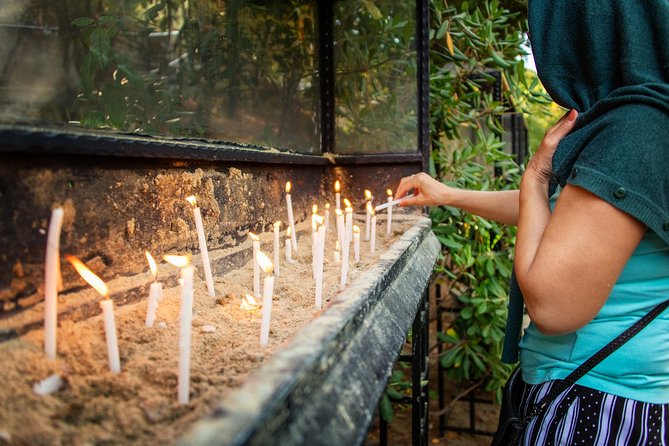
Ephesus is the big target. This stop is where the tour earns its name: around 2 hours in the Ancient City, with admission included. Ephesus is often called Turkey’s best-preserved classical ruin, and once you start walking, you see why.
You’ll move through key streets and public spaces that give you a real sense of Roman-era daily life—trading routes, civic areas, and places people gathered. The city is also tied to the cult of Cybele, the Anatolian fertility goddess, so even the spiritual layer of Ephesus isn’t one-note.
Among the sights you’ll likely spend time with:
- Agora areas (the civic hub energy)
- Arcadian Way (the grand marble-paved street feeling)
- Roman Baths and Public Latrines (yes, that’s part of the story)
- Temple of Hadrian area moments while you’re on Curetes Street
Why this matters for you: Ephesus gets confusing fast if you’re wandering with no context. With a guide pointing out what each monument served—social, political, religious—the stones connect into one picture.
Time note: two hours sounds short for Ephesus, but the route is selected to hit the most important “high-impact” blocks. If you want to linger in every corner, you’d need a longer independent visit. This tour is built for people who want the essentials without burning a whole day to get your bearings.
Odeon and the theatre: when Ephesus turns visual
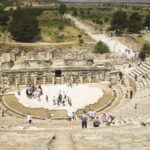
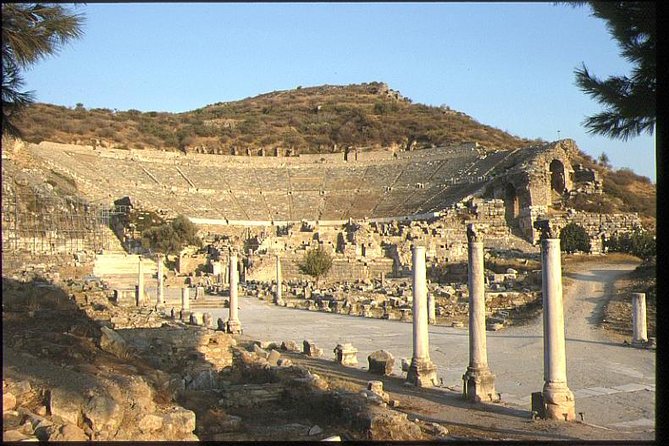
After the main city route, the tour continues into performance-and-assembly spaces. You’ll get time for the Odeion (about 15 minutes) and the Great Theatre (about 20 minutes).
The Great Theatre is a standout. It was built in marble and could seat up to around 24,000 spectators. The scale is the point: you can almost feel how public speaking, festivals, and performances shaped daily life. Even if you’re not the “ancient history” type, you’ll still get the wow factor because the proportions are so readable.
The Odeion is smaller and semi-circular, built in the 2nd century AD. The style signals a different use—concerts, social events, political meetings. It’s the kind of stop that reminds you Ephesus wasn’t only about temples and merchants.
If you’re someone who likes photos, these stops help. The theatre lines and the Odeion shape give you angles that look dramatic fast, without you needing a sunset to make it special.



Celsus Library and Temple of Artemis: the “wow, wow” combo
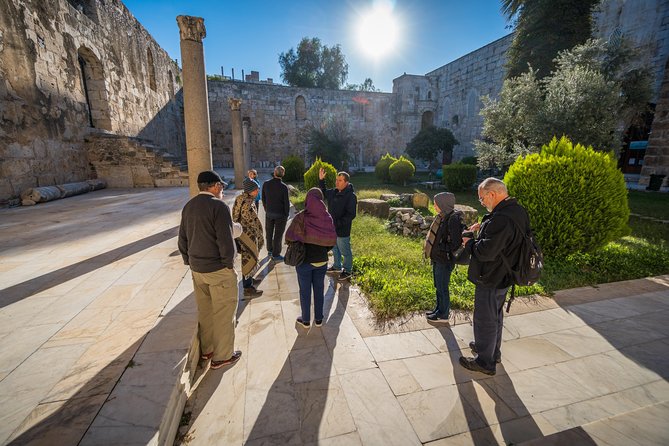
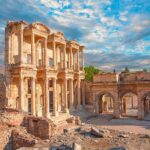
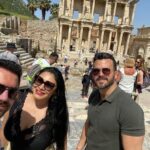
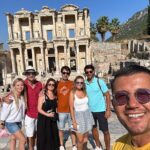
Next up is the monument that pulls most people in: the Library of Celsus. You’ll spend about 20 minutes here, and the library’s facade gives you a strong sense of structure and symbolism even after centuries of change. It dates to the early 2nd century AD and has been extensively restored.
What makes Celsus so satisfying is how it works visually. The facade uses design tricks—like the way the convex facade base helps emphasize the central elements—so what you see isn’t just ruins, it’s an intentionally built stage for knowledge and civic identity.
From there, the route includes the Temple of Artemis. This is a quick stop (about 20 minutes) with the reminder that what’s left is mostly a lone reconstructed pillar in an otherwise open area. It’s still worth it because Artemis was one of the Seven Wonders of the Ancient World, and the contrast between legend and survival is striking.
For you, this stop works best if you treat it like a short legend check. You’re not going to see the full temple the way ancient visitors did. But you’ll get the story anchor—and a strong mental image of how big things once were.
Temple of Hadrian: small stop, strong details
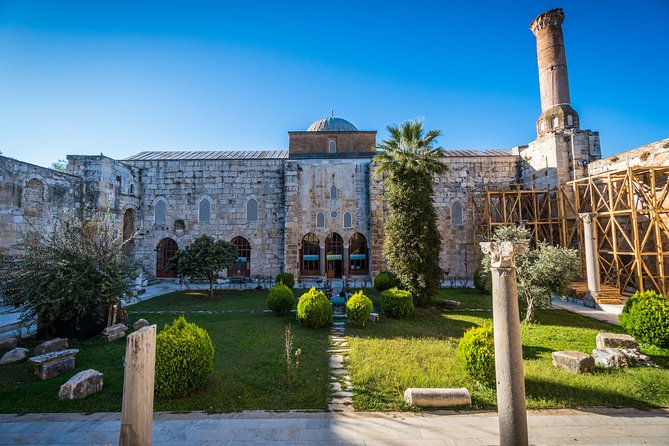
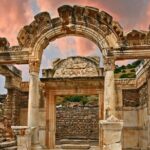
You’ll also pass by the Temple of Hadrian with about 15 minutes allocated. It’s dedicated to the Emperor Hadrian, constructed in the early 2nd century AD, and considered one of the better-preserved structures on Curetes Street.
This is a stop for people who like clean architectural lines and readable ruins. It’s not the largest monument on the list, but it’s attractive and gives you another angle on Ephesus as a Roman civic center—emperors, ceremonies, and city pride.
If you’ve had days where “one more temple” becomes a blur, this one helps break the monotony. It’s compact, detailed, and visually rewarding.
Lunch buffet: how to make the meal part of your day
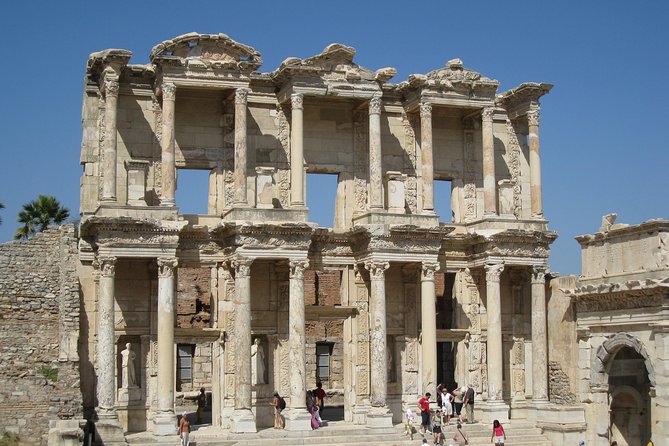
Lunch is included as a buffet lunch, and it’s built in as a break between long blocks of walking. Drinks are not included, so if you want tea, soda, or water beyond what’s provided at the restaurant, plan to pay separately.
The best way to use lunch is to treat it as a recharge, not a rushed bite. You’ll still be visiting more sites after lunch, so take a moment to eat at a comfortable pace and use the restrooms before you board the next segment.
Also, bring your patience for Turkish food. The lunch is often the part people remember because it’s a proper meal, not a quick sandwich break. It’s an essential part of the tour’s value because it would cost time and effort to arrange yourself while trying to keep up with a fixed schedule.
Isabey Mosque in Selçuk: a different style of sacred and civic space
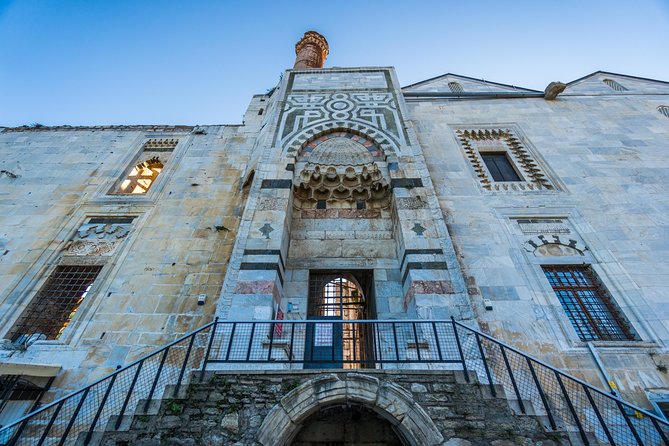
After Ephesus, the tour heads to nearby Selçuk for Isabey Mosque, with about 20 minutes on the site. The mosque is built in a post-Seljuk/pre-Ottoman transitional style, associated with a time when Selçuk was the capital of the Aydin Emirate.
There’s an Arabic inscription above the entrance stating a build date of 1375, which gives you a clear historical anchor that’s easy to remember. This stop changes the tone of your day from Roman ruins to a living architectural tradition that looks and feels different.
If you’re visiting Turkey for variety—beaches and cities one day, ancient sites the next—this mosque stop is a helpful shift. It’s also a good visual comparison point. You’ll see how different cultures built for worship, community, and identity.
Shopping stops: where the tour can feel great or a bit annoying
Here’s the practical reality check. Some versions of this type of itinerary can include workshop-style stops tied to carpets and leather (and occasionally other crafts). The aim is usually educational plus sales, and the pacing can feel more promotional than museum-like.
This is the one part that can change the day experience depending on your temperament. If you’re happy to browse and you don’t mind the sales energy, it can be a fun cultural look at how products are made. If you want pure ruins and zero pressure, it can feel like time you’d rather spend outside.
I’d handle it like this: decide in advance what kind of visitor you are. If you don’t want to buy, politely slow-roll your interest and focus on the process, not the price pitch. If you do want to buy, treat it like any market purchase—take your time, compare value, and don’t let urgency steer you.
Tour pace, group size, and what you actually get for the money
The tour is listed as 7 hours (approx.) and capped at 15 travelers. That small-group limit matters. You get enough room to ask questions, and the guide can keep the group moving without turning it into a sprint.
The tradeoff is pacing. Ephesus is huge, and you’re not doing it “slow.” You’re doing it in the way most people can handle on one day: a curated route hitting major landmarks like the Celsus Library, Great Theatre, and other major streets and civic sites.
Value-wise, at $174.60 per person, the pricing makes sense when you look at what’s bundled: hotel pickup/drop-off, English guide, entrance fees, and a lunch buffet. The cost feels more reasonable when you compare it to buying tickets plus transport plus a guide separately.
One more small consideration: language and delivery style. If you prefer stories that feel less like a lecture, it may help to bring a few specific questions. Ask what everyday life looked like in Roman times, or how a monument functioned (politics, worship, theater). Guides tend to respond best when you steer the conversation.
Who this tour suits best
This Ephesus Small Group Day Tour is a great match if you:
- Want the big Ephesus sights in one efficient day without map stress
- Like religious and historic variety in the same outing (Meryemana to Ephesus to Isabey Mosque)
- Appreciate a guide’s explanations while you walk
- Want lunch and entrance fees taken care of
It’s less ideal if you:
- Hate shopping-style stops and pressure to buy
- Want to spend hours wandering quietly with no schedule
- Prefer a slower pace and deeper time at fewer sites
Should you book this Ephesus Small Group Day Tour from Kusadasi?
Yes, I’d book it if your goal is a well-run, high-impact day that hits the core monuments without you doing logistics. The small group size, included entrance fees, and built-in lunch make it feel like a solid deal rather than a ticketed sightseeing scramble.
I’d also book it with one clear expectation: your time in Ephesus is curated, not endless. And you may encounter workshop/sales stops, which can turn a perfect ruin day into a slightly salesy one.
If that shopping factor could bother you, still consider booking—but go in prepared to focus on the sights and politely keep your wallet closed unless you genuinely want something.
FAQ
FAQ
What time does the tour start, and what pickup time should I expect?
The tour starts around 8:30am. If you’re in Kusadasi, pickup is usually 8:00–9:00am. From Selçuk, it’s usually 9:00–9:30am. Final pickup time may vary and is decided 1 day before, so it’s important to contact the pickup operator.
Is lunch included in the price?
Yes. The tour includes a lunch buffet. Drinks are not included, so you’ll pay for beverages separately.
How many people are in the group?
This experience is limited to a maximum of 15 travelers.
Is the tour offered in English?
Yes, it’s offered in English.
Are entrance fees included?
Yes. The tour includes all fees and taxes, and admission tickets are included for the listed stops.
Do I need a paper ticket?
No. You’ll receive a mobile ticket.
Can I cancel for free?
Yes. There’s free cancellation, and you can cancel up to 24 hours in advance for a full refund. If you cancel less than 24 hours before the start time, the amount paid is not refunded.