REVIEW · EPHESUS
Ephesus Entry Ticket with Mobile Phone Audio Tour
Book on GetYourGuide →Operated by Clio Muse Tours · Bookable on GetYourGuide
One stone city can feel like several lives at once. This Ephesus experience pairs skip-the-line entry with a phone audio tour, so you can move your pace while still following a solid route through the big-name ruins. I particularly like that it’s built around recognizable stops, from the Celsus Library to the Church of Mary.
Two things I like a lot: the download-and-entry process is set up to be pretty straightforward, and the audio lets you understand what you’re looking at without fighting a crowded guided group. You also get offline content and interactive maps, which matters because your phone won’t always behave well in open-air ruins.
The main drawback to consider is simple: at $77, you’re paying for the ticket plus the audio tech. If your phone isn’t compatible or the audio start point isn’t clear, you could lose time or end up re-wrapping your plan on the fly.
In This Review
- Key highlights to know before you go
- Ephesus Entry with Phone Audio: Why This Setup Works
- Entering Ephesus: Upper Gate (South Entrance) Near Magnesia Gate
- Price and Value: What $77 Covers (and What It Doesn’t)
- Phone Prep That Can Make or Break the Day
- The Route Begins: State Agora and Bouleuterion
- Temple of Domitian and the Curetes: How Power and Trade Moved
- Scolastica Baths and the Arsinoe Grave: The Stuff Between the Headlines
- Celsus Library: The Landmark You’ll Understand Better
- From Mazeus and Mithridates Gate to the Grand Theatre
- Church of Mary Ruins: The Christian Layer at the End
- Pacing, Timing, and Comfort in a 2.5-Hour Visit
- Accessibility and What You Should Plan For
- Who This Tour Fits Best
- Should You Book? My Decision Guide
- FAQ
- Where is the best place to start the audio tour?
- How long does the Ephesus audio tour take?
- Does the ticket include skip-the-line entry?
- What languages are available on the phone audio tour?
- Can I use the tour offline?
- Do I need headphones or a smartphone?
- What phone types are supported?
- How much storage does the audio tour need?
- Is Ephesus wheelchair accessible on this tour?
- What should I bring for the walk?
- Are there conditions for free entry for children or people with disabilities?
Key highlights to know before you go
- Start at the Upper Gate (South entrance) near Magnesia Gate to match the tour’s routing and map.
- Offline audio + interactive maps help you keep your bearings as you move between major ruins.
- 2.5 hours is a comfortable window for hit-the-essentials touring at Ephesus.
- You’ll pass famous anchors like Celsus Library and the Grand Theatre without guessing what to look for.
- The route includes quieter-but-fascinating stops like Scolastica baths and the grave of Arsinoe.
Ephesus Entry with Phone Audio: Why This Setup Works
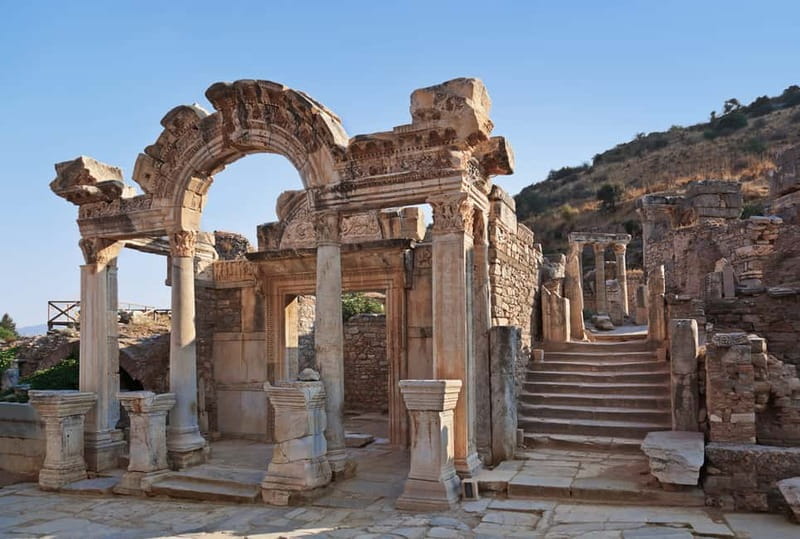
Ephesus is one of those sites where your brain needs help. The ruins are dramatic, but the story won’t be obvious just from walking around. This self-guided format solves that problem in a low-stress way: you get skip-the-line entry first, then you press play and learn as you go.
I like that the audio tour isn’t generic. It’s tied to a logical walking progression through the site’s layers—Greek founding, Roman power, and later Christian significance. You end up with a route that feels like following a path locals might have known, even though you’re standing in ruins.
You do give up a live person’s ability to answer questions in real time. Still, for most people, the combination of audio guidance and a clear stop list makes the day easier and more rewarding.
A few more Ephesus tours and experiences worth a look
Entering Ephesus: Upper Gate (South Entrance) Near Magnesia Gate
Your biggest practical win is where you start. The tour is designed to begin at the Upper Gate, the South entrance, near the Magnesia Gate. Go straight to that entrance and use the skip-the-line ticket process there.
This matters more than it sounds. Audio tours work best when you start on the right stop. If you begin from another entrance or assume the route starts where your feet land, you can get out of sync with the map and the stop order.
If you’re coming from Kusadasi or Selçuk, a taxi is the easiest way to reach the Upper Gate area. Then keep it simple: arrive, enter, and start your audio right away. Bring your patience for the fact that Ephesus can be spread out, but this starting point keeps the tour on track.
Price and Value: What $77 Covers (and What It Doesn’t)
At $77 per person for 2.5 hours, you’re buying three main things:
- Ephesus entry (e-ticket)
- Skip-the-line access
- A smartphone audio tour with offline content and interactive maps
What you’re not buying is a live guide, transportation, or a snack. That’s not automatically bad—it’s a budget choice. You’re paying to remove friction at the ticket gate and to add a guided narrative as you walk.
Here’s how I’d judge the value: if you want to see Ephesus but you also hate feeling lost or reading random plaques that don’t connect the story, the audio value is real. If you already know the site well or you’re comfortable touring alone with a printed guide, it may feel pricey compared with other audio-ticket options at major European ruins.
Phone Prep That Can Make or Break the Day
This is a tech-forward tour, so prep is part of the experience. You’ll receive a separate email after booking from the local partner with your ticket and audio tour, and it can land in spam, so check there first.
Make sure your phone meets the needs:
- You need an Android or iOS phone
- You need enough storage for about 100–150 MB
- The audio is not compatible with Windows phones and certain older Apple devices (like iPhone 5/5C and older iPads and iPod Touch)
Also plan for hardware. The tour does not include a phone or headphones, so you’ll want headphones and a charged smartphone. Bring water, comfortable shoes, and a hat—it’s open-air walking for the whole duration.
This is where small snags can show up. One person had trouble downloading audio, and another said they didn’t notice where the audio start point was. Your best defense is to start early enough to troubleshoot at the gate area, not halfway through the route.
The Route Begins: State Agora and Bouleuterion
Your first major story beats come fast. The tour starts with the State Agora, once the political heart of Ephesus. This is where the city’s decision-making energy would have played out in a visible public space—so when you stand there now, the audio helps you shift from sightseeing to understanding function.
Next is the Bouleuterion, the meeting point of the city council. You’ll learn how a place built for governance could also double as a stage for arts or public performance. Even if the architecture looks similar to other ruins at first glance, the audio narration helps you read the space by purpose.
This is one of the best parts of an audio-driven visit: you’re not just seeing stones. You’re getting a mental map of what people did there. That’s also why skip-the-line access matters—because it gets you into the site while your attention is still sharp.

Temple of Domitian and the Curetes: How Power and Trade Moved
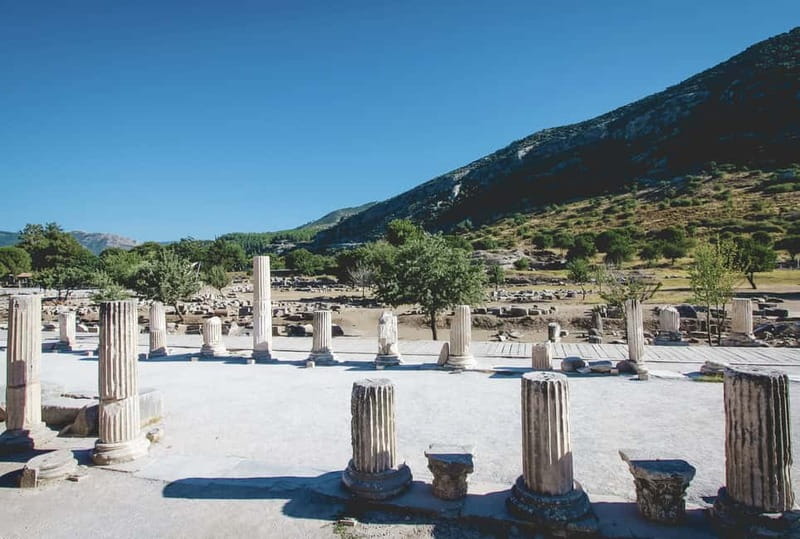
Then you move into a zone where Roman influence becomes very visual. The Temple of Domitian has an unusual layout with a U-shaped altar. That detail can be easy to miss if you’re only looking for the biggest columns and the most photogenic angles. The audio helps you notice the layout logic and why it mattered.
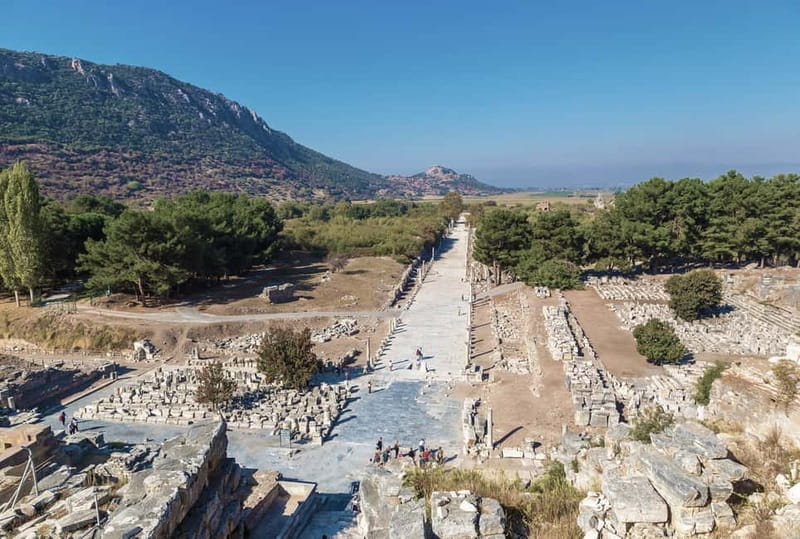
After that comes the Curetes, the street that connected Ephesus’s political and commercial centers. Think of it as the daily workflow of the city: governance and business not living in separate worlds.
You’ll also hear the legend of the emperor’s fountain. Legends are tricky in ruins, but they’re useful here because they teach you how people wrapped meaning around public works. Even if you take the story as legend rather than literal fact, it still gives you a lens for how the Romans presented authority.
Scolastica Baths and the Arsinoe Grave: The Stuff Between the Headlines
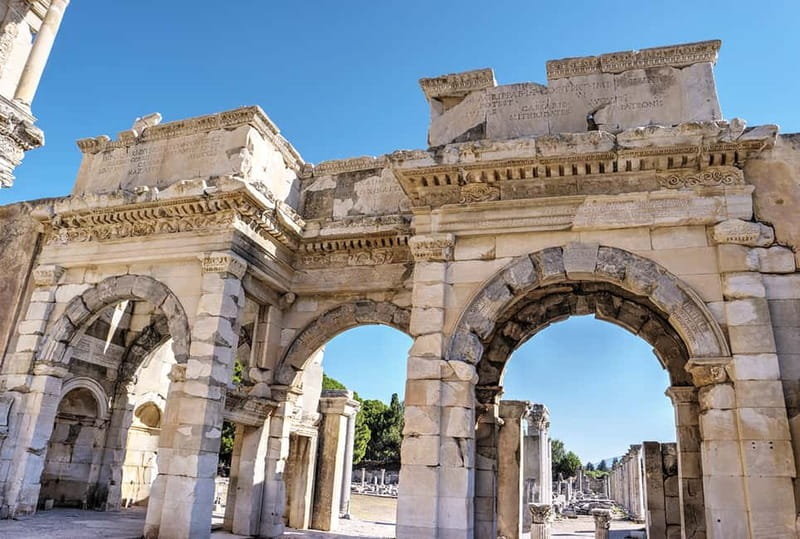
Ephesus has big-name highlights, but the better days are often the ones that include the in-between. The route brings you to the Scolastica bath complex, including marble latrines. That’s the kind of detail that turns “Roman ruins” into something practical and human: hygiene, routine, and daily comfort.
Next you’ll reach the grave of Arsinoe, described as an Egyptian princess. That alone adds a layer of international flavor, suggesting how Ephesus sat within larger Mediterranean networks. The audio helps you keep that context in mind instead of just walking past a tomb niche.
This portion is especially good for pacing. You don’t want to sprint through everything. Audio tours work best when you pause naturally—like when the story changes from politics to daily life.
Celsus Library: The Landmark You’ll Understand Better
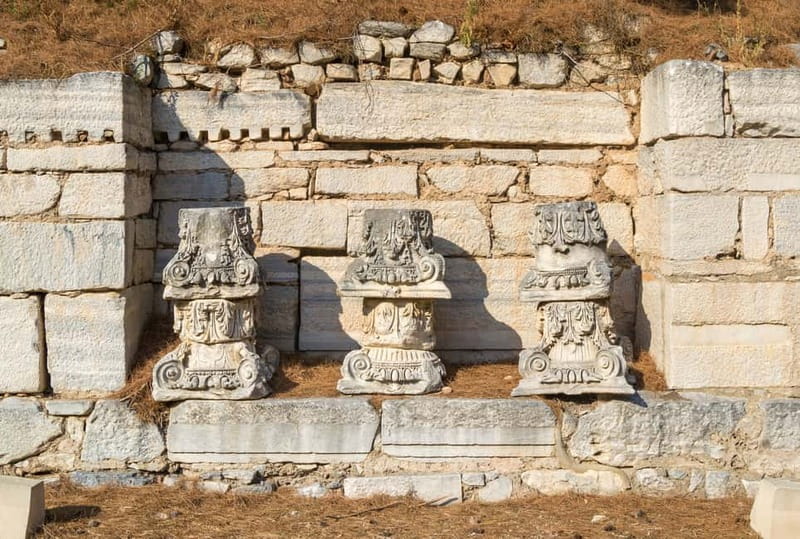
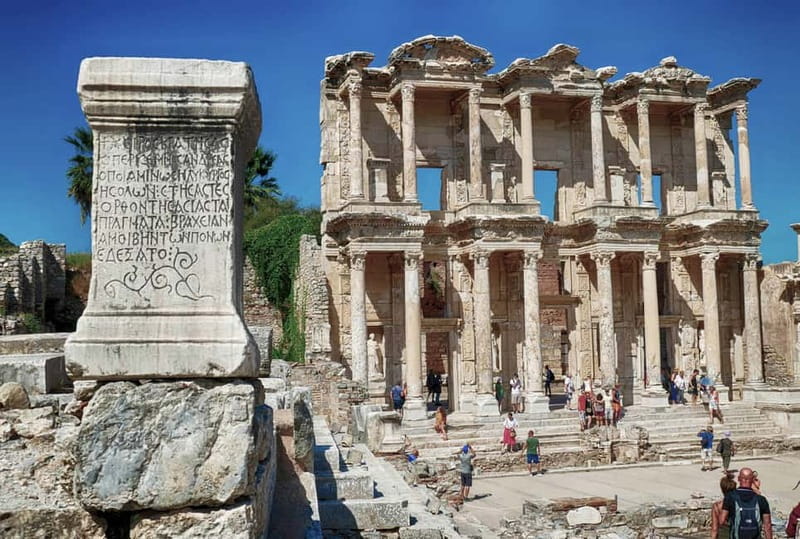
If you’re only choosing one “must-see” moment at Ephesus, it’s hard to beat the Celsus Library. It’s probably the most famous landmark of the site, and the audio experience gives you more than a postcard view.
In a normal visit, you might see a stunning façade and move on fast. With narration, you slow down because you’re picking up what libraries meant for status, education, and civic pride in the Roman world. You also get guidance on how this library fits into the route’s wider storyline.
This is also where many people naturally take photos. I’d treat it like a short break point. Step back, take a breath, and let the story land before you continue.
From Mazeus and Mithridates Gate to the Grand Theatre
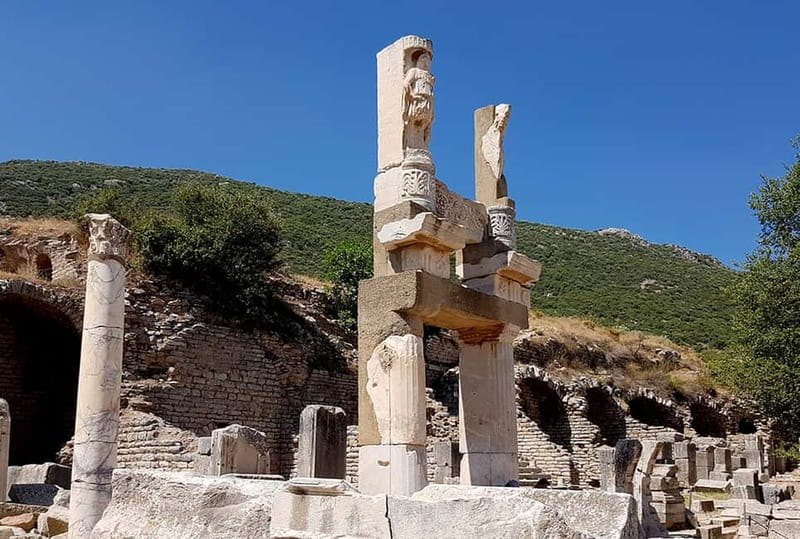
After the library area, the route leads you to the gate of Mazeus and Mithridates. City gates aren’t just entrances; they’re markers. They tell you you’re moving from one urban zone to another, from one kind of movement to another.
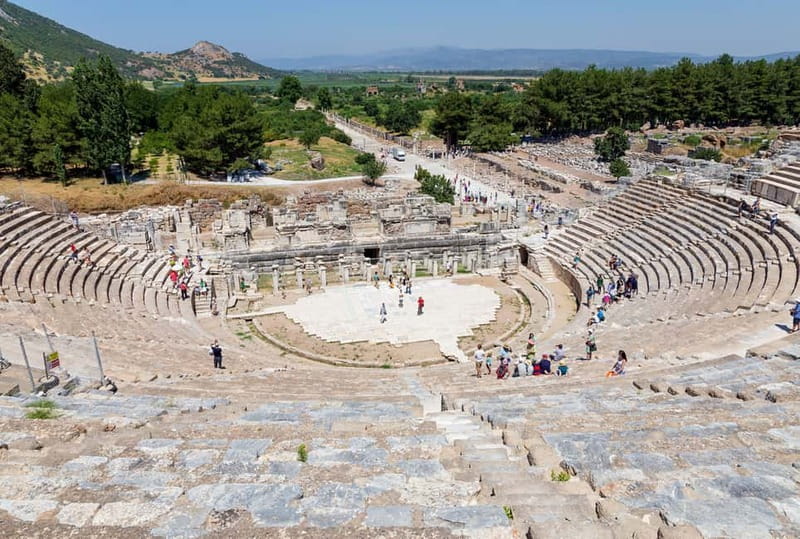
Then the tour reaches the Grand Theatre, where performances and gladiatorial games took place. The narration helps you picture the space as entertainment infrastructure, not just an amphitheater shell. It’s one of those ruins where sound and perspective matter, so even if the acoustics aren’t the same as ancient days, the setting still communicates scale.
If you tend to enjoy “how it worked” history more than pure aesthetics, this theatre stop is a strong payoff.
Church of Mary Ruins: The Christian Layer at the End
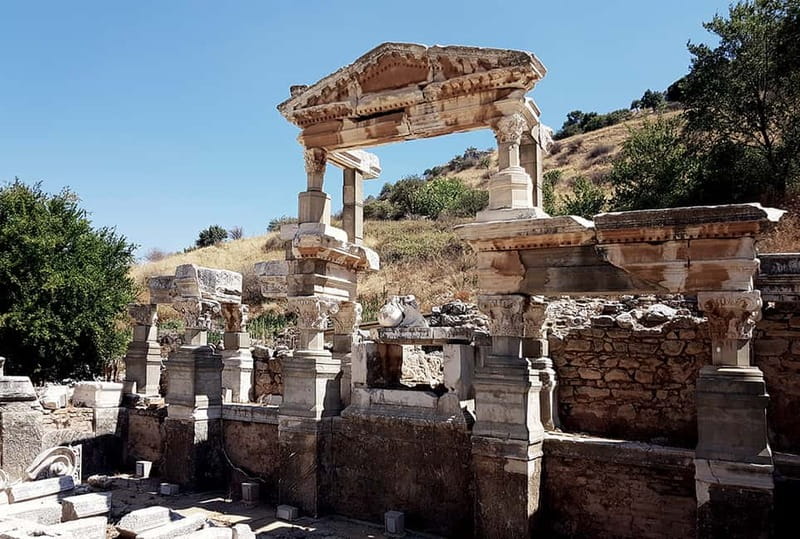
The final stretch brings you through the crossroads of Arcadiane and onto a smaller path leading to the ruins of the Church of Mary. This is where you feel the city’s evolution most clearly: Ephesus isn’t only Roman grandeur anymore. It’s a place with later religious identity.
This portion is also a good test of whether the audio tour is truly helpful to you. If you’re still syncing your audio and map here, you’ll appreciate how the route intentionally guides you from monumental structures to the quieter, tucked-away remains.
Wear shoes you trust. The path is part of the experience, and you’ll want solid footing as the day winds down.
Pacing, Timing, and Comfort in a 2.5-Hour Visit
The duration is 2.5 hours, which is enough time to do the key stops without turning your legs into a negotiator. It’s long enough for the story to feel connected, but short enough that you’re not stuck trudging in the heat or the cold.
Small group size is listed as limited to 10 participants, which is unusual for a self-guided format. In practice, it still matters: smaller groups usually mean less congestion at entry points and fewer people swarming at key photo areas.
My practical advice: plan to move steadily, not hurriedly. Audio tours are best when you let them control the rhythm. If you keep rushing ahead, you’ll miss the “why” that makes the ruins make sense.
Accessibility and What You Should Plan For
The activity is marked as wheelchair accessible. That’s a big plus if you need to travel at a slower pace or want smoother route planning.
Still, Ephesus involves uneven, ancient surfaces. Even with accessibility, you should expect that comfort and mobility will depend on the specific areas you navigate. Wearing sturdy shoes and using your time wisely matters for everyone.
Who This Tour Fits Best
This experience is a smart match for:
- You want skip-the-line entry but prefer to explore on your own schedule
- You like historical context that’s delivered as you walk
- You want a structured route so Ephesus doesn’t feel like a maze
It might be less ideal if:
- You only visit when you have a strong personal grasp of Ephesus already
- Your phone setup is shaky (storage limits, compatibility, or charging worries)
- You need a live guide to answer questions or adjust on the spot
Should You Book? My Decision Guide
If your goal is to see the major Ephesus landmarks in a way that feels connected—Agora to theatre to Church of Mary—this audio + skip-entry format is a solid choice. The best value comes when you use the audio exactly as designed: start at the Upper Gate (South entrance), confirm your device works, and carry headphones.
If you’re on the fence because of price, here’s the simple test: would you pay extra to avoid waiting in line and to get a guided explanation tied to the route? If yes, book. If you’d rather rely on your own reading and don’t care about skipping the ticket line, you may decide it’s more cost than you need.
FAQ
Where is the best place to start the audio tour?
Start at the Upper Gate (South entrance) near Magnesia Gate. Go directly to that entrance and use the skip-the-line entry so your audio and map route match the stops.
How long does the Ephesus audio tour take?
The experience is designed for about 2.5 hours.
Does the ticket include skip-the-line entry?
Yes. The entry e-ticket includes skip-the-line access to the archaeological site.
What languages are available on the phone audio tour?
The audio tour is available in English and German.
Can I use the tour offline?
Yes. The audio tour includes offline content and interactive maps.
Do I need headphones or a smartphone?
You’ll need your own smartphone and headphones. The tour includes the audio content on your device, but not the hardware.
What phone types are supported?
The audio tour is for Android and iOS phones, and it is not compatible with Windows phones or certain older iPhone/iPad/iPod models listed in the tour requirements.
How much storage does the audio tour need?
Plan for about 100–150 MB of free storage on your device.
Is Ephesus wheelchair accessible on this tour?
The activity is marked wheelchair accessible.
What should I bring for the walk?
Bring comfortable shoes, a hat, water, headphones, and a charged smartphone.
Are there conditions for free entry for children or people with disabilities?
Yes. Children 0–8 and disabled people plus a companion can enter for free with the right document, but the free tickets do not include skip-the-line privilege and may require queuing.