REVIEW · ORTAHISAR
Cappadocia: Semi Private Blue Tour with Lunch – pickup hotel
Book on GetYourGuide →Operated by ISTANBUL CENKA TURIZM TIC.LTD.STI · Bookable on GetYourGuide
Cappadocia can feel like a maze—this tour avoids it. I like how this semi-private Blue Tour mixes big-name valleys with lesser-hit sites: Mustafapaşa’s Greek-era streets, Keslik Monastery’s cave churches, and the Mazi Underground City. I also like that lunch is built into the day in Soganlı Valley, so you don’t just rush from one stop to the next. One consideration: you’re packing in a lot for an 8-hour day, so comfortable shoes and a calm pace help.
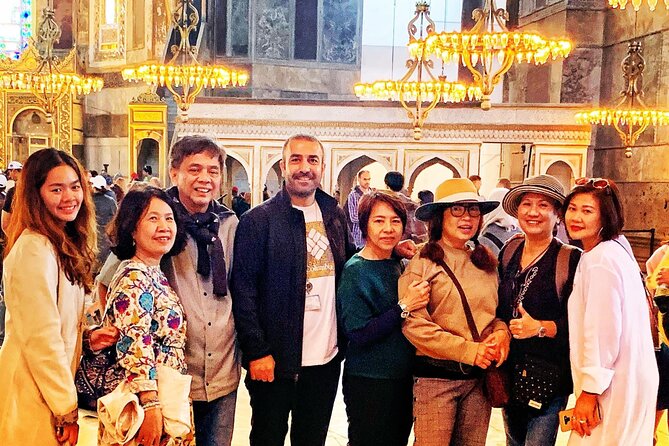
The route runs with a live English guide and stays capped at 10 people, which matters when you want time to look closely at frescoes and mosaics. Guides I’ve seen named for this tour include Gokhan, Donna, Anil, Adi Soyadi, and Cengiz—each noted for clear explanations and for pointing out the details people miss when they go on their own. If your expectation is a slow, one-site-only kind of day, this may feel a bit full.
In This Review
- Key highlights that make this Blue Tour worth your day
- Why this Blue route feels less crowded and more personal
- Pickup van logistics: how the day starts and where it ends
- Mustafapaşa: old Sinasos streets before the cave sites
- Keslik Monastery: two churches, 50-plus caves, and frescoes you can study
- Sobesos Ancient City: Roman mosaics and heating you can actually see
- Soganlı Valley: where lunch lands under apricot and walnut trees
- Mazi Underground City: authentic feel and independent exploration time
- Ortahisar free time and the carpet workshop stop
- Price and value: is $130 fair for this mix?
- Who should book this Blue Tour?
- Should you book this semi-private Blue Tour?
- FAQ
- How long is the Cappadocia Blue Tour with lunch?
- Is hotel pickup included, and from where?
- Where do you go during the day?
- What’s included in the price?
- How big is the group?
- What language is the live guide?
- Do you get time to explore in the underground city?
- Is there free time during the tour?
- Can I cancel and get a full refund?
Key highlights that make this Blue Tour worth your day
- Small-group cap (10) keeps the day calmer and makes it easier to ask questions at cave sites
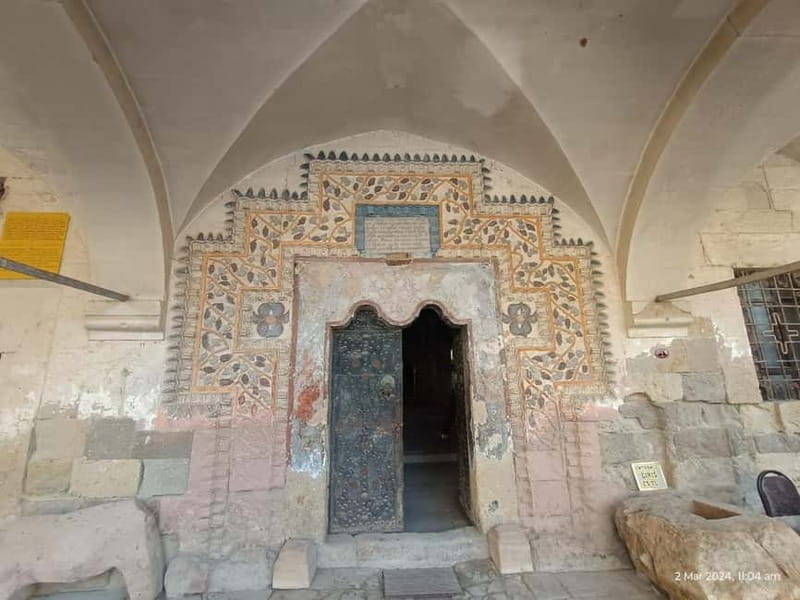
- Keslik Monastery includes two main churches plus more than 50 caves, with frescoes you can see up close
- Soganlı Valley lunch happens in the valley itself, under blossoms plus apricot and walnut trees
- Sobesos Ancient City shows off Roman mosaics and Roman heating systems, with excavation work visible
- Mazi Underground City gives you room to explore through the complex on your own
- Ortahisar free time (about 30 minutes) lets you step out, stretch legs, and get your bearings
Why this Blue route feels less crowded and more personal
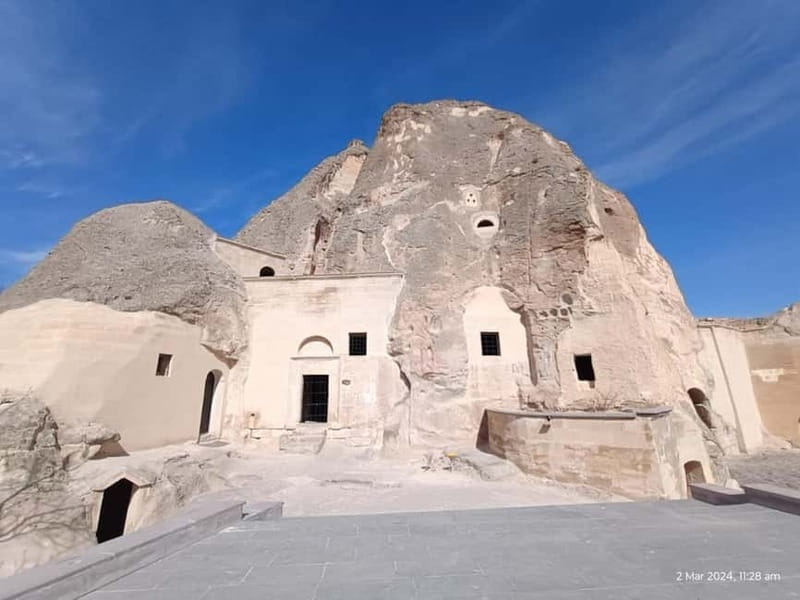
Cappadocia has two speeds: the packed-bus pace and the slower, look-harder pace. This tour leans toward the slower side because it’s limited to 10 participants and runs with a professional guide plus van transportation. When the group is small, you naturally spend less time waiting and more time reading the signs, studying the carvings, and asking why something was built the way it was.
The biggest reason I’d pick this Blue option over the most-famous color-coded tours is the stop mix. You get Keslik Monastery and Mazi Underground City, plus Soganlı Valley, and then a Roman-flavored stop at Sobesos. That combination makes the day feel like Cappadocia across eras, not just one theme.
If you’re comparing tours, think about what you want to remember most. If it’s cave churches and underground life, this itinerary gives you more of that time than the headline valleys alone.
You can also read our reviews of more private tours in Ortahisar
Pickup van logistics: how the day starts and where it ends
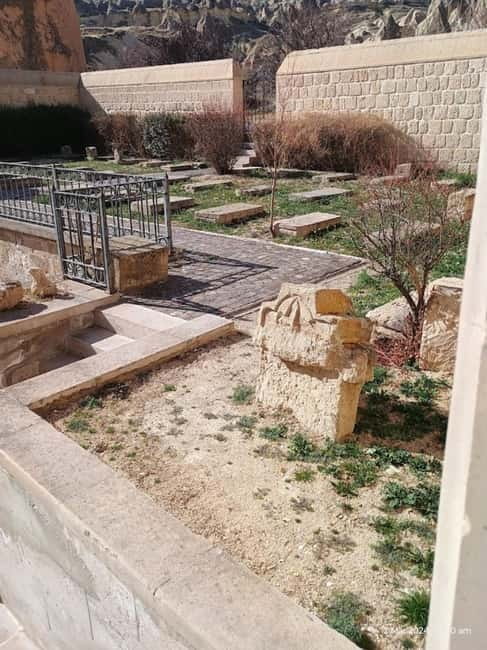
The tour is designed as a full day with hotel pickup in Göreme, Avanos, Uçhisar, or Ürgüp. That matters. You don’t waste your morning negotiating taxis or calculating your own route between sites that are spread out.
You also get drop-offs at Avanos, Ürgüp, Göreme, or Uçhisar. So even if you’re staying outside the center, you’re not stranded at the far end of the day.
Because it’s a van tour, you should expect driving time between places. Plan on a schedule where you can’t stroll “at your own speed” for hours in a row. That’s the trade: the convenience of pickup and coordinated timing in exchange for a more structured day.
Mustafapaşa: old Sinasos streets before the cave sites
Most days start with Göreme vibes. This one starts in Mustafapaşa, about 10 kilometers from Göreme—formerly known as Sinasos. I like this opening because it changes the mood early. Instead of starting with a panoramic viewpoint, you begin in a village with layered identity: deep connections to the Greek population that once lived here.
In Mustafapaşa, you can see Greek houses and churches that reflect that history. Even with a short visit, it’s a strong reminder that Cappadocia wasn’t only rock churches and fairy chimneys. It was a real, lived-in region where communities left marks you can still read in architecture.
Practical note: you only get around 30 minutes, so come ready to skim fast—then slow down if the guide points something out and you want to linger.
Keslik Monastery: two churches, 50-plus caves, and frescoes you can study
If you’re choosing one stop to justify the whole day, I’d point you to Keslik Monastery. You’re walking into a cave complex with two main churches and over 50 caves, so it’s not just a single photo spot—it’s a whole environment built into the rock.
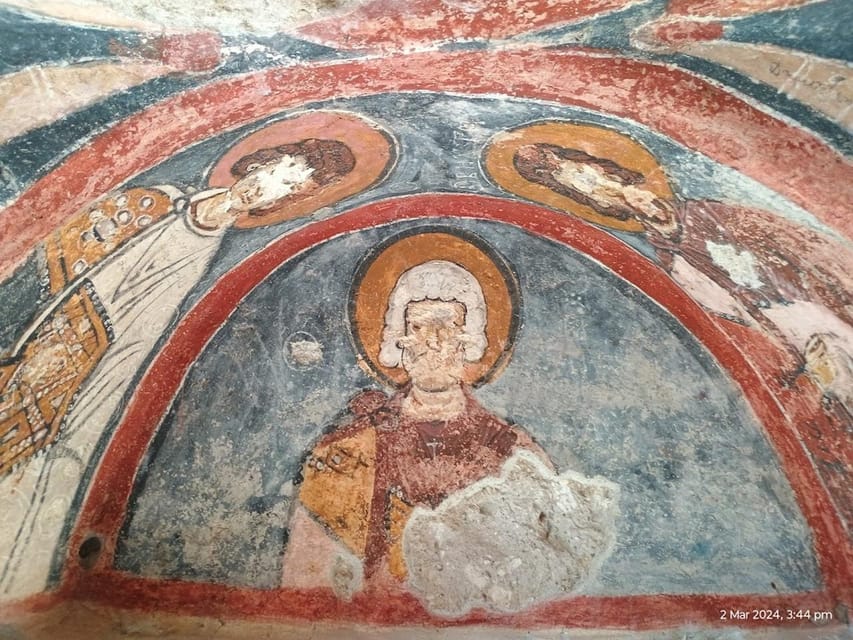
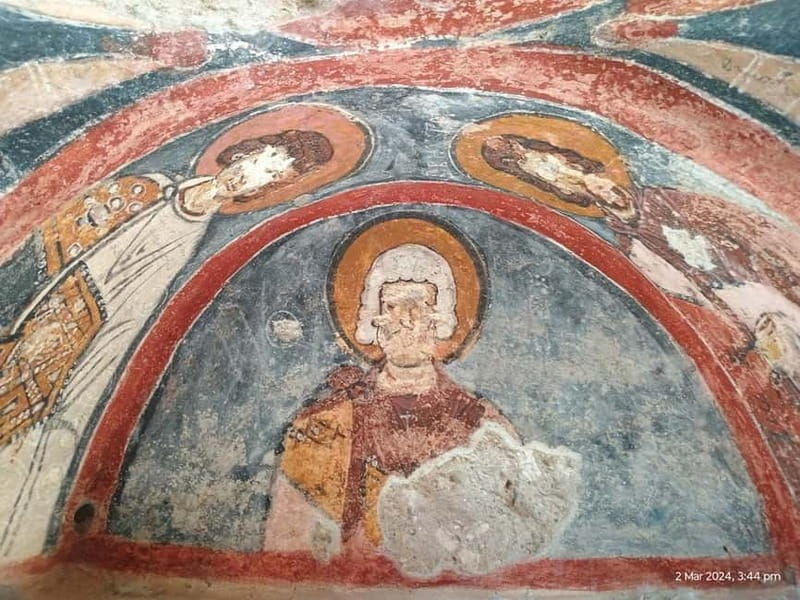
What makes this place special is the fresco discussion. The artwork isn’t treated like background. It’s explained with meaning and context, and you can view at least one scene from within arm’s distance. That’s the difference between seeing faint colors far away and actually understanding what you’re looking at.
You’ll also hear about how the complex functioned beyond worship: areas that served as refectories and springs, plus housing-like spaces. In other words, this wasn’t a one-room moment. It was a working religious life carved into the landscape.
One more detail I’d keep in mind: a guide-style point from the way this stop is described is that fresco cleaning is expected in the future, and one comment notes black residue on the paintings will be removed. If that happens, Keslik will only look better over time.
Sobesos Ancient City: Roman mosaics and heating you can actually see
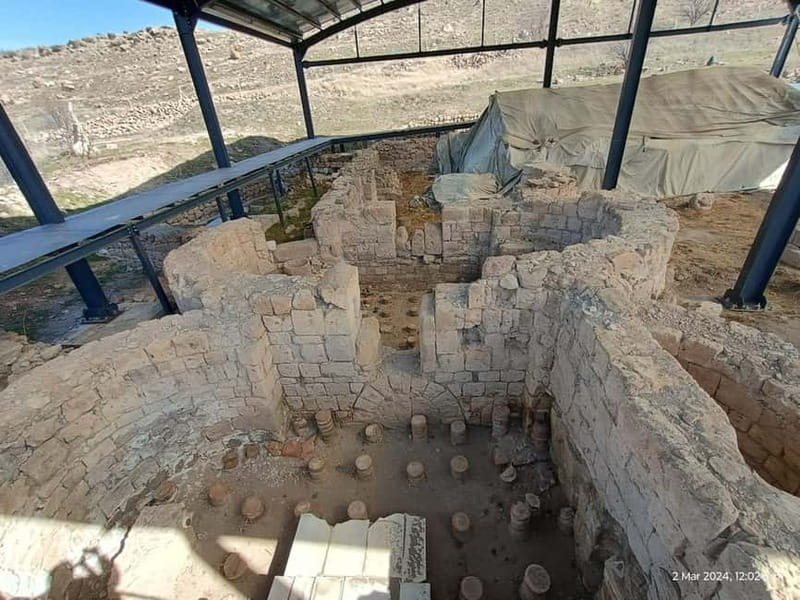
After the monastery, you shift gears into something Roman at heart: Sobesos Ancient City. This is presented as a recently discovered archaeological area, and it’s where I appreciate the tour’s variety most.
The highlights are mosaic tiles and Roman heating systems. You don’t just hear the word Roman and move on—you see the engineering that supported daily life. Excavation is also in view, so you get a sense of the site as a work in progress, not a finished museum piece.
The visit is shorter—about 20 minutes—so treat this as a targeted stop. Give yourself permission to move a bit quicker than at Keslik. Focus on what makes it Roman here: the mosaics and the heating concept.
If you like archaeology and tech history, this portion turns the day from “pretty Cappadocia” into “how did people live?”

Soganlı Valley: where lunch lands under apricot and walnut trees
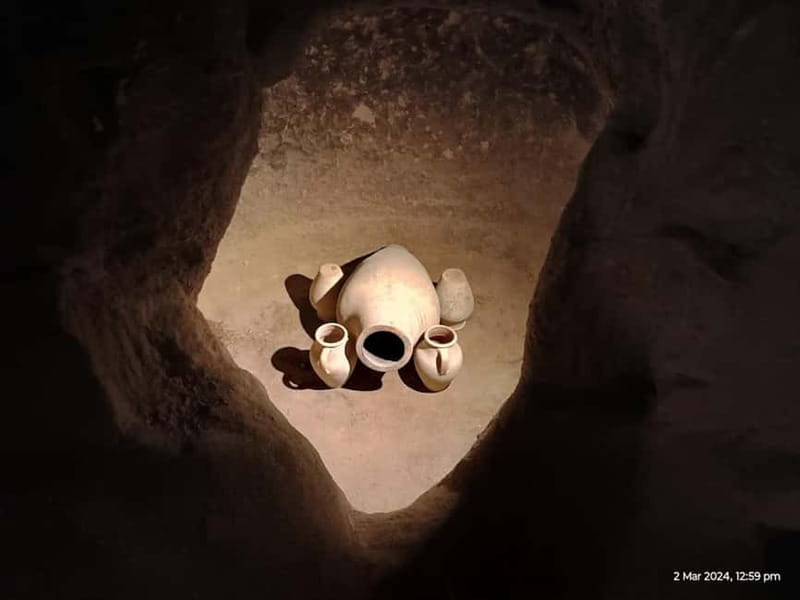
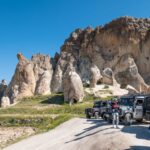
Then comes the calm break: Soganlı Valley. This valley earns its place because it’s described as rivaling the best-known valleys in both natural scale and historical importance. The rock formations are unique to this region, and you’ll see churches, tombs, and pigeon houses—different uses for the same kind of stone architecture.
Lunch is served here, and I like that the tour doesn’t treat food as an afterthought. You eat in the valley under blossoms, with apricot and walnut trees mentioned as part of the setting. That’s the kind of lunch stop that feels like part of the site, not a separate detour.
The church frescoes here are also described as more local and intimate to the community that lived in the region. So instead of grand, distant religious art, you get something closer to everyday belief and hope.
One practical consideration: the valley time is about two hours, which is enough for looking plus some breathing space. But you’re still on a schedule, so don’t assume you’ll have hours to wander independently. If you want to sit and watch light shift on the rocks, aim to arrive with a slower mindset rather than bouncing from church to church.
Mazi Underground City: authentic feel and independent exploration time
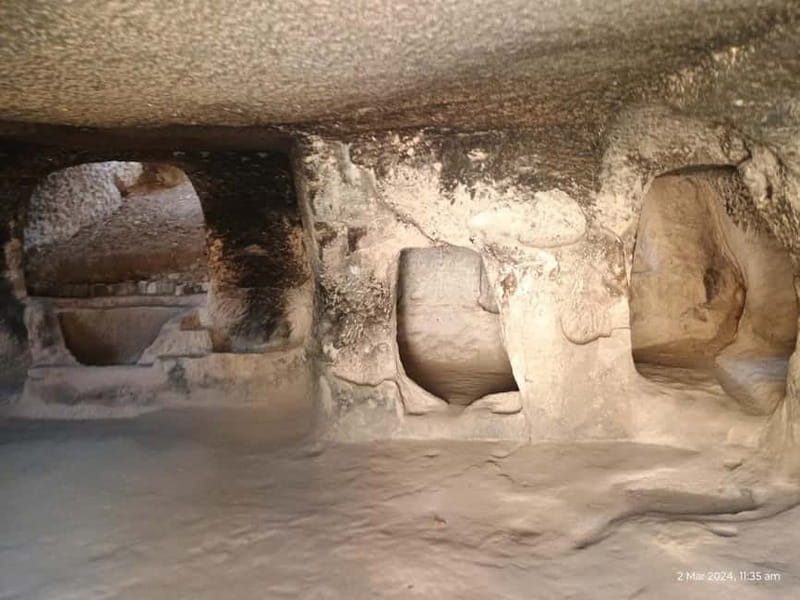
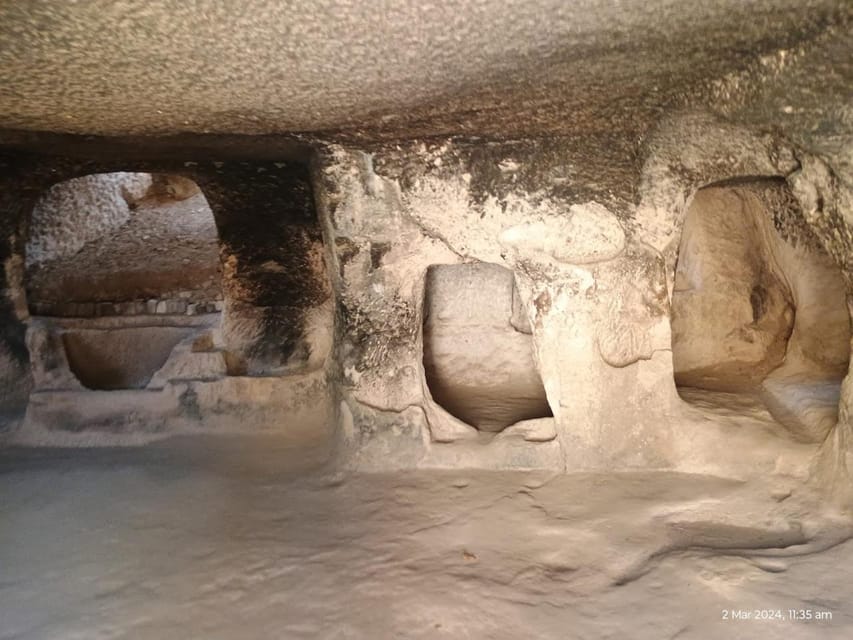
Next is Mazi Underground City, and this is where the word authentic starts to make sense. It’s described as an underground experience untouched by tourists, and the key detail for me is how you explore.
You don’t just follow a tight line through the highlights. You get time to move through much of the complex on your own, while still being guided by the context you’ve received earlier. That makes it easier to notice how the architecture supports daily living—spaces shaped for survival, work, and community life.
The underground scale is the big wow. These complexes are massive, and standing inside the structure helps you feel how people planned for shelter and movement.
The stop lasts about 45 minutes, which is a reasonable window. Long enough to get oriented and read details, short enough that you don’t feel rushed as you exit.
Ortahisar free time and the carpet workshop stop
After the underground site, you get a buffer: Ortahisar with about 30 minutes free time. This is useful because after cave churches and underground tunnels, your eyes need a break. Ortahisar gives you room to reset and look at the rock formations above ground without feeling locked into constant narration.
On the way back, the day includes a local workshop stop for traditional regional carpets, where you can observe how they’re handcrafted. I like adding a crafts element at the end of a culture-heavy day. It changes the conversation from “what happened” to “what’s still being made.”
This is also a good moment to ask your guide how carpets and weaving connect to the region’s heritage, since the tour already covered layered history from Greek-era homes to monastic life to Roman engineering.
Price and value: is $130 fair for this mix?
At $130 per person for an 8-hour small-group day, I think the value is strongest if you care about three things:
- Guided interpretation at cave churches and underground spaces
You’re not just buying entry tickets—you’re getting a guide who can explain the fresco meaning and the logic behind how the complex worked.
- Lunch included in the setting
Lunch in Soganlı Valley under fruit trees beats the usual “drive to a restaurant and eat fast” approach.
- Time efficiency
Hotel pickup, van transport, and a multi-stop schedule save you from coordinating between distant sites on your own.
If you only want one or two highlights, this may feel priced high compared with DIY entry tickets and a couple of stops. But if you want a structured day that covers Mustafapaşa, Keslik, Sobesos, Soganlı, Mazi, and Ortahisar, the $130 feels like a way to buy clarity and momentum.
Small groups are part of the value too. When you cap at 10 people, you tend to get better back-and-forth time—especially at places like Keslik where details matter.
Who should book this Blue Tour?
This tour fits best if you:
- Want cave churches, monastery life, and underground living more than only viewpoints
- Like having a guide explain what you’re seeing, especially frescoes and Roman features
- Prefer a calmer day over the most crowded formats
- Want one full day that connects Greek-era village history, Christian monastic sites, and Roman engineering
If you hate driving time and would rather stay put in one village for hours, you may prefer a slower half-day format. But for most first-timers who want depth without losing the day, this is a smart choice.
Should you book this semi-private Blue Tour?
Yes, if your ideal Cappadocia day includes Keslik Monastery and Mazi Underground City with real guiding at the artwork level. I’d also book it if you want lunch placed inside the valley rather than tacked on as an inconvenience.
I’d pause if you’re the type who wants a totally unstructured day. This route is full, and the value comes from staying on the plan so you can hit all the stops.
If you book, do one thing that improves your experience fast: arrive mentally ready to look. The best moments here are in details—fresco scenes you can study up close, mosaic patterns, and underground spaces that make sense when you slow your steps.
FAQ
How long is the Cappadocia Blue Tour with lunch?
The tour lasts about 8 hours.
Is hotel pickup included, and from where?
Yes. Pickup is available from Göreme, Avanos, Uçhisar, and Ürgüp.
Where do you go during the day?
You visit Mustafapaşa, Keslik Monastery, Sobesos Ancient City, Soğanlı Valley (for lunch), and Mazi Underground City, with free time in Ortahisar, plus a local carpet workshop stop on the return.
What’s included in the price?
The price includes van transportation, lunch, museum ticket(s), and a professional English-speaking tour guide. Ticket lines are skipped.
How big is the group?
It’s a small group limited to 10 participants.
What language is the live guide?
The tour guide speaks English.
Do you get time to explore in the underground city?
Yes. In Mazi Underground City, you explore on your own for part of the visit while the guide provides context.
Is there free time during the tour?
Yes. You get about 30 minutes in Ortahisar.
Can I cancel and get a full refund?
Yes. Full cancellation is available up to 24 hours in advance, according to the tour terms.