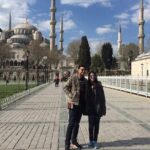
Istanbul looks different from open water. This Bosphorus guided afternoon cruise swaps a long museum day for a tight 2 hours of palace-front sailing, bridge sightings, and skyline photos. You’ll glide past the European and Anatolian shorelines that split Istanbul into two continents, with the strait’s currents and history explained along the way.
I love the licensed guide approach here: the narration ties geography to what you’re seeing, so the route feels more like a guided story than just scenery. I also love the included treats—turkish tea, lemonade, fruit plates, cookies, and baklava—so you stay comfortable without spending extra money mid-cruise.
One possible drawback: this experience depends on good weather, and it’s not recommended if you get vertigo or you’re prone to seasickness. Plan for a bit of motion on the water and a weather check on the day.
In This Review
- Key highlights at a glance
- Why the Bosphorus feels like Istanbul’s front porch
- 2 hours on the water: pace, group size, and comfort
- Your guide’s “story route” from Dolmabahçe to Çırağan
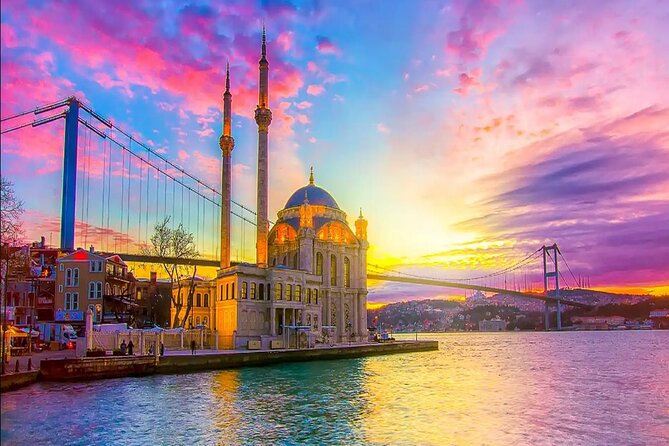
- Ortaköy and the Bosphorus Bridge: ideal for skyline photos
- Bebek to Rumeli Hisarı: Ottoman defenses from near the waterline
- The Fatih Sultan Mehmet Bridge: modern Istanbul’s spine
- Anadolu Hisarı to Küçüksu Pavilion: the Asian side’s calm weight
- Beylerbeyi Palace under the bridge: where styling meets power
- Galata Tower, Galata Bridge, and Maiden’s Tower: three skyline icons
- Snacks and tea: the small included comfort that matters
- Price and value: why $35.39 feels fair
- Best-fit travelers, and who should skip
- Should you book this Bosphorus cruise?
- FAQ
- How long is the Bosphorus guided afternoon cruise?
- What time does the tour start?
- Where is the meeting point?
- Does the tour include snacks and drinks?
- Are alcoholic drinks included?
- Is the tour offered in English?
- Is it recommended for people with seasickness or vertigo?
- What is the cancellation policy?
Key highlights at a glance
- Small group on a luxury yacht (max 30): enough space to enjoy the views without feeling packed in.
- English-speaking, licensed guide: helpful, route-based explanations for the Bosphorus landmarks you pass.
- Included snacks and drinks: turkish tea, lemonade, cookies, baklava, fruit, plus water.
- Big-photo stops without the walking marathon: bridges, fortresses, and iconic towers are part of the route.
- Palace-lined shoreline, explained simply: Dolmabahçe, Çırağan, Küçüksu, and Beylerbeyi show off different eras.
Why the Bosphorus feels like Istanbul’s front porch
The Bosphorus (Bosphorus/Bosporus) is the international strait that literally splits Istanbul between Europe and Asia. It connects the Sea of Marmara with the Black Sea, running roughly 30 kilometers in a northeast–southwest direction. Depth averages around 60 meters, with the deepest point reaching up to 120 meters, so when the guide talks currents, it makes real sense you’re looking at a working waterway—not a decorative canal.
What I like about doing this on a yacht is how quickly your brain gets oriented. You see how the coastline creates neighborhoods, how the shore curves guide sightlines, and how bridges and towers become landmarks from water level. Even the quick science facts help: surface currents generally move from the Black Sea toward the Marmara, while deeper waters flow back the other way, with occasional counter-currents on the surface.
And yes, this is a cruise—but the best part is the way the route connects geography, Ottoman power, and modern Istanbul in one afternoon.
You can also read our reviews of more boat tours in Istanbul
2 hours on the water: pace, group size, and comfort
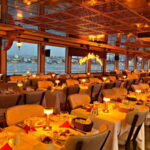
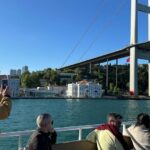
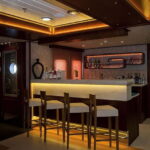
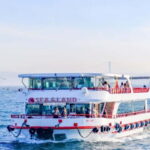
This is designed to be a short, high-payoff outing. It runs about 2 hours, with a start time of 1:00 pm, and ends back at the meeting point. The group size is capped at 30 travelers, which matters: you can hear the guide, grab a window/standing spot, and still enjoy the views without constant elbow-to-elbow shuffling.
You’re also not walking through a museum crowd for hours. The tradeoff is obvious: you’ll be outside on a boat, so plan for movement. The tour is not recommended for people prone to vertigo, and it also isn’t a great fit for those who get seasick easily.
If you’re the kind of traveler who wants Istanbul’s major landmarks, but you don’t want to spend the entire day in transit and lines, this pace hits the sweet spot.
Your guide’s “story route” from Dolmabahçe to Çırağan
The shoreline near Dolmabahçe Palace is the perfect place to start a Bosphorus cruise, because the palace sits right at the entrance to the strait from the Sea of Marmara. It’s spread over about 250,000 m² in Beşiktaş, stretching between Dolmabahçe Street (from Kabataş to Beşiktaş) and the waterfront. The palace sits on the left bank facing Üsküdar and Kuzguncuk, so from the water you get those classic long-view angles.
Dolmabahçe originally developed from a cove where ships anchored in ancient times, then became a favorite sultanate residence. That context helps you interpret what you’re seeing: you’re not just looking at a big building; you’re looking at how the Ottomans chose to display power where ships passed.
Next comes Çırağan Palace, commissioned by Sultan Abdulaziz and designed by architect Sarkis Balyan. Construction finished in 1871, and the palace is made of marble over a total area of 80,000 square meters. The guide’s narration here can get emotional fast, because after Abdulaziz was deposed he was imprisoned there with his family; later Murat V was also imprisoned there for 29 years.
The palace then shifts again into political history. After the Second Constitutional Monarchy in 1908, Çırağan was used as the House of Parliament until a fire in 1910. Later, the grounds became part of Beşiktaş Sports Club and were used for the Seref Stadium. By the early 1990s, it was restored and reopened as a luxury hotel.
From the cruise perspective, the value is that you see the change-over time as a sequence, not as random trivia. The yacht turns these palaces into a moving map of Ottoman ambition.
Ortaköy and the Bosphorus Bridge: ideal for skyline photos
Once you reach Ortaköy on the European side, the vibe changes. Ortaköy and Mecidiye form a district set on slopes opening toward the coast. The Ortaköy Bazaar is active throughout the day, with an assortment of souvenir shops, cafes, bars, and food stops, plus that so-called intellectual market feel.
Timing can matter for atmosphere. The market movement usually really starts after 10:00 am, so your 1:00 pm departure gives you a good chance of catching the livelier portion of the day rather than the quiet early hours.
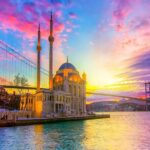
Then the route hits one of Istanbul’s most recognizable engineering symbols: the Bosphorus Bridge (the first bridge across the strait). Construction started in 1970, and it opened on 29 October 1973, timed with the Republic’s 50th anniversary. It’s a suspension bridge that’s active all day, and the guide may point out how it functions not just as transport, but as an Istanbul symbol with famous views from the water.
If you want one practical photo strategy, it’s this: stand where you can frame the bridge plus the coastline, not just the bridge alone. The strait is the story; the bridge is the headline.
Bebek to Rumeli Hisarı: Ottoman defenses from near the waterline
Bebek is a classic Bosphorus neighborhood, and the name itself means baby, tied (according to local tradition) to the area’s positioning along the water. Historically it’s been a residential area since Ottoman rule, and today you’ll see an uneven mix: older structures, waterside mansions, and the presence of large institutions like Bogaziçi University.
The cruise view here works because Bebek’s waterfront is visually readable: you can understand why wealthy Ottomans and later residents wanted direct access to the strait.
After that, you’ll pass Rumeli Hisarı in Sariyer. This is one of the sharpest “this is real strategy” stops on the route. Rumeli Hisarı was built directly across from Anadolu Hisarı at the narrowest point of the Bosphorus. Construction began in 1453 on the order of Sultan Mehmet the Conqueror, and it was completed in about three months. That speed alone tells you how serious the purpose was.
Before the conquest of Istanbul, Rumeli Hisarı guarded against naval attacks. After the conquest, it became an inspection point for maritime traffic. Over centuries, wooden houses filled the area inside the fortress, but during restoration work in 1953, those houses were removed. After restoration, it became known for summer concerts and now serves as an open-air theater and museum.
From a cruise, you won’t treat this like a long museum visit, but you’ll still get the emotional effect of seeing a fortress designed around choke points in a living waterway.
You can also read our reviews of more guided tours in Istanbul


The Fatih Sultan Mehmet Bridge: modern Istanbul’s spine
As you continue along, you’ll see the Fatih Sultan Mehmet Bridge, Istanbul’s second bridge spanning the Bosphorus. Construction began in 1986, and it opened on 3 July 1988. This bridge is a major artery for trans-Bosphorus traffic, and it’s become part of Istanbul’s skyline identity.
The tour’s value here is that it puts modern infrastructure in the same line of sight as palaces and fortresses. You’re looking at layers of power: the Ottoman era built control at narrow points; modern Istanbul built connections across the same water.
The bridge is also described as the 14th largest steel suspension bridge in the world, which helps you appreciate the scale. If bridges make your travel brain happy, this is a good route for you.
Anadolu Hisarı to Küçüksu Pavilion: the Asian side’s calm weight
Crossing toward the Anatolian side, you’ll meet Anadolu Hisarı in Beykoz. It sits at the narrowest point of the Bosphorus and was built in 1395 by Beyazid I, made up of a citadel and exterior castle walls. After the conquest of Istanbul, it lost much of its strategic importance and became a military hospital.
Over time, the area around the castle became settled, so today you’ll see waterfront houses and old mansions scattered among the ruins. Restoration in 1991–1993 converted it into a museum, but it’s not open to the public; you can visit only the outer walls, and the road passes right through the area. That last detail means the site has the feel of an open-air remnant integrated into modern life.
Then the route includes the Küçüksu Pavilion museum. Ottoman emperors used it as a summer palace and also as a hunting lodge. This stop works well on a cruise because the pavilion is a change of mood: after fortresses and bridges, you get something more like leisure, court life, and seasonal ritual.
If you like Ottoman history that feels human-sized—food, hunting, seasonal retreat—rather than only military or empire drama, these stops are a great balance.
Beylerbeyi Palace under the bridge: where styling meets power
Next up is Beylerbeyi Palace, built in the 1860s on the shores of the Bosphorus. It’s designed by Sarkis Balyan and sits right under the Bosphorus Bridge, so it’s a visually satisfying stop in an “over-under” way: modern bridge infrastructure above, imperial palace architecture below.
The palace complex combines styles from East and West—Renaissance, Baroque, and other influences. The main building is a two-store structure made of stone on a high basement, sitting on land of about 2,500 m² with a rectangular footprint. The south side was organized as the Imperial Mabeyn, and the north side as the Valide Sultan’s Apartment. Inside, you’ll find 6 halls, 24 rooms, plus a hamam and a bathroom across the two floors.
Don’t miss the garden focus: the lily pond and large garden are specifically called out. Even on a short cruise, knowing the palace’s garden layout helps you look beyond the facade and understand why this was built for comfort as much as status.
Galata Tower, Galata Bridge, and Maiden’s Tower: three skyline icons
Later in the route, you get a trio of landmark views that helps Istanbul feel complete.
Galata Tower was built by Genoese in 1348, rising to 66.90 meters and reaching a nine-story height. When it was built, it was the tallest building in the city. Ottoman use turned it into a fire observatory and even a jail. One of the most famous moments connected to the tower is in 1632, when Hezarfen Ahmet Çelebi glided from the tower across the Bosphorus to Üsküdar using self-made wings.
Even the tower’s structure has history: a storm in 1875 destroyed the conic roof, and it wasn’t restored in the Ottoman era. The conical cap was restored in the 1960s, and the wooden interior was replaced with concrete. Today, it’s open to the public and includes a restaurant and café on the upper floor.
From the water, this is a big moment. You don’t need to climb it to get the sense that Galata is watching the city.
Then there’s the Galata Bridge (Galata Koprusu), whose story starts in 1845. The bridge has changed over the years and was damaged by fire in 1992, after which a new bridge was built. The older beloved bridge was moved to Halic.
This bridge matters to daily life: below you’ll find restaurants, cafes, and hookah lounges; above it you’ll see tramway and pedestrian activity. It’s also tied to literature and popular culture, and it’s a great place to photograph everyday Istanbul.
Finally, Maiden’s Tower (Kız Kulesi) appears on the Bosphorus skyline. The tower sits on a tiny island about 200 meters offshore near Üsküdar. It’s famous for legends, especially the story about a sultan’s daughter and an oracle’s prophecy. The oracle predicts she will be killed by snake bite on her 18th birthday, so the sultan hides her life on the tower. On the birthday, she brings a basket of fruit, reaches in, and finds a snake inside—ending the story in tragedy as foreseen.
Whether or not you love legends, it’s a strong visual. Towers like this help you understand why people romanticize the Bosphorus.
Snacks and tea: the small included comfort that matters
This cruise doesn’t treat food as an afterthought. Snacks and drinks are included: turkish tea, lemonade, fruit plates, cookies, baklava, and water. That’s a real value add because Bosphorus cruises in Istanbul often make you pay extra for refreshments or force you to wait until you’re off the boat.
There’s also a practical comfort angle. Tea and sweet treats help you keep energy up during sightseeing—especially on an afternoon schedule that’s short but full of stops. On top of that, cold or hot drinks make it easier to stay on deck and keep watching for the next landmark.
Alcohol is not included, and the minimum drinking age is 18. So if you’re looking for cocktails, you’ll want to plan around that.
Price and value: why $35.39 feels fair
At $35.39 per person for about 2 hours, the big question is what you’re actually buying. You’re not just paying for “a boat ride.” You’re paying for:
- a licensed, English-speaking guide,
- a small group experience (max 30),
- and a set of included snacks and drinks that keep costs predictable.
In a city where viewpoint time can cost extra, a guided route that hits major Bosphorus and skyline landmarks in one afternoon is a good deal. The itinerary also includes both “big-known” sites like Dolmabahçe and Maiden’s Tower and lesser-seen structures like the fortresses and pavilion settings. That mix usually earns the money back if you’re short on time.
One more practical value note: this tour is often booked about 25 days in advance on average. I’d treat that as a signal to book ahead, especially in busier seasons.
Best-fit travelers, and who should skip
This is a great fit for you if you:
- want a guided Istanbul overview focused on the Bosphorus,
- prefer a relaxed 2-hour plan instead of a full day of walking,
- like skyline photos and want them with context,
- and appreciate included food without extra stops.
It’s not a great fit if you:
- get vertigo easily,
- are prone to seasickness,
- or you need a long, in-depth museum-style experience.
Also note that Monday museums are often closed, and on at least one occasion the operation adjusted with an alternative stop when needed. So if your schedule hits a museum-closure day, it’s still reasonable to expect the tour to keep moving.
Should you book this Bosphorus cruise?
If you want an efficient, good-value way to see Istanbul’s highlights from the waterline, this is an easy yes. The guide-led flow, the included tea and baklava, and the small-group feel are the reasons it works, not just the boat name.
Book it if your priority is Bosphorus landmarks and skyline views with minimal hassle. Skip it if you know you’re sensitive to motion or you need calm, still-ground sightseeing. If the weather looks iffy, plan to be flexible—this experience requires good weather, and you’ll be offered another date or a full refund if it’s canceled.
FAQ
How long is the Bosphorus guided afternoon cruise?
It lasts about 2 hours (approx.).
What time does the tour start?
The start time is 1:00 pm.
Where is the meeting point?
The meeting point is Türkiye Petrolleri Ömer Avni, Meclis-i Mebusan Cd. No:34, 34427 Beyoğlu/Istanbul, Türkiye.
Does the tour include snacks and drinks?
Yes. It includes snacks such as cookies and baklava, plus turkish tea, lemonade, fruit plates, and water.
Are alcoholic drinks included?
No. Alcoholic beverages are not included, and the minimum drinking age is 18 years old and above.
Is the tour offered in English?
Yes, the tour is offered in English.
Is it recommended for people with seasickness or vertigo?
No. It is not recommended for people with vertigo or for people who are prone to seasickness.
What is the cancellation policy?
You can cancel for a full refund up to 24 hours in advance of the experience start time. If you cancel less than 24 hours before, the amount paid is not refunded. The experience also depends on good weather, and if it’s canceled due to poor weather, you’ll be offered a different date or a full refund.