REVIEW · KEMER
Antalya/Kemer: Scuba Diving Experience with Lunch & Pick up
Book on GetYourGuide →Operated by Ginza Travel · Bookable on GetYourGuide
That tank of nerves usually turns into smiles. This Kemer scuba experience takes you to two of the best bays on the Mediterranean with professional instructors and plenty of time to enjoy the surface in between. I like that the format is clear and structured, and the day includes lunch onboard so you’re not hunting for food mid-trip. One thing to keep in mind: your time under the water is intentionally short, so go for the taste-and-learn value, not an all-day reef session.
In This Review
- Key highlights worth caring about
- Aquarium Bay and Kiris Bay: what makes this Kemer route special
- The 7–8 hour rhythm: from Kemer Marina to lunch onboard
- Your first underwater session at about 5 meters (learning mode)
- Kiris Bay at about 10–15 meters: more depth, more wow
- Snorkeling, sunbathing, rock jumps, and fish-feeding breaks
- Lunch onboard: simple fuel that keeps your day moving
- Price and extras: getting your money’s worth at around $29
- What to pack: snorkel, beach shoes, and a calm attitude
- Who this Kemer scuba experience is best for
- Should you book this Kemer two-stop scuba day?
- FAQ
- How many underwater sessions are included, and how deep are they?
- Is this suitable for first-time scuba participants?
- I don’t swim well. Can I still join?
- What’s included in the price?
- Can I bring my own camera?
- Is this tour okay if I have high blood pressure?
Key highlights worth caring about
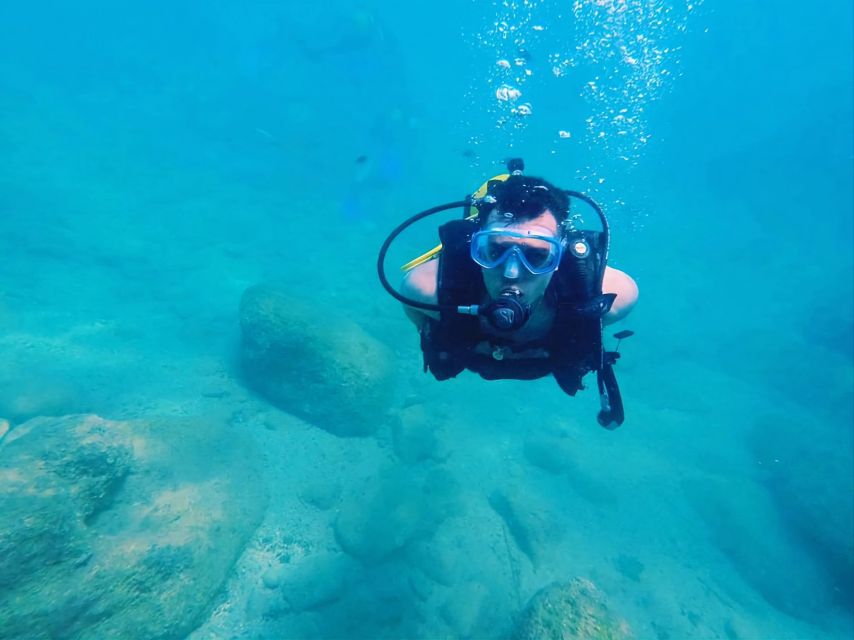
- Two bay stops: Aquarium Bay (about 5 meters) and Kiris Bay (about 10–15 meters) for varied underwater scenery
- Beginner-friendly coaching with licensed instructors in English or Russian, including lots of patience for nervous first-timers
- Hand-feeding fish from the water for a memorable up-close wildlife moment
- Boat downtime built in: swim, snorkel, sunbathe, and even jump from the rocks depending on conditions
- Included lunch onboard, with extra drinks and photo/video options sold on the side
Aquarium Bay and Kiris Bay: what makes this Kemer route special
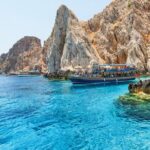
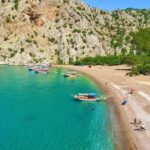
Kemer sits on a stretch of coast where the water tends to be calm and scenic, and this trip leans into that. You’re not just doing one spot and rushing away. You’re getting two different bays—Aquarium Bay first, then Kiris Bay—so your day feels like a full outing rather than a quick technical errand.
Aquarium Bay is the gentler introduction. It’s where the team helps you get comfortable with the gear, breathing, and buoyancy without throwing you into anything too complicated. Kiris Bay is where you’ll see more depth and a different mix of sea life, with the second underwater session set deeper.
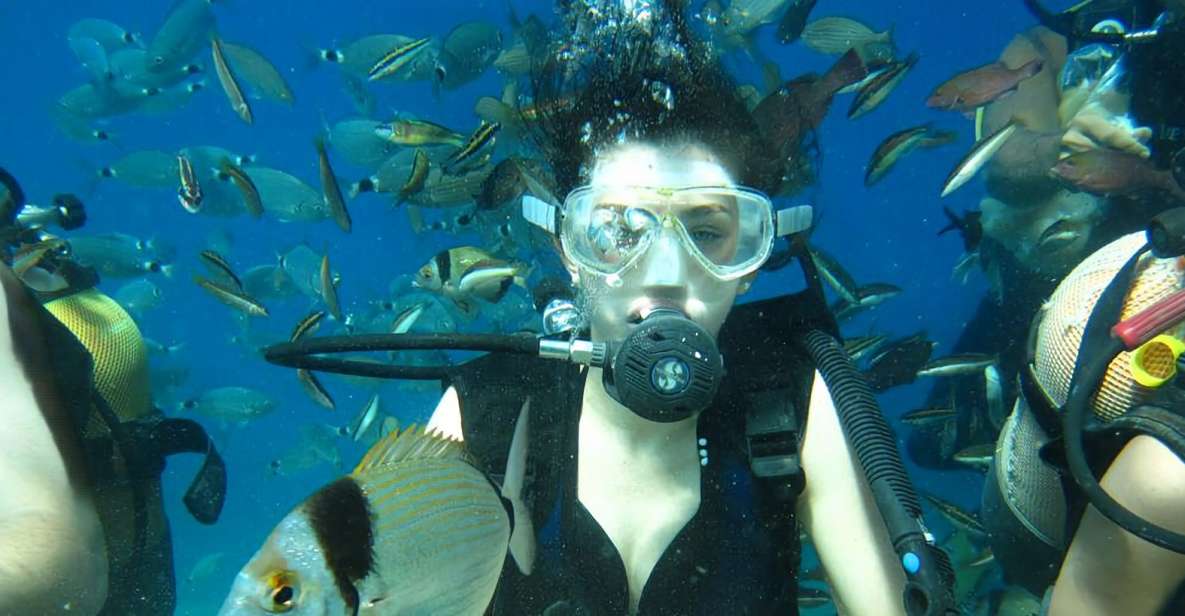
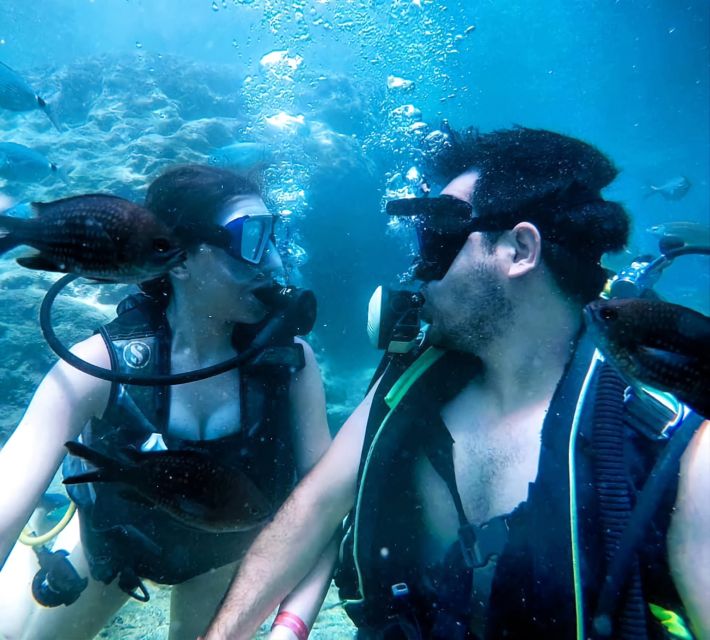
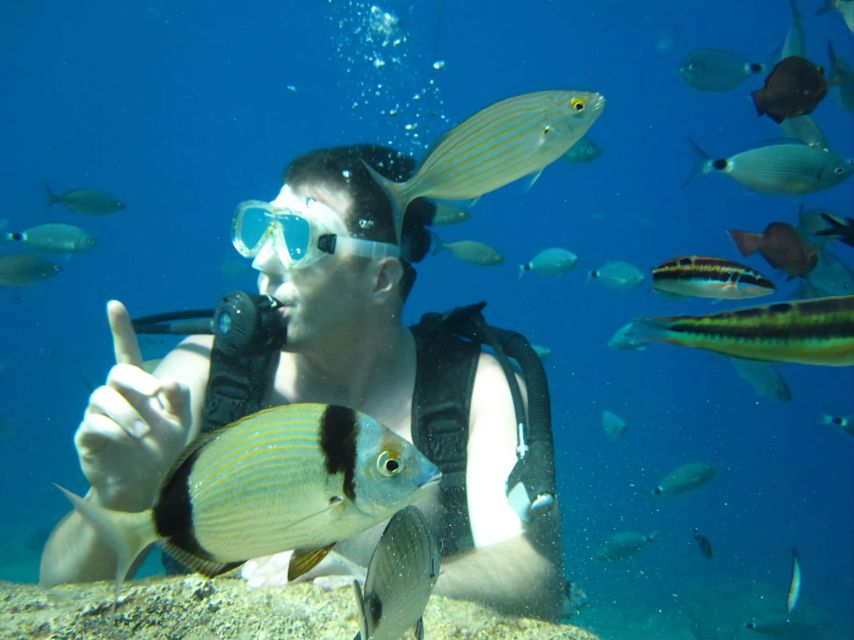
There’s also a small but memorable wildlife moment built in: you may get a chance to feed fish directly from your hands. That’s the kind of thing you remember on the flight home, even if you were nervous at check-in.
A few more Kemer tours and experiences worth a look
The 7–8 hour rhythm: from Kemer Marina to lunch onboard
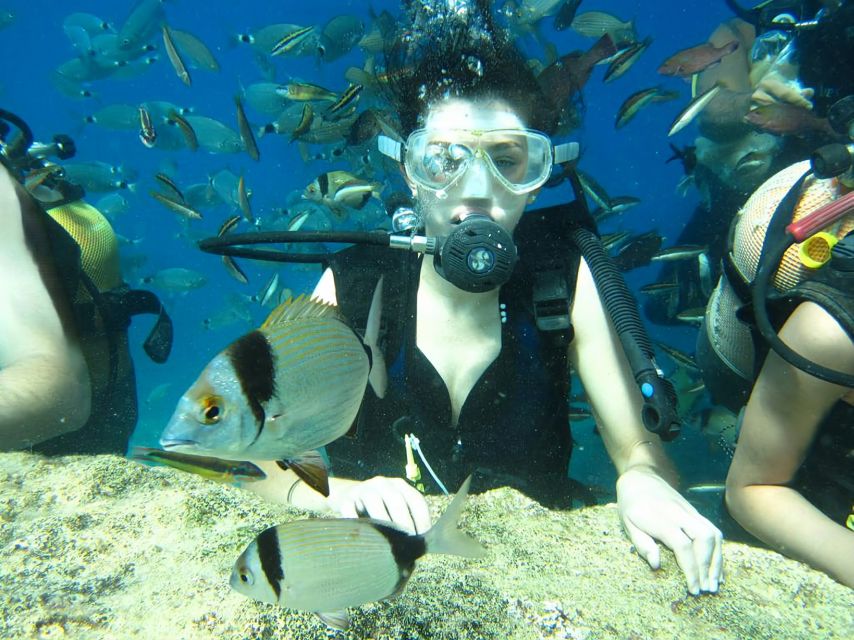
This is a long half-day. Plan on most of your day—7 to 8 hours—with a schedule that typically looks like this:
1) Pickup or meet up
If you choose hotel pickup, the plan is to wait outside the hotel security gate about 10 minutes before your scheduled time. The driver won’t wait more than 5 minutes after that. If you don’t have pickup, you’ll meet at Kemer Marina.
2) Transfer + boat boarding
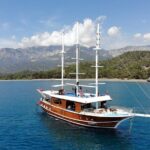
You’ll head to the port, board the boat, and get organized by language groups (English and Russian groups are noted). That’s helpful, but it can also mean a short wait if the boat has a lot of people.
3) Briefing and gear setup
Before you go under, instructors explain the basics: how the equipment works, boat routines, and safety rules. One nice detail from day-to-day feedback: many first-timers felt reassured step-by-step, even when they were unsure or didn’t swim confidently.
4) Two underwater sessions + surface time
You go underwater twice, then spend downtime swimming, snorkelling, or relaxing on deck while other groups take their turns.
5) Lunch and back to the hotels
Lunch is included onboard. Drinks are not, and photos/video are optional extras. Afterward, you return to your pickup drop-off area.
Why this rhythm matters: it keeps the day relaxed. You’re not racing from one pressure point to the next. If you’re a first-timer, that breathing room makes a real difference.
Your first underwater session at about 5 meters (learning mode)
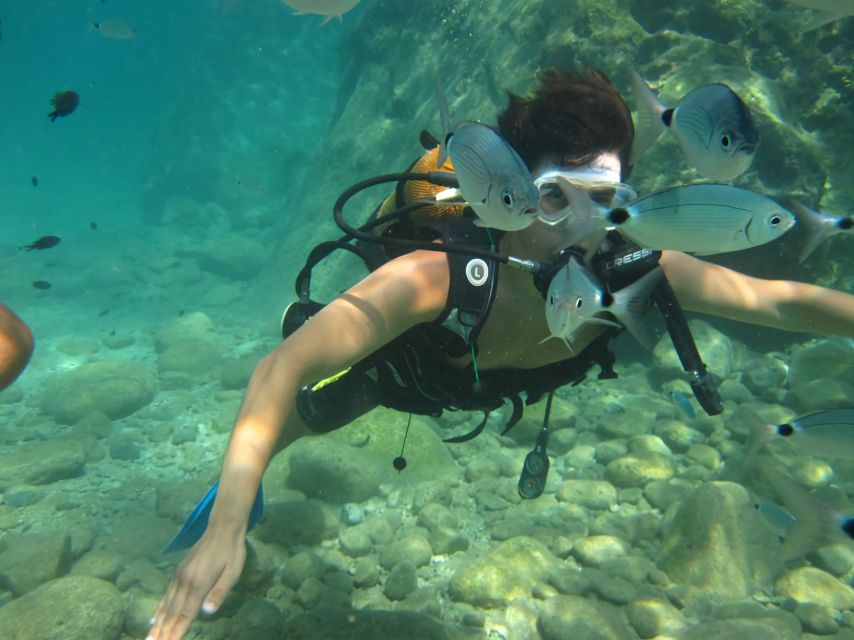
The first session is set at around 5 meters, and the whole point is comfort. Expect the instructor-led “get your bearings” phase: breathing, buoyancy control, and how to move underwater with less panic and more confidence.
A couple of real-world tips you’ll be glad you knew:
- Don’t fight the equipment. If something feels odd, tell your instructor fast and let them adjust or coach you through it.
- Keep your eyes calm. If you look around too fast, you can burn energy and start overthinking.
The team also tends to run close coaching for nervous beginners. Some guides are praised specifically for calming people down at the start, including instructors like Kirim and Karim (among others named by guests). If you’re worried you’ll panic, this is exactly what the briefing and patient coaching are meant to prevent.
Depth choice also helps. At around 5 meters, you can focus on learning rather than survival-mode problem solving.
Kiris Bay at about 10–15 meters: more depth, more wow
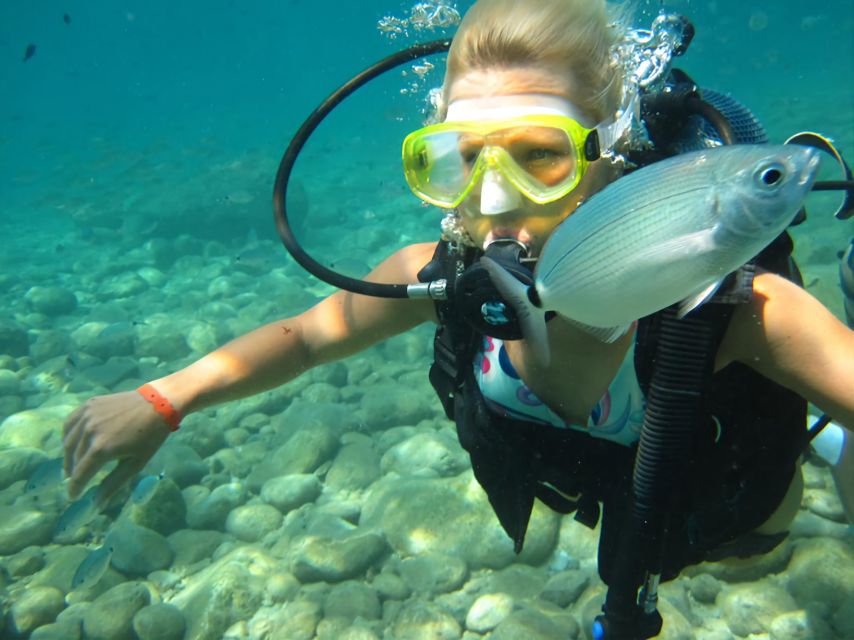
After the first session, you head to Kiris Bay for the second stop, which is about 10–15 meters. This is where the experience can feel noticeably different: you’re deeper, and the underwater world you’re looking at has more room to feel alive.
This is also where you should manage expectations. Several people note that the actual time under the water is brief—around 20–25 minutes total underwater time across both sessions is the stated plan. In practice, that can feel like roughly a handful of minutes per session depending on group flow and how quickly you get ready.
So your best strategy is simple: treat each session like a short guided “best-of” window, not a long independent exploration. If you want more time underwater in the future, you’ll have a baseline to train from.
Snorkeling, sunbathing, rock jumps, and fish-feeding breaks
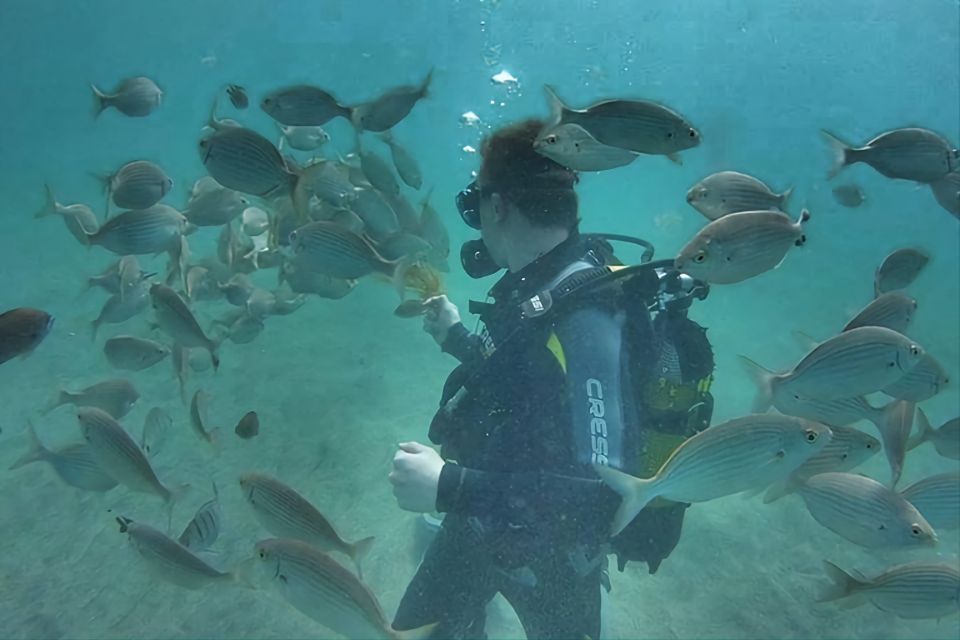
Between your two underwater sessions, you’re not stuck on the bench.
This trip is set up for surface fun:
- Swimming and sunbathing from the boat
- Snorkeling time (bring your own snorkel if you have one)
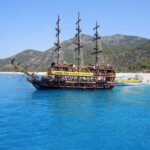
- On-board relaxation with mountain-and-cove scenery from the water
- In some conditions, you may find moments to jump from rocks or swim near caves
Fish-feeding is also part of the experience flow. It’s not just about seeing fish. It’s about that hands-on moment when the sea life shows up close enough to feel real.
One practical consideration: with lots of people, you might wait for your turn. Language grouping and time slots can build in downtime. Still, that surface time is part of the value—this isn’t a sit-in-a-classroom situation.
You can also read our reviews of more scuba diving tours in Kemer
Lunch onboard: simple fuel that keeps your day moving
Lunch is included and it’s meant to keep you steady for the later ride and final session. Reviews describe meals like bread rolls and pasta with chicken and vegetables, or similar simple onboard portions.
Here’s the honest read: lunch is basic but filling. It’s not a gourmet seafood feast, and that’s fine. You’re paying for a guided sea day, not a five-course meal.
If you’re picky about food or you burn calories easily in hot weather, consider packing a small snack for the gaps. (Your drinks are not included, so having a water plan helps too.)
Price and extras: getting your money’s worth at around $29
At about $29 per person, the math mostly works because a lot of the expensive parts are built in:
- Licensed instruction
- Scuba equipment
- Two structured underwater sessions
- Included lunch
- Optional hotel pickup (if you select it)
What’s extra:
- Drinks
- Photos and videos (not included)
- And personal cameras are not allowed per the activity rules
That camera point matters. If you want underwater photos, you’ll likely need to buy the onboard photo/video package when offered. Some guests report paying an additional amount on the spot for pictures and video, and they describe the photos as worth it for the memory factor.
My value advice: do the base tour first, then decide on photos afterward if you like how you feel on your first session. If you go in with a clear “learning first” mindset, $29 can feel like a bargain.
What to pack: snorkel, beach shoes, and a calm attitude
The tour doesn’t ask you to become an expert before you arrive. It does help if you come prepared to be comfortable on the boat.
Bring:
- A snorkel (helpful during the free swim/snorkel breaks)
- Beach shoes for getting on and off the boat and any rocky areas (this comes up a lot in feedback)
- A light layer for the ride if you’re sensitive to wind on open water
Leave at home:
- Any camera, since the tour states cameras are not allowed
And mentally prepare for this: your job is to relax, breathe, and follow the instructor’s cues. If you treat it like a performance, you’ll tense up. If you treat it like a guided lesson, it gets fun fast.
Who this Kemer scuba experience is best for
This is a strong fit if:
- You’re a first-timer who wants a structured introduction with patience and coaching
- You want two underwater stops in one day without complicated planning
- You’re happy spending time on the boat between sessions (sunbathing, swimming, snorkeling)
It’s also fine for experienced divers who want an easy day—just remember the underwater time is limited.
Not a fit if you have high blood pressure, since the activity isn’t suitable for that condition.
Should you book this Kemer two-stop scuba day?
I’d book it if you want a well-organized first scuba experience with two scenic bay locations, included equipment, and lunch—especially at this price level. It’s particularly appealing if you’re nervous about getting underwater, because many instructors are praised for calm, step-by-step reassurance (names like Kirim, Karim, Marat, Dovi, and Adriam come up often in feedback).
I wouldn’t book it if your #1 goal is long underwater time or if you strongly need to bring your own camera. Expect a short, guided taste, then boat time and sea views to fill the rest of your day.
FAQ
How many underwater sessions are included, and how deep are they?
You get two underwater sessions. The first is about 5 meters deep, and the second is about 10–15 meters deep.
Is this suitable for first-time scuba participants?
Yes. It’s described as suitable for both first-time underwater experience and experienced divers. Instructors provide a briefing on equipment, routines, and safety.
I don’t swim well. Can I still join?
The tour states that people who do not know how to swim can still join the diving experience.
What’s included in the price?
The price includes hotel pickup and drop-off if you select that option, diving equipment, a licensed diving instructor, and lunch.
Can I bring my own camera?
No. Cameras are not allowed on this activity.
Is this tour okay if I have high blood pressure?
No. It’s not suitable for people with high blood pressure.