Roman and Turkish Ankara on foot, with a guide. This private walk stitches together Anıtkabir and standout Roman-era stops like the Temple of Augustus, so the city feels like one story, not five separate photo stops. I like the flexibility of a private format and the way a guide can tie the details (like Augustus’s inscription) to what you’re actually seeing.
One consideration: it’s primarily a city walk, so expect outside viewing more than full monument “inside time,” and tickets aren’t included across the board, even if several stops are free. You’ll also want to plan for your own snacks or water breaks.
In This Review
- Key highlights before you go
- A smart Ankara overview you can actually use
- Price and what you’re really paying for
- Pickup, meeting, and how the day usually flows
- Stop 1: Temple of Augustus and why the inscription still matters
- Stop 2: Column of Julian (Belkıs Minaresi) and the story of routes
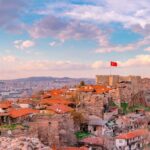
- Stop 3: Ankara Castle and the city’s long defensive memory
- Stop 4: Anıtkabir and what to notice beyond the crowds
- Stop 5: Roman Baths as an open-air museum pause
- Guides make or break it: names you might meet
- What to budget for: food, transport, and tickets
- How long is enough? Choosing 2 vs. 8 hours
- Who this tour suits best
- Should you book this Ankara walking tour?
- FAQ
- How long is the private Ankara walking tour?
- Do you pick me up from my hotel?
- Is this tour private or shared?
- What languages are the guides available in?
- Are entrance tickets included?
- What’s included in the tour price?
- Is food or drinks included?
- Do I need to use transportation during the tour?
- What is the cancellation policy?
Key highlights before you go
- Private route and customization: You can shape the day to your interests and time.
- Big names, walking distance: Temple of Augustus, Column of Julian/Belkıs Minaresi, Ankara Castle, Anıtkabir, Roman Baths.
- Clear historical context: Augustus’s inscription (Res Gestae) and Julianus’s route logic make ruins click.
- Guide flexibility if schedules shift: Some visits can be affected by dignitaries, and good guides adjust fast.
- Value for the price: A private guide for multiple major stops beats trying to piece it together solo.
A smart Ankara overview you can actually use
Ankara has a reputation for being “just a transit city.” This tour fights that idea in a practical way. Instead of showing you landmarks one by one with no connective tissue, it links them into a timeline you can carry in your head.
You’ll start with Roman power in the Altındağ district at the Temple of Augustus, then pivot to a later Roman marker at the Column of Julian (Belkıs Minaresi). After that you’ll hit Ankara Castle, then move into modern Turkey at Anıtkabir. The last stop brings you back to Roman life with the Roman Baths, now presented as an open-air museum. That mix is the point: you leave with Ankara’s layers sorted.
The private format matters here. If you want more time at Anıtkabir, or you’d rather spend extra moments on the castle walls, you can ask. You’re not locked into a fixed group pace.
You can also read our reviews of more walking tours in Ankara

Price and what you’re really paying for
At $36.05 per person, this is priced like a practical local-guiding service rather than a “big bus” excursion. The value comes from doing real interpretation while you walk between major sites.
What you need to know: the tour is private, and it includes an in-person guide plus help booking tickets for any visits that require them. Still, “tickets” to attractions are not included in the base price. The itinerary notes that several stops have free admission, but it’s smart to treat that as a likely outcome rather than a guarantee for every ticket situation on the day.
If you’re trying to save money, you can. But I’d also think about the alternative cost: time spent researching routes, getting confused at multiple sites, and missing the meaning of what you’re looking at. For most people, a good guide is the savings.
Pickup, meeting, and how the day usually flows
Pickup is offered. If your hotel is in Ankara, your guide will pick you up there. If you’re staying outside the city, the meeting point is set to something central and convenient. The tour can also be set to start from any centrally located hotel you request.
The tour may end somewhere different from where you started unless you ask for an end point in advance. That’s not bad, but it’s worth planning. If you’ve got a later dinner reservation or a specific spot you need to reach, tell the provider early so your guide can structure the final walk accordingly.
Also, you’ll get a mobile ticket. That’s handy when you’re juggling multiple sites and you want less friction on the day.
Stop 1: Temple of Augustus and why the inscription still matters
The Temple of Augustus and Rome, in Altındağ, is one of Ankara’s best Roman-era anchors. It’s believed to have been built around 25–20 AD, and it’s famous for the Monumentum Ancyranum—the inscription connected to Augustus.
Here’s what makes this stop more than “another ruin with columns.” The Monumentum Ancyranum is tied to the Res Gestae Divi Augusti, which is the record of Augustus’s works. The original text in Rome was lost, but this is among the most complete surviving copies. In plain terms: you’re looking at a real surviving message from the early empire.
What to expect on the ground:
- A focused look at the temple area
- Time to understand why this specific inscription ended up here
- A guide who can connect Augustus’s role to later layers of Ankara’s history
This stop is listed as a short stop, around 30 minutes, and admission ticket info is marked as free. In a short window, you’ll get the meaning fast—especially if you ask the guide to explain what you’re reading (conceptually, not necessarily word-for-word).
Stop 2: Column of Julian (Belkıs Minaresi) and the story of routes
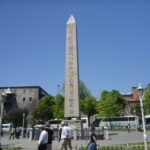
Next is the Column of Julianus, often called Belkıs Minaresi, located in the Ulus district. It’s an obelisk-style Roman marker, and the story behind it is a strong “how history moves” lesson.
Julianus was the last pagan Roman emperor. In 362, he declared war on the Persians. The column is tied to the creation of a route passing through Ankara—so Ankara isn’t just a random stop. It’s part of an actual travel-and-campaign map.
What I like about this stop is how it reframes a simple monument. You’re not just seeing a tall stone object; you’re learning why that object exists in that location.
Expect:
- A quick orientation and photo-friendly viewpoint
- A guide explanation of Julianus and the 4th-century context
- Time kept tight (also about 30 minutes), so you don’t burn your whole day standing still
As with other stops, admission is marked as free.


Stop 3: Ankara Castle and the city’s long defensive memory
Ankara Castle is an historic fortification with layers stretching far back. The earliest fortification on the site is credited to the Phrygians in the 8th century BC, then rebuilt by the Galatians in 278 BC. Later fortification construction is noted as being built in or after the 7th century.
That means your walk here is really a walk through time. Stonework and walls can look “samey” if you just stare. But with a guide, you start noticing why the city defended itself here, and how different groups treated Ankara as a strategic point.
Expect roughly 30 minutes. That’s enough for a meaningful look without turning it into a marathon. The castle fits nicely between the Roman and modern landmarks, acting like Ankara’s hinge.
Stop 4: Anıtkabir and what to notice beyond the crowds
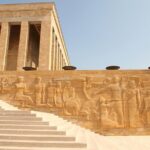
Anıtkabir is in the Çankaya district and includes the mausoleum of Mustafa Kemal Atatürk. Construction started in 1944 and finished in 1953, designed by Emin Onat and Orhan Arda. The complex also includes structures and monuments plus Peace Park, a wooded area.
This stop is the heart of modern Turkey in the itinerary. Even if you’re not into “museum mode,” it’s worth treating Anıtkabir as a place where symbolism matters. A good guide helps you read the site like a message, not just a building.
What to expect from a walking tour style visit:
- A guided approach that keeps you oriented
- Time to understand the complex layout and what’s included
- A pause long enough to absorb the main mausoleum area and nearby features
- Admission is listed as free, and your time allocation is about 30 minutes
One more practical note: schedule changes can happen. In some cases tied to visiting dignitaries, a guide may need to adjust the order or timing while keeping your visit productive. The key is having someone who handles changes smoothly, and the guide flexibility described in real experiences is a strong reason to book.
If you want the biggest payoff from this stop, ask your guide what is worth focusing on in the first five minutes. That simple question helps you avoid spending your whole time scanning without understanding.
Stop 5: Roman Baths as an open-air museum pause
The Roman Baths of Ankara are the ruined remains of an ancient bath complex. Excavations happened between 1937 and 1944, and then the site was opened to the public as an open-air museum.
This is a great final stop because baths are where Roman daily life becomes tangible. It’s also a nice pacing reset after Anıtkabir. Instead of heavyweight symbolism, you get physical remains and the feel of how people lived, washed, and socialized.
Expect:
- An outdoor walking look at the ruins
- A guide explaining the excavation timeline and what was found
- Time to slow down a bit (about 40 minutes)
Admission is marked as free here too.
Guides make or break it: names you might meet
This tour lives or dies on the guide. The best part isn’t just facts. It’s how they handle questions, adapt to timing, and point you toward practical local experiences.
From real examples of guides associated with this tour, you could be matched with people like Ertuğ, Kutlukan, Han, or a guide named Sarah. The standout theme across these experiences is the mix of history plus modern context—answers about ancient topics and also current life in Turkey.
There’s also a practical “you’ll use this later” side. One guide helped with bargaining at a local nut shop and offered tips for what to eat and where to go next. Another approach included showing more than the core monuments, like the old-town feel, city walls, and even a 16th-century mosque still in use (not just ruins).
That’s where the private format pays off. You’re not stuck with a script. You can ask, and the guide can tailor the walk—especially if you have a limited window in Ankara.
What to budget for: food, transport, and tickets
Food and drink are not included. That means you’ll want to carry water and plan a break if your day runs toward the longer end of the time range.
Transportation is also not included. The tour notes that public transport costs are on you. The flip side: the stops are in the city, and your guide can keep you on a walking route. Still, plan for Ankara weather. Bring layers and comfortable shoes. You’ll be on your feet.
Tickets: the stops list several entries as free admission, and that’s good news. But the broader tour policy says tickets to attractions are not included. In practice, that usually means you’re responsible for any ticket situations that do apply. The provider does include help from their team to book tickets for desired visits, which reduces your mental load.
So here’s the practical takeaway: assume some stops are free, and some might not be. Pack like a realist.
How long is enough? Choosing 2 vs. 8 hours
The tour duration is listed as 2 to 8 hours (approx.), which is a wide range. That’s not a problem if you match the length to your goals.
- If you want the highlights and a clear timeline, go shorter.
- If you like stopping to ask questions, taking photos, and adding extra old-town moments, go longer.
The tour is “a city tour and not a tour inside the monuments,” which is important for expectations. You’re building context through movement and interpretation, not doing a deep interior architecture tour at every site.
If you’ve only got a single day in Ankara, I’d lean toward the mid-range. That usually gives you enough time at Anıtkabir without rushing the Roman stops.
Who this tour suits best
This is a strong fit if you:
- Want a guided overview of Ankara’s major eras in one walk
- Prefer a private day with the chance to customize
- Like asking questions and getting explanations instead of scanning plaques
- Appreciate smooth handling of timing issues (especially around Anıtkabir days)
It’s also a good pick for families, based on experiences where kids felt comfortable and the visit stayed engaging. It tends to work well for first-timers because the stops are meaningful and the route is easy to understand.
Who might skip? If you’re the type who only wants interior access and long museum time inside monuments, this walk-style approach might feel too exterior-focused.
Should you book this Ankara walking tour?
I’d book it if you want your Ankara day to feel organized and memorable without stress. The price is reasonable for a private guide, and the itinerary hits the big anchors: Augustus’s inscription site, Julian’s column, the castle’s long fortification story, Atatürk at Anıtkabir, and the Roman Baths as a final slowdown point.
Skip it only if you know you want a strict, full interior tour experience at each site, or if you’d rather save money and self-guide with no real-time questions. For most people, the guide’s ability to add meaning, adapt when schedules shift, and toss in practical local tips is the main reason this works.
FAQ
How long is the private Ankara walking tour?
It runs for about 2 to 8 hours, depending on how you want to pace the visit.
Do you pick me up from my hotel?
Yes. The guide picks you up at your hotel if it’s located in Ankara, or you can request a centrally located hotel meeting point.
Is this tour private or shared?
It’s a private tour/activity, so only your group participates.
What languages are the guides available in?
The tour offers an in-person guide speaking English, with options also listed for Spanish, French, and Italian.
Are entrance tickets included?
No. Tickets to any attractions are not included, though the tour details list some stops with free admission.
What’s included in the tour price?
Included are the private walking tour, customization, help from the team to book tickets, and an in-person guide. A mobile ticket is also provided.
Is food or drinks included?
No. Drink or food is not included, so plan for a break if you need one.
Do I need to use transportation during the tour?
Transportation is not included. You can use public transport if you want, but the cost is at your own expense.
What is the cancellation policy?
You can cancel for a full refund if you cancel up to 24 hours in advance of the experience start time. Cancellation rules use the local time for the experience.