REVIEW · ISTANBUL
2-Days Private Tour to Gobeklitepe and Karahantepe from Istanbul
Book on Viator →Operated by Gobekli Tours · Bookable on Viator
Göbekli Tepe before breakfast is a real wow. This private, English-speaking two-day route in Şanlıurfa pairs the prehistoric gravity of Göbekli Tepe with the quieter, equally important Karahantepe stop. I like that the day also fills in context at the Şanlıurfa Archaeology and Mosaic Museum (including the museum’s Göbekli Tepe connections) and gives you time in the streets, not just ruins—especially the bazaar and the Abraham sites at Balıklıgöl. One thing to think about: at $2,760 per person, it’s a premium price, and some stops are brief, so you’ll want a pace that suits structured sightseeing rather than wandering all day.
What I really like about this setup is the private-group feel. You’re not sharing your guide’s attention, and you can move through major sites with the kind of explanation that helps prehistory make sense. I also like that the tour doesn’t treat Şanlıurfa as a one-ruin town: you get museum time, cave and sacred water time, an ancient necropolis moment, plus a second-day sweep through Soğmatar (Sumatar) and the Silk Road-era Han el Ba’rur.
The schedule does come with an important tradeoff: timing is tight for certain heritage stops—like just 30 minutes for the Kizilkoyun Necropolis and 30 minutes for Han el Ba’rur. If you’re the type who wants to linger in every corner with no pressure, you might wish these were longer. If you’re good with a “best-of” plan, this works well.
In This Review
- Key Things to Know Before You Go
- Why Şanlıurfa Works for Göbekli Tepe and Karahan Tepe
- Private-Group Touring from Istanbul: What Your Two Days Really Feel Like
- Day 1 at Şanlıurfa Archaeology and Mosaic Museum: The Context Stop You’ll Thank Yourself For
- Göbekli Tepe: Two Hours Among the World’s Oldest Ritual Complex
- Abraham’s Cave and Balıklıgöl: Where Sacred Stories Meet Real Stone
- Kizilkoyun Necropolis Tombs: A Fast Glimpse at Carved Bedrock History
- Day 2 in the Şanlıurfa Bazaar: A Break From Stones That Still Feels Local
- Soğmatar (Sumatar): The Moses Story and the Seven Temples Hill
- Han el Ba’rur: A Silk Road Caravanserai Stop That Changes the Mood
- Karahantepe Orenyeri: T-shaped Pillars and Carvings That Feel More Human
- Price and Value: Is $2,760 Per Person Worth It?
- Practical Tips for a Two-Day Stone-and-Story Route
- Should You Book This Tour?
- FAQ
- What is included in the tour price?
- Is this tour private?
- How long is the tour?
- Which sites are part of the itinerary?
- Is pickup offered in Istanbul?
- What is the cancellation policy?
Key Things to Know Before You Go
- Private-group touring means only your group participates, with an English-speaking guide and a focused pace
- Şanlıurfa Archaeology and Mosaic Museum links Göbekli Tepe to later eras, including the Urfa Man story
- Göbekli Tepe admission is included, and you’ll spend a full two hours at the site
- Balıklıgöl and Abraham’s cave add a strong religious-cultural layer to the same landscape of deep time
- Karahantepe is the later highlight on Day 2, with T-shaped pillars and carvings from the Pre-Pottery Neolithic
- Many stops are free on the program, so you’re mainly paying for guide time and the private format
Why Şanlıurfa Works for Göbekli Tepe and Karahan Tepe
Şanlıurfa is one of those places where “deep history” isn’t just a slogan. You feel it in the way the city is set up—ruins nearby, museums that explain what you’re seeing, and local sites tied to long-running religious traditions. That matters because Göbekli Tepe and Karahantepe aren’t easy to read by yourself. You need context: what you’re looking at, why it matters, and what questions archaeologists are still chasing.
This tour leans into that. You get your big-prehistory hits in a sensible order: first Göbekli Tepe, then Karahantepe, with museum and local heritage stops acting like signposts. If you’ve ever visited ancient sites that felt like a “point at it and move on” experience, this schedule is built to do the opposite.
You can also read our reviews of more private tours in Istanbul
Private-Group Touring from Istanbul: What Your Two Days Really Feel Like
This is sold as a private activity, so it’s restricted to your group. Practically, that means your guide can tailor the rhythm and answer questions without juggling a crowd. It also helps on a trip where you’re moving between places with different meanings: museum objects, outdoor sanctuaries, sacred water sites, and archaeological remains.
Your pickup is from your hotel or a confirmed address, and the service window runs Monday through Sunday from 5:00 AM to 8:00 PM. That doesn’t guarantee an exact time, but it does suggest you should be ready for an early start. Also, you’ll travel with mobile tickets and English support listed for the tour.
One other detail I appreciate: the program lists breakfast as included. If you’re paying a premium price, you want at least some meal planning handled. Still, food and drinks beyond breakfast aren’t listed as included, so plan on budgeting for meals and water during the day.
Day 1 at Şanlıurfa Archaeology and Mosaic Museum: The Context Stop You’ll Thank Yourself For
Before you walk among 12,000-year-old stone pillars, you start inside the Şanlıurfa Archaeology and Mosaic Museum. You’ll spend two hours here, and admission is included. This stop is a big part of the value, because it prepares your eyes for what’s coming next.
The museum covers artefacts stretching from the Neolithic all the way to the times of Crusader Edessa. That wide time span helps you see the region as a long human timeline rather than a single discovery that happened and then vanished.
Two things I’d actively put on your mental checklist while you’re in the museum:
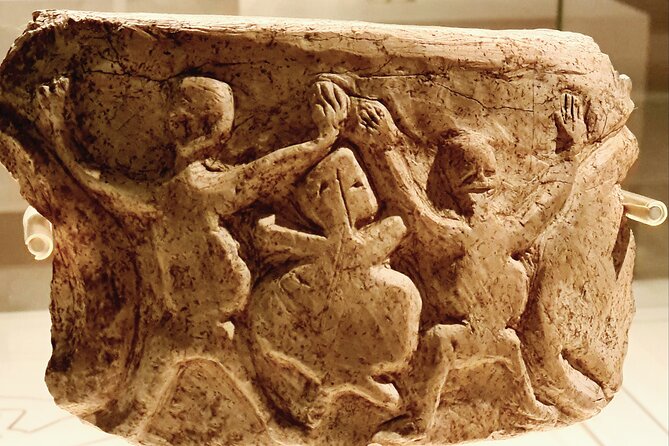
- The display of Urfa Man, described as the world’s oldest statue
- The museum’s connection to Göbekli Tepe, including a replica of Enclosure D
Even more interesting is the museum’s story around Nevali Cori. The itinerary explains that this cult site was submerged by the Atatürk Dam and that the original stones were moved into the museum. That turns the museum from “stuff in glass cases” into a place where you can understand how modern infrastructure intersects with archaeology.
Potential drawback? Two hours is enough to see the key highlights, but it’s still a museum. If you’re the kind of person who reads every label slowly, you may not finish everything on your own pace.
Göbekli Tepe: Two Hours Among the World’s Oldest Ritual Complex
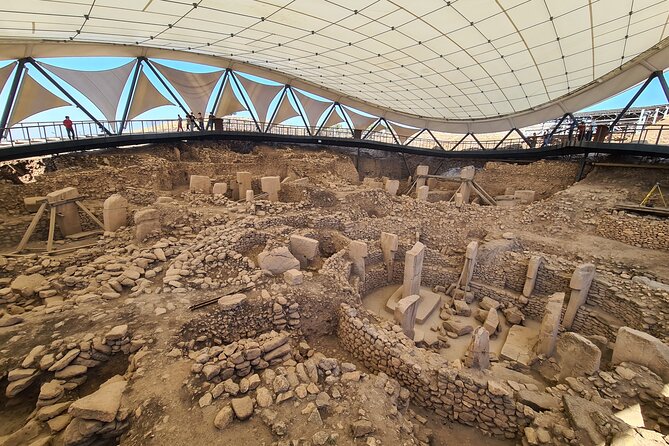
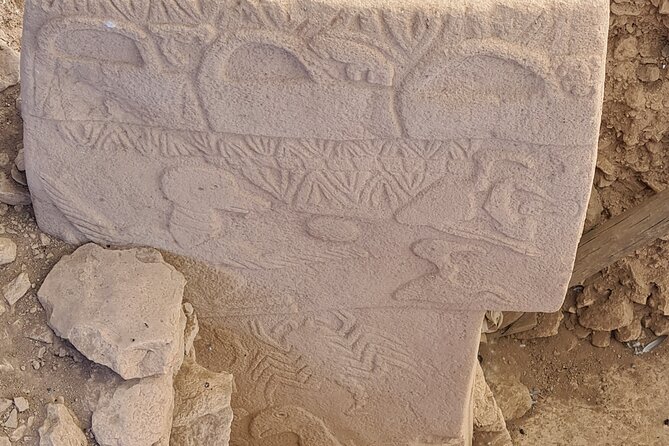
Next comes Göbekli Tepe, with two hours on site and admission included. This place is famous for a reason. It dates back as far as 12,000 years, and it was built before writing or pottery. The program also calls it the world’s oldest ritual complex—exactly the kind of claim that makes people stare at stone long after the tour moves on.
What I like most about this stop is that it’s not just a quick photo break. Two hours is long enough to shift from awe to understanding. You’ll be able to notice patterns rather than just absorbing the headlines.
Why it matters for your trip: once you’ve seen Göbekli Tepe, you start recognizing the logic behind the stones—how the site is arranged, what the carvings suggest, and why archaeologists keep arguing about what it means.
Also, since Karahantepe is on Day 2, this first visit sets your baseline. When you return to the region the next day, you’ll have a better sense of what’s similar and what changes.
Abraham’s Cave and Balıklıgöl: Where Sacred Stories Meet Real Stone
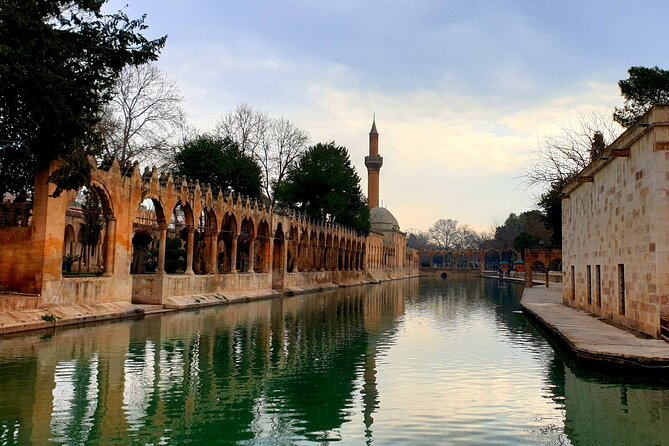
After Göbekli Tepe, you shift from prehistory into a living religious landscape. You’ll visit Abraham’s cave and the Pool of Prophet Abraham (Balıklıgöl). This stop is one hour, and admission is listed as free.
The program notes that the pool is believed to be the place where Prophet Abraham was thrown into the fire by Nimrod. Whether you approach this as religious history or cultural tradition, it adds a different kind of meaning to the same geography: people have been gathering here for centuries, and the rituals and stories still shape daily life.
One detail from the experience write-ups that you might love: the pond is associated with sacred fish, and you’ll see families spending time there. It’s a reminder that your two-day trip isn’t only about ancient dates—it’s also about how the present lives beside the past.
A few more Istanbul tours and experiences worth a look




Kizilkoyun Necropolis Tombs: A Fast Glimpse at Carved Bedrock History
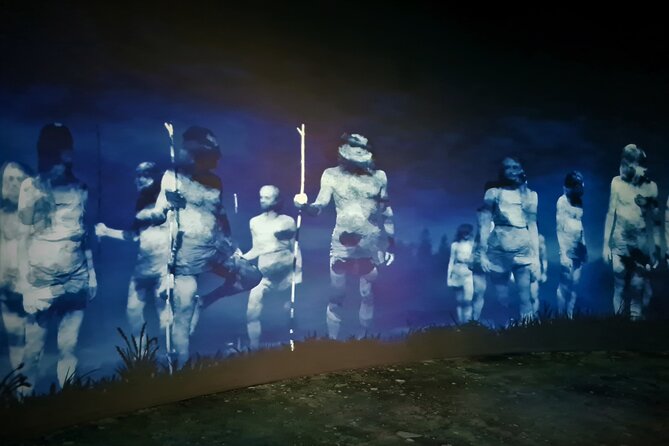
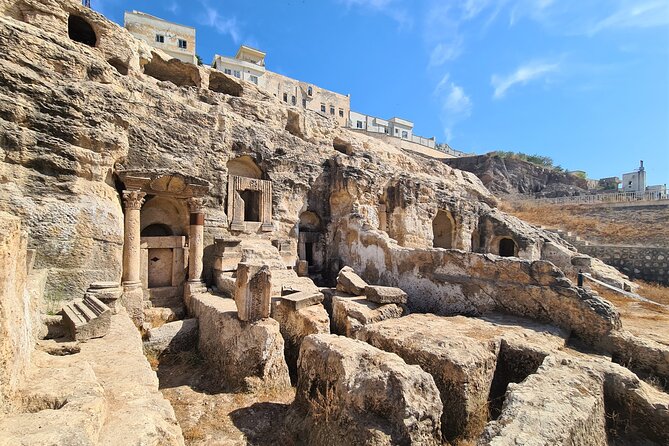
Still on Day 1, there’s a shorter stop at the Kizilkoyun Necropolis. You’ll have about 30 minutes, and admission is listed as free.
This is the part of the tour where you might ask yourself, Okay, is this enough time? For most people, it is. You’ll learn that the tombs date between the 2nd and 4th century AD and that there are over 61 excavated tombs, formed by carving into the bedrock limestone.
Why it’s worth the brief visit: it provides a bridge from prehistoric ritual sites to later burial practices in the same region. It also helps you understand that Şanlıurfa’s significance doesn’t begin and end with Göbekli Tepe.
Day 2 in the Şanlıurfa Bazaar: A Break From Stones That Still Feels Local
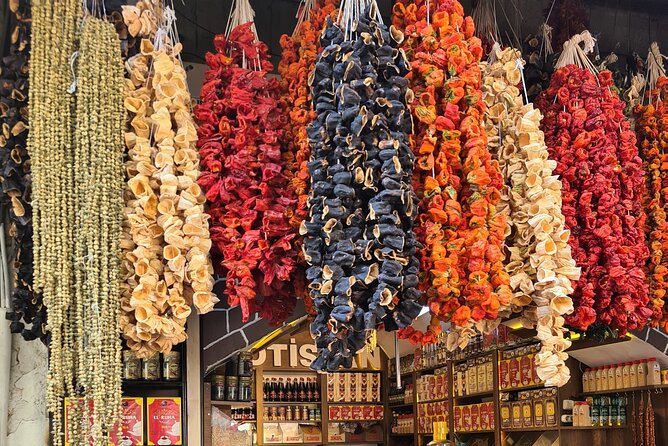
On the second day, the tour gives you two hours in the lively bazaar of Urfa. Admission is listed as free.
This is more than a casual stroll. The bazaar is where you get a sense of everyday craft and trade: stalls selling items like sheepskins, jeans, and colorful local scarves, plus workshop spaces and craftsmen you might not see in other places.
Two tips for this part:
- Use this time to pick up small, meaningful items. Since the tour isn’t listing included lunches, you might also use the bazaar areas to grab snacks and drinks.
- Don’t let it become your only “flex time.” Some of your remaining stops are time-boxed, and you’ll want enough energy to enjoy them.
Soğmatar (Sumatar): The Moses Story and the Seven Temples Hill
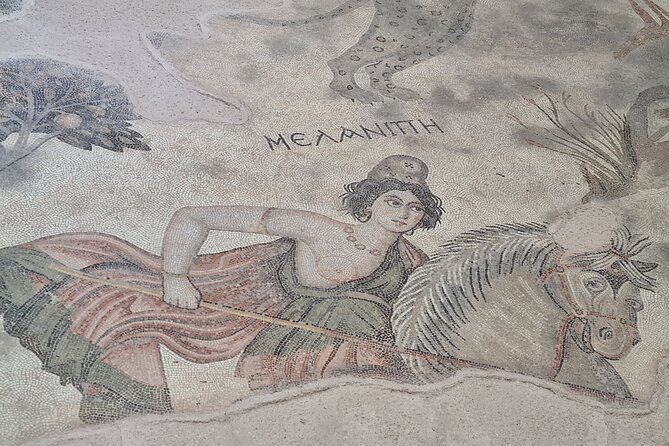
Next up is Sumatar, also known as Soğmatar. You’ll spend two hours, and admission is listed as free.
The program explains that the name comes from Arabic, tied to the idea of rain. It also says the region is associated with the belief that Prophet Moses escaped Pharaoh and engaged in farming here, with a well-hole said to have been opened by Moses’ miraculous scepter.
Then you get to the big hill story. The itinerary says there are remnants from around the 2nd century, described as a pagan center with seven temples—Sun, Moon, Saturn, Jupiter, Mars, Venus, and Mercury. It also notes that further investigation suggested the hill functions as a grave monument and sacred area, thought to represent a lord of gods with prayers oriented toward the center.
You’ll visit Pognon’s Cave, the sacred hill, and the Mars temple. That mix—cave + hill + temple—helps you feel why this stop earns attention beyond its religious storytelling. It’s the same site layered with belief, interpretation, and stone.
One consideration: this portion is packed with lore and symbols, so if you prefer straightforward facts over religious tradition, you may want your guide to focus on what can be tied to what you can see on site.
Han el Ba’rur: A Silk Road Caravanserai Stop That Changes the Mood
Then comes Han El Barur, with about 30 minutes and admission listed as free. The itinerary describes it as the remains of the Ayyubid dynasty Han el Ba’rur, a caravanserai built in 1228 to service trade caravans on the Silk Road.
This is a nice breather after more cave-and-hill stops. Caravanserais are practical architecture: they were built for travelers, storage, and overnight resting. Standing in the remains, you get a sense of movement—people coming through this region for long-distance trade, long before modern highways and flights existed.
Karahantepe Orenyeri: T-shaped Pillars and Carvings That Feel More Human
Your final major archaeological stop is Karahantepe Orenyeri. You’ll have two hours, and admission is listed as free.
Karahantepe is described as dating back over 11,000 years to the Pre-Pottery Neolithic period. The key visual element is the presence of T-shaped pillars, along with human and animal carvings and elaborate stone structures.
This is the part of the trip where I think the private format pays off again. When you’ve spent time at Göbekli Tepe, you can compare. Even if you don’t know the technical language, you’ll notice the site personality: what kinds of carvings appear, how the pillars relate to the space, and how the design tries to communicate meaning.
It’s also a helpful way to spend your last hours: you end your tour with another major piece of the prehistory puzzle, not a shop stop or a rushed viewpoint.
Price and Value: Is $2,760 Per Person Worth It?
Let’s talk numbers without pretending they don’t matter. The listed price is $2,760 per person for a two-day private tour. That is steep for most trips, so you should judge value by what’s included and what your time is buying.
Here’s what the program clearly covers:
- Breakfast included
- Pickup from your hotel or an agreed address
- English-speaking guidance
- Mobile tickets
- Admission included for the Şanlıurfa Archaeology and Mosaic Museum and Göbekli Tepe
- Multiple additional sites listed as free within the schedule, including Balıklıgöl/Abraham’s cave, Kizilkoyun Necropolis, the bazaar time, Soğmatar, Han el Ba’rur, and Karahantepe
Now the part that’s harder to put into a brochure: you’re paying for private access, coordination between multiple sites, and the guide’s ability to connect dots between stonework and context. When prehistory feels confusing, good explanation turns the trip from spectacle into understanding.
One thing to verify before you book: only breakfast is explicitly listed as included. In one set of experience notes, the team coordinated an overnight stay in Sanlıurfa and helped handle flight coordination from Istanbul. That sounds like real operational value, but it’s not stated in the basic inclusions list, so I’d confirm what’s covered for your exact booking.
Also plan on your own spending for meals and drinks since food isn’t listed as included beyond breakfast.
Practical Tips for a Two-Day Stone-and-Story Route
A trip like this works best when you plan for comfort and focus, not speed-chasing.
- Wear comfortable shoes. You’ll move between museums and outdoor sites, and time can pass faster than you expect.
- Bring a hat and water. The program depends on good weather, and you don’t want to be stuck thirsty during outdoor segments.
- Budget for food. Since only breakfast is listed, your day will likely involve buying lunch and snacks.
- Ask your guide questions early. Names like Taha come up in experience write-ups as a strong English-speaking guide, and having that rapport from the start can help you get more out of every stone and symbol.
Should You Book This Tour?
Book it if you want a private, structured two-day visit that treats Göbekli Tepe and Karahantepe as the main event, with enough surrounding context to make the sites click. It’s also a good fit if you enjoy mixing prehistory with cultural rhythm—museum objects, Abraham’s sacred sites, bazaar time, and the caravanserai stop.
Skip it (or at least rethink the timing) if you’re on a tight budget or you hate feeling rushed. Some stops are intentionally short, and at this price you’ll want to be confident you’ll enjoy a guided itinerary more than free-form wandering.
If you’re paying premium money, my best advice is simple: confirm what’s included beyond breakfast for your booking, and tell the operator what pace you want. With that in place, this is the kind of Şanlıurfa trip that can leave you with more than photos—it can leave you with a real sense of why these stones matter.
FAQ
What is included in the tour price?
The tour includes breakfast, pickup from your hotel or a confirmed address, and admission tickets are included for the Sanliurfa Archaeology and Mosaic Museum and Göbekli Tepe. A mobile ticket is also provided.
Is this tour private?
Yes. It is a private tour/activity, so only your group participates.
How long is the tour?
The tour duration is listed as 2 days (approx.), with time allocated to each stop across both days.
Which sites are part of the itinerary?
You’ll visit the Sanliurfa Archaeology and Mosaic Museum, Göbekli Tepe, Abraham’s cave and the Pool of Prophet Abraham (Balıklıgöl), the Kizilkoyun Necropolis, the Şanlıurfa bazaar, Soğmatar (Sumatar), Han el Ba’rur, and Karahantepe Orenyeri.
Is pickup offered in Istanbul?
Yes. Pickup is offered from your hotel or address to be confirmed/ agreed by both sides.
What is the cancellation policy?
You can cancel up to 6 days in advance for a full refund. If you cancel 2–6 days before the experience, you receive a 50% refund. If you cancel less than 2 days before, the amount paid is not refunded. The experience also requires good weather and may be rescheduled or refunded if canceled due to poor weather.