REVIEW · KUSADASI
Small Group Pamukkale Tour From Kusadasi or Selcuk Hotels
Book on Viator →Operated by Apasas travel · Bookable on Viator
Pamukkale never looks real until you’re staring at it. This full-day small-group trip (max 14 people) gets you to the mineral springs and the Hierapolis ruins with hotel pickup and a professional art historian guide—plus time set aside for the white travertines. One guide name that stands out from past days is Vedat, who’s known for mixing clear storytelling with a fun vibe on the drive.
The main thing to weigh is the long time in the vehicle: the road can add up to roughly 2.5 hours each way, so plan for a long day and pack a little patience with your water bottle.
In This Review
- Key highlights worth your time
- Pamukkale Thermal Pools: why the travertines are the star
- Hierapolis monuments in a tight 3-hour circuit
- The small-group feel: comfort, timing, and fewer headaches
- Lunch buffet: the meal you’ll actually look forward to
- What the guide adds (and why it changes your experience)
- Price and value: what you’re paying for
- A realistic game plan for the day
- Should you book this Pamukkale small-group tour?
- FAQ
- What is the duration of the tour?
- What time does the tour start?
- How big is the group?
- Where is pickup available?
- What sites do you visit?
- Is admission included for Pamukkale and Hierapolis?
- Is lunch included?
- Are drinks included?
- Is the tour offered in English?
- What happens if weather is poor?
Key highlights worth your time
- Small-group size (up to 14) means less waiting and more breathing room at the sites
- Pamukkale swim time at the thermal pools with admission included
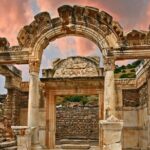
- Hierapolis stop built around real monuments like the Fountain of the Tritons and the Temple of Apollo
- Professional art historian guidance to help the ruins make sense fast
- Turkish lunch buffet with vegetarian options, plus drinks not included
- Air-conditioned transport with hotel pickup from Selcuk and Kusadasi (and the Port of Kusadasi)
Pamukkale Thermal Pools: why the travertines are the star
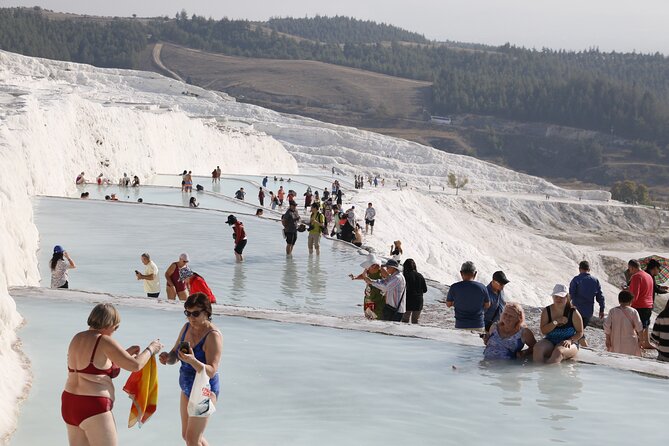
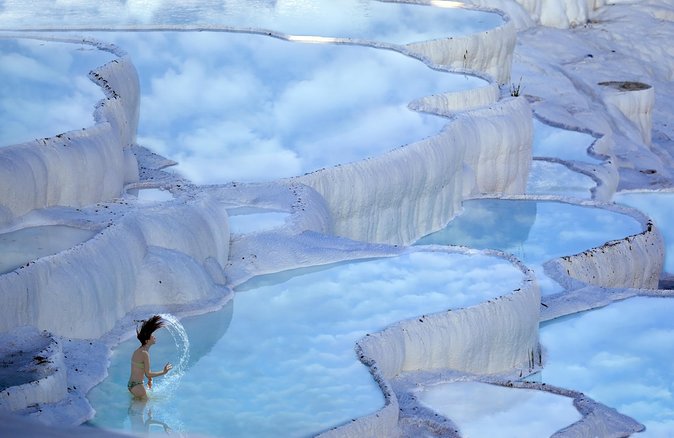
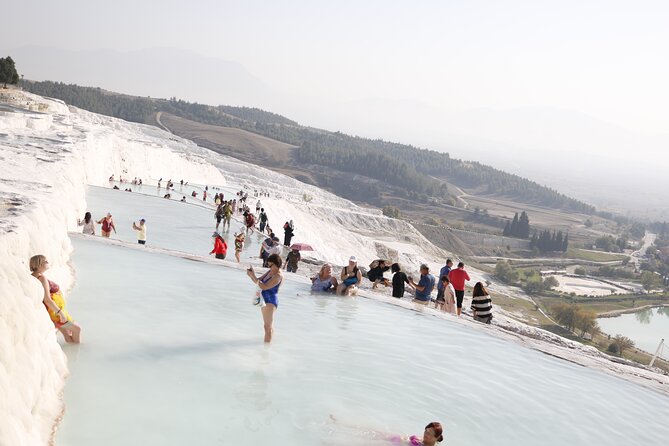
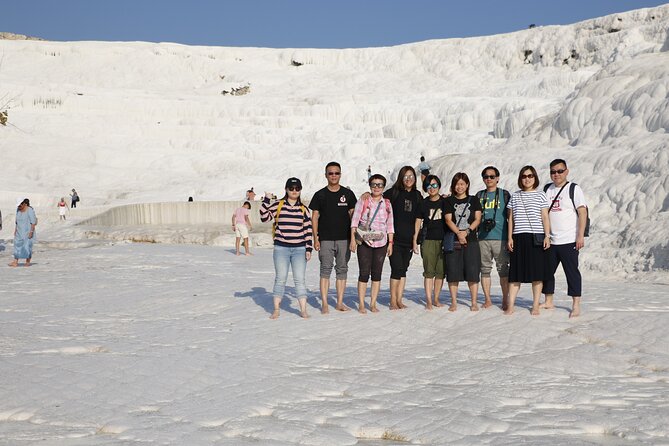
Pamukkale is one of those places where the famous look is the whole point. You’ll spend about 2 hours at the Pamukkale Thermal Pools, and yes, the big draw is the chance to swim in the mineral springs while you see how the world’s most recognizable “white terraces” are created.
Here’s what’s going on under the surface: the water that feeds the pools comes up from the ground with a high level of calcium hydrocarbonate. At around 35.6°C, changes in gases help trigger the precipitation of calcium carbonate. That’s the chemistry behind the travertine layers—water arrives, carbon dioxide and carbon monoxide evaporate, and calcium carbonate builds up into those chalky steps over time.
What I like about this part of the tour is that it’s not rushed past for a quick photo. With a full 2-hour block, you can take your time walking the travertines, pause for views, and still have a realistic window to actually get into the mineral water.
A practical note: the tour includes admission, so you don’t need to spend your mental energy on tickets here. Just plan for that 2-hour entry window and bring swim essentials (if you’re planning to go in), because the day is built around that experience.
You can also read our reviews of more tours and experiences in Kusadasi.


Hierapolis monuments in a tight 3-hour circuit
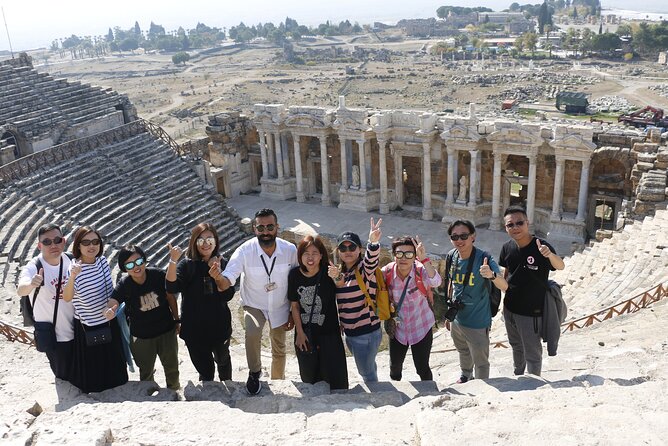
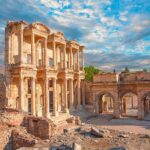
After Pamukkale’s terraces, the tour shifts into the bigger story: Hierapolis. You’ll get about 3 hours to explore a long list of landmarks and ruins, and the order is designed to keep the day moving without skipping the key stops.
Hierapolis wasn’t always one thing. Over time it became a meeting point for different cults and cultures. The city is believed to have been founded by Eumenes II, the Attalid king of Pergamon, around the end of the 2nd century BC. It’s also tied to a legend that the name comes from Hiera, the wife of Telephos—which helps you connect why these sites feel ceremonial even when you’re staring at stones instead of buildings.
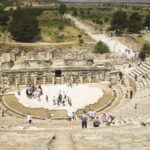
On the ground, you’ll see a mix of architecture, gateways, streets, and civic areas, including:
- Necropolis (the city’s burial grounds)
- Domitian Gate
- Frontinus Street
- Agora
- North Byzantine Gate
- Gymnasium
- The Fountain of the Tritons
- Temple of Apollon
- Martyrium of St. Philip and bridge
- Column Church
- Ruins of Plutonium
- Latrina and Roman Baths
My take: this collection works because it hits different angles of how ancient cities function. A gate and street show movement and access. An agora shows public life. Baths and latrines help you picture daily routine. Even if you’re not a hardcore archaeology person, the pacing lets you walk away with a mental map, not just a stack of photos.
And this is where having an art historian guide matters. With a decent guide, the ruins stop being random walls and start reading like a plan. You’ll get context on why each structure exists and what it likely did in the life of the city.
The small-group feel: comfort, timing, and fewer headaches
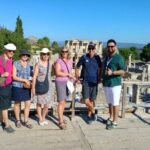
This is a small-group tour, with a maximum of 14 people. That matters more than it sounds. In a place like Pamukkale and Hierapolis—where there’s limited time and constant foot traffic—smaller groups usually mean less standing around and fewer “wait for everyone” moments.
The schedule also seems built to respect the reality of crowds. The experience is set up to avoid peak hours at Pamukkale, which is exactly what you want if you care about comfort while walking the terraces and taking in the views.
Transport is handled for you in an air-conditioned vehicle, with parking fees covered. You’re also not left guessing about logistics: there’s pickup from hotels across Selcuk and Kusadasi, plus pickup from the Port of Kusadasi. Start time is 8:00 am, and the full day clocks in at about 11 hours.
One thing to be honest about: the day is long. If your goal is to stay rested and slow, this might feel like a push. But if you want a full, well-structured day with minimal planning, the door-to-door setup is the value.
Lunch buffet: the meal you’ll actually look forward to
You get a Turkish lunch buffet, and the tour includes it. Vegetarian options are available—just tell the provider when booking.
This isn’t a small add-on. In a long day that starts in the morning and includes two major site blocks, lunch becomes the energy reset that keeps you comfortable through the afternoon walking. The fact that the lunch is described as exceeding expectations matters, because too many day tours “include lunch” in name only.
Also, drinks are not included, so if you like tea, water, or anything else with your meal, plan to purchase it on-site.
What the guide adds (and why it changes your experience)
A big part of why this tour feels worth it is the guiding style. You’re not just dropped at sites. You get guidance from a professional art historian who can translate ancient sites into something you can actually follow.
One recurring name in the feedback is Vedat, and what people liked most wasn’t just facts. It was the way he kept the day lively—mixing humor with clear context, even while you’re riding to and from Pamukkale.
Even if you don’t get that exact guide, the format matters: art historian-led commentary helps you connect the dots between structures like the Temple of Apollon and the civic spaces like the Agora. It also helps Hierapolis feel less like a list and more like a functioning city.




Price and value: what you’re paying for
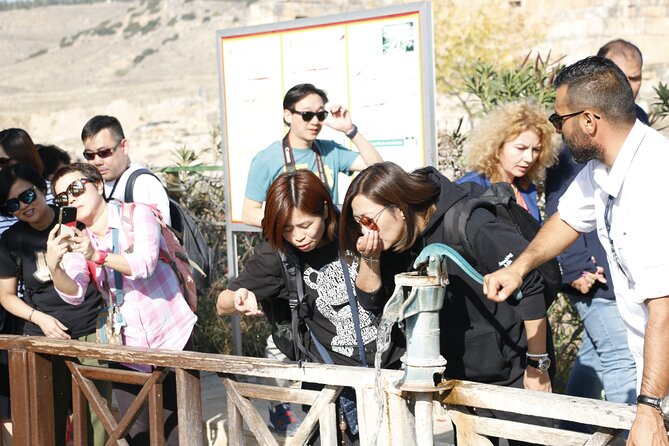
At $114.28 per person, this is priced like a real day tour rather than a bargain ticket. But you’re also getting several things that usually cost extra if you do it on your own:
- Hotel pickup and drop-off (plus port pickup)
- Roundtrip transport in an air-conditioned vehicle
- Entrance fees (included)
- A full lunch buffet
- Professional art historian guide
The “value math” here is pretty straightforward. If you were to piece together transport and tickets, the total often climbs fast—especially when you want admission included and guided time that keeps the day organized.
The only classic cost you need to plan for is drinks, since those are not included. Beyond that, the tour gives you a mostly predictable spend for the day.
A realistic game plan for the day
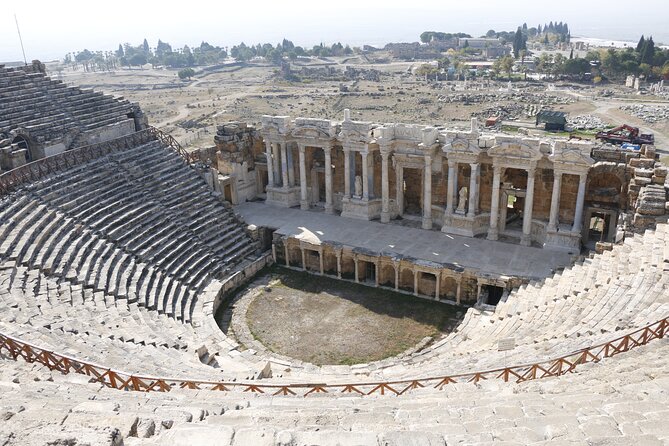
This tour runs from 8:00 am and lasts about 11 hours, with major time blocks at:
- Pamukkale Thermal Pools: 2 hours
- Hierapolis & Pamukkale: 3 hours
That means you’ll spend a lot of the day transitioning. Plan for that long road time, and don’t schedule anything tight the same day after you’re back.
Because there is time to swim in the mineral springs, bring your swimsuit if that’s on your list. Also pack something small for the road (snacks or a book if you like having options), since you’ll likely be in the vehicle for hours.
Finally, remember that Pamukkale’s reputation is real: it can be busy even outside the loudest moments. If you care about comfort while walking and taking photos, arriving with a plan—swim when the group is ready, walk the terraces within the 2-hour window—will make the day feel smoother.
Should you book this Pamukkale small-group tour?
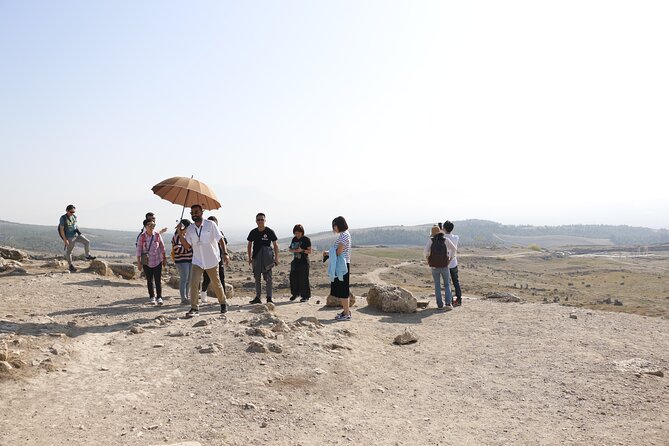
I’d book it if you want a full-day Pamukkale and Hierapolis experience with the planning handled for you: pickup, admissions, guide, and lunch all included. The small-group size and the way the day is structured to avoid peak hours make it feel practical, not chaotic.
I’d think twice if you strongly dislike long van rides or if you’re only interested in Pamukkale and want a shorter outing. With roughly 2.5 hours each way reported in similar schedules, the day is clearly built for people who enjoy a structured, action-packed tour.
If you want an organized, historically guided day where Pamukkale’s terraces and Hierapolis’s major monuments both get real attention, this one is a solid pick.
FAQ
What is the duration of the tour?
The tour is listed as about 11 hours.
What time does the tour start?
Pickup starts with an 8:00 am start time.
How big is the group?
The group size is capped at a maximum of 14 travelers.
Where is pickup available?
Pickup is available from hotels in Selcuk and Kusadasi, and from the Port of Kusadasi.
What sites do you visit?
You visit Pamukkale Thermal Pools and then explore Hierapolis, including major landmarks such as the Fountain of the Tritons and the Temple of Apollon.
Is admission included for Pamukkale and Hierapolis?
Yes. Entrance fees are included, including admission tickets for the Pamukkale and Hierapolis stops.
Is lunch included?
Yes, lunch buffet is included, with vegetarian options available if you advise when booking.
Are drinks included?
No. Drinks are not included.
Is the tour offered in English?
Yes, the tour is offered in English.
What happens if weather is poor?
The experience requires good weather. If it’s canceled due to poor weather, you’ll be offered a different date or a full refund.