REVIEW · KUSADASI
Skip The Line – Ephesus and Virgin Mary Tour
Book on Viator →Operated by Emtura Travel · Bookable on Viator
Ephesus is better when time is saved. This 4–5 hour tour strings together major sights—Temple of Artemis, the Ancient City of Ephesus, and Meryemana (Virgin Mary’s House)—with pickup, a professional English-speaking guide, and a mobile ticket so you can move efficiently. Two things I really like: the mix of big-name ruins plus the calmer, spiritual stop at Mary’s House, and the fact that several entrances are already covered (not just a walking tour). One thing to watch: the big ticket items for Ephesus and Meryemana are not included, so your final cost depends on what you choose to enter.
What makes this tour feel worth it is the pacing. You get a downhill guided route through Ephesus, then short, focused stops at sites like the Baths of Varius and the State Agora. Still, this is a group tour (up to 100), so you’ll want to keep your pace in sync and stay sharp with valuables in souvenir-heavy areas—especially around the shopping moments.
In This Review
- Key Points Before You Go
- How This Tour Fits Into an Ephesus Day
- Artemis First: Foundations of a Seven-Wonders Legend
- Walking the Ancient City: Magnesia Gate to Celsus Area
- Meryemana (Virgin Mary’s House): The Spiritual Side of Ephesus
- Temple of Domitian: Emperor Dedication on a Big Terrace
- Baths of Varius: Roman Daily Life, Not Just Big Monuments
- State Agora: Government Business, Not Merchants
- Price and Value: Where the Real Costs Actually Are
- Pickup, Timing, and Being Ready to Move
- Guides Make or Break It: Sam and Goksel’s Impact
- Avoiding Hassles in the Souvenir Zone
- Who This Tour Suits Best
- Should You Book This Skip-The-Line Ephesus and Virgin Mary Tour?
- FAQ
- How long is the tour?
- Is pickup from the port or hotel included?
- Is this tour offered in English?
- Does the price include the main admissions to Ephesus?
- Are tickets included for the Temple of Artemis and other stops?
- Is lunch included?
- What is the Virgin Mary’s House (Meryemana) ticket cost?
- Is there a mobile ticket?
- Do I need to pay extra for Izmir Airport pickup?
- What’s the group size limit?
Key Points Before You Go
- Pickup + drop-off in Kusadasi area: you meet staff at the gate with your name on a board.
- Mobile ticket included: helps cut down paper and confusion at entrances.
- Several entrances are included: Artemis, Temple of Domitian, Baths of Varius, and State Agora are covered.
- Two major add-ons: Ancient City of Ephesus and Meryemana tickets are separate.
- English guide quality matters: guides like Sam and Goksel are highlighted for solid explanations and care.
- Good weather is required: the experience runs with weather in mind.
How This Tour Fits Into an Ephesus Day
If you only have one morning or afternoon in the region, this plan makes sense. You start with the Temple of Artemis area, then hit the main Ephesus ruins, and finish with a few compact but meaningful archaeological stops. The total time is listed as about 4 to 5 hours, and each stop has a practical time window, so you’re not stuck in one place too long.
The tour also gives you a simple structure: history-heavy ruins first, then a faith-and-tradition stop, then Emperor/urban-life archaeology. It’s a good blend if you like both storytelling and seeing different types of Roman-era sites.
One practical point: some entrances are included, but not all. To avoid surprises, I’d budget for the Ancient City of Ephesus ticket and the Meryemana ticket up front. It’s the difference between a cheap guided day and a pricey one.
A few more Kusadasi tours and experiences worth a look

Artemis First: Foundations of a Seven-Wonders Legend
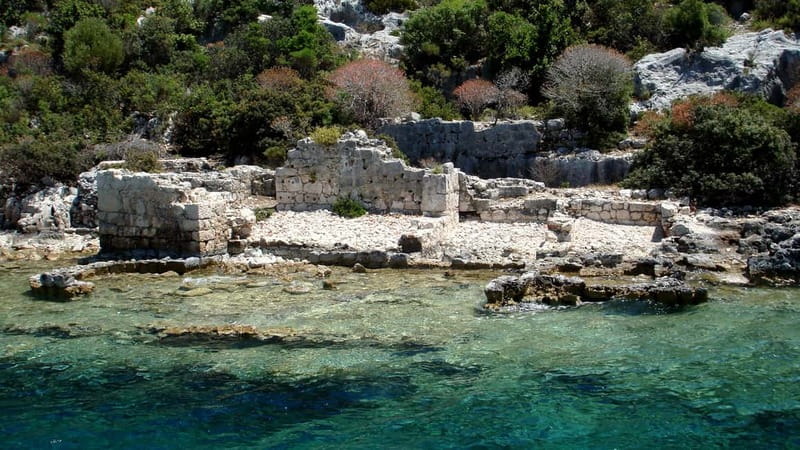
The day starts at the Temple of Artemis, one of the famous Seven Wonders. Today, you’re not seeing the full marble-and-column fantasy people imagine. You’re seeing the reality: ruins and foundations on what became a swampy area over centuries.
What you’ll likely love here is the context. Even with limited remains, the site still tells a story—how major civilizations built monumental architecture, then left traces that outlasted everything else. The tour keeps it to about 30 minutes, and that’s about right: enough time to understand the significance, without letting this stop steal all your energy from the bigger Ephesus walk.
Good value angle: the Temple of Artemis admission tickets are included, so you’re not paying extra just to get oriented. If you’re the kind of person who wants the big-name reference points early, starting here helps.
Walking the Ancient City: Magnesia Gate to Celsus Area
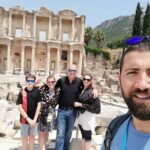
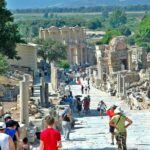
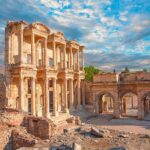
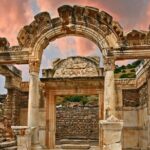
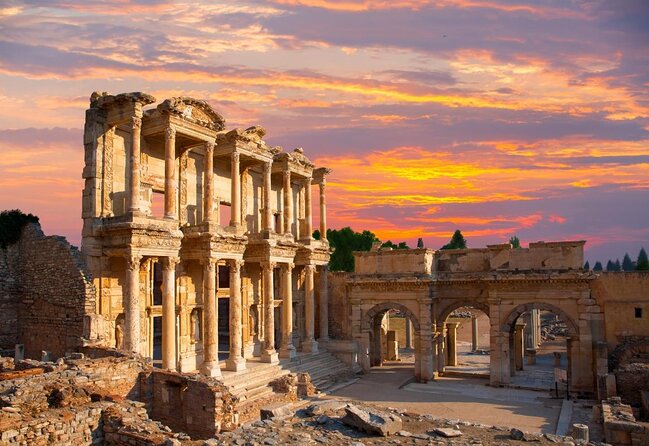
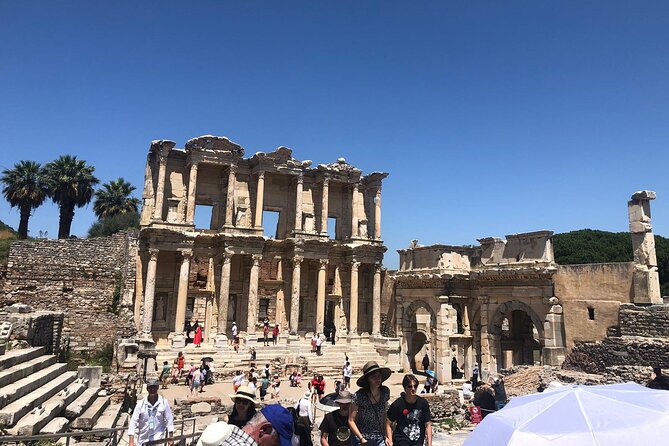
After Artemis, you move to the Ancient City of Ephesus. The tour enters through the Magnesia Gate and begins a slow, downhill walk into the ruins. That downhill detail matters: it naturally guides your view as you go, and it reduces the feeling that you’re just walking on flat ground.
Your route is designed around recognizable landmarks within Ephesus, including:
- Temple of Hadrian
- Fountain of Trajan
- Great Theatre
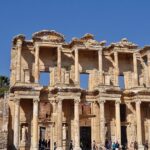
- Celsus Library
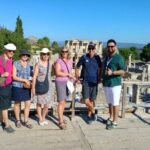
The tour time here is about 1 hour 30 minutes, which is long enough for a real guided circuit, not just a quick photo stop. Still, admissions for Ephesus are listed as an extra cost, so don’t assume the ticket is covered in the base price.
Meryemana (Virgin Mary’s House): The Spiritual Side of Ephesus

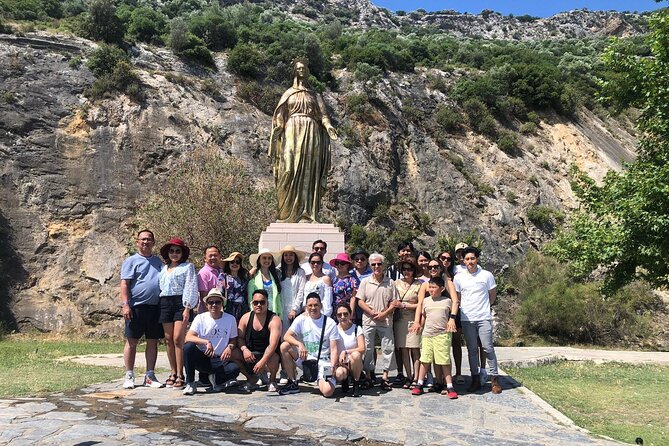
Then you shift gears to Meryemana, known in Christian tradition as the place Mary spent her final days in Ephesus. According to tradition, Mary came here after the resurrection of Christ, brought by the apostle John. The tour frames this stop as an uplifting or spiritual experience, and the time budget is about 45 minutes.
Two useful ways to decide if this is worth it for you:
- If you want a reflective break from Roman ruins, this stop gives you that.
- If you’re mainly chasing archaeology and architecture, you may feel it’s more faith-and-tradition than hands-on “wow” ruins.
Important for planning: Meryemana admission is not included. The price info lists 17 USD per person for the ticket, even though the stop description shows a different number (10 USD). Either way, you should expect an extra ticket cost here.
Temple of Domitian: Emperor Dedication on a Big Terrace
After Mary’s House, you head to Temple of Domitian. This is one of those sites that works well on a guided tour because it’s easier to understand what you’re looking at when someone explains the layout.
This temple is described as dedicated to an emperor and positioned to the south end of Domitian Street. The remaining structure sits on a high and wide terrace (about 50 by 100 meters) with vaulted foundations. The northern terrace section appears to have been two stories tall, reached by stairs that are still visible today.
The stop is brief—about 20 minutes—but that’s fine because the point here is recognition and orientation. If your energy is flagging, this is the kind of site that won’t burn your whole afternoon.
Notably, Temple of Domitian admission is included, so it’s a covered win rather than an optional add-on.






Baths of Varius: Roman Daily Life, Not Just Big Monuments
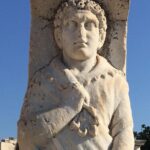
Next is the Baths of Varius, built in the first century and restored in the fourth century by a wealthy Christian woman named Scholastica. There’s also a statue associated with her (described as without a head), which helps connect the ruins to real people and time periods.
This stop is about how Romans relaxed, washed, and socialized. The tour description lays out the internal flow in a way that’s easy to picture:
- Apodyterium (dressing room)
- Frigidarium (cold room with a pool)
- Tepidarium (warm room)
- Caldarium (hot room with a heating system)
There’s also mention of the second floor used for massage and scrubbing therapy. Even if you don’t know Roman bathing terminology, this is a practical “how people lived” stop.
Time is short—about 15 minutes—but the site itself is arranged enough that it doesn’t feel like you’re rushing through a blank spot. And again, admission is included.
State Agora: Government Business, Not Merchants
Your last stop is the State Agora, described as the governmental market area for city discussions and official business. It’s placed on the southern part of the Basilica and dates to the Roman period, with a first-century B.C. build focus.
What I like about ending here is the tone shift. After temples and baths, you’re back to civic life: meetings, discussions, and decision-making. It’s also an easy finish, lasting about 15 minutes, so you’re not left dragging yourself back to the vehicle.
This one includes admission too.
Price and Value: Where the Real Costs Actually Are
The tour price is $43.00 per person and includes a lot of what you’d pay for on your own: hotel/port pickup and drop-off, transport by luxury minibus, and a professional guide with archaeological background. Parking fees and taxes are also covered.
Here’s the key value math:
- Included entrances: Temple of Artemis, Temple of Domitian, Baths of Varius, State Agora
- Not included entrances (the big ones):
- Ancient City of Ephesus: 55 USD per person
- Meryemana (Virgin Mary’s House): 17 USD per person
- Optional: lunch is not included and is listed at 8 USD per person
So if you enter both major ticket sites, you’re roughly at $43 + $55 + $17 = $115 per person, before any lunch. That still can be fair, because you’re getting guided routing, included transport, and multiple archaeological admissions. But it’s not a “$43 and you’re done” kind of day.
If you’re trying to save money, your decision is basically this:
- Want the full Ephesus experience plus Mary’s House? Budget the extra tickets.
- Prefer to focus on only archaeology? Consider skipping Meryemana and just doing Ephesus (though you’d need to confirm how the tour handles skipping).
Pickup, Timing, and Being Ready to Move
Pickup is offered, and staff meet you at the gate with a board showing your name. The tour operates in English, and the meeting point is close to public transportation, which helps if you’re not staying in the same area as the hotel pickups.
The minibus is described as new and air-conditioned in feedback tied to the experience, which matters in Turkey when the temperatures climb. Also, this is weather-dependent, so build in the idea that you might need a backup plan if the day is disrupted.
Because the experience runs in a sequence of multiple stops, the biggest success factor is simple: show up on time for pickup and keep track of where the group is going next.
Guides Make or Break It: Sam and Goksel’s Impact
The standout pattern I’d trust is guide quality. Feedback highlights guides named Sam and Goksel, with praise for knowledge, professionalism, and being considerate. One person specifically called out that communication for the meeting place was excellent and that the guide took extra steps to make them comfortable.
Even if you love history, what you often want is interpretation: why a building matters, what you’re seeing in ruins, and how the different sites connect. The tour’s structure supports this because each stop has a focused time slot. A great guide can turn ruins into a story you can actually remember.
Avoiding Hassles in the Souvenir Zone
Ephesus has plenty of shops and sellers nearby, and that can turn annoying fast. One negative note attached to this type of experience focused on aggressive souvenir behavior and the risk of theft from a van.
My practical advice:
- Keep valuables on you, not in shared spaces.
- Use a crossbody or zippered bag.
- If someone gets too pushy, step back and let the guide lead the group movement.
You don’t need paranoia. You just need basic street-smarts, especially during moments when people cluster near transport or entrance areas.
Who This Tour Suits Best
This is a strong fit for you if:
- You want a guided sweep of Ephesus plus a meaningful stop at Meryemana.
- You like having admissions handled for several sites, with only a couple major tickets added.
- You prefer not to puzzle out logistics on your own in the Ephesus area.
This is less ideal if:
- You only care about one “must-see” site and don’t want ticket add-ons.
- You hate group schedules and prefer totally flexible pacing.
Should You Book This Skip-The-Line Ephesus and Virgin Mary Tour?
I think you should book it if you want a time-efficient plan with a guide and you’re planning to enter Ephesus and likely also Meryemana. The base price covers useful foundations: pickup, transport, and multiple included admissions, so the day is not just a walking tour.
Skip booking if you’d rather spend your money on independent touring or if you know you won’t enter the two main ticket sites. In that case, you might be paying for guide time and included stops you don’t care about.
If you do book, go in with a clear budget for the separate tickets and a simple plan for valuables. Then focus on the joy part: seeing the Roman city layout, understanding the architecture logic, and finishing with a spiritual stop that changes the mood of the day.
FAQ
How long is the tour?
It runs about 4 to 5 hours.
Is pickup from the port or hotel included?
Yes. Hotel/port pickup and drop-off are included.
Is this tour offered in English?
Yes, it is offered in English.
Does the price include the main admissions to Ephesus?
No. Ancient City of Ephesus admission is not included and is listed as 55 USD per person.
Are tickets included for the Temple of Artemis and other stops?
Yes for several sites: Temple of Artemis, Temple of Domitian, Baths of Varius, and State Agora are listed as admission included.
Is lunch included?
No. Lunch is not included and is listed at 8 USD per person.
What is the Virgin Mary’s House (Meryemana) ticket cost?
Meryemana admission is not included and is listed as 17 USD per person.
Is there a mobile ticket?
Yes. A mobile ticket is included.
Do I need to pay extra for Izmir Airport pickup?
Yes. Pickup from Izmir Airport and Izmir Hotels is listed as 50 USD per person.
What’s the group size limit?
The tour has a maximum of 100 travelers.