REVIEW · KUSADASI
Priene, Miletus, and Didyma Day Tour from Kusadasi
Book on Viator →Operated by Apasas travel · Bookable on Viator
Three ancient cities in one steady day.
I like the small-group minibus format because it keeps the pace human, not cattle-car archaeology. I also love that you travel with a professional art historian, so the stones connect to real stories: Greek worship at Didyma, Ionian power in Miletus, and the hilltop planning of Priene.
One thing to think about: it’s still a full day. You’ll spend a lot of time outdoors at major ruins, and Priene gets a shorter visit window than the other stops, so fans of slow museum-style touring may feel a bit rushed unless you’re happy scanning and soaking in details fast.
In This Review
- Fast Reasons This Day Tour Works
- Three Ionian Giants in One Day from Kusadasi
- Small-Group Minibus and a Real Human Pace
- Didyma’s Apollo Temple: Oracle Power and the Sacred Way
- Miletus: Port Power, Ionian Ideas, and Coin-Making in Plain Sight
- Priene’s Theatre and Athena Hill: Designed for Living
- Entrance Fees, Drinks, and the Real Cost of a Full Day
- Lunch Break: How to Use It for Maximum Relaxation
- What the Art Historian Guide Actually Changes
- Time on the Road: The 9:00 Start and 8-Hour Reality
- Who Should Book This Tour
- Should You Book Priene, Miletus, and Didyma from Kusadasi?
- FAQ
- How long is the Priene, Miletus, and Didyma day tour?
- What time does the tour start?
- Where will I be picked up in Kusadasi?
- Is lunch included?
- Is the tour in English?
- How big is the group?
- Are entrance fees included?
- Do I get hotel drop-off at the end?
- Is there a mobile ticket?
- What is the cancellation policy?
Fast Reasons This Day Tour Works
- Art historian guide focus makes Didyma, Miletus, and Priene feel linked, not like three random stops
- Max 14 people keeps the minibus chatty and the pacing flexible
- Buffet lunch included, with a vegetarian option available if you ask ahead
- Door-to-door pickup and drop-off from Kusadasi hotels and the port area saves you time and hassle
- Practical pacing: longer visits at Didyma and Miletus, shorter at Priene, so you still see the big “wow” pieces
Three Ionian Giants in One Day from Kusadasi
If you’ve already seen Ephesus, this is a smart next move. Priene, Miletus, and Didyma sit in the same Aegean orbit, but they give you a different angle on Greek and Greco-Roman life. This tour strings them together in one 8-hour day, using hotel pickup so you don’t waste half your morning figuring out transit.
The payoff is the way the day builds themes. You start in a place of prophecy and worship at Didyma, move to a major Ionian city with learning and trade at Miletus, then finish with Priene’s planned city feel and standout theatre details. That flow matters: you stop, you learn, you connect, and the ruins start to make sense as a system.
You can also read our reviews of more tours and experiences in Kusadasi.


Small-Group Minibus and a Real Human Pace
This is not a huge coach tour. The group is capped at 14 travelers, and that shows in how you can actually hear the guide and ask questions. On a small minibus, your day feels like a conversation with stops, rather than a checklist where you get 12 minutes per site and a headcount at the end.
Pickup is built in too. You start with pickup from all hotels and the port in Kusadasi and you return with drop-off at the end of the day. If you’d rather spend your time looking at ancient marble than hunting for a bus schedule, this kind of logistics is part of the value.
A tiny caution: with fewer seats, schedules can feel tighter. You’re committing to a single-day plan, so wear comfortable shoes and accept that you’re walking through uneven ground at the ruins.
Didyma’s Apollo Temple: Oracle Power and the Sacred Way
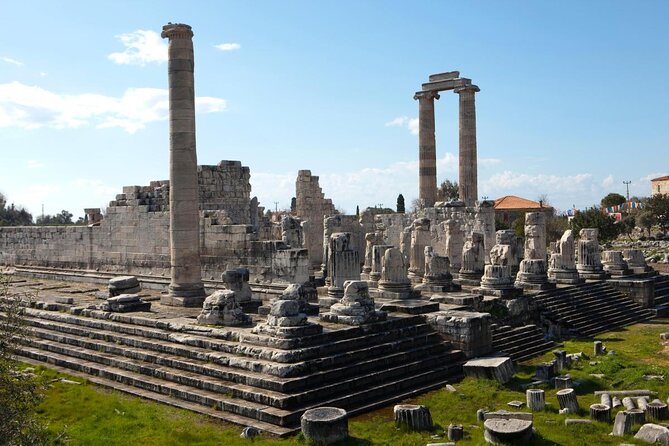
Didyma is where the day stops pretending to be modern. This was a major sanctuary across the ancient Mediterranean world, famous for the oracle connected with Apollo. The place wasn’t just a city—it functioned as a pilgrimage destination, linked to Miletus by the Sacred Way, a route pilgrims used when they came to get answers to difficult questions.
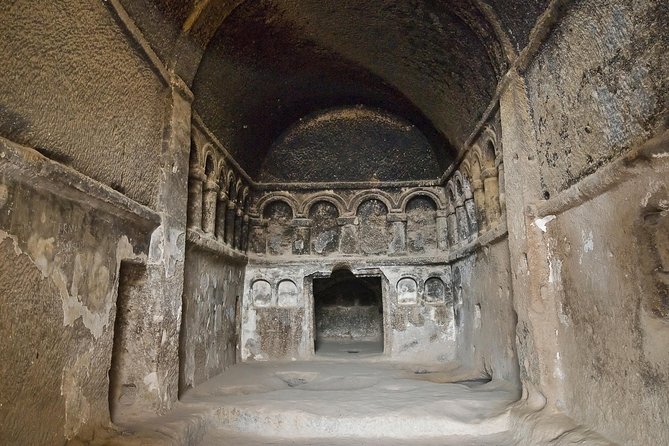
At the site, the main dramatic moment is the Temple of Apollo remains. Even if you’ve seen big Roman temples before, this one has a special “layered time” effect: the first temple dates back to the ancient Greeks in the late 8th century BCE, and today you’re looking at the archaic remnants located under later Hellenistic construction. That stacking of eras is exactly why Didyma feels different from a single-period ruin.
In the middle of all that stone, you also get the mythic framing. The word Didyma is tied to the idea of the twins, and the sanctuary relates to Zeus and Leto, whose children were Apollo and Artemis. If myths are your thing, you’ll catch the references the guide points out. If myths aren’t your thing, the architecture still delivers plenty of mood.
The visit time is about 3 hours, which is great. You’re not forced to rush through the site, and you have enough time to orient yourself and still catch the standout view points.
Miletus: Port Power, Ionian Ideas, and Coin-Making in Plain Sight
Miletus is the city that explains the region’s influence. This hillside city once controlled a large port on the Maeander River, and its ships ranged across the Mediterranean, Black Sea, and Sea of Marmara. In other words: this wasn’t a backwater. It was a connector.
Here’s what I think you’ll appreciate most. Miletus sits in the Ionian world, tied to the Ionian Confederation and the Ionian League—so the guide can trace why cities competed, traded, and shaped ideas. Miletus also connects to early Greek coins minted in the city, which is a great detail because it turns “ancient economy” from an abstract idea into something you can picture.
On-site, you’ll see a set of major structures that makes sense as a city plan rather than random piles:
- Theater and other civic spaces
- Byzantine Fortress
- Harbour Monuments
- Delphinium
- South Agora
- Baths of Faustina
- Mosque of Ilyas Bey
- Caravansaray
One practical note: Miletus is easier to enjoy when you’re mentally tracking how a city worked—meeting places, entertainment, worship, water and bathing, and trade flow. The guide’s art-historian approach helps you see those functions.
The visit time is about 3 hours as well, so you have room to look up, not just stare at the ground.
Priene’s Theatre and Athena Hill: Designed for Living
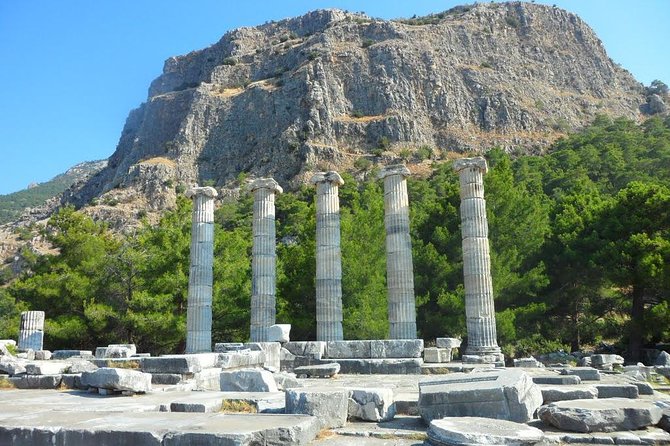
Priene gets less time than Didyma and Miletus, but it offers some top-tier visual rewards. The city’s star building is the temple of Athina on top of the hill, and that height makes the ruins feel planned and intentional rather than scattered. On a good day, the views add to the experience too, since you’re looking across the wider Aegean setting.
The theatre is the other headline. Priene’s theatre includes front-row seats often described as the five king chairs. Capacity was large—about 6,500 people—and it’s a Hellenistic-era theatre. One of the most interesting bits is that it’s described as the only theatre not renewed by the Romans, which gives you a stronger sense of continuity with Greek design rather than later modifications. If you like architecture details, you’ll enjoy how the guide points out the acoustic reputation of the theatre.
Priene also has a “city living” angle. The city once had a harbour and was tied to sea life. And it’s unusually specific about everyday comfort: it’s said that about 33% of citizens had their own bathrooms with toilets, a surprisingly modern-sounding detail for an ancient setting. It’s the kind of fact that makes you look at the plan differently.
The stop time is about 1 hour. That’s enough for the big highlights—Athena’s hilltop and the theatre area—but if you’re the type who likes to walk every street line, you might wish you had more time here.




Entrance Fees, Drinks, and the Real Cost of a Full Day
Price is listed at $216.74 per person for the full 8-hour experience. You’re paying for more than transport: you’re getting hotel pickup and drop-off, a professional art historian guide, a buffet lunch, and entry coverage is described as included.
One small thing to double-check before you go: the details for Priene indicate an admission ticket is not included for that stop. Elsewhere, the tour is described as including entrance fees. That mismatch is worth a quick confirmation when you book, so you’re not surprised on the day. Treat this as a normal travel sanity check, not a deal-breaker.
Drinks are not included. That matters because you’ll be at major sites for hours, and water and soft drinks can add up if you don’t plan for it.
Lunch Break: How to Use It for Maximum Relaxation
Lunch is included as a buffet. There’s also a vegetarian option available if you ask at booking. In my book, that’s a big practical win—because one of the hidden costs of ruins days is dealing with food logistics after a long morning.
The lunch time also gives you a rhythm reset. You’ll have spent part of the day looking at stone and myth, and then you can sit down and recharge before the next site. If you prefer a calm break, don’t underestimate how much this kind of included meal improves the whole day.
In at least some cases, the guide has been known to work with a local restaurant setup for the included lunch, so the meal can feel more grounded than a generic roadside sandwich stop. That’s a nice bonus if you care about where your food comes from.
What the Art Historian Guide Actually Changes
A good guide doesn’t just narrate dates. The art historian angle matters because it helps you “read” what you’re seeing. At Didyma, you’re not only seeing a temple base—you’re learning why the sanctuary mattered, why it drew pilgrims, and how earlier construction still sits under later building phases.
At Miletus, you’ll get help connecting the city’s Ionian identity to politics, trade, and culture. You’ll also get context for features like the harbour-related monuments, civic spaces, and the mixed eras represented on-site, including structures like the Baths of Faustina and later additions such as the Mosque of Ilyas Bey.
At Priene, the help is about design. Why the theatre placement matters. Why the Athina temple feels like the city’s crown. Why details like the theatre seats and the claimed acoustic reputation are worth your attention rather than trivia.
If you get guides such as Gul, Mehmet, or Melike, you’ll likely feel this immediately. Those names came up in how people described the day: clear explanations, friendly presence, and good pacing.
Time on the Road: The 9:00 Start and 8-Hour Reality
The day starts at 9:00 am, with pickup from your hotel or the port area in Kusadasi. That early start helps you fit three major sites without turning it into a late-night drive.
The entire tour is about 8 hours. Real talk: that’s a lot of movement, plus walking inside and around ruins. Don’t plan anything big right afterward. This is a full-day commitment, even with the comfort of a minibus.
A simple strategy helps: bring water, wear shoes you don’t mind getting dusty, and consider a hat or sunglasses. Many of these sites are open and sun-exposed, so your comfort affects how much you’ll enjoy the architecture.
Who Should Book This Tour
This tour is a strong fit if:
- You’re staying in Kusadasi and want door-to-door coverage
- You’ve already seen Ephesus and want Greek sites with a different feel
- You like archaeology with context, not just a list of monuments
- You want a small group day with time to ask questions
It’s also a good option if you’re traveling with someone who prefers guided explanations. The art historian setup keeps the day moving, and you’re less likely to feel lost among the stones.
If you’re the type who wants to spend half a day in just one ruin complex, you might find the time splits tight. But if you want the highlights and understanding, this format works.
Should You Book Priene, Miletus, and Didyma from Kusadasi?
I’d book it if your goal is a high-value day across three connected ancient sites, with a guide who can explain what you’re seeing instead of throwing dates at you. The combination of small-group transport, included lunch, and a focused art-historian style guide makes it feel like more than transportation to ruins.
Just do two quick checks before you pay and pack:
- Confirm whether Priene admission is included for your exact departure date (the details conflict).
- Plan for a full outdoor day, because this is still an 8-hour sightseeing commitment.
If you want a more efficient alternative to juggling buses and a self-guided route, this tour delivers that.
FAQ
How long is the Priene, Miletus, and Didyma day tour?
It runs for about 8 hours.
What time does the tour start?
Pickup and departure start at 9:00 am.
Where will I be picked up in Kusadasi?
You’ll be picked up from all hotels and from the port in the Kusadasi area.
Is lunch included?
Yes. The tour includes a buffet lunch, and a vegetarian option is available if you request it at booking.
Is the tour in English?
Yes, it is offered in English.
How big is the group?
The maximum group size is 14 travelers.
Are entrance fees included?
Entrance fees are described as included, but Priene’s admission is also listed as not included in the stop details. It’s smart to confirm this at booking for your specific departure.
Do I get hotel drop-off at the end?
Yes. The tour includes pickup and drop-off.
Is there a mobile ticket?
Yes, a mobile ticket is offered.
What is the cancellation policy?
You can cancel for a full refund up to 24 hours before the experience’s start time. If you cancel less than 24 hours before, the amount paid is not refunded. Cancellation cut-off times use local time.