REVIEW · MURATPASA
Istanbul: Turkish Coffee Making on Sand & Fortune Telling
Book on GetYourGuide →Operated by Highlights Turkiye Workshops · Bookable on GetYourGuide
Coffee, sand, and future-telling in one class. In Turkey’s first traditional Turkish coffee making atelier near Galataport, you grind your own beans, brew on sand in a copper cezve, then close the cup for a fortune telling ritual. I love the hands-on grinding part and I love the slow, no-rush rhythm that makes coffee feel like an event, not a transaction. One drawback to consider: this is a proper ritual, so it is not the kind of stop you slot in between trains with seconds to spare.
The instruction is practical and chatty, with lessons offered in English, Turkish, or Russian. From what the workshop’s different instructors are called out for, you could be guided by Ilham, Esin, Islam, or others, each shaping the experience with clear brewing coaching and story time. You also get taught the UNESCO-listed Turkish coffee tradition, not just the how-to.
You will also taste menengiç coffee (a nutty, caffeine-free Turkish classic), snack on Turkish delights, and wrap everything up with a take-home gift set. I like that the souvenir is not cheap and plastic-heavy: you leave with your own cezve, cup, coffee, and a recipe booklet, ready for a second go at home.
In This Review
- Key things you will actually do and take away
- Turkish coffee on sand: what makes this more than a tasting
- Choosing and grinding beans: where the real difference starts
- Brewing on sand in the cezve: the foam is the story
- Menengiç coffee: a Turkey taste you may not know yet
- The fortune telling ritual: symbols, meanings, and a fun pause
- Snacks and Turkish tea: keep energy steady through the ritual
- Where it is in Istanbul: finding the studio near Galataport
- Price and value: what $33 buys you in real terms
- Who this Turkish coffee on sand class suits best
- A quick pacing guide for your 90 minutes
- Should you book this Istanbul sand coffee workshop?
- FAQ
- How long is the Turkish coffee on sand workshop?
- How much does it cost?
- What do I do during the workshop?
- What is included in the take-home gift set?
- Where is the meeting point?
- What languages are offered?
- Is free cancellation and reserve-and-pay-later available?
Key things you will actually do and take away
- Grind Turkish coffee beans by hand using an old-style hand mill before it ever hits the cezve
- Brew on sand and watch the foam with guidance for the right finish
- Learn UNESCO-listed Turkish coffee tradition from pioneer-style teaching masters
- Try menengiç coffee and compare flavors you likely have not seen elsewhere
- Do the fortune ritual by closing the cup and reading symbols
- Take home a full gift set: cezve, cup, coffee package, and recipe booklet
Turkish coffee on sand: what makes this more than a tasting
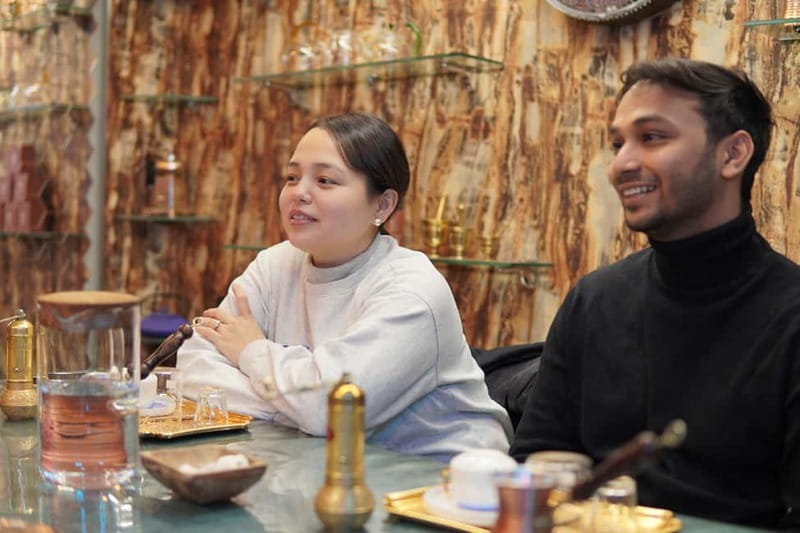
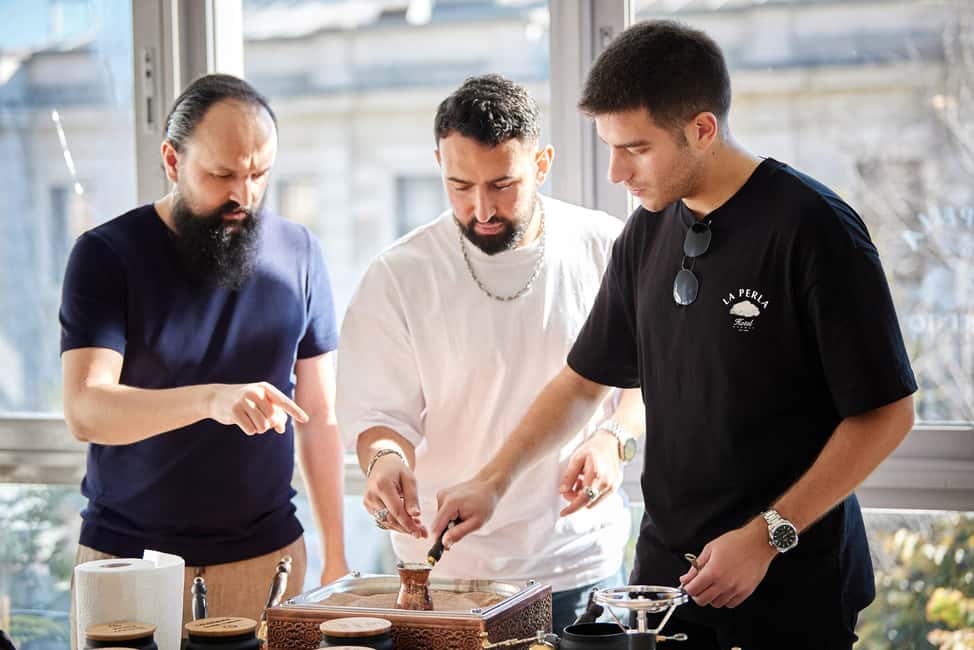
Most coffee experiences in big cities are quick. This one is not. Here, you learn why Turkish coffee is built around craft and patience: the foam matters, the grind matters, and timing matters. The workshop is built around doing, not just watching. You select the coffee, grind it yourself, and brew it on sand so you can see the process the way it is meant to be experienced.
What I like about this format is that it turns coffee from background noise into a skill. Once you’ve seen how the foam forms and how the cezve heats, you start understanding why Turkish coffee tastes the way it does, and why people treat it like a cultural ritual. It also helps you slow down a bit in Istanbul, where the city can move fast and you can end up doing everything at half attention.
If you are the type who learns best by using your hands, you will probably enjoy this a lot. If you want a silent, museum-like experience, it may feel a bit social since the workshop includes conversation and the fortune telling part is intentionally interactive.
You can also read our reviews of more tours and experiences in Muratpasa.



Choosing and grinding beans: where the real difference starts
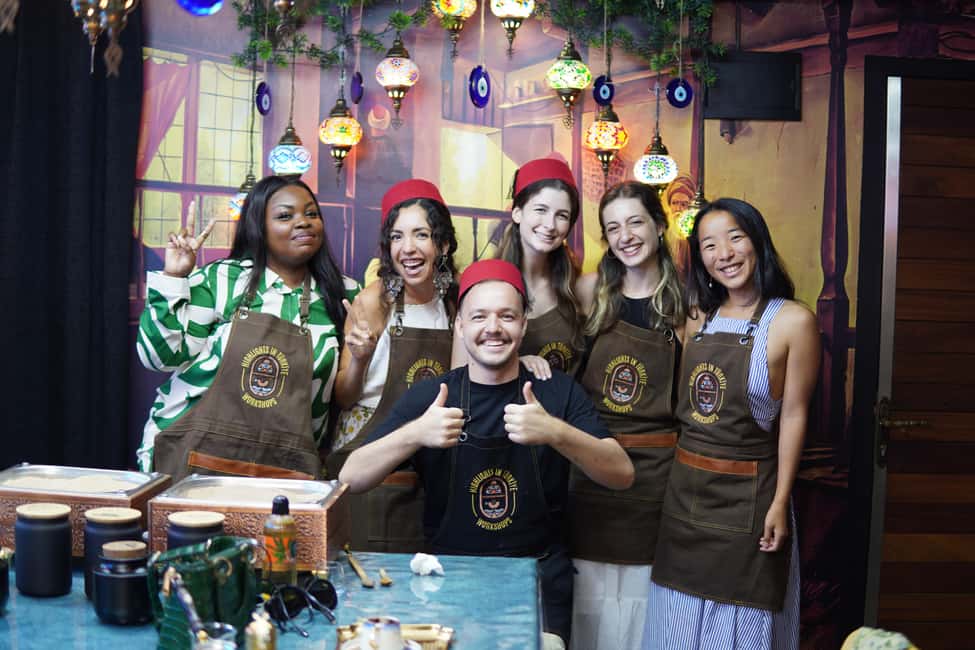
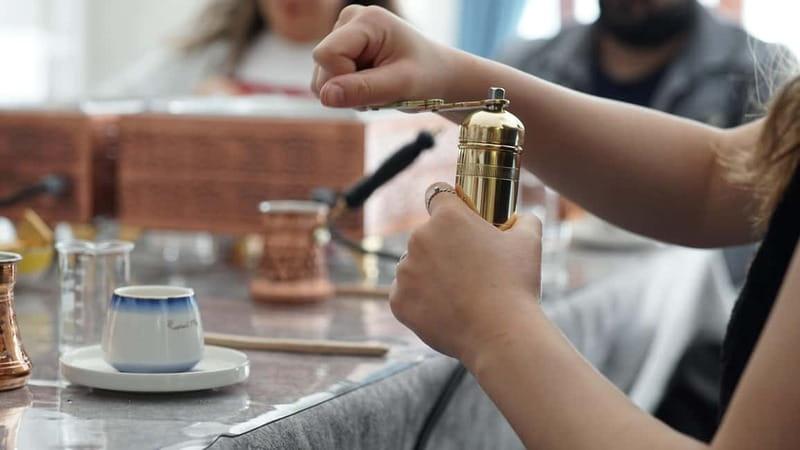
The first stage is the one that usually makes people smile. You do not just get coffee handed to you. You choose the beans, then grind them yourself with a hand-operated grinder. That hand mill step is not a gimmick. Turkish coffee depends on a very fine texture, and doing the grinding yourself helps you feel what the final cup should be like.
You’ll get guidance on holding the cezve with support while you practice the steps—either in English, Turkish, or Russian depending on your instructor. And since you are working with a real grinder and real coffee, you get a small sense of how this craft is passed down through practice.
A practical note: grinding takes a little effort. That is part of the charm. You will feel like you earned the coffee by the time it is ready.
From the instructor names shared by past participants—Ilham and Esin are two that come up often—this workshop tends to be taught in a friendly, clear way, with time for questions during the process. That matters because Turkish coffee can seem complicated until someone shows you what to watch.
Brewing on sand in the cezve: the foam is the story
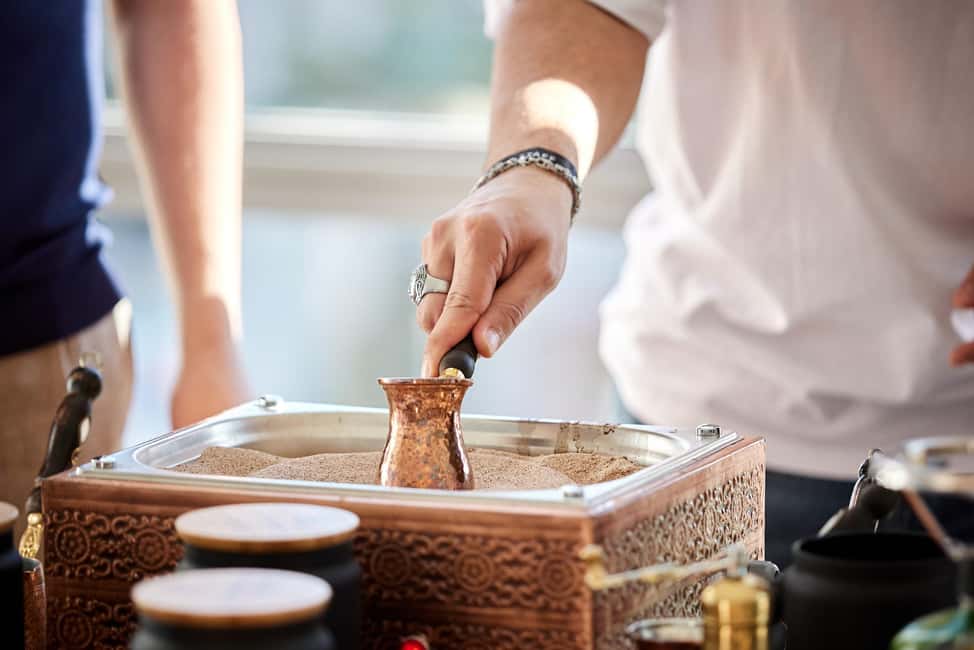
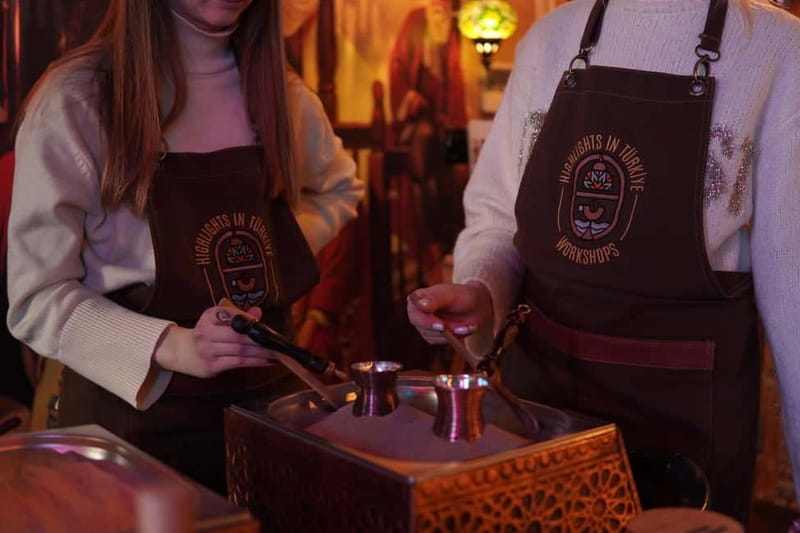
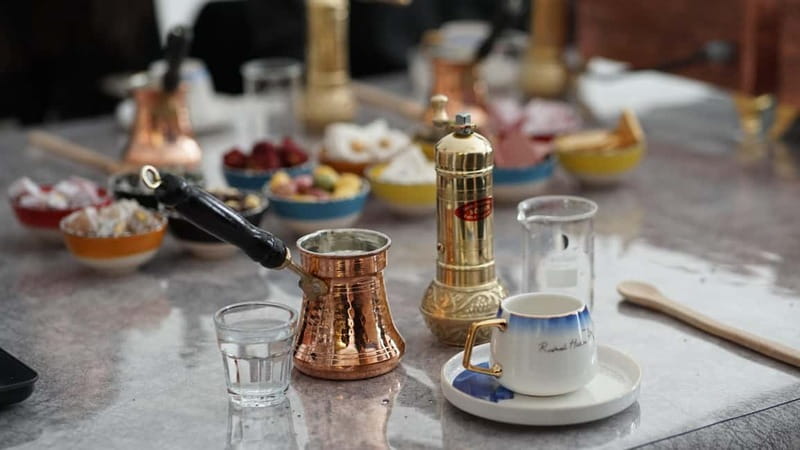
The core moment is brewing Turkish coffee on sand. You use a sand-based roasting pan and a traditional cezve (a copper pot). This method heats in a distinctive way, and the workshop’s coaching focuses on how the foam develops.
Here is what you should pay attention to when you do it: the texture and the timing. Turkish coffee is famous for its foam layer and the way it rises during brewing. In this atelier, you are not left to guess. The instructor helps with foam control as the coffee finishes.
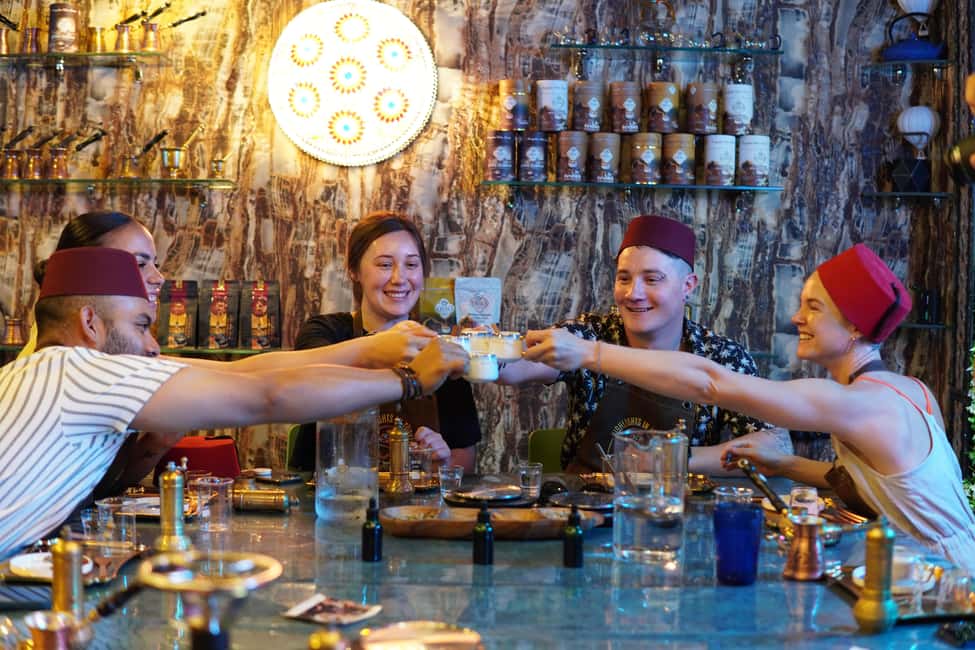
Then comes a key ritual step: you close your cup after the last sip. That is not random theater. It sets up the fortune telling portion, where symbols in the cup grounds are read and discussed in a social setting.
Also, you do not get the coffee in a disposable cup and run out the door. The workshop keeps things calm, in a spacious studio with high ceilings and soft background music. That kind of environment helps you focus on the process instead of rushing through it.
Menengiç coffee: a Turkey taste you may not know yet
After you’ve done the main Turkish coffee routine, you get introduced to menengiç coffee. This is a traditional Turkish option described as caffeine-free, with a nutty flavor profile.
Why this matters: many visitors assume they already understand Turkish coffee because they’ve seen it in cafes. Menengiç coffee is a different angle. It lets you taste a Turkish tradition that is tied to local ingredients and customs, not just the typical coffee-shop version of Turkish coffee.
If you are a coffee drinker, you may still enjoy it for the flavor experience. If you avoid caffeine, menengiç gives you a reason to participate fully in the ritual without having to opt out.
The fortune telling ritual: symbols, meanings, and a fun pause
Fortune telling is part of the experience here, and it is handled like a cultural activity rather than a scary, gimmicky trick. The format described is clear: you close the cup, then symbols are read, and meanings are discussed.
From the way past participants rate this part, people tend to remember the accuracy and the conversation more than the coffee foam. Instructors like Ilham, Dervan, and Kamran are specifically praised for the fortune telling session—particularly the fun of guessing what might be coming next based on what’s left in the cup.
How to approach it: treat it like a playful reflection tool. Even if you do not take it as literal prediction, it’s a nice break in your day where you slow down, listen, and share a few laughs with people at similar travel “curiosity volume.”
If you are on the skeptical side, you can still enjoy it because the ritual is tied to the coffee-making process you just learned. You’re not just doing random fortune telling; you’re linking it to the cup result you created.
Snacks and Turkish tea: keep energy steady through the ritual
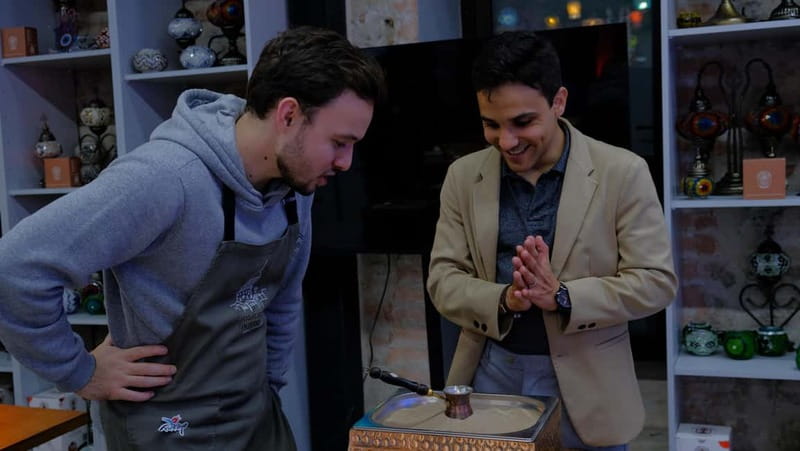
Coffee workshops can be all caffeine, all the time. This one adds Turkish tea and Turkish delights while you work through the ritual. That means you can take your time while your hands are doing the grinding and your brain is learning what to watch for in the foam.
This is also practical. Brewing on sand and doing fortune telling can take the full 90 minutes. Having snacks helps you avoid that mid-lesson hunger slump that can make any cultural experience feel shorter than it should.
If you have dietary restrictions, the exact menu is not spelled out in the details you provided. Still, you’ll likely find it helpful to mention any needs in advance when you confirm your booking.
Where it is in Istanbul: finding the studio near Galataport
The location is one of the easiest parts of the experience. The studio is described as diagonally to the right of Arada Beyrut Cafe and directly across from Lavander Cafe. It sits between Galataport and Galata Tower, in a bright, spacious atelier setting.
That matters because Galata is a great walking area. If you are planning a day around Galata Tower, Karaköy, or Galataport, you can make this feel like a natural stop rather than a detour.
Timing tip: because you want to enjoy the unhurried pace, I’d recommend arriving a few minutes early. In that area, you might spend extra time admiring side streets and small views before you even reach the atelier.
Price and value: what $33 buys you in real terms
At $33 per person for about 90 minutes, you are paying for a hands-on cultural workshop plus a take-home gift set. That’s the key value point: the session isn’t just a class; it ends with a meaningful kit.
Included items listed are substantial:
- a traditional sand setup for brewing
- premium coffee beans used for the session
- a traditional coffee pot (cezve) that you take home
- a hand-operated coffee grinder
- Turkish delights and snacks
- a special Turkish coffee booklet
- a take-home gift set including cezve, cup, ground coffee package, and recipe booklet
If you’ve ever tried to buy a cezve and matching ingredients in tourist shops, you know how quickly the cost climbs. Here, the purchase feels tied to the experience you just learned. You leave with tools and instructions, so the workshop can turn into coffee-making at home rather than being only a memory.
In other words, the price is not just for the tasting. It’s for the skill and the kit.
Who this Turkish coffee on sand class suits best
I’d put this workshop in the sweet spot for:
- couples and small groups who want a fun, hands-on activity that isn’t another “line and ticket” stop
- food and drink lovers who like learning process, not only flavors
- people who enjoy cultural rituals and a social atmosphere (because you’ll be chatting during the session and during fortune telling)
- anyone traveling with limited time who still wants a full cultural package in 90 minutes
It is also wheelchair accessible, which is helpful information if mobility matters for you.
One more practical note from how the session can run: the workshop experience is described as sometimes more intimate than you might expect. So if you prefer small-group pacing, you’re likely to feel comfortable. If you prefer a large group energy, you might want to check the session times when you book.
A quick pacing guide for your 90 minutes
Even without a minute-by-minute schedule, you can picture how the session flows based on what’s included:
1) You start with instruction and coffee preparation setup.
2) You choose beans and grind with the hand-operated grinder.
3) You brew Turkish coffee on sand in the cezve, focusing on foam control.
4) You taste and learn about menengiç coffee and the wider Turkish tradition.
5) You get snacks and Turkish tea during the session.
6) You close the cup after the last sip, then do the fortune telling ritual.
7) You wrap up with the take-home gift set and a recipe booklet you can use later.
That rhythm is one reason people rate it so highly: it doesn’t feel like waiting around. You’re doing something almost the entire time.
Should you book this Istanbul sand coffee workshop?
If you want a souvenir you’ll use, a coffee skill you can repeat, and a cultural activity that goes past the usual cafe script, I’d book it. The hands-on grinding and sand brewing are the real draw, and the fortune telling is a fun way to finish while everything is still fresh in your head.
If you are the kind of traveler who hates any activity that takes longer than it should, you might find the slow ritual pacing a bit much. Also, if you already know Turkish coffee deeply and only care about tasting new flavors, you may want to compare this to other Istanbul coffee-focused experiences.
For most people, though—especially if you’re in the Galata–Galataport area—this is a solid use of 90 minutes. You’ll leave with coffee know-how, a kit in your bag, and a story that doesn’t rely on queues or big crowd energy.
FAQ
How long is the Turkish coffee on sand workshop?
It lasts 90 minutes.
How much does it cost?
The price is $33 per person.
What do I do during the workshop?
You select and grind Turkish coffee beans, brew coffee on sand, learn about the Turkish coffee tradition, and take part in a fortune telling ritual. You also experience menengiç coffee and have Turkish tea and snacks.
What is included in the take-home gift set?
You take home a traditional coffee pot (cezve), a cup, a coffee package, and a recipe booklet (the workshop also includes a copper-style pot and coffee booklet as part of the included items).
Where is the meeting point?
It is a spacious studio located diagonally to the right of Arada Beyrut Cafe and directly across from Lavander Cafe.
What languages are offered?
The instructor can teach in English, Turkish, or Russian.
Is free cancellation and reserve-and-pay-later available?
Free cancellation is available up to 24 hours in advance for a full refund, and you can reserve now and pay later.