REVIEW · ISTANBUL
Istanbul: Turkish Carpet/Rug Weaving Workshop with Artisan
Book on GetYourGuide →Operated by Anatolian Heritage Workshop · Bookable on GetYourGuide
Your hands learn a craft older than Istanbul. This is a hands-on Turkish carpet weaving workshop with artisan-style guidance, plus tea breaks and real stories behind what you’re making—so you leave with a souvenir that feels personal, not mass-produced.
I love the small-group setup (max 8), because it means you actually sit at the loom and get help when you get stuck. I also like that you learn more than the motion: you hear about the meaning behind rug patterns and the colors people commonly use, not just how to copy them.
One thing to consider: the session is listed as 2.5 hours, but pacing can stretch a bit depending on the group and your comfort level. If you’ve got a strict schedule afterward, give yourself extra buffer.
In This Review
- Key Highlights You’ll Actually Feel
- Why This Istanbul Carpet Workshop Feels Different
- The Loom Part: What You Do During the 2.5 Hours
- You start by choosing your motif and colors
- Then you learn the knotting method
- You weave your way toward a finished souvenir
- Pattern Meanings: More Than Decoration
- Tea, Coffee, Snacks, and the Calm Pace
- Who You’re Learning From (and Why It Matters)
- Price and Value: Is $32 a Good Deal?
- Finding the Workshop: Anabala Pasajı, Near Petra and a Tattoo Shop
- Timing Reality Check: 2.5 Hours, but Leave Margin
- What’s Included vs. What You Might Want Later
- Best Fit: Who This Workshop Suits
- How to Prep So You Get the Most Out of It
- Should You Book This Istanbul Turkish Rug Weaving Workshop?
- FAQ
- Is this Turkish carpet weaving workshop beginner-friendly?
- How long is the workshop in Istanbul?
- How big are the groups?
- What languages are available?
- What’s included in the price?
- Can I take home what I make?
- Is a picture frame included?
- Is the workshop suitable for children?
Key Highlights You’ll Actually Feel
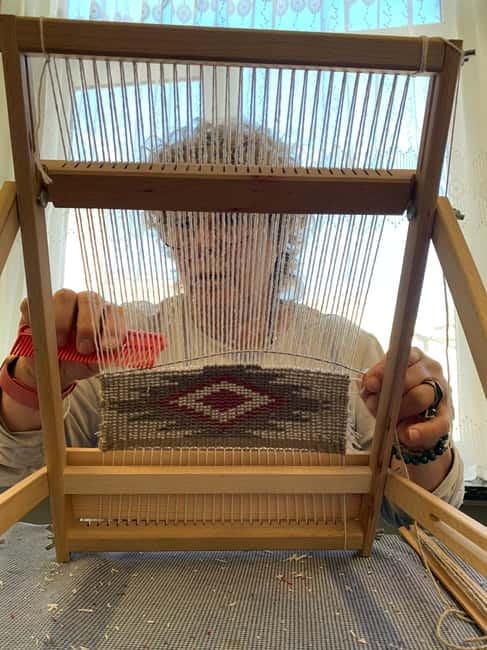
- Double-knot weaving at the loom: you practice the method used in traditional Turkish rugs, not just watch.
- Small group attention: limited to 8 participants, with hands-on guidance when your knots don’t look perfect.
- Pattern and symbol stories: you learn why designs and colors matter, so your rug has context.
- Comfort breaks included: tea, coffee, snacks, and a relaxed atmosphere so you’re not burning through the class on empty energy.
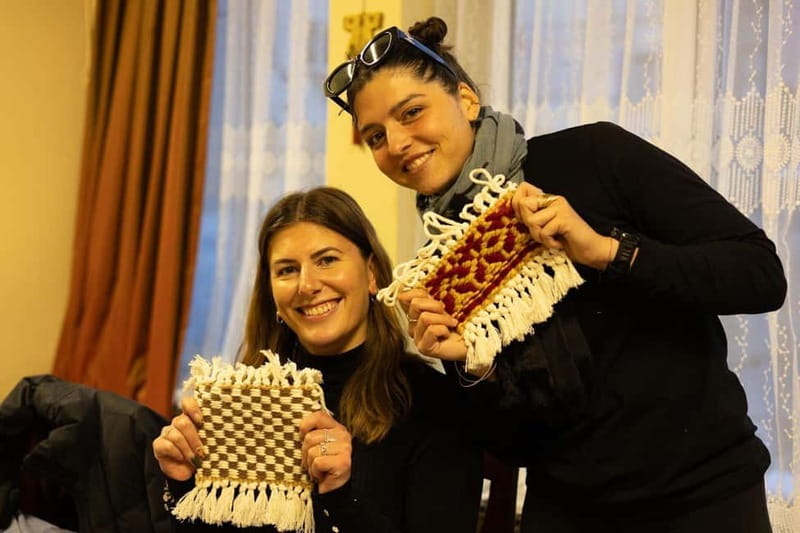
- You take home your own piece: the finished work is yours—no generic “shop rug” feeling.
- Instructors with real teaching patience: names you may meet include Hamza, Hakim, and İlker, who guide at your speed.
Why This Istanbul Carpet Workshop Feels Different
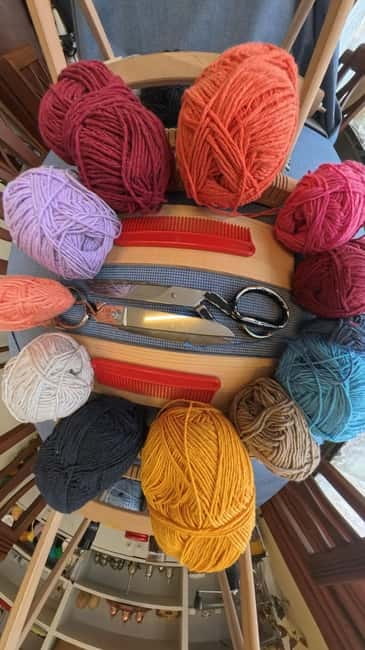
In Istanbul, there’s no shortage of things to buy. The trick is finding something you can’t really replicate at home—or forget quickly. This workshop hits that sweet spot because you do the work yourself.
You sit at the loom and learn the Turkish double-knot method. That matters. A rug isn’t one quick pass of a craft tool. It’s thousands of decisions—tension, spacing, direction, and consistency. When you understand that even a beginner-level weave takes real time, the finished rug stops being “a souvenir” and becomes proof you did something.
It also has a very practical vibe. You’re not sent to a back room to watch a slideshow and sign a waiver. The room is set up for making, with tea, coffee, snacks, and pauses that keep you comfortable while your hands learn a new rhythm.
A few more Istanbul tours and experiences worth a look


The Loom Part: What You Do During the 2.5 Hours
Let’s talk about the real schedule you’ll experience once you’re seated. The workshop is structured so you’re doing knots early, not just at the end.
You start by choosing your motif and colors
A common approach is that you pick a motif you like and then coordinate colors that match your taste. People often leave saying they couldn’t believe they actually made it, and that’s usually because they were involved from the start.
If you’re worried about making “bad choices,” don’t. The instructors guide you through the logic of how patterns translate into a woven result, and they treat mistakes as part of the learning curve. One of the nicest teaching moments is reassurance that imperfections can still make the rug feel more authentic and personal—especially since real rugs aren’t flawless under a microscope.
Then you learn the knotting method
You’ll work through the basics of double-knot weaving at the loom. The goal isn’t to turn you into a professional weaver. It’s to get you past the beginner panic stage (most people arrive sure they have zero skills) and into a zone where you can repeat the knot step with confidence.
Small-group size helps here. When you hit a snag—yarn too tight, knot not forming right, or you’re unsure where to place the next row—someone is there to correct you.
You weave your way toward a finished souvenir
As you go, you’ll spend more time weaving and less time listening. That’s the point. The class becomes a short “learn + make” rhythm: a quick explanation, then straight to the loom.
By the end, you leave with your own hand-woven piece. Not a framed artifact from a store. Your woven work. That changes the emotional value a lot.






Pattern Meanings: More Than Decoration
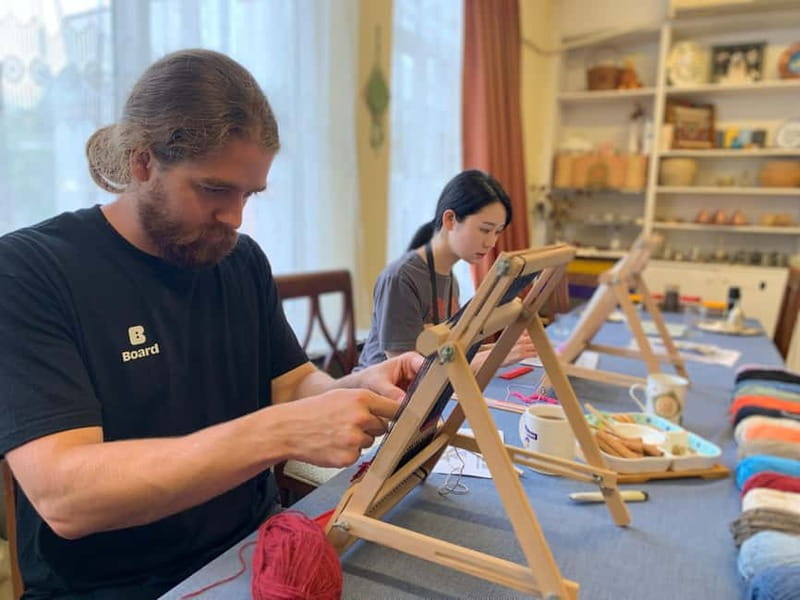
A lot of rug shops in Istanbul sell the look of Turkish design. This workshop gives you the meaning behind it.
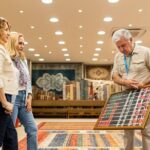
You learn about the history and origins of carpet weaving, plus how colors and motifs traditionally connect to people’s lives and regions. You also hear about commonly used symbols—why certain designs appear again and again and what they’re meant to represent.
This part is why the workshop is worth doing even if you’re not obsessed with crafts. You’ll start noticing details in Istanbul’s rug world later—colors, motifs, and what sellers are trying to communicate when they explain a design.
Tea, Coffee, Snacks, and the Calm Pace
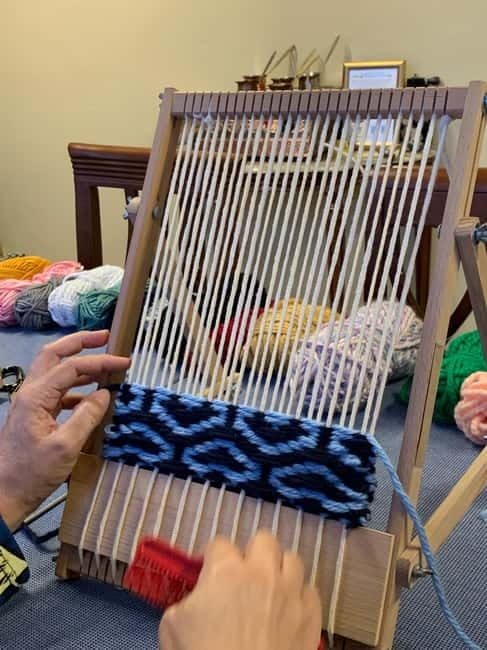
Yes, you’ll have tea and coffee. You’ll also have snacks and water. This isn’t a tiny water-on-the-side situation either. People consistently mention the food and drink as part of the comfortable, friendly atmosphere.
What I like about the pacing is that it’s not an exhaustion contest. You get breaks built into the session so your concentration stays steady while your hands learn.
It’s also a social environment. You’ll sit with a small mix of people, often from different countries, and you’ll compare your weaving progress (sometimes with jokes when knots don’t cooperate).
There’s at least one report of an air-conditioned space, which is a real plus in Istanbul seasons when the indoor temperature matters.
Who You’re Learning From (and Why It Matters)
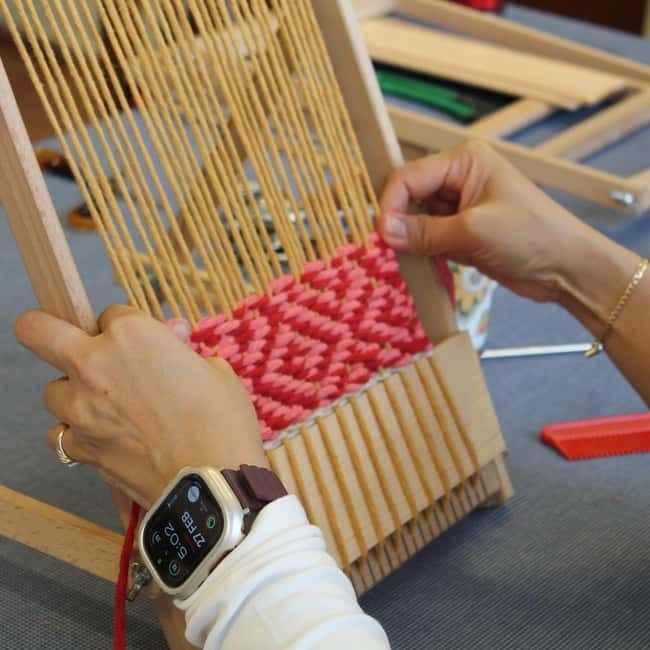
You’re not just getting instructions. You’re learning from instructors who are used to teaching complete beginners.
Depending on your session, you might be guided by teachers such as Hamza, Hakim, or İlker (names can vary by date). Across these instructors, the common thread is patience. They don’t just point at the loom and hope you figure it out.
You’ll also notice that they talk to you while you work—about Turkish culture and what you’re making. That makes the workshop feel less like a class and more like a short cultural hangout with structure.
Price and Value: Is $32 a Good Deal?
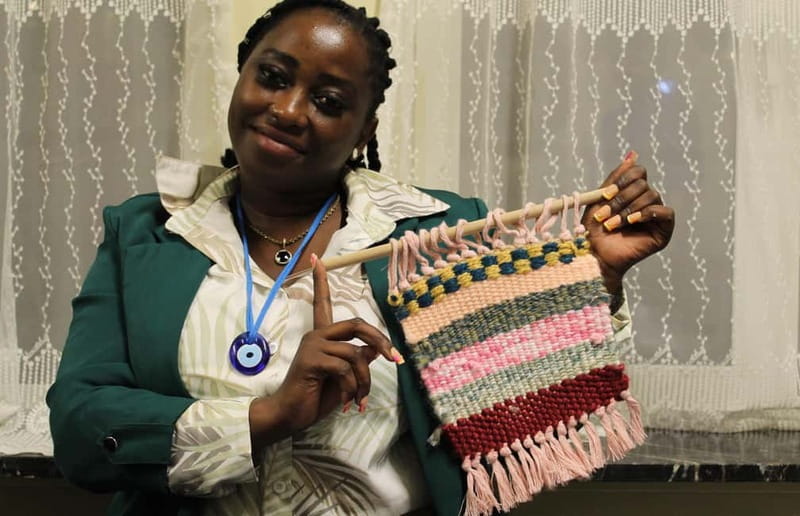
At $32 per person, this is one of those Istanbul activities that feels fair because you’re not paying just for entertainment. You’re paying for real instruction, materials, and a take-home handmade result.
Here’s how the value adds up:
- You’re using the tools and materials, not bringing your own supplies.
- A guide is included, and the workshop is limited to 8 people, which supports the hands-on help.
- Refreshments are included (tea, coffee, snacks, water), which makes the experience feel complete.
- You leave with your own hand-woven piece, which is harder to “compare” to typical paid experiences in Istanbul where you mostly take photos.
If you’ve been comparing lots of “craft experiences,” the difference here is that you actually weave. You’re not watching someone else craft your souvenir while you hold a cup.
Finding the Workshop: Anabala Pasajı, Near Petra and a Tattoo Shop
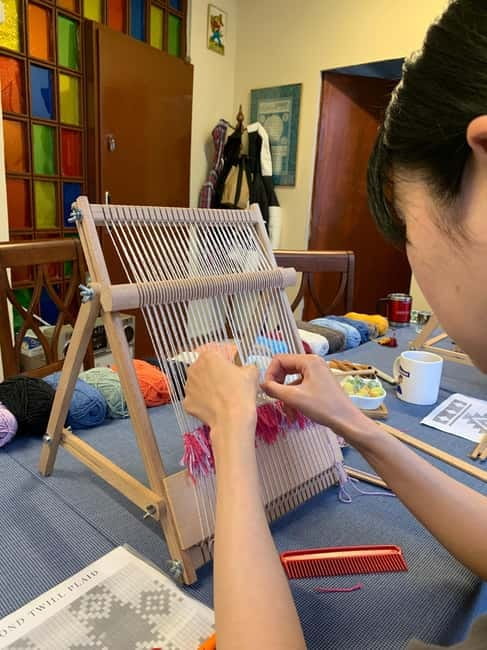
The meeting point is in Anabala Pasajı, which opens to two streets.
When you’re looking at Google Maps, you can use two street-level clues:
- On one side is a vintage shop called Petra
- On the other is a tattoo shop
Take the flight of stairs next to the tattoo shop and follow the signs to the workshop. It’s the kind of place that feels tucked-in, so if you’re arriving late, it’s worth arriving with a few extra minutes rather than racing.
Timing Reality Check: 2.5 Hours, but Leave Margin
The workshop is listed as 2.5 hours. In practice, weaving speed varies a lot by person, and some sessions run longer.
A few important patterns from real experiences:
- Some groups finish closer to 3 hours.
- Others may end up with even more time if the class pace and questions flow naturally.
This is usually a good sign—it means people aren’t being rushed off the loom. Still, if you have dinner, a ferry, or a show at a specific time, plan around it. Build in a buffer so the weaving doesn’t stress you out.
What’s Included vs. What You Might Want Later
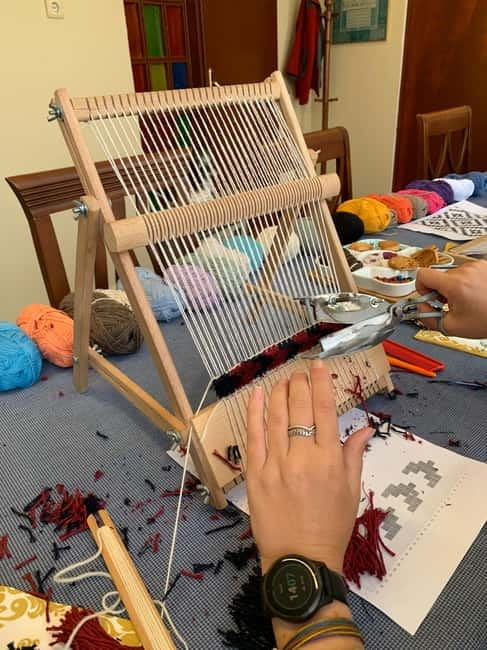
Included:
- All required equipment
- A certified guide
- Turkish tea
- Coffee
- Snacks
- Water
Not included:
- Picture frame
If you’re planning to gift your rug or display it on a wall, you may want to think ahead about framing options after the workshop. The good news is that you start with a finished piece you made yourself—you’re not stuck with a half-work craft.
Best Fit: Who This Workshop Suits
This is a great fit if you like any of these:
- You want a hands-on Istanbul activity that isn’t just shopping.
- You’re curious about how Turkish rugs get made, especially the knotting method.
- You enjoy meeting people from different countries in a relaxed setting.
- You want a souvenir with real meaning: you made it, you chose the motif, and you understand what the design represents.
It also works for families, including kids, since people have noted kids joining in and enjoying the process. Babies under 1 are not suitable.
If you’re short on time or hate close-focus tasks with fine motor skills, this might feel like work. But if you’re willing to slow down for a bit and enjoy learning, it becomes a surprisingly relaxing experience.
How to Prep So You Get the Most Out of It
You don’t need prior experience. Still, a few small prep choices make it smoother:
- Wear comfortable clothes and shoes you can sit in for a while.
- Bring curiosity, not perfectionism. Your first knots won’t look like a final product, and that’s normal.
- If you’re camera-happy, remember you’ll probably spend most of your time making, not posing.
Most people start with the same thought: I’m not crafty. The workshop is built to prove that thought wrong.
Should You Book This Istanbul Turkish Rug Weaving Workshop?
I’d book it if you want a hands-on craft experience with real cultural context and a take-home souvenir that feels earned. At $32, you’re also getting a lot of value in materials, a small-group format, and a guide who works with your pace.
Skip it (or book with a longer schedule) if:
- You have a hard deadline right after the session and you can’t handle the possibility of finishing closer to 3 hours.
- You only want a quick photo stop and don’t want to sit at a loom and focus on knots.
If you fit the first group, this is a smart, meaningful use of your time in Istanbul—one where the learning sticks longer than another item you’ll carry home.
FAQ
Is this Turkish carpet weaving workshop beginner-friendly?
Yes. The workshop is designed for people with no prior experience. You’ll get guidance at the loom, and instructors help you work at a comfortable pace.
How long is the workshop in Istanbul?
The listed duration is 2.5 hours. Some sessions may run a bit longer depending on how the class progresses.
How big are the groups?
The group is limited to 8 participants, so you get attention and hands-on help while you weave.
What languages are available?
Instruction is available in English, Turkish, and Arabic.
What’s included in the price?
Equipment, a certified guide, Turkish tea, coffee, snacks, and water are included.
Can I take home what I make?
Yes. You take home your own hand-woven piece from the workshop.
Is a picture frame included?
No. A picture frame is not included.
Is the workshop suitable for children?
Kids can join, but it is not suitable for babies under 1 year.