REVIEW · ISTANBUL
Istanbul Bosphorus Yacht Experience – Asian Side Visit in Kanlica
Book on Viator →Operated by Istanbul Bosphorus Tours · Bookable on Viator
Some views in Istanbul only make sense from the water.
This Bosphorus yacht experience packs in an unusually big loop, with commentary timed to the sights and a Kanlıca yogurt stop on the Asian side.
I especially liked the mix of famous landmarks and places most people skip, plus the easy, family-friendly pace.
I also like that the boat service keeps you comfortable with Turkish coffee, tea, snacks, and bottled water, without turning the cruise into a food break.
One catch: the best deck viewing depends on weather. Wind can be sharp, and if multiple boats dock at once, boarding can feel a little chaotic for a few minutes.
In This Review
- Key things to know before you go
- Setting Out From Dolmabahçe: Why This Start Works
- The Boat Experience: Clean, Comfortable, and Not Overstuffed
- How the Guide Makes the Views Easier to Understand
- Dolmabahçe Mosque to the Bosphorus Stories: More Than a Pretty Beginning
- Ortaköy and Arnavutköy: The Part of Istanbul You Actually Feel
- Galatasaray İsleti and the Power of the Straits
- Crossing the Bridges: Bosphorus Bridge and the Second Crossing
- Bebek: Eating Town Energy Along the Best Stretch
- Rumelihisarı Fortress: Why This Fort Feels Like a Turning Point
- The Asian Side Stop at Kanlıca Meydanı: Yogurt, Sea Air, and a Quick Break
- Beylerbeyi Palace: Marble Views With Royal-Scale Spending
- Anadoluhisarı Fortress: The Other Half of the Defensive Picture
- Kucuksu Palace: A Smaller Stop With Real Atmosphere
- Kız Kulesi (Maiden’s Tower): Legend on a Tight Spot
- Haydarpaşa, Hagia Sophia, Topkapı, Blue Mosque, and Süleymaniye: The Historic Peninsula From the Water
- Golden Horn and Galata Bridge: Where the Water Changes Character
- Galata Tower: The Final Landmark That Helps You Spot the Area Later
- Value for Money: Is $36.28 a Smart Use of Time?
- When You Should Pick This Cruise (and When You Might Skip It)
- Should You Book the Istanbul Bosphorus Yacht Experience to Kanlıca?
- FAQ
- How long is the Istanbul Bosphorus Yacht Experience?
- Where does the tour start?
- Is pickup included?
- What language is the tour guide?
- What’s included in the ticket price?
- Is there a stop on the Asian side?
- What’s not included?
- What group size should I expect?
- What if the weather is poor?
Key things to know before you go
- Kanlıca yogurt stop: You get a short but real taste stop at Kanlıca Meydanı.
- Both shores in one ride: You’ll see Europe and Asia from a single cruise.
- Dock-to-sight timing: The guiding is built around the views you pass.
- Food and drink included: Turkish coffee/tea plus sweet and savory snacks keep the mood relaxed.
- Small-to-midsize group feel: Max size is 35, and it often feels less crowded in practice.
- Weather matters: Bring a warm layer for wind off the water.
Setting Out From Dolmabahçe: Why This Start Works
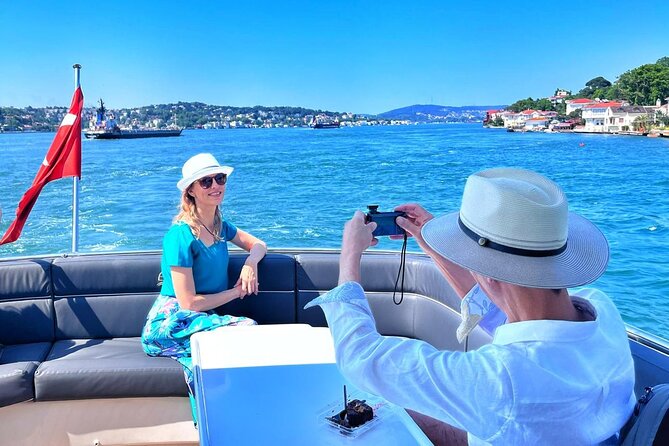
You meet at Dolmabahçe Mosque on Ömer Avni Meclis-i Mebusan Cd., in the Beyoğlu area. It’s a smart starting point because Dolmabahçe sits right where the Bosphorus becomes the postcard you want: grand buildings, busy shorelines, and that constant sense of movement.
The ride itself is about 2 hours 30 minutes, which is perfect if you only have a couple of days—or if you’re trying to place Istanbul’s sights in your head. From the deck, the Bosphorus turns into a “timeline” you can follow with your eyes.
And yes, you get a real “sit back” factor. This isn’t a walking tour where you’re constantly checking shoes and timing. You’re on water, with a live guide calling out what you’re seeing as you pass it.
You can also read our reviews of more boat tours in Istanbul
The Boat Experience: Clean, Comfortable, and Not Overstuffed
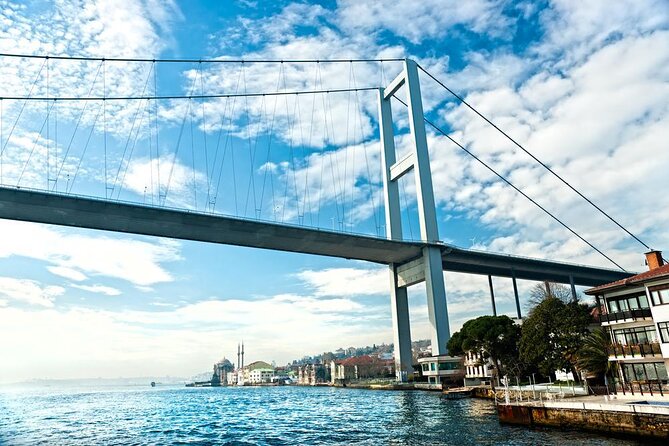
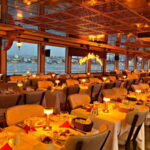
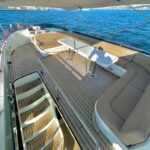
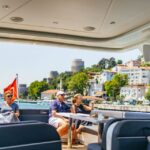
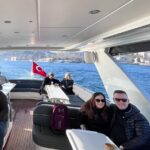
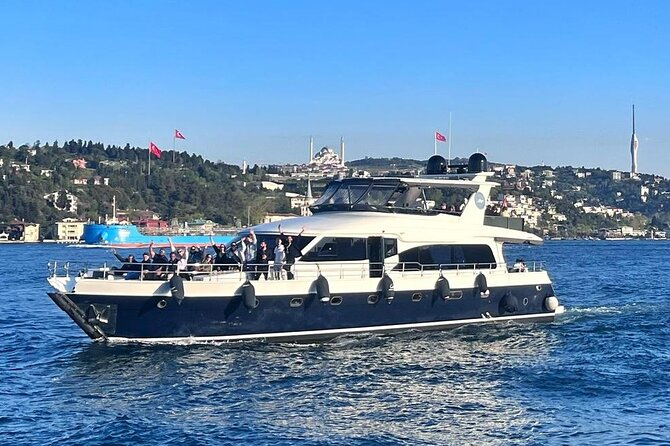
The yacht setup is the main reason this tour fits so many styles of travel. The boat is described as clean and comfortable, and the group size is capped at 35. Several reviews also mention a small group feel, with seating that doesn’t feel like a first-come, last-sit scramble.
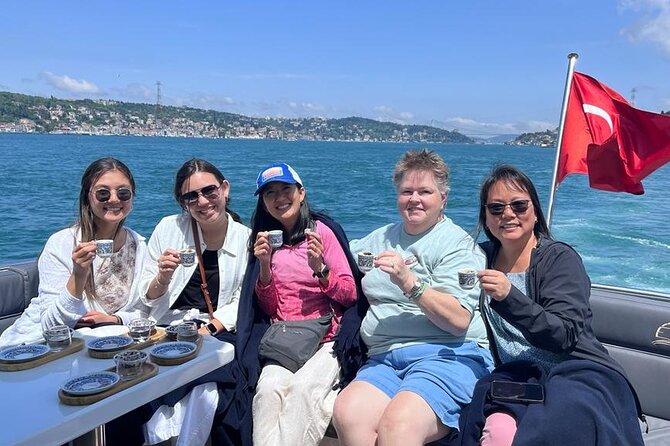
Service stands out. You’re served Turkish coffee in traditional cups, plus tea. There’s bottled water too. On top of that, you get Turkish delight, fruit, and snacks, with some people specifically calling out items like sandwiches, apple slices, and nuts.
If you like a little extra flexibility, there’s also an option to buy alcohol on board (you decide, but it’s there if that’s your thing).
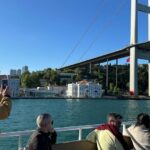
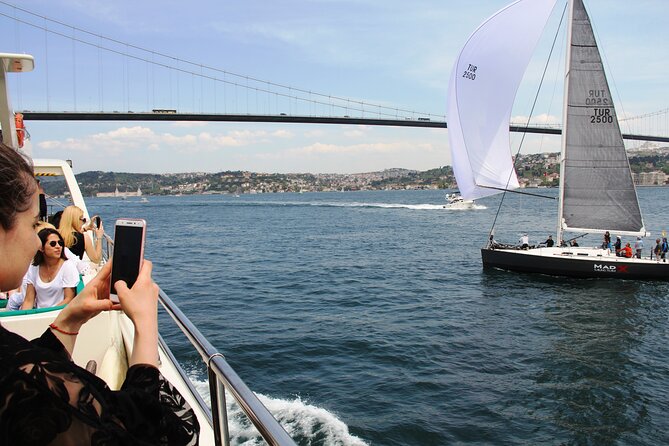
If you want the best photos, you’ll likely be happiest on the deck at least some of the time. Just plan for wind. In cooler months, people mention that it can bite. In winter, the view from inside is weaker—so bring a warm layer and maybe even gloves if you run cold.
How the Guide Makes the Views Easier to Understand
The tour includes an English-speaking guide and uses a running commentary as the boat moves. The guide style seems to hit a sweet spot: enough detail to make landmarks make sense, plus anecdotal and funny moments that keep it from getting heavy.
Guide names show up in reviews—Murat, John, and İkbal—so you may hear different voices depending on the day. Either way, the pattern is the same: the guide points out what you’re seeing along the coast, and ties it to why it matters.
This is a good approach for Istanbul, because the skyline can be confusing when you’re looking at it from land. From the Bosphorus, the same buildings suddenly make new sense.
Dolmabahçe Mosque to the Bosphorus Stories: More Than a Pretty Beginning
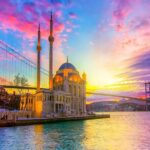
Right away, you’re positioned at Dolmabahçe Mosque, also known as Bezm-i Alem Valide Sultan Mosque. It’s tied to the Dolmabahçe Palace area and gives you an instant “imperial Istanbul” context before the boat really stretches out into the strait.
The cruise also includes storytelling about the shoreline where ships once anchored—an old mythic reference to the legendary vessel Argos and the Argonauts’ voyage. Even if you take the legend lightly, it adds a sense of depth to a stretch you might otherwise treat like scenery only.
Ortaköy and Arnavutköy: The Part of Istanbul You Actually Feel
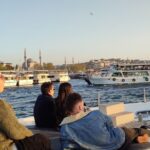
Then comes the neighborhood rhythm. Ortaköy is often described as the village in the middle of the European Bosphorus shore, and that idea fits what you see from the water: a shoreline that feels like a social stage. From the deck, you’ll catch the mix of waterfront life and the historic silhouettes near Sultanahmet.
Ortaköy is also a great reminder that Istanbul isn’t just monuments. It’s daily life along the sea.
Arnavutköy adds another layer. It’s known for historic wooden Ottoman mansions and seafood restaurants, and the cruise route keeps you oriented to why these neighborhoods developed where they did: food, view, and access to the strait. You’ll also pass the Robert College area, which gives the scene an educational landmark feel.
This section of the cruise is one reason I like doing the Bosphorus early in a trip. It helps you separate the “big sights” from the “real neighborhoods.”
You can also read our reviews of more sailing experiences in Istanbul
Galatasaray İsleti and the Power of the Straits
The boat passes the Galatasaray İsleti (Galatasaray Islet) off Kuruçeşme. It’s small, but it matters. Small islands on the Bosphorus help you grasp how narrow and strategically important this waterway is.
And that’s where the engineering milestones start to take over.
Crossing the Bridges: Bosphorus Bridge and the Second Crossing
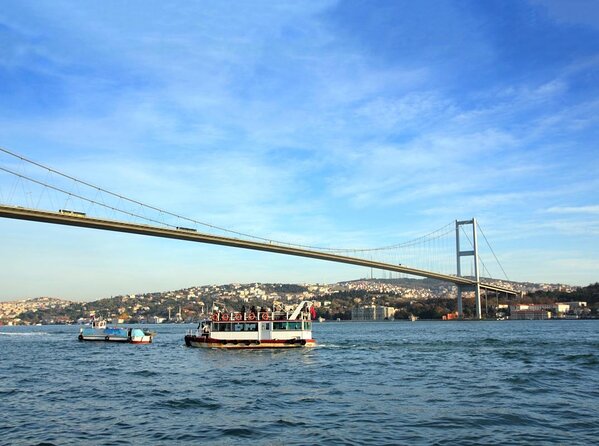
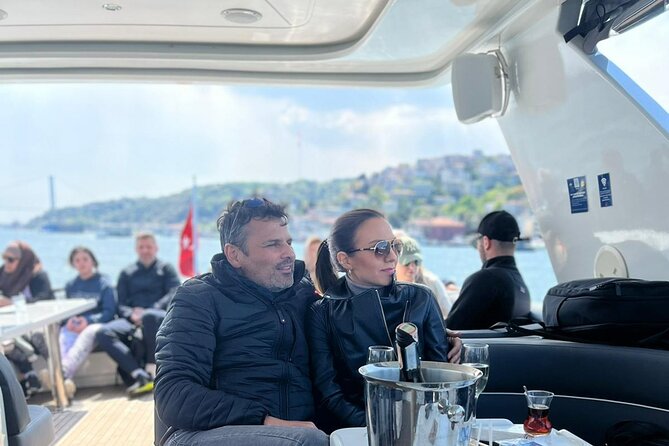
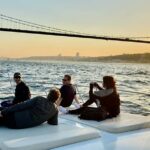
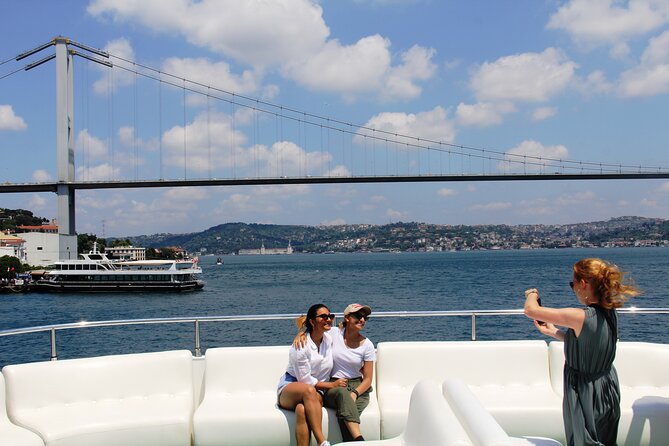
From the yacht, bridges aren’t just infrastructure. They’re scale markers. You’ll see the Bosphorus Bridge first—opened October 29, 1973—and it’s described with the kind of numbers your brain can actually feel. It has the longest span in Europe and is the fourth longest in the world.
Then the route also includes the Fatih Sultan Mehmet Bridge, the second Bosphorus crossing, completed in 1988. From the water, you can compare both bridges as visual anchors, which is hard to do from land streets.
If you like structure and systems, this part hits well. If you just want views, it still works because the bridges cut through the water and frame everything else behind them.
Bebek: Eating Town Energy Along the Best Stretch
Bebek is one of the best-known Bosphorus neighborhoods, and the cruise treats it like what it is: a strong, attractive waterfront area. It’s by the water, and the food scene is a big part of the appeal. People specifically mention that fish restaurants are great.
You won’t stop for a meal here on this cruise, but from the boat it’s easy to clock where you’d come back later for dinner or an evening stroll. It’s a useful “future planning” stop, even if you don’t get off the boat.
Rumelihisarı Fortress: Why This Fort Feels Like a Turning Point
On the European side, the yacht includes a close look at Rumelihisarı Fortress (Rumelihisarı Castle). This is the narrowest strategic point feel in the cruise route. Sultan Mehmet built it to control ship passage through the Bosphorus, and the fortress timeline is dramatic—foundation stone laid in 1452, completed in just a few months.
You also get the paired contrast with the older fortress across the water: Anadoluhisarı. When you see both in sequence, the Bosphorus stops being abstract. It becomes a controlled corridor with defensive logic.
The Asian Side Stop at Kanlıca Meydanı: Yogurt, Sea Air, and a Quick Break
This is the payoff stop for most people: Kanlıca Meydanı. The cruise includes about 30 minutes here, with the ticket for that stop listed as free.
Kanlıca is known for the pier square (İskele) and the iconic monumental plane tree that anchors the center of the scene. You’ll also notice a long-running coffeehouse tradition, İsmail Ağa Kahvesi, with sea views.
The main food reason you come is yogurt. Kanlıca yogurt is described as thick and citric, made from a mix of cow’s and sheep’s milk. If you want the full local-style experience, it’s traditionally served with powdered sugar or honey.
If you’re deciding what to buy fast, I’d follow the guide’s recommendation at the yogurt place. Reviews say service can be quick once you go where they direct you, and that can matter in a short stop.
Practical tip: 30 minutes goes by quickly. If you want photos, do it right after you land, before you line up.
Beylerbeyi Palace: Marble Views With Royal-Scale Spending
After Kanlıca, the cruise continues along the Asian side with Beylerbeyi Palace. Built in 1865 by Sultan Abdülaziz, it’s described as a white marble palace that floats in the Bosphorus view.
This stop works best if you like contrast. From the water, you can see the palace as architecture first, not just a name. Reviews and tour notes also mention it hosted Empress Eugénie in 1869 and Czar Nicholas I, plus Edward VIII as a guest in 1936.
Even if you don’t go inside on this cruise, you’ll understand why royals liked this shoreline.
Anadoluhisarı Fortress: The Other Half of the Defensive Picture
Next comes Anadoluhisarı Fortress (Anadoluhisari Castle), across from Rumelihisarı. Built in 1395 by Bayezid the Thunderbolt and later extended by Mehmet the Conqueror, it’s often treated as the other essential piece of the Bosphorus puzzle.
From the deck, the two forts feel like a coordinated set. That helps you remember that Istanbul’s water routes weren’t just scenic—they were about control, access, and timing.
Kucuksu Palace: A Smaller Stop With Real Atmosphere
Kucuksu Palace (also called the Palace of Göksu) is smaller and more delicate in feel. It was first built in 1749, then restored and refurbished across different reigns.
It sits along the Bosphorus lip with marble terraces that meet waves in the waterline view. If you like palaces but don’t want the huge-museum feeling, this is the kind of building that makes you appreciate how coastline living worked for centuries.
Kız Kulesi (Maiden’s Tower): Legend on a Tight Spot
Kız Kulesi, also called Maiden’s Tower or Leander’s Tower, sits near Üsküdar. It’s about 180 meters from the shore, and it carries layered legend.
Europeans connected the name to the tale of Leander swimming across—but the tour notes clarify that the Turkish Maiden’s Tower name is the key reference point, and today it functions as a modern lighthouse.
This is a great photo moment because the tower is compact, and the water makes it look close even when it’s slightly out from the shoreline.
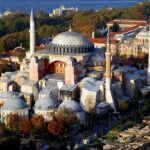
Haydarpaşa, Hagia Sophia, Topkapı, Blue Mosque, and Süleymaniye: The Historic Peninsula From the Water
The cruise then shifts your attention to Istanbul’s famous skyline as you move past and toward views of the historic peninsula. Included stops reference major landmarks you’ll recognize right away:
- Haydarpaşa station
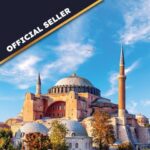
- Hagia Sophia
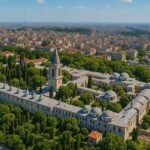
- Topkapı Palace
- Blue Mosque
- Süleymaniye Mosque
- Sirkeci station
From water level, these buildings work differently than on foot. Instead of walking up to domes and minarets, you catch them as part of a skyline composition. That’s why a Bosphorus cruise is such a helpful “orientation step.” You start to see how the peninsula sits between land and sea.
If you want to feel the contrast fast, this is it: the royal and monumental buildings appear while the shoreline around them keeps flowing like a working city.
Golden Horn and Galata Bridge: Where the Water Changes Character
Toward the end, the cruise includes the Golden Horn. The Golden Horn is the primary inlet of the Bosphorus in this setting, and it feels less like an open strait and more like a channel pulling into the city’s core.
The Galata Bridge also appears, and it’s tied to long-running cultural life in literature and poetry, so it’s not just a route crossing.
Galata Tower: The Final Landmark That Helps You Spot the Area Later
Near the end, you’ll see the Galata Tower, known as Christea Turris in Genoese times. It’s a medieval stone tower in the Galata/Karaköy area, and it’s just north of where the Golden Horn meets the Bosphorus.
This is a nice last landmark because it becomes a mental reference for future wandering. After the cruise, Galata starts to feel connected instead of random streets and hill climbs.
Value for Money: Is $36.28 a Smart Use of Time?
At about $36.28 per person, this is priced like a thoughtful “experience add-on” rather than a full-day sightseeing replacement. That’s exactly how you should evaluate it.
You’re paying for four things:
- a live guide while you see lots of coastal landmarks
- a real break from walking
- included drinks and snacks
- one short local-food moment on the Asian side (Kanlıca)
The duration—2.5 hours—matters here. You’re buying back energy, not just buying sights. If your schedule is tight, this cruise can help you understand Istanbul’s geography in a way that tickets to individual attractions can’t.
If you’re the type who hates crowds, focus on small boat size. Reviews frequently describe a comfortable, not-overstuffed atmosphere, and with max 35, it’s not built as a huge cattle-transport.
When You Should Pick This Cruise (and When You Might Skip It)
This cruise is a strong match for:
- first-time visitors who want fast orientation to European vs Asian viewpoints
- families who want an easier sightseeing day
- people who want to see multiple landmarks without buying multiple separate tickets
- travelers who like photography and want deck time without committing to a full day
You might skip it if:
- you want long time on land at each stop (this is mainly about views from the boat)
- you strongly prefer museum-style visiting or inside access
- you get miserable in cold wind unless you dress for it
One more practical note: the boarding process can get messy if multiple vessels dock at the same time. It usually resolves quickly, but it’s worth knowing so you don’t expect a perfectly smooth choreography.
Should You Book the Istanbul Bosphorus Yacht Experience to Kanlıca?
Yes, if you want a practical, scenic Istanbul hit that combines Bosphorus views, bridge-scale landmarks, and a real Asian-side stop for yogurt—all in a manageable 2.5 hours. The included Turkish coffee/tea and snacks make it feel like more than a basic boat ride, and the guide commentary adds structure so you aren’t just watching scenery.
Book it early in your trip if you want it to guide your later choices. Book it on a day with decent weather if you can. And if you’re sensitive to wind, dress warm so the deck stays fun.
If you’re trying to make limited time count, this is one of the cleanest ways to do it.
FAQ
How long is the Istanbul Bosphorus Yacht Experience?
It runs for about 2 hours 30 minutes.
Where does the tour start?
It starts at Dolmabahçe Mosque, Ömer Avni Meclis-i Mebusan Cd. No:34, 34427 Beyoğlu/İstanbul.
Is pickup included?
Hotel transfer is included only if you select the transfer option. Otherwise, you meet at the Dolmabahçe Mosque starting point.
What language is the tour guide?
The experience is offered in English.
What’s included in the ticket price?
Coffee and/or tea, bottled water, Turkish delight with Turkish coffee, a fruit platter, a tour guide, and hotel transfer if you chose that option.
Is there a stop on the Asian side?
Yes. You stop in Kanlıca at Kanlıca Meydanı for about 30 minutes to try the local yogurt.
What’s not included?
Hotel pick-up/drop-off is listed as not included (unless you selected the transfer option).
What group size should I expect?
The tour has a maximum of 35 travelers.
What if the weather is poor?
This experience requires good weather. If it’s canceled due to poor weather, you’ll be offered a different date or a full refund.