REVIEW · KUSADASI
From Kusadasi and Selcuk: Pamukkale and Hiearapolis Tour
Book on GetYourGuide →Operated by Castle Travel · Bookable on GetYourGuide
Pamukkale looks like snow that forgot it was in the Aegean. This day trip mixes UNESCO ruins at Hierapolis with the surreal calcium terraces at Pamukkale, then gives you time to wander and even swim at the famous pools. It’s one of those rare tours where the scenery does half the work for you.
I especially like the way you get two different worlds in one outing: Roman-and-Byzantine remains at Hierapolis, then the soft white stepping-stones of Pamukkale. I also like that you’re not rushed through the pools—your schedule includes free time so you can set your own pace for photos and a swim.
The main drawback is the driving time. If you’re hoping for lots of hours in the water at Pamukkale, you should know time here can feel short, especially on busy days when only some sections have open water.
In This Review
- Key things you’ll notice on this tour
- Why Pamukkale and Hierapolis work so well together
- The 10.5-hour plan: how the day is actually paced
- The drive through the Meander Valley (and why it matters)
- Hierapolis: ruins first, then warm-water terraces
- Pamukkale: free time for calcium terraces and pool options
- Hierapolis highlights you shouldn’t rush past
- The Necropolis: scale that sticks with you
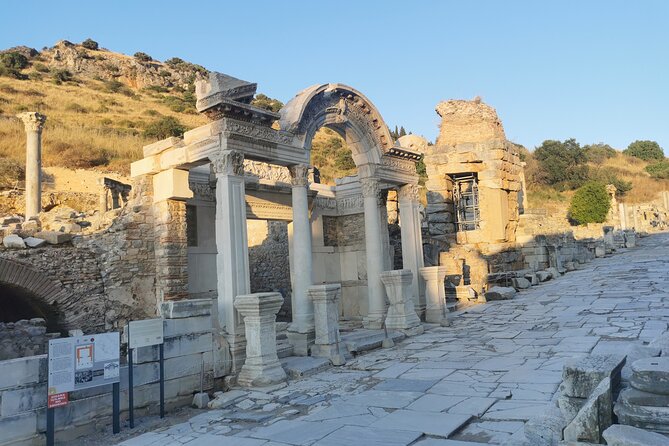
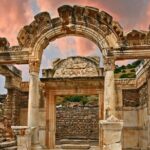
- Roman Bath, Domitian Gate, and the street remains
- Pamukkale: what it feels like to walk on calcium terraces
- Swimming and snorkeling options: decide early
- The Cleopatra Pool add-on (and why it’s worth considering)
- The guide and driver: what makes the difference on a day like this
- Lunch and the other stops: useful, but know what you’re trading
- Onyx and other breaks: plan your expectations
- What to bring (so you’re comfortable, not stressed)
- Who this tour is best for
- Value check: is $118 a good deal?
- Should you book this Pamukkale and Hierapolis tour?
- FAQ
- How long is the Pamukkale and Hierapolis tour from Kuşadası and Selçuk?
- What is included in the price?
- Is swimming included, and what about Cleopatra Pool?
- Do I need to pay for tickets during the tour?
- What should I bring for the day?
- What’s the group size, and what languages are offered?
- Is this tour refundable if plans change?
Key things you’ll notice on this tour
- Small group size (up to 14) keeps the day feeling manageable at crowded sites
- Hierapolis first, then Pamukkale, so you see ruins before the calcium terraces
- Guided history with free-time blocks, letting you ask questions and then roam on your own
- Optional swim time at Pamukkale, with the paid Cleopatra Pool add-on costing 6 euro
- Scenic Aegean road trip through Meander Valley, farming lands, and fruit-tree gardens
- English live commentary plus admission fees and lunch handled for you
Why Pamukkale and Hierapolis work so well together
Pamukkale and Hierapolis are often sold as one package, and that’s not just marketing. The ancient city of Hierapolis sits on the edge of the same thermal phenomenon that created Pamukkale’s famous white terraces. When you stand among Roman bath remains and then walk toward the shimmering pools, it clicks: the water shaped the place, the economy, and even the way people treated health and worship.
What makes this tour feel worth your time is the pacing. You travel out from Kuşadası/Selçuk early enough to make the day work, then you get structured stops for the big highlights. After that, you get breathing room. That mix is ideal if you’re traveling with mixed energy levels—maybe you love ruins, maybe your main goal is pool time, and both goals can fit.
You can also read our reviews of more tours and experiences in Kusadasi.


The 10.5-hour plan: how the day is actually paced
This is a full-day outing at about 10.5 hours, centered on two sites. The schedule is built around road travel from the Kuşadası and Selçuk area, plus a midway break and a final return drive.
The drive through the Meander Valley (and why it matters)
You’ll spend roughly 3 hours driving each way, with a break partway out. The route passes Meander Valley, mountains, farming areas, fruit-tree gardens, and small towns and villages. Even if you normally zone out in a bus, this road is visually rewarding because it changes often—valley views, then agriculture, then back to hills.
Practical tip: if you want the best photo angles, sit on the side of the bus that faces the views on your specific departure. You’ll also get at least one planned stop where you can stretch and reset.
Hierapolis: ruins first, then warm-water terraces
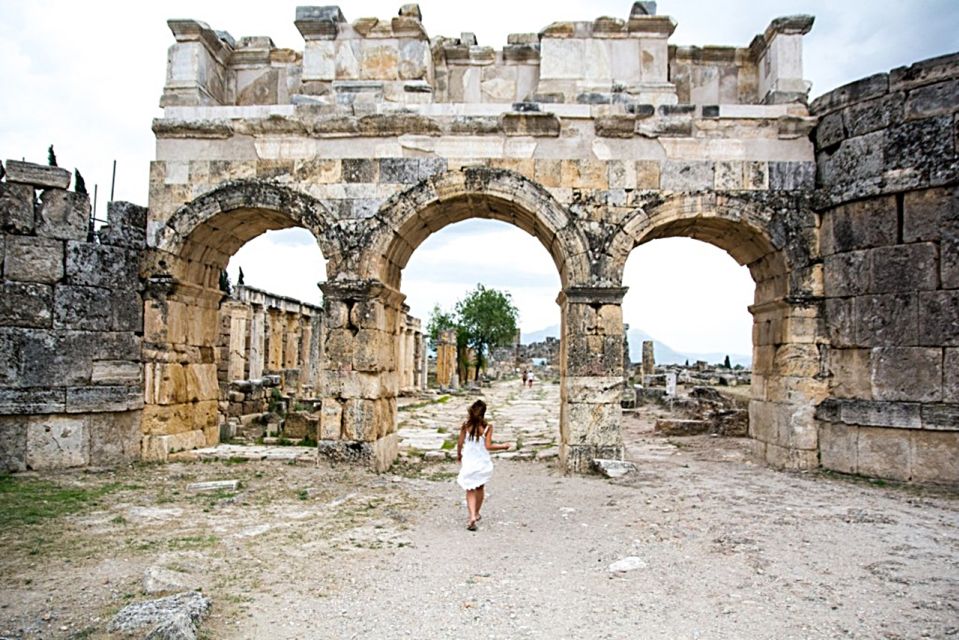
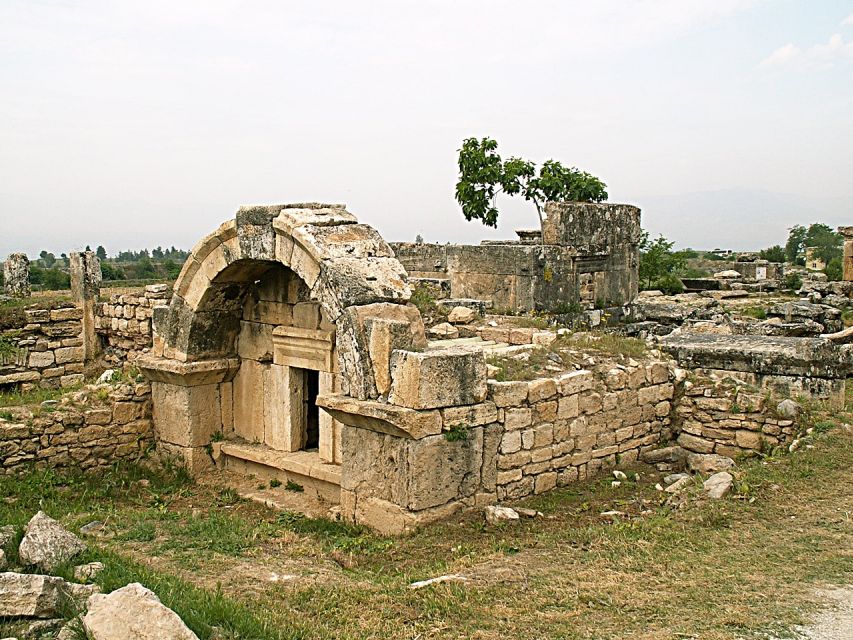
Hierapolis is where you start exploring. Your guide brings context, then you walk through several key areas: the Necropolis (one of the largest ancient cemeteries in Anatolia) with 1,200 graves, plus the Roman Bath, Domitian Gate, the Main Street, and the Byzantian Gate.
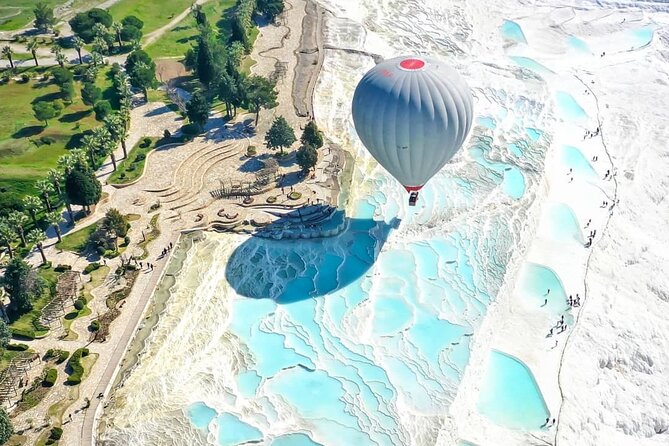
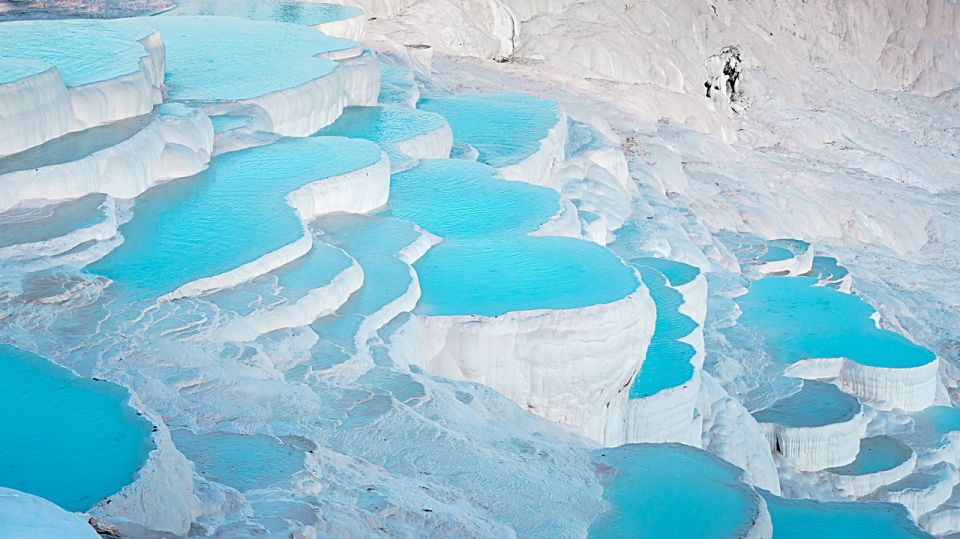
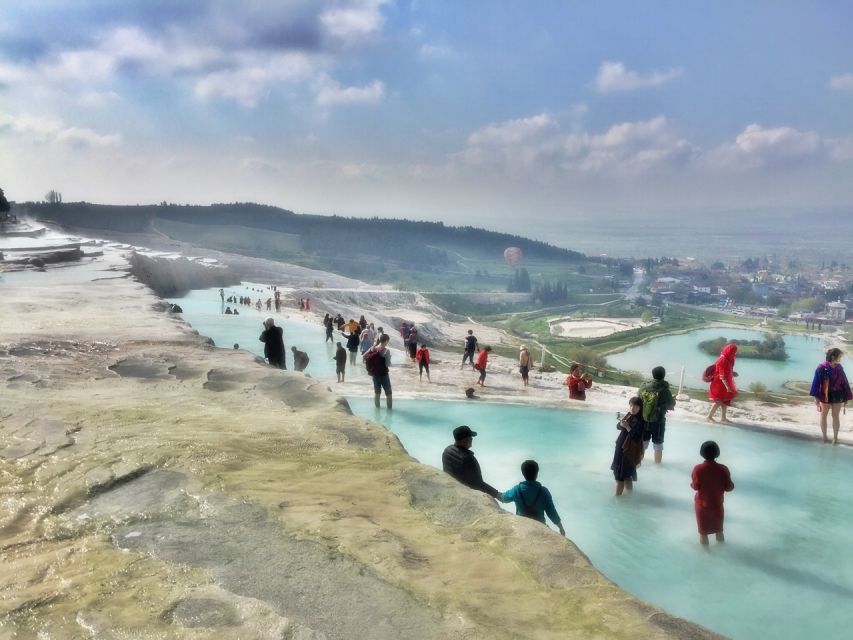
After that, you take a short walk to the natural warm-water terraces formed by calcium-rich thermal water. This is where the day starts to feel unreal—white mineral steps that look too clean to be real.
Two helpful points here:
- Cemeteries can sound heavy, but the scale is what grabs you. The Necropolis isn’t one tomb you can photograph and move on from—it’s the city’s view of life and death spread out across a landscape.
- The gates and street remains help you picture how people moved through Hierapolis, not just what they saw.
Pamukkale: free time for calcium terraces and pool options
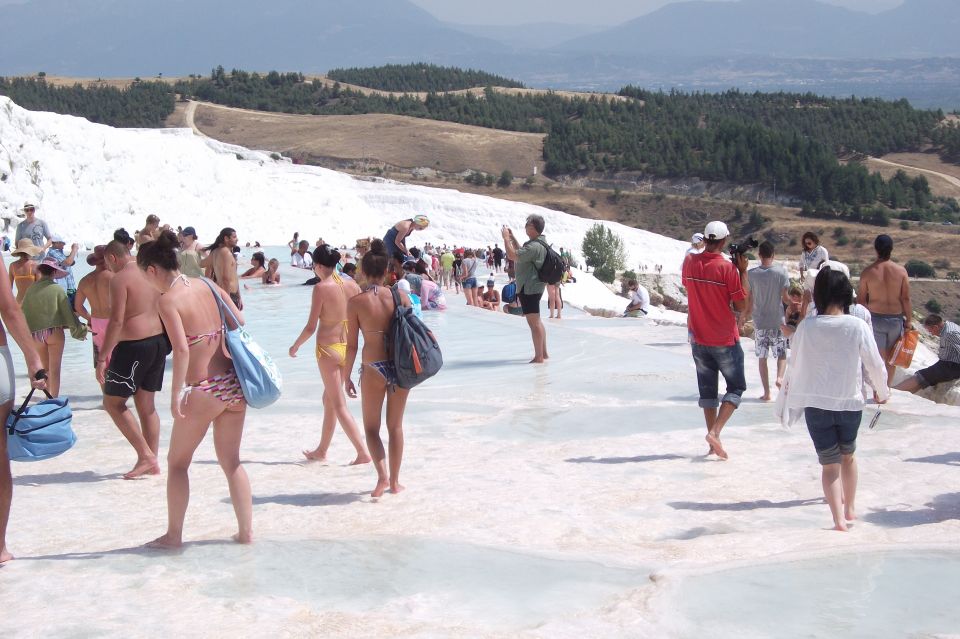
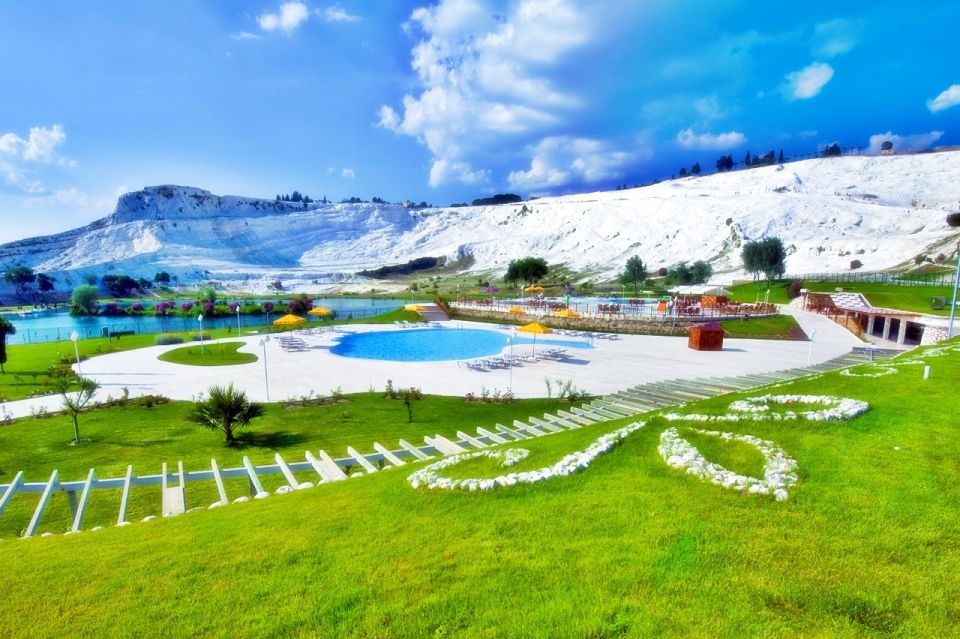
At Pamukkale, you get about 2 hours of free time for sightseeing and optional swimming. This is the moment most people have been waiting for: walking on or alongside the calcium terraces, taking photos, and then deciding if you want water time.
There are a couple of pool-related details you should plan around:
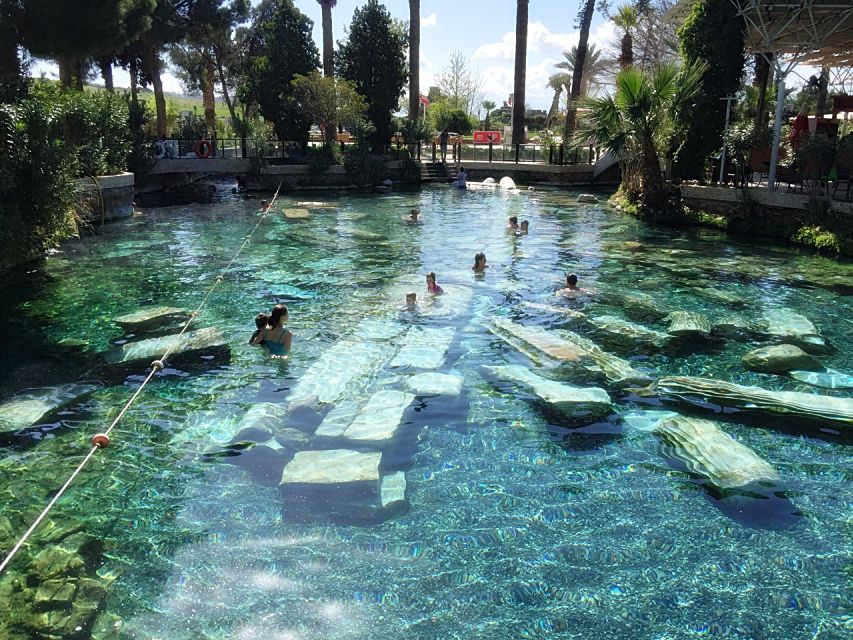
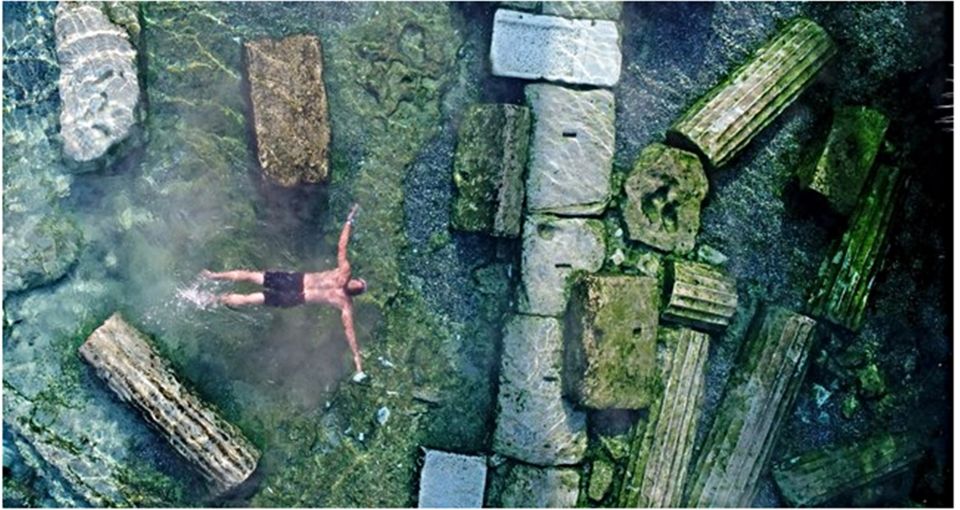
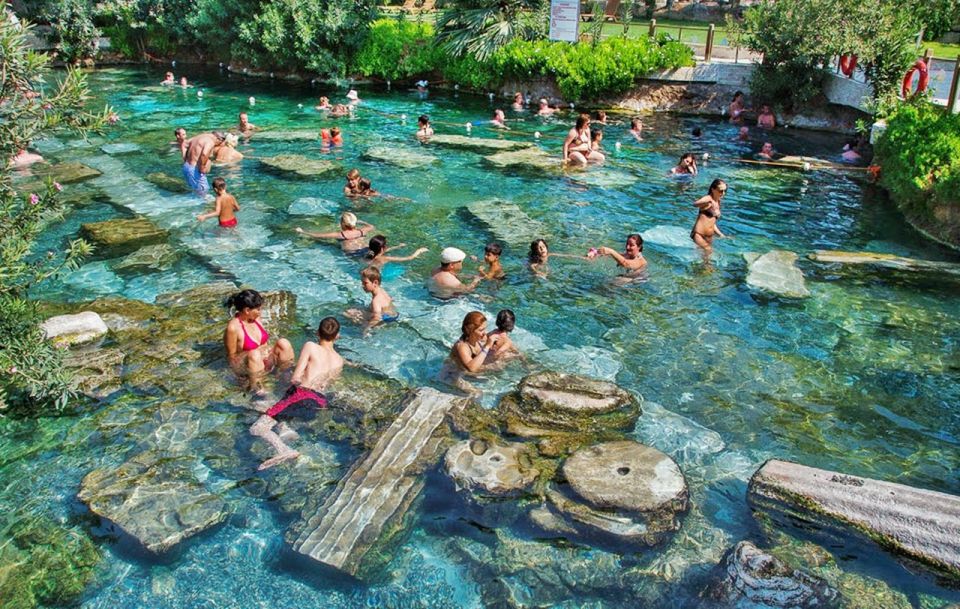
- The tour notes optional swimming at Pamukkale’s Antique Pool.
- The Cleopatra Pool is a separate paid add-on at 6 euro (not included).
- You may also be encouraged toward the Sacred Pool experience while you’re there, since the water is described as naturally effervescent and mineral-rich.
If you go for the water: you don’t need to treat it like a typical swim. The tour description emphasizes drying off afterward so the minerals can do their thing—so bring the mindset of a spa soak, not a sports workout.




Hierapolis highlights you shouldn’t rush past
Hierapolis can be more than ruins-as-background. It’s a functioning archaeological story about a city with Roman, Byzantine, and religious layers—plus the natural setting that created it.
The Necropolis: scale that sticks with you
The Necropolis is the big one. With 1,200 graves, it’s less about a single impressive monument and more about atmosphere. You’ll likely spend longer here than you planned, because the density is hard to ignore.
Photo tip: don’t just shoot straight-on. Try lower angles that show depth across the rows. The setting reads better that way.
Roman Bath, Domitian Gate, and the street remains
You’ll see a cluster of “read-this-and-you-get-it” highlights: the Roman Bath, Domitian Gate, the Main Street, and the Byzantian Gate. The gates are especially useful for orientation—suddenly you understand where people would have entered and exited, and how the street line would have guided movement.
I like this approach because it turns a pile of stones into a mental map. Even if you only catch part of the guide’s explanation, the shapes still help.
Pamukkale: what it feels like to walk on calcium terraces
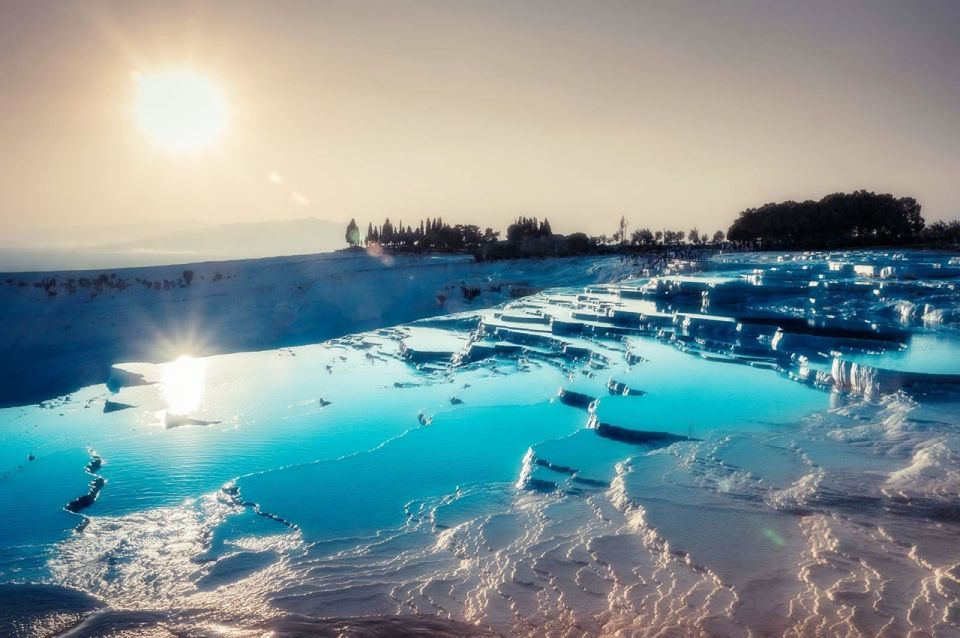
Pamukkale isn’t just pretty. It’s an active mineral landscape, and that changes how you move. The white terraces look delicate, but they’re formed by thermal water carrying calcium and other minerals. As you walk, you’ll notice how the area guides you—paths, shallow zones, and viewpoint angles that make photography feel natural.
The tour description calls out the water composition—high calcium content (including calcium bicarbonate and sulfate), plus magnesium and carbon dioxide. It also notes higher natural radioactivity levels. Practically, that means you should treat pool time like a short, special experience, not an all-day activity.
Swimming and snorkeling options: decide early
Depending on your comfort level and the open sections on the day, you can plan for swimming (and the tour schedule uses wording like sightseeing, swimming, and snorkeling). But because pool access can vary, I recommend you decide early so you don’t waste your best terrace viewing window waiting to see what’s open.
Also: bring swimwear and expect to get sandy or mineral residue on you. Plan to rinse off later if you can.
The Cleopatra Pool add-on (and why it’s worth considering)
The Cleopatra Pool costs an additional 6 euro, so it’s the optional splurge. If your main goal is the most famous photo moment, it’s the one to consider. If you’re happy with the terraces and the Antique Pool swim, you might skip it and spend more time soaking in the views.
The guide and driver: what makes the difference on a day like this
This kind of tour lives or dies on communication. The scheduling is tight enough that you need a guide who can keep things clear without turning the day into a lecture.
Across the feedback pattern, the English commentary stands out. Guides with names like Yetkin and Mustafa are praised for strong depth and for staying approachable. Ali is called out for kindness and solid explanations, and Resit Yıldırım shows up in reports tied to an especially memorable Cleopatra Pool experience. Even when people felt something needed improvement (like shopping time), they often still described the guide as a key reason the day worked.
What I’d take from that for your planning: if your English matters, you’ll likely be in good hands. And if you have questions—about the site, the region, or how the thermal water affects daily life—this format gives you time to ask without derailing the schedule.
Lunch and the other stops: useful, but know what you’re trading
Lunch is included, and it’s typically tied to a stop along the way. One report mentioned a buffet setup, which is great because you can choose what fits your hunger level. Still, the broader reality is that the day has a few “in-between” moments.
Onyx and other breaks: plan your expectations
One review mentioned a stop at an onyx demonstration where locally made stone products were shown. Other parts of the schedule include breaks for photos and lunch. If you dislike shopping stops, treat these segments as time buffers and aim to keep your focus on the main sites.
If you like hands-on local crafts, this can be a pleasant pause. If not, just treat it as a short detour before Pamukkale.
What to bring (so you’re comfortable, not stressed)
This tour is straightforward, but it’s outdoors and it includes optional water time. Pack like you’re doing a hot-site walk plus a short swim.
Bring:
- Comfortable shoes (you’ll walk more than you think)
- Sunglasses and a sun hat
- Swimwear, towel, and sunscreen
- Beachwear as backup for pool time
Avoid:
- Drones and tripods (not allowed)
If you want extra comfort: bring a small plastic bag for wet items and a second pair of socks. It’s not luxury; it’s a sanity saver.
Who this tour is best for
This tour fits best if you want a structured day with a guide but still want time to move at your own pace. It’s also a strong choice if you’re based in Kuşadası or Selçuk and want Pamukkale without the hassle of independent transport.
I think it works especially well for:
- First-timers who want Hierapolis + Pamukkale in one go
- People who enjoy photos and don’t mind some crowds at the pools
- Travelers who like ancient sites with clear highlights (gates, baths, streets, and a massive cemetery)
It’s not suitable for people with back problems, respiratory issues, pre-existing medical conditions, or recent surgeries. The walking and water-area environment can be demanding, even if the guide helps manage the flow.
Value check: is $118 a good deal?
At $118 per person for about 10.5 hours, the value is in what’s bundled:
Included:
- Guided tour of Pamukkale and Hierapolis
- Admission fees
- Lunch
- Roundtrip transportation from most Kuşadası/Selçuk hotels
- Live English commentary
- Skip-the-ticket-line style support
Not included:
- Drinks
- Cleopatra Pool add-on (6 euro)
So you’re paying for convenience and structure. You’re not paying to rent a car, navigate entrances, or figure out where to stand for the best terrace views. The guide and transportation are a big part of the cost.
Where value can dip:
- If you only care about one site (say, just the pools), the ruins time and driving may feel like too much.
- If you hate shopping stops, you might feel like part of the schedule trades away time you’d rather spend at Pamukkale.
But overall, for a one-day route that covers both UNESCO-connected sites, this is a pretty efficient way to do it.
Should you book this Pamukkale and Hierapolis tour?
If your priorities are big-photo sites, ancient ruins with real structure, and pool time without the stress of planning transport, I’d say this is a strong booking.
Book it if you want:
- A small group (up to 14)
- English guidance with enough freedom to explore
- The chance to swim, with the key add-on (Cleopatra Pool) clearly identified
Skip it (or consider a different format) if:
- You have mobility concerns tied to walking on uneven terrain
- You want maximum hours in the water above everything else
- You’re strongly averse to any shopping-style detours during the day
If you do book: wear grippy shoes, bring swim gear even if you’re on the fence, and be ready for a day where the white terraces and the ancient city both feel like the main event.
FAQ
How long is the Pamukkale and Hierapolis tour from Kuşadası and Selçuk?
The duration is listed as 10.5 hours.
What is included in the price?
The tour includes a guided tour, admission fees, lunch, and roundtrip transportation from most Kuşadası and Selçuk hotels/locations, plus live English commentary.
Is swimming included, and what about Cleopatra Pool?
Swimming is described as optional at Pamukkale (including the Antique Pool). Cleopatra’s Antique Pool is not included and costs 6 euro.
Do I need to pay for tickets during the tour?
The tour indicates skip the ticket line support, and admission fees are included, so you’re not separately paying for site entry as part of the tour price.
What should I bring for the day?
Bring comfortable shoes, sunglasses, a sun hat, swimwear, a towel, sunscreen, and beachwear.
What’s the group size, and what languages are offered?
It’s a small group limited to 14 participants, and the tour guide provides live commentary in English.
Is this tour refundable if plans change?
It offers free cancellation up to 24 hours in advance for a full refund.