REVIEW · KUSADASI
Ephesus & Virgin Mary’s House Tour (Entry Fees Included)
Book on GetYourGuide →Operated by OKEANOS TRAVEL · Bookable on GetYourGuide
Ephesus and Virgin Mary’s House in one trip feels like switching gears on purpose. You get Ephesus ruins plus a calm stop in the mountains, and it’s built for people who want big sights without a full day commitment. I especially like the pairing of the massive Roman-era structures (hello, Great Theatre and Celsus Library) with the small, prayer-focused atmosphere of Mary’s final home. One thing to consider: this is a walking-heavy tour, and it’s not suitable for wheelchair users or people with mobility impairments.
To make it work smoothly, the tour includes a licensed English-speaking guide (plus several other languages), luxury air-conditioned transport, pickup and drop-off, and entrance fees. You also see some memorable details that aren’t just “ruins,” like the Medusa head at the Temple of Hadrian and the stone footprint-and-heart carving tied to an old meeting place. The tour runs about 4.5 to 5 hours, so it’s excellent when you want depth but don’t want to spend your entire day on the ground.
In This Review
- Key points worth planning for
- A “best-of” half-day: why this combo works
- Ephesus on foot: 2,000-year-old streets and the guide-led storyline
- What makes the walking easier (and where it might be rough)
- The Great Theatre and St. Paul’s connection
- Practical note for your comfort
- Celsus Library: more than a library
- Temple of Hadrian and the Medusa head
- The world’s first advertisement detail: footprint and heart
- Trajan Fountain: the emperor’s statue story
- Virgin Mary’s House: quiet mountains, a small stone home, and the Wishing Wall
- The water stop that people remember
- Who this part suits best
- Timing and pacing: getting the most in 4.5 to 5 hours
- Price and value: is $150 per person fair here?
- Guide quality and language support (this is where the tour shines)
- Real-world perspective: what to learn from strong guides
- What to bring (so you’re comfortable, not distracted)
- Who should book this tour
- Should you book? My decision guide
- FAQ
- How long is the Ephesus and Virgin Mary’s House tour?
- What is included in the price?
- Where does the pickup happen?
- Is there an entrance fee included for the sites?
- What languages are available for the guide?
- What should I bring to the tour?
- Is video recording allowed during the tour?
- Is the tour wheelchair-friendly?
- What’s the cancellation option?
Key points worth planning for
- Two worlds, one route: huge Ephesus monuments first, then peaceful Mary’s House in the mountains
- Real scale of Ephesus: the Great Theatre is built for about 24,000 people
- Small but meaningful moments: the chapel inside and the Wishing Wall outside at Mary’s House
- Practical guidance included: licensed guide, entrance fees, and pickup/drop-off from Izmir or Kuşadası
- Expect walking, not rolling: comfortable shoes are a must, and the tour isn’t wheelchair-friendly
A “best-of” half-day: why this combo works
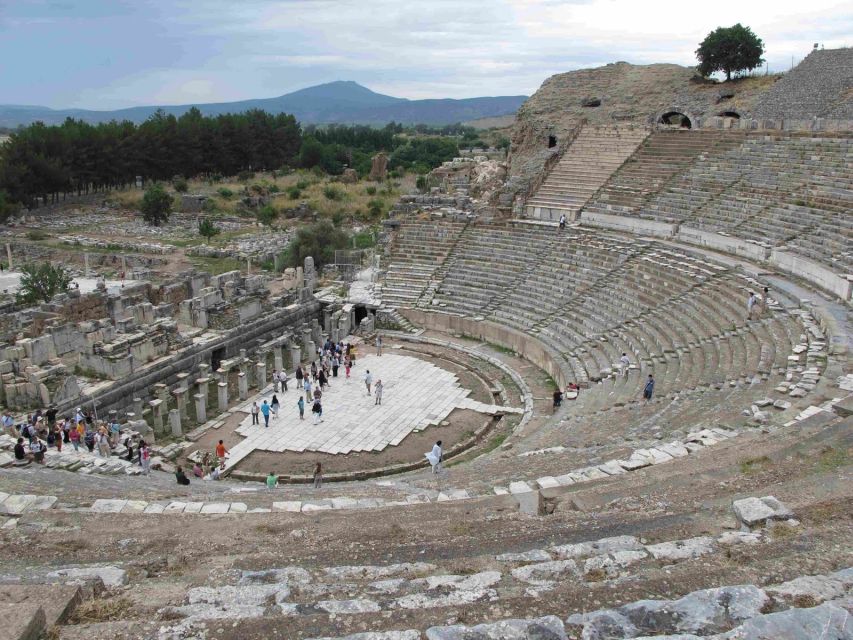
This tour is built around a smart idea: you don’t have to choose between major ancient history and a spiritual stop. Ephesus gives you the spectacle—marble streets, dramatic public buildings, and stories tied to early Christianity. Then the drive into the mountains shifts the mood fast, from crowds and stone to a calmer place for reflection.
If you’re visiting the Aegean coast and you only have a half day to spend, this is the kind of plan that helps you avoid the common problem: seeing one site really well but missing the other half of what you came for. Here, the itinerary holds both. The time window is long enough to cover the big Ephesus set pieces, but short enough that Mary’s House doesn’t feel rushed in the final stretch.
And you do get a practical boost: the guide handles the route and explanations, and the transport keeps your energy for the walking parts. With pickup offered from your port, airport, or hotel (you pick what fits), it’s also easier than trying to stitch together separate tickets and transport on your own.
You can also read our reviews of more tours and experiences in Kusadasi.

Ephesus on foot: 2,000-year-old streets and the guide-led storyline
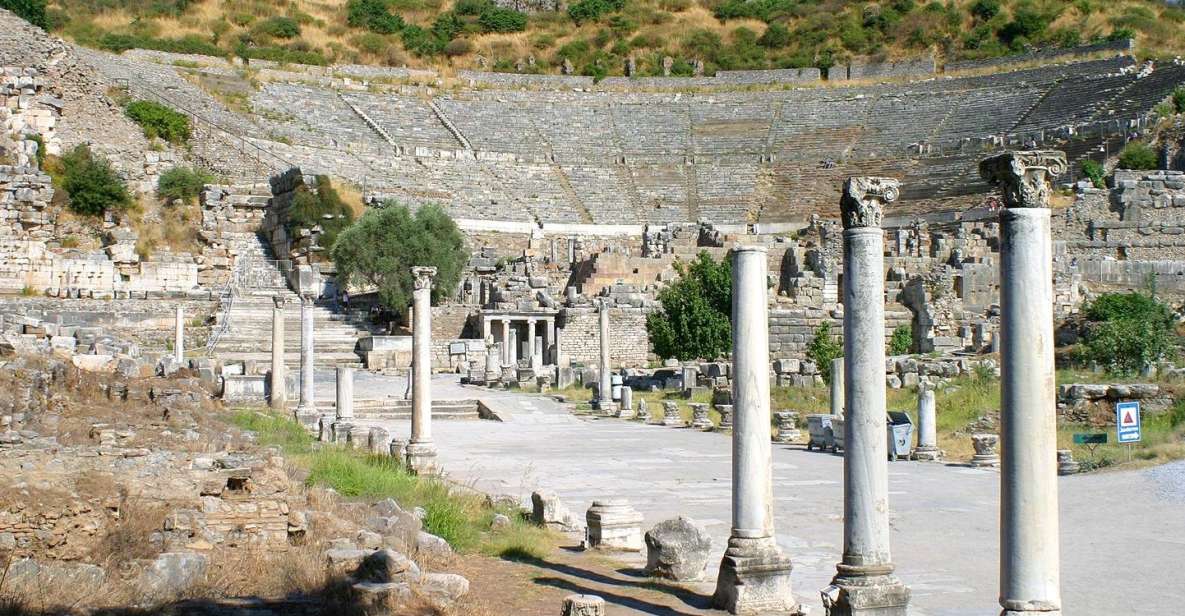
Ephesus is the kind of place where your appreciation jumps once you know what you’re looking at. The tour starts with that benefit: you walk through the ancient city with a friendly guide who connects the dots as you go.
You’ll be moving along marble streets that date back roughly 2,000 years. That sounds simple, but it matters—Ephesus is huge, and it can feel like “more ruins” unless someone helps you pick up the meaning. The tour is designed so you don’t just pass landmarks; you learn why they mattered in daily life and in the early Christian era.
What makes the walking easier (and where it might be rough)
This is not a “sit on a bus while you briefly look at things” experience. Comfortable shoes are a must. You’ll also want a sun hat and sunglasses, because there’s limited shade and you’ll be out for a good chunk of the 4.5 to 5 hours.
If you’re the type who likes to stop and read every sign, you might find the pace brisk—but that’s also why this tour is a good match for people who want the main highlights without turning the day into a multi-hour research project.
The Great Theatre and St. Paul’s connection
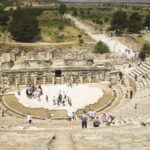
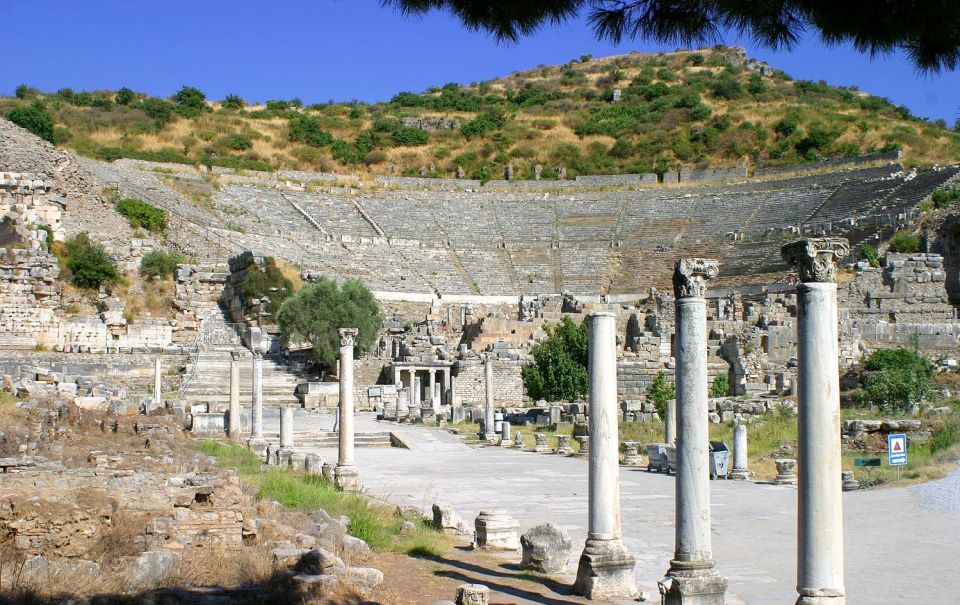
One of the anchors of the Ephesus route is the Great Theatre, a massive structure built to hold around 24,000 people. Standing in a place designed for that many voices makes the scale feel real.
The guide will explain what happened here in antiquity and the later connection tied to St. Paul speaking in the area. Even if you don’t consider yourself a “theology-history” person, it helps to place the story in a physical setting. A theatre is where people gather, hear public messages, and watch community life unfold. That context makes the early Christian references easier to understand.
Practical note for your comfort
The theatre and surrounding sections involve walking and uneven surfaces typical of archaeological sites. Bring shoes that can handle stone pathways, and plan to take your time with stairs and viewpoints.



Celsus Library: more than a library
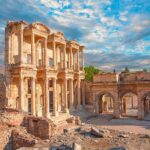
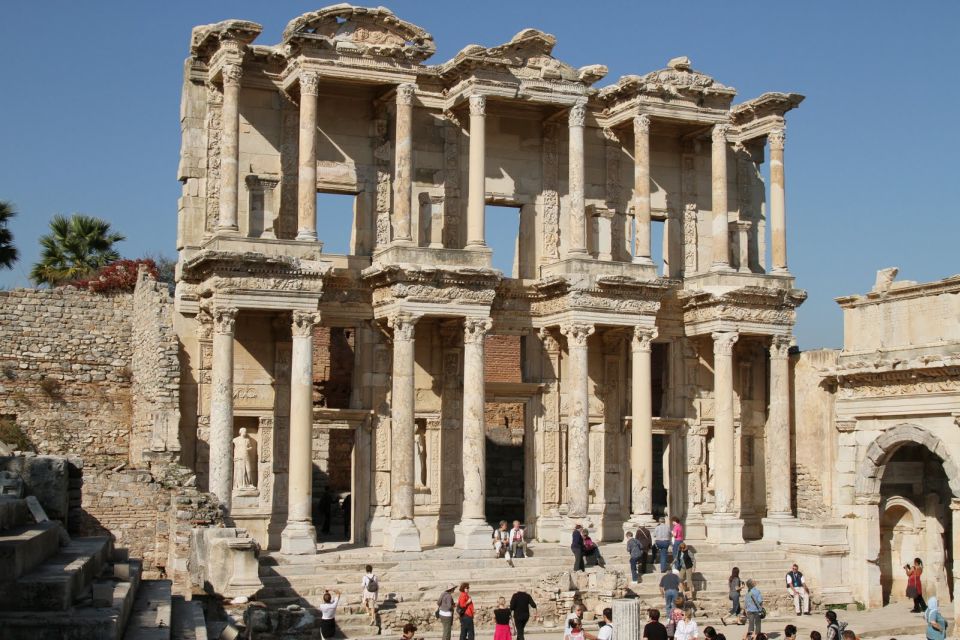
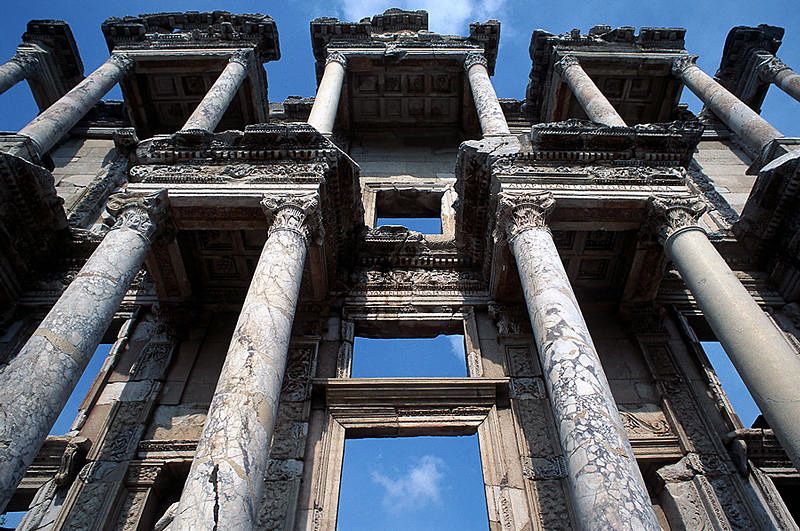
Next up is the Celsus Library, one of the most photographed structures in Ephesus for a reason. The important detail is that it wasn’t only a library. It functioned as a major tomb as well—so you’re looking at a building that served public knowledge and memorial purpose at the same time.
This is one of those stops where learning the “why” changes how you see the “wow.” You’ll likely find yourself looking at carvings and architecture differently once you understand the combined role of the site.
Temple of Hadrian and the Medusa head
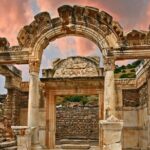
At the Temple of Hadrian, your guide points you toward a striking detail on the stonework: a head of Medusa on the wall. People once believed protective imagery could ward off bad luck, which is a fascinating reminder that ancient religion and symbolism were often tied to everyday hopes and fears—not just big ceremonial events.
Even if you’re not into myth retellings, it’s the kind of concrete object that helps you grasp what “belief” looked like in stone.
The world’s first advertisement detail: footprint and heart
One of the fun “wait, really?” stops is the note about the world’s first advertisement—based on a stone carving showing a footprint and a heart that people interpreted as guidance toward an old meeting place.
This is the kind of detail that makes Ephesus feel human. Ancient cities weren’t just marble monuments. People carved signals into public spaces because they needed directions, social cues, and shared meeting points. When your guide points these things out, Ephesus stops being only grand and starts feeling like a lived-in place.
Trajan Fountain: the emperor’s statue story
Another highlight is the Trajan Fountain. Today, only one stone foot remains from a larger statue of the emperor, but the stop still works because the story makes the fragment meaningful. Instead of treating what’s missing as a downside, the tour frames it as evidence of history’s rough editing—time leaves marks, and you learn how to read them.
This part is also a good reset point during the walking flow. You get architecture, then you get story, then you get to move on.
Virgin Mary’s House: quiet mountains, a small stone home, and the Wishing Wall
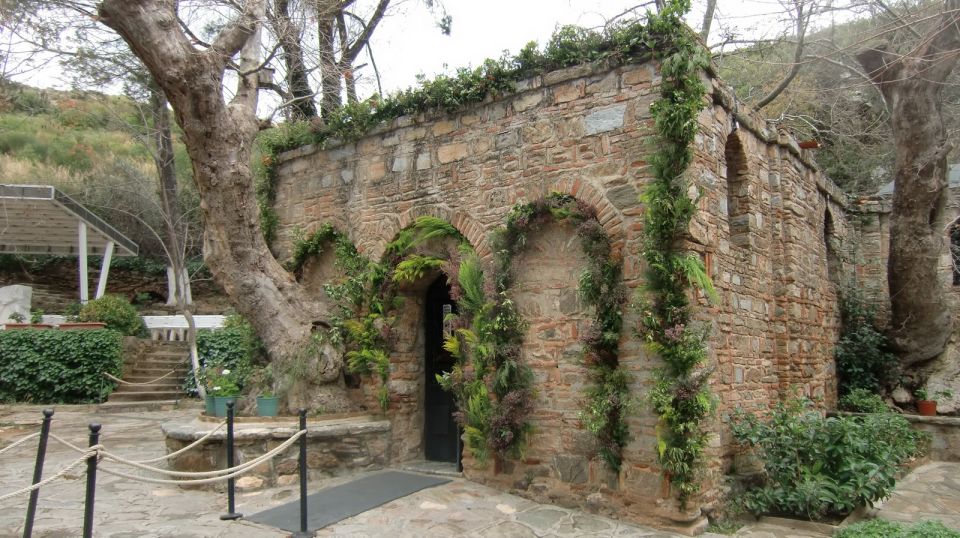
After Ephesus, the mood changes. You drive into the green mountains to reach the Virgin Mary’s House, described as Mary’s final home and a holy place for Christians and also respected by many Muslims.
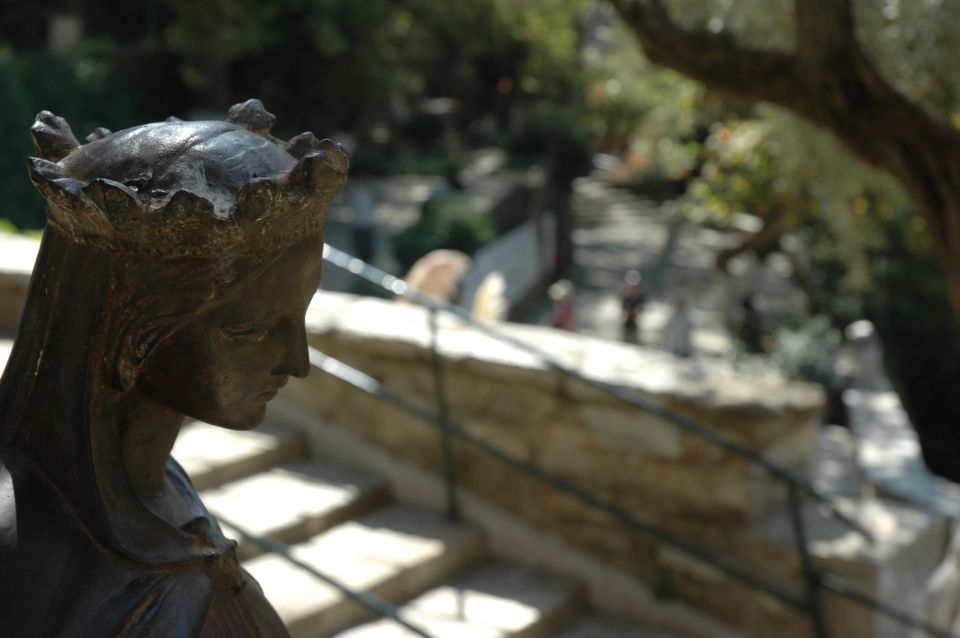
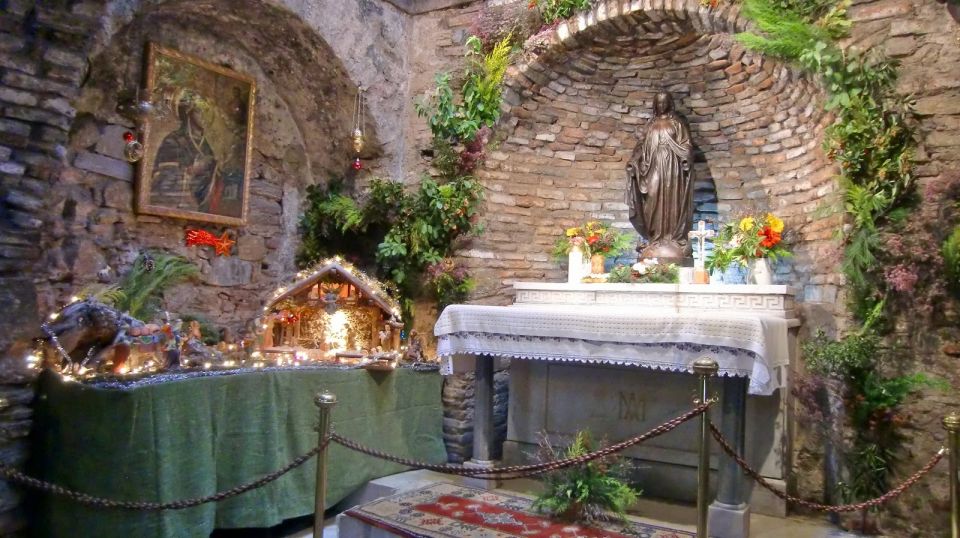
The house itself is small and stone-built, which helps the spiritual message land. Instead of massive walls meant to impress crowds, it’s a modest place associated with prayer and reflection. You’ll see a small chapel inside and then the Wishing Wall outside, where visitors tie pieces of cloth or paper with prayers and wishes.
The water stop that people remember
There’s also a natural spring where you can drink water. Many visitors believe this water has blessings. Even if you approach that belief cautiously, it’s still a memorable cultural and spiritual moment—one that’s simple and personal compared to the grand spectacle of the ruins.
Who this part suits best
This section works especially well if you’re visiting for both history and faith. It’s also a good counterbalance if you felt overwhelmed by the scale of archaeological sites. The drive and the quiet setting help you shift from “tour mode” to “human mode.”
Timing and pacing: getting the most in 4.5 to 5 hours
The overall duration is about 4.5 to 5 hours. That matters because it shapes the experience: you’re getting key Ephesus landmarks plus Mary’s House, but you’re not spending hours at one point.
For many people, that’s a plus. Half-day tours fit better into travel schedules, and they reduce the fatigue that can come from longer sightseeing days. It also means you get both parts of the day’s theme—ancient city energy and a calm spiritual stop—without turning either into an endurance test.
Still, plan your day around walking. You’ll want to carry only what you need because luggage or large bags aren’t allowed on the tour, and video recording isn’t permitted.
Price and value: is $150 per person fair here?
At $150 per person, this isn’t the cheapest way to see Ephesus. The value comes from what’s included. Your cost covers:
- a licensed professional guide in multiple languages
- luxury air-conditioned transportation
- pickup and drop-off
- entrance fees for museums and sites on the itinerary
When you add up those items separately, the price starts to make sense. You’re essentially paying for a guided route that handles entry fees and transport logistics, plus interpretation so you don’t miss the stories behind what you’re seeing.
Where it may not feel as “worth it” is if you’re the type who enjoys wandering completely on your own and don’t care about explanations. But if you want the sites connected into a coherent story—and you want it to run without hassle—this pricing structure is a strong fit.
Guide quality and language support (this is where the tour shines)
This tour stands on the guide. You’ll travel with a licensed professional guide, and they offer English plus other languages (German, French, Dutch, Italian, Spanish, Japanese). The tour description also lists live guide language options including Spanish, English, Italian, Dutch, Greek, German, Russian, and French.
That multi-language support is more than convenience. It affects how much you understand and how quickly you get your bearings in Ephesus. And it can change the entire experience—especially in a place where the architecture can be impressive but the context is easy to miss.
Also, I like that the tour is set up for clarity: the guide explains in simple English (and you can choose other languages depending on availability). If your main goal is to leave with real understanding—not just photos—this matters.
Real-world perspective: what to learn from strong guides
Some guides bring the ruins alive by focusing on the “small-but-specific” points: protective myth symbols like Medusa, the footprint-and-heart detail tied to an old meeting place, and the fact that Celsus Library also served as a tomb.
In the tour’s track record, I’ve seen praise for guides who are proactive and easygoing—people who handle questions and tailor the experience to what you’re interested in. One guide named Ahu stands out in the feedback, and another guide, Hazan, is noted for speaking perfect Spanish and recommending a local lunch spot that was simple but excellent. That kind of guide instinct is exactly what you want here: someone who explains the stone and also helps you make smart choices for the day.
What to bring (so you’re comfortable, not distracted)
Bring practical basics:
- passport or ID card
- comfortable shoes for walking
- sunglasses
- sun hat
And also plan for site rules: luggage or large bags aren’t allowed, and video recording isn’t permitted. If you like filming, this is one of those tours where you’ll want to focus on still photos and your own notes.
Who should book this tour
This is a strong match if you:
- want major Ephesus highlights without trying to manage a complex route
- like a blend of history and spirituality in one easy plan
- want guided interpretation so you understand the meaning behind the monuments
- prefer small groups or private options (available)
It’s not a good match if you:
- need wheelchair access or have mobility impairments (the tour isn’t suitable)
- require carrying large luggage (not allowed)
- need to record video during the visit (video recording isn’t permitted)
Should you book? My decision guide
If your goal is a high-value, guided half-day that hits the essentials—Great Theatre, Celsus Library, Temple of Hadrian, Trajan Fountain—and then switches to a quiet, faith-focused visit at Mary’s House, this tour is a sensible choice.
I’d book it if:
- you want clear storytelling instead of aimless wandering
- you’d rather pay for included guide and entrance fees than sort it out yourself
- you want both the big Roman-era sights and the calm mountain setting
I’d skip it if:
- walking for 4.5 to 5 hours is hard for you
- you’re trying to travel ultra-light with large bags
- you strongly prefer independent sightseeing without a structured route
Bottom line: for most visitors on the Aegean coast, this is a well-built plan—history that you can actually place, plus a spiritual stop that feels different from the ruins.
FAQ
How long is the Ephesus and Virgin Mary’s House tour?
The tour lasts about 4.5 to 5 hours.
What is included in the price?
The price includes pickup and drop-off, transportation in an air-conditioned vehicle, a licensed professional guide, and entrance fees to the sites on the itinerary.
Where does the pickup happen?
Pickup is available from Izmir or Kuşadası, and you can also arrange pickup from the port, airport, or your hotel (you select your preference when booking).
Is there an entrance fee included for the sites?
Yes. Entrance fees to museums and sites included in the itinerary are covered.
What languages are available for the guide?
Guides are available in multiple languages, including English, German, French, Dutch, Italian, Spanish, Japanese, Greek, Russian, and others listed for live guide support.
What should I bring to the tour?
Bring your passport or ID card, comfortable shoes, sunglasses, and a sun hat.
Is video recording allowed during the tour?
No. Video recording is not allowed.
Is the tour wheelchair-friendly?
No. It’s not suitable for wheelchair users or people with mobility impairments.
What’s the cancellation option?
Free cancellation is available up to 24 hours in advance for a full refund.