REVIEW · KUSADASI
Ephesus Tour from Kusadasi
Book on Viator →Operated by Puerto Travel Turkey · Bookable on Viator
Ephesus in one day actually works. This Kusadasi trip strings together the House of the Virgin Mary, the big Ephesus ruins, and the Temple of Artemis, plus an Ephesus Experience Museum break with pickup. I like the small group size (max 15) and the air-conditioned vehicle that keeps the day comfortable.
I also like that the tour is run by a professional licensed local guide in English. In practice, you get help with skipping long ticket lines by having entrance tickets arranged in advance, which matters when you’re on a tight schedule—especially from a cruise.
One thing to plan for: Ephesus involves uneven ground and steady footing, so good shoes help. And the day isn’t “all included,” since entrance fees and lunch are not included in the price.
In This Review
- Quick hits you’ll care about
- From Kusadasi pickup to the Ephesus beat
- The House of the Virgin Mary: a quiet stop with specific rules
- Ephesus Ancient City: how to see the core without getting lost
- Terrace Houses on Curetes Street: the view from the rich side
- Ephesus Experience Museum: use the tech to lock in what you saw
- Temple of Artemis: brief, but it’s part of the Seven Wonders story
- Selçuk lunch and a realistic photo plan
- Price and value: what you’re paying for at $60
- Who should book this tour, and who might want to rethink
- Should you book? My take
- FAQ
- How long is the Kusadasi Ephesus tour?
- What’s included in the tour price?
- Are entrance fees to Ephesus included?
- Is lunch included?
- Is pickup available from the port and hotels?
- Is free cancellation available?
Quick hits you’ll care about
- Pickup built for cruise and hotel days with port/hotel transfers and an on-time return guarantee for cruise passengers
- Güfte is a standout guide name you’ll see again and again, often with smart timing like visiting Mary early
- Ephesus Terrace Houses give a different angle than the main ruin routes, especially if you want views from the slopes
- Museum stop after the ruins helps you make sense of what you just walked through
- Temple of Artemis is brief—plan it as a checkmark stop, not a big-time highlight
- Lunch is a separate spend, but the included break is a real sit-down buffet in Selçuk
From Kusadasi pickup to the Ephesus beat
This tour starts in Kusadasi and moves fast in a good way. You’ll get port or hotel pickup (including Kusadasi area and nearby locations around Selçuk/Ephesus) and a drop-off back to the meeting point. The vehicle is described as a brand new, fully air-conditioned setup with a separate driver, which you’ll appreciate in Turkey’s heat.
The timing is what makes this route feel “worth it.” It runs about 4 to 6 hours depending on how your day flows, and there’s an extra push for cruise passengers with an on-time return guarantee. If your time in port is short, this is the kind of itinerary that tries to protect your minutes—by clustering the big sites and using quick, efficient stops instead of drifting.
Group size stays under 15, so you’re not stuck in a slow mob. That usually means you can hear your guide, get organized for photo breaks, and move through sites without losing half the day to bottlenecks.
You can also read our reviews of more tours and experiences in Kusadasi.


The House of the Virgin Mary: a quiet stop with specific rules
Your first major spiritual stop is the House of the Virgin Mary on the skirt of Bulbul Mountain in Selçuk. The story is part Catholic shrine, part pilgrimage site, tied to visions described by a nun in Germany who wrote about the place. For you, the practical value is simple: it’s a calmer start than the chaos you can feel later at large ruins.
Expect a focused hour here, and plan that you won’t just roam. This is a religious site with visitor flow and onsite rules. One review tip I strongly agree with in spirit: schedule your visit early in your day if the operator can manage it. One guide (Güfte) was known for reordering the day to hit Mary first, avoiding long lines that can build after arrival.
A few helpful details from real-world comments:
- You may see a section where visitors light candles/tapers; one note mentioned a minimum of 10 lira.
- There’s also a warning not to drink the holy water—stick to the site’s intent and keep things respectful.
- Don’t count on indoor photos. The rules can be strict in places, so save your camera energy for outside moments.
If you like meaning in your travel (not just monuments), this is a nice contrast to stone and sand. It’s also a good “breather” before you hit Ephesus.
Ephesus Ancient City: how to see the core without getting lost
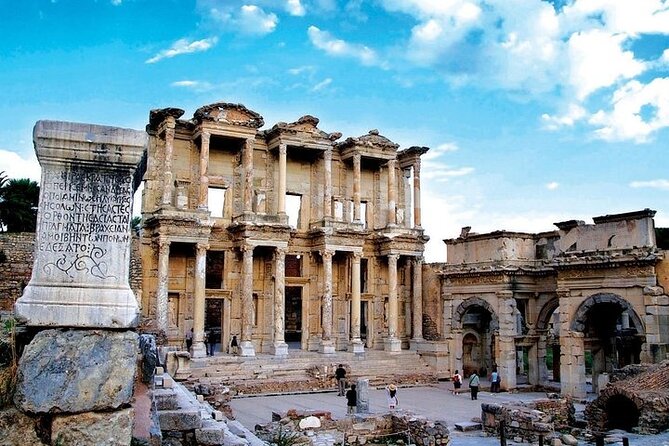
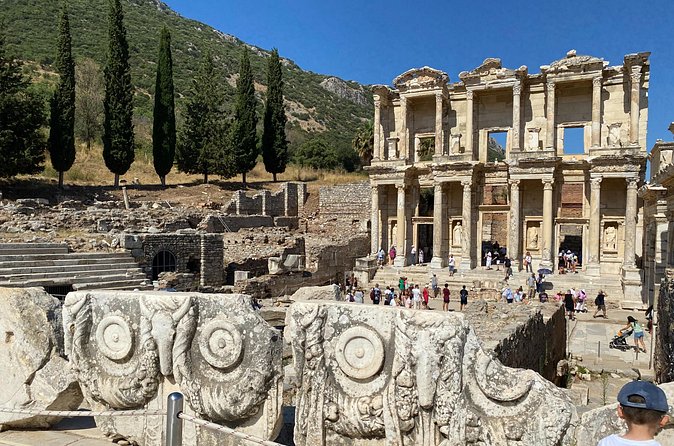
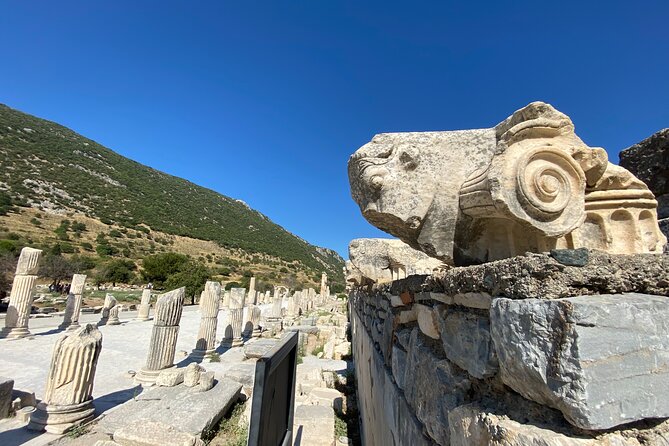
Then you’re onto Ephesus, one of Turkey’s top ancient sites and a major Greek and Roman trade city. The key idea here is that Ephesus wasn’t just a place where people lived—it was a port city with influence across the ancient world. It later becomes important for early Christianity and is even referenced in the Book of Revelations as one of the seven churches.
You’ll have about two hours in the ancient city. That’s not enough for every corner, which is why the guide matters. I like tours that make choices for you. A few comments noted guides skipping certain spots so you don’t lose time unless you’re a true archaeology devotee. The smart move is to ask questions on the spot. When you understand why something matters—like where ceremonies happened or how streets lined up—you don’t miss as much even if you skip a minor stop.
What to look for as you walk:
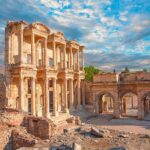
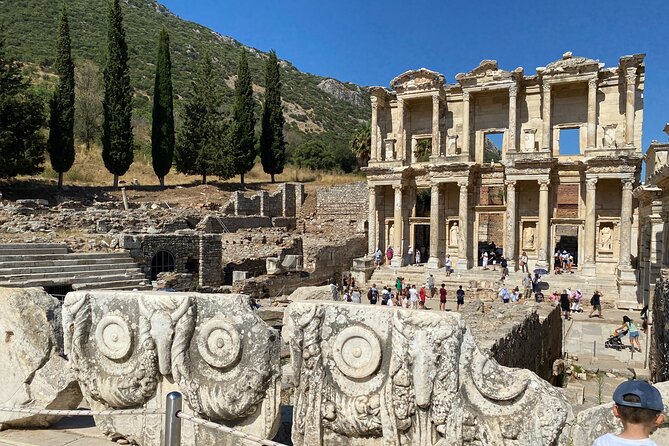
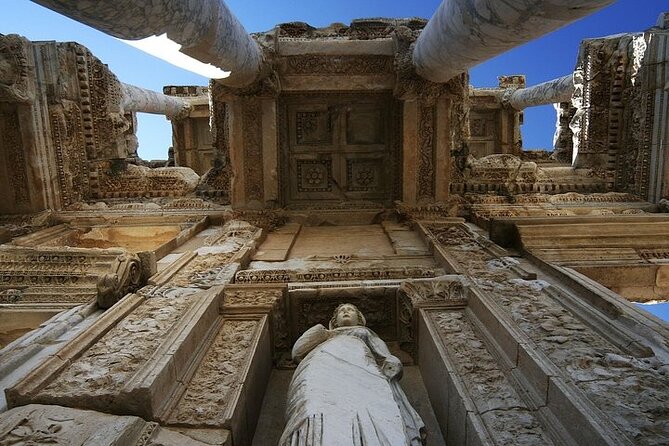
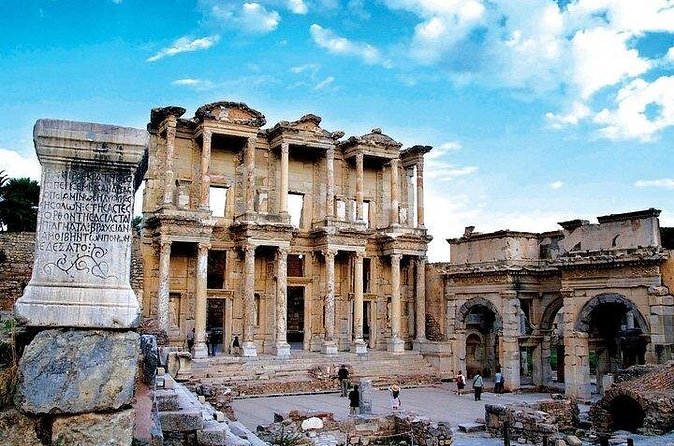
- Celsus Library, one of the most iconic structures in Ephesus
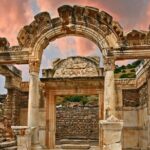
- Temple of Hadrian, which helps you connect the city to Roman power
- The fountain of Trajan
- The theater, where you can picture crowds gathering
Because the ground is uneven, you’ll want shoes with grip. Your legs will notice the difference between modern walking surfaces and ancient pathways. You’ll also want hydration. Multiple tips pushed bringing water bottles—at least two smaller ones—because you’ll be moving between stops.
A tour like this is also built to keep you from spending your time in ticket lines. Entrance fees aren’t included in the price, but the operator arranges tickets in advance so you can skip the worst delays.
Terrace Houses on Curetes Street: the view from the rich side
After Ephesus, you’ll move to the Terrace Houses, usually about 30 minutes. This stop is easy to overlook if you only chase the biggest ruins, but it’s one of the most interesting contrasts in the day.
These are exclusive residences on the slopes opposite the Temple of Hadrian along Curetes Street. The nickname “rich houses” fits because the houses show serious wealth: colonnaded porticoes and step streets that connected right into the home entrances. When you’re standing there, you get a different sense of Ephesus—not just public life, but how affluent people lived on the hillside.
If you like architecture, daily life, or “how did they actually live?” questions, this is the part that gives you that answer more than the main streets do. It’s also short enough that you still keep momentum for the rest of the day.
Ephesus Experience Museum: use the tech to lock in what you saw
Next comes a quick 30-minute visit to the Ephesus Experience Museum. The reason this stop works is timing: you just walked through marble ruins. Without context, ruins can feel like pretty stone and a lot of walking. The museum uses projections and interactive exhibits to recreate what life in Ephesus felt like at its height.
I like this stop because it acts like a translation layer. It helps your brain connect what you saw in the open-air site—streets, buildings, how space might have functioned—with what those spaces meant in daily life. Even if you’re not a “museum person,” this one is built for quick understanding after you’ve already done the walking.
One practical note: make the most of the air-conditioned break and plan a bathroom stop afterwards if you need it. That short reset can be the difference between a tiring day and a day you enjoy.



Temple of Artemis: brief, but it’s part of the Seven Wonders story
Your final major ancient landmark is the Temple of Artemis, located on the outskirts of Ephesus. This is famous for a reason—it’s tied to the Seven Wonders of the World and is said to have been completed around 550 BC. The sacred place goes back even earlier, and the temple was destroyed and rebuilt several times.
Still, here’s the reality: it’s a “say you saw it” stop more than a “wow you’ll spend an hour here” stop. One review comment put it bluntly: the Temple of Artemis can be mostly a single column to see, so don’t expect a full restored monument.
You’ll have about 30 minutes, and that’s enough. Treat it as a closing scene: a chance to step back from the Ephesus core and see how this famous sanctuary sits outside the main city grid.
Selçuk lunch and a realistic photo plan
You’ll end in Selçuk with an open buffet lunch at a local restaurant. This part is about nourishment, not sightseeing, and it includes traditional Turkish food with vegetarian options. One important value detail: some meals were noted as having vegan and gluten-free options, which is helpful if you have dietary needs.
In a day with a lot of walking, lunch isn’t optional. Build your photo strategy around it. If you’ve got a phone camera, charge it in the vehicle when you can. One practical tip was to bring a charging cable and use the ride time—smart if your battery tends to drain fast in the heat.
Also, remember this tour’s pace is designed to fit multiple stops. If you want long photo sessions at the big ruins, ask your guide when a quick outside photo moment is possible and then take it. The guides on this route are known for giving short, timed windows rather than letting the group wander until the whole schedule slips.
Price and value: what you’re paying for at $60
At $60 per person, this isn’t a “budget-only” tour, but it also isn’t priced like a private bespoke day. What you get is the part that usually costs time and stress: a licensed local guide, a comfortable air-conditioned vehicle, and port/hotel pickup and drop-off.
Included items cover:
- Professional licensed local tour guide
- Fully air-conditioned vehicle with separate driver
- Port/hotel pickup and drop-off
- Taxes and parking fees
- On-time return guarantee for cruise passengers
The two things that aren’t included are entrance fees and lunch. The operator says they arrange Ephesus tickets in advance so you skip long lines. That’s a big deal because line time is time you can’t buy back. In other words, you may pay extra for entry, but you’re likely buying speed and smoother flow.
If you compare this to piecing it together yourself, the value is in reduced friction. With Ephesus, the “how do I get in fast and see what matters?” question is half the battle. This route tries to solve that with planning and a guide who makes choices about where to spend your limited time.
One more “value” factor: max 15 travelers. Smaller groups tend to feel less rushed during explanations and easier to coordinate at stops.
Who should book this tour, and who might want to rethink
This tour suits you if:
- You want the main Ephesus highlights plus Terrace Houses without building your own route
- You’re traveling from Kusadasi with limited time (including cruise days)
- You like having a guide pick the order and keep the day moving
- You enjoy a mix of big ruins and a quick context-building museum
You might rethink if:
- You’re mainly chasing deep, slow archaeology crawling with no time pressure
- You have a hard time with uneven surfaces and stairs in outdoor ancient sites
- You hate paying add-on entrance fees during the day (since they’re not included)
If you’re the kind of traveler who values guidance—someone who explains why buildings matter—this makes sense. Several guide names came up repeatedly (Güfte, Darya, Yunus, Huseyin, Daniel, and Ms. Kilic), and a common theme was flexibility, good English, and timing help.
If you can request a guide, asking for Güfte seems like a strong move. The day gets shaped to avoid line headaches and you’ll usually get the kind of explanation that turns ruins into an actual story.
Should you book? My take
If you’re doing Kusadasi for one day and you want the best-known Ephesus stops with minimal hassle, I think you should book this. The mix of ancient city, Terrace Houses, the House of the Virgin Mary, and the Ephesus Experience Museum gives your brain both spectacle and context.
The main caution is physical: plan for uneven ground. Bring shoes that grip, carry water, and don’t expect every stop to feel like a blockbuster. Temple of Artemis is quick, and lunch costs extra because it’s not included—but the day is still structured to feel efficient and satisfying.
FAQ
How long is the Kusadasi Ephesus tour?
The duration is about 4 to 6 hours.
What’s included in the tour price?
You get a professional licensed local guide, an air-conditioned vehicle with a separate driver, port/hotel pickup and drop-off, and all taxes and parking fees. The tour also includes an on-time return guarantee for cruise passengers.
Are entrance fees to Ephesus included?
No. Entrance fees are not included, but the operator arranges tickets of Ephesus in advance so you can skip long ticket lines.
Is lunch included?
Lunch is not included. You’ll have an open buffet lunch in Selçuk, but you’ll pay for it separately.
Is pickup available from the port and hotels?
Yes. Free pickup is offered from Kusadasi Port, hotels in the Kusadasi area, the Selçuk/Ephesus area, and Kusadasi Setur Marina.
Is free cancellation available?
Yes. You can cancel up to 24 hours in advance for a full refund.